
In 2026, the typical smart thermostat installation cost runs from $200 to $500, with an average of about $350. That sounds manageable until you find out the final bill can jump fast when the wiring is old, the system is multi-zone, or the thermostat needs a C-wire.
Table of Contents
- Why Your Smart Thermostat Costs More Than the Box Price
- Breaking Down Smart Thermostat Installation Cost Components
- HVAC System Types and How They Affect Your Bill
- The C-Wire Problem and Other Wiring Surprises
- DIY Installation vs Hiring a Professional Electrician
- Energy Savings and Return on Investment Timeline
- Why Palm Beach County Homeowners Choose Licensed Electricians
Why Your Smart Thermostat Costs More Than the Box Price
A homeowner buys a sleek thermostat online and sees a price that looks manageable. Then the old wall plate comes off, the wiring is cramped or incomplete, and the quick swap turns into a service call. That is how a project that looked like a small upgrade becomes a real line item in the budget.
The hardware is only one piece of the bill. The bigger question is whether the thermostat can work with the HVAC system already in the house. A connected thermostat needs the right wiring, the right voltage, and the right setup, and those are the details that push the final cost higher.
Practical rule: if the home's current thermostat has extra loose conductors, no C-wire, or a control setup that is older than the equipment itself, assume the price will not stay at the low end.
Two neighbors can buy the same device and pay very different installation costs because the house behind the wall is different. One house has clean low-voltage wiring and a modern air handler. The next has older controls, multiple stages, or a heat pump that needs careful termination. In Palm Beach County, that gap shows up fast because labor rates and HVAC configurations are not the same from one home to the next. A straightforward job can stay near the lower end, while a more involved setup climbs quickly once the installer has to troubleshoot wiring, confirm compatibility, or correct an old control layout.
The warning signs are easy to spot once you know what to look for. If the current thermostat has a crowded terminal strip, if the HVAC system has more than basic heating and cooling, or if the old unit does not show a common wire, the job probably will not be a straightforward swap. The box price is not the project price.
Breaking Down Smart Thermostat Installation Cost Components
A thermostat install bill is built from three parts, hardware, labor, and wiring work. Homeowners who only budget for the box price usually get surprised once the installer opens the wall and checks the system behind it.
Hardware sets the starting point
Basic smart thermostats sit at the lower end of the price range. Learning models and premium units move the device cost up fast. That is before any wiring is touched. More features usually mean more money spent on the unit itself, which makes it easy to ignore the rest of the project.
Labor is where the time gets priced in
Professional rates commonly run $50 to $150 per hour, and most installations take 30 minutes to 3 hours (EcoTemp HVAC cost breakdown). A clean swap in a modern home is one job. A retrofit with setup, troubleshooting, or wiring correction is another. In Palm Beach County, that difference shows up quickly because the installer is charging for time on site, not just for hanging a new thermostat.
Wiring work is the hidden swing factor
The biggest surprise is usually the wiring correction behind the thermostat. Missing C-wire support can add about $50 to $150 more, and older systems can need more attention if the cable run or control board needs work. That is why a project can land around $150 to $350 for a simple swap and move into the $400 to $600+ range when the job involves more complex HVAC topology and extra termination work.
| Installation Type | Typical Cost Range | Time Required | Common Requirements |
|---|---|---|---|
| Simple modern-home swap | $200 to $350 | 30 minutes to 1.5 hours | Existing compatible wiring, standard low-voltage setup |
| C-wire add-on job | $250 to $500 | 1 to 3 hours | Common wire solution, additional wiring or adapter work |
| Older or more complex system | $400 to $600+ | 2 to 3 hours | Troubleshooting, multi-stage wiring, HVAC compatibility checks |
| Multi-zone or rewiring-heavy install | $400 to $600+ | 2 to 3 hours | More than one zone, extra terminations, control work |
The primary budget driver is the house, not the thermostat. Clean wiring keeps the bill under control. Old controls, missing conductors, or a control board that needs correction push the labor line up fast.
HVAC System Types and How They Affect Your Bill
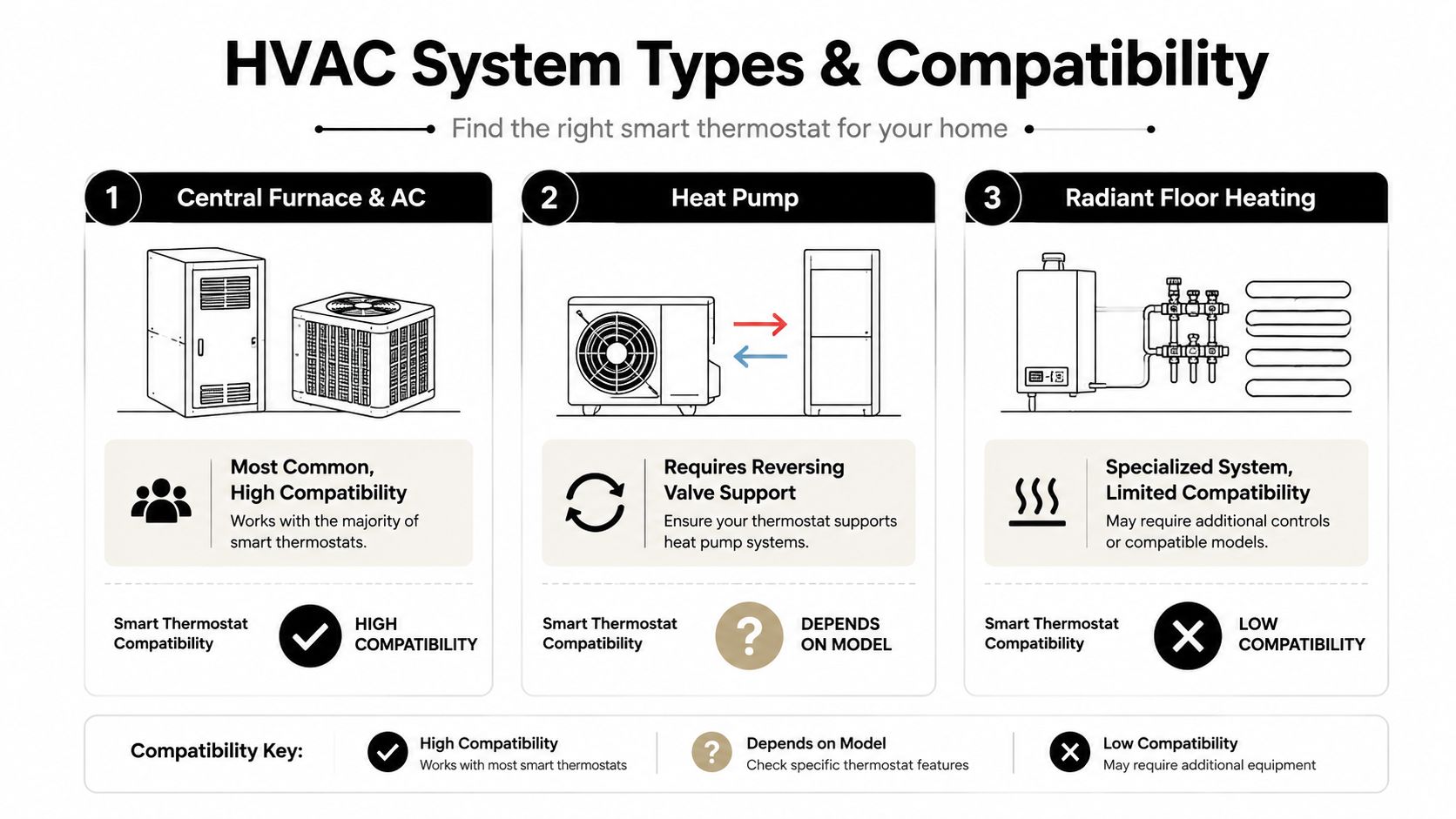
The same thermostat can be a clean fit in one home and a headache in another because HVAC systems aren't built the same way. A simple single-stage setup is easier to tie in than a heat pump with auxiliary heat or a multi-zone system that needs more careful control logic. The labor time changes because the wiring map changes.
Single-stage systems are usually the easiest
A basic furnace and central AC setup is the closest thing to a standard install. There are fewer control points, fewer termination decisions, and fewer programming wrinkles. For a homeowner, that usually means less labor, less troubleshooting, and a better chance of staying near the lower end of the installed-cost range.
Heat pumps add control complexity
Heat pumps need the thermostat to handle different operating logic than a simple furnace setup. Reversing valve control and auxiliary heat inputs can change the install from a quick swap into a more technical job. If the wiring is incomplete or labeled poorly, the installer has to trace and verify more before powering anything up.
Multi-zone systems are where budgets move
Multi-zone systems are the biggest reason two homes with similar-looking equipment can get very different quotes. Each zone can add wiring, configuration, and testing time. In many cases, the issue isn't the thermostat itself, it's the need to make sure every zone responds correctly without short cycling or fighting the other controls.
If the home has more than one temperature control area, don't expect the cheapest quote to hold. More zones means more labor, and more labor means a higher installed price.
There's also a regional reality here. Palm Beach County homes often mix newer additions with older HVAC equipment, so the visible system can look modern while the control wiring tells a different story. That's exactly where a project that starts near $250 can become a $500 job once the installer confirms the actual topology.
The smart move is to identify the system type before you buy the thermostat. One quick look at the equipment and the number of controlled zones can save a lot of budget shock later.
The C-Wire Problem and Other Wiring Surprises
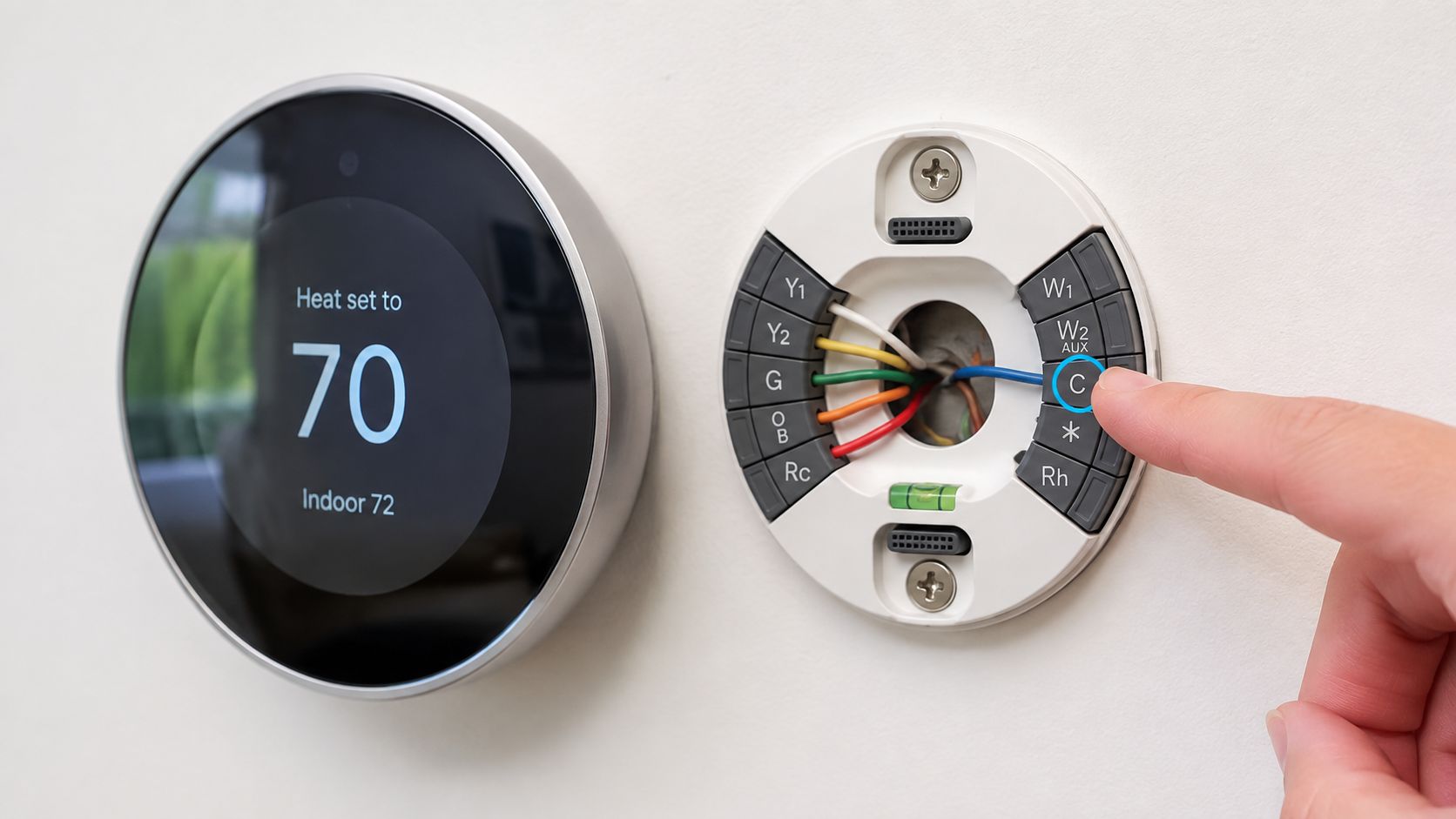
The C-wire is the most common reason a smart thermostat costs more than expected. It gives the thermostat constant power for Wi-Fi, display functions, and steady operation. Without it, the install can get complicated fast.
What happens when the common wire is missing
Some homes already have the right conductor in place, and some don't. When it's missing, the installer has three realistic options. Use a C-wire adapter, run a new cable, or choose a thermostat that can work under limited conditions without one. The cheapest option isn't always the best one if the system is old or inconsistent.
A smart homeowner checks the existing thermostat wiring before buying anything. Pull the old faceplate, look at the conductors, and confirm whether the system has the wire count needed for the new device. If that step feels uncertain, that's the moment to stop guessing and get eyes on the panel.
Other surprises that change the quote
A missing common wire is only the first problem that shows up. Voltage mismatch can rule out a device entirely, and multi-stage equipment can require additional wires that weren't needed by the old thermostat. Outdated control boards can also force extra labor if the installer has to do more than a direct replacement.
Rule of thumb: if the wiring behind the thermostat looks improvised, assume the install will need more than a hardware swap.
Homeowners in Palm Beach County also ask the same practical question when they're planning other upgrades, how much of this can be done cleanly and how much needs a pro? That same logic shows up in other home projects too, including the cost breakdown approach used in The Drapery Company's 2026 cost breakdown, where the final price depends on labor and installation complexity, not just the product itself.
If the wiring is damaged, undersized, or unclear, don't force the issue. An electrical wiring upgrade may be the cleaner long-term answer, and the details are laid out well in this electrical wiring upgrade guide.
DIY Installation vs Hiring a Professional Electrician
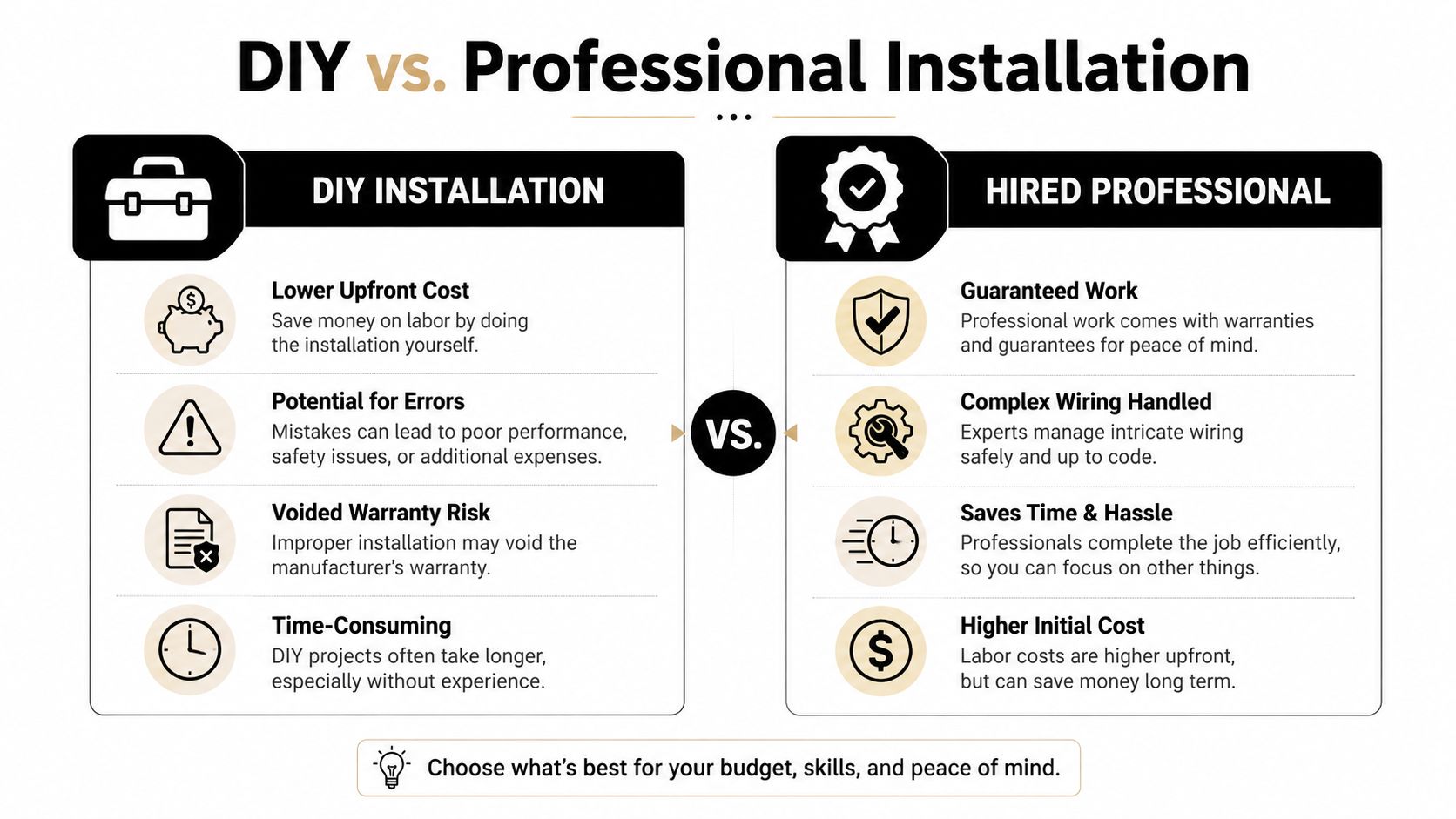
DIY makes sense when the job is simple and the homeowner knows exactly what they're looking at. It stops making sense when the wiring is old, the HVAC system is complex, or the thermostat needs troubleshooting before it can even power up properly.
When DIY is reasonable
A newer home with standard low-voltage wiring and a single-stage system can be a fair DIY project. If the existing thermostat already has the right conductors, the install may be closer to a controlled swap than a true electrical task. For a handy homeowner, that can save labor money without taking on much risk.
When DIY gets expensive in a hurry
Older homes are the danger zone. So are heat pumps, multi-zone systems, and anything that needs new wiring or board-level troubleshooting. One bad move can damage an HVAC control board, and replacing that kind of mistake can be far more expensive than paying for proper installation up front.
What the professional brings to the job
A licensed electrician or qualified installer brings verification, testing, and accountability. That matters when the thermostat needs correct terminations, app setup, and system checks after power-up. A homeowner may save a little on labor, but the wrong guess can erase the savings quickly.
If you want a step-by-step look at how a careful install should go, the safest starting point is safe smart thermostat installation steps. Read it before you start loosening screws, not after the old unit is already off the wall.
Saving on labor is smart only when the install is truly simple. If the system needs diagnosis, pay for the diagnosis.
The decision comes down to the house, not the hype. If the wiring is obvious and the system is standard, DIY can be fine. If the setup is anything less than straightforward, hire someone who works in live systems every day.
Energy Savings and Return on Investment Timeline
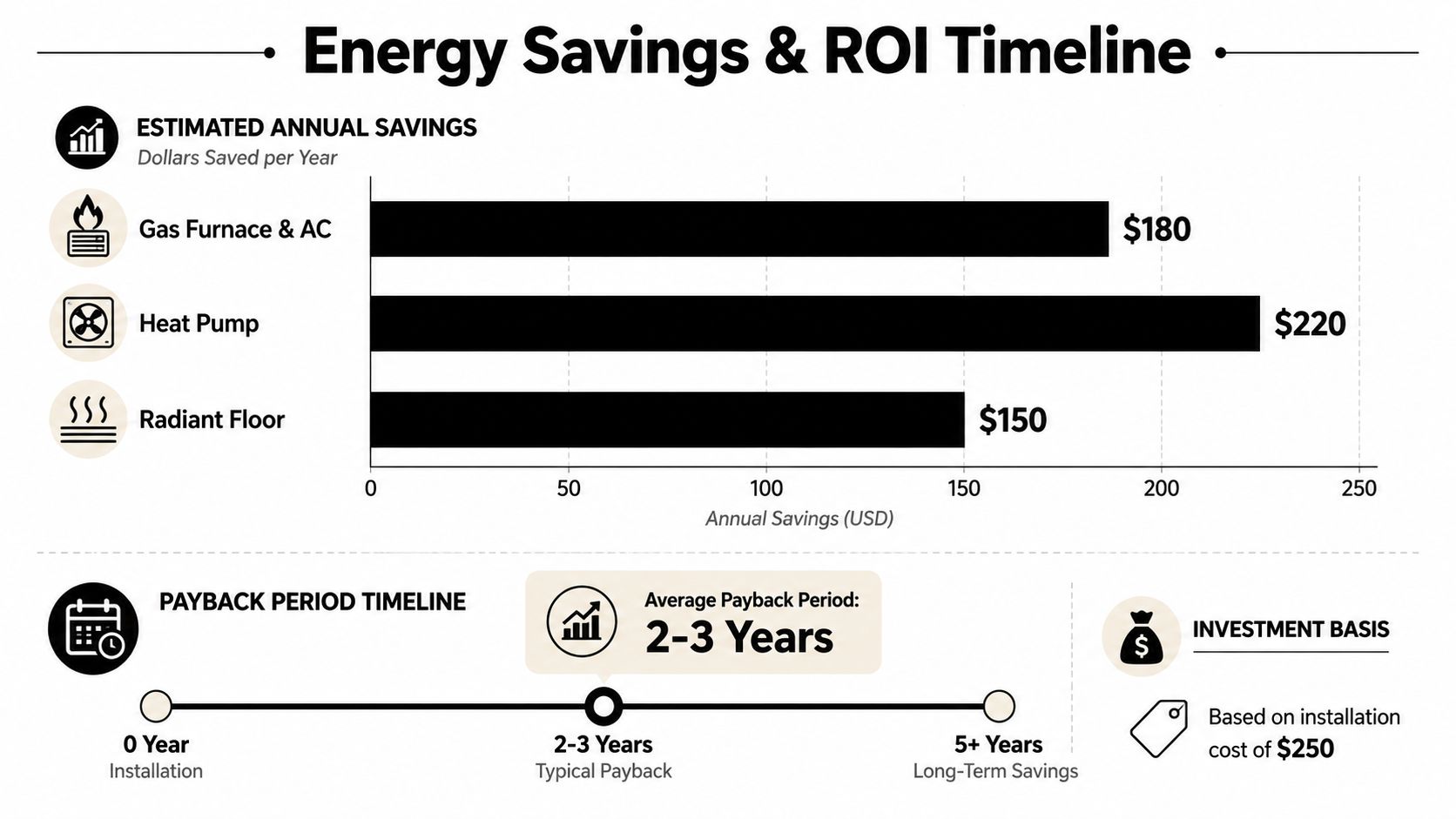
A smart thermostat earns its keep only if it changes behavior. Scheduling, remote adjustment, and learning features reduce waste when a home runs too hot, too cold, or empty for part of the day. That's where the payback starts.
The payback math is only useful if the install is right
A thermostat that's wired badly or programmed wrong won't deliver the same result as one that's installed and configured correctly. The upfront cost matters, but so does whether the system is controlling the HVAC equipment the way it should. If the install is sloppy, the energy savings get weaker and the payback takes longer.
Why the timeline varies by home
A home with steady usage and a well-matched HVAC setup has a better shot at recouping the investment sooner. A house with uneven occupancy, manual temperature changes, or an older system will usually see a slower return. The thermostat can still help, but the homeowner has to expect a longer wait before the savings fully offset the installation bill.
The key point is not that every home gets identical savings. It's that the device only works as a return-on-investment tool when the install is clean, the settings are sensible, and the system is compatible. That's the practical link between the upfront smart thermostat installation cost and the long-term bill.
For homeowners also trying to improve cooling efficiency across the whole system, the right next move is to look at this air conditioner efficiency guide. A better thermostat helps, but it's even stronger when the rest of the HVAC system is already running efficiently.
A smart thermostat is a control upgrade, not a cure-all. It pays off fastest in a home that already has a healthy HVAC system and sensible usage habits.
The best budget plan is to treat the thermostat as part of a broader efficiency strategy. That way, the install cost isn't just a one-time expense. It becomes part of a smarter operating pattern that keeps paying back.
Why Palm Beach County Homeowners Choose Licensed Electricians
Palm Beach County homeowners don't just need someone who can read a wiring diagram. They need someone who can handle low-voltage and line-voltage work correctly, show up when promised, and explain the price before the job starts. Licensed electrical contractors matter because the wrong install can create comfort problems, safety issues, and unnecessary callbacks.
What to ask before you schedule the work
- Ask about wiring experience: Make sure the installer works on both standard thermostat swaps and more complicated HVAC control setups.
- Ask about code and insurance: If the job touches electrical systems, you want proper licensing and coverage, not guesses.
- Ask what the quote includes: The price should cover assessment, installation, setup, and testing, not just wall-mounting the device.
- Ask who answers the phone: When questions come up, you want licensed professionals, not a call center passing messages around.
That checklist matters because low bids can hide a lot. A company that has served the area since 2005 knows the common HVAC configurations in local homes, understands the weather-driven demand on cooling systems, and can diagnose problems before they become expensive returns. For homeowners comparing contractor quality, the guidance in protecting your investment with licensed contractors is worth reading before you approve any installation.
What a solid installation visit should include
A proper visit starts with a pre-installation assessment. The installer checks the wiring, confirms compatibility, mounts the device, sets up the app, and tests the system under real operating conditions. That process is what separates a clean install from a rushed one.
For homeowners in Palm Beach County, the local advantage is simple. A licensed electrician who does this work every day is better positioned to spot a wiring issue, solve it on the first visit, and avoid surprise cost creep. If you need a licensed electrician in the area, start with this West Palm Beach licensed electrician resource.
If you want the smart thermostat installation cost handled without guessing, reach out to Lighthouse Energy Services. They handle thermostat installs, wiring issues, and HVAC-related electrical work across Palm Beach County with licensed professionals, clear pricing, and real 24/7 availability.