
You usually start looking for a Licensed electrician West Palm Beach FL at the worst possible time. The breaker won't reset. Half the house is dark. The A/C is off. You smell something hot near the panel, or a tenant is calling after business hours because outlets on one wall just died.
That's when people get rushed into bad decisions. They call the first number that says “24/7,” trust a vague promise over the phone, and only learn later that the person wasn't properly vetted, the price changed on arrival, or the “emergency” fee showed up after the work was done.
A good electrician solves the immediate problem. A reliable one also protects you from the next problem, the hidden charge, the code issue, and the patch-job fix that fails six months later.
When the Lights Go Out Who Do You Call
The usual scene goes like this. Someone grabs a phone flashlight, opens the panel, flips a breaker, and hopes it stays on. It doesn't. Now the questions start coming fast. Is it the utility, the panel, a bad breaker, a burned connection, water intrusion, or something plugged in that just took out a circuit?
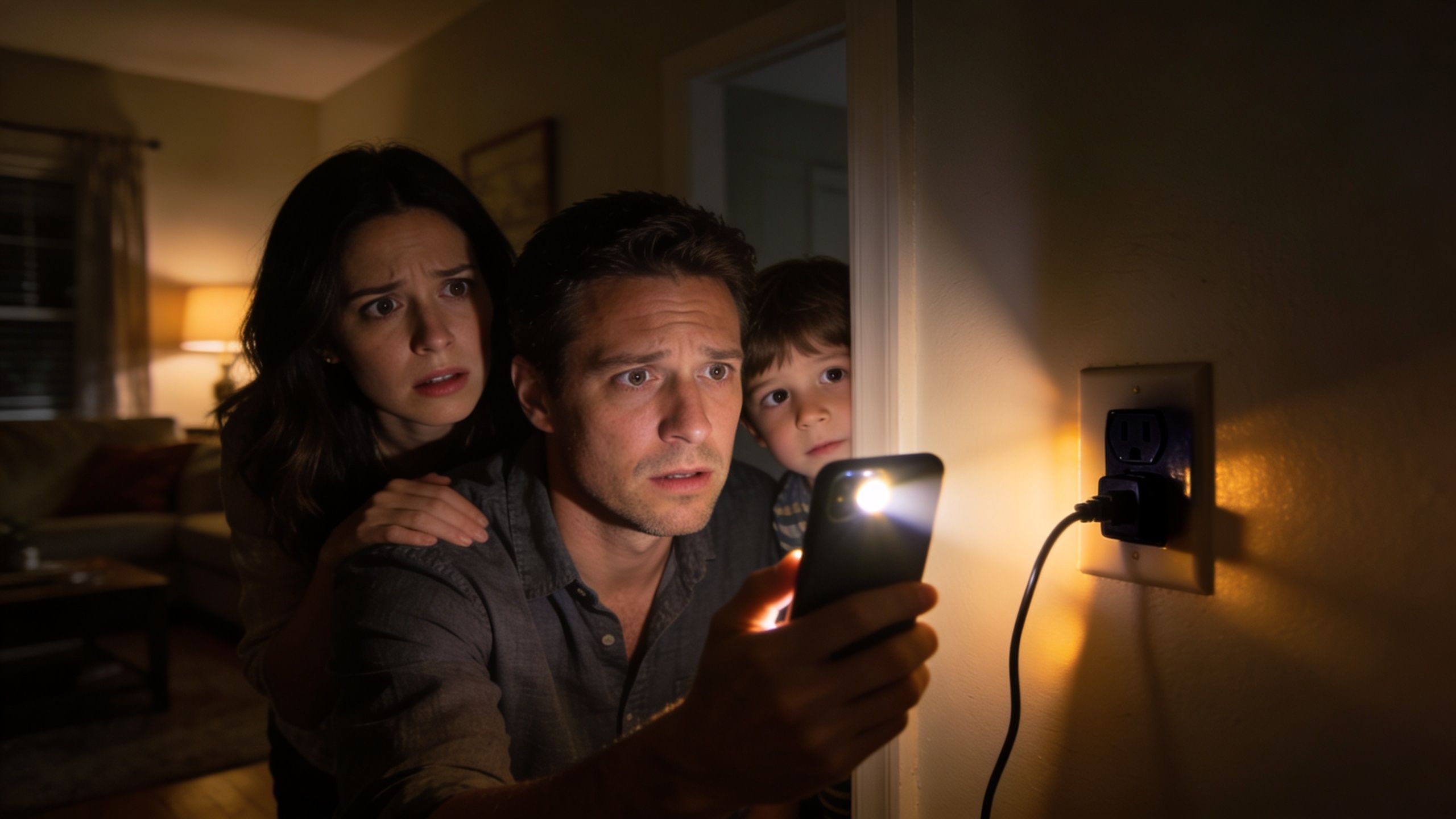
In that moment, many homeowners aren't shopping carefully. They're trying to get the lights back on before food spoils, equipment goes down, or a family member spends the night in a hot house. That urgency is exactly why bad hiring decisions happen.
West Palm Beach is not a small, simple market. As of 2026, Florida's electrician industry comprises 21,305 licensed electrical businesses, with 546 operating in West Palm Beach alone, according to IBISWorld's Florida electricians industry data. A crowded market gives you options. It also gives you noise.
Why panic hiring gets expensive
A rushed hire usually creates one of three problems:
- The wrong scope: Someone resets a breaker and leaves without finding the reason it tripped.
- The wrong credentials: A person says they “do electrical” but can't show the proper license and insurance.
- The wrong billing setup: The ad says emergency service, but the invoice says otherwise.
If an electrician can't explain what failed, what they tested, and what still needs attention, you probably paid for a temporary pause, not a repair.
If you're dealing with an outage right now, a local Palm Beach emergency electrician guide can help you sort out what to ask before dispatching anyone.
What to do in the first five minutes
Before you call:
- Check whether the outage is isolated to one room, one panel, or the whole property.
- Don't keep resetting a breaker that trips immediately.
- Unplug recent problem loads like space heaters, countertop appliances, or anything that may have caused the trip.
- Watch for warning signs such as buzzing, heat, scorch marks, or a burning smell.
Those details matter because a dependable electrician will ask them right away. That's often the first sign you're talking to a real pro and not just a scheduler reading a script.
Verifying Your Electrician Is Legit Before They Arrive
Before price, before arrival time, before any promise about “same-day service,” check whether the contractor is qualified to do the work. This is the one step that filters out most of the nonsense.
Florida doesn't hand out electrical licenses casually. To obtain an unlimited electrical contractor license in Florida, applicants must pass a two-part state exam with a 75% score, demonstrate six years of technical experience, and show that at least 40% of their work is in 3-phase services, as outlined in this overview of Florida electrician licensing requirements. That matters because three-phase knowledge is not beginner-level work. It speaks to real field experience, not just familiarity with residential basics.
What to verify online
Use the state portal first. Don't rely on a truck wrap, business card, or verbal assurance. A proper check should confirm:
- Current license status: Active beats “I'm renewing it.”
- Correct business name: Make sure the name on the estimate matches the licensed entity.
- Disciplinary history: If there's a pattern, take it seriously.
- License type: It should fit the kind of work you need done.
If you want a plain-English walkthrough, this guide on how to check contractor licenses from HomeProBadge lays out the process in a way homeowners can effectively use.
Licensed is not the same as insured
A lot of people hear “licensed” and assume that covers everything. It doesn't.
A license shows the contractor met the state's threshold to perform electrical work. Insurance addresses what happens if something goes wrong on your property. Ask for proof of liability coverage and workers' compensation. If the company hesitates, gets vague, or says “we've never had a problem,” keep moving.
Practical rule: If a contractor wants to diagnose a panel, service entrance, or concealed wiring issue before you verify license and insurance, stop the call there.
For readers who want a contractor already framed around state compliance, this page on government approved electrical contractors gives a useful baseline for what legitimate vetting should look like.
Questions worth asking before dispatch
Ask these on the phone, not after the truck shows up:
| Question | Why it matters |
|---|---|
| Are you sending a licensed electrical contractor or working under one? | You want accountability tied to the work. |
| Can you send your license number and proof of insurance before arrival? | Serious companies do this without drama. |
| Is the estimate issued under the same business name as the license? | This avoids shell-game billing. |
That's the threshold check. If they can't pass it, nothing else about speed or price matters.
What True 24/7 Emergency Service Actually Means
A lot of companies say “24/7.” In practice, that phrase can mean anything from “leave a voicemail and someone may call back” to “we answer now, dispatch now, and tell you the billing rules before the truck rolls.”
That difference matters most at night, on weekends, and on holidays, which is when confusion gets expensive.
In West Palm Beach, many electricians advertise emergency availability, but a common blind spot is transparent after-hours pricing. That's the issue highlighted in this review of local positioning around West Palm Beach emergency electrician messaging. Hidden emergency fees are a frequent frustration because customers often don't find out about them until the invoice is written.
What a real emergency setup looks like
Here's the difference between a marketing claim and an actual emergency operation.
A weak setup sounds like this: “We can probably get someone out. Pricing depends. The office will explain later.” That usually means a scheduler is trying to secure the visit first and define the cost later.
A solid setup sounds like this:
- Who answers the phone
- Whether the company dispatches at that hour
- Whether after-hours pricing changes
- Whether troubleshooting starts immediately on arrival or only after more approvals
- Whether temporary safety work and full repair are both available if needed
If they can't explain the after-hours policy in one clean sentence, assume the invoice will be messy.
Questions that expose the difference fast
Ask these exactly as written if you want clean answers:
- When I call tonight, am I speaking to someone who understands electrical emergencies or just an answering service?
- Do you charge extra for nights, weekends, or holidays?
- Can you tell me the service call structure before dispatch?
- If the issue is unsafe but parts are limited, what can you make safe tonight?
- Do you handle residential only, or can you support HOA, retail, office, and industrial issues too?
Property managers and HOAs should add one more question. Ask how the company documents emergency findings for follow-up approval, because that affects the handoff from urgent repair to permanent correction.
What doesn't count as 24/7
Not every late-night response is equal. Be cautious if the company:
- Won't discuss pricing until arrival
- Can't say who is on call
- Offers only “availability” but no response process
- Pushes a dispatch before confirming the emergency scope
One practical example in this market is Lighthouse Energy Services, which states that phones are answered by licensed electrical professionals and that there are no extra charges for after-hours calls. Whether you hire them or someone else, that's the level of clarity you should expect.
Understanding West Palm Beach Electrician Costs
Homeowners get tripped up on pricing because they compare the wrong numbers. They hear an hourly rate, then see a project total, and assume someone padded the bill. That's not always what happened.
Electrical pricing usually combines labor, travel, diagnostics, material, overhead, and risk. The invoice reflects the whole job, not just the minutes a tech had a screwdriver in hand.
The useful benchmark
A concrete local example helps more than a generic range. In West Palm Beach, a 200-amp panel upgrade can total approximately $1,838.68 for a 4-hour project including a lead electrician, apprentice, and all materials, while licensed electrician hourly rates average $73.10 to $89.00 according to this West Palm Beach residential electrical cost guide.
That project number tells you something important. A clean estimate should account for more than labor alone. It should reflect the panel, breakers, wiring, conduit, grounding materials, crew time, and operating costs tied to doing the job correctly.
Why low bids often go sideways
The cheapest quote can look attractive until you see what got left out.
Common omissions include:
- Permit or code-related scope
- Material quality
- Apprentice or helper time
- Disposal and cleanup
- Troubleshooting before replacement
- Return visits if hidden damage is discovered
A vague electrical estimate isn't cheaper. It's unfinished.
If you're trying to understand the difference between emergency billing, troubleshooting time, and repair scope, this emergency electrician cost guide for Palm Beach jobs is worth reviewing before you approve work.
How to read an estimate without getting fooled
Use this quick filter:
| Estimate feature | Good sign | Bad sign |
|---|---|---|
| Scope | Specific tasks listed | “Repair electrical issue” |
| Materials | Named or clearly described | “Miscellaneous parts” |
| Labor | Crew type or time basis explained | No labor structure at all |
| Conditions | Notes what could change the price | “Price subject to field conditions” with no detail |
A fair price is not the same as the lowest price. In electrical work, the dangerous quote is usually the one that sounds simple for a problem that isn't.
Your Vetting Checklist Before Making the Call
Homeowners often don't need a long theory lesson when the power is out. They need a script. Use this checklist on the first phone call and you'll eliminate a lot of weak options fast.
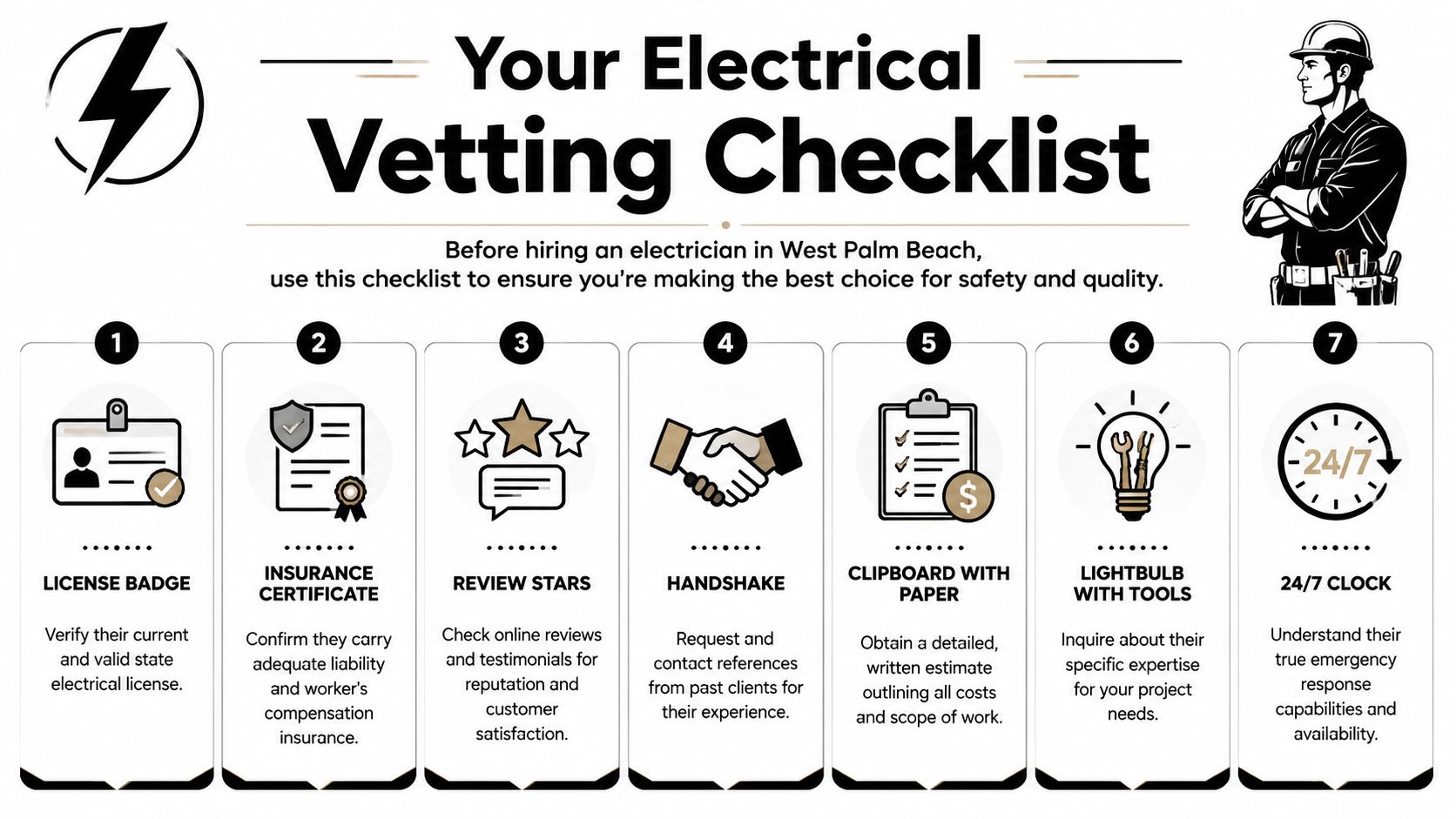
The call screening list
- Start with identity: Ask for the full legal business name, not just the company nickname they use in ads.
- Request proof early: Get the license number and insurance documents before the appointment if possible.
- Define the emergency policy: Ask whether night, weekend, or holiday rates change.
- Ask who is showing up: You want to know whether a qualified electrician is being dispatched or whether someone is coming only to “take a look.”
- Demand a written estimate: Even for troubleshooting, the billing structure should be explained first.
The project-fit questions
Not every electrician is the right fit for every job. A person who handles light fixture swaps may not be the one you want diagnosing service equipment, three-phase issues, repeated breaker trips, or commercial load concerns.
Ask things like:
- Have you handled this type of issue before?
- Will you check the cause, not just replace the failed part?
- Do you pull permits when required?
- How do you document code-related corrections?
For technical background on one area that often gets oversimplified, this article covering expertise from E & I Sales on wire and breaker sizing is a useful reminder that sizing decisions aren't guesswork. If a contractor answers sizing questions with “we usually just put in a bigger breaker,” that's a red flag, not a shortcut.
What to listen for in the answers
Good answers are calm and specific. Weak answers are fast, vague, and designed to move you toward dispatch without clarity.
Listen for these contrasts:
- Specific beats smooth: “We'll verify the load, inspect connections, and test the affected circuit” is better than “we do this all the time.”
- Clear beats reassuring: “There is no separate after-hours premium” is better than “we'll take care of you.”
- Direct beats defensive: Any pushback on license, insurance, or written pricing should make you pause.
Hire the electrician who makes the process easier to understand, not the one who tries hardest to get you off the phone.
If you're a homeowner, keep this list by the panel. If you manage property, make it part of your vendor approval process.
Finding a Partner for Efficiency and Compliance
A strong electrical contractor does more than show up when something fails. The better long-term move is finding someone who can help you reduce waste, plan upgrades, and keep specialized systems compliant.
That matters most for commercial owners, HOAs, industrial sites, and buildings with unusual infrastructure. Some electricians stay in the lane of repairs only. There's nothing wrong with that, but it leaves value on the table.

One area that's still underserved in this market is proactive energy efficiency. Few local electricians promote technology such as the Smartcool ECO3, which can reduce A/C electricity consumption by up to 25%, as noted in this overview of West Palm Beach electrical service positioning and efficiency options. For buildings where air conditioning runs hard most of the year, that's not a small operational detail.
What partnership work looks like
The right contractor should be able to help with more than repairs:
- Energy-saving upgrades that target recurring operating costs
- Compliance-focused work for specialized systems like aircraft obstruction lighting
- Planned maintenance that catches loose connections, aging components, and capacity issues before they turn into an emergency
The electrician you want long term is the one who can explain not only what broke, but what keeps breaking, why it keeps happening, and what changes will stop the cycle.
That's the difference between hiring a fixer and hiring a partner.
If you need a Licensed electrician West Palm Beach FL for emergency service, planned upgrades, or specialized compliance work, Lighthouse Energy Services is one local option serving Palm Beach County with residential, commercial, and industrial electrical support. They handle repairs, troubleshooting, installations, aircraft obstruction lighting, and Smartcool ECO3 efficiency upgrades, with true 24/7 availability and clear after-hours pricing policies.