
Living with an outdated electrical system isn't just an inconvenience—it's a genuine risk. For homeowners here in Palm Beach County, an electrical wiring upgrade is one of the smartest investments you can make. It’s about replacing old, hazardous materials with modern wiring that's safe, efficient, and ready to protect your home and family.
Is Your Home's Wiring a Hidden Danger?
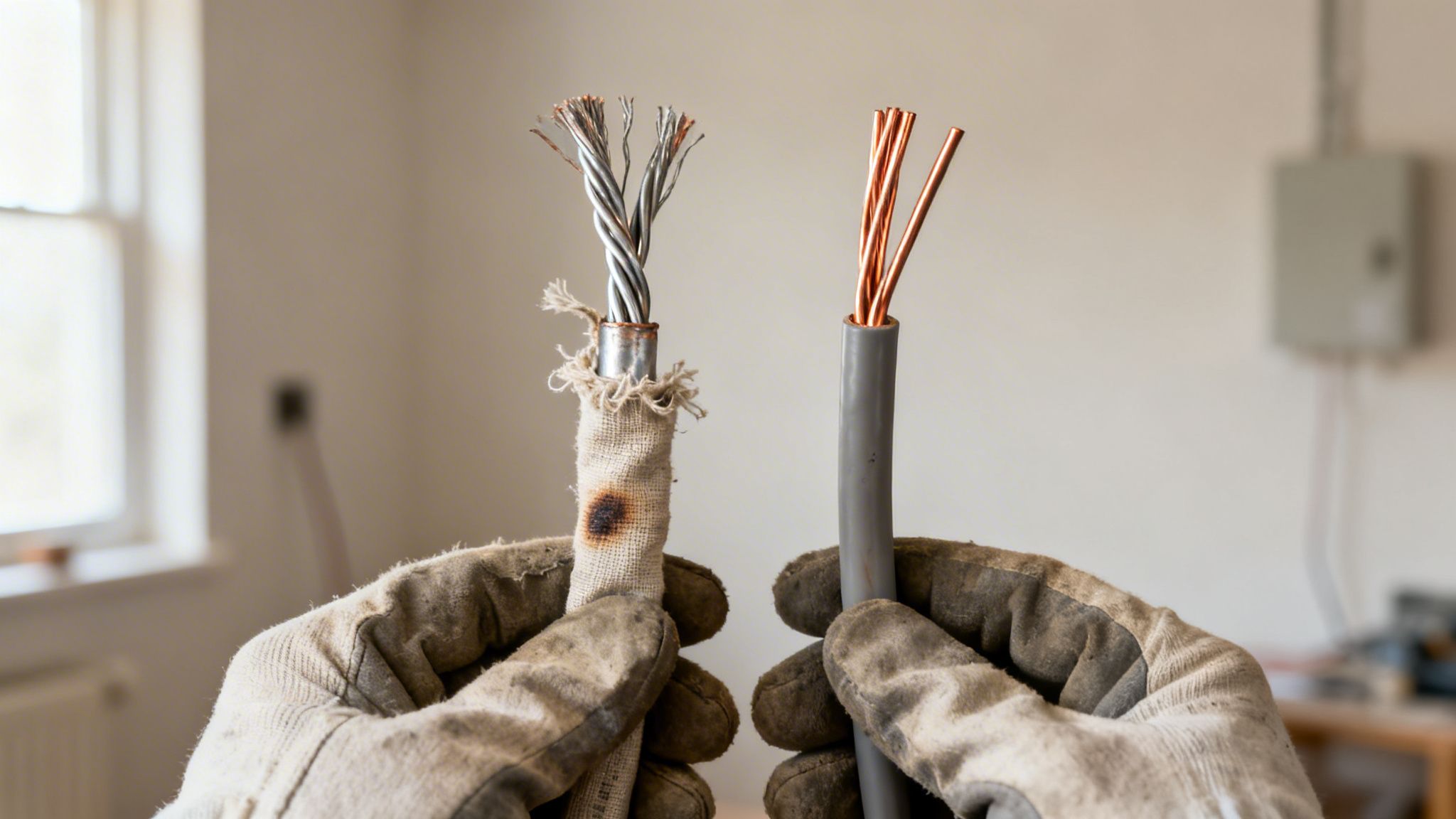
Think of your home’s electrical grid like its circulatory system. When it’s healthy, power flows exactly where it needs to go, running everything from your lights to your appliances without a problem. But over the decades, those electrical "arteries" age. They can become brittle and simply aren't equipped to handle the demands of our modern lives.
This isn't a small problem. It's a major fire hazard. Old wiring just can't keep up with the power draw from today's technology, from high-efficiency air conditioners to the dozen different devices we have charging at any given time. This overload creates dangerous heat, which can easily melt the wire’s protective insulation and ignite the surrounding wood framing.
Warning Signs You Can't Ignore
Your home will usually give you clues when its electrical system is struggling. Catching these red flags early is the key to preventing a potential disaster. It's time to call a professional for an inspection if you’re seeing any of these signs:
- Flickering or Dimming Lights: Do your lights dip whenever the AC or refrigerator kicks on? That's a classic sign of an overloaded circuit that can't distribute power evenly.
- Frequent Circuit Breaker Trips: Breakers trip to stop wires from overheating—that's their job. If it’s happening all the time, your system is telling you it can't handle the load.
- Buzzing or Crackling Sounds: Any strange noises from outlets, switches, or your electrical panel point to loose connections or faulty wiring. These can create dangerous electrical arcs and are a serious fire risk.
- A Persistent Burning Smell: If you ever catch a faint burning odor from an outlet or your breaker box, it’s a critical emergency. This means wires are already overheating and melting their sheathing.
The Unique Risks in Older Florida Homes
Many homes across Palm Beach County built before the 1980s have outdated wiring that we now know comes with specific, elevated risks. Figuring out what’s running through your walls is essential.
According to the U.S. Consumer Product Safety Commission, faulty electrical wiring is a leading contributor to the over 51,000 home electrical fires that occur annually. Upgrading your system is one of the most effective ways to protect your property from this hidden threat.
Two types of wiring are especially concerning:
Aluminum Wiring: Widely used from the mid-1960s to the late 1970s, aluminum wiring expands and contracts more than copper as it heats and cools. Over time, this movement loosens connections at outlets and fixtures, creating the perfect conditions for arcing and fire.
Knob-and-Tube Wiring: If your home was built before the 1950s, it might have this system. It's easily identified by its ceramic knobs and tubes. The biggest problem? It has no ground wire, which is a non-negotiable safety feature in all modern systems. Plus, its old insulation becomes brittle and can easily flake off, exposing live wires.
If you have any reason to suspect your home has these systems or you're noticing any of the warning signs, don't put it off. You can learn more about how a professional electrical home safety check can pinpoint these hazards and give you a clear path forward.
Understanding Common Electrical Upgrades for Florida Homes
When you hear the term "electrical wiring upgrade," it’s easy to picture a single, massive project. In reality, it’s not a one-size-fits-all job. It’s more like taking your car to a trusted mechanic—sometimes you just need new spark plugs, but other times, the whole engine needs to be rebuilt. The right fix for your Palm Beach County home depends entirely on its age, condition, and the demands of your modern lifestyle.
Let's break down what these different "tune-ups" look like so you can figure out exactly what your home needs.
Full Home Rewire: The Heart Transplant
A full home rewire is the most comprehensive upgrade you can undertake. We’re talking about completely replacing every inch of old, compromised wiring in your house with fresh, modern copper. It’s truly the electrical equivalent of a heart transplant for your home, giving it a brand new, reliable circulatory system.
This isn't an elective procedure; it's often a necessity for homes with genuinely hazardous wiring, like old knob-and-tube or early aluminum wiring. A full rewire gets to the root cause of flickering lights, overloaded circuits, and serious fire risks, giving you total peace of mind and a major boost to your property's value and safety.
Targeted Partial Upgrades
Thankfully, not every home needs a complete overhaul. If most of your wiring is in good shape, a partial rewire is a smart, budget-friendly strategy. We focus only on the specific circuits or rooms that are under the most electrical strain.
We see this most often in a few key areas:
- Kitchens: Between your microwave, air fryer, coffee maker, and that new induction cooktop, your kitchen's power draw is immense. Older circuits simply weren't designed for this.
- Home Offices: A couple of computers, multiple monitors, printers, and chargers can easily overwhelm a circuit that was originally meant for just a lamp and an alarm clock.
- Garages: The rise of electric vehicles is a game-changer. Upgrading your garage wiring is essential to safely install a Level 2 EV charger and power your workshop.
Panel Upgrades and Grounding
Your electrical panel (or breaker box) is the command center for your entire home. If it’s outdated or too small, it acts as a bottleneck, unable to safely manage the power you need.
An electrical panel upgrade, typically from an old 100-amp service to a modern 200-amp one, is one of the most common and critical upgrades. Think of it as expanding a two-lane country road into a four-lane highway. It allows much more power to flow through your home without the "traffic jams" that cause constantly tripped breakers.
Just as important is proper grounding. A grounding system provides a safe exit path for stray electrical current, directing it into the earth. This protects your expensive electronics from surges and, more importantly, shields your family from the danger of electric shock. Many older Florida homes were built without a proper grounding path, making this a crucial safety fix.
Life-Saving Outlet Technology: AFCI and GFCI
The safety upgrades don't stop at the wires in your walls. The outlets you interact with every day provide a powerful, immediate layer of protection. Modern electrical codes require two specific types in different areas of the home, and for good reason.
GFCI (Ground Fault Circuit Interrupter): These are the outlets that save you from electric shock, especially around water.
- How they work: They monitor the flow of electricity constantly. If they sense even a tiny imbalance—like electricity finding a path through water or a person—they shut off the power in a fraction of a second.
- Where you need them: Bathrooms, kitchens, garages, laundry rooms, and any outdoor outlets.
AFCI (Arc-Fault Circuit Interrupter): These devices are your best defense against electrical fires starting from within your walls.
- How they work: They are designed to detect a dangerous electrical arc—a tiny spark or jump in a damaged or loose wire. Before that arc can heat up and ignite surrounding wood or insulation, the AFCI shuts down the circuit.
- Where you need them: Code now requires them in almost all living areas, including bedrooms, living rooms, and hallways, to protect against those hidden dangers.
Why Modern Life Demands a Modern Electrical System
Ever stop and think about just how much electricity your home is really using? It’s a lot more than you think. Go back just a couple of decades, and the biggest power hogs in a house were the fridge and the air conditioner. Today, that’s just the starting lineup.
Your home’s electrical system, once a silent, background utility, is now being pushed to its limits every single day. This is why thinking about an electrical wiring upgrade is no longer just a good idea for older homes—it’s becoming a flat-out necessity for modern living. It’s not about just swapping out some old wires; it’s about fundamentally recalibrating your home’s power grid to handle the way we live now.
The Power-Hungry Home
The electrical demands in a typical Palm Beach County home have absolutely exploded. It isn't just one or two new gadgets, but the compounding effect of dozens of devices all pulling power at the same time. This puts an incredible amount of stress on wiring that was installed in a much simpler, lower-tech era.
Just think about the daily lineup in your own house:
- Heavy-Hitting Appliances: Those new high-efficiency air conditioners, powerful tankless water heaters, and sleek induction cooktops draw significantly more power than their older counterparts.
- Electric Vehicles (EVs): This is the big one. Charging an EV overnight is like running a second central air conditioner for hours on end. Most older electrical systems were never designed for that kind of sustained, heavy load.
- The Smart Home Creep: Every smart speaker, doorbell camera, thermostat, and light bulb adds to a constant, 24/7 power drain that older circuits just don't account for.
- Work & Entertainment: Between multiple home office computers, massive TVs, and power-hungry gaming consoles, the demand has skyrocketed.
This isn't just a local trend; it's a global shift. In fact, the market for electrical wiring installation is projected to jump from $1,290.12 billion in 2024 to a staggering $1,733.54 billion by 2029. That number tells a story: homes everywhere are racing to catch up with their own power needs. You can dig into these industry growth drivers to see just how widespread this issue is.
The Hidden Cost of Inefficient Wiring
What most people don't realize is that an overloaded or outdated electrical system is a constant drain on your wallet. When wiring is too old or too thin for the job, it struggles to deliver electricity where it needs to go. That struggle creates resistance, and resistance wastes energy by turning it into heat.
Think of it like trying to water your entire lawn with a skinny cocktail straw. You'd have to run the water for a very long time, and you’d lose a lot of pressure along the way. Old wiring is that cocktail straw—it "leaks" energy, forcing your appliances to work harder and pull more power just to function, which shows up directly on your FPL bill.
A proper electrical wiring upgrade is like swapping that straw for a brand-new fire hose. It creates a clean, efficient pathway, ensuring 100% of the power you pay for gets to your devices without waste.
Getting Your Home Ready for Tomorrow
An electrical wiring upgrade is one of the smartest investments you can make, preparing your property for a future that’s guaranteed to be even more electric. Technology isn't slowing down, and a robust, modern system ensures you're ready for whatever comes next.
A properly upgraded electrical panel and wiring give you the foundation for:
- Renewable Energy: It makes integrating solar panels and home battery backup systems like the Tesla Powerwall a smooth, seamless process.
- Next-Gen EV Charging: It gives you the capacity to install faster, more powerful Level 2 chargers, getting you back on the road quicker.
- Staying Up to Code: It ensures your home complies with the latest National Electrical Code (NEC) safety standards, which is crucial for insurance, home value, and your family's safety.
By tackling a professional electrical wiring upgrade now, you're not just fixing today's flickering lights or tripped breakers. You’re building a safe, efficient, and resilient foundation that will add value to your home and serve you reliably for decades to come.
Your Step-By-Step Guide to the Upgrade Process
Taking on a major electrical wiring upgrade can feel like a huge undertaking, and frankly, it's easy to see why. For most Palm Beach County homeowners, the process seems complex and disruptive. But it doesn't have to be. At Lighthouse Energy Services, we've found that a clear, well-managed plan is the best way to ensure peace of mind. We've built our entire process around open communication and professional work, turning a potentially stressful project into a smooth and worthwhile investment.
So, let's pull back the curtain and show you exactly what to expect when you work with a professional on an electrical upgrade.
Phase 1: The Initial Consultation and Inspection
It all starts with a simple conversation. A licensed electrician will come to your home, not with a sales pitch, but to listen. What are you trying to accomplish? Are you getting ready for an EV charger? Frustrated with a kitchen breaker that trips every time you use the microwave? This first talk helps us focus the inspection on what truly matters to you.
From there, we move on to the inspection itself—a true deep dive into your home's electrical "nervous system." An expert will methodically check:
- Your Electrical Panel: We’ll look at its brand, age, and amperage, searching for common red flags like overheating, rust, or obsolete and dangerous designs.
- Visible Wiring: In accessible areas like the attic or crawlspace, we'll identify the type of wiring you have. We’re on the lookout for outdated systems like hazardous aluminum or knob-and-tube wiring.
- Outlets and Switches: We test for proper grounding and check for any signs of damage, scorching, or improper installation that could pose a risk.
Phase 2: A Clear Proposal and Action Plan
After the inspection, you get a detailed, itemized proposal—not a one-line estimate on the back of a business card. This document clearly lays out the scope of work, the specific materials we’ll use, and a firm cost. We believe in no hidden fees and no last-minute surprises; everything is spelled out for your review.
Think of this proposal as a blueprint for your home's electrical future. It doesn't just list what we're going to do; it explains why each step is critical for safety and performance. This is your chance to ask every question you have and make sure you understand the full value of your electrical wiring upgrade.
Phase 3: Handling Permits and Code Compliance
Dealing with local permits can be one of the most frustrating parts of any home project. That’s why a professional contractor handles all of it for you. We take charge of the entire permitting process with Palm Beach County or your city, ensuring every detail is properly documented and approved before we even touch a wire.
Following the latest National Electrical Code (NEC) and local building codes isn't just a good idea—it's a legal requirement that protects your home and family. Our electricians live and breathe these standards, so your project will be done right the first time and sail through every inspection.
Phase 4: Professional Work with Minimal Disruption
Once the permits are approved, our licensed electricians get to work. We know you still have to live in your home, so our team is trained to be as unobtrusive as possible. That means keeping the work area clean, giving you a clear schedule each day, and working efficiently to get the job done right and on time.
The goal is to build a system that can handle everything a modern home throws at it, from a 40% increase in household energy use to the 10 KWH pull of an EV charger.
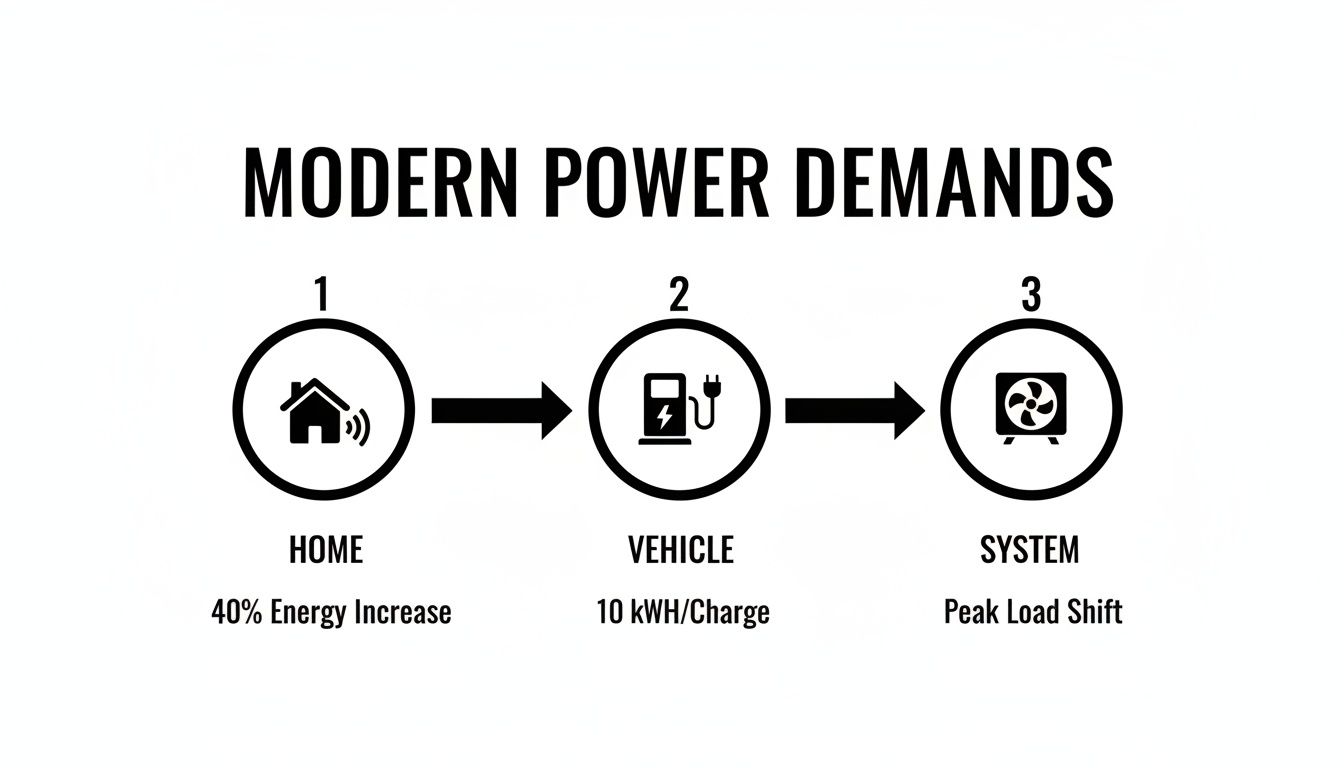
A modern electrical system has to juggle a lot, from smart home gadgets and major appliances to the new demands of charging an electric vehicle.
Your Electrical Wiring Upgrade Checklist
Feeling a bit overwhelmed? It's completely normal. To help you keep track of everything, we've put together this simple checklist. Think of it as your road map for a successful project, from the first call to the final sign-off.
| Phase | Key Action Item | Why It's Important |
|---|---|---|
| Before Work Begins | Vet your electrician. | Check licenses, insurance, and local reviews. This is the single most important step for ensuring quality and safety. |
| Before Work Begins | Get a detailed, written proposal. | Your proposal should clearly define the scope, materials, and total cost. Avoid vague estimates. |
| Before Work Begins | Confirm who is handling permits. | Your contractor should manage all permitting with the local municipality to ensure full code compliance. |
| During the Project | Keep communication lines open. | Know who your point of contact is and don't hesitate to ask questions if something is unclear. |
| During the Project | Protect your home. | Ensure the crew uses drop cloths and cleans up daily. Your home should be treated with respect. |
| After Completion | Review the final work. | Do a walkthrough with the electrician to understand what was done, especially with a new panel or breakers. |
| After Completion | Get copies of all final paperwork. | This includes the passed inspection report from the city and your final invoice/warranty information. |
Following these steps will help you stay in control and ensure your electrical upgrade is a smooth, positive experience from start to finish.
Phase 5: Final Inspection and System Testing
Just because the tools are packed up doesn't mean the job is done. We perform our own meticulous final inspection, testing every new circuit, outlet, and breaker to make sure it functions exactly as it should. After that, we schedule the official inspection with the local building department to get their final approval on the permit.
We only consider the project finished after your new system has passed both our tough internal standards and the official municipal inspection. At that point, we'll walk you through everything, show you how new features like AFCI breakers work, and make sure you are 100% satisfied. If you're just starting your search for a qualified pro, our guide on hiring a new home electrician is a great resource.
Navigating Upgrade Costs and Safety Codes
Let's get right to it. When homeowners in Palm Beach County start thinking about electrical upgrades, two questions always come up first: "What's this going to cost me?" and "How do I know it's really safe?" They're the most important questions you can ask, and we'll break down the answers right here.
Making an investment in your home's wiring is about more than just a project—it's about protecting your family and your property. The statistics are pretty sobering. The U.S. Consumer Product Safety Commission links faulty electrical systems to over 51,000 home fires every single year. The good news? Simply modernizing a home's breakers can slash that fire risk by a staggering 70%. You can read more about the impact of modern electrical safety innovations to see why this is such a huge focus for professionals.
What Does an Electrical Upgrade Actually Cost?
Giving a flat price for an electrical upgrade without seeing the house is like a mechanic quoting a price before popping the hood. It just isn't realistic. However, we can definitely give you a solid idea of the price range you can expect here in the South Florida market.
Several key things will influence the final number:
- Your Home's Age and Size: It's simple, really. Bigger homes need more wire and materials. Older homes often have hidden challenges, like outdated knob-and-tube wiring, that require more labor to address safely.
- How Much We're Actually Replacing: Are we doing a full, top-to-bottom rewire? Or are we focusing on a partial upgrade for a new kitchen or a workshop in the garage? The scope of the work is a huge factor.
- Accessibility: Getting to the wires is half the battle. If wiring is tucked away behind old plaster walls or buried in a cramped attic, it's going to take more time and effort than working in an open basement.
- Panel and Service Needs: If you're also jumping from a 100-amp service to a more robust 200-amp service, the new panel and related components will be a significant part of the project. You can learn more about electrical panel upgrades in our guide.
A real professional quote is more than just a final price. It’s a detailed, transparent roadmap of all costs—labor, quality materials, permits, and inspections—so you know exactly what you’re paying for with no surprises.
The Non-Negotiable Rules of Safety and Code
While project costs have some flexibility, safety standards are set in stone. Every bit of electrical work done in Palm Beach County has to follow the National Electrical Code (NEC), along with our specific local county and city rules. These aren't just "best practices"—they are the law, designed to prevent fires, shocks, and equipment failure.
There's only one way to ensure your project meets these strict standards: hire a licensed, professional electrician. An experienced pro lives and breathes these codes. They know the ins and outs of:
- Correct Wire Gauging: Using the right wire thickness for every circuit is critical. The wrong gauge can cause wires to overheat, creating a serious fire hazard.
- Proper Grounding and Bonding: This is what creates a safe escape route for stray electrical current, protecting your family from shock and your sensitive electronics from getting fried.
- AFCI/GFCI Requirements: We know exactly where the law requires life-saving arc-fault and ground-fault outlets, like in bedrooms, bathrooms, kitchens, and garages.
- Permitting and Inspections: A true professional handles the entire process, from pulling the right permits to scheduling and passing the final inspection with the city or county.
Think of the NEC as the official rulebook for a safe electrical system. A good contractor doesn't just glance at it—they have it memorized. That expertise is your guarantee that your home's new wiring will be done right and, most importantly, will be safe for your family for years to come.
Unlocking Home Efficiency and Long-Term Savings
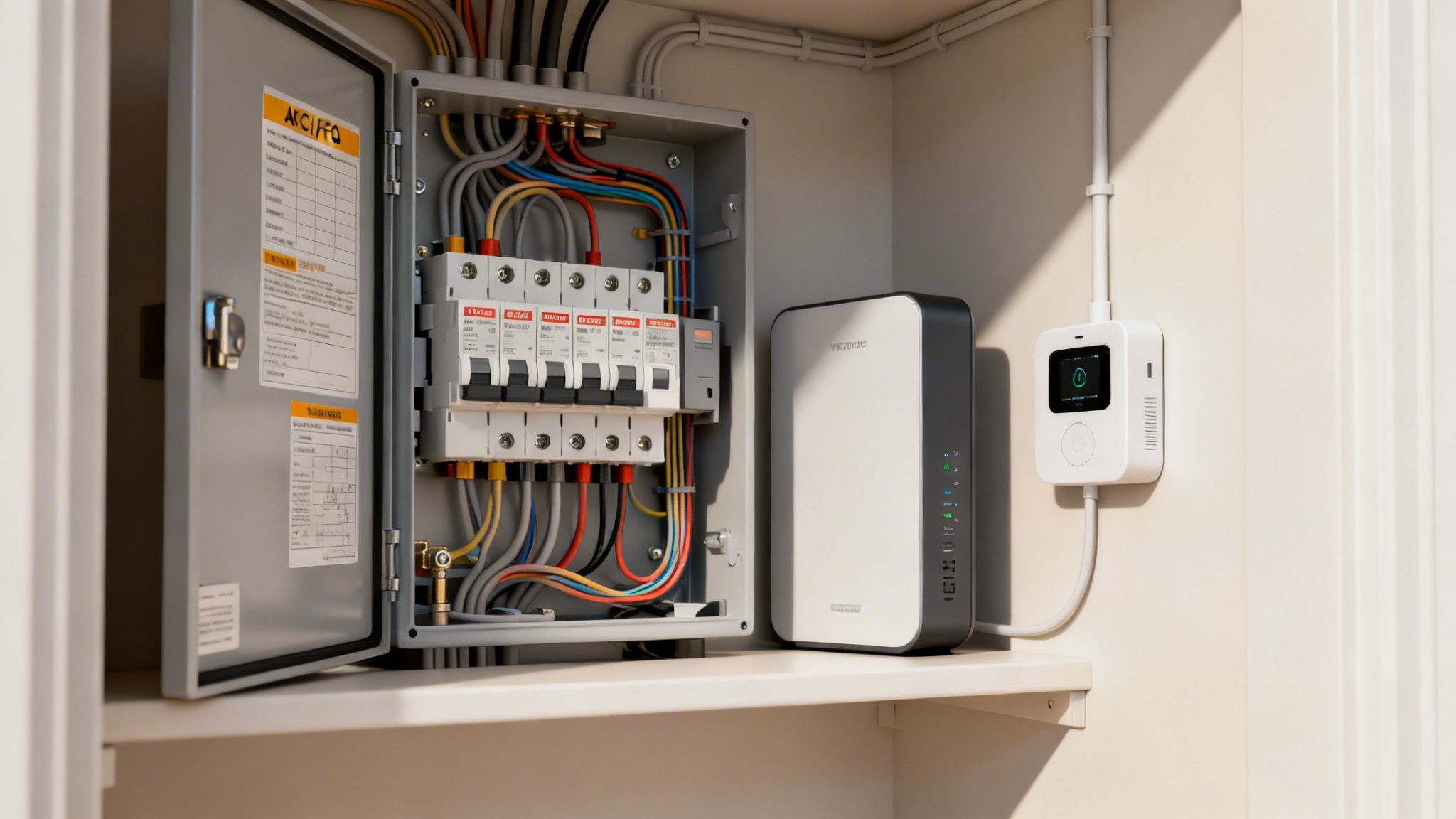
When we talk about a professional electrical wiring upgrade, most people immediately think about safety—and they're right. But that’s only half the story. It's also one of the smartest investments you can make in your home's performance and a direct line to lowering your monthly bills.
Think of old, undersized wiring as a clogged pipe. It struggles to deliver the power your home demands, creating resistance that wastes electricity as heat and forces your appliances to work overtime. That wasted effort shows up directly on your energy bill.
Switching to modern copper wiring and a correctly sized electrical panel is like giving your home a brand-new, high-flow water main. Your appliances finally get the clean, steady power they were designed for, helping them run at peak efficiency and even extending their lifespan. In short, everything just works better.
Bundling Upgrades for Maximum Savings
This is where you can get really strategic. To get the most out of your investment, we often recommend bundling the wiring upgrade with other energy-saving technologies. These devices work in perfect harmony with your new electrical system, delivering some serious long-term savings—especially here in Palm Beach County, where the AC runs nearly year-round.
One of the most effective add-ons we install is the Smartcool ECO3 device. This clever piece of tech connects directly to your air conditioning system and optimizes its compressor cycles, which is the part that uses the most electricity.
The Smartcool ECO3 intelligently manages how your AC runs, cutting its electricity consumption by up to 25% without you feeling any difference in comfort. When you combine that with a new, highly efficient electrical system, the savings really start to stack up on your FPL bill.
Future-Proofing with Smart Additions
A modern electrical system does more than just save you money today; it lays the groundwork for a smarter, more resilient, and cost-effective home tomorrow. This isn't just a local trend; it's part of a massive global shift toward smarter energy consumption.
In fact, the market for modern electrical equipment is projected to hit $2,339.86 billion by 2030. This growth is fueled by homeowners and businesses retrofitting their properties, who are reporting energy savings between 30% and 50%. You can discover more insights about these market trends and see just how significant the financial benefits are.
During your upgrade, it’s the perfect time to consider these valuable additions:
- Whole-Home Surge Protection: We install this device right at your electrical panel, where it acts as a bodyguard for every electronic device in your house. It stops damaging power surges from lightning or grid issues dead in their tracks, protecting thousands of dollars in appliances, computers, and TVs.
- Integrated Smart Home Systems: With a strong new electrical backbone, you can easily add smart lighting, thermostats, and other automated devices. These systems give you incredible control over your home's energy use, letting you schedule and automate savings right from your phone.
By treating your electrical wiring upgrade as the first step toward a fully optimized home, you unlock a whole cascade of benefits. It’s a strategic move that pays for itself over time through lower bills, longer-lasting appliances, and a property that's ready for whatever the future holds.
Frequently Asked Questions About Electrical Upgrades
It's completely normal to have more questions pop up when you're considering a project as significant as an electrical wiring upgrade. We get it. Let’s walk through some of the most common questions we hear from Palm Beach County homeowners, answered just as if we were standing in your living room.
How Long Does a Full Home Rewire Take?
This is usually the first thing people ask. For a typical single-family home, a full rewire generally takes between five and ten business days. The exact timeline really depends on your home’s size, age, and accessibility.
Our goal is always to be as efficient and non-disruptive as possible. While we often have to make small, precise cuts in the drywall to thread the new wiring, we keep the mess to an absolute minimum and make sure to clean up our workspace at the end of every single day.
Will My Power Be Off During the Entire Project?
Definitely not. You won't be left in the dark for a week. We work methodically, one circuit at a time. This means we only need to shut off power to the specific area where our electricians are actively working.
You'll still have power in the rest of the house to go about your day. We make a point to communicate our plan with you each morning, so you’ll always know which rooms will be affected and when.
Is an Electrical Wiring Upgrade a Good Investment?
Without a doubt. Think of it less as an expense and more as a powerful investment in your property's safety, value, and future. A modern, up-to-code electrical system is a massive selling point for potential buyers and can even lead to lower homeowner's insurance premiums.
A modern electrical system is no longer a luxury—it’s a core feature that savvy buyers and insurance companies look for. It demonstrates that a home is safe, well-maintained, and ready for the future.
Plus, it pays you back over time with better energy efficiency and lower electric bills. This upgrade is the essential backbone you’ll need for future projects like installing solar panels, battery backup systems, or a high-speed EV charger.
Ready to ensure your home's electrical system is safe, efficient, and up to code? The licensed professionals at Lighthouse Energy Services are available 24/7 to provide expert inspections, transparent quotes, and world-class service. Visit us online or call today to schedule your consultation.