
A whole-house generator installation averages roughly $5,157, with typical projects ranging from $1,512 to $8,803. Larger, more involved systems can move into the $15,000 to $25,000-plus range before you add unusual site work or service upgrades.
That spread is the number homeowners need to understand before they compare equipment stickers. In Palm Beach County, the generator is only one part of the job. The final bill also reflects the automatic transfer switch, gas connection, electrical work, pad, permits, inspections, placement, and the difficulty of getting everything approved and commissioned before the next storm.
National cost guidance supports the same conclusion. A 2026 whole-house generator cost benchmark places the average near $5,157, while another standby-generator installation estimate puts installed systems at $8,000 to $23,000, depending on capacity and site conditions. Those aren't contradictory numbers. They describe different project scopes.
Table of Contents
- What Generator Installation Cost Really Includes
- Equipment, Generator, and Transfer Switch Pricing
- Labor, Permits, and Site Work That Move the Price
- Real-World Price Scenarios for Palm Beach Homes
- Hurricane Standards, Code, and Permits in Palm Beach County
- Timeline, Maintenance, and Financing the Project
- When to Hire a Licensed Electrician
What Generator Installation Cost Really Includes
Most homeowners start with one question: “How much does the generator cost?” That's the wrong question. The useful question is, “What will it cost to install a safe, permitted system that powers the circuits I need?”
A complete project usually has these cost layers:
- Generator unit: The engine and enclosure provide the generating capacity.
- Automatic transfer switch: This disconnects the home from utility power before generator power reaches the wiring.
- Pad or mounting platform: The unit needs a stable, code-compliant base.
- Gas-line work: Natural gas or propane connections may require new piping, regulator work, or meter changes.
- Electrical upgrades: An older or crowded service panel may not accept the required equipment.
- Permits and inspections: Permanent installations commonly require electrical and fuel-related approvals.
- Site preparation: Crews may need to clear landscaping, improve access, or trench for underground runs.
- Labor and commissioning: Licensed trades must install, test, coordinate, and document the system.
That's why a generator with a relatively modest sticker price can become a much larger installed project. A short gas run, accessible panel, existing service capacity, and straightforward pad location keep the cost controlled. Long utility runs, panel work, difficult access, and coastal placement push it upward.
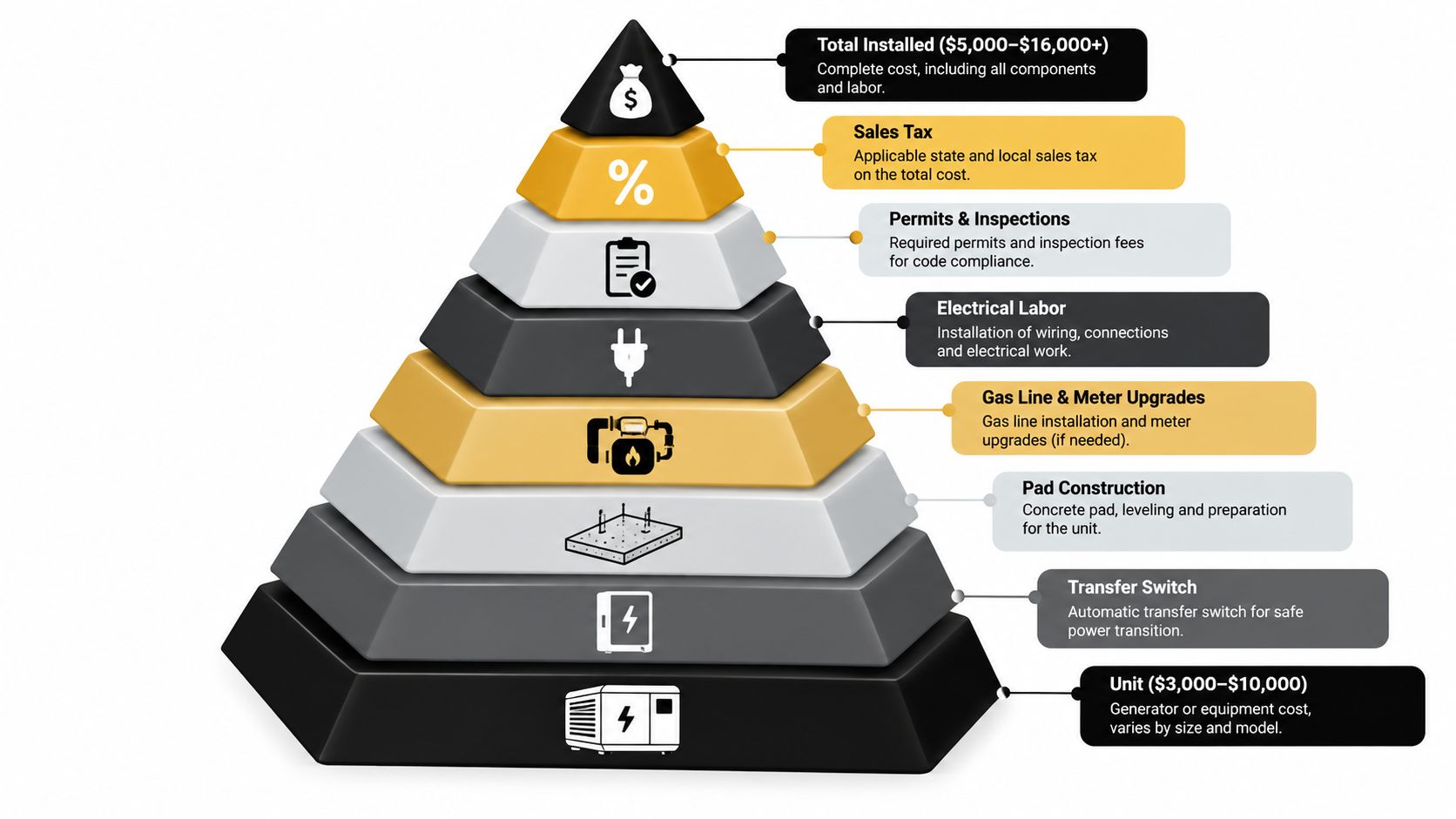
Why the quote needs line items
A bundled quote hides the decisions that affect your budget. Ask the contractor to separate the generator, transfer switch, pad, gas work, electrical work, permits, inspections, and startup. You should be able to see what's included and what triggers a change order.
The natural gas generator setup tips are also useful before the site visit, particularly if you're comparing natural gas with propane or trying to understand where the fuel connection belongs. The main takeaway is simple: generator installation cost is a system cost, not an equipment price.
A basic installation can remain near the lower end of the market. Full automatic coverage, air-conditioning support, a larger home, or complicated utility work can quickly reach five figures. Price the entire scope before you choose a model.
Equipment, Generator, and Transfer Switch Pricing
Equipment is the easiest part of the quote to compare, but it still requires a proper load calculation. Generator capacity is measured in kilowatts, and the right size depends on the circuits you want to run together, including motor-starting loads from air-conditioning equipment and pumps.
The following table uses the verified equipment ranges supplied for this guide. It's a planning framework, not a substitute for a site-specific calculation.
Generator and Transfer Switch Equipment Pricing 2026
| kW Class | Typical Home | Generator Unit | Transfer Switch | Concrete Pad |
|---|---|---|---|---|
| 8 to 12 kW | Essentials backup | $2,000 to $4,500 | $1,000 to $3,500 | $300 to $900 |
| 16 to 22 kW | Whole-home coverage in many average-sized homes | $5,500 to $12,000 | $1,000 to $3,500 | $300 to $900 |
| 30 to 48 kW | Large homes and estate-class loads | $15,000 to $30,000 | $1,000 to $3,500 | $300 to $900 |
The standby-generator cost guidance identifies 12 to 20 kW as a common whole-home range for average-sized homes, with installed prices around $5,000 to $16,200. That doesn't mean every house in Palm Beach County belongs in that band. A home with electric heat, multiple air-conditioning systems, pool equipment, or a large cooking load may need a different strategy.
The transfer switch deserves its own line
The automatic transfer switch is one of the most underestimated components. It handles the utility-to-generator changeover and prevents dangerous backfeeding. The switch also determines how the home's circuits are organized, whether the service requires additional equipment, and how much panel work the electrician must complete.
If you want a plain-language explanation before reviewing a quote, this guide to what a transfer switch does for generators will help you understand why it isn't an optional accessory.
Add-ons can include monitoring modules, a starting battery, enclosure upgrades, and a mounting solution suited to the property. Cold-weather accessories exist, but they rarely drive a Palm Beach County decision. Coastal homeowners should focus more on placement, corrosion exposure, drainage, and secure anchoring.
You can also compare a gas standby system with solar power backup systems if your goal is essentials-only coverage. The right choice depends on how much of the home must remain powered and whether automatic operation during a long outage matters more than minimizing installation work.
Labor, Permits, and Site Work That Move the Price
Similar-looking projects separate sharply at this stage. A routine installation may have an accessible service panel, a nearby gas connection, and an easy pad location. Another home may need a panel replacement, underground trenching, clearing, and coordination between electrical, gas, and concrete trades.
Verified 2026 guidance places labor alone around $1,500 to $5,000, with $2,000 to $4,000 common for many home standby systems, according to the labor and generator installation cost breakdown. Complex work can reach $5,000 to $12,000, especially when access, gas runs, panel changes, or lifting equipment complicate the job, as described in this standby installation complexity guide.
The main variables on a Palm Beach County site
| Cost Variable | Low-End | High-End | What Drives the Cost |
|---|---|---|---|
| Standard installation labor | $1,500 | $5,000 | Short runs, accessible panel, easy placement |
| Complex installation labor | $5,000 | $12,000 | Long runs, panel upgrades, tight access, crane needs |
| Permit and inspection layer | $50 | $500 | Jurisdiction, permit type, and number of inspections |
| Fuel-line work | $500 | $2,000-plus | Distance, trenching, regulator or meter requirements |
| Transfer-switch permit | $50 | $350 | Local permit requirements and inspection scope |
Those figures come from the verified generator installation cost ranges. They show why a low equipment price doesn't guarantee a low project total.
A contractor also has to check whether the existing service can carry the planned loads. If the transfer equipment won't fit or the panel lacks usable capacity, the electrical scope changes. Fuel piping needs the same attention. The contractor must confirm that the gas supply can support the generator alongside the home's other gas appliances.
Three site conditions, three different quotes
An easy lot has a short utility path, clear working space, and a suitable location near the service equipment. An average lot may need moderate gas piping, a new pad, and more involved scheduling. A complex lot can require trenching, vegetation removal, panel work, sound control, or specialized access.
Don't accept a quote that says only “installation included.” Ask whether the price includes the pad, transfer switch, fuel connection, electrical upgrades, permit fees, inspection corrections, startup, and disposal of construction debris. Those are the line items that create surprises.
Practical rule: The contractor should be able to explain every allowance before you sign, not after the crew opens the wall or excavates the yard.
Real-World Price Scenarios for Palm Beach Homes
A useful estimate starts with the home's actual backup goal. Square footage matters, but it doesn't tell the whole story. A smaller home with central air-conditioning and electric appliances may place more demand on a generator than a larger property with carefully selected essential circuits.
These scenarios are planning examples based on the verified project ranges supplied for this guide. They aren't quotes for any particular address.
| Palm Beach County scenario | Equipment and scope | Main cost pressure | Planning range |
|---|---|---|---|
| Smaller essentials backup | 14 to 18 kW air-cooled unit, natural gas, limited transfer coverage | Equipment, transfer switch, pad, basic gas and electrical work | $6,500 to $9,000 |
| Mid-size whole-home system | 20 to 22 kW unit, larger transfer equipment, propane storage | Higher capacity, fuel infrastructure, electrical integration | $14,000 to $18,500 |
| Large estate installation | Dual 26 kW units, underground fuel connection, whole-panel upgrade | Multiple units, service work, trenching, commissioning | $25,000 to $40,000-plus |
The smaller essentials installation makes sense when the priority is refrigeration, lighting, internet, security, selected outlets, and limited cooling. It won't necessarily support every major load at the same time. That trade-off can keep the project closer to the lower end while still providing automatic backup for the circuits that matter most.
The mid-size whole-home system moves higher because the homeowner wants broader coverage. Larger transfer equipment, more substantial fuel planning, and greater demand from air-conditioning and household appliances all add scope. The whole-house generator cost analysis also shows how installed totals rise when capacity and site complexity increase.
What makes an estate project different
An estate installation is not just a bigger version of a small home project. Multiple generators require coordinated controls, careful load distribution, larger conductors, and a service strategy that the contractor must verify before ordering equipment. Underground fuel work adds excavation, restoration, and inspection coordination.
For each scenario, insist on four separate quote sections:
- Equipment, including the generator and transfer equipment.
- Electrical work, including wiring and panel changes.
- Fuel and site work, including piping, trenching, pad construction, and restoration.
- Approval and startup, including permits, inspections, testing, and owner instruction.
That format lets you compare bids accurately. If one contractor includes panel work and another excludes it, the lower number isn't truly lower.
Hurricane Standards, Code, and Permits in Palm Beach County
Palm Beach County installations face conditions that national cost guides often miss. Wind exposure, coastal salt, flood concerns, neighborhood restrictions, and post-storm access all influence where the generator can go and how the contractor secures it.
The practical starting point is the permitted site plan. Your contractor needs to confirm clearances, anchoring, fuel routing, electrical connection, drainage, and access for future service. A location that looks convenient from the driveway may be wrong once doors, windows, property lines, flood conditions, and equipment clearances are considered.
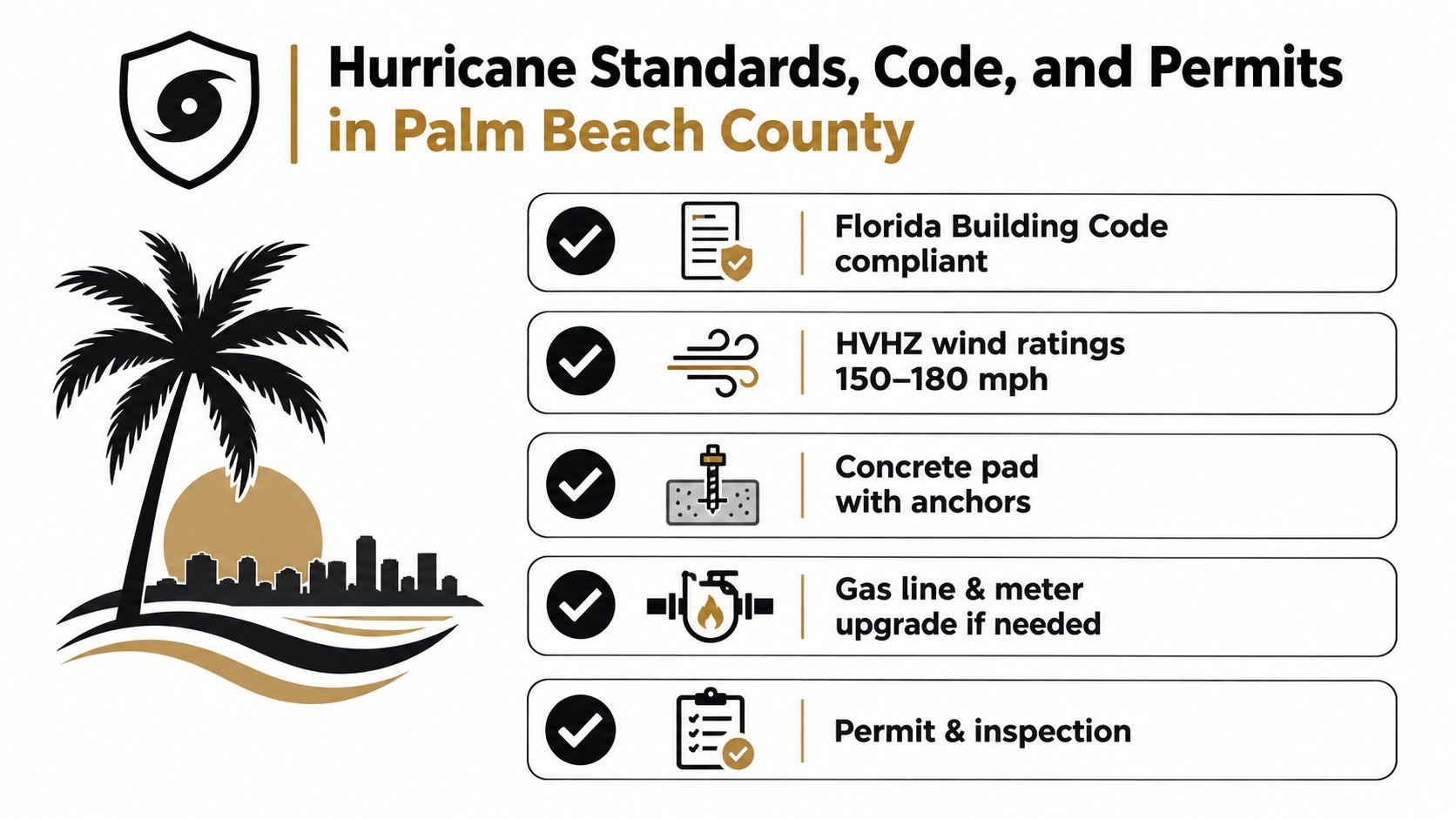
Local approval is part of the job
A permanent standby system may involve electrical permitting, plumbing or gas permitting, and, depending on the property, zoning or community review. Inspections must be completed before the system is placed into normal service. The exact requirements can vary by location, so the licensed contractor should confirm the application path before work begins.
Near the coast, salt air can accelerate corrosion on exposed metal and electrical components. The enclosure, mounting hardware, pad location, drainage, and service access all deserve attention. Flood-prone properties may require an above-ground or specially engineered installation rather than a basic slab at grade.
HOA rules can also affect the project. Communities in Boca Raton, Jupiter, Wellington, and nearby areas may regulate screening, equipment visibility, noise, setbacks, or changes to the property. Get written approval before the pad is poured. Moving a generator after installation is expensive and disruptive.
Homeowners planning broader storm protection often ask whether structural upgrades work as advertised. A practical discussion of whether hurricane-proof doors work can help put generator planning into the larger resilience picture.
Service after the storm
A reliable electrical contractor should explain what happens after a regional outage, not just what happens on installation day. That may include emergency diagnostics, generator startup troubleshooting, fuel coordination, and priority scheduling for customers with maintenance relationships.
The Florida hurricane backup generator installation guidance provides useful context for evaluating the electrical, fuel, permitting, and safety scope together. Don't treat hurricane readiness as a product purchase. Treat it as a permitted system that must remain accessible and serviceable when the weather is worst.
Timeline, Maintenance, and Financing the Project
A generator project takes longer than the time the crew spends physically mounting the unit. The work includes load calculations, site review, permit processing, delivery coordination, installation, inspections, startup, and a walkthrough of the controls.
A typical sequence looks like this:
- Planning day: The contractor surveys the site, reviews the service, and calculates the required load.
- Permitting period: Applications move through the required approval process. Verified project guidance describes permit timing as roughly two to four weeks.
- Delivery period: Equipment delivery may take one to two weeks, depending on availability and the selected system.
- Installation days: Crews install the pad and fuel connection, then complete electrical work and transfer-switch integration.
- Inspection and startup: The system is inspected, commissioned, tested, and explained to the owner.
The lifetime budget
Installation is only the first financial decision. Verified 2026 guidance places an annual service visit around $200 to $450, battery replacement around $150 to $300 every three to four years, and a major service at roughly 200 hours around $900, according to the standby-generator ownership cost guidance.
Fuel planning depends on the system and the utility arrangement. A natural-gas generator can increase the monthly gas bill by roughly $30 to $120, while propane pricing in the supplied 2026 guidance is around $3.50 to $4.50 per gallon, plus possible tank rental, as outlined in the 2026 generator cost and fuel guide. Because that source URL has already been used above, treat this as the same cited cost framework rather than a separate market claim.
Financing can make the project easier to manage, but read the terms carefully. Options may include manufacturer promotions offering 0% financing for 12 to 24 months, hurricane-hardening financing programs, and home equity lines, as described in the consumer generator buying guidance. Compare the total repayment amount, not just the monthly payment.
When to Hire a Licensed Electrician
The line is clear. Once the work touches the service panel, transfer switch, gas connection, or municipal permit, it belongs with a licensed professional.
A permanently installed standby generator connects directly to the home's electrical system and fuel supply. Improper work can create backfeed hazards, gas leaks, failed inspections, equipment damage, and insurance problems. A portable generator may require less installation, but a generator inlet, interlock, or transfer equipment still affects the service panel and should be handled through the proper permitting process.
What to request before signing
Ask every contractor for:
- License information: Request the electrical contractor's license details and confirm who will pull the permit.
- Insurance proof: Verify liability and workers' compensation coverage.
- Relevant references: Ask for recent standby-generator installations in Palm Beach County.
- A line-item proposal: Equipment, transfer switch, gas piping, pad, electrical upgrades, permits, inspections, labor, and startup should be identifiable.
- Workmanship coverage: Get the workmanship warranty in writing.
- Manufacturer registration: Confirm who will register the generator and explain the equipment warranty.
- Commissioning: Require a startup visit, load test, and owner walkthrough.
The standby generator installer selection guide gives homeowners a useful checklist for comparing qualifications and scope. Use it before you collect bids, not after you receive three confusing totals.
Be cautious with quotes that omit gas-line sizing, transfer-switch work, panel compatibility, or permit responsibility. Pressure to skip permits is a serious warning sign. So is a price that looks attractive only because the contractor hasn't inspected the service, fuel route, pad location, or access conditions.
Your best protection is a walkthrough before the estimate. The electrician should see the panel, meter, proposed generator location, fuel path, drainage, landscaping, and any HOA constraints. A transparent quote may not be the cheapest number on the page, but it gives you a defensible budget and a system that can be serviced when Palm Beach County needs it most.
Lighthouse Energy Services evaluates generator capacity, transfer-switch integration, fuel connections, permitting, inspections, and site conditions before providing a detailed estimate. If you want a no-surprises review for your Palm Beach County home, visit Lighthouse Energy Services to request a professional assessment and discuss the right backup-power scope.