
A storm is approaching, and a Palm Beach County homeowner wants backup power in place before the next outage. The generator has been selected, the deposit has been paid, and the promised installation date sounds reassuring. Then someone discovers that the gas meter can't supply the unit, the transfer equipment doesn't match the existing service, or the permit application is missing information.
That's when the project becomes visible. A standby generator isn't just a box delivered to a concrete pad. It's a coordinated electrical, fuel, permitting, utility, inspection, and commissioning project. The right standby generator installers manage that chain from the first load calculation through final approval, rather than leaving the homeowner to coordinate separate trades after the sale.
Table of Contents
- Why the Installer's Role Matters More Than the Generator
- Site Assessment, Load Calculation, and Right-Sizing the System
- Fuel Choices and What They Change About the Project
- Permits, Inspections, and Utility Coordination in Palm Beach County
- Cost Breakdown, Financing, and Where the Money Goes
- Vetting Standby Generator Installers and Asking the Right Questions
- Installation Timeline, Commissioning, and Ongoing Service Plans
Why the Installer's Role Matters More Than the Generator
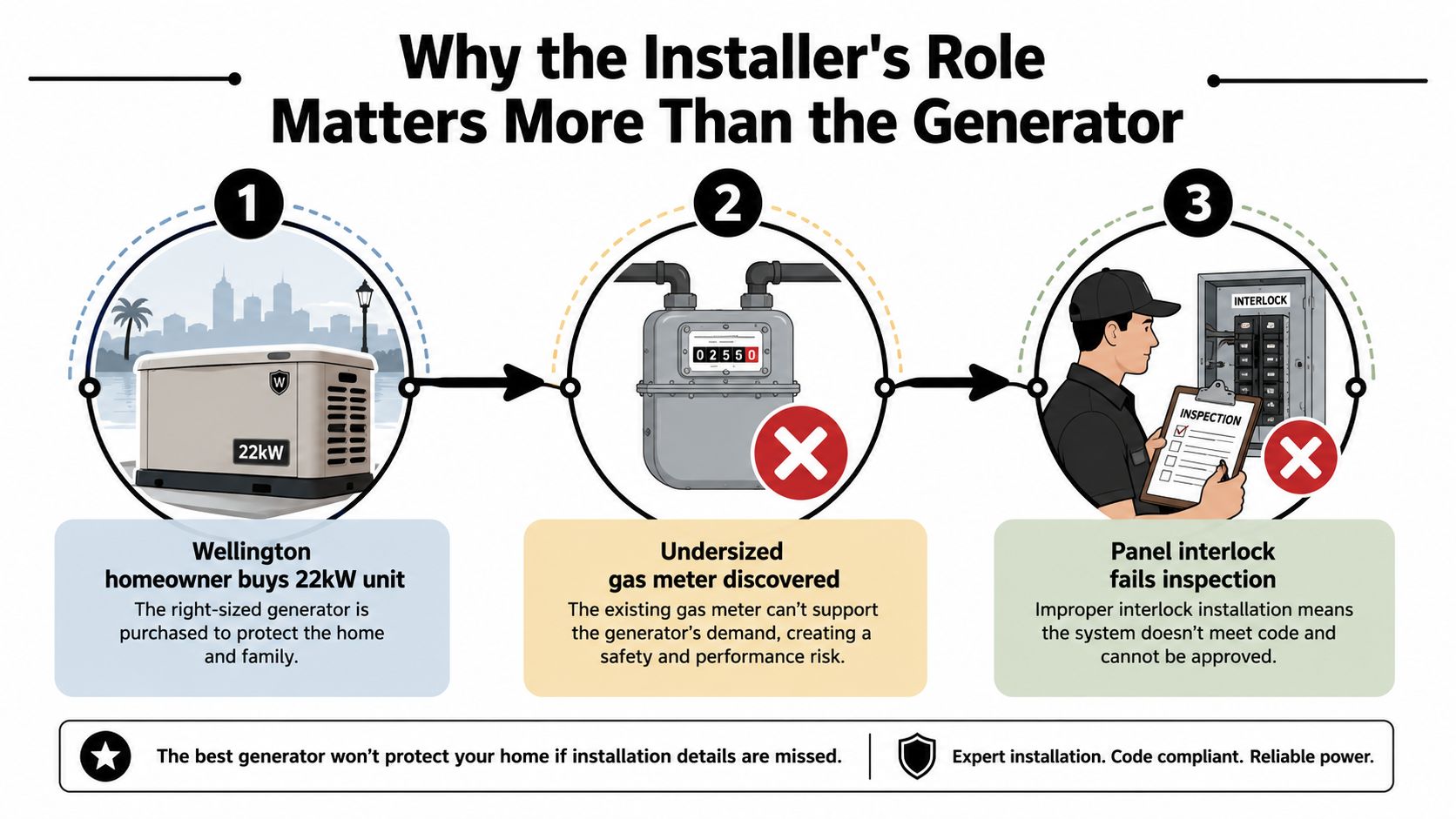
A Wellington homeowner once bought a 22 kW standby generator shortly before hurricane season. The unit itself wasn't the problem. The gas meter was undersized, the proposed panel interlock failed inspection, and the installer stopped returning calls when the project needed corrections.
That scenario is more common in structure than most buyers realize. The equipment can carry a manufacturer warranty, but a warranty won't fix a missing permit, reschedule a utility visit, correct an unsuitable gas run, or make an inspector approve an installation that doesn't match the plans. Those failures remain on the homeowner's timeline, often when local contractors are already overwhelmed.
The six handoffs behind a working system
A properly managed project usually includes these connected responsibilities:
- Load study: Someone identifies which appliances and circuits must operate during an outage and calculates the electrical demand.
- Gas sizing: A qualified professional verifies fuel type, pressure, meter capacity, pipe sizing, and routing.
- Electrical installation: The electrician matches the generator, service equipment, conductors, grounding, bonding, and transfer method.
- Permits: The responsible contractor prepares and submits the required building, electrical, and fuel-related applications.
- Utility notice and coordination: Service or meter changes must be scheduled with the relevant utility or fuel provider.
- Factory-authorized startup: The generator is commissioned, tested, documented, and registered correctly.
The installer is the only party positioned to see how those pieces affect one another. A gas fitter may size a line correctly without knowing that the proposed generator location creates a setback problem. An electrician may install transfer equipment without knowing that the utility requires a service modification. A permit runner may submit drawings that don't reflect the final field conditions.
Practical rule: Choose the contractor who can name the owner of every handoff, not just the person who can quote the generator.
Generator brands matter, but the installation process usually determines whether the system operates properly when the utility supply fails. In Palm Beach County, that means evaluating the service, site, fuel arrangement, local approval path, and final testing before deciding that one equipment label is the whole purchasing decision.
The category itself is substantial and expanding. One industry estimate values the global standby generator sets market at $31.9 billion in 2026, with a projected 8.7% compound annual growth rate reaching $67.4 billion by 2035, while another estimates the global standby generator market at $28.3 billion in 2025 and $47.5 billion by 2034. These projections, summarized with their source links in standby generator market statistics, show why homeowners have many equipment choices. They don't remove the need for disciplined local project management.
Site Assessment, Load Calculation, and Right-Sizing the System
The first useful site visit is more than a salesperson measuring a wall. A competent installer examines the electrical service, fuel infrastructure, proposed generator location, and the loads that matter during an outage.
What the installer should verify
Start at the service equipment. The installer should document the service rating, panel amperage, available fault current where required, disconnect arrangement, neutral configuration, and the physical space available for transfer equipment. The assessment should also identify the location and condition of the gas line, available pressure, meter capacity, and the route from the fuel source to the generator.
The outside placement matters just as much. The installer should review property lines, openings, combustion air, exhaust discharge, access for service, drainage, flood-related elevation concerns, and the practical clearance needed to work safely. A location that looks convenient beside a wall can become expensive if it fails a setback requirement or leaves no room to remove a panel.
A load calculation should reflect the equipment the homeowner expects to use. Air-conditioning compressors, well pumps, refrigeration, pool equipment, medical equipment, water heaters, and kitchen loads can behave very differently from simple resistive appliances. Square footage alone can't tell an installer whether a motor will start cleanly or whether two large loads can operate at the same time.
Sizing and transfer equipment
The practical sequence is to calculate the emergency load first, then size the generator at roughly 20% to 25% above peak load, as outlined in the generator sizing guide. That margin helps account for motor-starting demand and reasonable future changes, such as an added electric vehicle charger or pool heater. It isn't a substitute for engineering judgment, and it shouldn't be used to justify an oversized unit without checking the fuel and electrical systems.
The transfer switch decision comes next. A service-rated whole-house arrangement can transfer the entire service when the equipment and service design support it. An essential-circuits sub-panel limits backup power to selected loads and can reduce the scope of panel work, but it requires a clear circuit list and careful separation of emergency and non-emergency loads.
That choice affects the permit drawings, conductor sizing, disconnect arrangement, installation labor, and final inspection. Homeowners who want a clearer explanation of the calculation process can review this guide to sizing a generator for your home.
Right-Sizing Reference for Palm Beach Homes
| Property Type | Square Footage | Recommended Unit | Notes |
|---|---|---|---|
| Compact residence | Not sufficient by itself | Based on calculated emergency load | Include refrigeration, air conditioning, pumps, and selected circuits |
| Mid-size residence | Not sufficient by itself | Based on calculated emergency load plus starting margin | Confirm service capacity and transfer-switch arrangement |
| Large residence | Not sufficient by itself | Based on calculated emergency load, service limits, and future additions | Review multiple compressors, pool equipment, and panel modifications |
Square footage is a planning description, not a sizing method. The installer should show the loads included, the assumptions used, and the reason the proposed unit can start and carry them.
Fuel Choices and What They Change About the Project
Fuel selection changes the project team as much as it changes the generator specification. Natural gas, propane, and diesel each create different coordination requirements, placement constraints, and service responsibilities.
Natural gas
A natural-gas installation depends on the available utility service, meter capacity, pressure, and pipe route. The installer should coordinate with the local gas utility before equipment placement is finalized, especially if the proposed generator requires a meter upgrade or a service change. A gas fitter must verify the piping design, pressure testing, shutoff arrangement, and connection details.
Natural gas can be convenient where the service is already suitable, but it can create a schedule problem if the utility must approve and complete work before the generator can pass inspection. The unit may be physically installed while still unable to operate legally or reliably.
Propane LP
Propane is often the practical choice in areas where municipal gas isn't available, including many properties west of the Turnpike. It requires a tank decision, a suitable location, delivery access, regulator coordination, and an agreement with a fuel supplier.
The installer should coordinate the tank pad and piping route with the electrical and site plans. A tank that arrives after the generator pad is poured, or a pipe route that conflicts with landscaping or drainage, can create avoidable rework. The supplier also needs accurate information about expected demand and delivery access.
Diesel
Diesel is less common for residences and more likely on larger commercial, industrial, or institutional sites. Those projects may require on-site fuel storage, refueling logistics, spill controls, and specialized maintenance such as fuel polishing.
That brings additional vendors into the schedule. A commercial installer may need to coordinate an electrical contractor, fuel contractor, tank provider, environmental consultant, commissioning technician, and facility representative. The generator contractor should remain the sequencing point so one trade doesn't complete work that another trade later has to remove.
Fuel isn't just an operating expense. It determines who must approve, install, inspect, deliver, and maintain part of the system.
The written proposal should identify the fuel assumptions. Ask whether meter or tank work is included, who pays the supplier or utility fees, who performs pressure testing, and what happens if the existing service can't support the selected generator. A low equipment price can lose its appeal quickly when the fuel scope is left vague.
Permits, Inspections, and Utility Coordination in Palm Beach County
Permanent standby generators generally require more than equipment delivery. The local building department may require building and electrical permits, while natural-gas or propane piping can trigger a separate fuel-related permit. The exact path depends on the municipality, property type, project scope, and local review requirements.
Who owns each approval
The installer should prepare the site plan, equipment specifications, electrical riser or one-line diagram, transfer-switch information, grounding details, and fuel layout. The homeowner still needs to provide accurate property information and disclose easements, HOA restrictions, flood-related conditions, and any prior unpermitted work.
Setbacks from property lines, windows, doors, and other openings must be addressed during design, not after the generator is on the pad. Coastal and low-lying Palm Beach properties may also require careful attention to flood-zone placement and elevation requirements. The approved plan should match the field installation.
The electrical contractor handles the electrical permit and installation. The qualified gas professional handles fuel piping and related work. The generator installer should coordinate both scopes and make sure the permit applications don't contradict one another.
Utility coordination and inspections
Electrical service changes may require coordination with the electric utility. Natural-gas projects may require the gas utility to review service capacity, schedule a meter change, or approve the final connection. Those appointments can control the schedule even when the physical installation is ready.
Common inspection problems include:
- Improper clearances: The generator, exhaust, or fuel piping doesn't match approved placement.
- Missing bonding: Grounding and bonding connections aren't installed or documented correctly.
- Unmarked equipment: Disconnects, emergency circuits, or transfer equipment lack required labels.
- Uncompleted fuel testing: Gas lines haven't been properly pressurized, tested, or made available for inspection.
- Plan deviations: Field conditions differ from the submitted drawings.
The Florida hurricane backup generator installation guide can help homeowners understand why site, fuel, and approval details need to be addressed together.
A clean closeout packet should contain approved permits, inspection approvals, startup documentation, warranty registration, operating instructions, and a service contact. A factory startup witness isn't the same as a final building inspection. The manufacturer representative confirms equipment operation and setup, while the local inspector confirms compliance with the approved construction and applicable codes.
The regulatory environment has become more formal over time. California's generator-house ventilation and heating rule, Title 8 Section 4807, traces amendments to 1976 and 1987, and the National Electrical Code added a listing requirement for stationary generators rated 600 volts and less in the 2020 code cycle, as summarized in standby generator regulatory information. Local Palm Beach requirements still control the project, but these milestones illustrate why professional documentation matters.
Cost Breakdown, Financing, and Where the Money Goes
A standby generator quote should read like a construction scope, not a single equipment number. The generator is only one line item. Transfer equipment, electrical labor, fuel work, permits, startup, site preparation, and restoration can determine the final price.
A practical comparison
The table below is a scope comparison, not a price schedule. Exact costs vary with service condition, fuel distance, permit jurisdiction, access, drainage, landscaping, and the amount of panel work required.
| Line Item | 16 kW System | 20 kW System | 26 kW System |
|---|---|---|---|
| Generator equipment | Smaller capacity, subject to load study | Mid-range capacity, subject to load study | Larger capacity, subject to load study |
| Automatic transfer switch | Matched to service and emergency loads | Matched to service and emergency loads | May require broader service review |
| Gas plumbing or propane tank pad | Depends on route and fuel source | Depends on route, pressure, and fuel source | May require greater fuel-service capacity |
| Electrical rough-in | Conductors, disconnects, grounding, and panel work | Same categories, with service compatibility verified | Potentially broader conductor and service requirements |
| Concrete pad | Site-specific | Site-specific | Site-specific, with access and placement reviewed |
| Permits | Building, electrical, and applicable fuel permits | Same permit categories as required | Same permit categories, possibly with greater review scope |
| Factory startup | Schedule and document authorized commissioning | Schedule and document authorized commissioning | Schedule and document authorized commissioning |
| Site work and restoration | Excavation, access, drainage, and landscaping as needed | Same categories | May involve more substantial access or site preparation |
A long fuel run can increase labor and materials. An older home may need panel modifications, grounding corrections, service work, or a new disconnect arrangement before the generator can be connected. Switching from natural gas to propane adds tank placement, delivery access, and supplier arrangements rather than just changing a line on the proposal.
Financing needs a scope-first review
Homeowners may encounter manufacturer promotional loans, contractor financing, or home equity lines. Each option has different implications for interest, repayment period, approval requirements, and whether the borrowing is secured against the property. A property manager or business owner may also need to distinguish construction-related borrowing from equipment financing.
For a useful explanation of that distinction, review this construction loans and equipment financing guide before accepting a financing structure. The important question is whether the financing matches the work being funded, including site construction and electrical improvements, rather than only the generator itself.
Rebate or discount programs may apply at particular times, but eligibility changes by program and jurisdiction. Don't treat an advertised incentive as guaranteed until the responsible agency or contractor confirms the current requirements in writing. For older Palm Beach homes, keeping a 10% to 15% contingency reserve is a realistic planning approach for unexpected panel, access, drainage, or site corrections. The whole-house generator installation cost guide offers additional context for separating equipment costs from installation scope.
Vetting Standby Generator Installers and Asking the Right Questions
The best interview question isn't “Which generator do you sell?” It's “Who owns the project when another party has to approve, change, or inspect part of it?”
Confirm the contractor's authority
Ask to see the contractor's Florida electrical license information and confirm that the license covers the work being proposed. If fuel piping is included, verify that the appropriate gas-qualified professional is assigned and that the proposal identifies who is responsible for that portion.
Also confirm:
- Manufacturer authorization: Ask who performs factory-authorized startup and whether that person is included in the schedule.
- Insurance coverage: Request current workers' compensation and general liability certificates.
- Local experience: Ask for references from projects permitted through the same building department, not only installations in another county.
- Service capability: Find out who handles warranty calls, emergency troubleshooting, and routine maintenance after commissioning.
A contractor who can't explain the permit path may be planning to make the homeowner coordinate it. That can work only if the homeowner has the time and technical knowledge to manage electrical, fuel, utility, and inspection dependencies.
Use questions that expose missing scope
Ask these questions before comparing proposals:
- Who performs and signs the load calculation?
- Who checks the existing gas meter capacity and fuel pressure?
- Who pulls the electrical and fuel permits?
- Who schedules utility coordination and pays any related fees?
- Is the transfer switch, disconnect, grounding, labeling, and panel work included?
- Who books the factory startup?
- Does the quoted price include the final inspection and correction visits?
- What happens if the approved location fails inspection?
- Which party owns delays caused by missing information or an incomplete application?
- What service response is available after a storm?
Read the contract for ownership
Red flags include a quote issued without a site visit, pressure to skip a load study, unexplained cash discounts, a vague equipment-only scope, and a promise to “handle permits” without naming the permit holder. A contractor who avoids written answers before the deposit usually won't become more organized afterward.
The contract should state the scope, exclusions, permit responsibility, utility coordination duties, milestone dates, payment schedule, startup obligations, inspection responsibility, and warranty terms for equipment and labor. Tie a meaningful payment milestone to successful inspection and documented commissioning, rather than paying the entire balance when the generator is placed on the pad.
The residential distribution channel is heavily installer-led. One market estimate reported that the dealer and installer channel held 68% of home standby genset revenue in 2025, a pattern discussed in the home standby gensets market report and consistent with the technical demands of permanent installations. That makes installer diligence a central purchasing decision, not an administrative detail.
Installation Timeline, Commissioning, and Ongoing Service Plans
A dependable project schedule starts before the generator arrives. The installer should identify the site conditions, complete the load review, confirm fuel availability, prepare permit documents, submit applications, coordinate the utility or fuel provider, and order equipment. The physical work may take one to two days, but the full project commonly takes four to twelve weeks when permits and equipment lead times are included, according to this generator installer questions guide.
Use milestones, not a single promised date
A credible schedule names the person responsible for each stage:
- Design: Site survey, load calculation, transfer-switch selection, and final equipment specification.
- Approvals: Permit submission, review responses, utility coordination, and fuel-provider scheduling.
- Construction: Pad or foundation work, generator placement, electrical connections, fuel installation, grounding, and labeling.
- Inspection: Rough or fuel inspections where required, final electrical inspection, corrections, and sign-off.
- Commissioning: Factory-authorized startup, transfer testing, operating review, warranty registration, and closeout documents.
Weather, access, equipment availability, utility scheduling, and permit review can shift those milestones. The installer should tell you what has changed, why it changed, and which party controls the next action.
Commissioning must prove performance
Pressing the control to “auto” isn't a complete startup. The technician should verify fuel pressure, engine operation, controller alerts, battery condition, transfer-switch function, emergency circuit operation, and the system's response to a simulated utility outage. The homeowner or property manager should receive a clear explanation of which loads are backed up and which are intentionally excluded.
Before hurricane season, arrange a documented exercise and battery check, then follow the manufacturer's specified maintenance interval. Keep the commissioning report, inspection approvals, warranty registration, operating instructions, and service records with the property documents.
Compare service plans carefully
A maintenance contract may include remote monitoring, emergency response, software updates, oil and filter changes, coolant checks, battery service, and priority equipment support after a major storm. Don't assume those items are included. Review:
- Response terms: Confirm coverage hours and expected response time.
- Technician qualifications: Ask who is authorized to service the equipment.
- Parts and labor: Identify what the plan excludes and what carries a separate charge.
- Renewal language: Check automatic renewal, cancellation, and price-adjustment terms.
- Commercial authority: Establish who can approve repairs for an association, facility, or managed property.
ServiceTitan's 2025 contractor analysis found installed generator demand was 17.8% lower than the unusual 2024 peak, while remaining near 2022 and 2023 levels, as reported in its installed generator demand analysis. That pattern reinforces a practical point for installers and buyers: demand can normalize while permitting, utility coordination, and qualified service capacity remain critical constraints. Broader market estimates still project growth from $8.89 billion in 2025 to $13.26 billion by 2031, according to the same source's referenced market context, so a maintenance relationship matters long after the purchase decision.
Lighthouse Energy Services handles residential and commercial standby generator projects in Palm Beach County, including load evaluation, transfer-switch installation, permitting coordination, system testing, and ongoing electrical support. If you want one contractor to review the coordination chain before work begins, visit Lighthouse Energy Services to request a project assessment.