
In Palm Beach County, generator shopping usually starts the same way. A storm track turns south, the news starts naming neighborhoods, and people remember exactly how fast the house heats up when the power drops. The air handler goes silent. The refrigerator becomes a countdown clock. Wi-Fi disappears, phones start draining, and the question changes from “Should we get a generator?” to “What size do we need?”
That second question matters more than most homeowners expect. A generator that’s too small won’t reliably carry the loads you care about when the weather gets ugly. A generator that’s too large costs more to buy, more to install, and more to run. In South Florida, where air conditioning is often the deciding load, bad sizing shows up quickly.
The right answer isn’t based on guesswork, your neighbor’s setup, or the amp rating on your main panel. It comes from knowing what your house demands during an outage, especially in the middle of hurricane season when AC loads, refrigeration, lighting, pumps, and communications all matter at once.
Surviving the Storm with Uninterrupted Power
A summer outage in Palm Beach County isn’t just inconvenient. It gets uncomfortable fast. When the grid drops in the middle of a storm, the priority isn't generator specs. It's keeping food cold, keeping one part of the house livable, and keeping the lights on long enough to make good decisions.
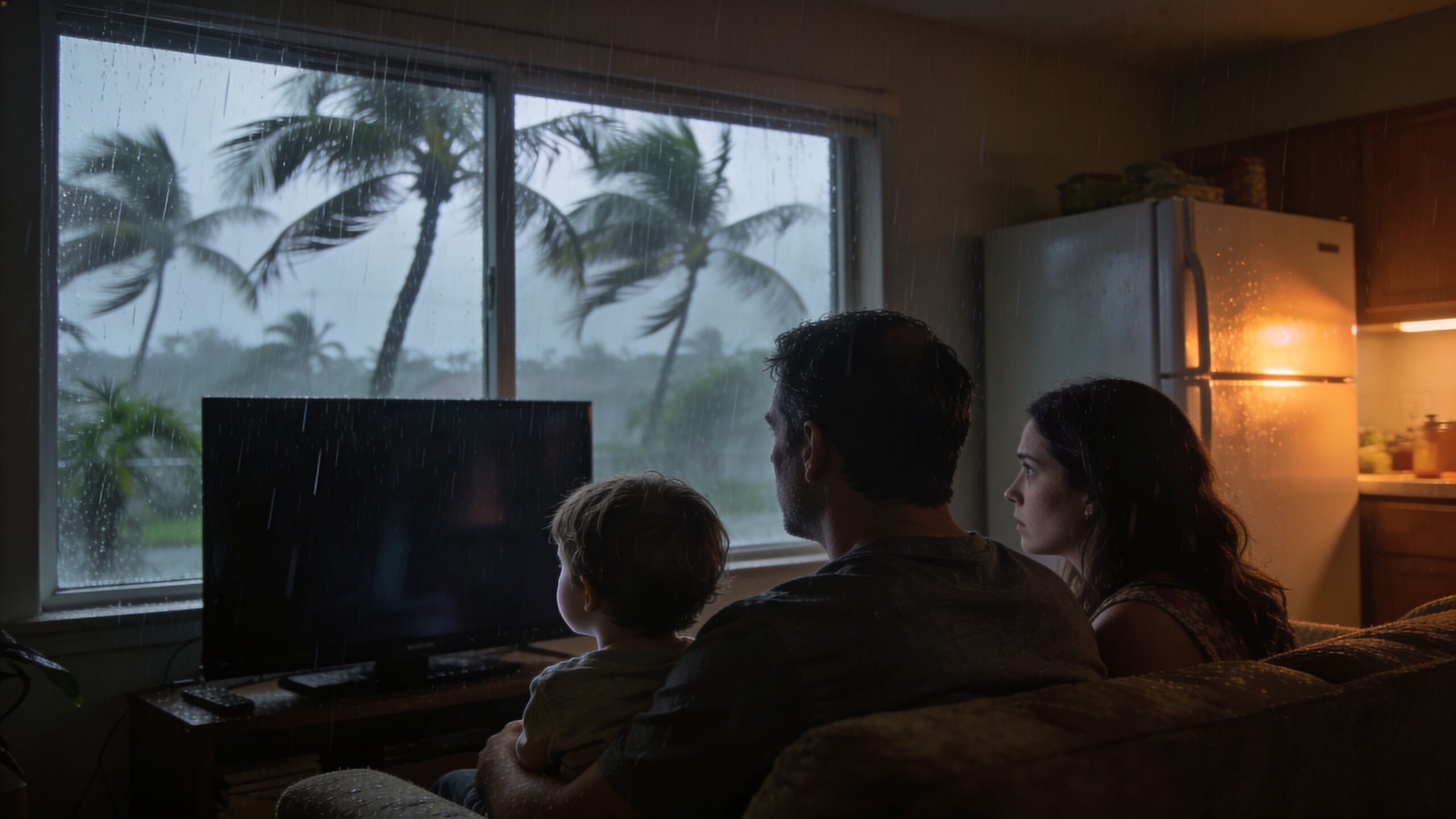
I’ve seen the same pattern over and over in coastal homes and inland neighborhoods alike. The first few minutes feel manageable. Then the refrigerator starts warming, the house loses airflow, and everyone realizes how many daily essentials depend on reliable power. If you have a well pump, gate system, medical equipment, internet-dependent work, or a home office, the outage becomes more than a comfort issue.
A properly sized generator changes that experience. Instead of scrambling for extension cords and deciding what to unplug next, the house keeps operating according to a plan. That’s the key point. Sizing is what determines whether backup power feels dependable or frustrating.
A generator isn’t “good” because it’s big. It’s good when it matches the real load of the house.
In Palm Beach County, that match has to account for Florida realities. Air conditioning often drives the sizing decision. So do storm-season priorities like refrigeration, lighting, garage access, pumps, and communications. Homes near the coast may also have extra equipment that owners forget to count until the lights go out, such as lift stations, security systems, dehumidification equipment, or outdoor circuits that support gates and exterior lighting.
What homeowners usually get wrong
The most common mistake is starting with the generator model instead of the load list. People shop by brand, by what a neighbor installed, or by what looks “whole-house” in a brochure. That’s backwards.
The better approach is simple:
- Start with what must stay on during an outage.
- Separate must-have loads from nice-to-have loads.
- Account for motor starting loads, especially AC and pumps.
- Choose the generator after the math is done.
That’s how to size a generator for your home without paying for the wrong machine or ending up with one that trips when the compressor kicks on.
First Define Your Household Power Priorities
After a hurricane, the sizing question gets real fast. The house is hot, the fridge is full, the phone battery is dropping, and someone in the family wants to know whether the air conditioning will stay on. That is the moment to decide what the generator is intended to carry, not after the equipment is already ordered.
In Palm Beach County, “backup power” can mean very different things from one home to the next. A waterfront property with gate motors, security equipment, dehumidification, and multiple condensers has a different outage plan than a smaller inland home that just needs refrigeration, lights, internet, and one cooling path. General size ranges can help frame the conversation. Garber Electric’s whole-house generator sizing guidance notes that many homes fall into the mid-range residential generator sizes, but those estimates only help if the load list is accurate.
Start by ranking circuits and equipment in the order you would fight to keep them on during a three-day outage.
Build your outage plan in tiers
I advise Palm Beach County homeowners to sort loads into three levels. It keeps the conversation honest. It also prevents a common mistake, which is calling everything “necessary” until the generator size, fuel use, and installation cost jump higher than expected.
Tier one means safety and day-one survival
This list usually includes the loads that protect food, support health, and keep the house functional enough to ride out the outage:
- Refrigerator and freezer
- Basic interior lighting in key rooms
- Router, modem, and charging outlets
- Garage door opener or motorized gate, if access matters
- Medical equipment
- Security system or selected cameras
- One method of hot-water or sanitation support, if the home depends on electric equipment for it
These are the circuits that turn a miserable outage into a manageable one.
Tier two means Florida habitability
Generator sizing for Palm Beach County homes differs from generic advice written for milder climates. In hurricane season, cooling is often the deciding load. If the house cannot hold a safe indoor temperature, homeowners quickly regret sizing only for lights and a refrigerator.
Typical tier-two loads include:
- One central AC system, or one clearly defined cooling zone
- Air handler
- Well pump, irrigation booster used for basic water needs, or pressure pump
- Microwave
- Kitchen receptacles for limited cooking
- Drainage or water-management equipment where the property depends on it
Be specific here. “We want AC” is not enough. Decide whether that means one condenser, one mini-split zone, bedroom cooling at night, or full-house conditioning. That single decision can change the project from a modest essential-load setup to a much larger standby system.
Tier three means comfort and convenience
These loads are optional for many homes, but they still matter if your goal is normal living after a storm:
- Pool equipment
- Outdoor lighting
- Second AC system
- Electric range or oven
- Laundry equipment
- Water heater
- Entertainment circuits
- EV charging
Budgets are often challenged. An electric cooking load, a second condenser, and pool equipment can push the generator into the next size class quickly. That affects fuel consumption, pad space, transfer equipment, and permitting details.
Walk the house, then walk the panel
Do not build the list from memory. Walk room by room first. Then open the panel with a qualified electrician and match the actual circuits to the way your family lives during an outage.
That second step matters in older Palm Beach County homes. Labels are often vague, remodeled spaces may be tied into unexpected circuits, and equipment added over the years can be easy to miss. I see this with booster pumps, detached structures, outdoor kitchens, security gear, and dock or gate equipment.
Use a simple working list like this:
| Priority level | What belongs here | Palm Beach County example |
|---|---|---|
| Must stay on | Safety, food protection, communications, minimum cooling | Fridge, lights, router, one bedroom or main living cooling path |
| Should stay on | Basic comfort and operations | Microwave, pump, selected kitchen circuits, garage access |
| Can stay off | Convenience and luxury loads | Pool heater, second AC, decorative lighting, EV charging |
If your home uses natural gas or propane for some major appliances, note that too. Fuel type changes the electrical load profile. It is the same reason understanding utility use matters in other energy calculations, including converting cubic meters to kilowatt hours. The appliance itself may look large, but the electric demand may be modest if the heating source is gas.
Square footage is a shortcut, not a sizing method
Home size helps set expectations, but it does not answer the essential question. Two houses with the same square footage can land in very different generator sizes if one has gas appliances and a single cooling zone, while the other has electric cooking, multiple AC systems, pumps, and more accessory loads.
That is why Lighthouse Energy Services starts with priorities, then verifies the actual circuits and equipment on site. In Palm Beach County, the right generator is the one that supports your storm plan safely, passes code, and carries the loads you need without overspending on capacity you will never use.
Calculating Your Total Wattage Requirements
A generator that looks big enough on paper can still trip offline the first time the AC compressor and the well pump try to start in the same minute. That is the mistake I see most often in Palm Beach County homes before hurricane season.
Start with the loads you expect to run together, not every appliance in the house. Then account for the startup hit from motor-driven equipment. In our area, air conditioning usually controls the final generator size more than lighting, TVs, or kitchen convenience loads.
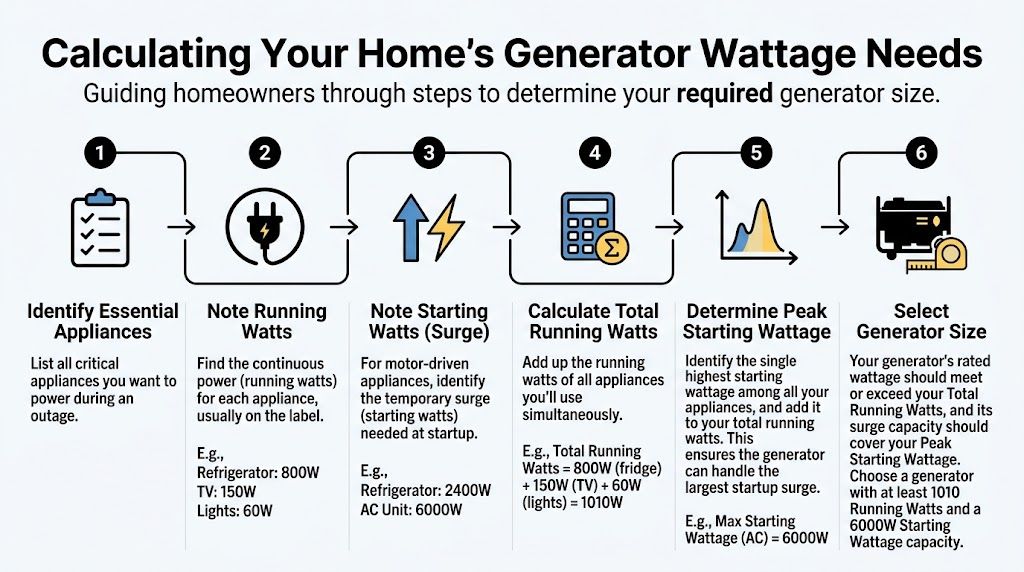
The basic sizing method is straightforward. Add the running watts for the circuits you want energized at the same time, identify the largest starting surge, and leave reserve capacity so the generator is not working at its limit in August heat.
Running watts versus starting watts
Running watts are the power an appliance uses after it is up and operating. Starting watts are the brief surge needed to get a motor turning. Refrigerators, pumps, condensers, air handlers, and central AC systems all need attention here.
Homeowners often get surprised.
A refrigerator may run modestly once it is going, but the startup demand is higher. The same goes for a pool pump or well pump. Central air is usually the biggest issue in Palm Beach County, especially in homes that need at least one cooling zone during an outage for safety and basic livability.
Use this simple formula
For a practical estimate, use this sequence:
- Add the running watts for the loads you expect to operate at the same time.
- Find the single largest startup surge among the motor loads.
- Add reserve capacity so the unit is not sized right to the edge.
That gives you a working target. From there, an electrician can match it to an actual generator and verify whether load management, soft starts, or circuit prioritization would reduce the size you need.
Common appliance wattage estimates
Use these figures as starting points only. Always verify the appliance nameplate, the breaker size, and the manufacturer data when available.
| Appliance | Estimated Running Watts | Estimated Starting Watts |
|---|---|---|
| Refrigerator or freezer | 600 to 800 | Higher startup surge, often motor-driven |
| Microwave | 1,200 | Typically no major motor surge like AC |
| Electric range element | 2,500 per element | Varies by model |
| Sump pump | 1,500 | Motor-driven startup surge |
| Outdoor lighting | 500 to 1,000 | Minimal surge compared with motors |
| Well pump | 1,000 run | 1 to 2 kW start |
| HVAC system | Varies | Can be a major surge load |
| HVAC in Florida example | 4 to 5 kW run | Up to 15 kW peak start |
Those HVAC numbers matter here. A Palm Beach County home with one central AC system can size very differently from a similar home with mini-splits, gas appliances, or no well pump.
A Palm Beach County example
Take a home that wants backup power for:
- Refrigerator
- Selected lighting
- Microwave
- Well pump
- One central AC system
The running load may look manageable at first glance. The actual problem often shows up when the AC compressor starts, or when the pump kicks on during that same window. If the generator cannot carry that startup event cleanly, lights dip, breakers trip, and sensitive equipment sees rough power.
That is why generator sizing should be based on actual operating conditions in your house, not on square footage and not on the model number stamped on the equipment.
Leave room for heat, age, and real use
Reserve capacity matters in South Florida. Equipment runs harder in high heat, older motors can draw more at startup, and homeowners almost always find one more circuit they want during a multiday outage.
A tightly sized generator may work in mild weather and still struggle during storm season. The better approach is to build in margin and decide in advance whether you want to support one AC zone, the whole house with managed loads, or only the circuits that protect health and food.
If you already know you want an automatic system, it helps to review how a standby generator installation for Palm Beach County homes is typically planned around real load calculations, transfer equipment, and local permitting.
Mixed fuel homes need a cleaner load check
Do not assume a large appliance is a large electrical load. If your water heater, range, dryer, or furnace uses natural gas or propane, the electrical demand may be much lower than the appliance size suggests. In those homes, the actual load of the house can be very different from what a quick visual estimate implies.
For homeowners comparing utility usage across electric and gas equipment, this guide to converting cubic meters to kilowatt hours can help make the units easier to compare. It does not replace a load calculation, but it helps when fuel usage and electrical usage are getting mixed together.
What usually works on real projects
- Reading the equipment nameplates instead of guessing
- Counting only concurrent loads
- Identifying the worst startup event
- Allowing reserve capacity for hot-weather operation
- Checking whether soft-start equipment could reduce AC inrush
What causes trouble
- Adding up every appliance in the house as if all of it runs at once
- Ignoring compressor and pump startup
- Assuming square footage answers the question
- Choosing a unit that will run near full output for long stretches
- Skipping an on-site load review before installation
In Palm Beach County, good sizing is part math and part field experience. The numbers matter, but so do the cooling requirements, pump loads, fuel choices, code requirements, and the way your family lives through a storm.
Choosing Your Generator Type Standby vs Portable
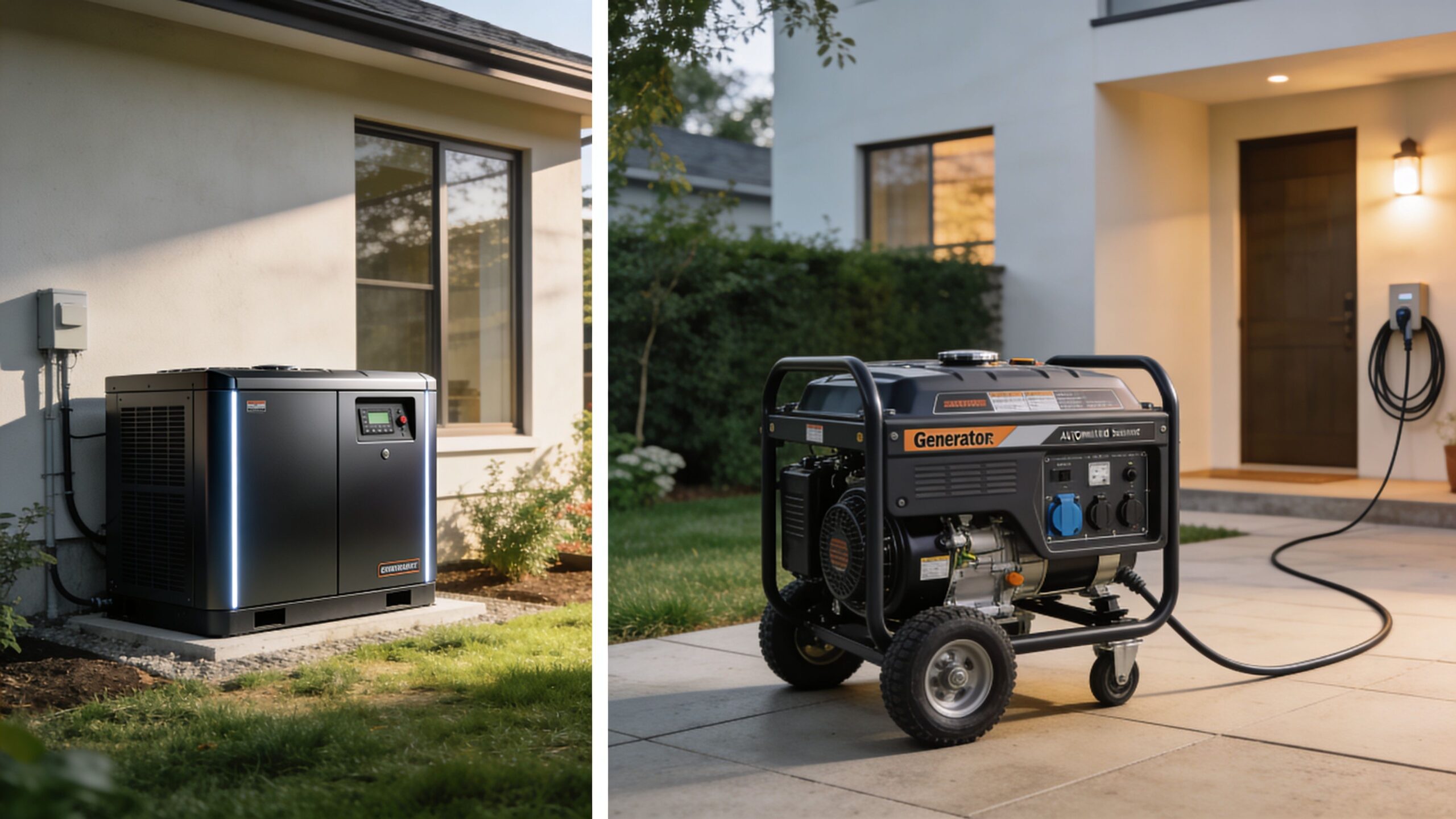
After the load calculation, the next decision is practical, not mathematical. Do you want a standby generator that starts automatically and feeds the house through a transfer switch, or a portable generator that you roll out, fuel manually, and connect to selected circuits?
In Florida homes, standby systems are often sized under NEC Article 702 optional standby system considerations, and local guidance puts more weight on professional load audits than square-foot shortcuts because of heavy AC demand. Properly sized standby units can deliver over 98% uptime in hurricanes and offer 10 to 30 second failover with a transfer switch, according to Home Depot’s generator sizing guidance. That same guidance warns that ignoring AC inrush current is a primary cause of generator failure.
When standby makes more sense
Standby units are built for homeowners who want the backup system to behave like part of the house. Utility power drops. The transfer switch responds. The generator starts. The selected circuits or the full managed load comes back without dragging cords through a storm.
That matters in Palm Beach County for a few reasons:
- Storm timing is unpredictable. You may not be home when power goes out.
- AC matters more here than it does in many regions.
- Longer outages become much easier to manage when fuel comes from a fixed source rather than cans.
- Hardwired loads like air handlers, pumps, and built-in systems are easier to support correctly.
For homeowners considering a fixed system, it helps to see what a professional setup looks like through a standby generator installation service overview.
Where portable generators still fit
Portable generators absolutely have a place. They’re often the right choice when the goal is selective backup rather than complete whole-home operation. If you want to keep the refrigerator cold, run lights, charge phones, and maybe power a few additional circuits through a proper inlet and transfer setup, a portable unit can do that well.
They make sense when:
- The budget is tighter
- You don’t need central AC
- You’re comfortable with manual setup
- You’re willing to manage fuel and startup during bad weather
Portable units ask more from the homeowner. You need to stage them, fuel them, start them, connect them correctly, and monitor what’s running. During a hurricane event, that can feel a lot less convenient than it sounded in the store.
A side-by-side decision view
| Question | Standby generator | Portable generator |
|---|---|---|
| Startup | Automatic | Manual |
| Typical best use | Whole-home or major system backup | Essentials and selected circuits |
| AC support | Better suited for central AC planning | Often limited, depends on size and setup |
| Fuel handling | Connected fuel source | Manual refueling |
| User effort during outage | Low | Higher |
| Installation complexity | Higher, permanent | Lower unit cost but still needs safe connection planning |
Buy a portable unit if you want a tool. Buy a standby unit if you want a system.
What usually pushes the decision
The turning point is rarely the generator itself. It’s lifestyle.
If you have young children, older family members, medical equipment, or you leave the property during storm season, standby usually wins because it removes steps and uncertainty. If you’re trying to protect food, maintain one cooling path, and cover a smaller set of essentials, a well-planned portable solution can still be smart.
What doesn’t work is forcing a portable unit into a standby role it can’t realistically fill, or buying a standby unit with a half-finished load plan that doesn’t reflect how the house operates.
Safe Connections Transfer Switches and Local Codes
A generator is only as safe as the way it’s connected. This is the part homeowners should take seriously, because bad connections don’t just risk equipment. They risk fire, injury, and dangerous backfeeding onto utility lines.
A transfer switch is not an optional accessory. It’s the device that isolates your house from the grid when generator power is active. Without it, electricity can flow in ways it shouldn’t. That puts utility workers and your own system at risk.
Why a transfer switch is mandatory
Portable setups typically use a manual transfer switch or approved interconnection arrangement for selected circuits. Standby systems use an automatic transfer switch that senses the outage and shifts the load when the generator starts.
The point is the same in both cases. The house must never be improvised into generator service with unsafe shortcuts.
Never judge a generator installation by whether “the lights came on.” Judge it by whether the system isolates, transfers, and protects correctly.
Local code and permit reality in Palm Beach County
This isn’t a DIY extension-cord conversation once the generator is feeding house circuits. In Palm Beach County, a proper installation needs to account for permits, inspection, equipment ratings, clearances, and the actual condition of the existing electrical system.
That existing system matters more than many homeowners think. If the panel is outdated, crowded, or poorly labeled, the generator project quickly becomes an electrical infrastructure project too. Homeowners trying to understand that side of the work can benefit from background on electrical panel and breaker services, especially when evaluating whether the current panel can support a clean generator integration.
The panel size myth needs to die
Many people still assume a 200-amp main panel tells them what generator to buy. It doesn’t.
The verified NEC-oriented guidance is clear that NEC Article 220 is the standard for professional load calculations, and that using the home’s 200-amp service panel as the sizing basis is a common mistake because it does not reflect actual demand. The correct method is a detailed load calculation plus a 15 to 25 percent reserve margin for homes with significant motor loads like AC compressors, according to Kopperfield’s NEC load calculation guidance.
That’s an important distinction. Service size tells you the maximum service framework. It does not tell you what the house draws under outage conditions.
What a pro should verify before installation
A serious contractor should inspect more than the generator pad location. They should also look at:
- Load calculation method under NEC standards
- Panel condition and available space
- Transfer switch compatibility
- Fuel source planning
- Critical motor loads, especially AC and pumps
- Permit and inspection path
- Property-specific constraints, including access and possible HOA review
If your panel may need work before the generator can be integrated correctly, this guide on electrical panel upgrades is a useful place to understand what often comes up.
The safest generator installation is the one that treats the house as a complete system. Not a machine dropped next to the meter.
Future-Proofing Your Power EVs and Smart Homes
Generator sizing has changed because homes have changed. A backup plan that made sense a few years ago can come up short today if the house now includes an EV charger, more connected equipment, or battery storage.
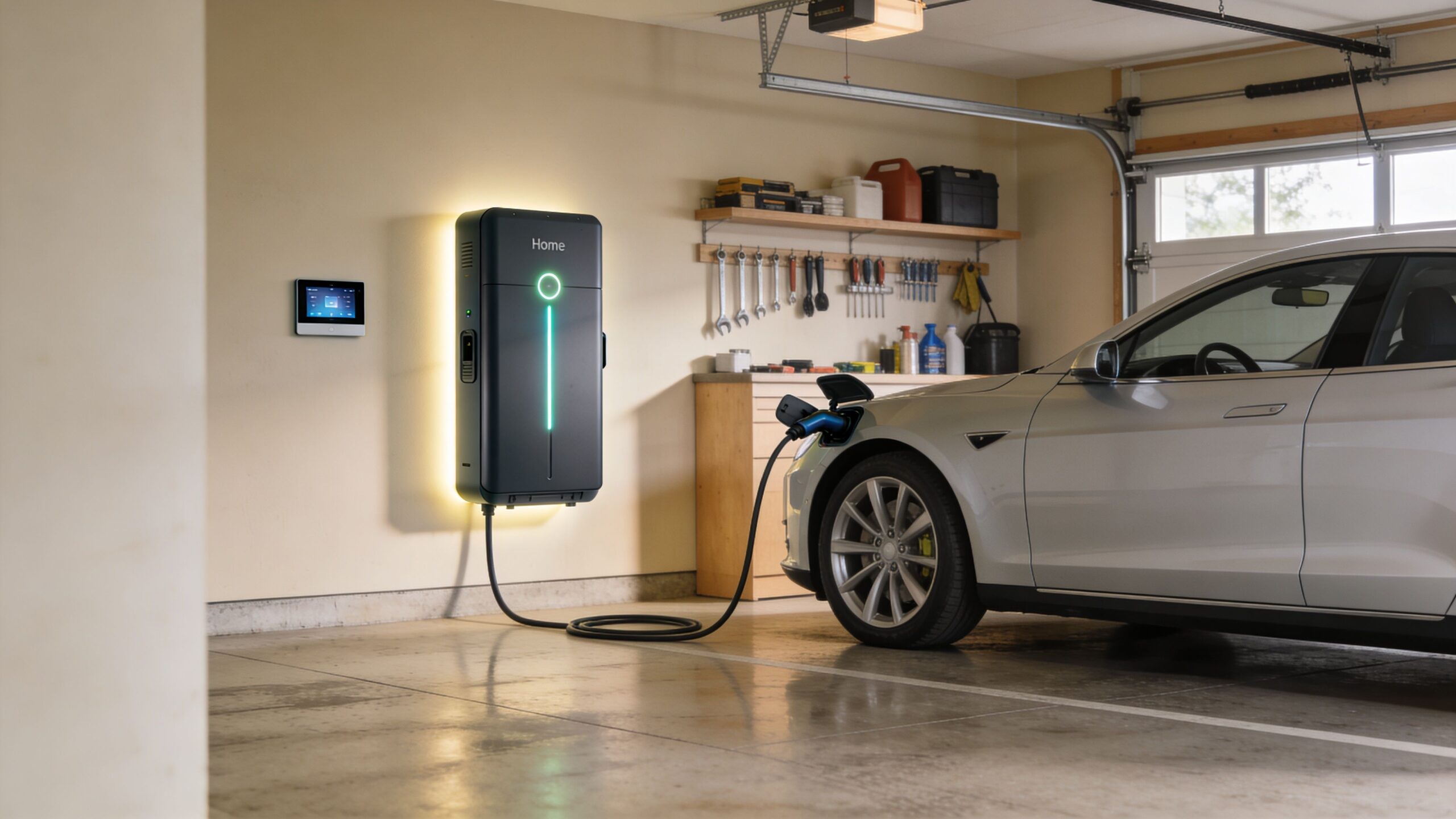
A major emerging trend is EV integration. Verified data states that 2025 data shows 15% of U.S. homes have EVs that need 7 to 11 kW circuits during outages, and that hybrid systems pairing a generator with a battery can optimize fuel use by up to 25%, according to Generac’s generator sizing guidance.
Don’t oversize just to chase one future load
Homeowners can make an expensive mistake. They buy generator capacity for a full Level 2 charging scenario they may never need during an outage. That can push the project into a much larger and less efficient installation.
A better strategy is to decide what the EV needs to do when utility power is down.
Maybe the answer is:
- No EV charging during outages
- Limited charging only
- Battery-supported charging with load management
- Generator supports essentials while battery handles flexible loads
That’s a system design conversation, not just a generator size conversation.
Battery hybrids are becoming more practical
Hybrid approaches can make a lot of sense in Palm Beach County. A generator can cover core loads and recharge storage, while the battery smooths out smaller or shifting demands. That reduces the need to size the generator around every possible peak at once.
Smart homes also add another consideration. More electronics means more value in good power quality and layered protection. If the backup plan includes connected devices, controls, appliances, and charging equipment, whole-home protection should be part of the design. Homeowners looking at that side of the system can review options for whole-home surge protection.
The practical takeaway is simple. Size for the house you have, but leave room for the house you’re building toward.
Frequently Asked Questions About Home Generators
Can I use my home’s 200-amp service to pick generator size?
No. A 200-amp panel only tells you the house can draw that much from utility service. It does not tell you what you need to carry during an outage.
For generator sizing, the key questions are which loads must stay on, which ones can wait, and what starts at the same time. In Palm Beach County, air conditioning, well pumps, pool equipment, and larger kitchen loads are usually where sizing mistakes show up.
Which fuel makes the most sense in Palm Beach County?
Fuel choice affects reliability as much as generator size.
- Natural gas works well for permanent standby generators if the home has gas service and the meter capacity supports the added load.
- Propane is a strong option for homes without natural gas, but tank size and refill planning matter during storm season.
- Gasoline is usually limited to portable units. It requires safe storage, regular fuel rotation, and manual refueling in bad weather.
The best choice depends on what utility service the property has, how long you want to run during an outage, and how much hands-on work you are willing to do after a storm.
Do I really need whole-house backup?
Usually not.
A lot of homeowners are better off backing up the equipment that protects comfort and safety first. That often means one air conditioning system or a few cooling zones, refrigeration, lighting, internet, garage access, medical equipment, and selected receptacle circuits. That approach usually costs less, uses less fuel, and creates fewer nuisance shutdowns from overload.
Can a portable generator run central AC?
Sometimes, but people can quickly run into problems. The running wattage may look manageable on paper, then the compressor starts and the generator stumbles or trips.
If central AC is part of the outage plan, treat it as a design requirement from the start. Verify the actual equipment data, the starting characteristics, and the connection method before buying a generator.
Do I need a transfer switch, or can I plug into the panel another way?
A transfer switch or approved interlock setup is required for a safe installation. Backfeeding a panel through a dryer outlet or other improvised connection is dangerous and illegal. It can injure utility workers, damage equipment, and create fire risk inside the home.
In Palm Beach County, generator work also has to clear permitting and inspection. That includes the electrical connection, and in many cases the pad location, fuel work, and required clearances.
How often should a home generator be serviced?
Standby generators need routine maintenance, not just a weekly self-test. Oil changes, battery checks, air filter service, software updates when applicable, and load testing all matter.
Before hurricane season, I tell homeowners to stop assuming last year’s working generator is ready today. Batteries fail. Fuel issues show up. Starter problems sit unnoticed until the first outage.
What does a proper estimate include?
A useful estimate should cover more than generator size. It should account for transfer equipment, load management if needed, fuel supply, permitting, placement, code-required clearances, and any panel upgrades or circuit rework.
If a quote is built around a rough square-foot guess, it is not enough.
If you want a generator that works when Palm Beach County weather gets serious, the job starts with a real load calculation and a safe installation plan. Lighthouse Energy Services handles generator-related electrical work with local experience, code awareness, and the kind of practical troubleshooting that matters before hurricane season, not after. If you’re deciding between essentials-only backup and a full standby system, schedule an on-site evaluation and get the sizing right the first time.