
You're standing in front of a property that can't afford a long outage. The lights are fine, but a panel is aging, tenants are calling, and your inbox is already full of quotes that all sound the same. That's exactly when typing commercial electrical contractors Boca Raton into a search bar gets dangerous, because a directory result isn't proof of capacity.
What you need is not a list of names. You need a way to tell which contractor can handle a retail, office, multifamily, or industrial site without guessing, stalling, or improvising on your dime. In Boca Raton, the wrong hire costs more than the bid because the market is crowded, regulated, and exposed to weather that punishes weak electrical planning.
Table of Contents
- What This Guide Helps You Decide
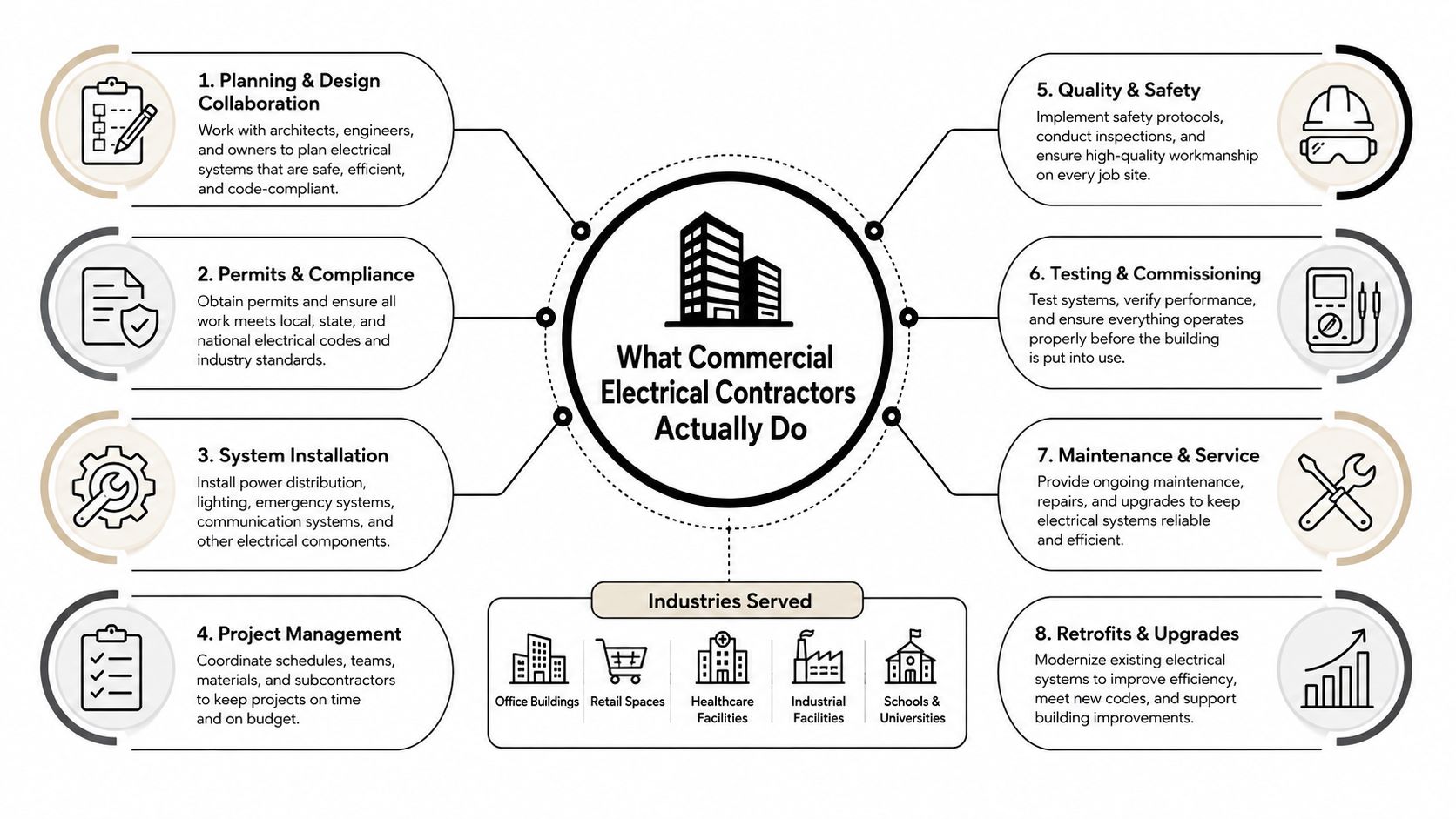
- What Commercial Electrical Contractors Actually Do
- Why Boca Raton's Market Demands Real Vetting
- Credentials, Permits, and Code Expectations
- A Look Inside a Typical Commercial Service Call
- Cost Factors and What a Real Quote Should Include
- Questions to Ask Before You Sign
- How Lighthouse Energy Services Fits the Profile
What This Guide Helps You Decide
If you manage a property and a breaker starts failing, the only question that matters is whether the contractor on the phone can solve it without turning one problem into three. You need a firm with real staffing, clean paperwork, and after-hours coverage that works.
Boca Raton makes that call harder because the market is crowded and strict. A local contractor database shows a deep pool of electrical contractors in the city, and a separate license scorecard shows that active licensing is not the same as real electrical depth. The point is simple, a name in a directory does not tell you whether the firm can handle commercial load, coordinate permits, and get the job closed out properly.
Use this guide to judge capacity, not advertising. A directory listing only proves somebody showed up in search results.
Practical rule: Treat the first call like a capacity check, not a popularity contest. A contractor who cannot explain scope, staffing, and response coverage is not ready for commercial work.
The questions that matter are straightforward. What does the contractor handle, how do you verify real depth, what should a professional quote include, and what separates a daytime-only shop from a firm that can handle emergencies without drama. If you answer those well, you avoid the low-bid mistake that looks cheap until the first failed inspection or after-hours call.
What Commercial Electrical Contractors Actually Do
A commercial electrical contractor isn't just a bigger version of a residential electrician. The work changes because the building changes, the loads change, and the documentation burden gets heavier.
The job is about building systems, not isolated devices
On a house, the conversation might center on a receptacle, a fixture, or a single panel. On a commercial property, the contractor is dealing with service equipment, branch circuits, distribution, tenant buildouts, and code-driven upgrades that feed whole floors or entire operating areas. That can include offices, retail spaces, restaurants, warehouses, medical suites, and multifamily common areas.
Think of it this way. Residential work is a household outlet. Commercial work is the electrical backbone that keeps a building's operations alive.
Florida commercial systems commonly run at 120/208V three-phase for smaller buildings and 277/480V three-phase for medium and large facilities with heavier lighting and motor loads, and the code framework is the NEC as adopted and amended by Florida. That matters because the contractor has to size conductors, coordinate overcurrent protection, and select equipment around the actual load profile, not just swap parts one-for-one.
Common projects you should expect them to handle
The usual commercial scope includes service upgrades, panel replacements, tenant improvements, lighting retrofits, emergency diagnostics, and compliance work tied to inspections or permit corrections. In a strong operation, the contractor also coordinates with the general contractor, the building owner, and inspectors so the job doesn't stall over missing paperwork.
That coordination is not optional. Commercial work lives or dies on sequence. If the load is wrong, the service is wrong. If the permits are incomplete, the schedule slips. If the contractor can't document the work clearly, the owner ends up managing the fallout.
If you also need broader property recovery support after a storm, the Eagle Restoration commercial guide is useful context because electrical failures often sit inside a bigger recovery sequence that includes water, interior damage, and mechanical interruptions.
The main takeaway is simple. You're not hiring someone to “fix wiring.” You're hiring a contractor to keep a facility safe, operational, and inspectable. That distinction separates a real commercial shop from a residential crew trying to stretch into larger work.
Why Boca Raton's Market Demands Real Vetting
A Boca Raton search result can look full, but that does not mean the contractor is ready for commercial work on your property. A directory listing only proves someone showed up online.
Local market data shows a crowded field, with 767 electrical contractors in the city and an average reported response time of 5 days. The broader BBB category also shows 313 commercial electrician results near Boca Raton and 9,224 electrical contractor results in the wider electrical contractor category (BBB Boca Raton commercial electrician category). Those figures point to a simple reality, there are plenty of names to call, but far fewer firms that can handle commercial conditions without delay, confusion, or excuses.
License status is necessary, not sufficient
The local market data shows a 99.9% active license rate across 1,734 contractor license records, and the electrical slice shows 6 active out of 7 total licenses, or an 85.7% active rate. That is what a regulated market looks like. It does not tell you whether the contractor has enough people to cover a service upgrade, a nighttime outage, and a permit correction in the same week.
A license number proves permission. It does not prove staffing, dispatch discipline, or commercial experience under pressure.
That is the gap property managers keep paying for. The contractor can be licensed and still be the wrong fit if the company runs thin on in-house electricians, treats after-hours calls like an inconvenience, or sends a different crew every time something breaks. If you need a commercial electrical installation plan that can support the building load and the schedule, the team should be able to discuss the work clearly and tie it to the site conditions, not just the phone quote.
Vet for capacity, not just presence
Ask who answers after hours, who is dispatched, and how much of the work is handled by the contractor's own crew. If the answer depends on subcontractors, you are already dealing with a layered response, not a direct commercial shop.
You also want a firm that understands how building systems affect each other. Electrical work often sits beside fire protection, access control, and tenant operations, so a contractor who ignores coordination creates more problems than they solve. That is why the annual fire extinguisher service requirements matter in the same planning conversation, because property managers do not get to treat life-safety items as separate from the electrical schedule.
The right question is not whether a company appears in a search result. It is whether the firm can respond fast, communicate clearly, and keep a commercial property operating without turning a routine call into a site-wide problem.
Credentials, Permits, and Code Expectations
Commercial electrical work in Boca Raton starts with paperwork, not tools. If a contractor talks about starting first and sorting permits later, walk away.
The permit package tells you if the contractor knows the process
For commercial service work, the city's application requires load calculations and, for qualifying projects, a certified Notice of Commencement. The submittal set also lists the HOA affidavit, contract, plans, and the city's electrical service-work application (Boca Raton electrical service-work application). That tells you the city expects engineered demand, not guesswork.
Load calculations matter because they force the contractor to size the service around documented demand. That reduces the risk of undersized feeders, nuisance tripping, and failed inspections. In plain English, it keeps a contractor from pretending a tired old panel can support a modern load just because it used to work yesterday.
What to ask for before work starts
Ask to see the license credentials, the permit approach, and the documents the contractor expects from you. If the project touches a common area or a managed property, ask how they handle owner authorizations, plan submittals, and inspection scheduling.
You should also want a contractor who understands basic workplace hazard awareness. The identifying electrical hazards at work resource is a good reminder that the safe contractor is the one who sees trouble before it becomes a callout.
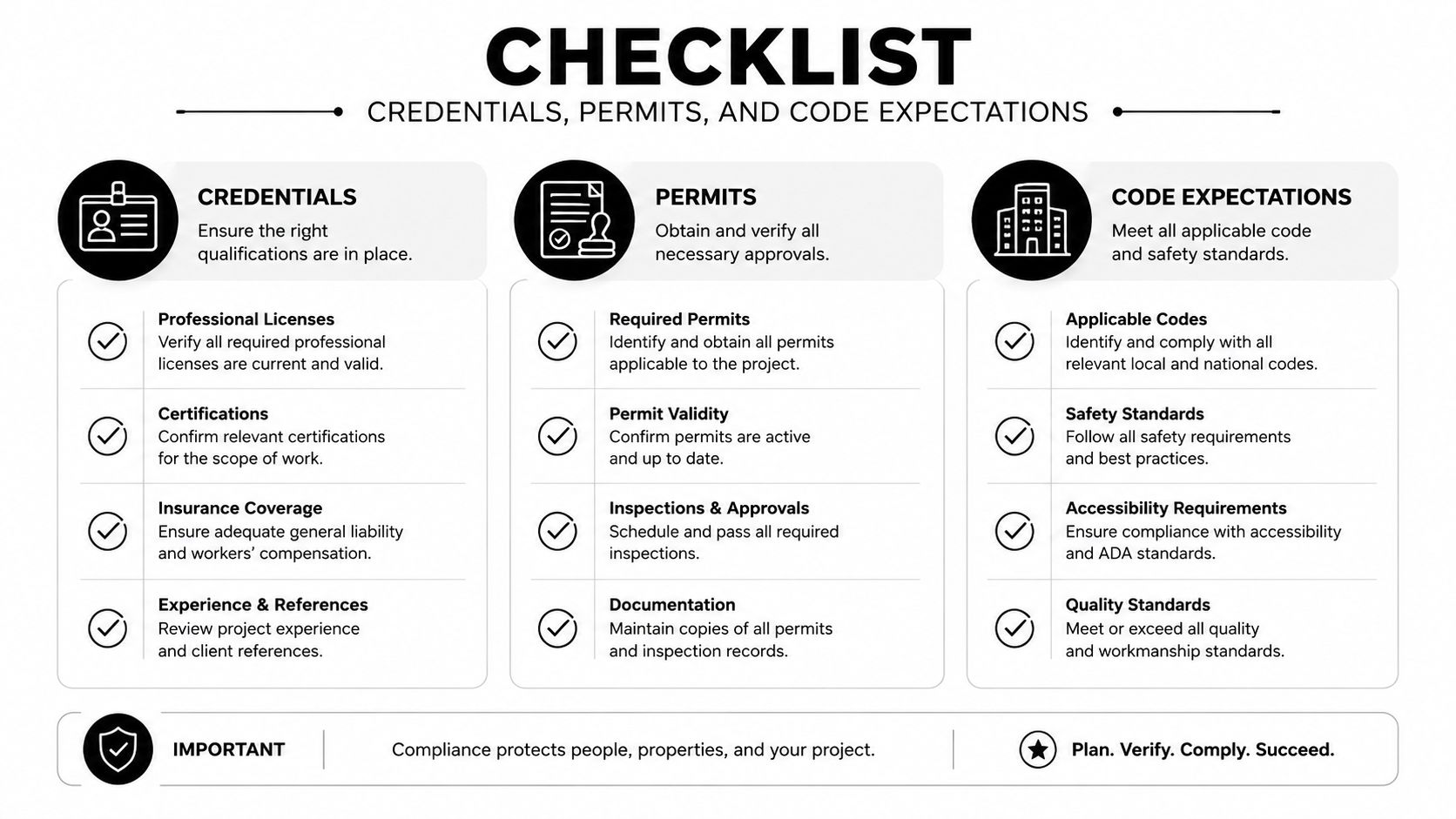
A serious commercial firm should be able to explain:
- Which permit applies: Service work, tenant improvement, or correction work should be identified before anyone opens a panel.
- What load data they need: They should ask for the actual demand profile, not just eyeball the building.
- Who handles inspections: If the answer is vague, the schedule will be vague too.
- What code basis they're using: Florida uses the NEC framework, so the contractor should speak that language without fumbling.
If they can't produce those answers cleanly, they're not ready for a commercial job in Boca Raton. The paperwork doesn't exist to slow the work down. It exists to make sure the work is safe, legal, and accepted the first time.
A Look Inside a Typical Commercial Service Call
A commercial service call should start with facts, not guesses. A reliable contractor reviews the property type, the complaint, the load history, and the likely failure point before the truck rolls. That matters in Boca Raton, where a bad shutdown plan costs time, frustrates tenants, and makes the manager look unprepared.
A real firm shows up with a sequence. First comes the site assessment. Then the load calculation. Then the permit set. After that, the crew coordinates with the owner, the utility, and the inspector so the work stays controlled and the downtime stays predictable. That is the difference between a contractor who does commercial work and a directory listing with a van.
A clean service call should sound boring. The call gets answered, the scope is clear, the crew arrives on time, and the quote explains labor, equipment, permit responsibility, and any scheduling constraints without hiding them in fine print.
If you want a clearer picture of how commercial work is organized on the installation side, the internal overview at commercial electrical installation lays out the sequence without dressing it up.
Special cases need special planning
Some service calls go beyond panels and feeders. Rooftop and tower work can involve aircraft obstruction lighting, and that calls for a contractor who treats it as operational infrastructure, not an afterthought. If that lighting fails, the problem is not cosmetic. It can trigger compliance trouble and visibility problems.
Life-safety related systems deserve the same discipline. A contractor should know how to diagnose the issue, isolate the fault, repair it, document the work, and leave a clean record behind. That mindset also shows up in other critical compliance tasks, including the annual fire extinguisher service requirements, because a building manager needs vendors who understand that inspected systems have to stay inspected.
The best service call ends with paperwork a manager can file and trust. The site should be cleaner, the status should be clearer, and the next step should be obvious. If the contractor leaves the building in better shape than they found it, that shop knows how to work commercial property the right way.
Cost Factors and What a Real Quote Should Include
A Boca Raton property manager should expect commercial electrical pricing to reflect real field work, not a number pulled from a directory listing. If the job touches live operations, the quote has to account for labor skill, coordination, code responsibility, and the cost of doing the work without creating a second problem in the middle of business hours.
What drives the price
Scope sets the price first. A panel replacement is a different job from a tenant buildout, and a service upgrade is not the same as an emergency diagnostic. Voltage class changes the work too, because higher-capacity systems require different equipment, more planning, and tighter coordination on site.
The labor market also explains why low bids deserve scrutiny. The broader electrical contracting field is large and labor-heavy, and the U.S. Bureau of Labor Statistics reported 1,045,300 workers in the broader NAICS 238210 electrical contractors and other wiring installation industry in May 2023, with electricians alone accounting for 509,010 of those jobs and an annual mean wage of $67,030 (BLS electrical contractors occupation data). That scale is one reason bargain pricing usually means something was left out.
What a professional proposal must spell out
A real quote names the scope, exclusions, permit responsibility, response-time commitment, and warranty terms. It also says whether after-hours coverage is included, because emergency work that only exists during the workday is not emergency coverage.
The difference between a real quote and a handyman estimate is clarity. A serious proposal lists the equipment, the labor sequence, and the assumptions behind the price. A weak one gives you a number and hopes nobody asks what is missing.
South Florida weather raises the risk fast. If a cheaper contractor leaves you with downtime after a surge event or a failed startup, the savings disappear in a hurry. For property owners thinking about operating efficiency, the internal note on energy-saving tips for commercial buildings fits the same conversation, because utility load, equipment condition, and operating cost are tied together.
If a contractor will not put the scope in writing, walk away. You are buying accountability, not a favor.
Questions to Ask Before You Sign
The best interview is short, direct, and a little uncomfortable. If a contractor can't answer these questions clearly, they're not ready for your property.
Ask about licensing, staffing, and dispatch
Start with the basics. Who is licensed? Who will show up? Is the work handled by an in-house team or passed around to subcontractors? A commercial electrician should answer those without hesitation.
Then move to capacity. Ask whether they have enough staff to support your site if multiple issues hit at once, and whether after-hours dispatch is real or just a voicemail with a promise. If they claim emergency coverage, ask what that means in practice.
Ask about documentation and pricing discipline
You want to know what their service report looks like, how they document repairs, and what happens if the inspection flags an issue. If they can't show you a sample report, assume the paperwork will be sloppy later too.
Use this checklist in the call:
- License Verification: Ask for the active license details and confirm who on the team is authorized to pull permits.
- In-House Coverage: Find out whether the company staffs the job or just brokers it out.
- After-Hours Response: Ask if emergency calls are answered by a licensed professional.
- Surcharge Policy: Get a direct answer on whether after-hours service costs extra.
- Load and Code Review: Ask how they evaluate existing capacity before recommending a fix.
- Permit Handling: Make sure the contractor owns the permit process instead of pushing it back on you.
- Report Quality: Request a sample of the service documentation they leave behind.
- Weather Readiness: Ask what happens during storm season when surge or outage calls stack up.
- Scope Clarity: Confirm what is included and what is excluded before anyone starts.
- Warranty Terms: Get the warranty in writing, not as a verbal reassurance.
If you want a quick reference for vendor screening language, the internal resource at commercial electrician near me fits that purpose well. Use it as a prompt, not a substitute for judgment.
The goal is simple. You want a contractor who answers like they've done this before, because if they haven't, your property will teach them at your expense.
How Lighthouse Energy Services Fits the Profile
Lighthouse Energy Services matches the profile this guide describes. The company has been established since 2005, brings more than 100 years of combined team experience, answers phones with licensed electrical professionals, and offers true 24/7 availability with no extra charge for after-hours calls.
It also covers Boca Raton through Jupiter across Palm Beach County, handles commercial electrical work, rapid emergency diagnostics, and specialized aircraft obstruction lighting for rooftops and towers. For owners who care about operating cost, the Smartcool ECO3 efficiency upgrade adds a practical energy-control angle to the service mix.
If you want one local firm that checks the boxes that matter, this is the kind of profile to look for. Lighthouse is not just showing up in a directory, it's built around the actual demands of commercial properties in this market.
Call Lighthouse Energy Services if you need a commercial electrician who can answer the phone, show up on time, and handle the paperwork as seriously as the wiring. If your Boca Raton property needs repairs, upgrades, emergency diagnostics, or rooftop lighting support, visit Lighthouse Energy Services and start with a team that works like the job matters.