
Commercial buildings carry a large utility burden, and in Palm Beach County that burden is driven hard by year-round cooling demand, humidity control, and long operating hours.
For South Florida owners, the pattern is usually easy to spot. If a property has aging lighting, drifting HVAC setpoints, worn door seals, outside air coming in where it should not, or no visibility beyond the monthly power bill, money is leaving the building every day. I see the same issue across offices, retail centers, medical space, warehouses, and mixed-use properties. The waste is rarely tied to one dramatic failure. It usually comes from a stack of ordinary problems that run all month.
The strongest results come from fixing those problems in the right order.
In Palm Beach County, that means prioritizing systems that work hardest in heat and humidity, then separating low-cost operating changes from capital projects that need a longer payback horizon. Good planning matters here because local buildings deal with high latent loads, storm-related envelope wear, wide occupancy swings, and utility costs that can punish inefficient scheduling. Owners who start with a clear sequence usually get better returns than owners who buy isolated upgrades without a building-wide plan.
This guide is built around that sequence. It focuses on practical measures that reduce waste, improve control, and support day-to-day operations, from lighting and HVAC tuning to monitoring, envelope improvements, and targeted equipment upgrades. It also covers technologies that fit this market, including AC optimization tools such as the Smartcool ECO3, where they make sense for the equipment and runtime profile.
Some projects are fast-payback fixes. Some require capital approval, contractor coordination, and a realistic view of disruption, maintenance, and expected service life. If you are already planning tenant improvements or facility upgrades, pairing that work with commercial lighting installation and retrofit services can improve the return on the broader energy plan. The goal is straightforward: cut avoidable consumption, protect comfort, and spend capital where it produces measurable operating value.
1. LED Lighting Upgrades and Controls
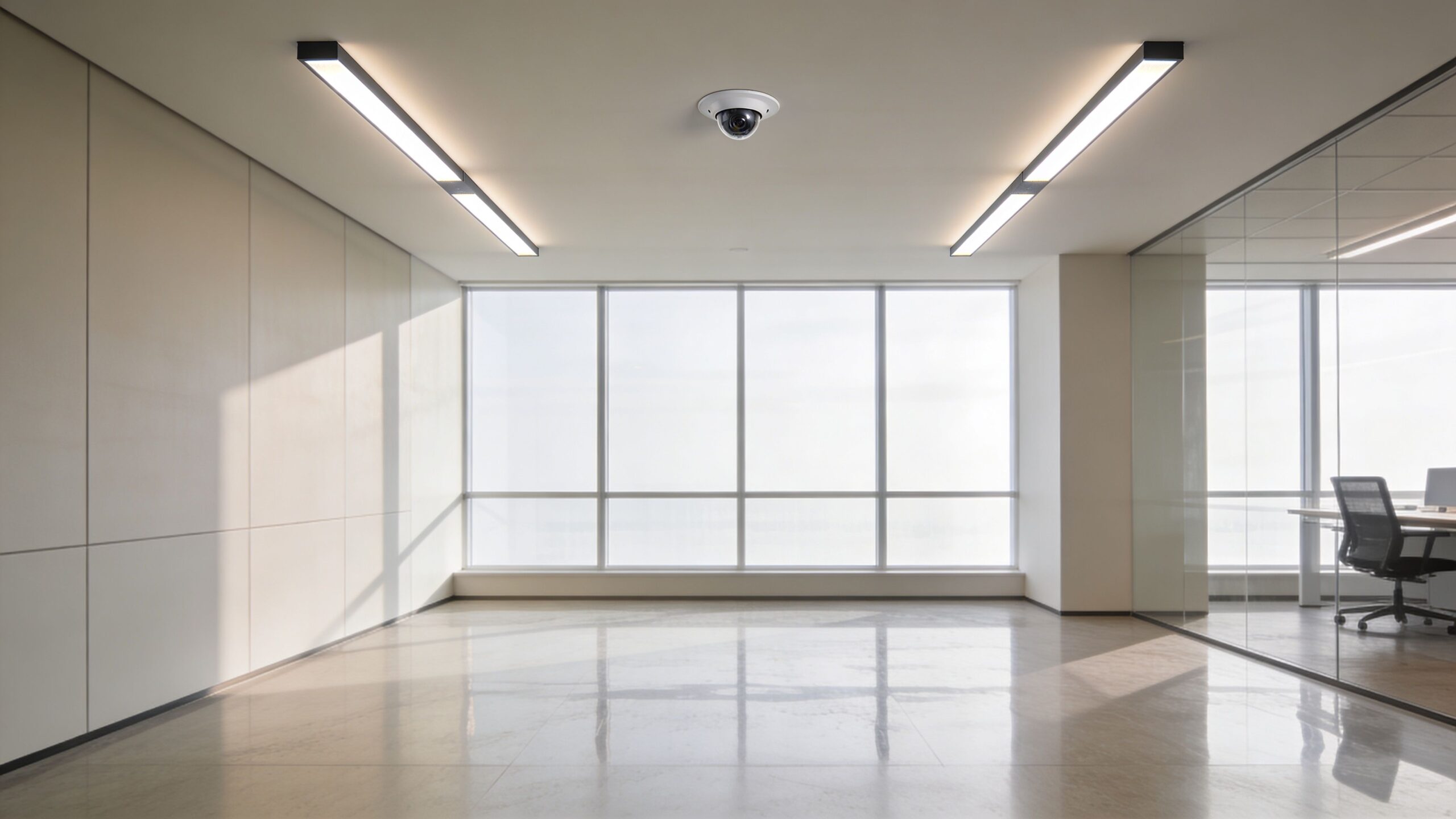
Lighting typically delivers some of the fastest measurable savings in a commercial building because runtime is easy to verify, fixture counts are easy to audit, and the retrofit scope is usually manageable during normal operations. In Palm Beach County, it also belongs near the top of the priority list because many buildings still have older fluorescent systems, overlit perimeter zones, and control setups that ignore daylight.
The biggest mistake I see is treating an LED project as a lamp swap. Owners get better results when they address fixture efficiency, control strategy, and operating schedule at the same time. In a local office, that often means dimming the window line during bright afternoon hours, tightening after-hours schedules, and adding occupancy sensing in rooms that sit empty for long stretches.
That approach fits this market.
Buildings in Palm Beach County get strong sun, long cooling seasons, and uneven occupancy across offices, retail bays, medical suites, and back-of-house areas. Reducing lighting wattage cuts direct electrical use. It can also trim some internal heat gain, which helps support the broader energy plan without turning this into an HVAC project.
Where the return usually shows up first
Start with spaces that stay lit the longest or are regularly unoccupied. Those are the areas where the payback is easiest to justify.
A few common examples:
- Perimeter offices and open office window lines: Daylight harvesting can reduce output during bright hours instead of running full power against available sun.
- Conference rooms, training rooms, and break rooms: Vacancy sensors usually outperform manual switching because usage is inconsistent.
- Storage rooms, electrical rooms, and support spaces: These rooms are often lit far longer than needed.
- Parking and exterior circulation areas: Scheduled dimming and photocell-based control can cut waste without compromising safety.
- Warehouses with high-bay fixtures: Long operating hours make every watt removed more valuable.
Retail needs a little more judgment. Lower wattage saves energy, but display lighting still has a job to do. In those spaces, I usually separate decorative or merchandising circuits from general illumination so the owner can reduce waste without flattening the sales floor.
A few specification details matter more than they look on paper:
- Sensor delay settings: If time delays are too long, lights stay on after a room empties. If they are too short, occupants get annoyed and override the system.
- Daylight calibration: Photosensors need commissioning. Poor setup can cause lights to hunt, flicker, or stay brighter than necessary.
- Color temperature and optics: Choose light levels and distribution based on the task, tenant expectations, and finish materials, not just the fixture cut sheet.
- Control wiring and integration: Sensors, relays, dimming drivers, and panel schedules need to be coordinated correctly. Poor industrial control wiring for lighting and automation systems creates callbacks and lost savings.
- Retrofit method: Wireless controls can reduce labor in finished spaces, but hardwired controls may still be the better long-term fit in larger renovations or buildings with stricter maintenance standards.
If you're planning fixture replacement or controls, work with a contractor who handles commercial lighting installation and retrofit work so sensors, drivers, and switching all play well together. Poor commissioning frustrates occupants fast. Once tenants start bypassing schedules or taping over sensors, the projected savings stop being real.
2. HVAC System Optimization with Smart Controls
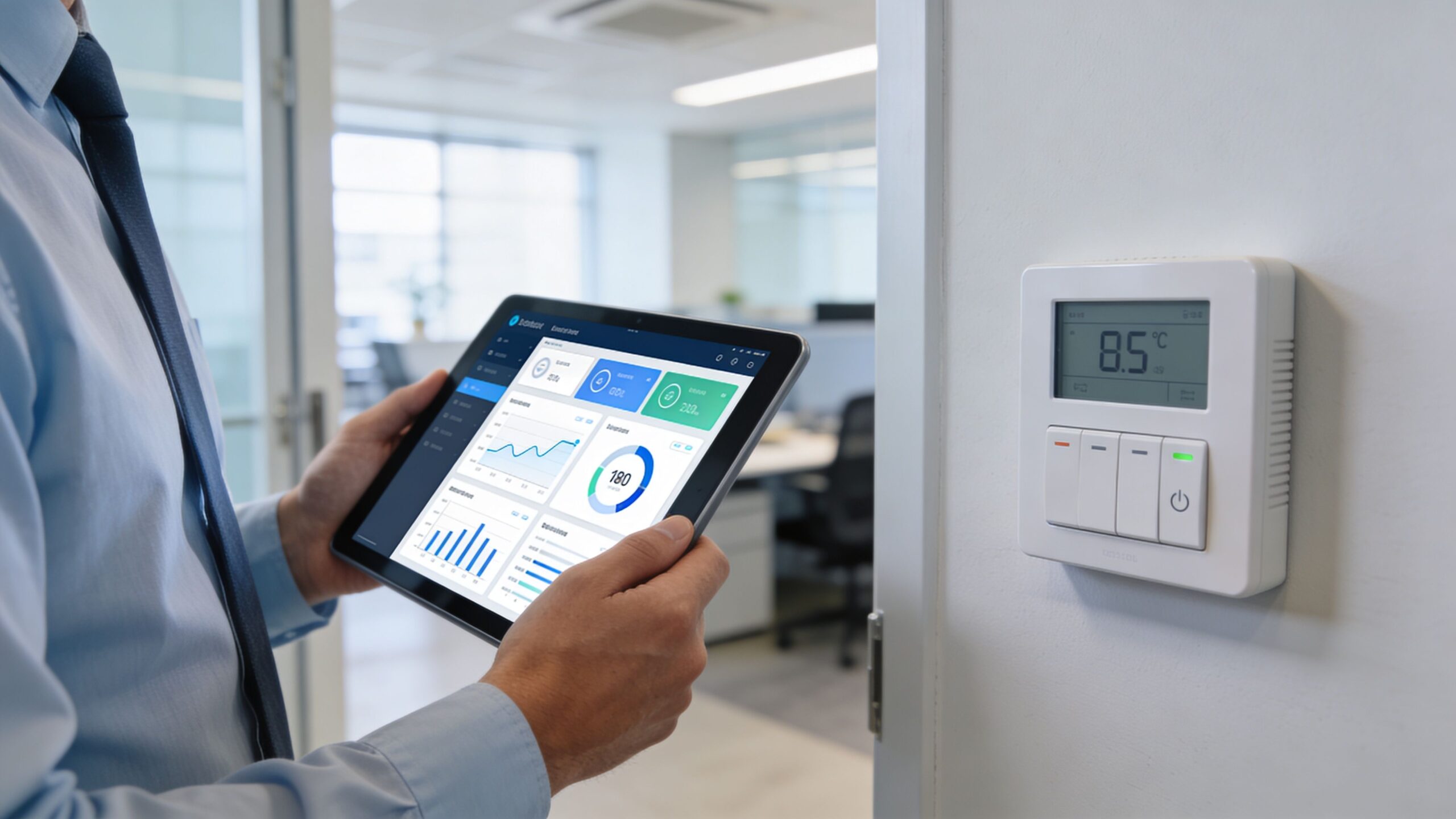
In a Palm Beach County commercial building, HVAC usually drives the biggest utility cost and the most avoidable waste. It also hides problems better than lighting or plug loads. A unit can run all day, keep part of the building comfortable, and still burn money because schedules are wrong, zones are fighting each other, or humidity control is loose.
Smart controls fix operation before you spend capital on replacement equipment. That matters in South Florida, where long cooling seasons, high latent load, and uneven occupancy patterns punish buildings that rely on one static schedule. Offices, medical suites, retail spaces, and mixed-use properties all benefit, but the payback depends on how the space is used and whether the existing sequence of operations is worth correcting or needs to be rebuilt.
What works in the field
The best control upgrades usually start with boring fixes that produce measurable savings.
- Zone scheduling: A conference room, lobby, and back office should not all follow the same occupied hours.
- Setback strategy: Nights, weekends, and holidays need separate temperature and humidity logic, not a simple on-off schedule.
- Lockouts and interlocks: Heating and cooling should never call at the same time, and outside air should respond to real operating conditions.
- Trend logs: Review runtime, supply air temperature, space temperature drift, and override history. That shows whether the sequence is saving energy or just looking good on paper.
- Override discipline: Temporary tenant overrides often become permanent if no one reviews them.
I see one mistake repeatedly. Owners jump to equipment replacement before they verify whether the current controls are doing the job. If one wing is hot every afternoon, the answer may be a failed damper actuator, a bad sensor, or poor scheduling, not a larger rooftop unit. Control work costs less than major mechanical replacement, but it still needs proper commissioning or the savings disappear into callbacks and comfort complaints.
For Palm Beach County properties, humidity control deserves special attention. A thermostat-only approach can keep a room cool while leaving the space damp, which drives complaints and can create IAQ issues. Good control sequences account for both temperature and moisture, especially in buildings with high door traffic, variable occupancy, or after-hours cleaning schedules.
One targeted option for AC-heavy facilities is the Smartcool ECO3, which is covered in more detail later in this guide. It can make sense for owners who need a lower-cost efficiency measure before they are ready for full system replacement. The trade-off is straightforward. Add-on optimization devices are most useful when the base equipment is still mechanically sound and the control strategy is already reasonably stable.
None of this performs well if the field installation is sloppy. Thermostats, relays, sensors, dampers, and equipment interfaces need clean terminations, clear labeling, and a sequence the service team can follow. Poor industrial control wiring for HVAC control systems turns a smart upgrade into a long-term nuisance. Good wiring and proper commissioning turn it into savings that hold up in daily operation.
3. Building Insulation and Air Sealing
A building with uncontrolled air leakage forces the HVAC system to fight the outdoors all day. In Palm Beach County, that means heat and humidity infiltration, not just temperature loss. Owners often focus on the equipment and ignore the envelope, but leaky doors, roof penetrations, loading docks, and aging window seals can keep a decent HVAC system from ever performing the way it should.
Envelope improvements reduce HVAC load by shrinking the amount of outside air and heat your system has to manage. That includes insulation, air sealing, window films, and targeted glazing upgrades. The biggest gains often come from fixing the ugliest leaks first, especially in older office buildings, storefronts with constant door traffic, and warehouse spaces with dock activity.
Start with the weak points
You don't need to tear apart the whole building on day one. In many facilities, a walk-through combined with thermal imaging and a maintenance-minded inspection will expose the worst offenders quickly.
- Roof penetrations: Conduits, duct curbs, and abandoned openings often leak more than owners realize.
- Dock and service doors: Warehouses lose conditioned air here constantly, especially if seals are damaged.
- Storefront entries: High-traffic retail doors can let in outside air all day if closers and weatherstripping are worn.
- Mechanical rooms: Pipe and duct penetrations are common leakage points.
The trade-off is straightforward. Envelope work can be less exciting than a new piece of equipment, and some fixes are disruptive if you tackle them all at once. But in humid climates, reducing infiltration often improves comfort and moisture control at the same time. That's why I usually recommend phased envelope work rather than waiting for a full renovation.
A low-cost first pass often includes weatherstripping, sealing roof and wall penetrations, and insulating accessible hot or chilled water piping. If west-facing glass is punishing your cooling load, solar film can be a practical bridge before full window replacement. For many owners, that's the right move: stop the obvious waste now, then plan larger envelope investments around reroofing, facade work, or tenant turnover.
4. Energy Management Systems and Real-Time Monitoring
Cooling drives a large share of electric use in Palm Beach County commercial buildings. If you wait for the monthly utility bill, you find problems after they have already affected demand charges, comfort, and equipment run time.
An energy management system gives owners and facility teams a way to see what is happening by hour, by circuit, and by operating mode. That matters in South Florida, where a small scheduling error or stuck override can keep equipment running through hot, humid nights and weekends without drawing attention until the bill arrives. The practical value is simple. You can catch waste sooner, assign the right work order, and verify whether the fix held.
I usually advise owners to start with visibility, not a giant software rollout. The best first phase is the one your staff will use.
Start with the loads that affect cost fastest
For most buildings in this market, that means metering and trending the systems that drive peak demand and after-hours waste first:
- Main HVAC equipment and key branch circuits: rooftop units, chillers, pumps, and air handlers
- Lighting panels: to confirm schedules and identify lights left on after close
- Large plug and process loads: server closets, kitchen equipment, refrigeration, and specialty equipment
- Tenant or department submeters: useful in mixed-use and multi-tenant properties where accountability matters
The goal is not more data for its own sake. The goal is faster decisions. If one tenant suite shows occupied-level usage all night, the next step is obvious. If a package unit starts earlier every week because of a bad schedule change, the trend line exposes it before the pattern becomes normal.
Good monitoring also helps sort out capital decisions. Owners often assume the next move is equipment replacement when the problem is controls drift, poor scheduling, or simultaneous heating and cooling. In other cases, monitoring confirms that a system has become expensive to operate and should be moved up the capital plan.
That prioritization matters in Palm Beach County. A building with afternoon solar gain, long operating hours, and heavy cooling demand may get better short-term returns from controls and monitoring than from a broad retrofit started all at once. If the data shows perimeter zones overheating every afternoon, commercial window tinting may also move higher on the list because it reduces the load the HVAC system has to chase.
What owners often miss
The savings usually come from ordinary failures:
- schedules that no longer match business hours
- occupancy sensors or thermostats that were overridden and never reset
- economizer or ventilation sequences that are out of calibration
- equipment short-cycling or starting too early
- simultaneous operation of systems that should be staged
These are operating problems, not headline problems. They rarely trigger an emergency call, but they add cost month after month.
The trade-off is straightforward. Software does not produce savings on its own. Someone has to review alarms, question anomalies, and close the loop with maintenance. The buildings that get the best return are not always the ones with the most advanced platform. They are the ones with a clear ownership process, weekly review habits, and enough metering to find the expensive mistakes quickly.
5. Window and Door Upgrades
Glass can be one of the biggest comfort and cooling problems in a Palm Beach commercial building, especially on west and south exposures. If people near the perimeter are always hot, blinds stay shut all day, or the AC runs hard every afternoon, the windows may be part of the problem. High-performance glazing, insulated frames, and solar control measures can cut solar heat gain while still letting useful daylight into the building.
This isn't an all-or-nothing decision. Full window replacement can make sense during a larger capital project, but a lot of owners get worthwhile results from phased upgrades. Window films, better seals, and targeted replacement of the worst-facing facades often deliver a better operational outcome than a building-wide replacement pushed for image reasons.
Best uses in South Florida buildings
Retail storefronts with large display glass, office suites with perimeter desks, and lobbies with decorative glazing are common candidates. In those spaces, reducing heat gain can support both comfort and HVAC performance. It also helps your lighting strategy, because better daylight control means you can use natural light without creating glare or overheating the room.
For owners not ready to replace windows, commercial window tinting can be a practical intermediate step. Film isn't the same as a full glazing upgrade, but it can reduce solar load and occupant complaints without the cost and disruption of replacing entire assemblies.
A few caution points matter here:
- Don't overspec for appearance alone: Darker or more reflective glass isn't automatically better for occupants or tenants.
- Check installation quality: A failed seal or poor frame integration can wipe out the benefit of a premium product.
- Coordinate with HVAC planning: If you reduce solar gain significantly, your future cooling strategy may change too.
This is one of those projects where phasing is usually smarter than rushing. Tackle the worst exposures first. Pair window work with shading, interior layout changes, and control updates so the building uses the improvement instead of fighting it.
6. Variable Frequency Drives for Motors and Pumps
A lot of commercial equipment still runs like an on-off machine in a world that needs modulation. Fans, pumps, and motors often operate at full speed even when the building needs far less. That's where variable frequency drives can earn their keep. They let the motor match actual demand instead of running flat out and throttling mechanically.
This is especially useful on HVAC fans, condenser water pumps, chilled water pumps, and other variable-load systems. If the equipment serves a building with changing occupancy, changing temperature, or changing process demand, fixed-speed operation is usually wasteful.
Where VFDs make the most sense
The best candidates share a few traits:
- Long runtimes: Equipment that runs most of the day gives you more room to save.
- Variable load: If demand swings, speed control has value.
- Larger motors: Bigger motors usually justify engineering and installation effort faster.
- Existing throttling: If you're controlling flow with dampers or valves while the motor stays at full speed, there's likely an opportunity.
The trade-off is that VFDs are not plug-and-play magic. They need correct sizing, commissioning, and compatibility with the rest of the control sequence. Poorly applied drives can create nuisance trips, harmonics issues, or maintenance headaches. That's why I usually tell owners to start with a targeted list of motors, not a blanket specification.
If your project also needs electrical cleanup, power factor correction and related power quality planning can fit into the broader conversation. The point isn't to add gadgets. It's to make sure the electrical side supports the mechanical side cleanly.
VFDs don't belong everywhere. Constant-volume processes, simple small motors with short runtimes, and systems near the end of life may not justify the investment. But on the right air handler or pump set, they can turn a blunt instrument into a controllable system.
7. Demand-Controlled Ventilation and IAQ Management
Ventilation is one of the easiest places to waste energy while still thinking you're doing the right thing. Many buildings bring in more outside air than they need for actual occupancy, then spend money cooling and dehumidifying it. Demand-controlled ventilation fixes that by adjusting outdoor air intake based on actual conditions, usually with occupancy signals and indoor air quality measurements.
That matters in South Florida because outside air isn't free. Every extra cubic foot of warm, humid air adds cooling and moisture load. Good DCV reduces over-ventilation without turning the building stuffy or compromising indoor air quality.
The balance owners need to get right
DCV only works when the sequence respects both energy and occupant needs. If the controls are too aggressive, conference rooms get stale and complaints rise. If the controls are too timid, you're back to paying to condition outdoor air that nobody needs.
A practical setup usually includes CO2 monitoring in representative occupied areas, verified minimum ventilation settings, and periodic sensor calibration. That's the unglamorous part that keeps the strategy credible. Sensors drift. Spaces change use. Setpoints get overridden. Someone has to own the tuning.
Good IAQ and energy control are not opposites. The problem is bad ventilation logic, not ventilation itself.
This approach is especially useful in spaces with highly variable occupancy such as training rooms, event spaces, worship facilities, classrooms, and retail zones with uneven traffic. In those buildings, fixed outdoor air assumptions usually miss reality for large parts of the day.
The common mistake is trying to bolt DCV onto a system that already has maintenance issues. If dampers stick, sensors fail, or economizer logic is unreliable, fix those basics first. A control strategy can't save a system that doesn't respond properly.
8. On-Site Renewable Energy Systems
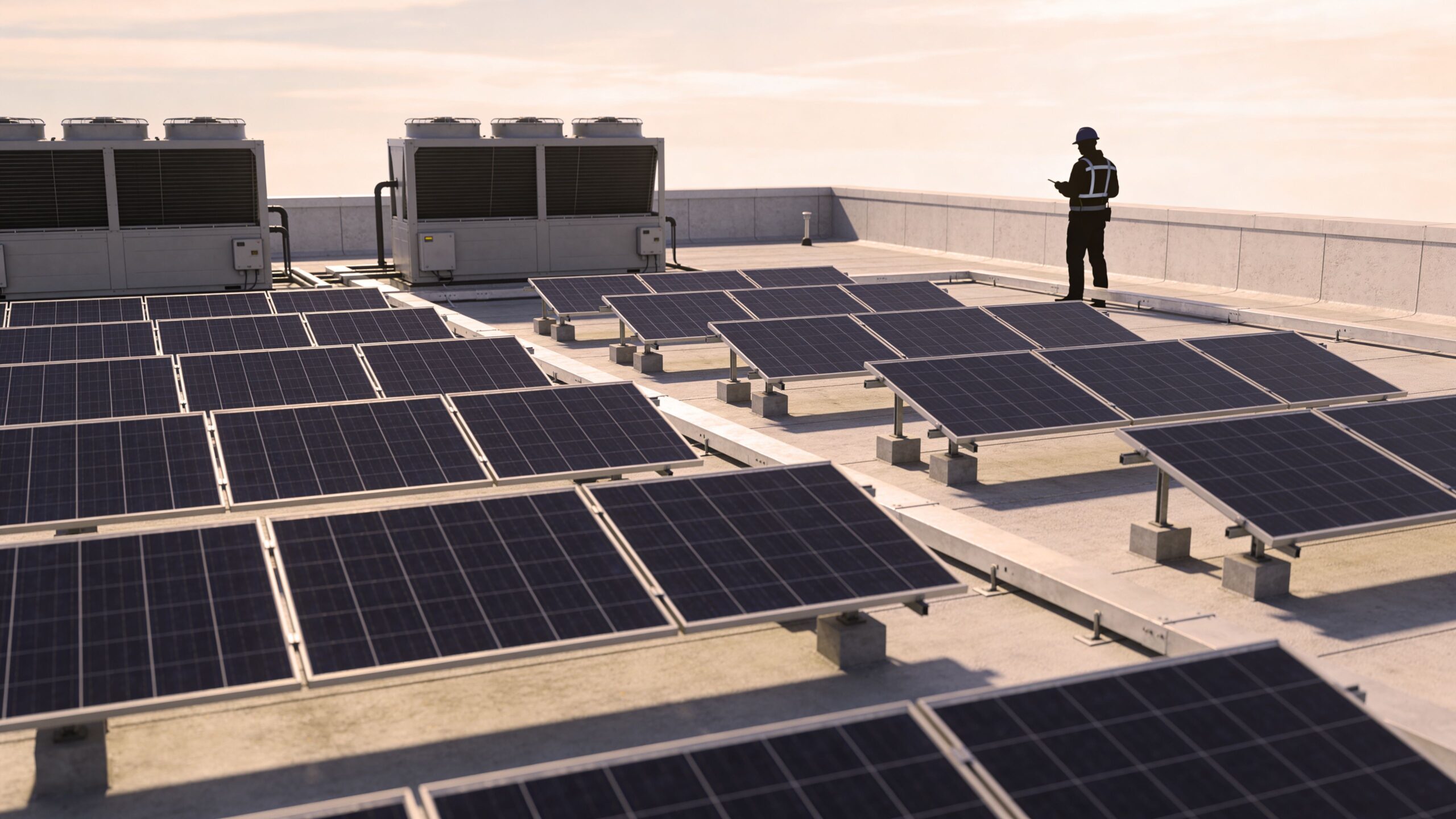
Florida businesses pay some of their highest electric costs during sunny, air-conditioning-heavy hours. That makes on-site solar worth serious consideration in Palm Beach County, especially for buildings with strong daytime load and enough roof area to offset a meaningful share of consumption.
Solar works best after the building's major waste has been reduced. If schedules are sloppy, HVAC controls are drifting, or motors are running harder than necessary, the PV system ends up serving avoidable load. Owners get a better return when they cut waste first and size generation around the leaner operating profile.
The best candidates are usually broad-roof buildings with limited shading and consistent daytime usage. Warehouses, retail centers, medical offices, self-storage, schools, and low-rise commercial properties often pencil out faster than taller buildings with complex roof layouts. Hotels and facilities with large domestic hot water demand may also review solar thermal, but in this market, solar PV is usually the first option to evaluate.
Battery storage deserves a separate decision, not a default add-on. In Palm Beach County, batteries can make sense where demand charges are painful, outage tolerance matters, or operations cannot afford even short interruptions. The trade-off is straightforward. Storage adds cost, space requirements, permitting complexity, and replacement planning later in the asset life. It tends to make the most sense for buildings with expensive peak demand, critical loads, or resilience goals that have real financial value.
Before approving a project, check the site conditions that affect long-term ROI:
- Roof condition: Match the solar system life to the roof life. Re-roofing under recently installed panels is expensive.
- Structural capacity: Older buildings may need engineering review before adding racking and ballast.
- Interconnection: Utility approval, metering setup, and tariff details can affect payback.
- Hurricane exposure: Panel attachment, wind ratings, and roof details matter more here than in milder markets.
- Maintenance access: Crews still need safe access to RTUs, drains, and other rooftop equipment.
Operations matter after installation too. Dirt, pollen, salt air, and bird activity can cut output over time, which is why some owners schedule commercial solar panel cleaning to boost efficiency as part of routine roof maintenance rather than treating it as an afterthought.
For Palm Beach County owners, the practical framework is simple. Reduce internal loads first. Then evaluate solar and storage against roof life, peak demand, resilience needs, and local installation conditions. That order usually produces a cleaner project scope and a better financial result.
9. High-Efficiency Water Heating Upgrades
Not every Palm Beach commercial building needs a major water heating strategy, but some absolutely do. Hotels, restaurants, fitness facilities, laundries, multifamily-commercial properties, and buildings with commercial kitchens can waste a lot of energy through old boilers, oversized storage, long recirculation loops, and poorly insulated piping.
For those properties, high-efficiency boilers, condensing equipment, and tankless water heating can improve performance when selected around actual usage patterns. This isn't a category where bigger is better. Oversizing is one of the most common mistakes because owners or contractors plan around rare peak demand instead of real load profiles.
Where the savings usually come from
The biggest gains often come from system design and distribution, not just the appliance nameplate. If the building stores too much hot water, cycles unnecessarily, or loses heat across long pipe runs, replacing the heater alone won't solve the whole problem.
A sensible upgrade review usually includes:
- Load profile: When do you need hot water, and how much?
- Distribution losses: Are recirculation lines insulated and controlled properly?
- Venting requirements: Condensing equipment needs the right vent materials and drainage planning.
- Fixture demand: Lower-flow fixtures can reduce hot water load without compromising use in many settings.
For buildings that also use rooftop solar, maintenance matters on that side too. Dirty panels don't help offset electric water heating or other base loads, which is why routine services like commercial solar panel cleaning to boost efficiency can support overall site performance where solar is already installed.
In South Florida, I generally treat water heating as a targeted opportunity rather than a universal first move. If your building's main spend is clearly cooling and lighting, start there. If your operation depends on heavy daily hot water demand, then this category moves much higher on the priority list.
10. Smartcool ECO3 Device and AC Optimization
Cooling usually drives the electric bill in Palm Beach County. For many commercial buildings, the fastest savings do not come from replacing every rooftop unit at once. They come from tightening the performance of equipment that still has service life left.
The Smartcool ECO3 fits that middle ground. It is a retrofit control device intended to reduce compressor run inefficiency under varying load conditions. For owners trying to lower AC costs without taking on a full equipment replacement, that can be a practical option, especially in buildings that run cooling for long hours most of the year.
The best candidates are fairly easy to spot. The building has consistent occupancy, predictable cooling demand, and packaged or split systems that are still in decent mechanical condition. Offices, retail centers, medical suites, and multi-tenant properties often fit that profile in South Florida.
Results depend on the starting point. If coils are fouled, refrigerant charge is off, economizer controls are failing, or tenants are constantly overriding setpoints, an add-on device will not fix those problems. I tell owners to treat AC optimization as a second-layer measure. Get the base system operating correctly first, then use retrofit controls to cut waste that remains.
A good rollout usually includes four steps:
- Verify equipment condition: Confirm airflow, refrigerant charge, compressor health, and control sequence before installation.
- Choose the right units: Prioritize systems with high annual runtime and stable load patterns.
- Measure before and after: Use interval utility data, trend logs, or submeters so the savings case is based on actual operation.
- Pair with operating rules: Lock in reasonable schedules and setpoints so the device is supporting a disciplined system, not compensating for poor habits.
There is a real trade-off here. A Smartcool ECO3 is usually easier to approve than a major HVAC capital project, but the upside is narrower than what you can get from full controls integration, major duct corrections, or equipment replacement. That is why I place it in a Palm Beach County strategy as a targeted measure, not a first move for every site.
Used in the right building, it can be a solid ROI play. Used in the wrong one, it becomes another line item attached to an HVAC system that still has basic performance issues. The priority is simple: fix maintenance and control problems first, then add compressor optimization where the cooling profile justifies it.
10 Commercial Energy-Savings Strategies Compared
| Solution | Implementation complexity | Resource requirements | Expected outcomes | Ideal use cases | Key advantages |
|---|---|---|---|---|---|
| LED Lighting Upgrades and Controls (Occupancy & Daylight Harvesting) | Low–Medium: simple retrofit; sensors add wiring/config | Moderate: LED fixtures, sensors, electrician; possible rebates | 60–80% lighting energy reduction; payback 1–4 years | High-use areas, offices, retail, parking, warehouses | Fast ROI, improved light quality, lower maintenance, rebates |
| HVAC System Optimization with Smart Controls | Medium–High: BMS integration and programming | High: controllers, sensors, integration, staff training | 15–30% HVAC energy reduction; improved comfort; payback 3–5 years | Central HVAC buildings in hot/humid climates | Zone control, predictive maintenance, remote monitoring |
| Building Insulation and Air Sealing | Medium: audit and professional installation | Moderate–High: insulation materials, labor, possible structural work | 20–30% heating/cooling reduction; payback 4–8 years | Older buildings, high-infiltration structures, roofs | Improved comfort, reduced HVAC load, moisture control |
| Energy Management Systems (EMS) & Real-Time Monitoring | High: software/hardware deployment and integration | High: sub-metering, gateways, software licenses, skilled staff | 10–20% energy reduction via data-driven actions; payback 2–4 years | Multi-tenant, large facilities, sustainability programs | Rapid fault detection, benchmarking, tenant billing accuracy |
| Window and Door Upgrades (High-Performance Glazing) | High: full replacement, weatherproofing, disruption | Very High: high-performance units, installation labor | 15–25% cooling reduction; payback 8–15+ years | Buildings with large south/west glazing, storefronts, offices | Lower solar gain, better comfort, UV/glare reduction, value increase |
| Variable Frequency Drives (VFDs) for Motors and Pumps | Medium–High: electrical work and commissioning | High: VFD units, filtering, electrical integration, commissioning | 20–50% energy reduction for variable loads; payback 2–4 years | HVAC fans, chillers, pumps, industrial motors | Energy proportional control, soft start, extended equipment life |
| Demand-Controlled Ventilation (DCV) & IAQ Management | Medium: sensor placement and HVAC integration | Moderate: CO2/VOC sensors, controls, occasional calibration | 15–30% ventilation energy reduction; improved IAQ; payback 3–6 years | Offices, conference centers, schools, variable-occupancy spaces | Maintains IAQ, reduces over-ventilation, supports standards compliance |
| On-Site Renewable Energy Systems (Solar PV & Solar Thermal) | High: engineering, permitting, structural assessment | Very High: panels, inverters, mounting, optional storage, O&M | 30–60% electrical offset possible; payback 8–15 years | Rooftop-capable commercial sites, high-energy users | Long-term energy cost hedge, incentives, sustainability branding |
| High-Efficiency Boiler & Water Heater Upgrades | Medium: plumbing, venting changes, commissioning | High: condensing boilers or tankless units, installation | 15–30% hot water/heating savings; payback often 8–15 years | Hotels, restaurants, laundries, multi-family buildings | Improved efficiency, lower emissions, smaller footprint options |
| Smartcool ECO3 Device and AC Optimization | Low–Medium: device install and system tuning | Moderate: device cost, professional configuration, monitoring | Up to 25% AC energy reduction; payback 1–3 years | AC-intensive commercial buildings in hot climates | Rapid payback, minimal disruption, extends AC lifespan, remote monitoring |
Your Next Step to a More Efficient Building
Cooling drives a large share of commercial energy use in South Florida. In Palm Beach County, that reality should shape the order of work.
The owners who get the best return do not treat efficiency as a shopping list. They follow a sequence that matches the building, the climate, and the operating schedule. A retail plaza, medical office, warehouse, and hotel will not have the same priority stack, even if all four have high utility bills.
In this market, the first phase usually starts with HVAC performance and controls because long cooling seasons punish bad scheduling, poor airflow, and weak maintenance habits fast. Lighting often comes next because it is visible, relatively straightforward to install, and usually pays back without disrupting operations. After that, envelope repairs, monitoring, motor control upgrades, ventilation tuning, and larger capital projects make more sense because the base systems are already running closer to spec.
That order matters. I have seen owners invest in solar before fixing short-cycling package units, failed door sweeps, or fans running at full speed all day. The building still wastes energy, and the expensive project has to cover for problems that should have been corrected first. A better plan is to cut avoidable load, tighten controls, and then decide which capital upgrades deserve budget.
Benchmarking helps set that plan. If the ownership team cannot explain where the building is using power by hour, season, and tenant pattern, it is hard to spend capital well. Utility interval data, trend logs from an EMS, and a basic site walk usually reveal the first round of opportunities. Lights left on after hours, outside air dampers stuck open, drifting schedules, simultaneous heating and cooling, and poor setpoint discipline are common findings.
The goal is not to chase every project at once. The goal is to rank measures by payback, operational impact, and fit for the property. In Palm Beach County, that often means separating quick wins from bigger projects. Schedule corrections, lighting controls, basic air sealing, and AC optimization can move quickly. Window replacement, major insulation work, renewable energy, or central plant changes usually need a longer capital plan.
That is also where a device like Smartcool ECO3 can fit well. In AC-heavy buildings, it can be a practical add-on after the core maintenance and control issues are addressed. It is not a substitute for fixing airflow problems, failed sensors, or poor scheduling. It is one more tool in a prioritized plan built around local cooling demand and real operating conditions.
Start with what can be verified. Walk the building early in the morning, mid-day, and after hours. Compare occupancy to schedules. Check entrances, roof penetrations, thermostat settings, condensate issues, and maintenance logs. Then build phase one around the waste you can see and the loads you can measure.
If the site is complex, a professional audit is worth the cost. If it is a smaller property, a disciplined field review can still identify a strong first phase. For owners in Palm Beach County who need local help with lighting, controls, electrical upgrades, or Smartcool ECO3 installation, Lighthouse Energy Services is one relevant option.
If you're ready to cut avoidable energy costs in your commercial building, Lighthouse Energy Services can help with lighting upgrades, controls, electrical improvements, and Smartcool ECO3 installation across Palm Beach County. Reach out to discuss your building, your operating hours, and where the fastest practical savings are likely to come from.