
A professionally installed whole-home surge protector typically runs $200 to $700 for the device, with $100 to $200 in labor, and most jobs take about 2 hours. That's a modest spend when the primary target is the collection of electronics, appliances, and control boards in a Palm Beach County home.
Palm Beach County homeowners don't usually call about surge protection because they're browsing upgrades. They call after a storm season, a flicker event, or a panel inspection turns up an aging setup that makes them think harder about what's sitting behind the walls. In this part of Florida, the decision isn't academic. It's about protecting a home that lives with afternoon storms, salt air, older panels, and a lot more sensitive electronics than houses had even a decade ago.
Table of Contents
- What Whole Home Surge Protection Does
- Why Your Home Probably Needs One
- Assessing Your Home Before You Buy Equipment
- Choosing the Right Device and Rating
- Permits and Code Requirements in Palm Beach County
- What Happens on Installation Day
- Why Hire Lighthouse Energy Services for the Job
What Whole Home Surge Protection Does
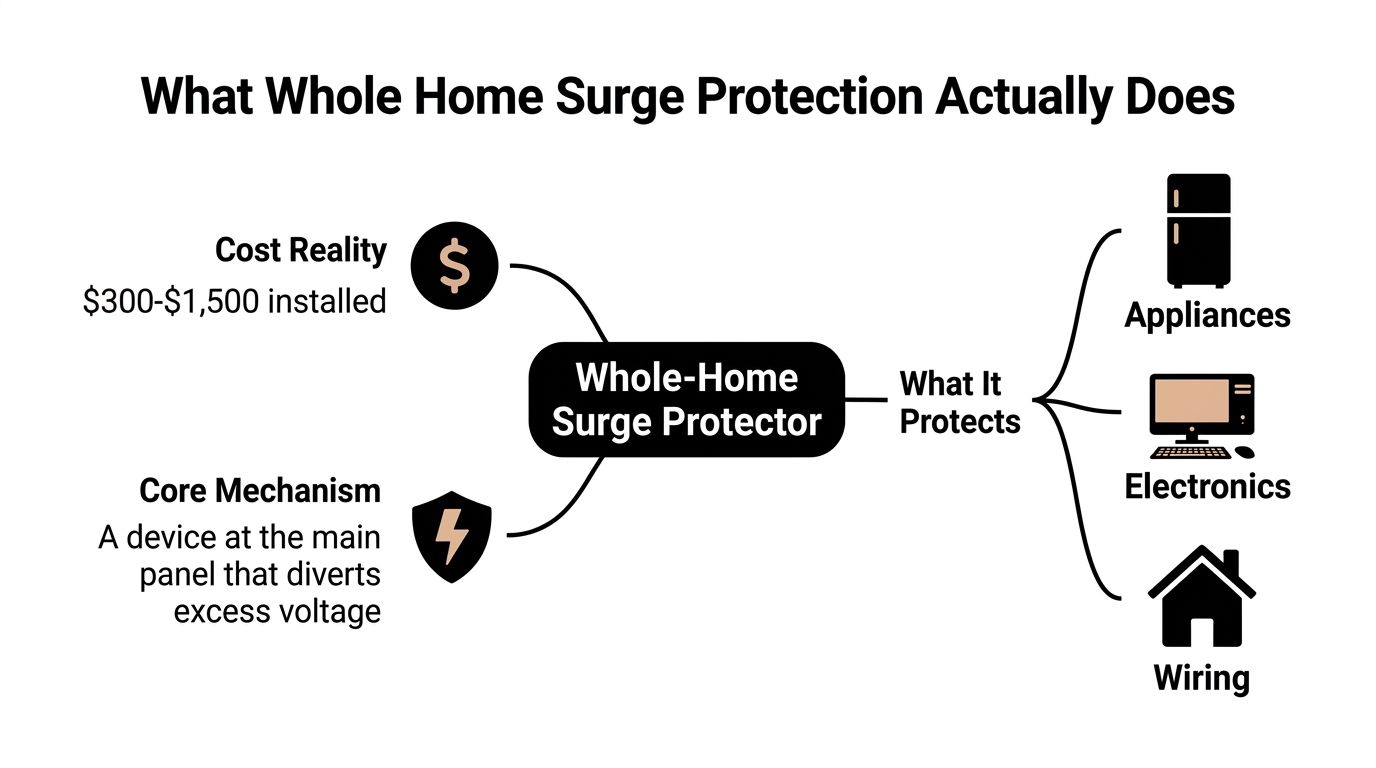
The money question is straightforward, because the installation is usually not the expensive part. A residential whole-house surge protector is often priced in the low hundreds, and professional labor is a separate line item that can add a modest amount on top of the equipment. For a Palm Beach County homeowner, that trade-off makes more sense once you look at how many devices now depend on one electrical panel, from kitchen appliances to network gear and HVAC controls. A diagram explaining that whole home surge protection costs between $300 and $1,500 for installation is here.
The device sits at the panel, not at the outlet
A whole-home surge protective device is mounted at the main electrical panel. Its job is to send excess voltage to ground before that voltage travels through branch circuits and reaches equipment in the house. It works like a pressure-relief valve for the electrical system. Normal power keeps flowing. The device responds when voltage rises above what the wiring and connected equipment should see.
That is the key difference from the plug-in strip under a desk. A strip protects only what is plugged into it, and only on that one branch circuit. A panel-mounted device works upstream, where the disturbance enters the home. In older panel inventories around Boca Raton, Delray Beach, and Jupiter, that upstream placement matters because the service equipment is often where an installer has the cleanest point of control, provided the panel condition allows it.
External surges and internal surges don't behave the same way
Palm Beach County homes deal with both. External surges can come from lightning or utility switching, while internal surges often happen when motors and compressors start or stop. The outside events are the dramatic ones, but the inside events are the ones homeowners live with every day.
A panel-level device is built for the whole-house side of the problem, which is why it belongs in the service equipment. A homeowner who wants a plain-language explanation of the protection path can review this breakdown of whole-home surge behavior. For a broader technical reference, reliable surge guidance for industrial OEMs also helps explain why protection belongs at the point where voltage first enters the building.
A surge protector at the panel is a whole-home safety layer. Power strips still have a place, but they are not the same tool.
Why Your Home Probably Needs One
Surge risk is often underestimated because the damage isn't always immediately visible. A TV might fail, but more often the problem appears later in a control board, a network router, a pool system, or a refrigerator that begins acting strangely after a storm. The key question isn't whether a surge protector costs a few hundred dollars. It's whether the array of equipment in your home is worth protecting as a system.
The modern Palm Beach home is packed with vulnerable electronics
A lot of homes in this area now depend on equipment that used to be optional. Smart TVs, home office gear, pool automation, kitchen appliances, HVAC control boards, and chargers all rely on sensitive electronics. Add in medical devices or home networks that people can't afford to have fail, and the value adds up quickly.
That's why surge protection shouldn't be judged by the price of one outlet strip. It should be judged by the total cost of replacement across the house. A whole-home device reduces the odds that one event takes out several categories of equipment at once.
Florida weather changes the math
Palm Beach County gets the kind of weather that makes electrical protection less theoretical. Frequent afternoon storms create repeated opportunities for surges, and the coastal environment brings its own wear on equipment over time. Homes from Boca Raton to Jupiter also include a wide mix of panel ages, which matters because older electrical inventories often need more careful planning than newer construction.
If a home already has expensive electronics and lives through regular storm season, panel-level protection stops being an upgrade and starts looking like baseline maintenance.
For a practical explanation of common surge sources inside a house, this guide on what causes power surges in a house is worth a look. The main point is simple. Surge strips are only one layer. They're not the whole answer.
Assessing Your Home Before You Buy Equipment
A homeowner can usually tell a lot before buying anything. Walk the property, open the panel door if it is safe to do so, and look at the equipment already carrying the load. You do not need to be an electrician to spot the signs that matter. You need a flashlight, a few quiet minutes, and an honest look at what the home is asking the electrical system to do.
A short readiness check beats a rushed sales conversation
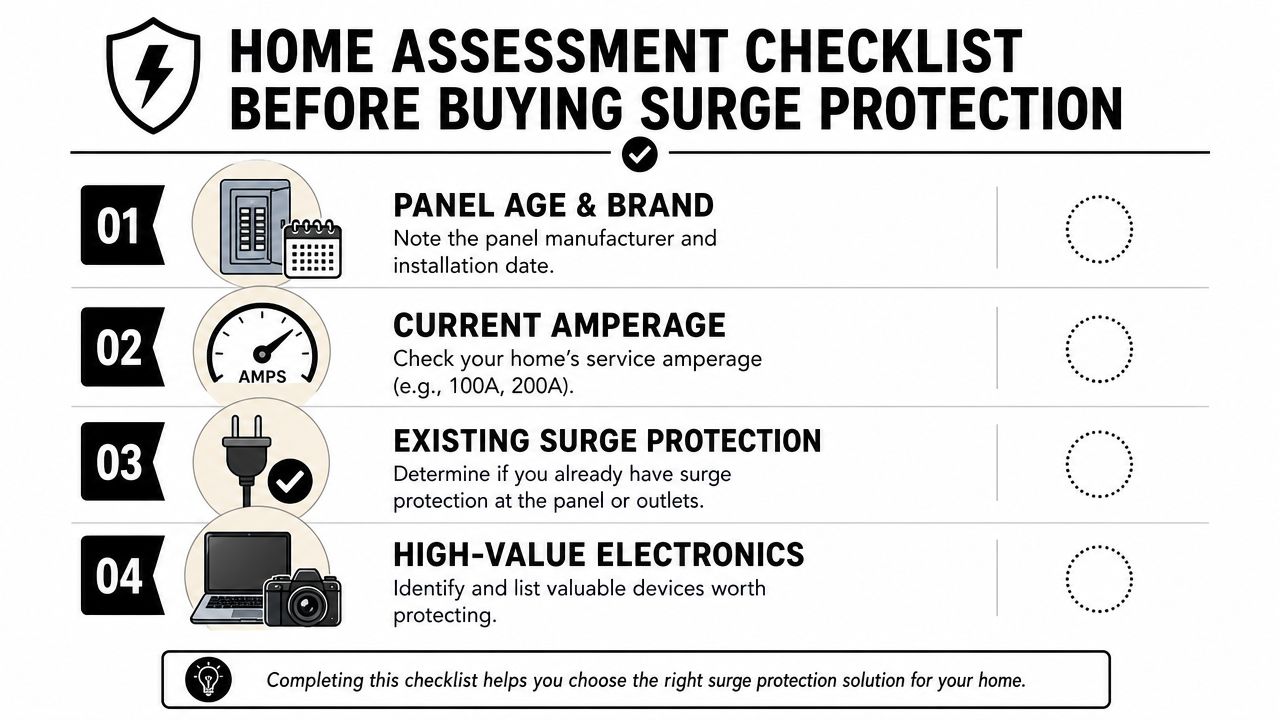
Start at the panel. Check the manufacturer if it is visible, and look for equipment that appears old, crowded, or patched with add-ons that were installed over time. Then ask whether the home already has surge protection at the panel or in a few rooms where sensitive gear is concentrated.
After that, look at the house load. The more high-value electronics a home depends on, the more value whole-home protection tends to have. A home office, entertainment equipment, pool controls, and newer kitchen appliances all raise the stakes. If lights have flickered, devices have reset for no clear reason, or equipment failed after a storm, that is a strong signal to move the project higher on the list.
What to notice around the property
Salt air matters in Palm Beach County. Homes closer to the coast often see more wear on exposed hardware, and that does not automatically mean the entire panel needs replacement. It does mean the inspection has to be more careful. A panel can look tidy from the outside and still have aging terminations or a layout that makes surge protection harder to add cleanly.
A practical read on the home usually falls into a few buckets:
- Panel looks old or crowded: Have a licensed electrician review it before you buy hardware.
- No existing surge protection: The case for installation is stronger, especially where storms are routine.
- Lots of electronics and automation: Protect the panel first, then add point-of-use protection for sensitive devices.
- Recent surges, flickers, or resets: Treat those as warning signs, not background noise.
If you want a simple way to organize what you see before you schedule work, this home electrical inspection checklist resource helps homeowners gather the right information without guessing.
Cost also enters the conversation early. Surge protection is usually a modest add-on compared with the price of replacing damaged electronics, but the final bill still depends on the panel, the service configuration, and whether the installer runs into older equipment that needs extra labor. That is the kind of trade-off a quick walk-through can reveal before anyone starts opening boxes in the truck.
Choosing the Right Device and Rating
The right device depends on where it's installed, how the home is wired, and how much protection you want at the panel versus at the outlet. In residential work, the choice usually comes down to a Type 1 or Type 2 surge protective device, and most Palm Beach County homeowners end up with a Type 2 unit at the main panel plus point-of-use strips for the most sensitive electronics.
Type 1 and Type 2 serve different positions
A Type 1 device is installed at or near the service entrance. A Type 2 device is installed at the distribution side, which is why it's so common in homes. For a homeowner, the distinction is less about jargon and more about placement. The device has to be where the surge can be intercepted effectively, and that depends on the service configuration and the equipment already in place.
The other number people ask about is kA rating, which describes surge current capacity. Higher isn't automatically better for every house. Residential work needs a device sized to the system and installed correctly, not just the biggest label on the shelf. A poorly installed high-capacity device doesn't outperform a properly installed one that matches the panel and the wiring.
| Surge Protective Device Comparison | Install Location | Typical kA Range | Best For |
|---|---|---|---|
| Type 1 | Service entrance or ahead of main panel, where allowed | Varies by product | Homes where the service configuration supports entrance-side protection |
| Type 2 | Main panel or load side | Varies by product | Most residential whole-home installations |
| Point-of-use strip | At the outlet | Not usually compared the same way as panel devices | Sensitive electronics that need local backup protection |
What homeowners actually see quoted
In practice, homeowners tend to be quoted across a wide range because the panel condition, access, and service layout matter as much as the device itself. That's why two homes on the same street can end up with very different pricing and hardware recommendations. The number on the spec sheet is only one part of the decision.
The smartest setup is layered protection. Put the main device at the panel, then add local protection where the most fragile gear lives.
For most Palm Beach homes, the practical answer is a Type 2 unit at the main panel, selected by a licensed electrician who can match the device to the existing service, then supplemented with point-of-use protection for electronics that are especially sensitive.
Permits and Code Requirements in Palm Beach County
Electrical protection work isn't just a hardware decision, it's a compliance decision. In Palm Beach County, the permit question usually turns on whether the work is tied to panel changes, service changes, or other electrical upgrades that require inspection. A homeowner can't treat this like a simple accessory swap if the installation touches the service equipment.
Code adoption changes what gets inspected
Florida's code environment in the 2020s moved surge protection closer to standard practice for certain service work. Contractor guidance based on the 2023 National Electrical Code says Texas required whole-house surge protection for new electrical services and panel upgrades after adopting the code in September 2023, which shows how quickly panel-level protection has become part of mainstream electrical compliance in code-driven markets. Epic Electrical's code-based guidance reflects that shift.
Palm Beach County homeowners should expect the local process to be more formal whenever the work involves the service panel. A licensed electrician should handle the installation, and when the job is tied to a panel upgrade, the permit and inspection process should be part of the plan from the start.
What to ask before the work begins
Before authorizing the job, ask the contractor to confirm who pulls the permit, who schedules the inspection, and what condition could trigger a panel correction. That matters because a clean installation isn't just about making the device work. It's about making the work pass inspection and stay reliable in a humid, storm-heavy coastal environment.
A good contractor also explains whether the existing panel has room for the device, whether there's evidence of corrosion, and whether any upstream work needs to happen first. Those details save homeowners from surprise delays once the installation starts.
A permit process shouldn't feel like a hurdle. It's the paper trail that proves the work was done correctly and inspected properly.
The practical takeaway is straightforward. Let the electrician handle permitting, and don't call the job complete until the inspection is scheduled and closed out.
What Happens on Installation Day
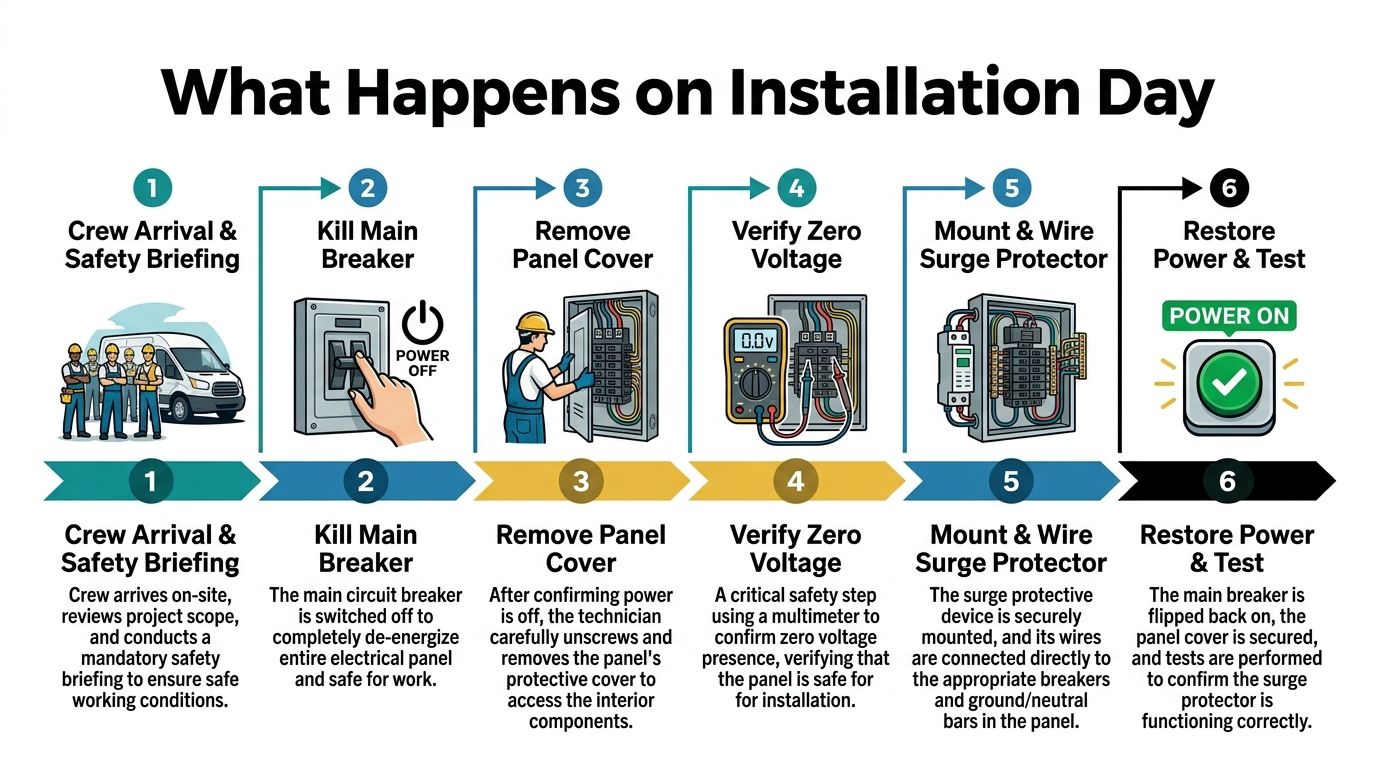
A proper installation looks orderly because the safety steps matter. The crew should arrive with the device sized for the panel, confirm the panel layout, and then shut the system down in the right sequence. Homeowners don't need to watch every move, but they should recognize the major steps.
The sequence that should happen
First comes de-energization. The main breaker is switched off, the panel cover comes off, and a tester confirms that the conductors are dead before anyone touches them. After that, the surge protector is mounted adjacent to the service equipment, and its leads are routed through a knockout so the run stays clean and direct.
Then the conductors are landed according to the manufacturer's instructions, typically to a dedicated double-pole breaker plus the neutral and ground bars where specified. Short, straight routing matters because excess lead length adds inductive impedance and can reduce clamping effectiveness during a fast transient. That detail is easy to miss, but it's one of the things that separates a careful install from a sloppy one.
What a homeowner should look for
A good installer doesn't leave long wire loops or guess at terminations. The work should look tight, deliberate, and consistent with the panel layout. Once power is restored, the indicator light should show healthy operation. If the light is red or off, that's a sign the wiring or the device itself needs review.
The field failure mode is usually not the device, it's skipped verification or incorrect terminations. That's why professional discipline matters more than the box on the truck.
If you want the procedural details behind that sequence, this installation guide for whole-house surge protection lays out the de-energization-and-verification workflow clearly.
For a homeowner, the visit should be relatively contained. No messy guesswork, no mystery wiring, and no pretending the indicator light doesn't matter. The job is finished when the panel is back together, the device is powered, and the system has been checked end to end.
Why Hire Lighthouse Energy Services for the Job
Whole-home surge protection is one of those installs that looks simple until the panel opens. A licensed electrician sees the panel age, the condition of the terminations, the amount of corrosion risk, and the space constraints before anyone mounts a device. In Palm Beach County, that local judgment matters because salt air, frequent storms, and older inventory can turn a routine job into a repair if the installation is rushed.
Why a local licensed crew makes a difference
A bad install usually fails in predictable ways. The leads are too long, the breaker choice doesn't match the device instructions, or the panel conditions weren't checked before work started. A licensed crew works through those details because the panel isn't just a mounting surface, it's the nerve center of the home.
Lighthouse Energy Services brings the kind of local service model that fits this work, with a team that has served the region since 2005, more than 100 years of combined experience, true 24/7 availability, and phones answered by licensed electrical professionals. For homeowners from Boca Raton to Jupiter, that means the call goes to people who already understand the kinds of panels and weather conditions common in the area.
A practical fit for real homes
This is also the kind of project where related electrical work can be folded into one visit. If a home is already planning EV charging or other panel-dependent upgrades, it helps to have one electrician look at the panel as a system. For background on another common home upgrade, the price of installing a wallbox is a useful reference point when homeowners are comparing panel work across projects.
Lighthouse Energy Services can handle the kind of install that needs care at the panel, along with the permitting and inspection coordination that keeps the work clean. If your home is near the coast, has an older panel, or has already seen a few storm-related flickers, that's the right time to schedule an assessment and get the protection sized correctly.
A CTA for Lighthouse Energy Services.