
Natural gas supplied about 75% of Florida's electricity generation in 2022 (U.S. Energy Information Administration), which means most lights, outlets, AC systems, and commercial equipment in the state are still being powered by a non renewable fuel. For a Palm Beach County homeowner, that matters in a very practical way, because the fuel mix behind the grid shapes reliability, bill pressure, and how your property behaves when storms, heat, and demand all hit at once.
Table of Contents
- What Florida's Power Grid Looks Like in 2026
- Understanding Nonrenewable Energy
- Inside Florida's Nonrenewable Energy Mix
- Reliability, Infrastructure and Cost Impacts
- How Policy Shapes Florida's Energy Future
- Reducing Dependence at the Property Level
- Action Plan for Palm Beach County Homes and Businesses
What Florida's Power Grid Looks Like in 2026
Florida's grid is still heavily shaped by natural gas, and that's the first thing to understand about non renewable energy in Florida. In 2022, natural gas supplied about 75% of Florida's electricity generation, while coal fell to about 6%, down from 36% in 2001, and renewables such as solar and biomass contributed only about 7% of in-state generation (EIA Florida analysis). That's not a balanced mix, it's a system that still leans hard on one fuel.
For a homeowner in Palm Beach County, that shows up less as a headline and more as a monthly pattern. When a grid depends so much on one fuel and on large central plants, the whole system is more exposed to storm disruption, peak demand strain, and fuel-related cost swings. If your AC runs all afternoon, your pool pump cycles, and your appliances come on at the wrong time, you're not just using electricity, you're depending on the way that fuel mix is managed upstream.
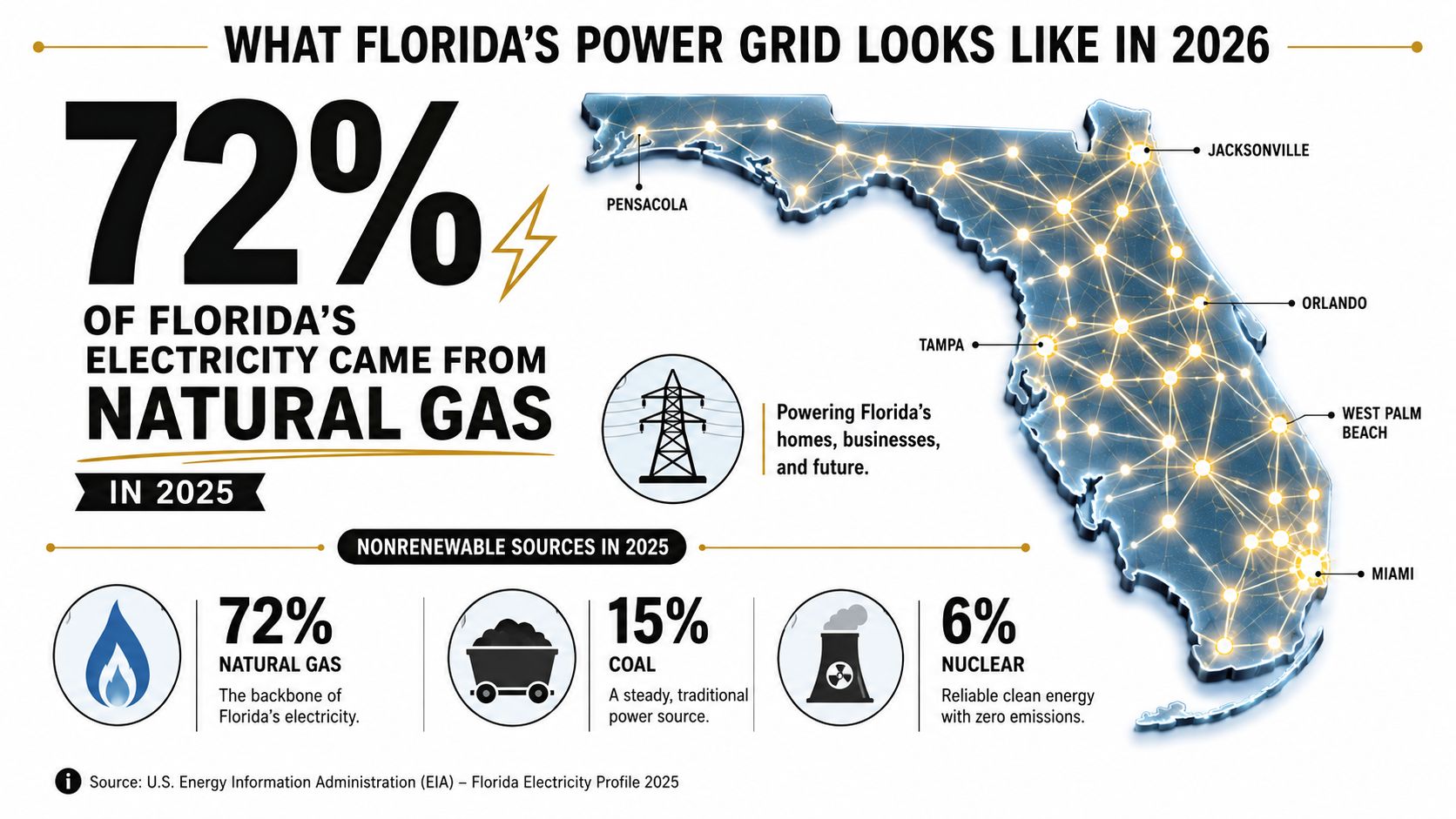
The useful question isn't whether Florida has electricity. It's what's feeding it, how stable that supply really is, and what a property owner can do to make their own usage less expensive and less fragile. If you've ever wondered why one storm can ripple into an outage, or why a home with decent equipment still runs up a big bill in summer, the fuel mix is part of the answer. For a deeper look at how power gets from the utility side to the building side, see electrical distribution systems.
Practical rule: If a property depends on cooling, refrigeration, or digital equipment, the grid's fuel mix matters even when the lights seem ordinary. The less margin your property has, the more that upstream dependence shows up during heat and outage events.
Understanding Nonrenewable Energy
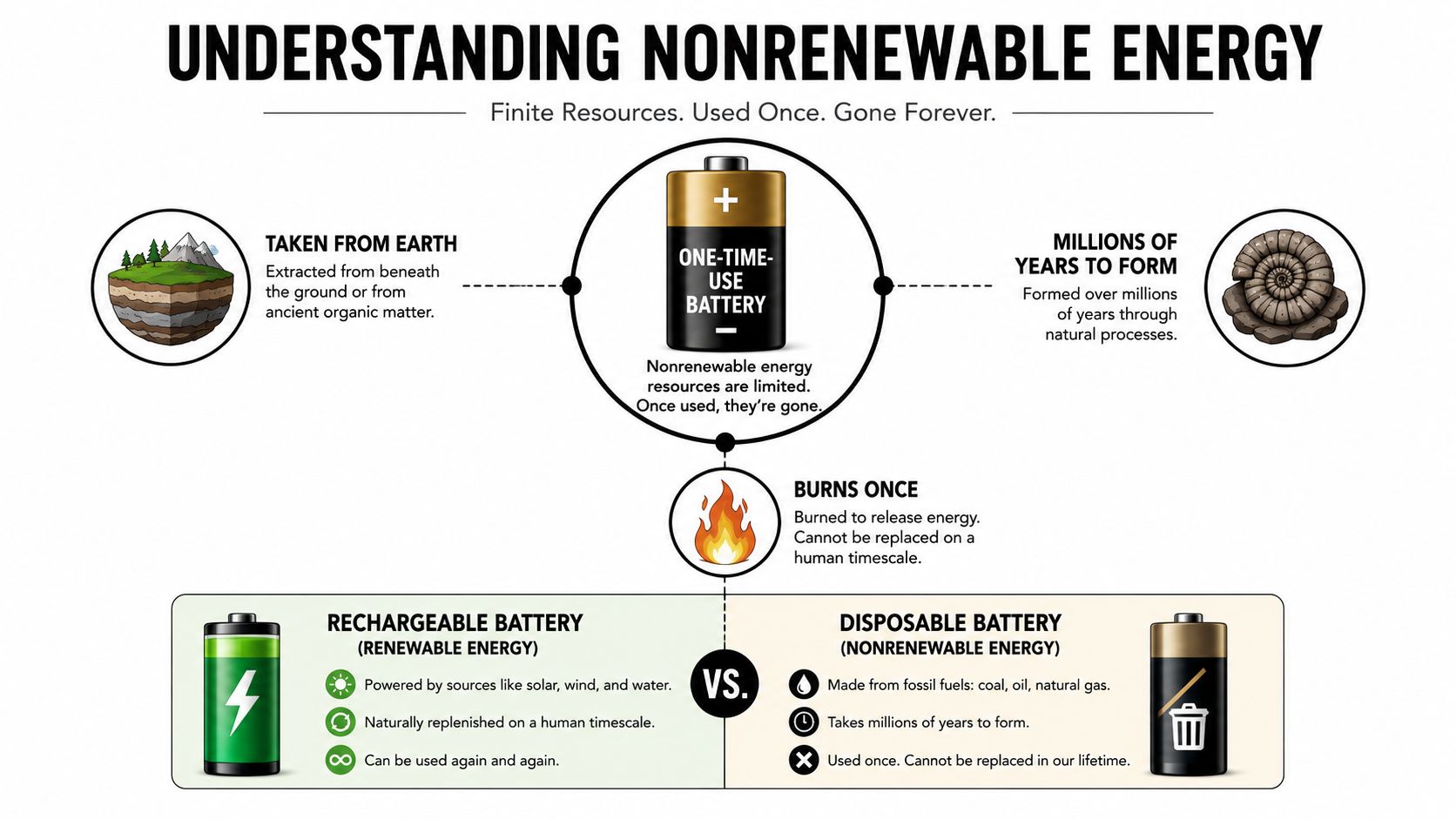
Nonrenewable energy is easier to understand as a battery you can't recharge. Once you use it, it's gone on a human timescale. That's the basic difference between a finite fuel and a source that can be replaced naturally and repeatedly, like solar or wind.
Why the label matters
The term nonrenewable doesn't only describe how a fuel is found, it describes how quickly nature makes it again. Fossil fuels like coal, oil, and natural gas were formed over geologic time, then extracted and burned in a matter of hours or days. Nuclear power is different in chemistry, but it still depends on mined fuel that isn't replenished on a household or utility planning timeline.
That difference matters because electricity systems are long-lived. Utilities build plants, pipelines, substations, and transmission lines around fuel choices that can last for decades. Florida's grid reflects that history, which is why the state's current supply still centers on large fuel-dependent assets rather than a broad mix of many smaller sources.
What homeowners usually mix up
People often lump every “energy source” together, but the grid doesn't work that way. Solar and wind are renewable because the sun and wind keep coming back. Natural gas, coal, and oil are not, because every kilowatt-hour made from them requires burning something that had to be dug up, drilled, processed, and delivered.
That's why a home can install efficient lighting or a smart thermostat and still be connected to a very fossil-heavy system. The device in the house may be efficient, but the power feeding it can still come from a nonrenewable source. The homeowner sees the bill, not the fuel chain, so the distinction gets missed.
A good way to explain it to clients is simple, the meter measures electricity, not the fuel history behind it. The fuel mix is hidden, but the costs and outage risks are not.
Inside Florida's Nonrenewable Energy Mix
Florida's electricity mix shows a clear shift in how the state has been powered over time. As noted in the earlier grid overview, natural gas now carries most of the load, while coal has been pushed far down the stack and renewables still make up a smaller share. The larger trend matters more than any single year, because it shows how the state moved from a broad fossil-heavy mix toward one fuel doing most of the work, which is the kind of concentration that affects both reliability and cost for homeowners and businesses in Palm Beach County. EIA Florida analysis
That shift did not come from a clean break to renewable power. Coal lost ground mostly to gas, so Florida became less coal-dependent without becoming less dependent on nonrenewable fuel overall. A separate federal profile also describes Florida's long reliance on fossil fuels and nuclear power, with renewable generation playing only a limited role in the earlier system record DOE Florida Energy Sector Risk Profile. For a homeowner, that is the key point, the meter may show electricity use, but the fuel mix behind it still shapes what shows up on the bill and how resilient the grid feels during a storm.
Florida Electricity Generation by Source
| Source | Type | Approximate Share (2022) | Trend |
|---|---|---|---|
| Natural gas | Nonrenewable | About 75% | Rose sharply over time |
| Coal | Nonrenewable | About 6% | Fell steeply from earlier levels |
| Renewables such as solar and biomass | Renewable | About 7% | Present, but still small |
| Oil | Nonrenewable | Not quantified in the verified data | Minimal compared with gas |
| Nuclear | Nonrenewable fuel cycle, but not fossil | Not quantified in the verified data | Part of the broader nonrenewable system |
The older federal snapshot shows how concentrated the system already was before the most recent shift became so pronounced. Florida produced 149.7 TWh of electricity from natural gas, compared with 44.3 TWh from coal, 17.9 TWh from nuclear, and 0 TWh from other renewable electricity in that snapshot DOE Florida Energy Sector Risk Profile. Read that next to the more recent mix, and the pattern is clear, the state did not move toward a balanced set of many fuels, it moved deeper into a gas-centered system.
That same dependence still shapes the grid today. More recent system data show that Florida's renewable electricity net summer capacity reached 13,030 MW by September 2025, equal to only 3.3% of total net summer capacity, while the state still used 4,302 trillion Btu of total energy in 2023 DOE Florida Energy Sector Risk Profile. For property owners, the practical lesson is straightforward. A fuel-heavy grid can keep the lights on for a long time, yet it also leaves more exposure to fuel price swings, plant outages, and the kind of service problems that make homeowners ask why the bill keeps climbing. If you want a plain-English breakdown of that issue, see why your electric bill is so high.
For business owners trying to protect revenue, the same fuel concentration can make controls inside the building matter more than people expect. Better scheduling, load management, and thermostat control do not change Florida's generation mix, but they can reduce avoidable runtime and help boost NOI with smart thermostats when utility costs stay high.
The big takeaway is simple. Florida's coal share fell hard, but the gap was filled mainly by gas, not by a wide renewable shift. The result is a system that looks less coal-heavy than before, yet still depends heavily on fossil-fuel dependent generation, with nuclear still part of the broader nonrenewable footprint.
Reliability, Infrastructure and Cost Impacts
A gas-heavy grid can work fine on an ordinary day, then show its weakness fast when weather and load change at the same time. In South Florida, that's not theoretical. A hurricane outage, a feeder fault, or a peak summer afternoon can leave a property waiting on a system that's already working hard before the event even starts.
Why the grid feels tight when the weather turns
Natural gas generation depends on fuel delivery, plant availability, and transmission working together. If one link gets stressed, the others have less room to absorb the hit. Older infrastructure adds another layer of risk, because equipment that's been carrying load for years doesn't get easier to maintain when storms, corrosion, and heat keep pressing on it.
For homeowners, the practical result is simple. A property can have working appliances and still experience nuisance trips, short outages, voltage issues, or delayed restoration after a storm. Businesses feel it even more when refrigeration, security systems, network gear, or point-of-sale equipment has to stay online.
Why bills move even when you use the same amount
Fuel-dependent systems also create cost exposure. When utility fuel costs rise, that pressure can flow through to customer bills through the utility's rate structure and adjustment mechanisms. A homeowner can be careful with usage and still feel bill shock if the underlying generation cost rises or if a property's equipment is inefficient.
That's why a bill review should start with the load side, not just the utility side. If your HVAC is short cycling, if an air handler is fighting bad controls, or if a water heater is working harder than it should, you're paying for wasted runtime on top of the grid cost. For a plain-language breakdown of common billing drivers, see why your electric bill is so high.
Contractor's view: The cheapest kilowatt-hour is the one your property never needs. Cutting waste lowers the amount you buy, and that protects you whether the issue is fuel cost, storm recovery, or summer peak demand.
A practical example
Think of a medical office or small retail space after a storm. The utility restores service, but the building still has a control issue, a loose connection, or a thermostat problem that keeps equipment cycling too often. That property pays twice, once for the interruption and again for the extra energy consumed after service returns. A licensed electrician can find the weak point before it turns into another callout.
If your building manager wants to reduce runtime waste, remote monitoring can help spot spikes and abnormal schedules before they become expensive. A useful example is boost NOI with smart thermostats, especially where comfort, occupancy, and HVAC control all need to stay aligned.
How Policy Shapes Florida's Energy Future
Florida's dependence on nonrenewable generation sits inside a policy setting that mixes public clean-energy messaging with slower change on the ground. Federal and academic work on Florida energy equity and resilience shows that low-income and underserved communities remain a central concern in the transition, yet the practical questions stay the same. Who gets relief first, who pays, and whether resilience investments reduce dependence where people live and work (OSTI review on Florida energy equity and resilience).
What regulation can and can't do
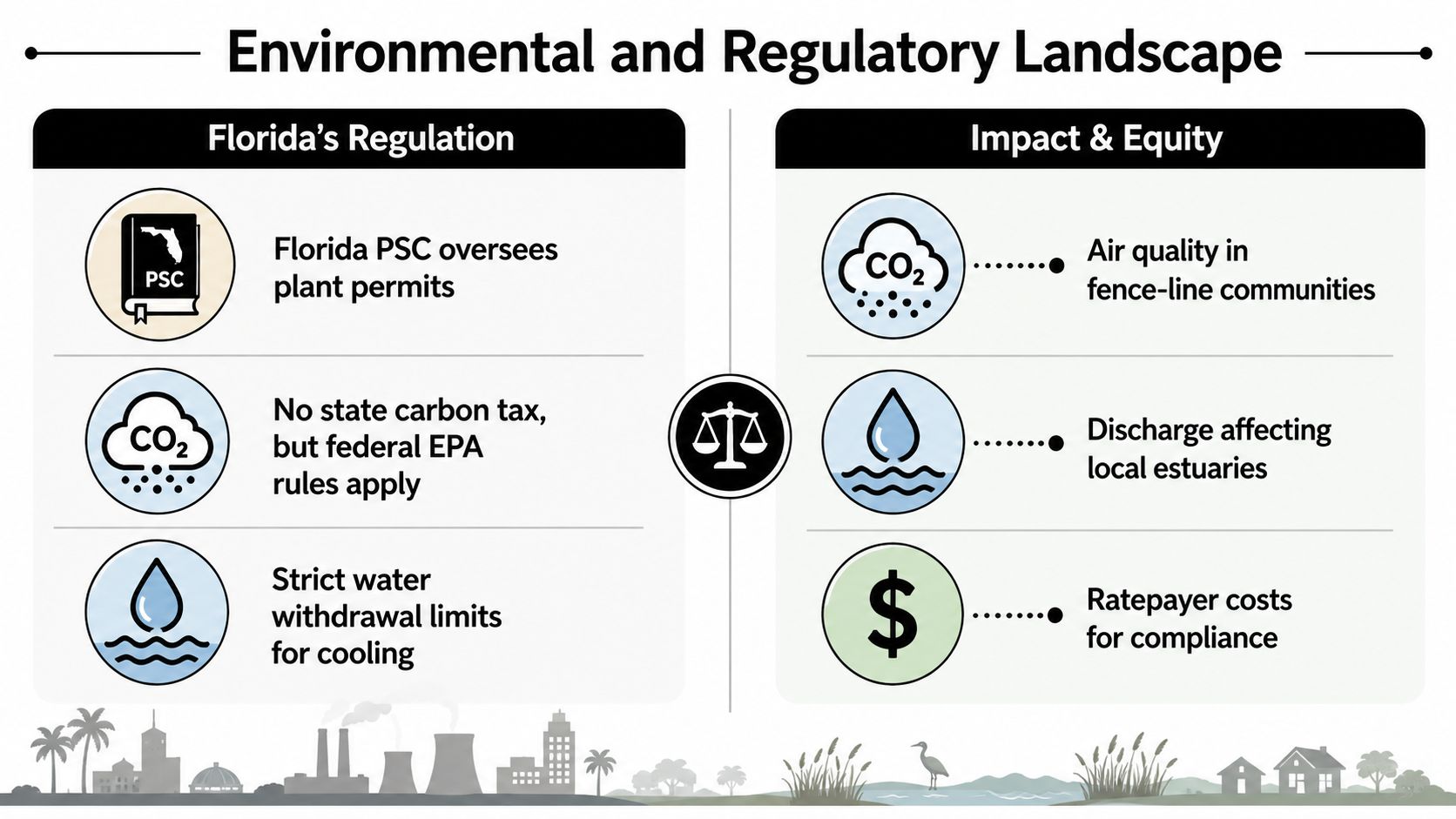
Regulation can shape permits, emissions compliance, and utility planning. It can also slow or speed the pace at which cleaner assets get built. What it cannot do is instantly change the fact that Florida already runs a grid built around gas and other nonrenewable assets.
That gap matters because public messaging and real-world results do not always line up. A state can talk about resilience and clean energy while the generation mix still depends heavily on gas and renewable deployment stays uneven. Homeowners and business owners notice that mismatch when the promise sounds broad but the bill, outage risk, or equipment performance looks very local.
Why equity comes up in the same conversation
Environmental burdens do not fall evenly. Communities near heavy infrastructure often live with more local exposure to air and water impacts, while ratepayers across the state share the cost of compliance, repairs, and fuel. In coastal Florida, that matters because energy systems already operate in a sensitive setting where water constraints and discharge concerns add pressure on plant siting and operations.
Compliance also has a practical side for property owners. When utilities or large facilities retire old equipment, replace controls, or manage site cleanup, businesses need a clear way to handle the equipment that comes out of service. For Florida firms dealing with old panels, cabling, controls, or equipment from building upgrades, e-waste disposal for Florida firms becomes part of the transition conversation.
The difference is between real levers and symbolic ones. Real levers change what gets built, what gets retired, and how properties use energy every day. Symbolic talk may sound forward-looking, but it does not lower a bill, improve a backup plan, or make a facility more resilient after a storm.
For a homeowner or small business in Palm Beach County, the policy side only matters if it changes what happens at the meter, at the panel, or at the thermostat. A clear look at your own load is still the fastest way to control costs, and how to reduce home electricity bill is a useful starting point for that kind of review.
Reducing Dependence at the Property Level
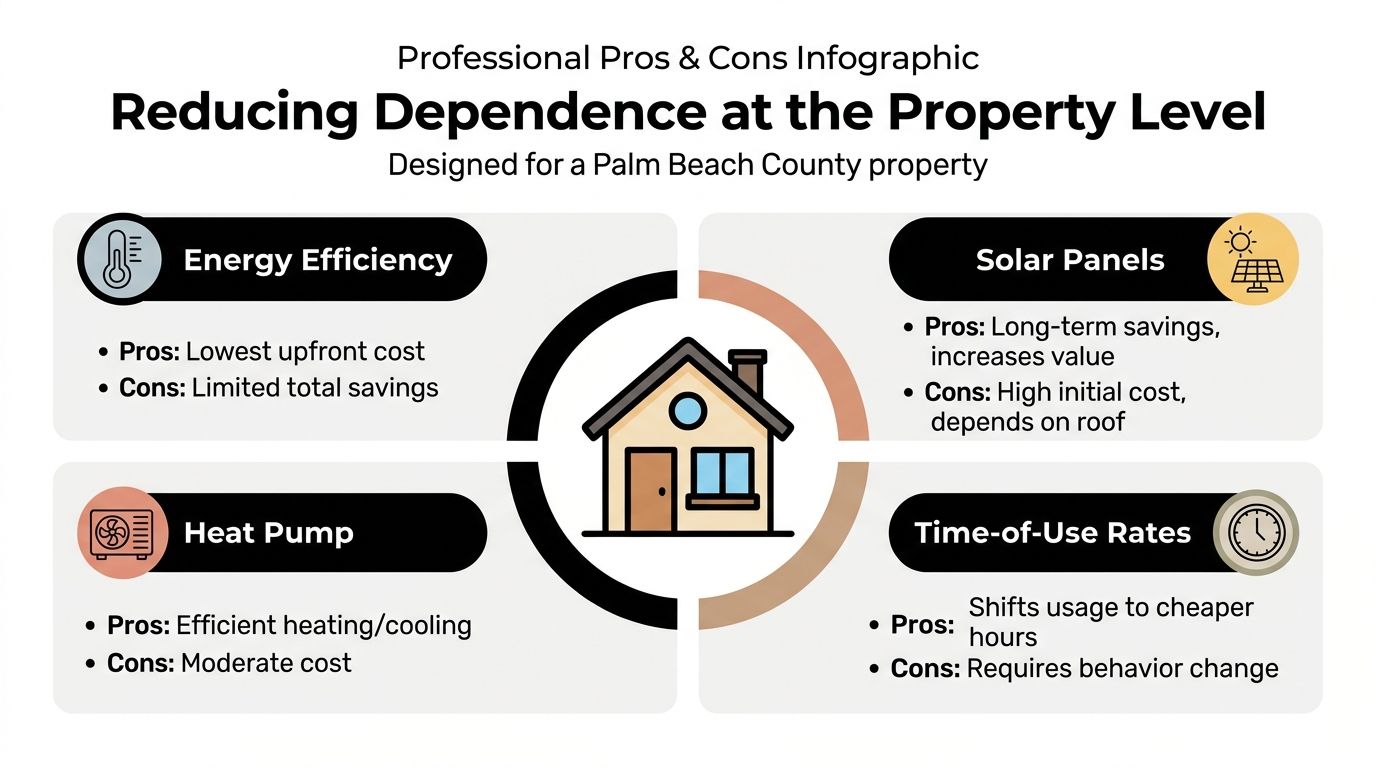
The best way to lower exposure to a nonrenewable grid is to cut how much energy your property needs in the first place. For most Palm Beach County homes and businesses, the practical options fall into four buckets, efficiency, electrification, backup power, and solar with storage. They don't do the same job, and they're not equally useful for every property.
Which lever fits which property
Efficiency is usually the first move because it lowers the load you already have. Sealing duct leaks, fixing controls, replacing failing parts, and tuning HVAC operation can all reduce waste without changing how the building works day to day. If your house or storefront is comfortable but expensive, this is often the clearest starting point, and how to reduce your home electricity bill gives a useful framework for that kind of work.
Electrification makes sense when old combustion equipment is due for replacement and the building can benefit from modern electric systems. A heat pump can be a strong option in Florida because it handles cooling and heating with one system, but the value depends on installation quality, duct condition, and how the rest of the property is wired.
Backup power is about resilience, not savings. If you need refrigeration, security, or critical IT to survive an outage, then a generator or battery-backed setup may be worth it even if it doesn't lower your monthly bill. The right choice depends on runtime needs, maintenance tolerance, and how often the property can afford downtime.
Solar with storage can reduce grid dependence, but it's not a blanket answer. Roof condition, shading, salt exposure, and space for equipment all matter in coastal Florida. For some properties, the right move is a hybrid approach, reduce the load first, then decide whether solar and storage are worth the capital expense.
If the building wastes less, every other solution gets easier. Smaller loads need smaller backup systems, smaller panels, and less utility energy overall.
A note on transportation and property planning
Energy use at a property doesn't stop at the breaker panel. If a homeowner or community is thinking about vehicle charging or shared mobility planning, it helps to look at EV and LSV options for communities in the context of the property's real electrical capacity. Charging choices should follow the wiring, service size, and daily load profile, not the other way around.
For one local option, Lighthouse Energy Services also installs the Smartcool ECO3 device, which is designed to help optimize AC use and lower electricity consumption. That kind of device only makes sense in the right system, but it fits the broader strategy of reducing waste before buying more power.
Action Plan for Palm Beach County Homes and Businesses
Start with a short walk-through of the property, then look for the obvious waste. Check whether lights, fans, refrigeration, pool equipment, and HVAC controls are running when they shouldn't be. If a system is short cycling, making unusual noises, or tripping breakers, that's not a bill problem first, it's an electrical problem first.
Next, separate the work into fast fixes and bigger projects. Fast fixes usually include control issues, bad timers, loose connections, worn devices, and equipment settings that don't match the property's actual schedule. Bigger projects usually involve panel capacity, backup power planning, new circuits, or replacing older equipment that's no longer efficient or reliable.
What to ask before you hire anyone
- Licensing and scope: Confirm the electrician is licensed for the kind of residential, commercial, or industrial work you need.
- Storm readiness: Ask whether they handle after-hours troubleshooting, because outage-related problems don't wait for business hours.
- Clear pricing: Request transparent pricing before work starts, so you're not guessing about labor or parts.
- Load planning: Make sure they look at how the property uses power, not just the device that failed.
- Future needs: If you may add solar, storage, EV charging, or backup equipment later, bring that up before any panel or circuit changes are made.
Then decide whether the project is about comfort, continuity, or cost. Comfort projects are usually control and efficiency jobs. Continuity projects usually involve backup power or critical-circuit planning. Cost projects usually start with the biggest waste, because a property that uses less electricity gives you more room to absorb the rest of the grid's nonrenewable dependence.
If you want a licensed electrician to assess load issues, repair problem circuits, or plan upgrades that fit a Palm Beach County property, Lighthouse Energy Services works on residential, commercial, and industrial electrical systems with 24/7 availability. Visit Lighthouse Energy Services to schedule service and get a practical plan for lowering waste, improving reliability, and keeping the property ready for the next outage or heat wave.