That shocking number staring back from your monthly statement usually has a pretty simple explanation. When you ask, "Why is my electric bill so high all of a sudden?" the answer always comes down to two things: how much electricity you used (your consumption) and what your utility charges for it (your rate). A sudden spike just means one—or both—of those numbers went up, often without you even noticing.
Your High Electric Bill: The Simple Answer and First Steps
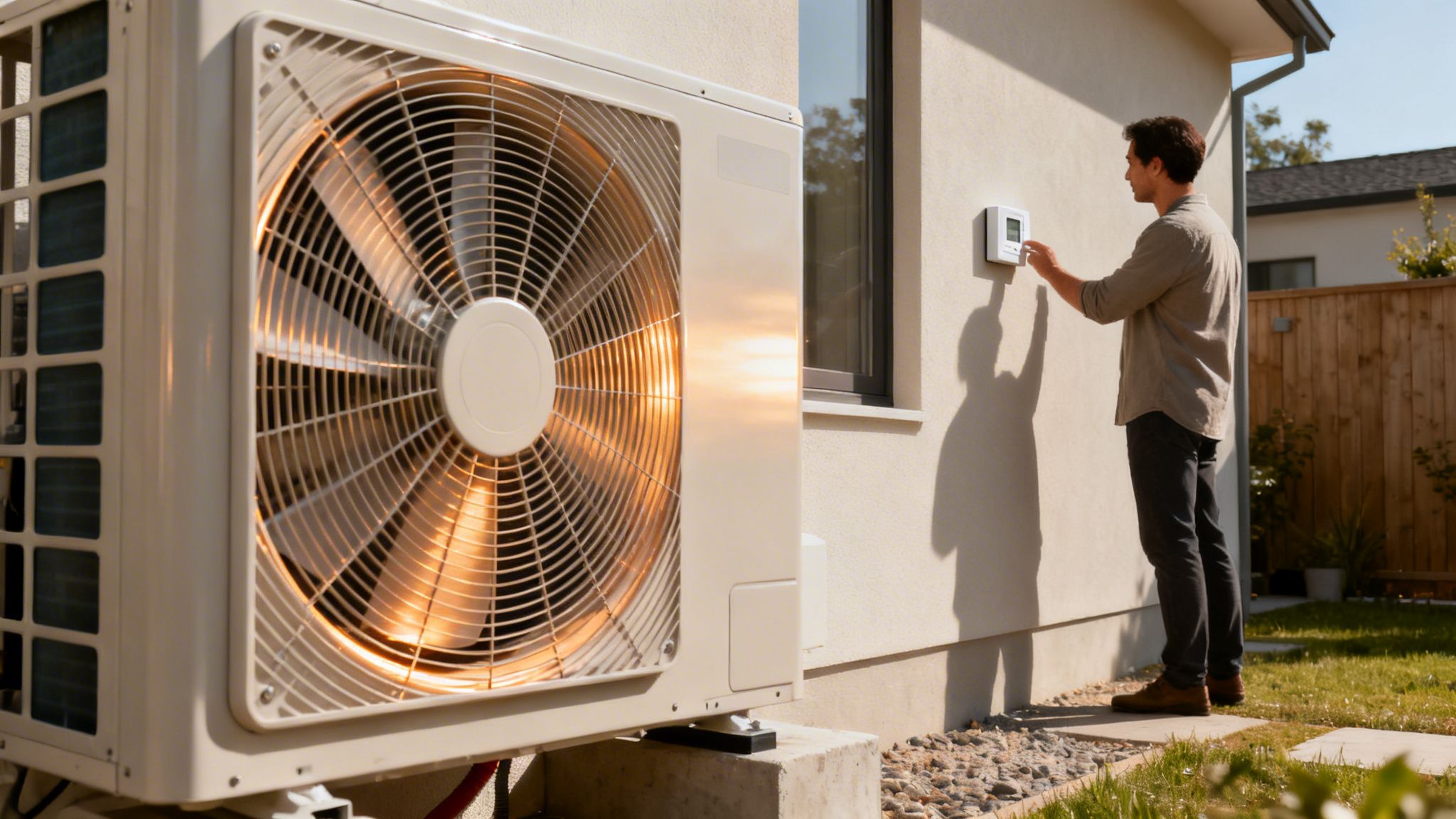
Opening an electric bill that's way higher than you expected is frustrating. We've all been there. But figuring out the mystery is easier than you think.
The best way to look at your bill is like a grocery receipt. The total goes up for two reasons: you either bought more stuff (increased consumption) or the price of everything went up (a rate hike). Often, both happen at the same time.
For instance, a classic Palm Beach County heatwave can make your AC work overtime, which sends your consumption through the roof. At the same time, your utility provider might have rolled out a seasonal rate adjustment, quietly raising the price you pay for each kilowatt-hour (kWh)—the unit of energy they bill you for.
Figuring out which of these is the main culprit is your first step to getting things back under control.
Diagnosing the Cause: Usage vs. Rates
So, where do you start? Before you can fix the problem, you have to find its source. Was it a change in your family's habits, or did something else change the price of power? The average U.S. household used about 899 kWh per month in 2022, but your own use can swing wildly depending on the weather and your lifestyle.
Your electricity bill is a direct reflection of supply and demand. Increased personal demand (usage) or increased market demand (which affects rates) will both lead to higher costs. Pinpointing the cause is essential for finding the right solution.
The real trick is to compare your latest bill with one from last month and, more importantly, with the bill from the same month last year. You’re looking for two specific numbers: your total kWh used and the rate charged per kWh. This simple comparison will tell you exactly what happened.
- Higher kWh Usage: If you see a big jump in your kWh consumption but the rate per kWh is the same, the problem is inside your house. This points directly to things like running your appliances more, an inefficient HVAC system, or maybe some new power-hungry electronics.
- Higher Rate per kWh: If your usage looks normal but the cost per kWh went up, the cause lies with your utility provider. This is often due to fuel cost adjustments, fees for grid upgrades, or a switch to a time-of-use (TOU) pricing plan where electricity costs more during peak hours.
- Both Are Higher: This is the perfect storm for a record-high bill, and it’s pretty common. Your usage went up right as your utility company raised its rates.
Quick Diagnosis: Common Causes of a High Electric Bill
Feeling a little overwhelmed? Don't be. This table is a great starting point to quickly figure out what might be going on. It separates the issues you can control (your usage) from the ones you just need to be aware of (the rates).
| Potential Cause | What to Check First | Is This a Usage or Rate Issue? |
|---|---|---|
| Extreme Weather | Compare current kWh usage to a milder month. | Usage |
| Inefficient HVAC System | Check if the AC runs constantly or cycles frequently. | Usage |
| Energy Vampires | Unplug non-essential electronics for a day. | Usage |
| Utility Rate Increase | Review the "price per kWh" on your last few bills. | Rate |
| Time-of-Use (TOU) Plan | Check if you're using major appliances during peak hours. | Rate & Usage |
| Aging Appliances | An old refrigerator or freezer can consume excess power. | Usage |
By running through these common causes, you can quickly narrow down the suspects and get a much clearer picture of why your bill shot up. From there, you can start taking targeted steps to fix it.
The Bigger Picture Driving Record Electricity Demand
Ever feel like your electric bill has a mind of its own? That higher number isn't just a personal problem—it’s a symptom of a massive shift happening across the entire country. Record-breaking electricity demand is putting a serious strain on our national power grid, and your bill reflects that pressure.
Think of the power grid as a giant highway system. For decades, the traffic flow was pretty predictable. Now, we’re in a permanent, system-wide rush hour that never seems to end. This isn't just because of more people or more homes; it’s driven by new, incredibly power-hungry technologies that are becoming part of our daily lives.
This infographic breaks down the two main forces pushing your bill higher, showing how your own usage collides with external rate pressures.
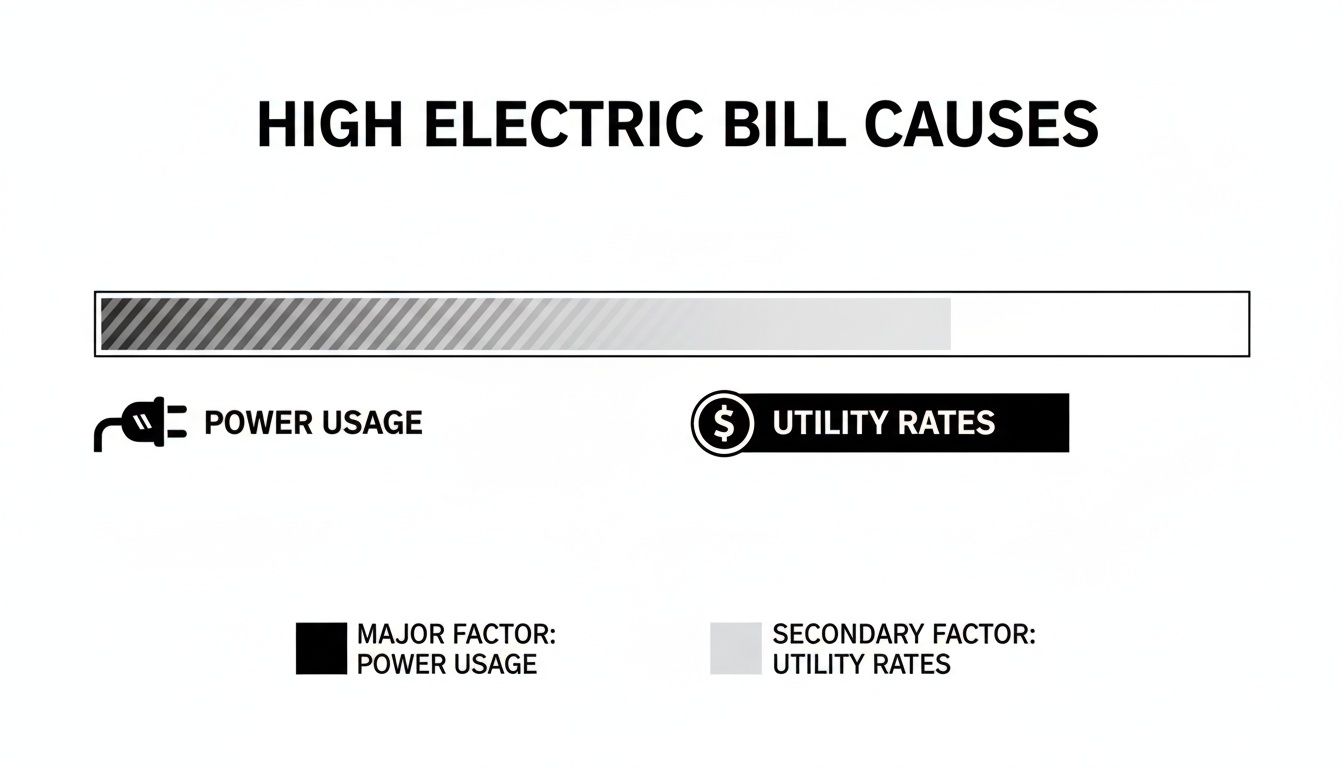
As you can see, both your personal power consumption and the utility's rates shape your final bill. But the factors driving those rates are getting more complex and, frankly, more expensive.
The New Sources of Power Demand
So, where is all this new demand coming from? A few key industries have developed an insatiable appetite for electricity. Their consumption is so huge that it directly impacts the "toll"—or the rate—that every single one of us pays to use the grid.
- Data Centers: These are the physical engines of the internet, cloud computing, and now, artificial intelligence. Every movie you stream, app you use, or AI-powered search you run taps into a data center that needs a staggering amount of electricity to operate and stay cool.
- AI and Cryptocurrency: Training artificial intelligence models and mining for cryptocurrency are exceptionally energy-intensive jobs. They require immense computational power, which translates directly into massive electricity consumption.
- Mass Electrification: We're also right in the middle of a major societal shift, swapping out fossil fuels for electricity in everything from our cars (electric vehicles) to the way we heat our homes (heat pumps).
This isn't just a temporary spike. The demand from these new technologies is forging a new, permanently higher baseline for national energy use. This is a structural change, meaning the grid has to work harder than ever, and the cost of maintaining and expanding it gets passed on to all of us.
The Data Center Boom and Your Bill
The explosive growth of data centers is a major reason why your electric bill is so high. Their electricity use has surged by a mind-boggling 400% over the last decade, with a 150% leap in just the past five years. This is the single biggest factor driving up U.S. power demand.
In fact, the U.S. Energy Information Administration now projects that our total power consumption will hit new record highs in both 2025 and 2026. When these large-scale operations gobble up so much power, they drive up wholesale prices. Those costs are inevitably passed down to residential customers like you. You can see the data for yourself in the 2026 energy factbook from Bloomberg NEF.
This surge means utility companies have to generate or buy more power while also making massive investments to upgrade an aging grid that wasn't built for this kind of load. Those multi-billion dollar projects for new power plants and transmission lines are paid for through rate hikes on your monthly bill.
Understanding this bigger picture is crucial. It means that making your home more energy-efficient is no longer just a "green" choice or a nice way to save a few bucks. It’s now an essential financial strategy to protect your household budget against powerful market forces that are set to drive electricity costs higher for years to come.
Your HVAC System: The Number One Energy Consumer
When you’re trying to figure out why your electric bill suddenly shot up, there’s one appliance that should always be your prime suspect. Here in the relentless Palm Beach County heat, your air conditioning system is hands down the biggest energy hog in your home. It’s not unusual for it to be responsible for more than half of your total electricity usage, especially during those sweltering summer months.
Think of your HVAC system as your home's engine. When everything is running smoothly, it keeps you cool and comfortable without burning a hole in your wallet. But the moment it starts to struggle, it turns into an energy guzzler. So, if you're asking, "why is my electric bill so high?" the answer almost always starts with your AC.
The Slow Leaks That Drain Your Wallet
An inefficient air conditioner is a lot like a car with a slow leak in a tire. Sure, the car still drives, but the engine has to work much harder just to maintain its speed, guzzling way more gas in the process. Your HVAC system does the exact same thing when it's not in top shape.
Several common issues can force your system into overdrive, making it run longer and more often just to hit the temperature you set on the thermostat. Every extra minute it runs is another dollar added to your bill.
These problems tend to creep up on you, so you might not even notice them—until that bill arrives.
- Dirty Air Filters: A clogged filter is the most common culprit, and luckily, the easiest to fix. It chokes off the airflow, forcing the fan motor to strain and the entire unit to run longer just to cool your home.
- Low Refrigerant Levels: Refrigerant is the lifeblood of your AC unit. If it’s running low because of a leak, your system loses its ability to cool the air effectively. This can cause it to run almost nonstop without ever making the room comfortable.
- Aging Components: Like any machine, HVAC systems wear out. An older unit, especially one that’s over 10-15 years old, is naturally going to be less efficient than a modern one and will use a lot more power to do the same amount of work.
- Poor Maintenance: When you skip those annual tune-ups, small problems like dirty coils or a failing capacitor get missed. Over time, these little inefficiencies add up to a major drain on your power.
When your HVAC is forced to run inefficiently, it doesn't just spike your bill. It also puts a ton of extra strain on every part, which can lead to premature breakdowns and expensive repair calls.
A Smarter Way to Cool Your Home
For decades, the only real fix for an inefficient AC was a painful repair bill or a full, costly replacement. But what if you could make your existing system smarter without having to rip it out and start over? Thankfully, technology now gives us a more direct way to get significant savings.
The secret to lowering your cooling costs isn't just about using your AC less—it's about making the time it does run as efficient as possible. This is where cycle optimization comes in.
This is precisely what the Smartcool ECO3 device was built for. You can think of it as installing "smart cruise control" for your air conditioner's compressor, which is the single most power-hungry component in the whole system. The ECO3 intelligently optimizes the compressor's running cycles, making sure it never works harder than it absolutely has to.
By analyzing your system's performance and preventing wasteful overcooling, it slashes the compressor's runtime and energy draw. This focused approach can cut your total cooling costs by up to 25%. It's a powerful upgrade that delivers real, measurable savings month after month.
Of course, managing airflow throughout your home is also vital for HVAC efficiency. For more on how proper ventilation affects your home's temperature, you might want to read our guide on attic fan installation costs and benefits.
Getting a handle on your HVAC system's performance is the single most impactful step you can take to bring down a high electric bill. Whether it's through simple maintenance or a strategic upgrade like the ECO3, focusing on this energy giant will give you the biggest bang for your buck.
Finding Your Home's Hidden Energy Vampires
If your HVAC system checks out but your electric bill is still stubbornly high, it’s time to look for the less obvious drains on your power. Your home is likely filled with "energy vampires"—devices that quietly suck electricity around the clock, even when you think they’re off.
It’s a lot like a slow leak from a faucet. A single drop seems like nothing, but when you have dozens of small drips all over the house, you end up wasting a shocking amount of water. These phantom loads work the same way, constantly drawing a small bit of power to light up a display, stay connected to Wi-Fi, or listen for a remote control signal.
The Usual Suspects: Common Vampire Appliances
These sneaky power consumers are often hiding in plain sight. We’re talking about anything with a standby light, a digital clock, or an "instant-on" feature. Some of the most common offenders to put on your watch list include:
- Entertainment Systems: Your TV, cable box, and gaming consoles are notorious for this. They use a surprising amount of power just sitting there, waiting for you to press a button on the remote.
- Kitchen Gadgets: That glowing clock on your microwave or coffee maker? It’s always on, always drawing power. Even a smart toaster or air fryer in standby mode is adding to your bill.
- Chargers and Adapters: Any charger left plugged into the wall pulls a small amount of electricity, even if no device is connected. With a house full of chargers for phones, laptops, and tablets, this trickle adds up fast.
These small drains are part of why home electricity use is climbing. In fact, U.S. homes are consuming more power than ever, with projections showing residential demand will soar to a new record of 1,524 billion kilowatt-hours in 2025. This beats the previous high from 2022 and puts even more strain on the grid. You can discover more about national electricity trends and see how this bigger picture affects your wallet.
Beyond Vampires: The Big Energy Guzzlers
Aside from the small phantom loads, your home might also have a few bigger, power-hungry appliances secretly running up your bill. These aren't just in standby mode; they’re just plain inefficient, often due to their age.
Take that old refrigerator or freezer humming away in the garage. Sure, it’s handy for extra drinks and frozen meals, but those older models are far less efficient than what’s available today. It can easily burn 35% more energy than a new ENERGY STAR model, making that extra storage space a very expensive luxury.
Another major energy hog, especially here in Palm Beach County, is the pool pump. An older, single-speed pump can easily be one of the top three energy users in your home, right after your AC and water heater. Letting it run for eight hours a day can add a huge chunk to your monthly bill.
Your Simple Home Energy Audit
The good news is you don’t need a team of experts to start finding these hidden costs. A simple home energy audit is something you can do yourself with a little observation and one incredibly useful tool.
A smart plug with energy monitoring is your secret weapon. It's a small adapter you plug into an outlet, and then you plug your appliance into it. The smart plug’s app will show you exactly how much power that device is using in real time, exposing both its active consumption and its phantom load.
Here’s how to run your own mini-audit:
- Identify Your Suspects: Walk through your home and make a list of all potential energy vampires and power-guzzling appliances. Don't forget the garage and outdoor areas.
- Measure with a Smart Plug: One by one, connect these devices to your energy-monitoring smart plug. Let them run as usual, then check their power draw again when they’re "off" but still plugged in.
- Document and Prioritize: Take note of the phantom load for each device. You'll quickly see which gadgets are the worst offenders.
- Take Action: For electronics with high standby power, group them onto a single power strip that you can switch off completely when they're not in use. For that old fridge, use the smart plug data to calculate its monthly running cost. You might find that replacing it with an efficient model will pay for itself.
By finding and vanquishing these hidden energy drains, you can finally make a real dent in your electricity usage and start getting that high electric bill under control.
When to Call a Professional for Electrical Issues
Chasing down energy vampires and tweaking your thermostat can definitely make a dent in your bill. But what if you've done all that and your costs are still through the roof? Sometimes, a surprisingly high electric bill isn't just a budget problem—it's a warning sign of a deeper, potentially dangerous electrical issue.
If you suspect the problem lies within your home's wiring, panel, or meter, it's time to put down the tools. This is where DIY stops and a professional needs to step in.
Think of your home's electrical system as its circulatory system. When everything flows correctly, it works silently in the background. But a hidden problem can create serious symptoms. Trying to diagnose these issues yourself isn't just a gamble; it's a major safety risk for you and your family.
Red Flags That Demand an Expert Eye
Certain signs should set off alarm bells immediately. They often indicate that your electrical system is overloaded, failing, or has become a fire hazard. If you notice any of these problems—especially if they appear alongside a sudden bill spike—it’s a clear signal to call for help.
- Frequently Tripping Breakers: A breaker tripping every once in a while is no big deal. But if the same one keeps tripping over and over, you're looking at an overloaded circuit or a more serious electrical fault.
- Flickering or Dimming Lights: Do your lights dip or flicker when the air conditioner kicks on or you use the microwave? This could mean the circuit is overloaded, but it can also point to loose wiring or a poor connection somewhere in the system.
- Buzzing Sounds or Burning Smells: Any weird noises or smells coming from your outlets, switches, or electrical panel are urgent. A buzzing sound can indicate a loose, arcing wire, while a burning smell is an unmistakable sign of a fire risk that needs immediate attention.
A sudden, sky-high electric bill with no obvious cause can be the very first symptom of faulty wiring or a failing electrical component. These faults create resistance, forcing your system to draw more power just to function—driving up your bill and creating a serious safety hazard.
Ignoring these symptoms is like driving with the check engine light on while hearing a grinding noise from the engine. The problem won't fix itself; it will only get worse and more dangerous. These signs mean it's time for an expert diagnosis. To get a better idea of what a professional looks for, you can learn more about the steps in a comprehensive electrical home safety check.
The Lighthouse Energy Services Advantage
When you're dealing with these kinds of red flags, you need more than a handyman—you need certified expertise, and you often need it fast. That’s when calling a professional becomes a necessity, not just to solve your high bill but to guarantee your home is safe.
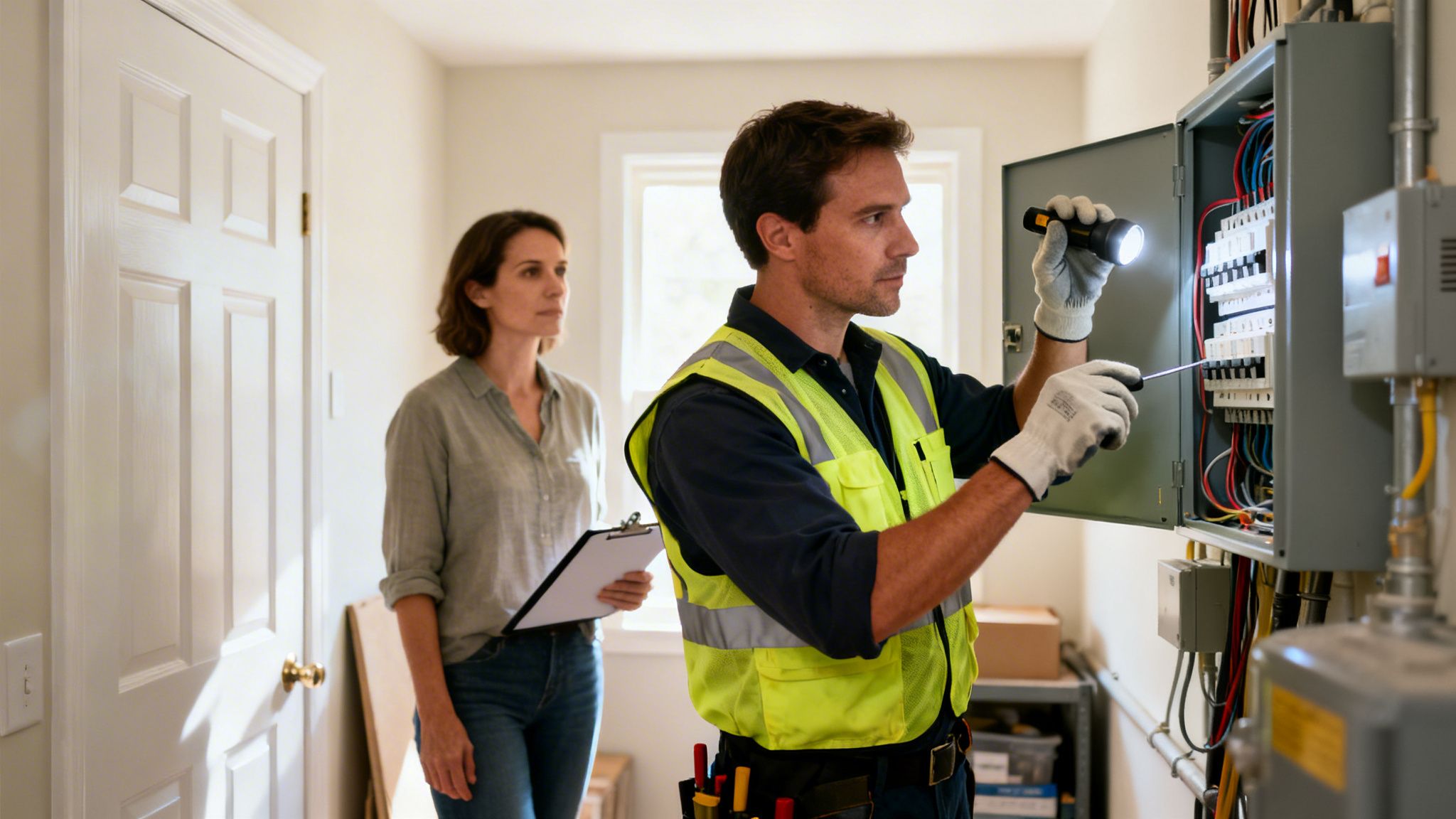
At Lighthouse Energy Services, our licensed electricians are on call 24/7 to troubleshoot these exact kinds of urgent problems. We know that electrical emergencies don't stick to a 9-to-5 schedule. Our team is always ready to find the root cause of your high bill and fix any underlying hazards correctly the first time. Whether it's a bad connection, an overloaded panel, or an issue with your meter, we have the experience to handle it safely.
Your Action Plan for a Lower Electric Bill
Alright, you’ve figured out why your electric bill is so high. Now for the important part: what are you going to do about it? Taking back control of your energy costs starts now. We'll walk through everything from simple, free adjustments to smart upgrades that offer major long-term savings.
This isn't just about saving a few dollars next month. The big picture shows global electricity demand is skyrocketing, with a projected increase of 369 terawatt-hours in just the first half of 2025, according to energy think tank Ember. You can see their full analysis on Ember-Energy.org. As demand climbs, so do prices, making energy efficiency a critical financial strategy for any homeowner.
First, The Easy Wins: No-Cost Habit Changes
The quickest savings often come from small changes in your daily routine. They don’t cost a dime—just a bit of mindfulness. When you practice them consistently, you'll be surprised at the impact.
Become a Bill Detective: Don't just glance at the total and pay it. Really dig in. Compare your kilowatt-hour (kWh) usage this month to last month and the same month last year. This is the single best way to tell if you're using more power or if your utility simply raised its rates.
Work With Your Rate Plan: If you have a Time-of-Use (TOU) plan, your timing is everything. Shifting big jobs like laundry or running the dishwasher to off-peak hours (usually later in the evening) can make a real dent in your bill. Running those appliances at 9 PM instead of 6 PM often means you're paying a much lower rate.
Go on a Vampire Hunt: Remember that home energy audit we talked about? Put it into practice. Unplug chargers, game consoles, and coffee makers when they're not in use. Even better, plug entertainment centers and home office setups into power strips so you can cut off their power completely with one switch.
Next, Invest in High-Impact Upgrades
Once you've locked in the savings from new habits, it's time to look at bigger changes that deliver more substantial results. These steps target the biggest energy hogs in your home for the greatest effect.
Investing in your home's electrical efficiency isn't just another expense. Think of it as a direct counter-measure to rising utility costs. Each upgrade actively works to lower your monthly bill and protect your budget from future rate hikes.
Here are some powerful next steps to consider:
- Schedule an HVAC Consultation: Your air conditioner is almost always the biggest single user of electricity in your home. A professional check-up can reveal if a simple tune-up will do the trick, or if a high-efficiency upgrade like the Smartcool ECO3 is the right move. Optimizing your AC can slash cooling costs by up to 25%.
- Upgrade Inefficient Systems: An expert can also spot other power-draining culprits. Making strategic electrical upgrades for your home not only cuts down on wasted energy but also improves your family's safety.
- Call for an Expert Diagnosis: If you've tried everything and your bill is still a mystery—or if you're seeing warning signs like flickering lights or frequently tripping breakers—don't hesitate. Contact Lighthouse Energy Services right away. Our licensed electricians are on call 24/7 to pinpoint the root cause, making your home both efficient and safe.
Frequently Asked Questions About High Electric Bills
Even after breaking down the big picture of your power costs, I know there are always those nagging, specific questions that pop up when you're staring at a surprisingly high bill. Let's tackle some of the most common concerns homeowners have when they ask, "Why is my electric bill so high?"
My Bill Is High But My Habits Haven't Changed. What's the Cause?
This is one of the most common and frustrating situations we hear about. If you’re certain your daily routines are the same, it almost always boils down to one of two things: a change in your utility's rates or a problem brewing with a major appliance.
Nine times out of ten, the biggest offender is your HVAC system. Utility companies can adjust their rates based on the season or fuel costs, and it's easy to miss the fine print on your bill. At the same time, an aging AC unit slowly loses its efficiency, forcing it to run much longer and harder just to maintain the same temperature. You never touch the thermostat, but your consumption still skyrockets. We always recommend starting by closely examining your latest bill for any rate changes. If nothing stands out, the next logical step is having your HVAC and electrical system professionally inspected.
How Can I Tell If an Appliance Is Using Too Much Electricity?
For most things you can plug into a wall, there’s a great little DIY tool called a plug-in electricity usage monitor. You can find them at most hardware stores. Simply plug the monitor into the outlet, then plug your appliance into the monitor, and it will give you a real-time reading of exactly how much power it's drawing.
This is the perfect way to hunt down "energy vampires" or finally get proof that your old garage refrigerator is an energy hog. However, for hardwired systems like your central air conditioner or water heater, this isn't an option. In those cases, a professional energy audit from a licensed electrician is the only safe and truly accurate way to diagnose the problem.
Key Takeaway: A plug-in usage monitor is a fantastic tool for any appliance you can unplug. For anything hardwired into your home’s electrical system, you need a professional for both safety and accuracy.
Is the Smartcool ECO3 Device Really Worth the Investment?
For many homeowners here in Palm Beach County, the answer is a definite yes. The Smartcool ECO3 is a smart device that works by optimizing your air conditioner's compressor cycles. Instead of letting the compressor run at full blast until it hits the target temperature, it helps it run more intelligently, reducing its overall electricity consumption by up to 25%.
Think about it this way: your HVAC is the single biggest energy user in your home. Shaving a quarter off its consumption adds up to very real savings on your monthly bill. Over time, those savings effectively pay for the device, making it a powerful investment in making your existing AC unit more efficient without the massive cost of a full replacement.
What Are Warning Signs of a Dangerous Electrical Problem?
A high bill can be annoying, but some issues are downright dangerous. Never, ever ignore these warning signs, as they can point to a serious fire hazard:
- Circuit breakers that trip over and over again
- A distinct burning smell coming from outlets or your electrical panel
- Wall outlets that feel hot to the touch
- Lights that flicker or dim dramatically when a large appliance (like the AC) kicks on
If you notice any of these symptoms—especially alongside a sudden spike in your bill—it’s time to stop investigating and call for help immediately. These are classic signs of overloaded circuits or failing wiring. Your family's safety is always the top priority.
When you’ve tried the DIY fixes and still can't find the source of your high bills, or if you suspect a deeper electrical problem, don't wait. Lighthouse Energy Services provides 24/7 emergency troubleshooting and professional energy-saving solutions like the Smartcool ECO3 to keep your home safe and your bills under control. Contact us today to schedule your service.