
You've just signed the paperwork for a new EV, and the first thing you do is open the garage panel cover. The charger salesperson said installation would be simple, but the panel is already crowded, the service rating may be only 100 or 200 amps, and there's no obvious space for another breaker. In Palm Beach County, that panel often determines the project more than the charger itself.
The practical EV charger installation requirements fall into four groups: electrical capacity, permits and inspections, physical mounting conditions, and code decisions such as continuous-load sizing and accessibility. The two questions that settle most projects are whether the existing service can support the added load and whether a licensed electrical contractor must perform and permit the work.
This guide gives you the language to ask for a proper load calculation, a clear scope of work, and documented approval. A charger quote that skips those questions isn't a complete installation plan.
Table of Contents
- What Homeowners Need Before Installing an EV Charger
- Level 1 and Level 2 Charging Basics Explained
- Electrical Specs That Drive Every Installation
- Permits, Inspections, and the Licensed-Contractor Question
- Panel Upgrades, Subpanels, and Load Management Options
- Site, Mounting, and ADA Considerations
- Palm Beach County Checklist for a Smooth Installation
What Homeowners Need Before Installing an EV Charger
Start with the service, not the charger
Look at the panel rating, not just the number printed on the charger box. A panel with 200 amps and two open spaces for a double-pole breaker will likely have capacity for a Level 2 installation, according to EPA guidance on getting started with home EV charging. That doesn't guarantee approval, because the electrician must also account for existing air-conditioning, water-heating, pool, range, and other loads.
A 100-amp service may support a lower-power charging setup, but it needs a professional calculation. An apparently full panel may also have unused capacity, while a panel with open breaker spaces may have little usable capacity. Empty slots provide physical room. They don't prove that the service or busbar can safely carry the new load.
Four checks happen before installation
A competent site review should address:
- Electrical capacity: Confirm service amperage, available breaker spaces, voltage, existing demand, conductor condition, and whether a dedicated branch circuit is feasible.
- Permitting: Determine which permit Palm Beach County requires, who will submit it, and how the inspection will be scheduled through the county building process.
- Site conditions: Select a mounting point that protects the equipment, keeps the cable accessible, and avoids vehicle impact, water exposure, and trip hazards.
- Code compliance: Apply continuous-load sizing, required protection, equipment listing, working clearances, and accessibility rules where parking is shared.
Practical rule: Don't choose the charger amperage until the electrician has reviewed the panel and the vehicle's charging specification.
The Department of Energy advises multifamily property owners to have a professional assess electrical capacity, contact the local permitting authority, and use a licensed professional for installation, as described in its multifamily EV charging guide. That advice applies to condos and HOAs as well as apartment buildings, where one transformer, service, or parking area may serve many residents.
A charger salesperson can explain features. The electrical contractor must determine whether the property can support the equipment and whether the proposed work complies with local requirements.
Level 1 and Level 2 Charging Basics Explained
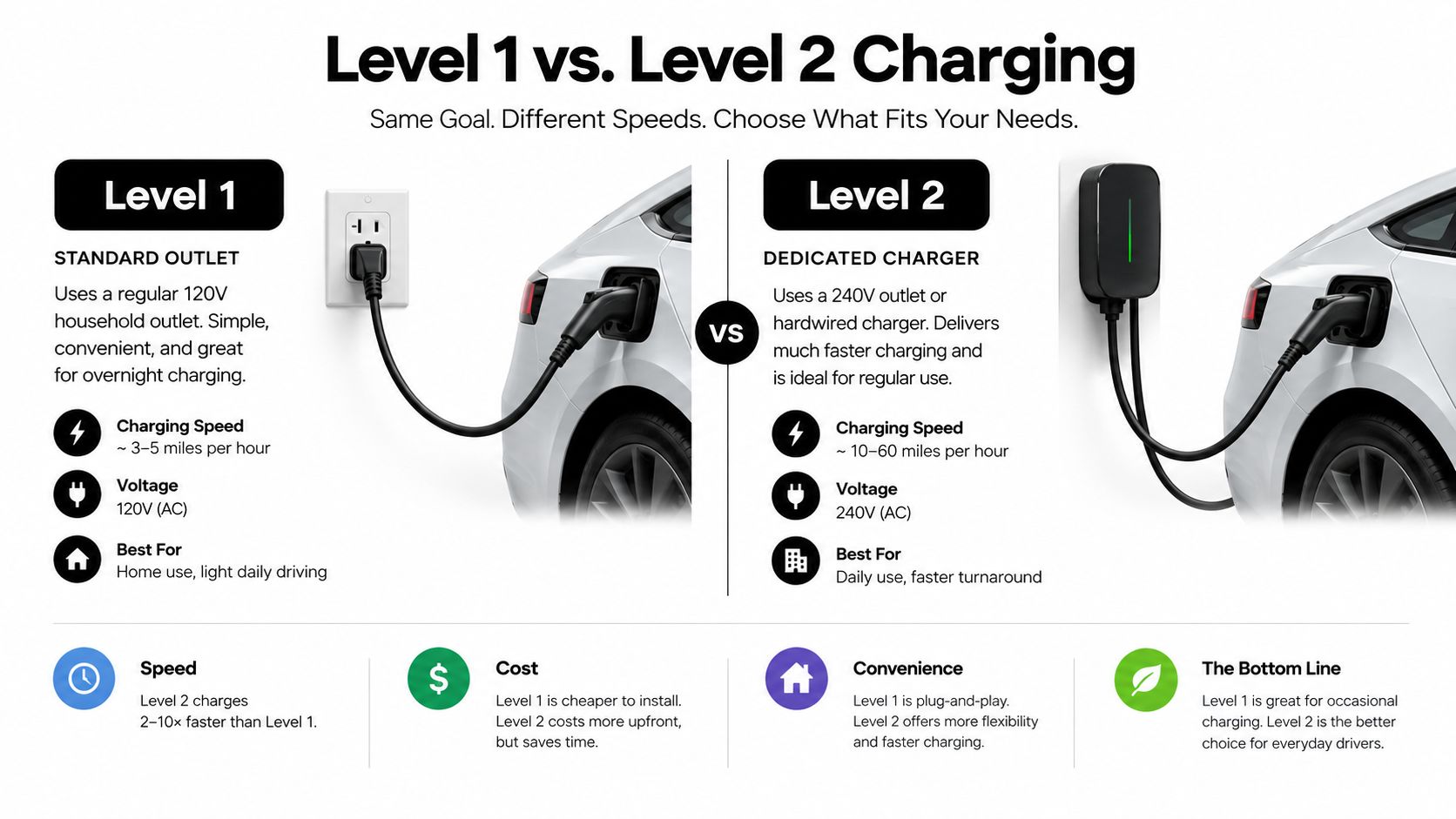
Level 1 charging uses a standard 120-volt receptacle, usually on a 15 or 20 amp circuit. It adds roughly 3 to 5 miles of driving range per hour, while Level 2 charging typically adds roughly 20 to 40 miles per hour. These operating ranges are useful for understanding the trade-off, but the vehicle, battery, temperature, and charging equipment all affect the result.
Level 1 can work when the vehicle is parked for long periods and daily driving is modest. It avoids a new 240-volt circuit, but it may not replace enough energy overnight for a driver with a longer commute or frequent daytime use. In South Florida, air-conditioning loads and other household demand also make a proper electrical review important before adding any equipment.
What changes with Level 2
Level 2 operates at 240 volts and commonly uses a dedicated circuit in the 30 to 60 amp range. The installation normally requires a double-pole breaker, appropriately sized conductors, suitable equipment, and protection required by the applicable electrical code. The charger may be hardwired or connected through an approved receptacle, depending on the equipment and installation design.
The word "speed" can hide the electrical decision. Voltage determines the system configuration, amperage determines current flow, and the continuous-load rule determines how much capacity the circuit must safely provide.
Think of the circuit as a pipe. If the charger draws water continuously through the pipe, you don't size the pipe exactly to the faucet's maximum flow. You provide margin so the system can carry that flow without excessive heat.
The 125% rule in practice
EVSE is treated as a continuous load. The branch circuit and overcurrent protection must therefore be sized at 125% of the charger's maximum continuous current, as explained in NEC 625 EV charging guidance. A 32-amp charger requires a 40-amp circuit, a 40-amp charger requires a 50-amp circuit, and a 48-amp charger requires a 60-amp circuit.
Charging can run for three hours or more, which is why the breaker isn't matched one-for-one with the charger's output. The conductor, breaker, and charger setting must agree. A 48-amp charger on a 50-amp circuit isn't a harmless shortcut. It creates a sizing problem.
Your charging schedule can also affect household operating decisions. If your utility offers time-based pricing, review how a smart charger would fit your routine in this guide to time-of-use electricity rates.
Electrical Specs That Drive Every Installation
Breaker size, conductor ampacity, charger settings, and voltage drop are one design decision. Treating them as separate line items is how homeowners end up with a quote that lists a charger but doesn't explain whether the wiring can deliver its rated output safely.
The continuous-load calculation gives the starting point:
| Charger Amperage | Breaker Size | Copper Conductor (under 50 ft) | Notes |
|---|---|---|---|
| 32 amps | 40 amps | #8 AWG | Confirm the run length, installation method, terminals, and local requirements. |
| 40 amps | 50 amps | #6 AWG | Requires a dedicated circuit and coordinated equipment settings. |
| 48 amps | 60 amps | #6 AWG | Longer runs may require #4 AWG to control voltage drop. |
These conductor examples are planning references, not a substitute for a field design. The electrician must verify terminal ratings, ambient conditions, conduit fill, conductor material, installation method, and the actual distance from the panel to the charger.
Voltage drop changes the practical design
For longer runs, voltage drop becomes a real constraint. Industry guidance tied to the NEC recommends keeping branch-circuit voltage drop at or below 3%, because excessive drop can reduce charging power, increase conductor heat, and contribute to nuisance trips or charging derating, as discussed in EV charger wiring and voltage-drop guidance.
A short garage run may support the planned conductor size. A detached garage, side-yard pedestal, or long underground route may not. The installer should evaluate conductor length, copper size, and current together rather than selecting wire from the charger label alone.
Protection and load calculation
EV charging branch circuits require the protection specified by the applicable NEC provisions, including GFCI considerations under NEC 210.8 and Article 625. The protection method can affect breaker selection, especially where the charger is connected through a receptacle or where the equipment has integrated protective functions.
A 200-amp panel doesn't automatically accept a 50-amp EV circuit. Existing HVAC equipment, pool pumps, electric water heaters, cooking appliances, and other loads may consume the available capacity. Ask for a written load calculation that shows the proposed charger setting and the service demand after installation.
Ask for the design as a matched set: charger output, breaker rating, conductor size, protection method, route length, and calculated load.
A vague proposal that says “install a Level 2 charger” leaves too much unresolved. A usable proposal identifies the circuit rating and explains what happens if the existing service can't support it.
Permits, Inspections, and the Licensed-Contractor Question
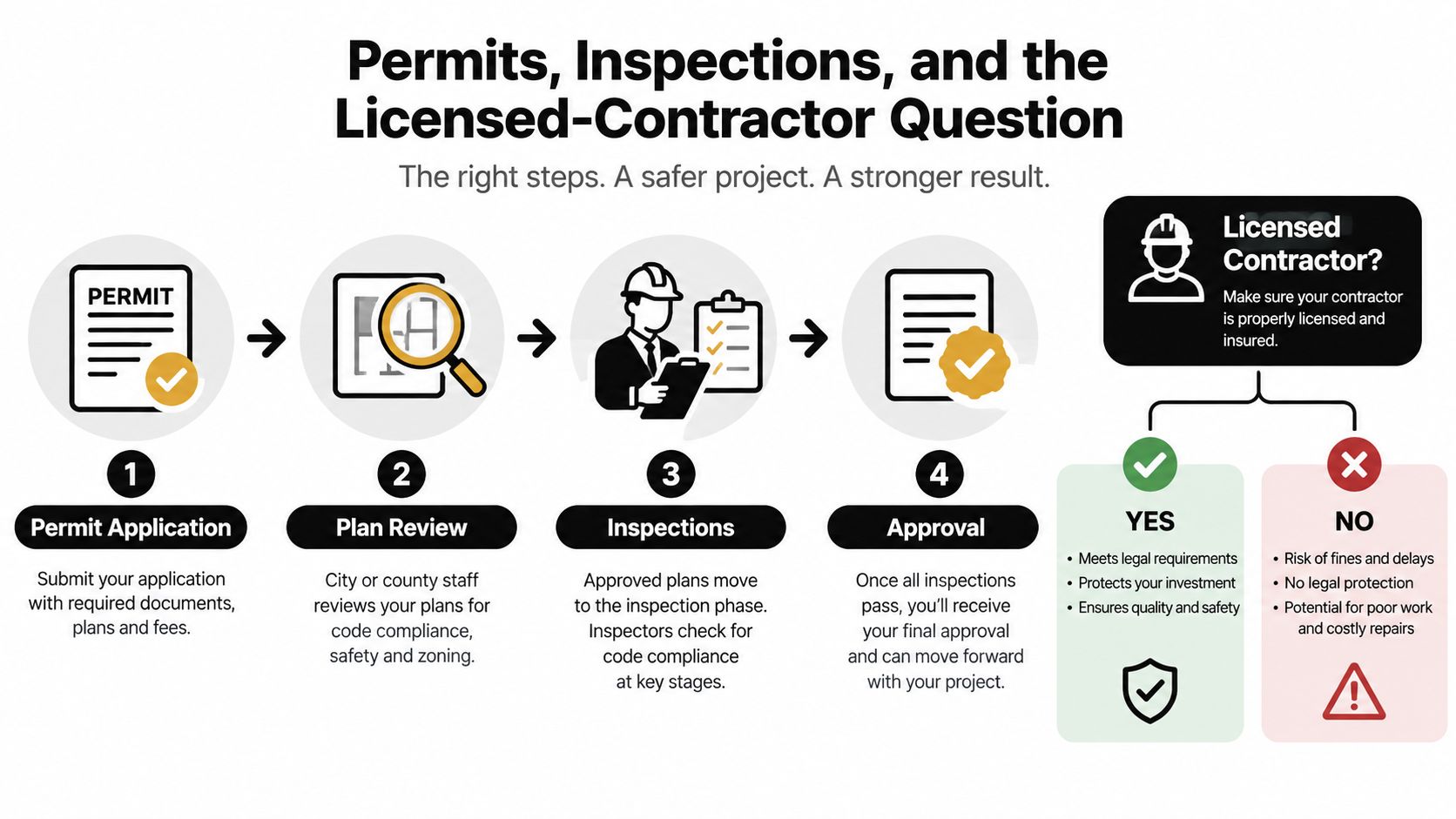
In Palm Beach County, a new 240-volt circuit, a dedicated circuit above ordinary receptacle work, panel modifications, or a subpanel addition can trigger an electrical permit and inspection. The exact permit path depends on the scope, property type, and current county requirements, so the contractor should verify the process with the Palm Beach County Building Division before work begins.
Florida treats electrical contracting as regulated work. Homeowners should expect the contractor to identify the applicable license, carry insurance, describe the permit responsibility in writing, and provide the completion documentation required for the project.
A clean permit process
The usual sequence looks like this:
- Site review and scope: The contractor inspects the panel, parking location, cable route, charger specifications, and service capacity.
- Permit application: The licensed contractor prepares and submits the electrical permit, including the required project information and supporting documents.
- Utility coordination: A service change or other utility-related modification may require notification and coordination before energization.
- Installation and inspection: The contractor completes the work, schedules inspection, corrects any comments, and confirms final operation.
Homeowner signatures may be required, but that doesn't transfer the technical responsibility for the installation. Ask directly who pulls the permit, who communicates with the inspector, and who resolves failed inspection items.
For practical questions about evaluating an electrician's credentials and scope, the Hand Vetted Co. electrician guide offers a useful hiring framework. Also review what a licensed electrical contractor near you should provide before accepting a proposal.
What the inspector is looking for
If walls or ceilings will be closed, an inspector may need to see rough-in work before concealment. The final inspection can include breaker identification, conductor terminations, torque verification, working clearances, protection devices, equipment listing, and accessible disconnecting means.
The charger shouldn't be energized for regular use until the installation has passed the required inspection process. Keep the permit record, electrical certificate, charger documentation, and warranty information with the property records.
A permit is risk control, not decoration. It creates a documented review of work that affects your service, wiring, insurance position, and future sale.
Unpermitted electrical work can complicate an insurance claim after a fire, create problems with equipment warranties, and raise questions during resale. HOA properties may face another layer of scrutiny because common areas, architectural approvals, and shared electrical infrastructure can be involved.
Panel Upgrades, Subpanels, and Load Management Options
When the existing service can't support the chosen charger, there isn't one universal fix. The right answer depends on the service entrance, busbar condition, panel location, available capacity, cable route, and whether you expect another EV or major electric appliance later.
Here are the four paths an electrician commonly evaluates:
- Service or panel upgrade: Replacing a smaller service or outdated panel can create additional capacity, but it may involve utility coordination, a new meter base, service conductors, and a new permit.
- New meter socket and service lateral: A fused panel, damaged equipment, or undersized busbar may require work beyond a simple panel swap. The utility must coordinate this type of service change.
- Subpanel: A subpanel near the garage can organize EV circuits and reduce long individual runs when the main service and feeder have adequate capacity. It does not create capacity by itself.
- Load management: A listed load-management system can monitor household demand and limit or pause EV charging when another large load operates. This can avoid unnecessary service expansion when the calculated design supports it.
Match the remedy to the property
| Upgrade Path | Typical Cost | Timeline | Best Fit Scenario |
|---|---|---|---|
| Panel upgrade | $2,500 to $5,000 | Utility and permit coordination required | A 100-amp service lacks capacity or the existing panel is obsolete. |
| New meter socket and service lateral | $3,000 to $6,000 | Depends on utility coordination | The meter equipment, service lateral, or busbar needs replacement. |
| Subpanel installation | $800 to $2,000 | Usually shorter when capacity and location are available | The main panel has capacity, but the charger is remote or the distribution layout is inconvenient. |
| Load management device | $500 to $1,200 | Depends on equipment and approval | Existing service is marginal, but managed charging can share capacity safely. |
The cost figures above are local planning ranges supplied for this project, not guaranteed quotes. The contractor's site review determines the actual material, labor, permit, and utility requirements. You can also review factors that affect an electrical panel upgrade cost before comparing proposals.
Capacity versus organization
A subpanel improves organization and may simplify distribution. It won't turn a constrained 100-amp service into a larger service. Load management can preserve future capacity for another charger or an electric water-heater conversion, but it must be selected and configured as part of the electrical design.
A service upgrade may offer the cleanest long-term solution, yet it can involve more coordination and disruption. A managed lower-power charger may be the better fit when overnight charging meets the vehicle owner's needs and the existing service is otherwise sound.
Don't accept “you need a panel upgrade” or “a subpanel will solve it” without the load calculation and a description of what the proposed equipment changes electrically.
Site, Mounting, and ADA Considerations
The best electrical design can still produce a poor installation if the charger is mounted where the cable crosses a walking path or the vehicle can strike it. Decide where the car parks, where the charge port sits, and how the cable will be stored before the installer drills the first hole.
An unfinished garage wall near the panel is often the simplest location. Outdoor work needs weather-rated equipment, protected raceway, suitable seals, and a mounting method that can withstand local exposure. In Palm Beach County, the contractor should also consider wind, rain, flooding, corrosion, and the possibility that a vehicle could hit a wall-mounted unit or pedestal.
Choose the physical arrangement
A wall mount works well when the vehicle parks alongside the garage or exterior wall. A pedestal suits a driveway or parking space without a usable wall, but it needs a stable foundation and protection from vehicle movement. Bollards may be appropriate where cars maneuver close to the equipment.
Maintain the required electrical working space around the equipment. Common planning dimensions include 36 inches in front, 30 inches of width, and 6.5 feet of headroom, subject to the applicable installation conditions and code interpretation. The 2020 NEC Article 625 also addresses vehicle clearance around charging equipment.
Shared parking changes the design
A private single-family garage usually has fewer accessibility coordination issues than an HOA, apartment, workplace, or commercial parking area. Shared facilities may need an accessible route, appropriate stall allocation, signage, equipment reach, and approval from the property owner or association.
The 2010 ADA Standards identify a reach range between 15 and 48 inches, an unobstructed side reach of 30 inches, an accessible-route slope no steeper than 1:12, and a minimum 60-inch turning radius at the charging space where the applicable requirements govern the project. Confirm the final design with the permitting authority and the property's accessibility professional.
| Location Type | Clearance | Enclosure Rating | Key ADA Rule |
|---|---|---|---|
| Indoor private garage | Preserve electrical working space and keep the cable off walking paths. | Equipment must suit the indoor environment. | Usually limited accessibility coordination, unless shared facilities apply. |
| Outdoor private driveway | Protect equipment from impact, water, sun, and vehicle movement. | Use equipment rated for the outdoor exposure. | Review route and parking conditions when others share the space. |
| HOA or multifamily parking | Coordinate equipment, cable routes, signs, and common-area access. | Match the enclosure to weather and site exposure. | Apply accessible-route, reach, and maneuvering requirements where applicable. |
| Commercial site | Design for repeated use, maintenance access, and clear traffic movement. | Use listed equipment suitable for the site. | Coordinate stall, route, reach, and turning requirements with the authority. |
Accessibility planning often overlaps with ramps, paths, and handrails. For related context, see this resource on ADA handrail requirements in Florida. The charger itself is only one part of an accessible parking arrangement.
Palm Beach County Checklist for a Smooth Installation
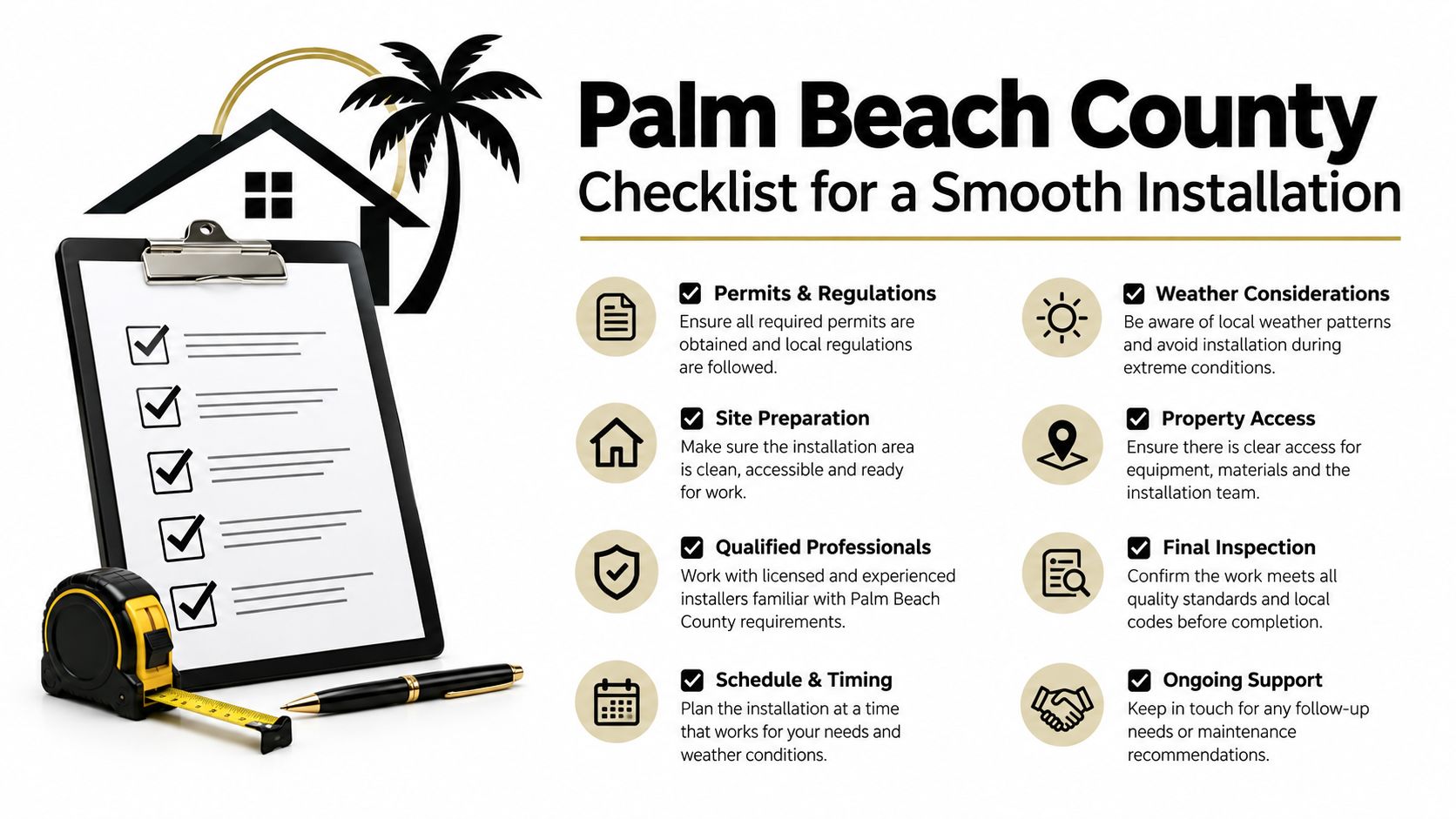
A smooth project starts with a complete information packet. Before requesting quotes, photograph the panel directory, panel label, meter area, parking space, and the likely cable route. Gather the vehicle's charging specification and the exact charger model you're considering.
Prepare the decision
Write down:
- Service details: Panel amperage, voltage, visible breaker spaces, and any known upgrades.
- Charging need: Whether Level 1 is adequate or whether you need Level 2, plus the preferred charging current.
- Parking location: The vehicle's normal position, charge-port location, cable reach, and indoor or outdoor mounting preference.
- Property rules: HOA approval, landlord permission, shared-parking policies, and any common-area restrictions.
- Future demand: A second EV, electric water heating, solar equipment, or other planned electrical loads.
Ask each contractor for a written scope that identifies the breaker, conductor size, circuit route, charger setting, load calculation, protection, permit responsibility, inspection responsibility, and workmanship warranty. Confirm licensing, insurance, relevant EV installation experience, and references before signing.
Questions to ask before work begins
- Who submits the permit to the Palm Beach County Building Division?
- Who schedules the inspection and handles corrections?
- What does the load calculation show after the charger is added?
- If the panel is marginal, why is a subpanel, service upgrade, or load-management system being proposed?
- Is utility coordination required?
- What documentation will I receive after final inspection?
- What warranty covers labor, terminations, and mounting?
The county process and project complexity determine timing. Allow roughly 2 to 6 weeks for permitting and inspection as a planning range, then confirm the current schedule with the contractor and authority.
Complete the final review
Before accepting the installation, verify:
- Terminations: The installer has completed torque verification and provided any required documentation.
- Identification: The breaker and equipment are labeled clearly in accordance with the applicable code.
- Protection: Required GFCI and other protective functions have been tested.
- Inspection: The final inspection has passed before normal operation begins.
- Operation: The charger communicates correctly, starts a vehicle charge, and has an accessible emergency or disconnecting method where required.
Property managers and HOAs should add shared-parking allocation, accessible-space planning, common-area metering, resident communication, maintenance access, and utility coordination to the checklist. A single-home quote rarely addresses those governance issues, yet they can determine whether a shared installation is approved.
Lighthouse Energy Services can review your panel capacity, plan the dedicated circuit, prepare permit documentation, and coordinate the inspection for an EV charger project in Palm Beach County. Visit Lighthouse Energy Services to request a site assessment and discuss the safest installation path for your home, HOA, or commercial property.