
When you’ve got an electrical issue, the first thing you probably do is grab your phone and search for a "licensed electrical contractor near me." That’s a smart move. More than just a quick fix, that search is your first line of defense against faulty work, fire hazards, and major legal headaches. It’s how you start the process of making your home or business truly safe.
Why 'Licensed and Local' Matters for Electrical Safety
Hiring an electrical contractor who is both licensed and local isn't just a good idea—it's essential for your safety and peace of mind. Here in Palm Beach County, where we have our own set of strict building codes and unique storm-related electrical risks, the stakes are even higher. The gap between a certified professional and a general handyman is huge, and choosing wrong can turn a simple repair into a ticking time bomb.
A licensed electrician has done the work. They've passed tough exams, carry the right insurance to shield you from liability, and know the specific local rules inside and out. This isn’t about bureaucracy; it’s about protecting your property and the people you care about.
The Value of Local Expertise
A local contractor brings a lot more to the table than just a short drive time. They have a deep understanding of our regional challenges, from how South Florida's humidity impacts wiring to the best ways to prep a home's electrical system for hurricane season.
They also know the ins and outs of local permitting offices and have built relationships with inspectors. Trust me, that kind of familiarity helps your project move along without the frustrating and expensive delays that can plague out-of-town companies. You can dive deeper into the advantages by reading our guide on using government-approved electrical contractors.
It's also helpful to know that the electrical industry is mostly made up of small operations. In fact, 85% of firms have fewer than 20 people, with the average business having just 2.8 employees. For homeowners in Palm Beach County, this means it's even more important to find an established, reputable company that brings stability and accountability to the job.
Choosing a contractor with deep roots in the community, like one operating since 2005, gives you a partner invested in maintaining a strong local reputation through quality work.
Licensed Pro vs Unlicensed Handyman The Real Risks
It can be really tempting to call a handyman for what seems like a small electrical job to save a few bucks. But from what I've seen over the years, the "savings" can disappear in an instant when something goes wrong. The hidden costs and risks are just not worth it.
This table breaks down the critical differences.
| Factor | Licensed Electrical Contractor | Unlicensed Handyman or 'Electrician' |
|---|---|---|
| Qualifications | Verified training, passed state exams, and meets ongoing education requirements. | No verified training or formal qualifications. Skills are often unproven. |
| Insurance | Carries general liability and workers' compensation, protecting you from accidents. | Typically uninsured, leaving you financially responsible for any injuries or damages. |
| Code Compliance | Work is guaranteed to meet all local and National Electrical Code (NEC) standards. | Often unaware of code requirements, leading to failed inspections and unsafe work. |
| Accountability | Legally and professionally accountable. Their license is on the line. | No professional accountability. They can disappear after a job goes wrong. |
| Fire Risk | Minimizes fire risk by using correct techniques, materials, and grounding. | Significantly increases fire risk due to improper connections and shortcuts. |
At the end of the day, hiring a licensed pro is an investment in safety and quality. An unlicensed person might get the lights to turn on, but a professional ensures they stay on safely and meet every legal standard, protecting you from much bigger problems down the road.
Your Vetting Checklist for Palm Beach County Electricians
So, you’ve done a few searches for a "licensed electrical contractor near me" and have a short list of names. That's a good start, but now comes the most critical part of the process: making sure they’re the real deal. Vetting your contractor is what separates a smooth, safe project from a costly nightmare.
This simple flowchart is a great gut check for deciding when it's time to call in a pro.
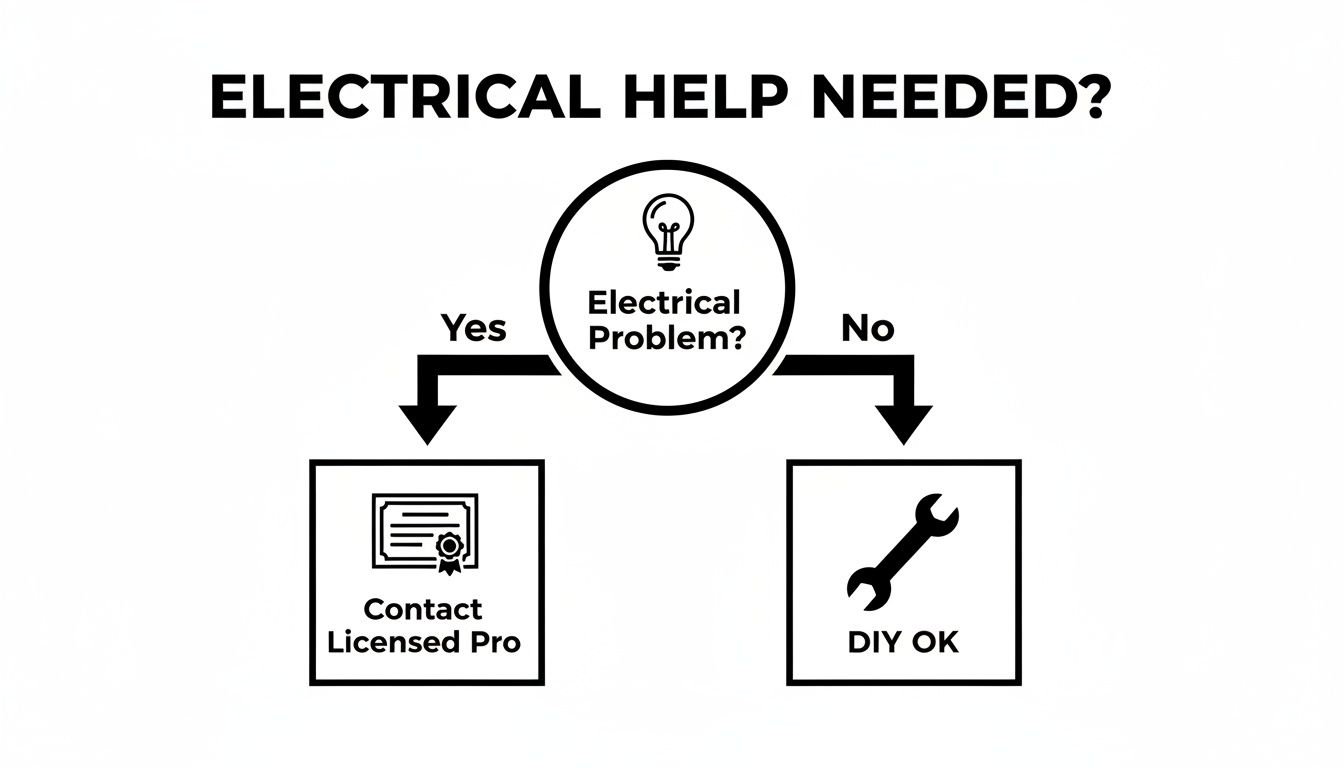
The takeaway is pretty clear. While some home projects are great for a Saturday afternoon, anything that touches your electrical system is a job for a licensed professional. No exceptions.
Confirm the License First
Before you even think about discussing quotes or project timelines, your very first move should be to verify their license. In Florida, this is non-negotiable. Any legitimate contractor will have a state-issued license number—usually an EC (Electrical Contractor) or ER (Electrical Contractor, Registered) license—and should give it to you without a second thought.
You can—and absolutely should—look it up on the Florida Department of Business and Professional Regulation (DBPR) website. This quick check tells you two vital things:
- That the license is active and in good standing.
- That there are no public complaints or disciplinary actions filed against them.
This isn’t just red tape. It's your primary assurance that the person you’re about to let into your home has met the state’s tough standards for safety and expertise.
The electrical field has seen significant growth, with about 712,000 electricians working in the U.S. as of 2023—an 8.7% jump since 2018. With more people entering the trade, verifying credentials has never been more important to weed out the inexperienced from the truly qualified.
Scrutinize Insurance and Liability
Once the license is confirmed, the next conversation is about insurance. Hiring an uninsured or underinsured contractor is one of the biggest risks a homeowner can take. If someone gets hurt on your property or your home is damaged during the work, you could be the one left footing the bill.
A professional electrician must carry two key policies:
- General Liability Insurance: This is what protects your property from any accidental damage.
- Workers' Compensation: This covers their crew if they’re injured on your job, protecting you from potential lawsuits.
Don't just take their word for it. Ask them to provide a Certificate of Insurance (COI) and check that the policies haven't expired. For bigger jobs, it's wise to request being added as an "additional insured" on their policy. It’s an extra layer of protection that gives you direct rights under their coverage if something goes wrong.
Pro Tip: Save a digital copy of their license and COI in a folder for your project. It takes two seconds and gives you incredible peace of mind.
Move Beyond Generic Testimonials
Online reviews are a helpful starting point, but they rarely paint the full picture. To get a true feel for a contractor’s work ethic and reliability, you need to talk to their past clients. A confident, reputable electrician will be happy to connect you with recent references.
When you call, skip the generic questions. Dig deeper with targeted questions that give you real insight:
- "Was the project finished on budget and on schedule?"
- "How did they communicate with you when unexpected issues came up?"
- "Tell me about their crew. Were they professional and respectful of your home?"
- "Did they clean up the worksite at the end of each day?"
The answers will tell you everything you need to know about their professionalism and how they handle themselves in the real world. This is especially crucial when hiring an electrician for a new home, where clear communication and dependability are everything.
Navigating Electrical Emergencies Before the Pro Arrives
That acrid, burning plastic smell from an outlet. Lights that won't stop flickering. Or, worst of all, a sudden, total power outage. An electrical emergency is one of the most jarring things you can experience as a property owner, and the first instinct for most people is to panic. But a cool head is your best tool while you wait for a licensed electrical contractor.
Knowing exactly what to do—and, just as importantly, what not to do—can make all the difference, preventing further damage and keeping everyone in the building safe.
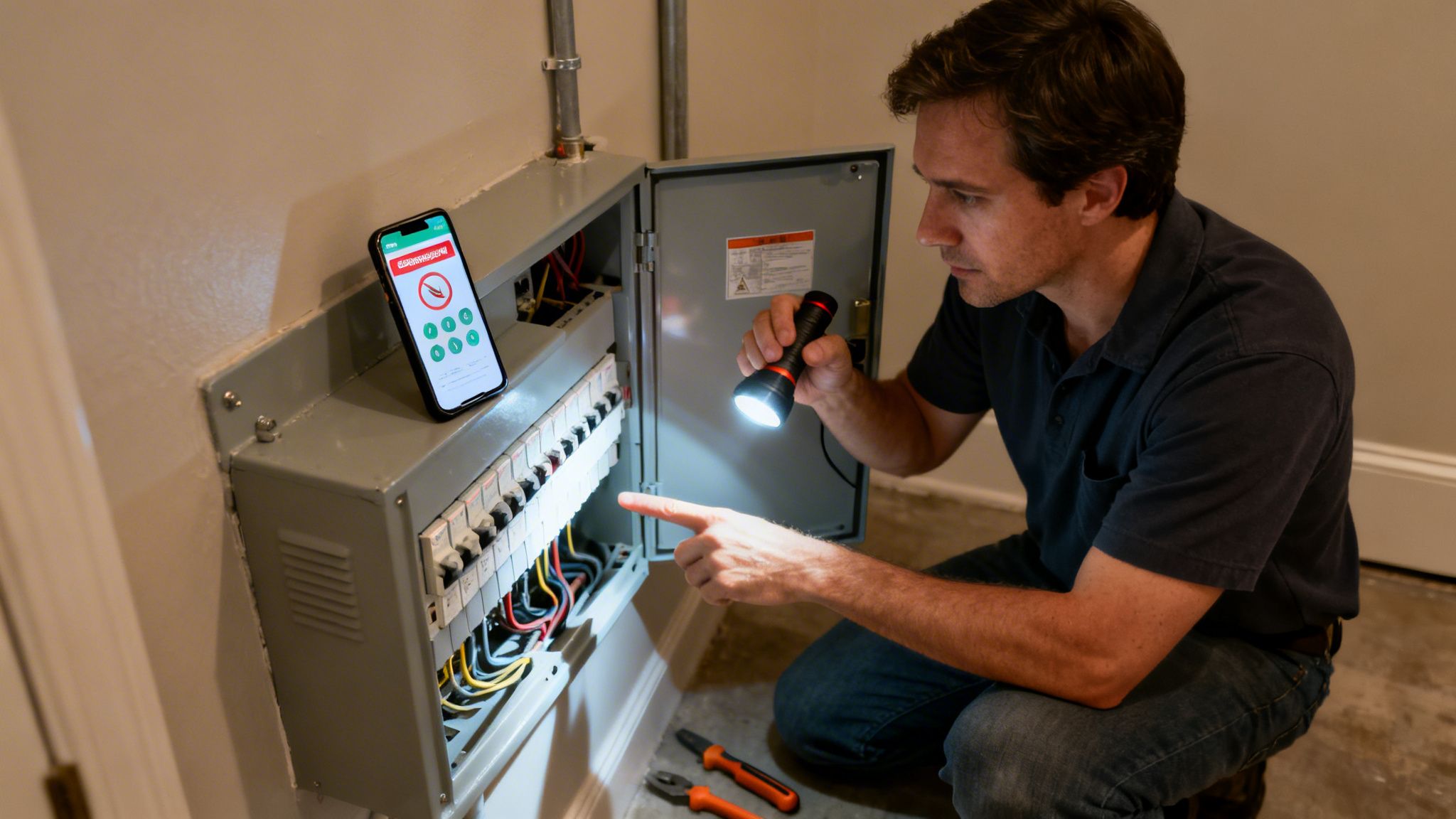
Your Immediate Action Plan for Electrical Incidents
When a problem pops up, your first job is to cut off the danger without putting yourself in harm's way.
If you see smoke or smell something burning from a switch or outlet, your gut reaction might be to investigate up close. Don't. Do not touch it. The components are likely live, incredibly hot, and extremely dangerous. Instead, make a straight line for your electrical panel.
At the breaker box, find the circuit breaker for that part of your property and flip it to the OFF position. If you have no idea which one it is, or if the problem seems to be affecting multiple areas, don't waste time guessing. Shut off the main breaker to kill power to the entire property. This one move starves the electrical fault of the power it needs to cause more damage.
Pre-Emergency Preparedness Checklist
You can't exactly pencil an electrical fire into your calendar, but you can absolutely prepare for one. A little bit of prep now can be a game-changer when seconds matter.
- Locate Your Panel: First things first, know exactly where your main circuit breaker panel is located. You don’t want to be fumbling around in the dark during an actual emergency.
- Label Your Breakers: This is a 30-minute task that pays off immensely. Go through your panel one breaker at a time, switching each off to see what it controls. Label them clearly. This lets you surgically cut power to a problem area instead of blacking out the whole house.
- Have an Emergency Kit: Keep a good flashlight with fresh batteries right next to your panel. It’s also wise to have the number of a trusted 24/7 electrician saved in your phone and physically written down near the panel itself.
Remember, a genuine 24/7 emergency service means you get a real person on the line who can walk you through immediate safety steps. They don't just take a message for 9 a.m. on Monday. That initial phone guidance can be critical.
What to Expect From a Real Emergency Response
When you call for help, a true professional's job starts with diagnostics, not just grabbing tools. They get that it's urgent, but they will never cut corners on safety or proper procedure.
A real pro won't just show up and start swapping out parts. They'll start by listening. They’ll ask you what you saw, smelled, and heard, and in what order. From there, they’ll use their diagnostic tools to test the circuit and find the root cause of the problem.
This methodical approach is what separates an experienced licensed electrical contractor near me from a handyman. It’s the only way to be certain the issue is actually resolved for good. For a closer look at what a professional service call involves, check out our Palm Beach emergency electrician guide.
Think about it this way: your breakers keep tripping. An amateur might just replace the breaker and call it a day. A professional investigates why it's tripping. Is it a simple overload? A dangerous short circuit from damaged wiring? Or a ground fault? Each of those issues requires a completely different fix to ensure your system is safe long-term. That diagnostic skill is what you're really paying for, and it's priceless.
Understanding Electrical Costs and Timelines in Palm Beach County
Let’s be honest—one of the first questions you have when facing an electrical issue is, "How much is this going to cost me?" That uncertainty, along with not knowing how long your home might be disrupted, can be stressful. We're here to pull back the curtain on pricing and scheduling in Palm Beach County so you can feel confident in your decisions.
The final cost of any electrical job really boils down to three things: the age of your home, how easy it is to get to the wiring, and the specific parts needed. An older home with hard-to-reach wiring and decades-old components will simply take more work than a straightforward fix in a newer build.
Deconstructing Common Project Costs
While every project has its own quirks, we can map out some ballpark costs for jobs we see every day around here. This should give you a solid baseline for what to expect when you get a quote.
- Ceiling Fan Installation: Looks easy, right? But if you have high ceilings or we need to install a new, properly braced electrical box where one doesn't exist, the job becomes more involved.
- Outlet or Switch Replacement: A simple swap-out is usually quick. The job gets bigger, though, if we find the wiring behind the wall is frayed, ungrounded, or not up to current code.
- Dedicated Circuit Installation: Need a special outlet for a new high-powered appliance? We have to run a brand-new wire all the way from your electrical panel, which is a much more detailed process than a simple repair.
- Electrical Panel Upgrade: This is a major project. We're essentially performing a heart transplant on your home's electrical system, which often requires us to coordinate with Florida Power & Light (FPL) to safely disconnect and restore power.
A true professional will offer transparent, flat-rate pricing. This means you agree on the total price for the entire job before a single tool comes out. No surprise charges, no hidden fees—it’s the sign of a contractor who stands by their work and their word.
Setting Realistic Timeline Expectations
Just like costs, timelines can vary wildly. Replacing a faulty circuit breaker might be an hour-long job, from diagnosis to fix. On the other hand, a full panel upgrade is an all-day affair, especially when you factor in the necessary coordination with FPL.
This is where a contractor's experience and team size truly matter. You may have heard about the skilled labor shortage—and it's very real. Projections show that for every five experienced electricians retiring by 2026, only two new ones are joining the trade. This crunch puts a huge strain on scheduling and availability across the industry. You can learn more about this challenge in this comprehensive analysis of electrical contracting trends.
That’s exactly why it pays to choose an established company with a deep bench of qualified electricians. They have the people power to keep your project on track and aren't thrown off course if one person is unavailable.
Hourly Rates vs. Flat-Rate Pricing
It's crucial to know how you're going to be billed. The two most common models are hourly rates plus materials, or a single flat-rate price.
- Hourly Rate: This might sound good for small fixes, but the final cost is a moving target. If the technician runs into an unexpected snag, the clock keeps ticking, and your bill can quickly climb.
- Flat-Rate Pricing: With this model, you get a firm, all-inclusive price for a well-defined job. You know the exact cost before work starts, which removes the financial guesswork and shows the contractor is confident in their quote.
We are big believers in upfront, flat-rate pricing. It puts us on the same team—our goal is to get the job done right and efficiently, not to run up the clock. You get the peace of mind of a fixed cost, and we get to focus on what we do best: delivering quality work. It’s simply the most transparent and fair approach for any electrical project.
Beyond the Basics: Specialized Electrical Work in Palm Beach County
When you start searching for a "licensed electrical contractor near me," it’s probably not for a simple flickering light. Here in Palm Beach County, our properties—from high-rise condos and commercial centers to sprawling HOAs—have electrical needs that go far beyond what a general handyman can handle.
Finding the right electrical partner isn't just about fixing what's broken. It's about finding an expert who understands the unique challenges of our area, from federal aviation laws to our sky-high FPL bills. A great contractor doesn't just solve problems; they provide solutions that improve safety, cut your operating costs, and keep your property running smoothly. This is where having deep, local expertise really pays off.
Aircraft Obstruction Lighting Compliance
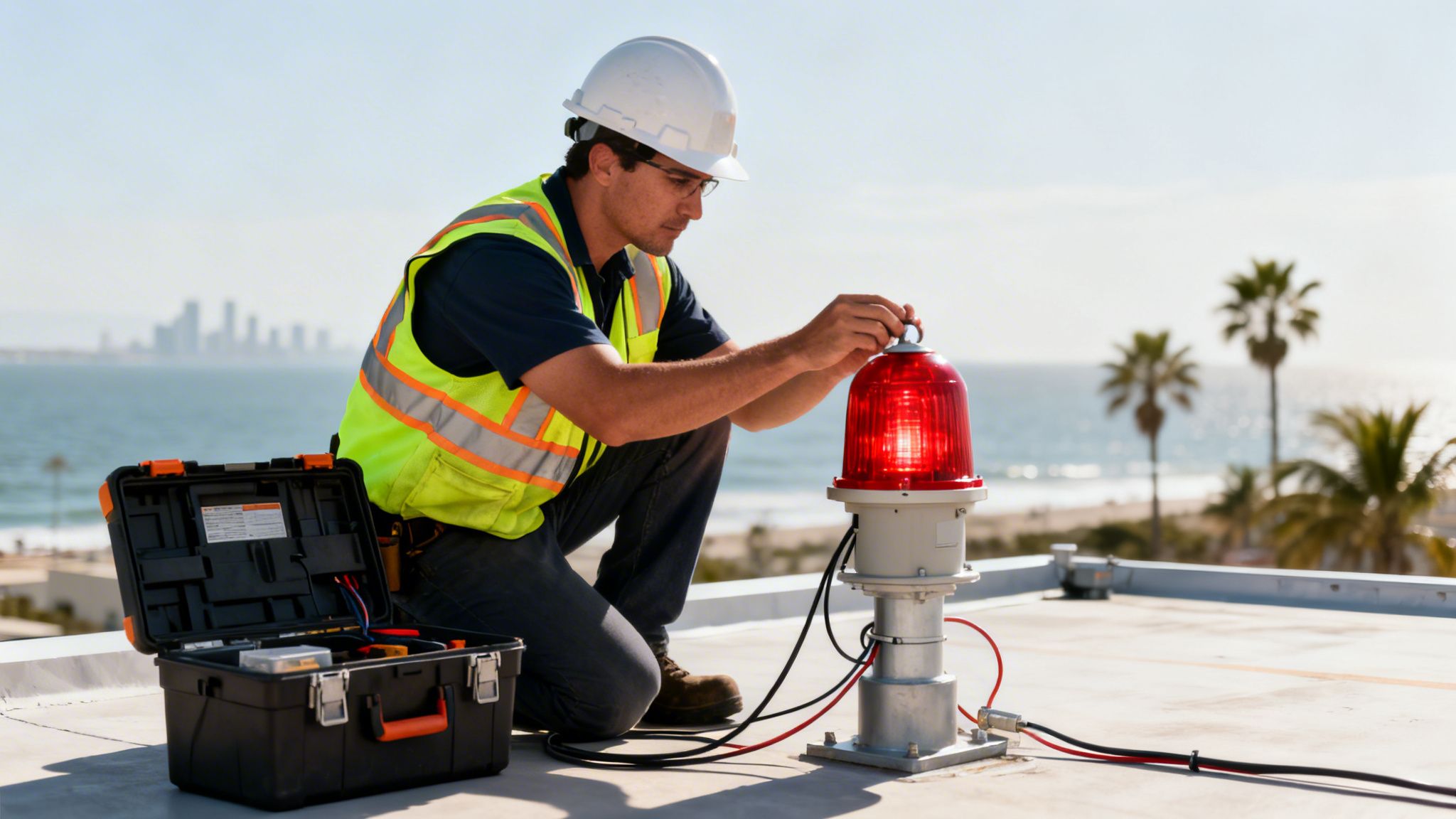
With our ever-growing skyline, many buildings in Palm Beach County are required to have aircraft obstruction lighting. These are the red beacon lights you see on top of towers and tall buildings, and they are regulated by the Federal Aviation Administration (FAA) to keep pilots and the public safe. This isn't a suggestion—it's the law, and getting it wrong is expensive.
The FAA has incredibly specific rules for the installation, brightness, and maintenance of these lighting systems. A contractor absolutely must know these regulations inside and out. If you hire someone who isn’t qualified for this specialized work, you’re setting yourself up for serious trouble:
- Hefty Fines: The FAA doesn't mess around. They will levy significant financial penalties for lighting that isn't up to code.
- Major Safety Hazards: A malfunctioning light is a genuine threat to low-flying aircraft, especially in an area with so many airports and private helipads.
- Double the Work and Cost: Any work that fails inspection will have to be torn out and redone correctly, which means you’ll be paying for the same job twice.
A pro who specializes in this will make sure your system is 100% compliant, maintain the required service logs, and be ready to roll if a light ever goes out. For property managers and owners of taller buildings, this service is non-negotiable.
Smart Solutions to Lower Your Energy Bills
Let's be honest: your air conditioner is the hungriest appliance in your home or business. In the relentless South Florida heat, that can mean some painful energy bills. A smart electrical contractor can offer some surprisingly effective ways to bring those costs down without making you sweat.
One of the best tools I've seen for this is an energy-saving device like the Smartcool ECO3. This isn't just another smart thermostat. It's a small unit that gets wired directly into your existing AC system’s controls to make it run more efficiently. It works by optimizing the compressor's cycles, so it doesn't waste energy.
By preventing the compressor from running inefficiently, these devices have been proven to cut AC-related electricity consumption by up to 25%. That’s a real, measurable drop in your monthly FPL bill.
Think of it like tuning your car's engine to get better gas mileage. The installation is a job for a licensed professional who understands HVAC electrical systems, ensuring it’s done safely and delivers the promised savings. It's a fantastic example of a smart investment that can pay for itself in a short amount of time.
Electrical Support for HOAs and Commercial Properties
Homeowners Associations (HOAs) and commercial properties deal with a whole different class of electrical issues compared to a single-family home. The safety and reliability of power in common areas, parking lots, and offices are a huge responsibility, and you need a contractor with a commercial skillset.
Managing these properties is a constant balancing act of routine maintenance, planned upgrades, and sudden emergencies. As our buildings get smarter and more complex, the need for qualified commercial electricians is only growing.
Here are a few key services these properties always need:
- Parking Lot and Landscape Lighting: Keeping common areas well-lit is a matter of security and liability. A dead light in a dark parking lot is a problem you need fixed now.
- Whole-Property Surge Protection: One good power surge from a storm can fry sensitive electronics across an entire building. A commercial-grade surge protector at the main service panel is essential protection.
- Power Reliability: For a business, an outage means lost revenue. For an HOA, it means unhappy residents. An experienced contractor can quickly solve power problems and recommend backup systems to keep the lights on.
When you're in charge of multiple units or an entire commercial building, finding one electrical partner you can trust is a game-changer. It makes service calls easier, guarantees quality work, and gives you peace of mind that an expert who knows your property is just a phone call away.
Your Questions About Hiring an Electrician Answered
It's natural to have questions, even after you’ve done your initial research. Finding the right electrician is a big deal, and you should feel completely comfortable before making a final decision. Let's walk through some of the most common questions we hear from folks searching for a "licensed electrical contractor near me."
Think of this as our final chat before you hire someone—just a few key points to make sure you’re set up for a safe and successful project.
How Can I Quickly Verify an Electrician's License in Florida?
This is probably the most critical step, and thankfully, it's easy to do. The best way to check a contractor's license is through the official Florida Department of Business and Professional Regulation (DBPR) online portal.
You can look them up by their name or their business name. Even better, ask for their license number (it often starts with "EC" for Electrical Contractor) and type that in for a direct hit. Any reputable electrician will give you this number without a second thought. If they get defensive or make excuses, that’s a huge red flag.
Checking the DBPR portal doesn't just tell you if a license exists. It shows you if it’s active, and more importantly, if there are any public complaints or disciplinary actions on their record. It’s your single best tool for avoiding unqualified workers.
What Is the Difference Between a Quote and an Estimate?
Knowing the difference here is key to avoiding surprise costs on your final bill. The two terms are not the same, and mistaking one for the other can cost you.
- An estimate is just that—an educated guess. It’s a ballpark figure of what the job should cost, but it isn’t set in stone. If the work takes longer or needs more parts, the final price can climb.
- A quote, which we prefer to call a flat-rate price, is a firm, binding offer to do the job for a specific price. The cost is the cost, no matter how many hours it takes.
We believe in providing flat-rate quotes because it puts us on the same team. Our focus is on getting the job done right and efficiently, not on watching the clock. It gives you a clear, fixed cost from the start, so there’s no financial anxiety. Always ask if you’re getting an estimate or a quote, and always get it in writing.
Do I Really Need a Licensed Electrician for a Small Job?
Yes, without a doubt. It’s a common mistake to think that a "small" job, like swapping out a dimmer switch or adding a new outlet, is something a handyman can handle. But even the simplest electrical tasks are risky if you don’t know exactly what you’re doing.
Faulty wiring is one of the top causes of house fires. A licensed electrician isn't just connecting wires—they're following the strict safety standards of the National Electrical Code (NEC). They understand critical details like wire gauge, proper grounding, and circuit loads that prevent overloads and fires.
The money you might save hiring an unlicensed person is nothing compared to the potential cost of a fire, damage to your property, or serious injury. For your safety and your family’s, every electrical job needs a professional.
What Does True 24/7 Emergency Service Actually Mean?
A lot of companies claim to offer "24/7 service," but what you often get is an answering service that takes a message for a callback the next business day. That's useless when you have an emergency at 2 a.m.
True 24/7 emergency service is different. It means when you call—day or night, weekend or holiday—you speak directly to a real electrical professional who can give you immediate safety advice while they dispatch a technician.
It also means having technicians on standby, ready to roll out to your home for urgent problems without hitting you with massive "emergency" fees. When you're searching for a licensed electrical contractor near me because sparks are flying, you need a rapid response and real expertise, not a spot in a callback queue.
When electrical problems arise, you need a team you can trust to respond quickly, professionally, and with the expertise to do the job right. For over a decade, Lighthouse Energy Services has been the reliable partner for Palm Beach County residents and businesses. Our phones are answered by licensed electricians 24/7, ready to provide the immediate help you need. For transparent pricing, on-time service, and peace of mind, contact us today at https://lighthouseenergyco.com.