
Your breakers keep tripping when the AC kicks on, the lights dim in the kitchen, and the panel in the garage feels hotter than it should. In West Palm Beach, that's usually not a nuisance you can ignore for long, it's the home telling you the electrical system is running out of capacity or age. For a lot of local homes, electrical panel replacement West Palm Beach isn't about chasing a single bad breaker, it's about bringing older service equipment up to the demands of modern living, storm-season stress, and the documentation lenders and insurers expect.
The homes I see most often in Palm Beach County are dealing with a mix of old service gear, newer appliances, and more electrical load than the original panel was designed to carry. That's why replacement keeps coming up in late-20th-century homes, especially where air conditioning, pool equipment, EV charging, or renovation work has added new demand. It also explains why good contractors don't start with a sales pitch, they start with the panel age, the actual load, the permitting path, and whether the service needs an upgrade instead of a simple swap.
If you're trying to get found by homeowners who are already searching for this exact problem, local relevance matters in the same way it does for any service business, and a practical guide to win more local jobs can help you see how that search intent works. For the homeowner, though, the priority is simpler. You want safe power, fewer surprises, and a paper trail that holds up when the insurance company, HOA, or future buyer asks questions.
Table of Contents
- Introduction to Electrical Panel Replacement in West Palm Beach
- How to Recognize You Need an Electrical Panel Replacement
- Palm Beach County Permits Codes and Utility Requirements Explained
- What Happens During Replacement Day and How to Prepare
- Understanding Costs Timelines and Upgrade Options
- Choosing a Licensed Electrician and Final Safety Checklist
Introduction to Electrical Panel Replacement in West Palm Beach
A homeowner calls after the upstairs AC trips the main breaker three times in one week. Another notices the microwave and dryer can't run together without lights flickering across the house. In West Palm Beach, those are the kinds of warning signs that usually show up before a panel replacement conversation becomes unavoidable.
Why local homes hit this problem sooner
West Palm Beach has a lot of homes that are now in the age range where electrical panels start wearing out. Local guidance notes that panels typically last 25 to 40 years, so a house built in the late 20th century may already be approaching replacement age Florida Electrical Authority. That doesn't mean every older panel is failing, but it does mean age alone deserves a real inspection, not a guess.
The other local factor is load growth. Homes today run far more equipment than the houses they were originally wired for, and that creates a different kind of failure. A panel can look fine on the outside and still be undersized for the actual demand inside the home.
Practical rule: if the breaker trips are tied to everyday appliances, the panel is no longer just protecting the house, it is becoming the bottleneck.
Electrical panel replacement brings older service equipment up to the demands of modern living, storm-season stress, and the documentation lenders and insurers expect. In Palm Beach County, it also has to fit the permit path and the utility disconnect and inspection proof the job requires. If you're trying to figure out whether the issue is the breaker, the load, or the entire panel, the answer starts with an inspection and a load calculation, not another reset.
For homeowners who are also trying to win more local jobs, that same local relevance matters on the marketing side. For the homeowner, the priority is simpler. You want safe power, fewer surprises, and a paper trail that holds up when the insurance company, HOA, or future buyer asks questions.
What a homeowner should expect from the process
A proper panel replacement should move in a straight line, assessment, permit, disconnect, install, inspection, re-energize. That sequence matters because the utility typically won't reconnect service until the inspection passes. A good electrician explains that clearly before work begins, because timing, outage length, and permit handling are part of the job, not surprises.
The best outcomes are simple to describe. Safer power, cleaner labeling, fewer nuisance trips, and enough capacity to support what the home uses. The bad outcome is treating a failing or undersized panel like a minor repair. That approach leaves the home exposed to repeat trips, code problems, and extra delays when a permit or inspection comes into play.
How to Recognize You Need an Electrical Panel Replacement
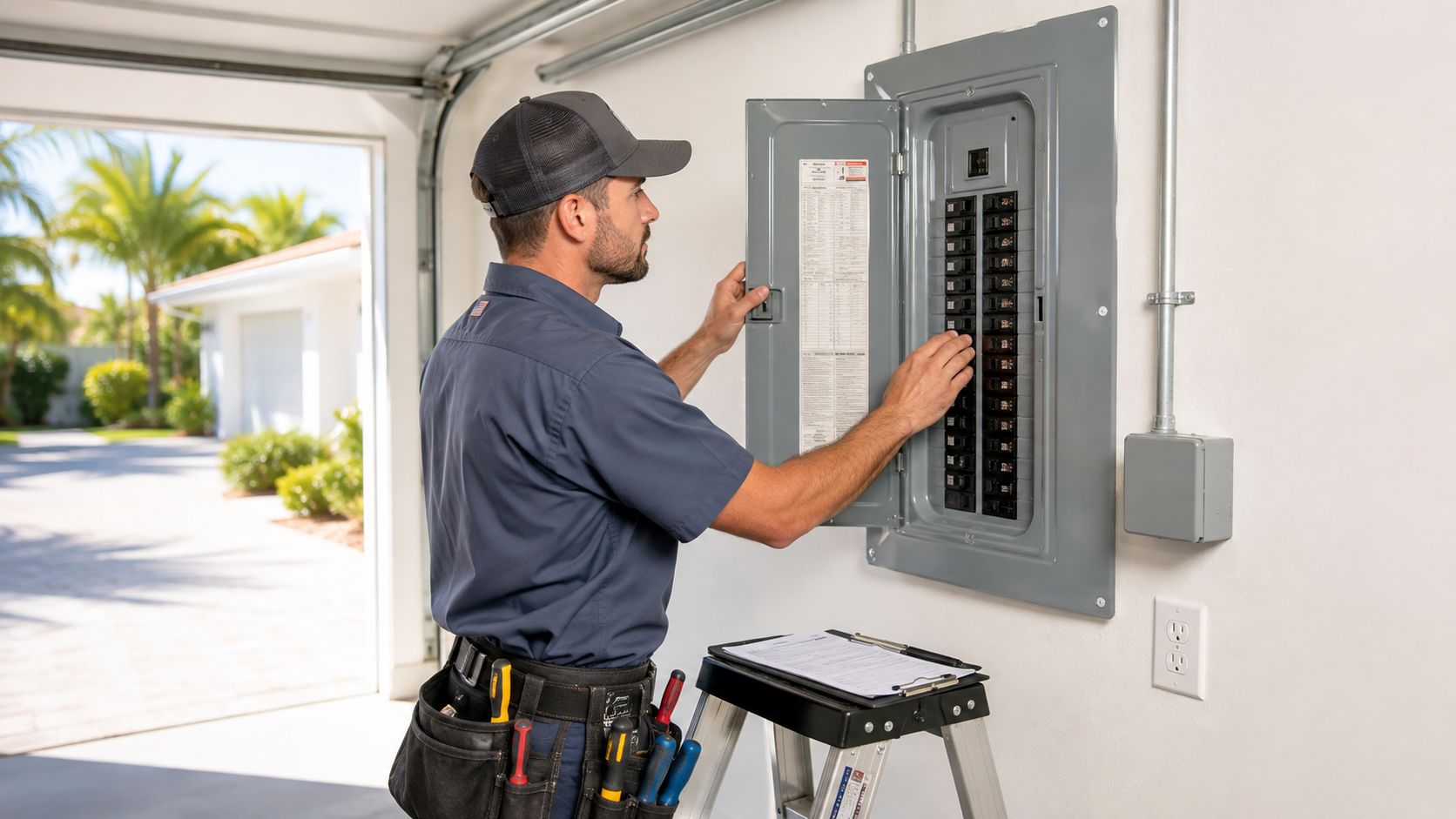
If you're wondering whether the panel is the problem or just the symptom, start with what the house is doing. Frequent breaker trips, warm panel surfaces, buzzing sounds, flickering lights, rust around the cabinet, or a faint burning smell are all signals that need a licensed electrician, not another round of resetting breakers. In humid coastal conditions, corrosion can move from cosmetic to electrical faster than a homeowner expects.
What the warning signs usually look like
A panel problem often shows up first at the exact moment the home is under strain. The AC starts, the main trips. The hair dryer and microwave run together, and a bedroom light dims. The panel isn't always dead, it's often failing to keep up.
Some homes give off physical clues too. Rust on the cabinet, discoloration near breaker slots, or a panel that feels warm to the touch point to heat or corrosion issues that shouldn't be ignored. In a coastal county, those signs matter even more because humidity and salt air can accelerate deterioration.
Legacy brands are another reason homeowners should take an inspection seriously. Federal Pacific Stab-Lok and Zinsco panels are still discussed locally because their age and defect history make insurers and electricians cautious. If your home has one of those brands, replacement usually becomes a stronger recommendation than a casual repair.
A quick way to think about urgency
If the home only trips when you push a single circuit too hard, the issue may be localized. If you're using power strips everywhere, hearing buzzing at the panel, or seeing multiple rooms react when one appliance starts, the panel itself may be failing to distribute power correctly.
A useful habit is to stop treating repeated trips like an inconvenience and start treating them like a diagnostic clue. If the same circuit trips under normal use, that's a reason to investigate. If the main breaker trips or the panel smells hot, that's a reason to stop using the affected circuits and call for help.
Stop resetting the breaker if the same load keeps causing the trip, or if the panel shows heat, smell, rust, or visible damage. That's a licensed-electrical problem, not a DIY fix.
For a plain explanation of why repeated trips happen, a homeowner can also review this circuit breaker tripping guide, then compare it to what the house is doing.
The paperwork side matters too
Homeowners often focus on the panel itself and overlook the records that follow the work. Local permit handling and inspection sign-off are part of the replacement process in Palm Beach County, and those records can matter later for insurance, a refinance, or a sale. A contractor should be able to explain what's being filed, what the inspector checks, and what proof the homeowner gets at the end.
If you want a second opinion on code issues that are tied to a warning sign, the right kind of review is a real inspection, not a guess from a phone photo. That's especially true when the home is old enough that the panel may have been patched, expanded, or mislabeled over time.
Palm Beach County Permits Codes and Utility Requirements Explained
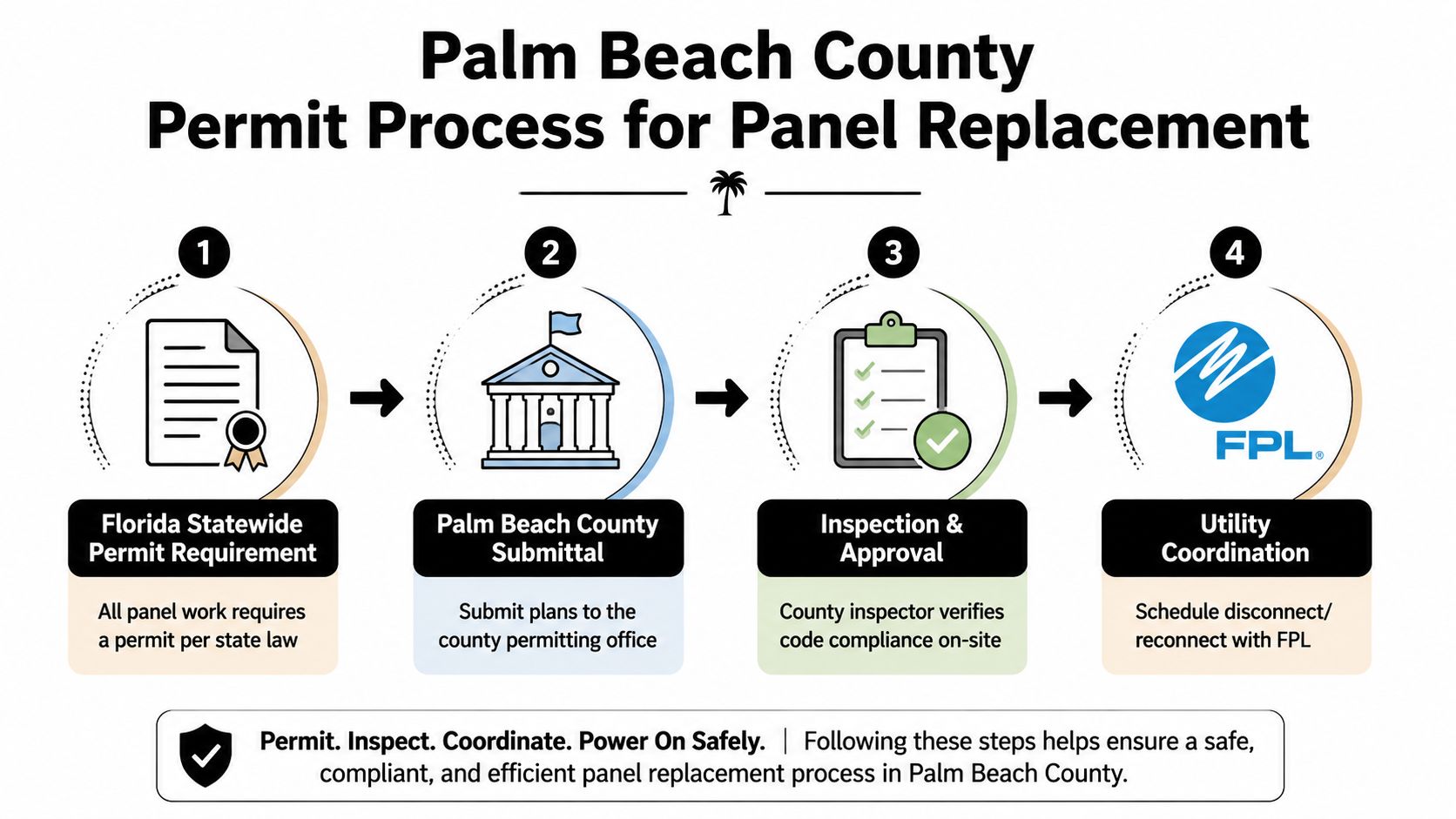
Electrical panel replacement is not just a hardware change, it's a regulated workflow. In Florida, panel work requires a permit, and the utility generally won't restore power until the inspection passes Florida Electrical Authority. That's the part many homeowners don't see when they're comparing estimates, but it's the part that keeps the job from becoming a rework nightmare.
What inspectors and utilities are actually looking for
The first thing a competent electrician should do is assess the existing panel, the service entrance, grounding and bonding, and the load calculation before filing anything Florida Electrical Authority. That sequence matters because the permit package should reflect the condition of the home, not a generic upgrade template.
Inspectors are usually checking whether the installation matches current code requirements, whether the grounding and bonding are correct, and whether the panel is accessible and properly labeled. If the project involves a load increase or service change, they'll also care about whether the service capacity matches the home's needs. Miss one of those areas and the job can stall.
Common delay points are predictable:
- Incomplete load calculations: The proposed panel size doesn't fit the actual electrical demand.
- Missing protection upgrades: AFCI, GFCI, surge protection, or grounding improvements are left out when they're required.
- Poor documentation: Existing circuits aren't documented well enough to verify what was changed.
- Access issues: The panel location or working space doesn't allow proper inspection.
Those aren't paperwork annoyances, they're the reasons a project can sit waiting while power stays off longer than planned.
What the homeowner should keep
A homeowner should keep the permit record, inspection sign-off, and any proof of utility disconnect and reconnect timing. Those details can be useful if an insurer asks for documentation after a claim, or if a future buyer wants proof that the panel was replaced properly. A photo of the labeled panel after completion is also worth saving.
Keep the permit packet with the inspection approval in the same folder as your insurance policy. If a claim or sale ever depends on the panel history, that file becomes evidence, not clutter.
Homeowners usually don't need to handle the filing themselves, but they do need to ask who is handling it and when the inspection is scheduled. If the electrician is vague about permitting, that's a red flag. If they explain what gets filed, who meets the inspector, and when FPL is expected to reconnect, that's a sign the job is being managed the right way.
For homeowners dealing with code issues beyond a simple replacement, a local resource like this code correction guide can be useful for understanding why a panel upgrade sometimes pulls in other corrections at the same time.
What Happens During Replacement Day and How to Prepare
A panel replacement day should feel organized, even with the power shut off. For a typical 100-amp to 200-amp upgrade, Florida guidance says the work is often completed in 4 to 8 hours by a licensed electrician. That timeframe still depends on panel condition, service changes, and how much correction work shows up once the old equipment comes off the wall.
Before the truck arrives, the electrician should confirm the existing amperage, review the itemized quote, and verify whether the service equipment outside also needs attention. A careful estimate should break out materials, labor, and permits so you can see what you are paying for and what changes if the scope changes. A panel replacement is a controlled shutdown with a clear sequence of steps.
A normal day on site
The crew starts with a final assessment and safety shutdown, then coordinates the utility disconnect if that is part of the service plan. After that, the old panel comes out, the new one is mounted and wired, circuits are moved over carefully, and each breaker gets labeled before the system is tested.
Once the installation is complete, the power may still stay off until the inspection is done and the utility clears reconnection. The inspection can happen later that day or later in the week depending on scheduling. In Palm Beach County, that timing matters because homeowners often need proof of inspection and utility coordination for the file, especially on jobs tied to hurricane code upgrades or insurer questions about older panel brands.
How to prepare without overthinking it
Before the electrician arrives, clear the area around the panel so there is room to work safely. If the panel is in a garage, laundry room, or utility closet, move stored items out of the way and keep pets away from the work zone.
A practical prep list looks like this:
- Back up electronics: Save files, shut down computers properly, and charge phones in advance.
- Protect refrigerated items: Plan for the fridge and freezer to be closed as much as possible during the outage.
- Photograph existing circuits: Take clear photos of labels, breakers, and any odd wiring conditions before work starts.
- Note sensitive equipment: Alarm systems, aquarium pumps, medical devices, and smart home hubs may need special attention.
If you want a home checklist before the electrician arrives, this inspection checklist is a sensible place to start.
The fastest jobs are the ones where the homeowner clears access, the electrician has the right paperwork, and the existing circuits are documented before anything gets moved.
A clean setup also helps avoid mistakes when panels are crowded or mislabeled. If the crew can verify circuits before disconnecting them, the risk of delay drops sharply. That keeps outage time under control and makes the inspection easier to close out.
Understanding Costs Timelines and Upgrade Options
A West Palm Beach panel job is priced by more than the metal box on the wall. The key question is which amperage fits this house now and in the near future, not which panel costs the least upfront. In Palm Beach County, a standard residential electrical panel replacement is commonly estimated at $1,500 to $4,500, with same-amperage replacement, such as 200A to 200A, listed at $1,500 to $2,800 in a local cost guide Kaspar Electric cost guide.
What changes the quote
The quote changes with amperage, material quality, labor, permit handling, and whether the service entrance or panel location has to move. If the old setup is clean and the new panel goes back in the same spot, the price usually stays closer to the lower end of the range. If the work includes service changes, relocation, or major code corrections, the cost climbs.
A same-amperage replacement is one job. A service upgrade is another. In Florida, a standard 200-amp upgrade is commonly estimated at $2,500 to $4,500 and usually takes 4 to 8 hours for a licensed electrician to complete West Palm Beach Mister Sparky. That spread reflects the home's electrical load and the amount of work involved, not just the hardware price.
Palm Beach County also has local conditions that can push totals above broader averages. Hurricane-related code expectations, labor rates, and permit requirements all affect the final number. A quote that looks high at first can still be reasonable once the scope is spelled out clearly.
Matching capacity to the home
The right question is which amperage fits this house now and in the near future. Homes with air conditioning, EV charging, heat pumps, or other large appliances often need more than older 100-amp service, and many projects move toward a modern 150- or 200-amp panel Palm Beach Spark Electric.
| West Palm Beach Panel Replacement Options Compared | |||
|---|---|---|---|
| Upgrade Path | Best For | Typical Cost Range | Timeline |
| Same-amperage replacement | Homeowners keeping existing load and replacing aging equipment | $1,500 to $2,800 in Palm Beach County Kaspar Electric cost guide | Often a single-day project, depending on access and permit timing |
| 150-amp upgrade | Homes adding moderate load or replacing undersized legacy service | Higher than a same-amperage swap | Usually handled during a one-day service visit |
| 200-amp upgrade | Homes with AC, EV charging, heat pumps, or future expansion needs | $2,500 to $4,500 in Florida for a standard upgrade West Palm Beach Mister Sparky | Often 4 to 8 hours on site West Palm Beach Mister Sparky |
That table helps with capacity planning. Under-sizing the panel may save money today and create rework later. Oversizing without a load reason can waste money that would be better spent on code corrections or surge protection.
If you want a quote that makes sense, ask for a line item that separates labor, materials, permits, and any service changes. That makes it easier to compare estimates without getting buried in sales language.
Choosing a Licensed Electrician and Final Safety Checklist
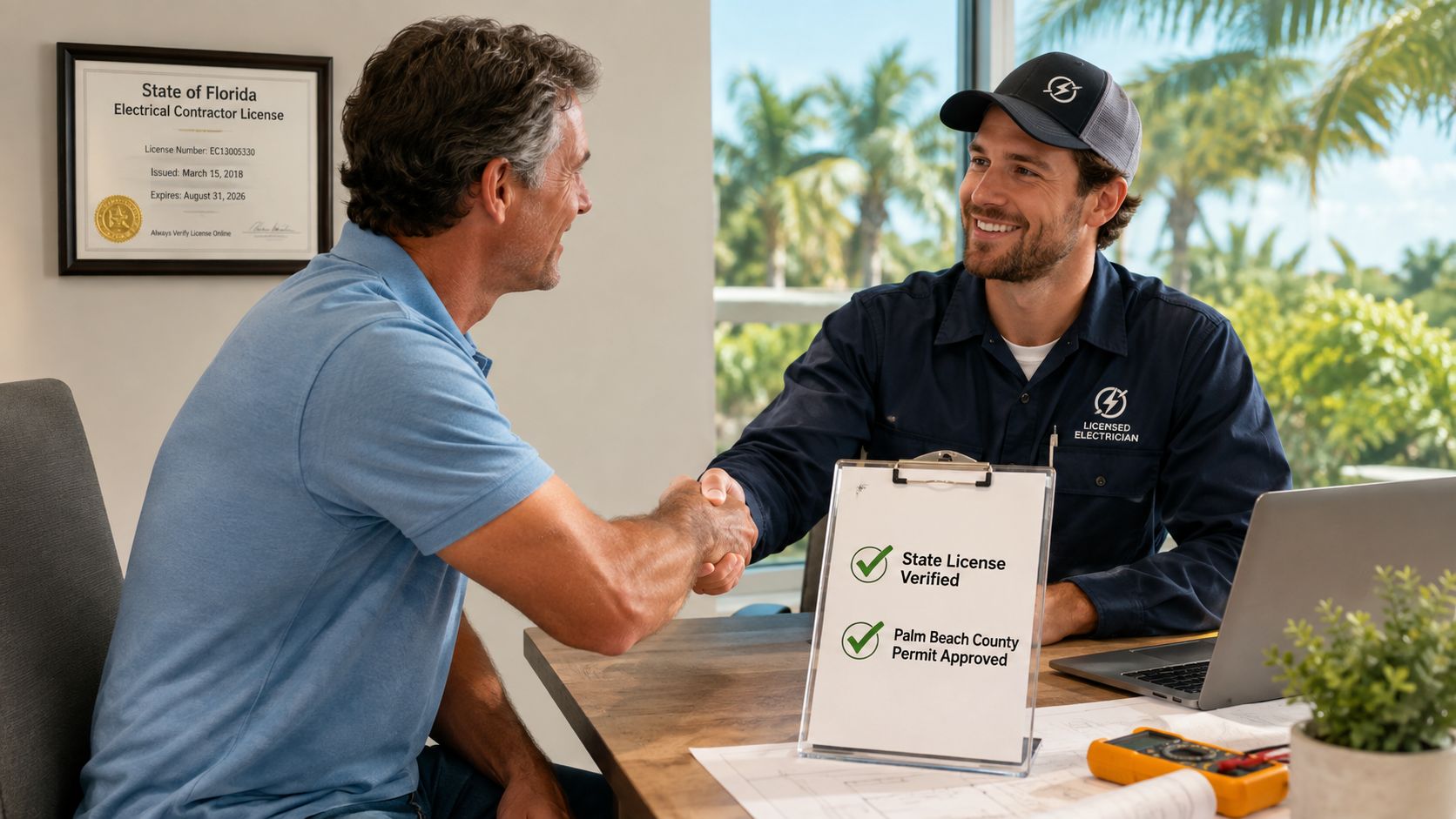
The electrician you hire matters as much as the panel itself. For electrical panel replacement West Palm Beach homeowners should verify state licensing, confirm that the contractor handles Palm Beach County permits, and ask how inspection scheduling and utility coordination are managed. If the office can't explain those basics clearly, the job may be more stressful than it needs to be.
What to verify before you sign
A solid contractor should be comfortable proving licensure, describing their permit process, and giving you a transparent quote before work starts. You also want proof of insurance, a real service history in the area, and a phone line answered by someone who understands electrical work, not a generic answering service.
If you need a local example of the kind of service structure that fits this work, Lighthouse Energy Services offers residential panel replacement, permit handling, code compliance, new service panel installation, and final testing in Palm Beach County. Use that as a benchmark when you compare any electrician's scope, not as a substitute for checking the details yourself.
Keep your decision focused on the loads the home has and the loads you expect later. For major Florida markets, the priority is matching service capacity to the home's real and future demand, not just swapping the box, and moving from 100-amp legacy service to a 150- or 200-amp panel is commonly recommended when larger appliances are present Palm Beach Spark Electric.
A clean post-job file should include the permit record, inspection sign-off, panel labeling photos, and any notes about surge protection or related code work. That file is valuable if an insurer asks for proof, or if you sell the house later and need to show the panel was replaced properly.
Before you hire, run this quick checklist:
- License verified: Confirm the electrician is properly licensed for panel work in Florida.
- Permit responsibility clear: Know who files, who schedules, and who meets the inspector.
- Scope itemized: Make sure labor, materials, permits, and service changes are listed separately.
- Documentation promised: Ask for photos, labels, and inspection paperwork at completion.
- Load matching explained: The quote should state why the chosen amperage fits the home.
If the panel is tripping, buzzing, rusting, or too old for the home's load, don't wait until it becomes an emergency. Schedule a real assessment, compare the quote against the capacity you need, and keep every permit and inspection record with your home files.
If you're in Palm Beach County and you want the panel checked the right way, Lighthouse Energy Services can inspect the existing service, handle permitting, replace the panel, and document the work for future insurance or resale needs. Visit Lighthouse Energy Services to schedule an assessment and get a clear plan before the next breaker trip turns into a longer outage.