
That notice usually shows up at the worst time. You're under contract to sell, your insurer wants corrections before renewal, or a county inspector flagged work that nobody told you needed a permit. The paper feels bigger than the actual electrical problem because now you're dealing with the repair, the permit, the inspection, and the clock.
The good news is that most electrical violations are fixable. The bad news is that they only get resolved when the repair and the paperwork line up. If you need a Code violation correction electrician Florida property owners can rely on, you need someone who understands both the wiring and the closing process that gets the violation officially cleared.
That Violation Notice Explained Common Florida Electrical Issues
A violation notice isn't proof that your whole system is a disaster. It usually means an inspector, insurance representative, or buyer-side inspection found a specific problem that has to be corrected and documented. In Florida existing homes, electrical problems were the single largest category of common building-code violations at 15% in a University of Florida study, ahead of structural and exit or fire-safety issues in that sample, according to the University of Florida research on code violations in existing homes.
That matters because it tells you something important. You're not dealing with a rare edge case. You're dealing with a very common category of inspection failure, especially in older homes, renovated properties, and buildings where different people have modified the system over time.
What inspectors usually find
Most notices point to one of a handful of recurring issues. The pattern is familiar: panel problems, grounding or bonding defects, overloaded or modified circuits, and missing safety protection such as GFCI or AFCI devices.
Practical rule: Read the exact wording of the notice before anyone touches the system. If the cited issue is only part of a larger condition, a patch job won't close it.
Here is the simple version of what those violations usually mean in the field:
| Violation | Risk Factor | Typical Correction by an Electrician |
|---|---|---|
| Double-tapped or overcrowded breakers | Heat buildup, loose terminations, fire risk | Reconfigure circuits, move conductors to properly rated breakers, or adjust panel layout |
| Missing panel labeling | Unsafe shutdown, inspection failure | Trace circuits and create accurate directory labeling |
| Improper grounding or bonding | Shock hazard, poor fault clearing | Correct grounding path, bonding connections, and related hardware |
| Missing GFCI protection | Shock risk near wet locations | Install compliant GFCI protection at required locations |
| Missing AFCI protection | Increased fire risk from arc faults | Add compliant AFCI protection where required |
| Improper wiring or overloaded circuits | Overheating, nuisance trips, hidden damage | Rework circuit layout, separate loads, and replace noncompliant wiring components |
| Outdated or noncompliant equipment | Reliability and safety concerns | Replace only the affected components when targeted correction is appropriate |
What the notice may not say clearly
A notice often lists the code section and the visible defect, but it doesn't always spell out the hidden reason the job failed. A panel might be cited for labeling, yet the underlying problem is that previous work changed circuits without matching breakers, conductor routing, or grounding. A GFCI problem might be straightforward, or it might reveal bootleg wiring, reversed polarity, or shared neutrals that need correction.
If your breakers have been tripping, that's often a symptom worth paying attention to before the inspection ever happens. This overview of why a circuit breaker keeps tripping gives a good plain-language explanation of how overloads, short circuits, and fault conditions can point to code problems.
What usually works and what doesn't
What works is targeted diagnosis. Open the panel. Verify conductor sizes, breaker compatibility, terminations, grounding, bonding, and protection devices. Then compare the actual installation to the violation notice.
What doesn't work is assuming every violation means a full rewire, or going the other direction and trying to hide the issue with a quick device swap. Most correction jobs live in the middle. They require a disciplined repair, not panic and not guesswork.
Navigating the Florida Permitting and Inspection Process
The electrical repair is only half the job. The other half is moving through the local building department in the right order so the violation can be closed. In Florida, the proper workflow is a sequence: permit application review, field inspections, a written notice citing the exact code, re-inspection after correction, and then closure. Trying to fix it before the permit is in place can mean the work has to be redone, as outlined in Florida-specific guidance on electrical violations and enforcement.
That sequence frustrates people because it feels slow. But inspectors don't close cases based on good intentions. They close cases when permitted work has been verified.
The order matters
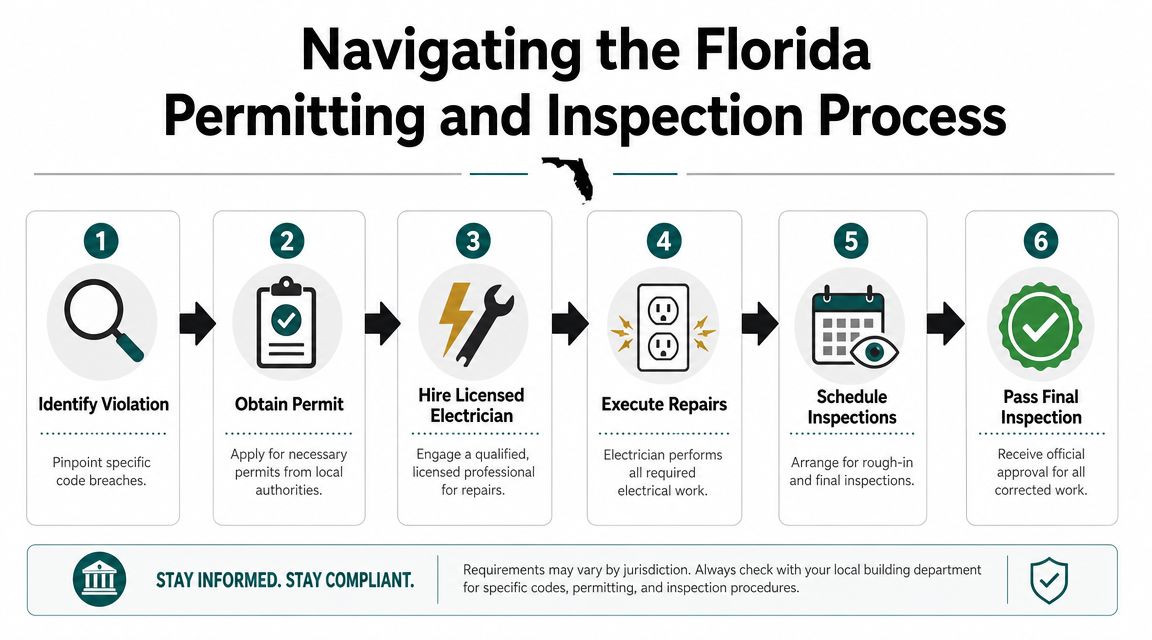
A clean correction process usually looks like this:
Match the notice to the actual condition
The electrician reviews the cited violation, inspects the affected system, and checks whether the visible issue is part of a larger noncompliant installation.Pull the correct permit
Incorrect permitting can lead many jobs astray. The permit scope has to reflect the actual work. If the violation involves unpermitted prior improvements, the building department may want more than a basic repair permit.Prepare for required access
If walls, ceilings, or equipment prevent verification, that has to be addressed before inspection day. Concealed work is where delays multiply.Perform the correction
The repair has to match code and match the permit scope. If additional defects are found, the permit may need to be revised.Schedule inspections in the proper sequence
Some jobs need a rough inspection before everything is closed up. Others go straight to final.Secure official sign-off
The case isn't done because the lights work. It's done when the authority having jurisdiction marks the correction complete.
If a local department can't verify what was repaired, they won't close the file just because the visible symptom is gone.
Why unpermitted work becomes a bigger problem
In counties such as Palm Beach, unpermitted improvements can trigger a deeper review. The correction may require a permit package, multiple trade inspections, and in some cases engineer or architect certification if parts of the work aren't accessible for direct inspection. That's why the smartest move is usually to slow down at the front end and document everything correctly.
Property owners often think this is unique to Florida, but the general lesson applies anywhere: local permit systems have their own workflow, forms, and inspection logic. If you're trying to understand how another jurisdiction structures permit research, this example on applying for Phoenix building permits shows how much of the process depends on local records and agency requirements.
What to have ready before the first inspection call
A smoother permit file usually includes:
- The actual violation notice with code references and deadlines.
- Property details that match county records.
- Photos of the affected area before repair, especially if access will change.
- A clear scope of work describing what is being corrected.
- Any prior permit information if the violation ties back to older work.
The people who get stuck are usually the ones who treat permitting like a side task. For code correction, permitting is the path.
How to Hire the Right Licensed Electrician for Code Correction
The wrong electrician can leave you with a repaired-looking system and an open violation. That's the primary risk. Code correction isn't just electrical labor. It's diagnosis, scope control, permit handling, inspection prep, and enough experience to know which “small” issue is the thing that will fail re-inspection.
Florida enforcement has teeth. Significant violations can lead to fines from $500 to $5,000 and disciplinary action against licensed contractors, according to the Florida Building Code final report on code violations. That should tell you how seriously the state treats compliance work.
What to verify before signing anything
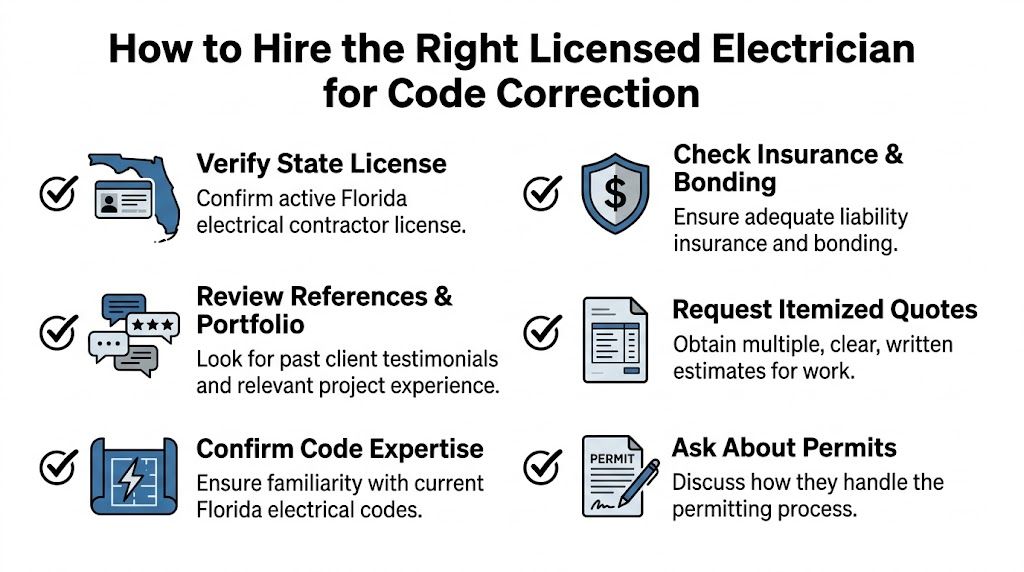
Start with the basics, then go narrower.
Active Florida license
You want a contractor who can legally perform the work and pull the permit required for the correction.Insurance and workers' comp
If a contractor can't show coverage, you're taking on risk you don't need.Local inspection experience
A contractor who works regularly with your municipality or county usually knows how that office handles revisions, access issues, and final sign-off.Written scope, not vague promises
The estimate should describe what is being corrected, what isn't included, and what happens if hidden defects appear.Permit responsibility spelled out
If the contractor says you should pull the permit to save money, stop there.
Red flags that should end the conversation
Some warning signs are obvious. Others are subtle.
Watch for this: anyone who says, “We'll fix it without involving the county,” when the violation is already in the system.
Other red flags include:
- Large cash demands up front with no written scope
- No interest in reading the violation notice
- No mention of re-inspection
- A price that assumes every problem is cosmetic
- Refusal to document changes
A useful comparison point is this homeowner-focused guide to hiring a new home electrician. The same vetting habits apply, but violation work requires a sharper focus on permit and inspection history.
Experience matters more than speed talk
A contractor can be fast and still create delays if the permit is wrong or the repair isn't documented. That's why this is one of the few situations where I'd rather hire the electrician who asks more questions. A firm such as Lighthouse Energy Services, which handles inspections, rewiring, code corrections, and around-the-clock electrical service in Palm Beach County, fits this kind of work because the scope often expands once the panel is opened.
The best hire is usually the one who treats the violation like a closure project, not a quick service call.
The Electrical Repair and Documentation Checklist
Once the permit is active and the scope is clear, the work should feel organized. Not rushed. Not improvised. A professional correction job usually involves targeted repairs, careful access, testing, labeling, and a documentation trail that matches what the inspector will need to verify.
Florida field guidance consistently points to the same failure areas: panels, grounding and bonding, and missing GFCI or AFCI protection. It also notes that passing re-inspection depends on documenting the corrective actions and making concealed work verifiable, as explained in this Florida electrical code violation repair guidance.
What the electrician is likely doing on site
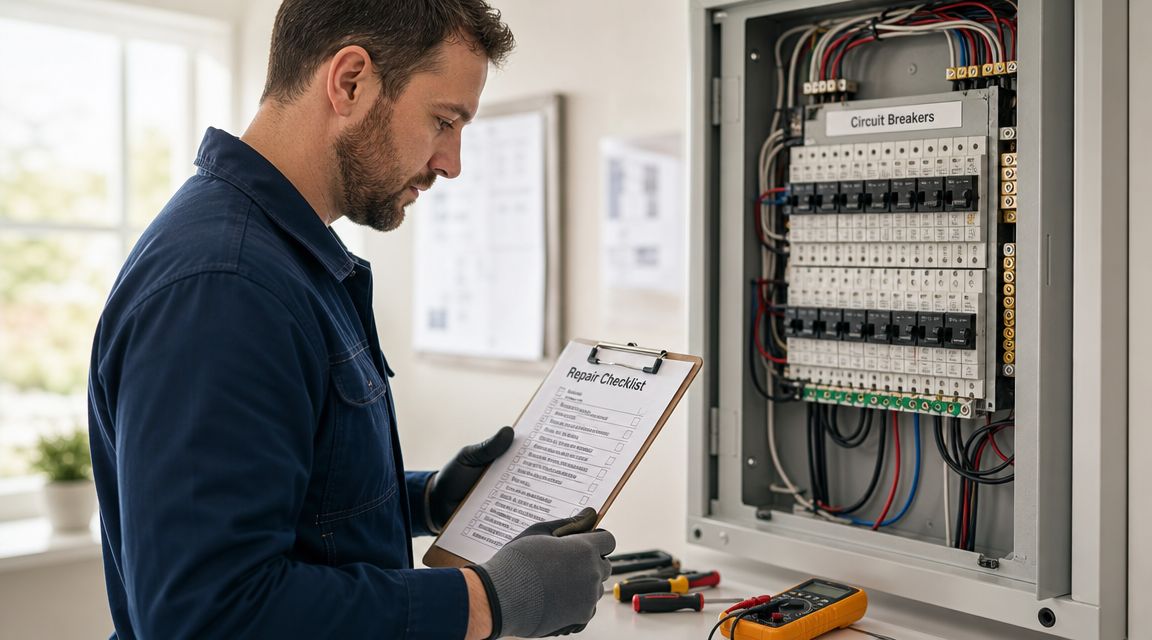
This isn't a DIY checklist. It's what you should expect to see from competent work.
Open and inspect the panel fully
The electrician checks breaker arrangement, conductor terminations, labeling, signs of overheating, and whether the panel condition matches the complaint.Verify grounding and bonding paths
This step matters because a system can appear to function normally while still failing fault-clearing or safety requirements.Test protection devices
GFCI and AFCI protection isn't assumed. It gets verified.Correct only what needs correction, plus anything directly tied to it
Good electricians don't sell a full replacement when a targeted compliant repair will solve the problem. They also don't ignore adjacent hazards that will cause the next failed inspection.
What you should do before the crew arrives
You can save time by making the work area usable.
Clear access to panels, disconnects, and outlets
Don't make the crew move storage, shelving, or appliances just to reach the cited area.Gather prior permits and inspection notes
If the property has a long renovation history, those records help explain what was altered.List recurring symptoms
Breaker trips, dead receptacles, moisture events, flickering, and previous handyman repairs are all relevant.
A broader electrical home safety check can also help property owners understand what else deserves attention once the violation itself is under control.
The documentation that helps close the loop
This is the part many owners never see. Strong documentation often includes:
| Documentation item | Why it matters |
|---|---|
| Before photos | Shows original condition tied to the notice |
| During-repair photos | Helps when parts of the work become concealed |
| Panel directory updates | Gives the inspector a usable map of the corrected system |
| Material and device notes | Confirms what was installed |
| Written correction summary | Connects the repair to the cited violation |
A clean panel with no notes can still fail. An inspector needs to verify what changed, where it changed, and whether the corrected work matches the permit.
The repair gets the system compliant. The documentation helps prove it.
Passing Final Inspection and Preventing Future Violations
Final inspection is where loose ends show up. The wiring may be corrected, but if access is blocked, labeling is incomplete, or the permit file doesn't reflect the actual work, the case can stay open. That's why getting to “passed” is more than a technical milestone. It's the moment the property owner finally has proof that the issue was addressed and recognized by the authority that cited it.
This becomes especially important when the pressure came from a sale, a recertification, or insurance underwriting. Florida contractors regularly note that code corrections are often triggered by real estate transactions, insurance 4-point inspections, or building recertifications, and that official closure paperwork matters just as much as the repair itself, as described in this overview of correcting electrical violations tied to inspections and transactions.
What to have in hand after a pass
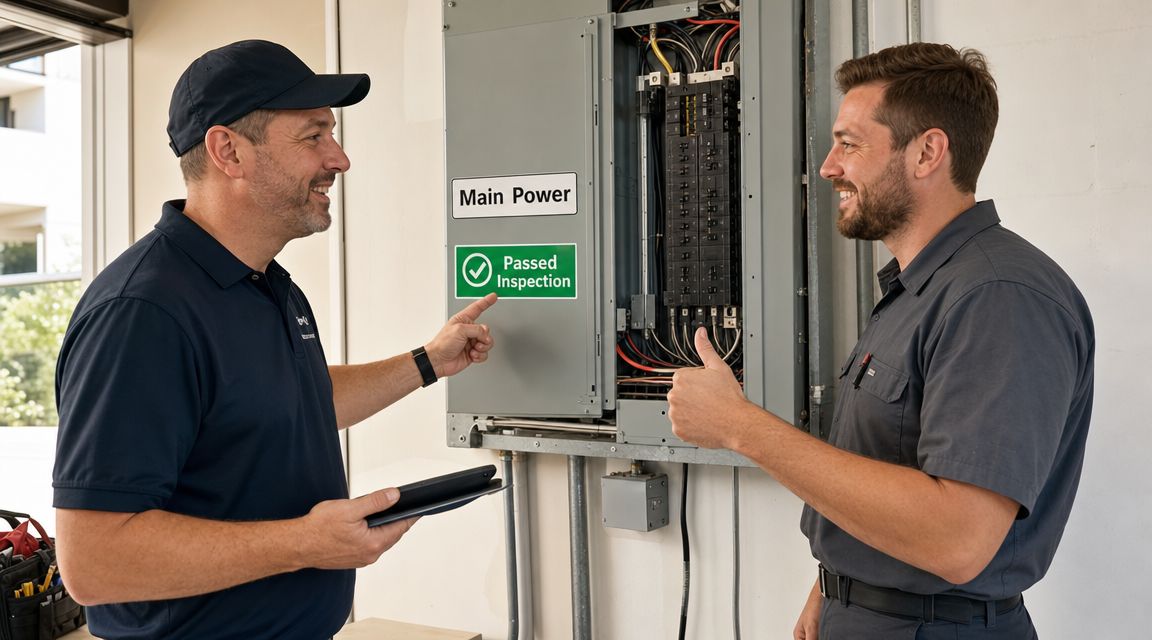
When the job passes, keep copies of the documents that prove it. At a minimum, you want records showing the permit and the completed inspection status. If the issue affected a sale, insurance file, HOA matter, or property management file, distribute those records immediately so nobody is waiting on “one last email.”
A practical closeout file should include:
- Permit record showing the approved scope
- Final inspection result or equivalent sign-off
- Repair invoice with enough detail to identify the corrected work
- Photos and notes if the issue was likely to be questioned later
- Any supporting certifications if design professionals were involved
How to avoid going through this again
Not every future problem is preventable, but many repeat violations are. The most common pattern is deferred maintenance mixed with undocumented changes. Someone adds a circuit, swaps a device, replaces a breaker with whatever fits, or remodels around electrical equipment and nobody updates the records.
For owners who manage multiple properties, internal tracking helps. Even a simple compliance log can prevent missed renewals, forgotten corrections, and unclear repair histories. If you're building a better admin system around inspections and corrective actions, this guide to compliance success is a useful starting point.
The easiest violation to close is the one that never had time to grow into a file with deadlines, inspectors, and transaction pressure.
For homeowners, basic annual checks help. Make sure panels stay accessible, test safety devices, watch for signs of added loads, and don't ignore repeated breaker trips. For property managers and commercial owners, schedule periodic reviews before insurers, buyers, or municipal inspectors force the issue.
Frequently Asked Questions About Code Corrections
How much does electrical code violation correction cost in Florida
It depends on what the notice covers. A targeted correction such as adding required protection, fixing a grounding issue, or reorganizing a panel is very different from cleaning up unpermitted prior work or correcting multiple defects found during the same permit.
The cost isn't just labor and materials. It can also include permit fees, time spent coordinating inspections, access work if areas are concealed, and follow-up visits if the scope expands once the system is opened. Be careful with any quote that gives a flat number before the contractor has reviewed the violation notice and inspected the affected equipment.
How long does it take to fix a violation and pass inspection
The timeline depends on three things: permit processing, the actual repair scope, and inspector availability. Some jobs move quickly because the violation is isolated and access is easy. Others drag because the permit needs revision, concealed work can't be verified, or the first correction reveals older noncompliant work nearby.
If you're under pressure from a closing or insurance deadline, say that at the first call. A good electrician can often sequence the work and paperwork to reduce avoidable delays, but nobody can responsibly promise an exact completion date before the scope is clear.
Can I do the electrical work myself
For code correction tied to an active violation, DIY work is usually the wrong move. Even if you're capable with basic electrical tasks, the issue isn't only whether the repair functions. The issue is whether it was permitted correctly, performed to code, and accepted by the local inspector.
The bigger risk is making the file worse. If someone repairs the visible symptom without addressing the permit, documentation, or related defects, the work can be rejected and may need to be opened back up. When the property is tied to a sale, insurance review, or management file, that kind of setback costs more than hiring the right licensed electrician in the first place.
If you're trying to clear a violation without more failed inspections, missed closing dates, or permit confusion, Lighthouse Energy Services can be one practical option to consider for licensed electrical repairs and code-correction work in Palm Beach County. The key is getting a contractor who will diagnose the underlying issue, pull the right permit, document the repair, and stay with the job until the paperwork is fully closed.