
It's late. The house is quiet. Then you catch it. A sharp, hot smell that doesn't belong there. Not dinner. Not dust. Not a candle. Something closer to burnt plastic, hot rubber, or a clean harsh electrical odor that seems to come and go.
Treat that smell like a warning, not a mystery. I've taken enough after-hours calls to tell you the same thing every time. If you notice an electrical burning smell in house conditions, don't wait for smoke, and don't assume it stopped just because the odor faded. Electrical problems often heat up under load, cool down when the load cycles off, and leave damaged insulation or connections behind.
Table of Contents
- Why an Electrical Burning Smell Means Act Immediately
- Immediate Safety Actions When You Notice the Smell
- How to Pinpoint Where the Smell Is Coming From
- Common Causes Behind That Acrid Odor
- Safe Homeowner Checks and When to Call a Professional
- Prevent Future Electrical Odors and Stay Safe Year Round
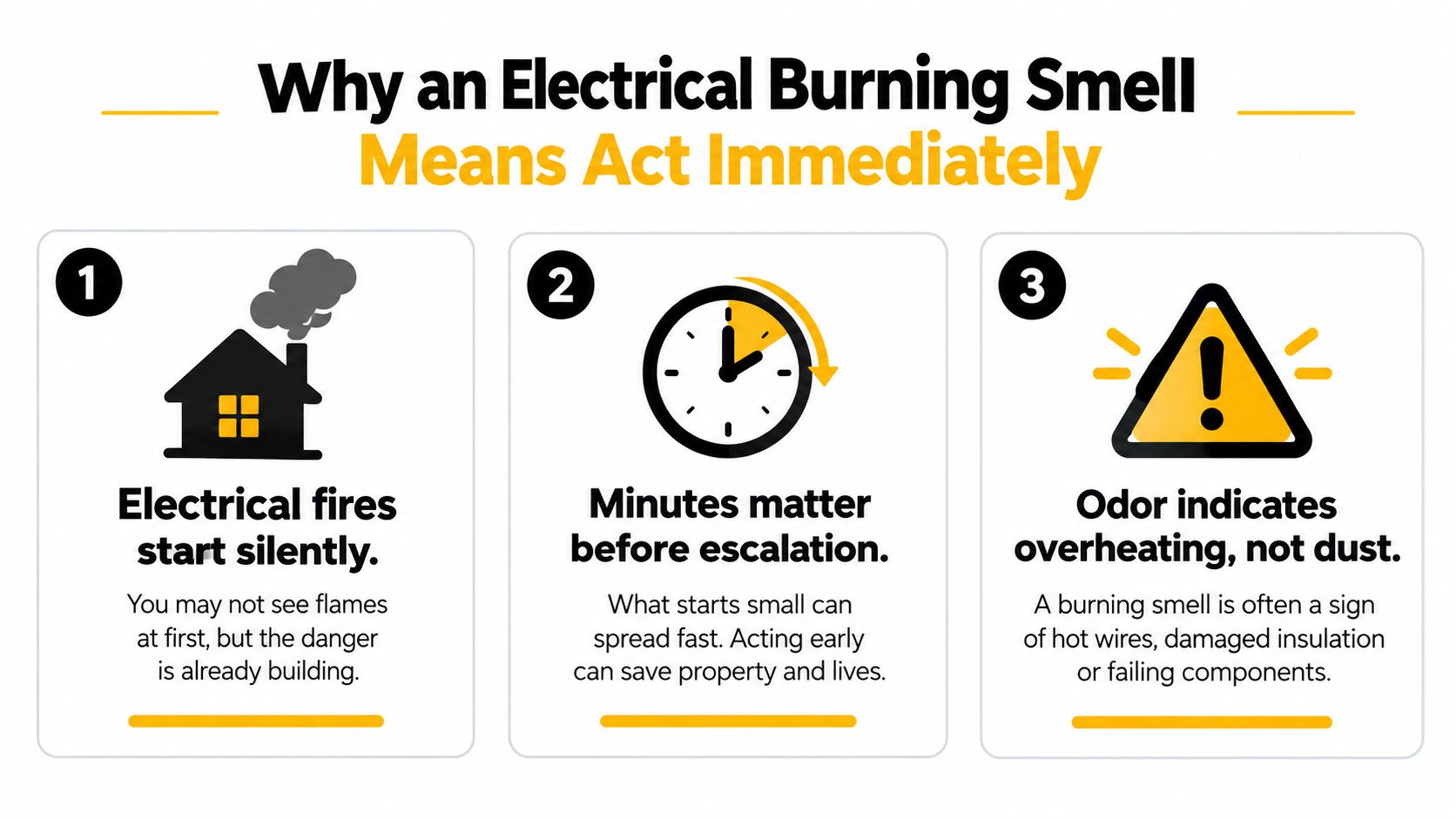
Why an Electrical Burning Smell Means Act Immediately
A house can go from normal to dangerous fast when this smell shows up. If the odor is sharp, plastic-like, fishy, or hot-metal acrid, treat it as active overheating until proved otherwise.
An electrical burning smell usually means insulation, wire coating, a device body, or a loose connection has gotten hotter than it should. That can happen inside an outlet box, inside an appliance, above a light fixture, at the panel, or in concealed wiring you cannot see. By the time your nose picks it up, something has already been stressed.
What matters first is the type of smell and where it hangs in the house. Burnt plastic near one receptacle points you in a different direction than a hot dusty odor above a ceiling light, or a rubber smell following the laundry circuit. That first distinction helps separate a bad appliance from a failing outlet or a hidden wiring problem, and it changes how urgently the circuit needs to be shut down.
Where these smells often start
In real service calls, the usual trouble spots are the places that carry heat, vibration, or repeated plug use. Kitchen receptacles, bathroom exhaust fans, bedroom outlets, light fixtures, attic junction boxes, furnace or air-handler circuits, and older panel connections are common offenders.
A loose connection can cook for a while before it ever throws visible smoke. An overloaded appliance cord can soften insulation and leave a smell in the room long after the device cycles off. Hidden wiring failures are worse because the odor may drift away from the actual fault and fool you into checking the wrong spot.
That last part matters. People often assume the danger passed because the smell faded after they turned something off. It did not. Heat lingers in plastic, dust, wood, and insulation. Damaged wire coating keeps off-gassing after the load is removed, and a loose connection can cool down just enough to stop smelling until the circuit is used again.
Do not wait for smoke to confirm it.
Good alarms still matter. Homeowners reviewing fire alarm systems home UK options should treat detection as backup protection, especially near sleeping areas and hallways. Your first warning of an electrical failure is often the odor itself, and that warning comes before flame more often than people think.
Immediate Safety Actions When You Notice the Smell
It's 11:40 p.m. The house is quiet, then you catch that sharp, acrid smell near the hallway and can't tell if it's the lamp, the outlet, or something buried in the wall. Treat that as an electrical emergency until proven otherwise.
Your first job is to stop heat from building and keep people out of harm's way. Do not waste time hunting for smoke or testing switches.
What to do first
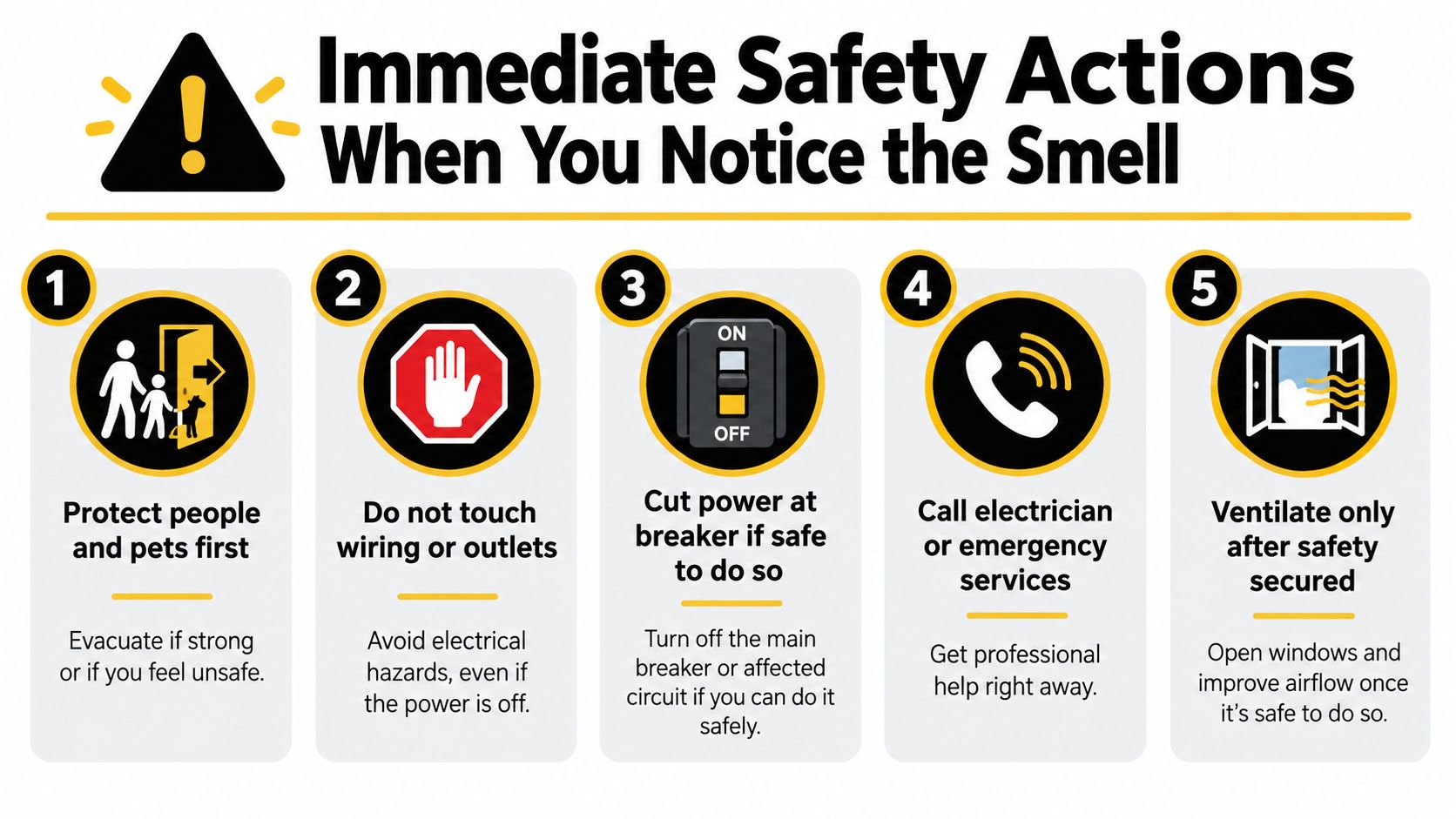
Use this order.
- Clear the area. Move children, older adults, and pets away from the room or section of the house where the odor is strongest.
- Stop using anything nearby. Do not flip the switch again. Do not restart the appliance. Do not plug in something else to compare.
- Shut off the suspected circuit if you know it. Use the breaker, not the wall switch or the appliance controls.
- Shut off the main breaker if the smell is strong and you cannot isolate the source. Only do this if the panel is easy to reach and there is no smoke, heat, or visible damage around it.
- Call for help. If you see smoke, sparks, charring, or flame, call emergency services. If you have odor only, call a licensed electrician immediately.
One bad decision causes trouble fast. Plugging something back in, touching a hot cord, or removing a cover plate turns a manageable fault into an injury.
What to leave alone
Leave outlet covers in place. Leave the panel front closed. Leave a hot or warped plug exactly where it is until power is off at the breaker. Do not put your hand on a switch plate, receptacle, or appliance case to “check if it's warm.”
Do not use water. Do not use a household cleaner. Do not stand there sniffing each outlet to find the winner.
If you need immediate direction while you isolate power, contact an emergency electricity helpline and report three things clearly: what the smell is like, where it is strongest, and whether shutting off a breaker changed it.
When smell alone is enough to act
A strong electrical odor is enough reason to shut power off and make the call, even without smoke. Burnt plastic, fishy insulation, hot dust, and overheated metal all point to different failure types, but the action is the same at this stage. Isolate the circuit or the whole house if needed, then keep hands off.
Do not let a fading smell talk you out of it. Odor often lingers after the load is off because heated plastic, wire insulation, dust, and wood keep releasing that smell as they cool. The active arcing may have stopped for the moment, but the damage is already there.
After power is off
Ventilate the area after you cut power, not before. Open windows if you want cleaner air, but do not mistake fresh air for a fix.
Then wait for the system to stay off until it is checked. If the smell was tied to one appliance, leave it unplugged. If it was strongest at an outlet, switch, fixture, or inside a wall, leave that circuit off and leave the hardware untouched.
How to Pinpoint Where the Smell Is Coming From
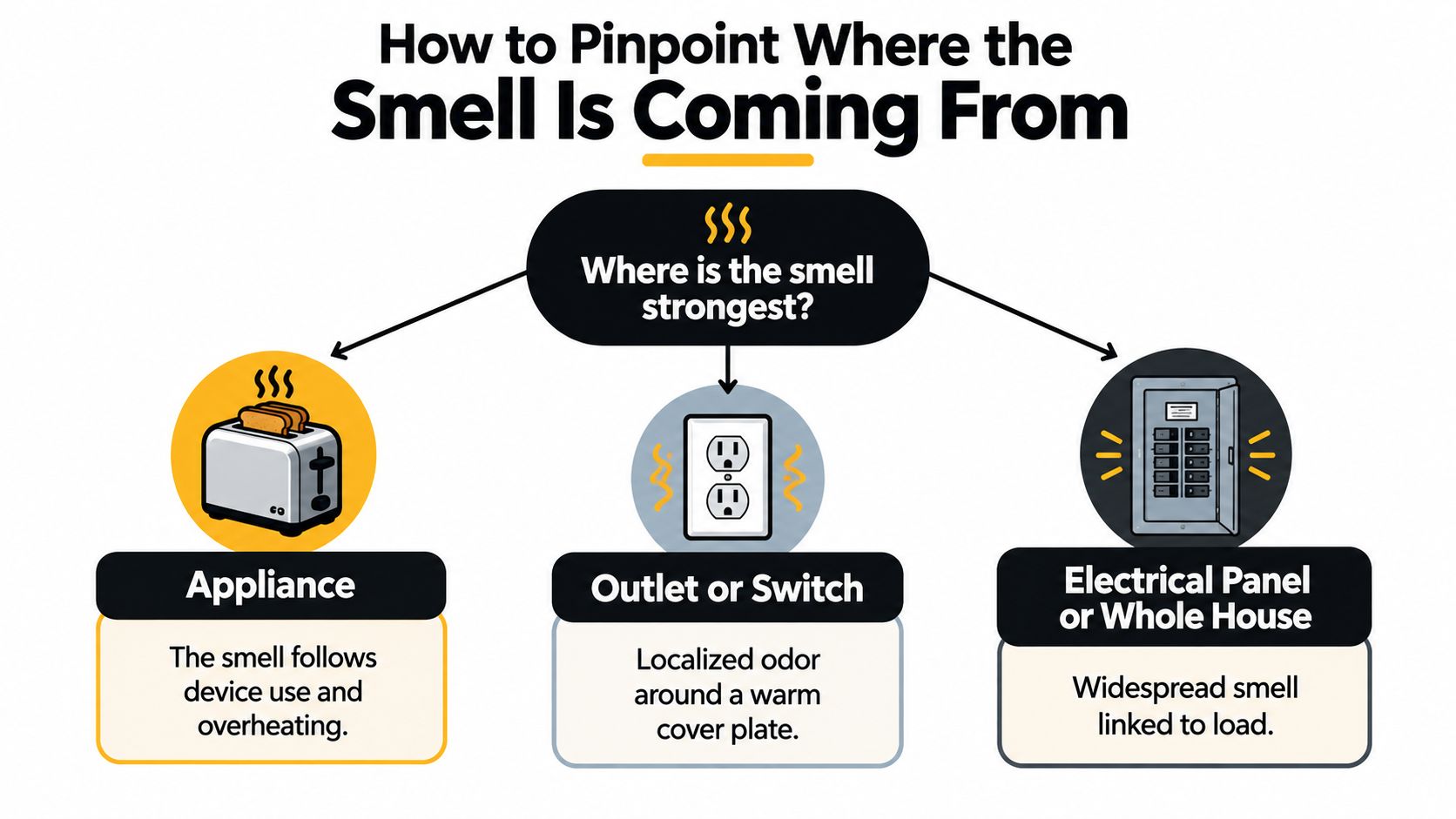
Pinpointing the source starts with triage, not guesswork. Focus on three things in this order: where the smell is strongest, when it shows up, and what it smells like. That combination usually separates a bad appliance from a failing outlet, a switch problem, a panel issue, or damaged wiring hidden in a wall or ceiling.
Start with the strongest location
Stand back and map the odor. Don't touch outlets, switches, light fixtures, cords, or appliance housings.
If the smell is concentrated at one appliance, the problem is often inside that device, its cord, or its plug. If it is strongest at one outlet, switch, or light fixture, suspect a failing wire connection or heat damage inside that box. If the odor hangs in several rooms, near the service panel, or along one wall or ceiling line, treat hidden branch-circuit wiring or panel trouble as the leading suspect.
Air movement can fool you. HVAC returns, ceiling fans, and hallway drafts can carry odor away from the actual failure point. Follow the strongest concentration, not the room where you noticed it first.
Use timing to separate load problems from fixed wiring problems
Timing gives away a lot.
A smell that appears only when the dryer, microwave, dishwasher, window AC, furnace blower, or space heater runs usually points to overheating under load. A smell that shows up with no obvious appliance cycling on deserves more suspicion, especially if it seems tied to lighting circuits, attic heat, or a certain section of the house.
Write down these details while they're fresh:
- What was running when the smell started
- Which room or wall smelled strongest
- Whether the odor appeared fast or built slowly
- Whether it faded after the equipment shut off
- Whether one breaker being off changed the smell pattern
That last point matters. A bad appliance often stops smelling once it is unplugged or its circuit is off. Hidden wiring damage can still stink after power is cut because the insulation, plastic box, wood framing, or dust around the hot spot keeps releasing odor while it cools. Homeowners miss this all the time and assume the danger passed. It didn't. The heat event already happened.
Pay attention to the smell itself
Electrical odors are not all the same.
- Burnt plastic or melting insulation: Common with overheated receptacles, switches, cords, and wire insulation.
- Fishy or urine-like smell: Often points to overheating plastic components in a device, outlet, switch, or breaker.
- Sharp, harsh, almost bleach-clean smell: More consistent with arcing or ozone.
- Hot dust smell: Common at heaters, older light fixtures, baseboard units, or equipment that just started running after sitting.
Use smell type with location. A fishy odor at one bathroom switch tells a different story than a hot-dust smell at the first furnace run of the season. A sharp arcing smell near a panel or junction box is a leave-it-alone problem.
One more hard truth. The faceplate can look normal while the failure is cooking behind it. The loose stab connection, scorched wire nut, damaged neutral, or overheated breaker lug is usually out of sight.
If you want a clearer picture of how electricians trace a fault after basic homeowner triage, this guide on how to find an electrical short in a house explains the fault-finding process without asking you to take anything apart.
Common Causes Behind That Acrid Odor
The cause usually reveals itself by two things: what the smell is like and where it is strongest. That combination tells you whether you are dealing with a failing appliance, a bad device connection, or wiring that is overheating out of sight.
The repeat offender is a loose or damaged connection. That can be a receptacle terminal, a switch connection, a wire nut in a junction box, a breaker terminal, or a neutral connection in the panel. The failure point gets resistive, heat builds fast, and the plastic around it starts to bake.
Loose connections hide behind normal-looking devices
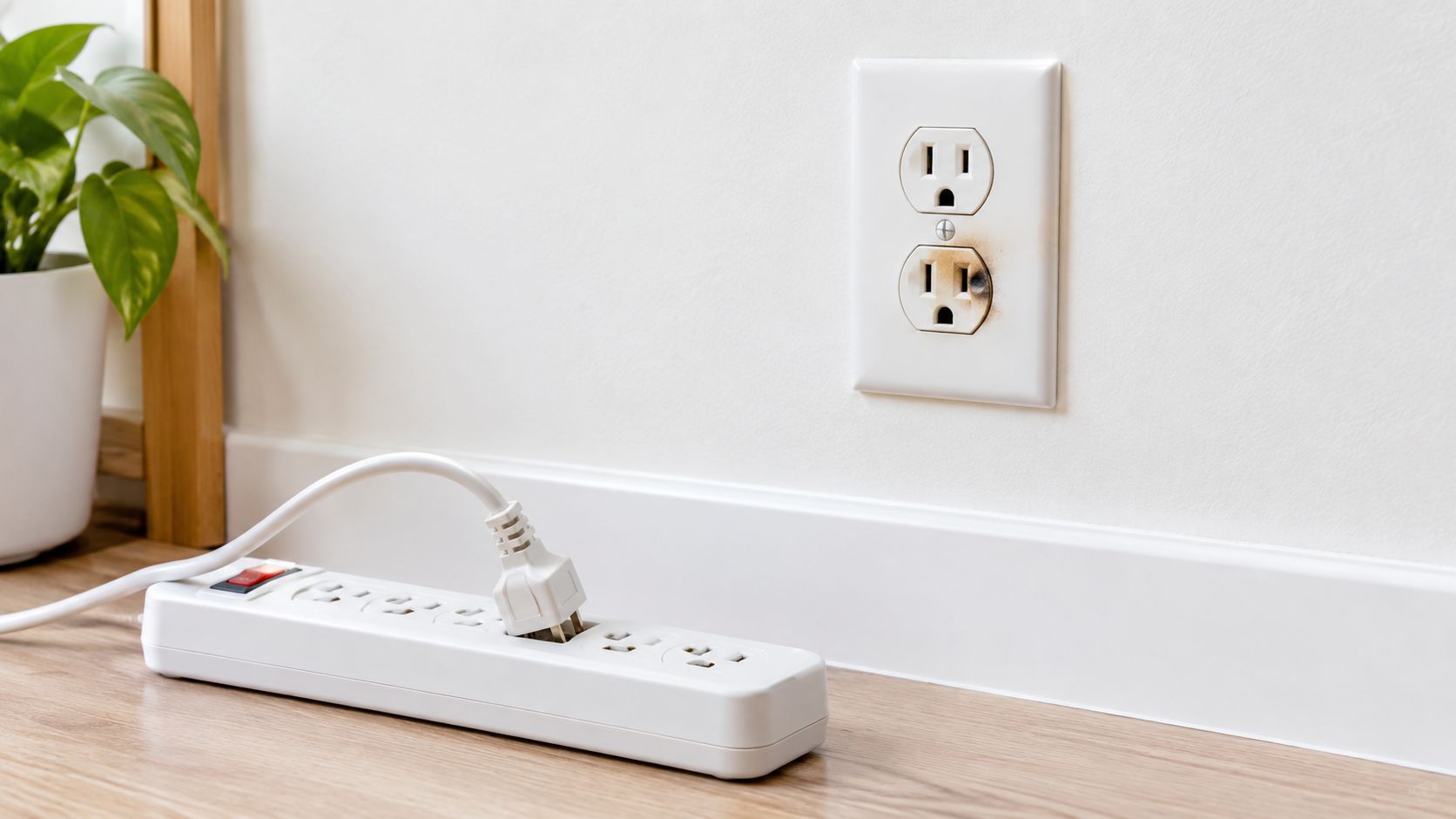
A receptacle can look fine from the front and still be failing behind it. I see this with worn outlet contacts, overheated backstab terminations, loose side screws, and scorched splices. The faceplate stays clean. The trouble is on the wire connection where the heat starts.
That is also why the smell can linger after the lamp, toaster, or vacuum is unplugged. The load triggered the heat event, but the insulation, box, drywall, or wood around that hot spot keeps releasing odor while it cools.
Appliance failure has a different pattern
Some smells start inside one piece of equipment. Common examples are a failing motor winding, a damaged cord cap, an overheated plug blade, or an internal component cooking under load. If the odor shows up only when one appliance runs and stays at that cord and plug, start by suspecting the appliance.
If the smell shows up at an outlet with different devices, or with nothing plugged in, suspect the house wiring.
| Clue | More likely appliance issue | More likely house wiring issue |
|---|---|---|
| Smell appears only when one device runs | Yes | Sometimes |
| Smell stays localized to one plug and cord | Yes | Sometimes |
| Smell strongest at one outlet with changing loads | Sometimes | Yes |
| Smell near panel or across rooms | No | Yes |
| Smell near wall or ceiling with no device involved | No | Yes |
Panel odor is a higher-stakes warning
A burning smell at the electrical panel gets my attention immediately. The common failure points are breaker terminals, neutral bars, main lugs, and damaged breaker-to-bus connections. Those are not homeowner repairs.
Panel problems also fool people because the odor may remain after the breaker trips or the heavy load shuts off. The connection already overheated. Nearby insulation and plastic keep off-gassing long after the current drops.
According to the U.S. Fire Administration, residential electrical malfunctions are a recurring cause of home fires, injuries, and deaths in the United States (https://www.usfa.fema.gov/statistics/reports/electrical-fires/). Treat panel odor like an active hazard, not a minor nuisance.
Overloads expose weak points
Space heaters, air fryers, hair tools, window AC units, and power strips draw enough current to expose bad connections fast. Sometimes the appliance is the whole problem. Often it is just the load that reveals a weak receptacle, tired breaker connection, undersized extension cord, or damaged splice that was already there.
A warm outlet behind a heavy-use appliance is not harmless. A fishy smell at a switch is not an old-house quirk. Those are heat warnings, and heat is what starts fires.
Safe Homeowner Checks and When to Call a Professional
Homeowners can do some useful checking. The line is clear, though. Observe, isolate, document. Don't disassemble.
If the circuit is off and the area is safe, your job is to gather clues without exposing yourself to live parts. That means no cover removal, no panel opening, and no wire handling.
What you can safely check
Use this short list after power is isolated:
- Look for visible damage: Check for browned plastic, warped switch plates, melted plug ends, or discoloration around receptacles.
- Sniff from a distance: You're not putting your face near the device. You're confirming whether the odor is strongest at the appliance, outlet, switch, panel door, or ceiling area.
- Note breaker labels: If a breaker tripped, write down what it serves. Even sloppy labels help.
- Use a plug-in receptacle tester: If the outlet appears intact and power is later restored by a pro or under professional direction, a simple tester can help verify whether wiring appears correct before deeper troubleshooting.
- Document what was running: This is one of the most useful clues in intermittent odor cases.
What you should leave alone
Don't remove an outlet or switch plate to “take a quick look.” Don't tighten breaker screws. Don't pull a breaker. Don't separate a plug that looks fused to the receptacle. Those are electrician tasks.
A good local reference on hiring qualified help and avoiding unsafe DIY work is this Growth 4 Trades electrician guide. The details are UK-focused, but the core principle is universal. Electrical fault work belongs to licensed professionals.
If plastic is deformed, if the panel smells hot, or if the odor returns under load, your troubleshooting is over. That's the handoff point.
When to call emergency services versus a licensed electrician
Use the situation, not your confidence level, to decide.
| Situation | Who to Call First | Why |
|---|---|---|
| Visible smoke, flame, or sparking | Emergency services | There's an active fire or immediate ignition risk |
| Strong electrical smell and you can't safely identify the source | Licensed electrician, and emergency services if conditions worsen | Hidden overheating can escalate without warning |
| Hot or melted outlet, but no visible fire | Licensed electrician | The device or wiring likely suffered heat damage and needs repair |
| Smell at the main panel or breakers | Licensed electrician | Panel faults involve high-risk components and should not be opened by homeowners |
| Odor from one appliance only | Licensed electrician or appliance technician depending on confirmed source | The problem may be internal to the device, cord, or receptacle feeding it |
| Repeated odor when HVAC or major appliances cycle on | Licensed electrician | Intermittent load-related overheating needs circuit-level diagnosis |
If you're in Palm Beach County and need round-the-clock diagnostics for a burning outlet, suspect breaker issue, or hidden circuit problem, Lighthouse Energy Services handles emergency electrical response and inspection calls. That's the point where a pro brings in thermal scanning, circuit isolation, and hands-on testing you should not attempt yourself.
Prevent Future Electrical Odors and Stay Safe Year Round
Prevention isn't glamorous. It works.
Most burning-smell calls start long before the smell. A plug gets loose over time. A receptacle wears out. A space heater gets used on a tired circuit. A panel connection degrades slowly. Then one night the house tells you about it.
Habits that cut risk
A safer house usually comes from plain habits done consistently:
- Don't overload one outlet or power strip: High-draw appliances need the right circuit, not a daisy-chained workaround.
- Replace loose or worn receptacles: If plugs fall out easily, the device has lost grip and shouldn't stay in service.
- Pay attention to warm plates and odd smells: Outlets and switches should not smell hot.
- Have the panel inspected when warning signs show up: Buzzing, odor, nuisance tripping, or visible discoloration are not cosmetic issues.
- Be extra alert in bedrooms and attic areas: Older fire reporting found bedroom-related starts and attic or crawl space starts were common problem areas in residential electrical fires, as noted earlier in the article.
Why property managers and HOA boards should care
In condos, townhomes, and shared communities, one unit's neglected electrical issue can become everybody's problem. Routine common-area maintenance matters, and so does quick response when residents report a sharp odor near lighting, utility rooms, or shared equipment. The broader discipline of preserving HOA property value overlaps with electrical safety more than many boards realize.
For homeowners, the practical goal is simple. Catch the early warning before it becomes a wall repair, a panel replacement, or a fire claim.
A short prevention checklist
Keep this standard in your head:
- If it smells electrical, act the same day
- If it smells stronger under load, shut the circuit down
- If the source isn't obvious, don't guess
- If you want to reduce risk long term, follow a home electrical fire prevention plan
A useful starting point is this guide to preventing electrical fires at home, especially if you've already had one warm outlet, one suspicious breaker, or one unexplained odor event.
The main point is this. A disappearing smell doesn't mean a disappearing problem. Electrical damage often waits for the next heavy load.
If you smell hot plastic, burnt rubber, or a sharp electrical odor anywhere in your home, don't sit on it until morning. Lighthouse Energy Services provides 24/7 electrical troubleshooting for outlets, switches, panels, and hidden wiring issues, with live response from licensed professionals who can help you decide whether to shut power down, evacuate, or schedule immediate repair.