
Home electrical fires don’t start only in dramatic, obvious ways. Many start, for instance, inside a loose connection, behind an outlet, or at a cord that’s been bent one too many times. In the United States, home electrical fires account for an estimated 51,000 fires annually, causing nearly 500 deaths, more than 1,400 injuries, and $1.3 billion in property damage, making electrical distribution systems the third leading cause of home structure fires, according to the Electrical Safety Foundation International.
That number should reframe the issue for any homeowner in Palm Beach County. Electrical fire prevention isn’t just about replacing a bad outlet when it stops working. It’s about spotting heat, wear, overload, moisture exposure, and outdated equipment before they turn into ignition sources. In older Florida homes, that matters even more because air conditioning runs hard, humidity is relentless, and many houses weren’t designed for today’s appliance loads, home offices, and EV charging demands.
The Hidden Dangers Lurking in Your Walls
Most homeowners think about electrical danger when they see a spark. The actual trouble is usually less visible than that. A loose termination in a device box, a brittle conductor jacket, an overworked branch circuit, or a worn receptacle can sit unnoticed for years until heat and arcing finally catch up.
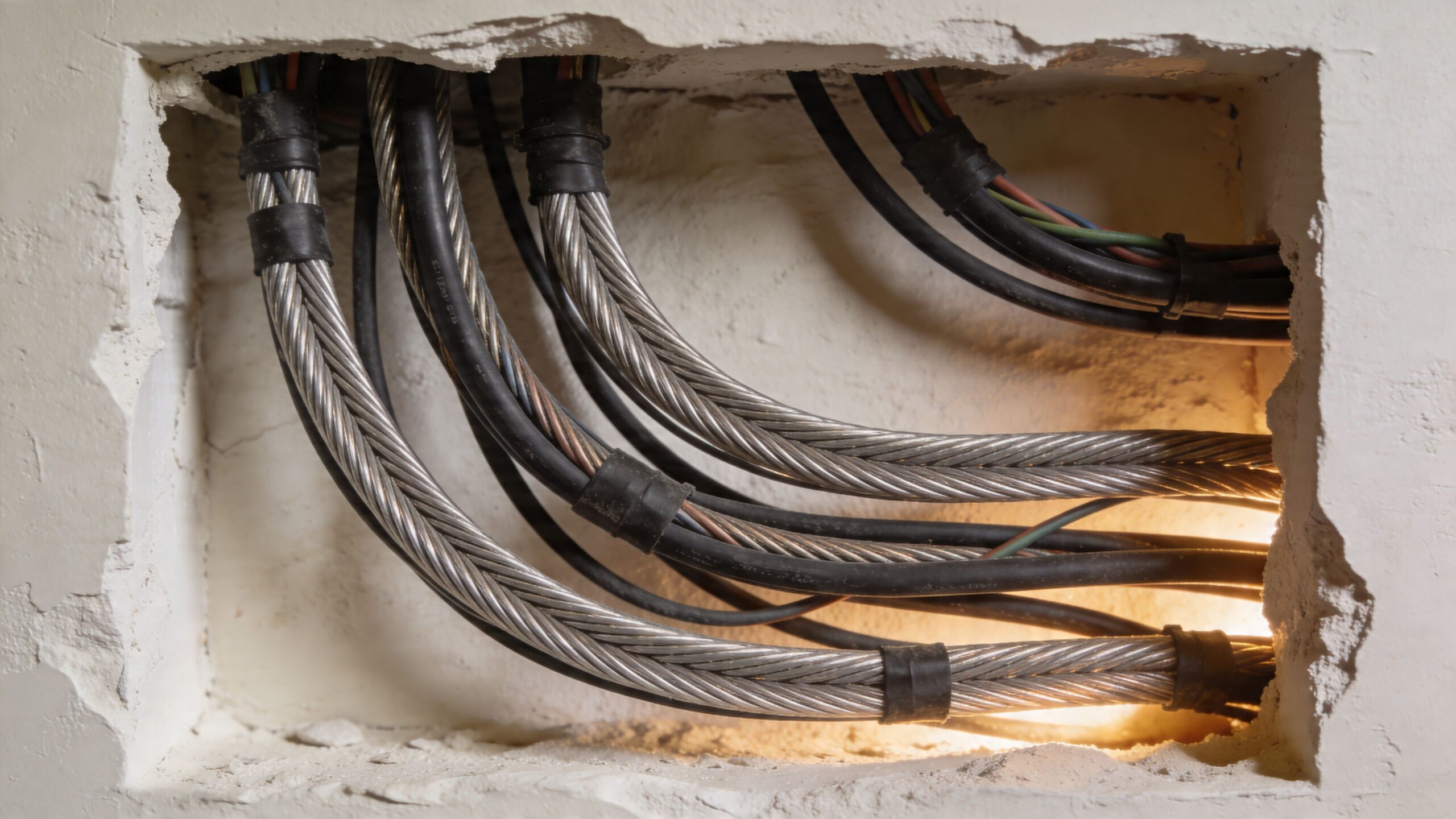
Palm Beach County adds its own pressure points. Humidity can work into weak points over time. Heavy AC use keeps demand high for long stretches. In older homes, especially those that have seen piecemeal renovations, I often find circuits serving far more than the original system was meant to handle. That doesn’t always trip a breaker right away. Sometimes it just creates repeated heat stress, and heat is what ages electrical components.
Why hidden problems get missed
Homeowners usually notice what’s visible and convenient. They’ll replace a lamp cord, swap a bulb, or reset a breaker. What they can’t easily see are failing splices, aging insulation, crowded panels, or old wiring methods that no longer match modern use.
A common example is an older home that now has more window units, kitchen equipment, entertainment devices, and charging gear than the original electrical layout anticipated. Another is vintage wiring that was safe in its time but isn’t a good fit for current loads. If your house still has legacy wiring, this guide on knob-and-tube wiring and fire hazards is worth reading before you assume everything behind the walls is fine.
Practical rule: If a circuit has to work harder than the house was designed for, the risk usually builds slowly, not all at once.
What actually prevents fires
The good news is that most electrical fire risks are manageable. Prevention comes down to three things done consistently:
- Find damage early: Look for wear, heat, discoloration, noise, and nuisance tripping.
- Use the system correctly: Don’t ask one outlet, cord, or strip to do the job of a properly installed circuit.
- Upgrade weak points: Add modern protection where the older system has none.
That’s how to prevent electrical fires at home in real life. Not with fear, and not with guesswork. With routine checks, safe habits, and professional correction when warning signs show up.
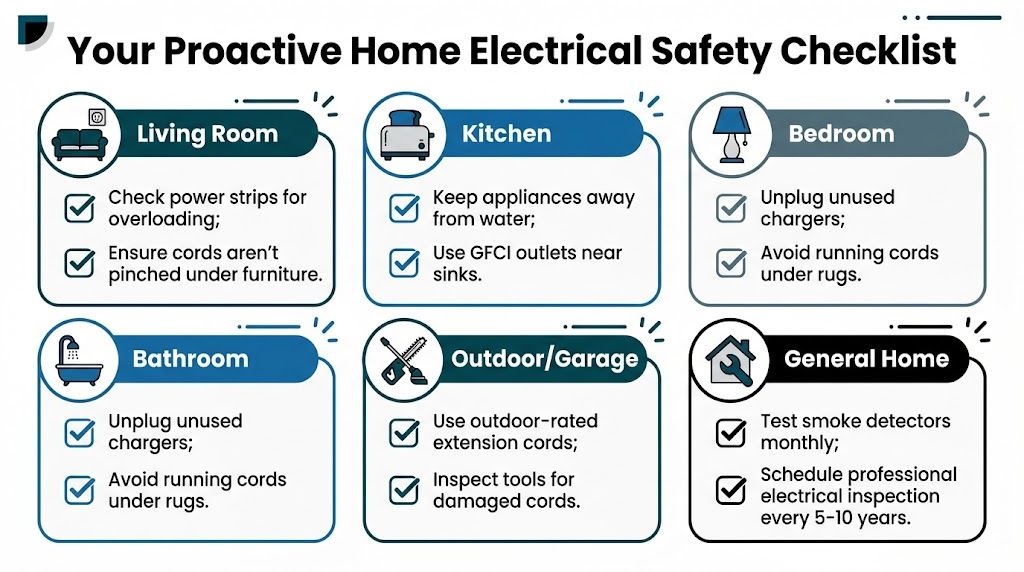
Your Proactive Home Electrical Safety Checklist
A good safety check isn’t complicated, but it does need to be deliberate. Don’t wait for a breaker trip or a burnt smell. Walk the house and look for conditions that create heat, loosen connections, or invite damage.
If you’re doing broader home risk reduction, it also helps to review other common causes of house fires so electrical safety is part of a full-home approach rather than a standalone task.
Check cords and plugs first
Start with the items you touch every day. Chargers, appliance cords, extension cords, and power strips tell you a lot about how safely a home is being used.
- Look for damaged insulation: Cracks, flattening, exposed conductor, or taped repairs mean the cord needs replacement.
- Check plug blades: If they’re loose, bent, or discolored, the connection may be poor enough to create heat.
- Feel for warmth after use: A cord cap or plug shouldn’t feel hot in normal operation.
- Retire “temporary” setups: If an extension cord has become permanent furniture, it’s no longer a convenience. It’s a sign the room needs a better electrical layout.
Inspect outlets and switches
Outlets and switches are often your first visible warning that there’s trouble deeper in the circuit.
Signs that deserve attention
- Discoloration or scorch marks: Brown, black, or yellowing around the device plate often points to overheating.
- Loose fit: If a plug slips out too easily, the receptacle may no longer grip tightly.
- Movement in the wall: A device that wiggles can stress the wiring connection behind it.
- Buzzing or crackling: Switches and receptacles should operate quietly.
- Intermittent power: If a lamp flickers when the plug is touched, don’t ignore it.
A warm outlet is never a cosmetic issue. It’s an electrical problem until proven otherwise.
Walk room by room
Different parts of the house produce different electrical risks. A quick room-by-room scan catches problems before they become habits.
| Area | What to look for | Why it matters |
|---|---|---|
| Living room | Overloaded power strips, cords under furniture, lamps with damaged cords | Compression and excess load create heat |
| Kitchen | Countertop appliances clustered on one circuit, cords near water, loose receptacles | Kitchens combine high draw and moisture |
| Bedroom | Chargers left plugged in, cords under rugs, hot lampshades or fixtures | Hidden cords can overheat without being noticed |
| Bathroom | Missing protection near sinks, electronics too close to water | Wet locations need extra protection |
| Garage and outdoors | Damaged tool cords, weathered receptacles, makeshift adapters | Heat, dust, moisture, and impact shorten equipment life |
Don’t ignore the panel and laundry area
Homeowners don’t need to remove panel covers. You can still do a useful visual check from the outside.
Look for a panel door that doesn’t close properly, breakers that are unlabeled, rust staining, or signs that the area around the panel is being used as storage. If you’re resetting the same breaker repeatedly, that’s not maintenance. That’s a symptom.
In the laundry area, inspect the dryer cord, receptacle, and venting path. Lint buildup isn’t just a housekeeping issue. It’s a fire issue. If you want a structured review instead of a self-audit, a home electrical safety check gives you a more complete picture of what’s happening behind the walls and at the panel.
Check lighting and fixtures
Lighting problems often reveal loose connections or excessive heat.
- Use the correct bulb wattage: Oversized bulbs can overheat enclosed fixtures.
- Watch for flicker: One flickering lamp may be the lamp. Repeated flicker in one area may be the circuit.
- Listen at dimmers and switches: Humming can point to compatibility issues or device wear.
- Inspect attic and closet fixtures carefully: These are common places for heat-producing fixtures to sit too close to stored materials.
A homeowner checklist won’t diagnose every hazard, but it will identify the houses that need a closer look. That alone prevents a lot of trouble.
Cultivating Safe Electrical Habits Day to Day
Most fire prevention happens in ordinary moments. It happens when someone plugs in a space-hungry appliance the right way, cleans a dryer lint screen before the next load, or decides not to run a cord under a rug because it looks cleaner.
One of the most overlooked examples is the laundry room. Uncleaned clothes dryers ignite 31% of such fires, and working smoke alarms can cut the death rate from home fires by 60%, as noted by Whisker Labs. Those two facts point to a simple truth. Small maintenance habits save lives.
The home office problem
A modern home office can become an electrical stress test. Laptop charger, monitor, printer, router, speakers, desk lamp, phone charger, and maybe a space heater under the desk. None of that looks dramatic, but it all lands on a few receptacles.
The unsafe version looks tidy. One power strip plugged into another, transformer blocks stacked together, cords bent sharply behind furniture, and chargers left energized all the time. The safer version is less about buying gadgets and more about discipline. Spread loads properly, avoid daisy-chaining strips, and unplug what you’re not using.
The kitchen problem
Kitchens generate high demand fast. Toaster, coffee maker, air fryer, microwave, and blender can all be in play within minutes. If one small-appliance circuit is doing too much work, the devices may still “run,” but the receptacles and connections suffer.
Don’t judge a circuit by whether it still powers the appliance. Judge it by whether it stays cool and stable while doing it.
Good daily habits in the kitchen include keeping cords away from sink edges, unplugging heat-producing countertop appliances when they’re done, and avoiding adapters or add-ons that turn one receptacle into a permanent multi-appliance hub.
The charger habit that needs fixing
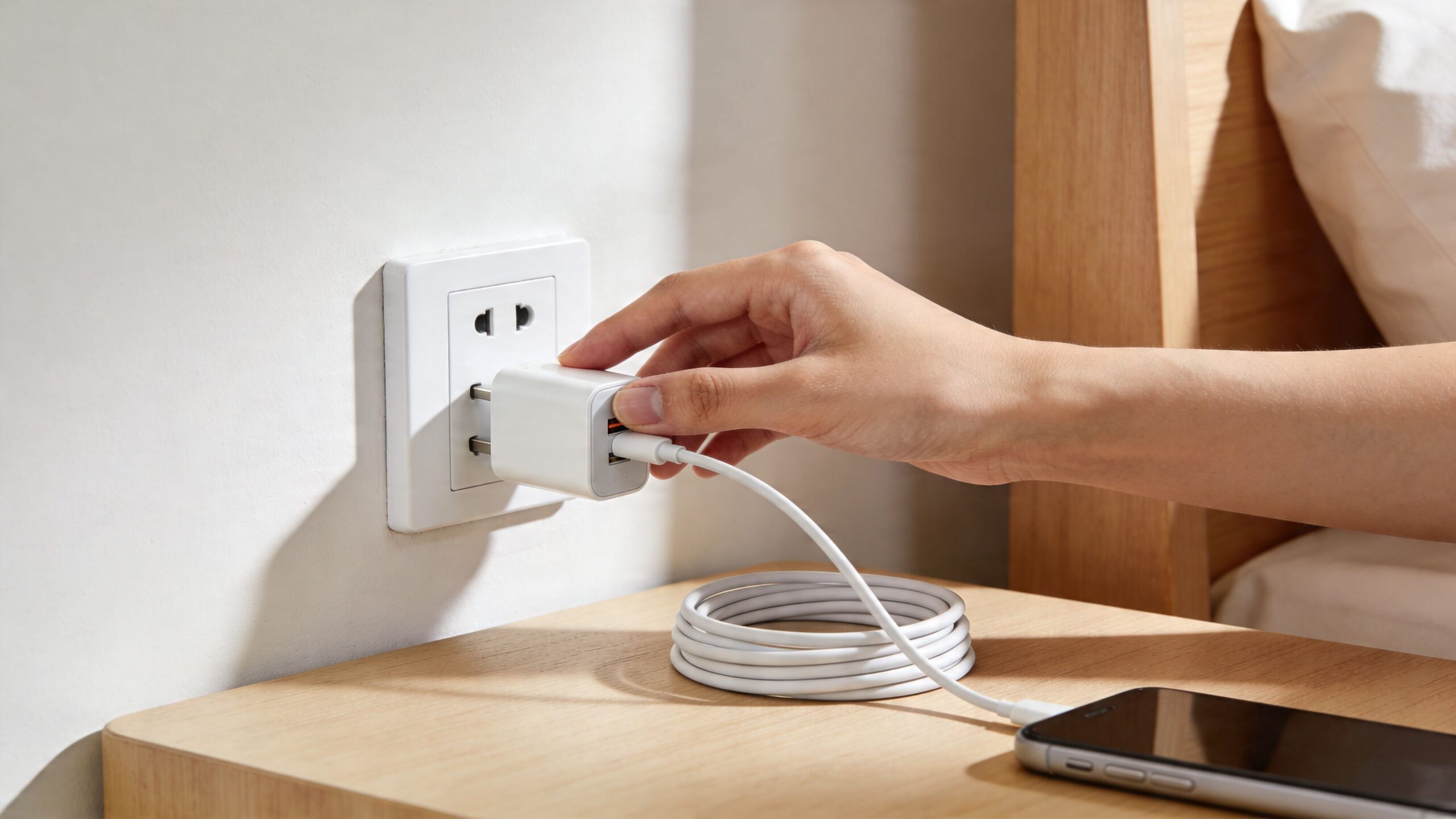
Phone and tablet chargers have become background noise in most homes. That’s exactly why people stop paying attention to them. A worn charging cable, a loose wall cube, or a charger tucked into bedding can create heat where nobody notices it until late.
Keep device charging simple:
- Use intact chargers: If the cord jacket is split or the plug body is separating, replace it.
- Charge on open, hard surfaces: Beds, sofas, and piles of clothing trap heat.
- Unplug failed accessories: If a charger runs unusually hot or fits loosely, stop using it.
- Avoid cord pinch points: Repeated crushing at nightstands and bed frames shortens cable life.
The dryer, AC, and appliance habits that matter most
Florida homes lean hard on cooling equipment, and that means homeowners need to respect dedicated loads. Major appliances should go directly into properly installed outlets, not extension cords. That includes dryers, refrigerators, and portable AC equipment.
A few habits make a real difference:
- Clean the lint trap every cycle. Don’t treat it as optional.
- Keep air moving around appliances. Heat needs somewhere to go.
- Watch for repeated breaker trips. Don’t normalize them.
- Listen for changes. Buzzing, clicking, or odd startup behavior often shows up before failure.
The safest homes aren’t the ones with perfect wiring diagrams on paper. They’re the ones where the people inside use electricity with a little respect every day.
Essential Electrical Upgrades for a Fire-Safe Home
Good habits matter, but habits can’t detect every dangerous fault. Some fire risks happen inside walls and inside devices where no homeowner will see them in time. That’s why protective upgrades matter. They add a layer of defense that older systems don’t have.
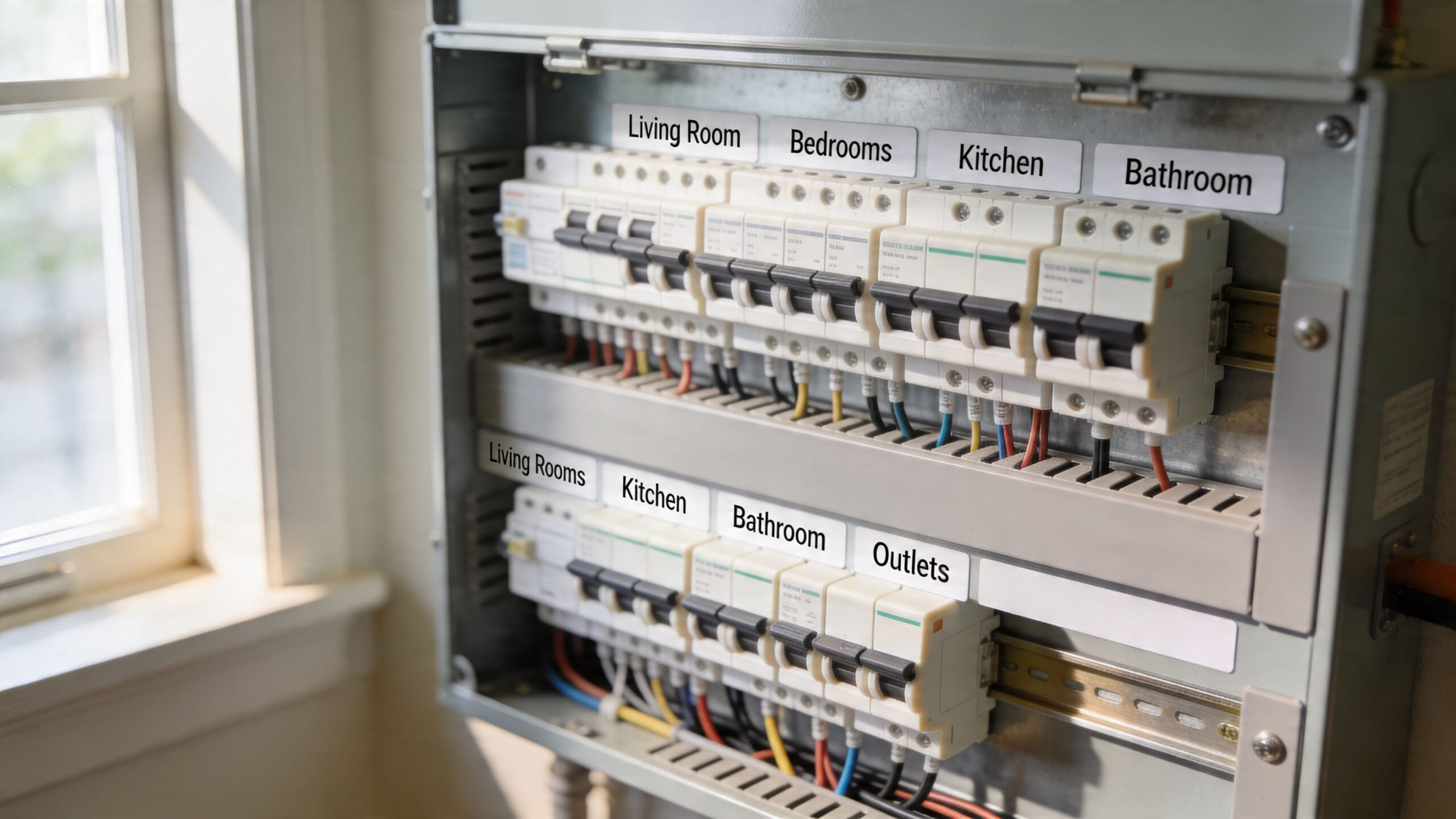
The upgrade I push hardest for in fire prevention work is AFCI protection. Installing Combination Arc-Fault Circuit Interrupters can prevent a significant portion of the 47,000 annual U.S. home electrical fires. They detect both series and parallel arcs, interrupt the fault in under 8ms, and have been shown to reduce arc-fault fires by 70% to 85% in monitored installations, according to the Indiana Electric Cooperatives summary.
Why standard breakers aren’t enough
A standard breaker is designed to respond to overcurrent and short circuits. That’s important, but it doesn’t catch every dangerous condition. Arcing can happen at a loose connection, damaged conductor, or deteriorated cord without drawing the kind of current that makes a standard breaker trip immediately.
That’s the trade-off homeowners need to understand. An older panel with conventional breakers may appear to be “working fine” because nothing has shut off. Meanwhile, an arc can still generate enough heat to ignite surrounding materials.
Where AFCIs make the biggest difference
AFCIs are especially useful where people plug in lamps, chargers, entertainment devices, and portable equipment. Those areas see a lot of cord movement, repeated plugging and unplugging, and hidden damage behind furniture.
Consider upgrading protection in:
- Bedrooms: Lamps, chargers, and cords often sit near bedding and soft materials.
- Living areas: Entertainment centers collect plugs, strips, and transformer loads.
- Home offices: Dense equipment layouts create constant daily use on a few circuits.
- Older branch circuits: Aging conductors and older terminations deserve extra monitoring.
If a fault can develop without drawing obvious overload current, passive confidence in an old breaker isn’t enough.
GFCIs and why they still matter
AFCIs and GFCIs do different jobs. AFCIs focus on arcing fire conditions. GFCIs focus on shock risk in wet and damp locations. In Palm Beach County, where outdoor equipment, pool areas, garages, kitchens, baths, and exterior receptacles see moisture regularly, GFCI protection remains essential.
Some homeowners get confused. They install one safety device and assume they’re covered everywhere. They aren’t. Fire prevention and shock prevention overlap, but they’re not the same.
Panel capacity and dedicated circuits
The biggest upgrade mistake I see isn’t always a bad breaker. It’s a house that has outgrown its original electrical design. The panel may still operate, but the demands have changed. Today’s homes ask for more from the system: bigger kitchen loads, more electronics, outdoor living equipment, and often an EV charger.
That means the right fire-prevention upgrade may be one of these:
| Upgrade | Best use | Main benefit |
|---|---|---|
| AFCI breakers | General living circuits | Detect dangerous arcing |
| GFCI protection | Wet and outdoor areas | Reduce shock risk |
| Dedicated appliance circuits | High-demand equipment | Prevent chronic overload |
| Panel rework or replacement | Crowded or outdated systems | Support modern loads safely |
EV chargers and smart-home loads
EV charging changes the conversation because it adds a sustained, high-demand load to a home that may already be near its comfortable limit. A charger shouldn’t be treated like just another plug-in device. It needs a properly designed circuit, correct overcurrent protection, and a panel that can support the added demand safely.
The same is true, in a different way, for smart-home equipment. Individual devices may not draw much, but the combination of networking gear, controls, cameras, low-voltage power supplies, and convenience add-ons creates more continuous use than many older homes were built around.
One practical option for homeowners who want a documented review before making upgrades is to have a contractor assess the panel, branch circuits, and high-demand equipment. Lighthouse Energy Services provides residential inspections and upgrade work in Palm Beach County, which is useful when the question isn’t whether something powers on, but whether the system is still safe under modern use.
What doesn’t work
Some “fixes” make homeowners feel safer without fixing the actual risk.
- Power strips don’t add circuit capacity. They only add more places to plug in.
- A new faceplate doesn’t repair a bad connection. Cosmetic work can hide heat damage.
- Adapters are not substitutes for wiring upgrades. They often become permanent workarounds.
- DIY breaker swaps are risky. The breaker is only one part of the protection strategy.
The right upgrades aren’t flashy. They’re the ones that remove ignition conditions before anything burns.
Recognizing When You Need a Licensed Electrician
Some electrical safety steps belong to homeowners. Many do not. Knowing the line between those two is one of the most important parts of preventing a house fire.
In older homes in humid climates like Palm Beach County, professional inspections matter because heavy AC use can worsen stress in aging wiring, which causes over 30,000 U.S. fires yearly. Humidity can accelerate insulation degradation, and DIY checks miss over 70% of underlying issues that a licensed electrician can detect, according to Entergy’s electrical fire safety guidance.
Stop and call when you see these red flags
You don’t need technical training to know when something is wrong. Certain symptoms should end the DIY phase immediately.
- A burning smell: Especially near outlets, switches, the panel, or appliances.
- Frequent breaker trips: One nuisance trip can happen. Repeated trips mean the circuit needs diagnosis.
- Flickering tied to appliance use: If lights dim or flutter when equipment starts, the circuit may be overloaded or have a poor connection.
- Warm or hot devices: Outlets, switches, plugs, and panel surfaces should not feel hot.
- Buzzing, sizzling, or sparking: Electrical systems should be quiet.
- Water intrusion near electrical equipment: In Florida, this comes up more often than homeowners expect.
DIY-safe tasks versus pro-only work
A lot of confusion comes from homeowners trying to be responsible and accidentally stepping into unsafe territory. Here’s the simple dividing line.
| Usually safe for homeowners | Call a licensed electrician |
|---|---|
| Testing smoke alarms | Replacing or upgrading a panel |
| Looking for scorch marks or loose cords | Diagnosing repeated breaker trips |
| Cleaning lint traps and improving appliance clearance | Investigating warm outlets or burning smells |
| Unplugging damaged chargers and replacing them | Adding circuits for appliances or EV chargers |
| Visually checking receptacles and plates | Any work inside service equipment |
The smartest DIY decision is often knowing when to stop touching it.
Why older Palm Beach homes deserve a closer look
A home can look updated and still have old electrical infrastructure behind finished walls. New tile, a renovated kitchen, and fresh paint don’t tell you whether the branch wiring is aging badly or whether the panel has room for current demand.
That mismatch shows up a lot in homes that have added larger AC loads, pool equipment, workshop tools, or vehicle charging without a full electrical rethink. If you’re buying, renovating, or inheriting an older property, this guide to hiring an electrician for a new home helps clarify what to ask before you rely on the system.
What a professional actually looks for
A licensed electrician doesn’t just look for “broken stuff.” The job is to identify patterns that create fire conditions.
That includes signs of overheated terminations, improper breaker and conductor pairing, degraded insulation, loose devices, double-tapped connections where they don’t belong, moisture exposure, and evidence that a circuit’s real-world use no longer matches its design. Those aren’t problems a homeowner can verify by looking at a faceplate or resetting a breaker.
If the house is giving you warnings, the safe choice is simple. Stop testing your luck and get it diagnosed correctly.
Your Emergency Action Plan for an Electrical Fire
If an electrical fire starts, your priorities need to be automatic. The risk is known to peak from December through March and between midnight and 6 a.m., and functioning smoke alarms lower the death rate in home fires by 60%, according to the U.S. Fire Administration’s home fire prevention guidance.
Follow this order
- Get out.
- Stay out.
- Call 911.
Don’t stop to collect valuables. Don’t go back for pets if the space is already filling with smoke or heat. Don’t assume a small fire will stay small.
If the fire is very small
Use a fire extinguisher only if all of these are true:
- You have a clear exit behind you
- The fire is contained and small
- You know how to use the extinguisher
- You can do it without moving closer than is safe
If there’s any doubt, leave.
About shutting off power
Cut power at the main panel only if you can reach it safely without passing through smoke, flames, or heat. If the panel area is compromised, do not attempt it. Fire scenes change fast, and no breaker is worth getting trapped.
Practice the escape plan when nothing is wrong. People don’t think clearly once alarms are sounding at 2 a.m.
Prepare now, not during the fire
Keep the plan simple:
- Know two ways out of key rooms
- Choose one outdoor meeting spot
- Test smoke alarms regularly
- Keep pathways clear at night
- Make sure children know not to hide
If a fire does damage the home, recovery becomes a separate job from emergency response. This complete recovery guide for fire damage restoration is a practical reference for what comes after the fire department leaves.
A Commitment to a Safer Home
The safest homes usually aren’t the newest or the most expensive. They’re the ones where the owners pay attention, correct small warnings early, and don’t treat electrical problems as cosmetic annoyances. That’s the answer to how to prevent electrical fires at home.
A safe house starts with routine observation. It gets stronger with better day-to-day habits. It becomes much more resilient when outdated protection is upgraded and hidden issues are diagnosed before they fail. And when the warning signs move beyond what a homeowner can safely inspect, the right move is to bring in a licensed electrician, not to keep guessing.
For Palm Beach County homeowners, that matters because local conditions are hard on electrical systems. Humidity, long AC run times, older housing stock, and expanding power demands all push in the same direction. The response should be just as practical. Inspect what you can. Use the system correctly. Upgrade what needs upgrading. Act quickly when the house gives you a warning.
If you want a professional assessment of your home’s wiring, panel, outlets, and high-demand circuits, Lighthouse Energy Services can help you identify fire risks before they become emergencies. For Palm Beach County homeowners, that’s a practical next step when your goal is a safer, more reliable home.