
You smell hot plastic in the hallway, hear a faint crackle from the panel, and half the house has gone dark while the neighbors still have lights. That's the moment you start googling an emergency electricity helpline, but the first job isn't panic, it's sorting the problem into the right bucket fast. A grid outage, a home-side fault, and a fire hazard can look similar for a minute or two, but the phone call you make next changes everything.
Table of Contents
- When the Lights Go Out and the Phone Comes Out Too
- Stay Safe in the First Thirty Minutes
- Utility Outage or Home-Side Fault
- What to Say When the Dispatcher Answers
- What Happens Before the Truck Pulls Away
- Property Managers and HOAs Need a Different Playbook
- Save This Checklist Before the Next Outage
When the Lights Go Out and the Phone Comes Out Too
A real 11 p.m. Palm Beach County call usually doesn't start with a clean description. It starts with a voice that sounds too loud because the house is too quiet, maybe a burning smell near the panel, one bedroom dark, the kitchen still on, and the neighbor next door says their lights are fine. That's not a simple inconvenience. That's a sign you may be dealing with a fault on your property, not a neighborhood outage.
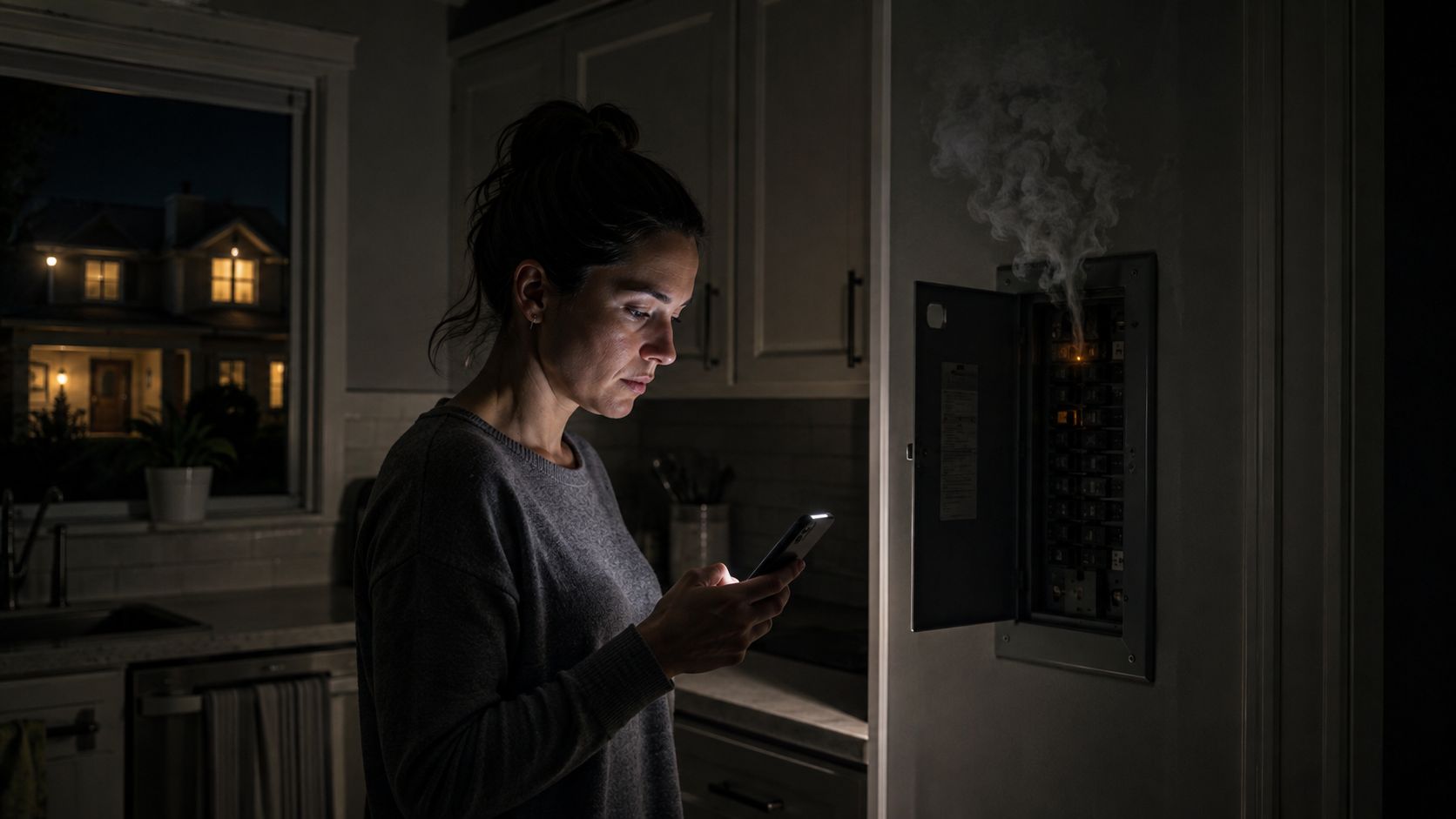
The phrase emergency electricity helpline gets used loosely, but in practice it means a layered response. On one end is utility-side outage reporting, which is for grid problems, downed lines, and neighborhood loss of power. On the other end is a licensed electrician, who handles a panel fault, damaged wiring, wet equipment, or a breaker that won't behave after one careful reset. The first clue is usually the simplest one, whether the homes around you are dark too.
Practical rule: if the neighbors are lit and you're not, treat it as a home-side electrical problem until proven otherwise.
That distinction matters because the wrong call wastes time. It also can put you in a loop where you wait on a utility when the issue is inside your own service equipment, or you call an electrician for a grid problem that the utility has to clear first. If you need a deeper primer on how to vet the person who eventually comes out, the homeowner's guide to hiring an electrician is a useful place to sanity-check what good service looks like before anyone steps through the door.
One quick observation usually settles the first decision. Check the block. Check the panel area. If the outage is isolated to your property and you smell burning, hear buzzing, or see scorch marks, you're not looking at an ordinary power cut. You're looking at an emergency that needs a controlled response, not a guess.
Stay Safe in the First Thirty Minutes
The first minute matters more than the first phone call. If a panel is warm, buzzing, or smoking, keep your hands off it and keep other people away. If one breaker tripped, don't keep snapping it back up over and over, because repeated resets can turn a fault into damage you didn't have a moment earlier.
The first 60 seconds
Do the simplest safe checks only. Look, listen, and smell. If an appliance is wet, leave it alone. Water and electricity don't negotiate, and fans or open windows won't make a wet circuit safer.
The next five minutes
If you can reach the main disconnect without standing in water and without passing a hot, sparking area, shut power off safely. Unplug sensitive electronics if they're already dry and easy to reach. If you smell ozone or melting plastic, get fresh air into the space only if that doesn't expose you to wet wiring or a damaged panel.
If there's standing water near outlets, cords, or appliances, treat that area like a live hazard until a licensed electrician clears it.
Use the internal emergency reference at this Palm Beach County electrical repair page as a reminder that fast response still has to start with safe isolation, not with a race to restore power.
The next thirty minutes
Decide whether the space is safe to stay in. If you see smoke, arcing, or repeated breaker trips, leave if you can do so safely and call for help from outside. Protect food in the freezer only after the immediate hazard is controlled, and document visible damage with photos for insurance before anything gets cleaned up. Don't move burned equipment unless it's necessary for safety, because the original condition matters later.
A good emergency call is built on restraint. The goal isn't to fix the circuit yourself, it's to keep the problem from spreading while you hand the job to someone qualified. That calm first half hour often determines whether the repair is straightforward or turns into a bigger replacement.
Utility Outage or Home-Side Fault
The cleanest way to sort this out is to compare the clues side by side. If the block is dark, streetlights are off, and no one can reset power at the neighborhood level, that points toward a utility issue. If only your home is affected, or one section of the home is out while the rest still works, the fault is probably inside the property.
| Which Number to Call | ||
|---|---|---|
| Symptom | Likely Cause | Call First |
| Whole neighborhood out, nearby homes dark too | Utility-side outage | Utility outage reporting line |
| One home dark, breaker won't reset, odor or scorch marks | Home-side fault | Licensed electrician |
| Power cut with visible downed line or overhead hazard | Safety emergency on the utility side | Utility emergency line |
| Flickering lights, intermittent loss in a single area | Internal wiring, load issue, or failing equipment | Licensed electrician |
A quick breaker test helps, but only once. If a breaker is clearly tripped, one careful reset may be reasonable after you've removed obvious load, like a faulty appliance. If it trips again, stop there. That's not a puzzle for repeated guessing, it's a sign the circuit needs diagnosis.
Smell and sight matter just as much as the breaker panel. Burn marks, melted insulation, water intrusion, and a hot faceplate all point away from a simple outage and toward a fault that can worsen if energized again. The internal guide on what causes flickering lights in house is useful when the problem is intermittent, because flicker often shows up before a circuit fails hard.
For utility-side outages, report what you can clearly observe, address, account details if you have them, and whether you see downed lines, sparks, or odd sounds. For home-side faults, stop troubleshooting and get a licensed 24/7 electrical contractor involved. That's the mistake that costs people the most time, calling the wrong side first and then having to start over.
What to Say When the Dispatcher Answers
A short, accurate intake gets the right truck rolling. Start with the address, then add access notes that save time when the electrician arrives, gate code, dog in the yard, parking instructions, or whether the panel is in a garage, closet, or outside cabinet. Then describe the symptom in plain language, not theory, so the dispatcher can picture the failure fast.
Give the facts in this order
- Where you are: full address, unit number if needed, and the easiest way in.
- What's happening: no power, burning smell, sparking, tripping breaker, partial outage, or wet equipment.
- When it started: just now, after a storm, after an appliance ran, or after a breaker reset.
- What you already tried: one breaker reset, unplugging an appliance, checking neighbors, or nothing at all.
- Safety concerns: smoke, water, anyone hurt, or anyone who can't leave the area quickly.
The best dispatchers don't need a speech, they need usable facts. If a panel is smoking, say that first. If there's water in the room, say that before you talk about which lights are off. The order matters because it tells the electrician what to bring and whether to treat the visit as a fault isolation call or a replacement job.
Ask back a few direct questions before you hang up. What's the arrival window? Is there a diagnostic fee, and how is it applied? Will the technician quote before work begins? What payment methods are accepted after hours? Those are the questions that keep the visit honest and stop the bait-and-switch problem that so many homeowners dread.
Useful habit: the first call should end with a clear next step, not with “we'll see what happens.”
If the office is staffed by licensed electrical professionals, you should feel the difference quickly. The conversation stays technical, the questions are specific, and nobody tries to rush you into approving work they haven't described yet. That's what you want at 2 a.m., calm intake and a clean handoff to the field.
What Happens Before the Truck Pulls Away
A professional emergency visit should feel organized, not theatrical. After dispatch, the electrician heads out with enough context to narrow the problem before arrival. In a county as spread out as Palm Beach, response windows can vary with distance, traffic, and the time of night, so the value is not a promise of magic speed, it's a straight answer and a technician who shows up prepared.
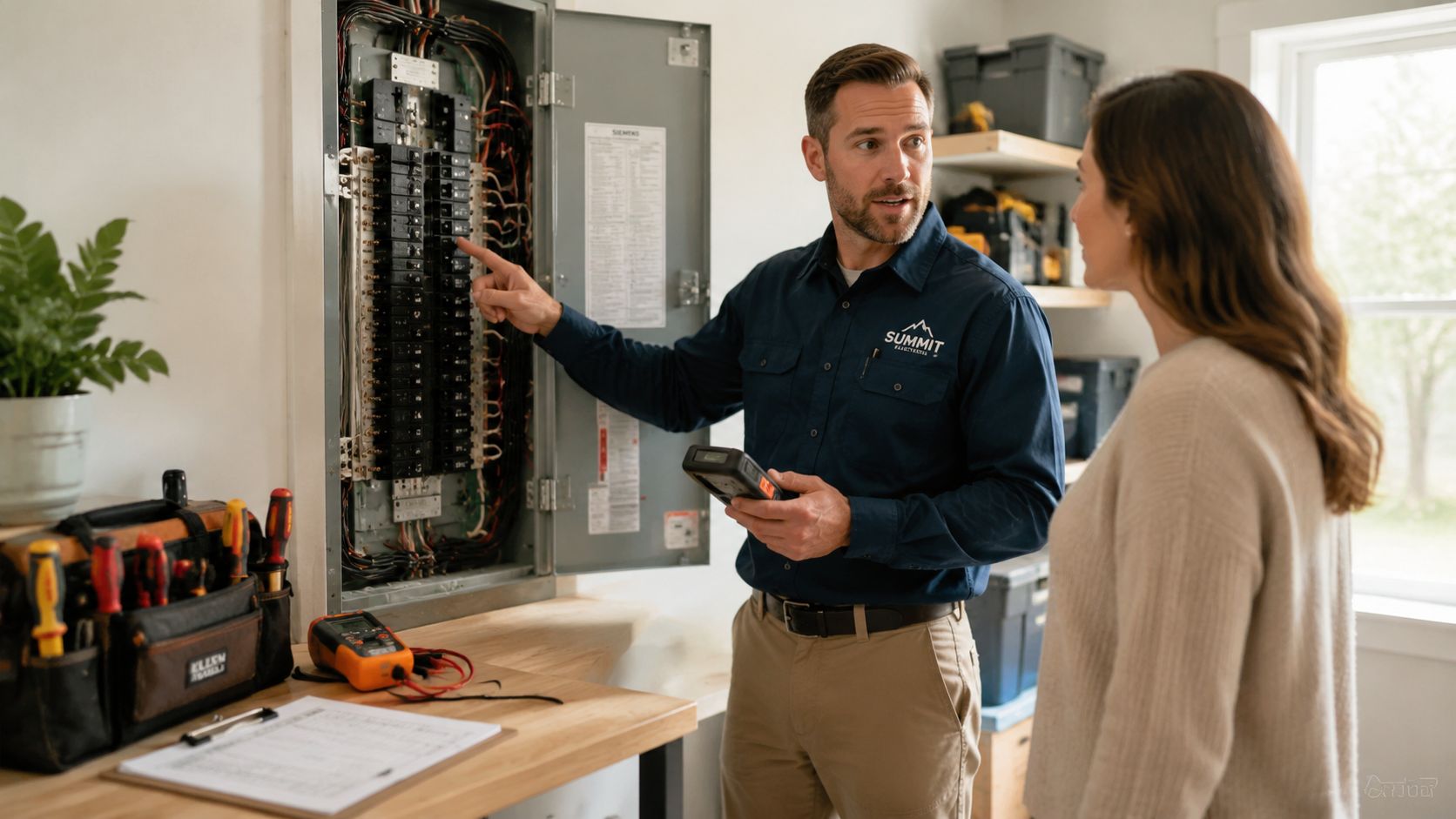
The diagnostic should narrow the problem, not guess at it
The first on-site pass usually includes a panel inspection, circuit testing, and a close look at the parts of the system that show heat, moisture, or mechanical wear. If the signs point that way, thermal imaging can help identify a hot spot that isn't obvious to the eye. That kind of diagnosis matters because a breaker replacement, a burnt neutral repair, or an emergency disconnect are very different jobs, even if the homeowner just sees “the power is weird.”
Transparent pricing has to happen before work starts. The quote should name the repair path, the parts involved, and what gets done right then versus what gets scheduled later. That way a homeowner can decide whether the immediate fix is enough for safety or whether a full correction makes more sense.
In a well-run emergency service, after-hours timing doesn't become a surprise charge that appears at the end. The point is to make the visit predictable enough that the customer can say yes or no with real information. Lighthouse Energy Services is structured around that idea, with licensed professionals answering the phones and no extra charge for after-hours calls.
The paperwork matters too. Ask for a written diagnostic, an itemized quote, and the warranty terms before the truck leaves. If the repair is completed on the first visit, the homeowner should still know what was found, what was changed, and what conditions would justify a follow-up. That documentation protects everyone when the next storm, surge, or equipment failure shows up later.
Property Managers and HOAs Need a Different Playbook
A multi-unit property changes the first question from “what's broken” to “how many people are affected.” Start by separating the issue into three groups, individual units, common areas, and building-critical systems. Hallway lighting, elevator power, pool equipment, irrigation controls, and rooftop or tower lighting can all turn a local fault into a wider safety and compliance problem.
Triage before you notify residents
If only one unit is down, isolate that unit and preserve the rest of the building's power where possible. If a common area is affected, residents need a clear notice that says what's out, what isn't, and whether they should avoid specific spaces. If the outage touches a life-safety or access system, dispatch immediately and escalate fast.
Documentation matters because a master policy claim can hinge on what was observed first. Take time-stamped photos, note the panel involved, and write down whether the outage was sudden, partial, or accompanied by heat or odor. Keep that record with the service ticket so the repair trail is easy to follow later.
Operational rule: if the issue can affect egress, lighting, or shared equipment, don't treat it like a normal maintenance call.
A steady contractor relationship is worth more than a random list of numbers. Ask whether the provider handles commercial work, how after-hours service is routed, and whether the team can support recurring inspections as well as emergency response. For communities that need structured call handling, fonea's guide to call handling is a useful reference for thinking through intake, escalation, and resident communication without losing control of the message.
Building owners with towers or rooftop fixtures should also keep aircraft obstruction lighting on the checklist. If that system fails, it isn't just an equipment issue, it's a safety and regulatory one that needs prompt attention. A service partner with commercial and industrial experience is usually a better fit than a purely residential rotation because the stakes, access needs, and documentation are different.
Save This Checklist Before the Next Outage
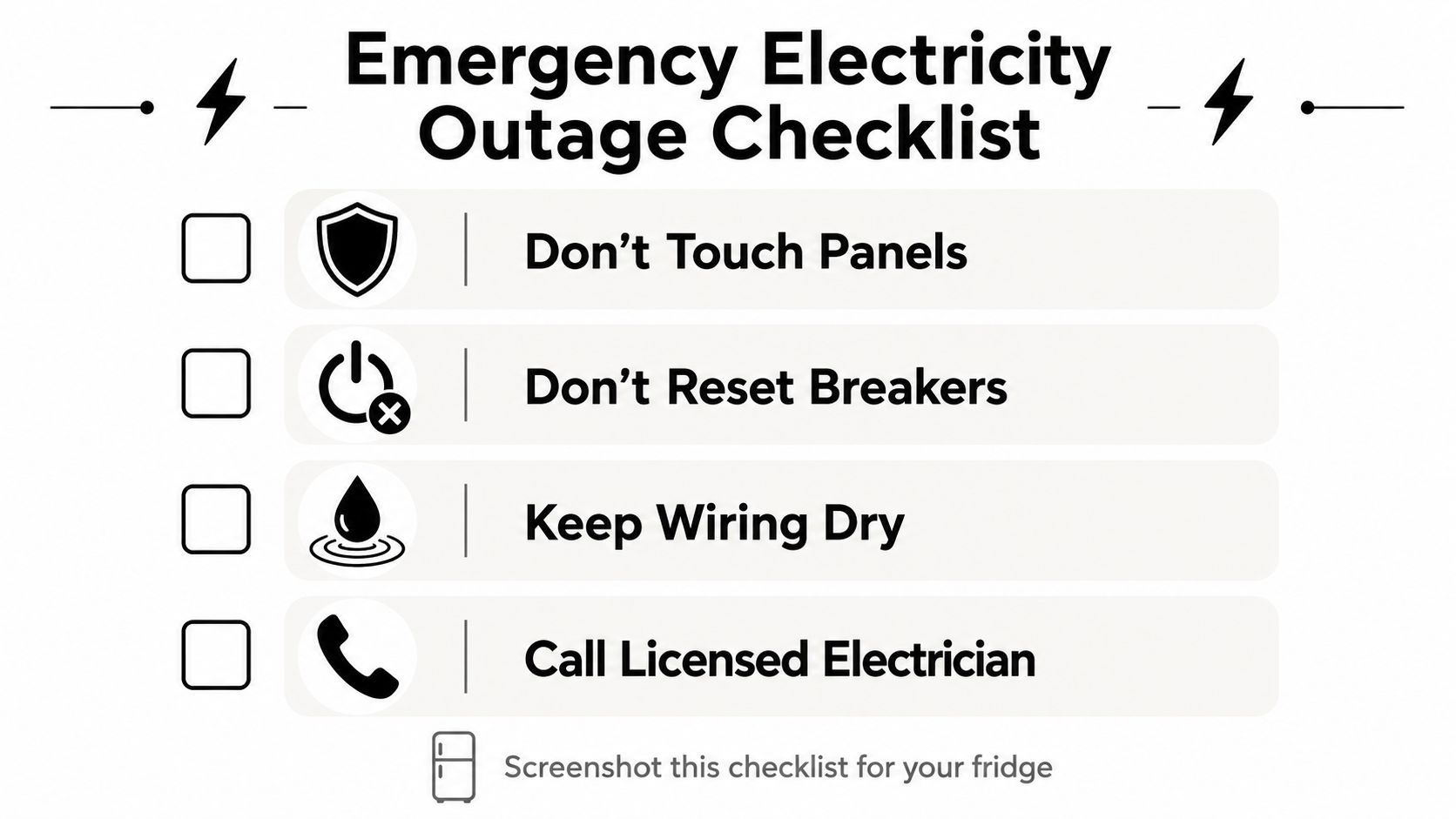
Use this when the lights go out and your head starts racing:
- Don't touch panels that are warm, buzzing, smoking, or wet.
- Don't reset breakers more than once.
- Keep wiring dry if water is involved, and stay out of the area.
- Call the right number based on the problem, utility reporting for grid issues, or a licensed electrician for home-side and commercial faults.
For the preparedness side of the house, Adventure Medical Kits emergency guide is a good reminder that phones, flashlights, and basic supplies belong in the same plan as your electrical contacts. Pair that with the home electrical inspection checklist so you've got a simple way to spot problems before they become late-night calls.
Call script, five lines
- Full address and access notes.
- What you see, smell, or hear.
- When it started.
- What you already tried.
- Whether anyone is in danger.
Ask the dispatcher
- Arrival window
- Diagnostic fee
- Quote before work
- After-hours payment options
The three mistakes that make the next outage worse are simple. Repeatedly resetting a tripped breaker, ignoring a burning smell that “went away,” and waiting until morning when the panel or water involved feels warm. Know the category, know the number, and know the script.
If you're in Palm Beach County and the problem is on your side of the meter, Lighthouse Energy Services handles emergency diagnostics, repairs, and commercial electrical response with licensed professionals answering the phone. Visit Lighthouse Energy Services to get the right crew moving when the panel is hot, the lights are partial, or the situation can't wait until morning.