
It's late, the house is dim, and something doesn't feel right. Maybe half the lights are out, the panel is buzzing, an outlet smells hot, or the air conditioner quit during a humid Palm Beach County night. In that moment, you don't need marketing language. You need a calm answer, a safe next step, and a clear way to tell whether this is your electrician's problem or your utility's.
That's where most emergency electrical advice falls short. It tells you to call fast, but not always who to call first. If you're looking for a 24 hour emergency electrician in Palm Beach County, the smartest first move is a quick triage. Some situations demand immediate electrical service. Others belong to the utility company, and knowing the difference can save time, stress, and an unnecessary dispatch.
Table of Contents
- What Qualifies as a True Electrical Emergency
- Immediate Safety Steps to Take Right Now
- Your 24/7 Palm Beach County Response from Lighthouse Energy
- Our Service Area and Rapid Dispatch Process
- Transparent Pricing With No After-Hours Fees
- Frequently Asked Questions About Emergency Electrical Service
What Qualifies as a True Electrical Emergency
Electrical emergencies aren't all equal. Some conditions mean get out of the area and call for help immediately. Others are serious warning signs that still require prompt service, but they don't always mean the system is in immediate failure.
The simplest rule is this: if there's heat, smoke, sparking, water contact, or loss of power to critical equipment, treat it as urgent.
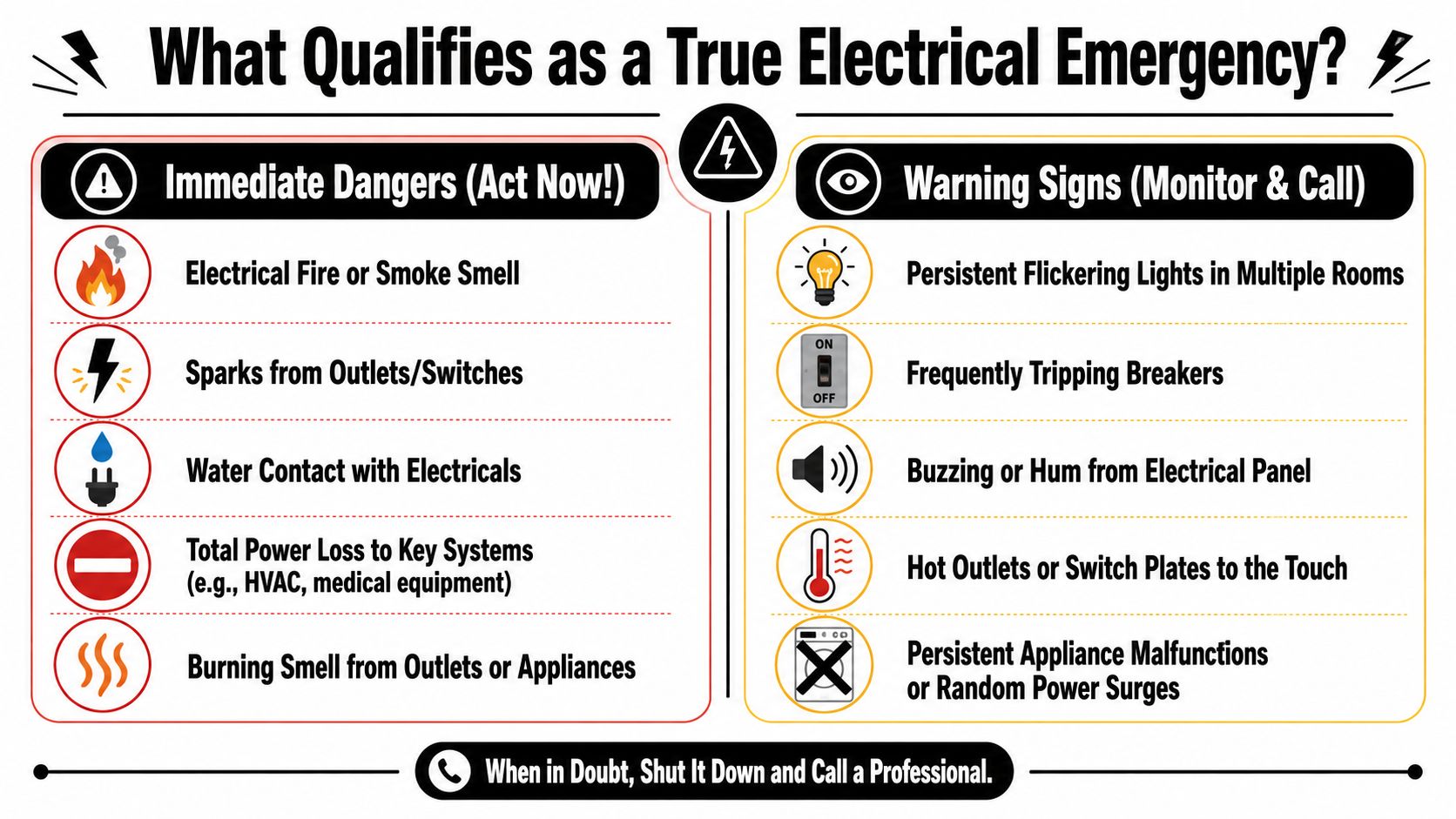
Signs that need action now
These are the calls that should never wait until morning:
- Burning smell from outlets or devices. That odor often points to overheating insulation, a failing connection, or damaged equipment.
- Visible sparks when using a switch, plugging in a cord, or opening a panel.
- Smoke or signs of charring around outlets, breakers, or appliances.
- Water near energized equipment after a leak, flooding, or storm intrusion.
- Power loss to essential systems such as medical devices, refrigeration tied to medications, or critical HVAC in extreme heat.
Practical rule: If you can smell burning or hear active arcing, stop using that circuit immediately and keep people away from the area.
Some issues sit one step below active danger but still deserve same-day professional attention. Persistent flickering in multiple rooms, breakers that won't hold, a warm switch plate, or a panel that hums under load all suggest something in the system isn't stable. If that's happening repeatedly, there's a reason. It needs diagnosis, not guessing.
If breakers keep tripping, it helps to understand whether the problem is overload, a bad breaker, or a wiring fault. This guide on what causes a circuit breaker to keep tripping gives homeowners a practical overview of what those patterns usually mean.
When the utility should be your first call
This is the part many homeowners aren't told clearly enough. Not every apparent emergency belongs to a private electrician.
Before calling an electrician, it's critical to determine if the issue is on your property or the utility's. Advice shared in an online discussion about partial power loss and utility-side faults shows many users with partial power are told to call the utility first, because problems like wire-to-pole friction or fuse cartridge failures can happen on the utility side and a private electrician can't fix them.
Use this quick checkpoint:
| Situation | First call |
|---|---|
| Only your home is affected and neighbors have power | Electrician |
| You have burning smell, sparks, hot outlets, or panel noise | Electrician |
| Part of the house has power and part does not | Utility first |
| Issue appears at the service drop, meter area, or pole | Utility first |
| Neighborhood outage | Utility |
If you're seeing partial power, dim and bright lights at the same time, or unusual service behavior affecting the whole house, start with the utility. If they confirm their side is fine, then bring in an electrician. That sequence is honest, efficient, and safer than dispatching the wrong person first.
Immediate Safety Steps to Take Right Now
Once you've decided the problem is on the property, the priority is simple. Secure the area. Don't try to diagnose a live electrical fault under stress.
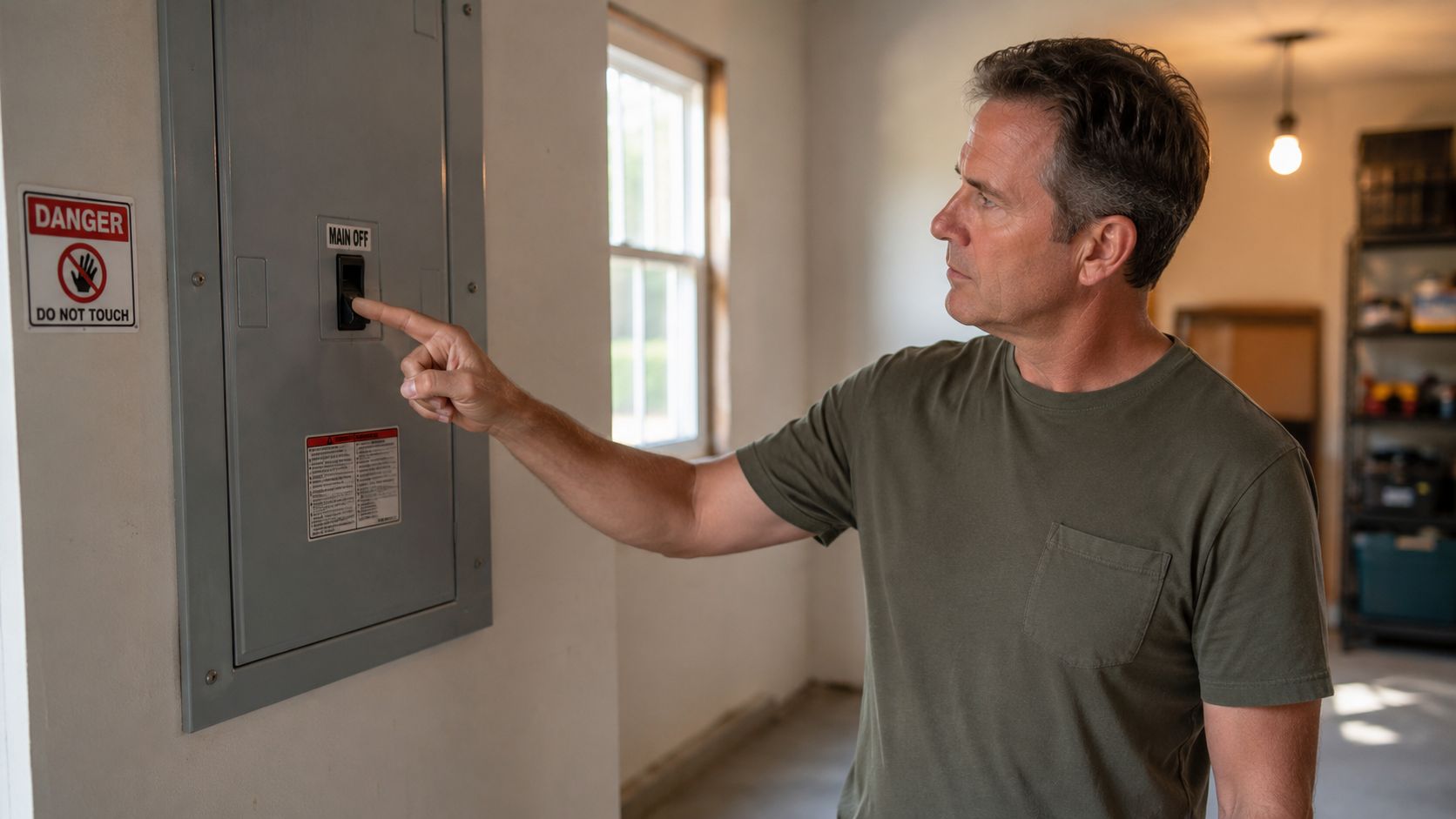
What to do before anyone touches the system
Move people away from the hazard. Keep children, pets, and anyone barefoot or wet away from the affected room, panel, or appliance.
Shut off the main breaker only if it's safe to approach. If the panel area is dry, clear, and there's no smoke coming from it, turning off the main can reduce risk until help arrives.
Do not touch anything wet. If water is present around outlets, cords, appliances, or the panel, stay out of that area entirely.
Unplug sensitive electronics only on safe circuits. If a room is stable and dry, disconnecting computers, televisions, or networking gear can help protect them when power is restored.
Don't reset a breaker repeatedly. One reset can be a diagnostic clue. Repeated resets can turn a manageable fault into burned wiring or damaged equipment.
Leave clear access for the technician. Open gates, move stored items away from the panel, and keep pets secured.
If you want a homeowner-friendly explanation of switch and wiring basics while you wait for a pro, Rescreen Rescue's electrical guide is a useful reference for understanding common device components without treating the issue like a DIY project.
A calm emergency call usually goes smoother when you can answer four things: what you smelled or heard, whether breakers tripped, whether water is involved, and whether the issue affects one room or the whole property. That information matters more than trying to describe technical details.
Your 24/7 Palm Beach County Response from Lighthouse Energy
At 2:00 a.m., the problem is not just getting someone to pick up the phone. The critical question is whether the person answering can tell you, right then, if you need the utility company, an emergency electrician, or an immediate evacuation because of smoke, heat, or arcing.
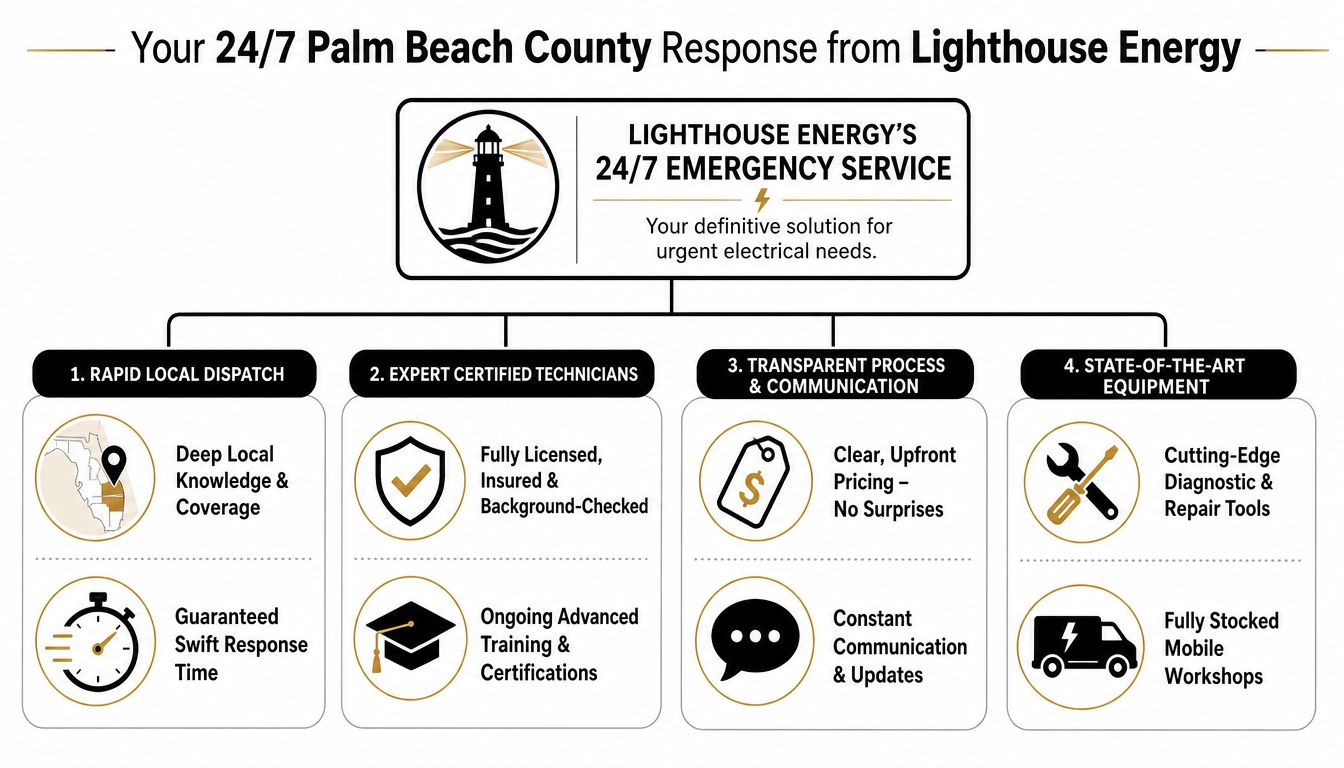
That distinction matters more than homeowners realize. If the entire block is dark, the service drop is damaged, or the meter can has been pulled loose, the utility may need to respond first. If one panel is overheating, breakers are tripping under normal load, or part of the home has lost power while the neighbors still have it, that points to a property-side issue that needs an electrician.
Lighthouse Energy Services has been serving Palm Beach County since 2005, with experience across residential, commercial, and industrial systems. In emergency work, that range matters. A house panel failure, a restaurant outage, and a building equipment fault do not get diagnosed the same way, and sending the wrong technician costs time you may not have.
Good emergency response also starts before the truck leaves. A licensed team handling after-hours electrical services in Palm Beach County can ask the right questions at the start. Is the issue isolated to one circuit or the whole property? Is there burning odor, buzzing, or visible heat? Did the utility already confirm an area outage? Those answers shape the safest next step and the right dispatch.
For readers who also deal with storm recovery or property stabilization, the coordination used in Ocala emergency restoration is a useful parallel. Electrical emergencies also depend on clear intake, correct triage, and disciplined response, not just speed.
Two details address the biggest after-hours concerns homeowners usually have. First, Lighthouse Energy does not add after-hours fees. Second, calls are answered by licensed professionals, not a generic answering service reading from a script. That means you get guidance from someone who can sort out utility-side problems from electrician-side problems and help reduce risk while the crew is on the way.
Some calls are straightforward. Others involve rooftop equipment, shared building systems, site lighting, specialty circuits, or code-sensitive commercial infrastructure. In those cases, the first conversation has to identify the type of hazard quickly so the right technician arrives prepared.
Our Service Area and Rapid Dispatch Process
The practical question during an electrical emergency is simple: can the right electrician reach your property fast enough to make the situation safer, not slower? In Palm Beach County, that depends on more than distance. Traffic, gated access, high-rise entry, coastal routes, and the type of electrical problem all affect how a call gets dispatched.
Where emergency calls are covered
Lighthouse Energy handles emergency calls across Palm Beach County, including the main corridor from Boca Raton to Jupiter and communities such as Boynton Beach, Delray Beach, Lake Worth, Wellington, and West Palm Beach. That range matters because emergencies do not happen only in single-family homes. They also happen in condos, retail spaces, offices, restaurants, and larger properties where a shutdown can affect safety, refrigeration, security systems, or critical equipment.
What happens from your call to arrival
A good dispatch process starts with clear triage, then sends the technician who fits the problem.
- The call is screened for immediate hazards. Burning smell, visible arcing, water near energized equipment, and loss of power to critical systems get urgent priority.
- Location and access details are confirmed. Gate codes, unit numbers, building entry, panel location, and parking restrictions all affect how quickly a technician can get to the source of the problem.
- The closest appropriate technician is assigned. A service issue, panel problem, failed branch circuit, and equipment-related fault do not all call for the same preparation.
- You receive an arrival window and clear safety instructions. That helps prevent risky DIY attempts while the crew is in route.
Our goal is to respond within approximately 60 minutes from the initial call, setting a benchmark for high-quality emergency response in Palm Beach County. Actual arrival time can vary with weather, road conditions, and the location of the active technician, but the standard stays the same. Get the call answered by a licensed professional, sort out whether the issue belongs with the utility or an electrician, and dispatch the right help without wasting time.
That last part matters. Fast service is only useful if the truck arrives prepared. When intake is done correctly, the electrician is already thinking about service conductors, main breakers, overheated connections, damaged devices, or equipment-specific faults before stepping onto the property. That shortens diagnosis time and helps stabilize the situation sooner.
Transparent Pricing With No After-Hours Fees
A lot of homeowners hesitate before making the call. The problem is not always the outage itself. It is the fear of getting hit with a night, weekend, or holiday charge before anyone has even touched the panel.
That concern is reasonable. In an electrical emergency, people are making decisions under stress, often in the dark, sometimes with part of the home shut down. Pricing should reduce pressure, not add to it.
Lighthouse Energy addresses that directly. There are no after-hours fees, and that matters because it removes one of the biggest reasons people wait too long. If a breaker is failing, a lug is overheating, or a circuit has started arcing, delay can turn a contained repair into property damage.
Clear pricing also helps you make the right call about who needs to respond first. If the problem is on the utility side, you should not be paying for the wrong service visit. If the issue is inside the home, you should know what the dispatch covers, what will be diagnosed on arrival, and when approval is needed before repair work starts.
A fair emergency pricing standard is straightforward:
- Explain what the dispatch is for before the truck rolls
- State clearly that after-hours premiums do or do not apply
- Inspect and diagnose before presenting repair options
- Get approval before repair work begins
- Keep the invoice free of surprise add-ons
Homeowners who want a plain-language example can review Lighthouse Energy's approach to no hidden fee electrical service in West Palm Beach.
Emergency repairs do not all cost the same. A failed main breaker, a burned meter connection, and a damaged branch circuit are different problems with different repair paths. Honest service means explaining that difference clearly, then pricing the actual work instead of using the time of day to raise the bill.
That is the standard people should expect when the call cannot wait.
Frequently Asked Questions About Emergency Electrical Service
Do I need a licensed electrician on the phone right away
Yes. The first few minutes matter because the right advice changes what you do next. A licensed professional can help you sort out whether this looks like a utility problem, a main service problem, or a branch-circuit issue inside the home.
That distinction saves time and can prevent a wasted service call. It also helps you avoid the two mistakes homeowners make under stress: resetting equipment that should stay off, or waiting too long on a fault that is getting hotter.
Lighthouse Energy states that emergency calls are answered by licensed electrical professionals through its emergency electrician guidance. That matters more than speed alone. If the person answering can give sound instructions immediately, you get safer next steps before a truck ever leaves.
What happens when the electrician arrives
The electrician starts by making the site safe and identifying the fault path.
That usually means checking the panel, looking for heat damage, testing affected circuits, and confirming what can stay energized without increasing risk. If a breaker failed because of overload, loose termination, moisture, or a short, those are different repairs. Restoring power before that is understood can trip the system again or damage equipment connected downstream.
Sometimes the right repair happens that night. Sometimes the safe choice is to isolate the failed section, restore partial power where possible, and return for a permanent repair once materials or utility coordination are in place. Good emergency service includes that judgment.
Can emergency service include specialized systems
Yes, if the contractor is licensed and equipped for that scope of work.
Emergency calls are not limited to receptacles and light switches. They can involve service equipment, commercial gear, code-required exterior lighting, and larger electrical loads that affect how a system behaves after an outage. In some cases, the immediate job is not replacing parts. It is determining whether one piece of equipment is causing repeat trips, voltage drop, or excessive startup load.
If the home or property has specialized electrical equipment, say so during the first call. That helps the dispatcher send the right electrician and set expectations before arrival.
Should I stay in the house while waiting for help
It depends on what you see, smell, and hear.
Leave the area and follow fire safety procedures if there is smoke, visible arcing, a burning odor that is getting stronger, or signs that the panel or meter area is overheating. If you have a localized outage with no heat, no odor, and no water exposure, it may be reasonable to wait after turning off the affected circuit, if that can be done safely.
If you are unsure, ask for guidance during the call. A licensed electrician should be able to tell you whether to stay clear of one room, shut off the main, or wait for the utility first.
Is resetting the main breaker a good idea if everything went out
Usually not without checking a few basics first.
A full loss of power may be inside the home, at the meter, or on the utility side. If neighbors are also out, call the utility. If only your home is out and there are signs of burning, buzzing, water intrusion, or a hot panel, leave the main off and call for help. Forcing the system back on can turn a manageable fault into damaged breakers, burned conductors, or a panel that needs a larger repair.
Restraint is often the safer choice.
If you're dealing with an urgent electrical problem in Palm Beach County and want calm, qualified guidance before anyone is dispatched, Lighthouse Energy Services is one option for around-the-clock electrical response. Their approach addresses two common homeowner concerns directly. There are no after-hours fees, and the phone is answered by licensed professionals who can help you decide whether the utility should be your first call or whether you need an electrician on site now.