
You're in bed at 2 AM when the lights flicker, the hallway outlet smells like hot plastic, and the breaker trips again. You reset it once. It trips immediately. That's the moment to stop treating the problem as an inconvenience and start treating it as a possible safety emergency.
24/7 residential electrical repair exists for more than restoring a dark room. It provides trained help when a panel is arcing, wiring is overheating, storm damage has exposed conductors, or a partial outage points to a dangerous fault. The critical skill is knowing what can wait and what shouldn't.
Table of Contents
- What 24/7 Residential Electrical Repair Covers
- Immediate Safety Actions Before the Electrician Arrives
- Warning Signs That Demand Immediate Emergency Response
- What to Expect During a 24/7 Emergency Service Call
- How to Choose a Trusted 24/7 Electrical Provider in Palm Beach County
- Common Questions About Emergency Electrical Services
What 24/7 Residential Electrical Repair Covers
A tripped breaker at midnight does not automatically require an emergency call. If it resets once, stays on, and no outlet feels hot, looks discolored, buzzes, or smells burnt, schedule a repair for the morning. Repeated trips, panel noise, or a circuit that will not restore safely requires professional diagnosis. Do not keep resetting the breaker.
Emergency service is about controlling hazards
A genuine after-hours call usually involves one of four conditions:
- Active electrical danger: Sparks, smoke, visible arcing, a strong unexplained burning odor, or a hot panel indicate that electricity may be producing damaging heat.
- Loss of safe control: A breaker will not remain on, the main panel has failed, or part of the home has lost power without an obvious utility outage.
- Physical damage: Flooding, storm debris, exposed wiring, or impact damage can leave energized components accessible.
- Urgent system failure: A failed service connection, damaged disconnect, or panel problem can affect the entire home and connected equipment.
A licensed electrician does more than restore the lights. The technician identifies where current is traveling, isolates the affected circuit, checks for heat and damaged insulation, and decides whether the repair can be completed safely during the visit.
A reset can hide the cause. Loose terminations, damaged conductors, failed receptacles, and overloaded circuits may continue deteriorating after power returns. That is why repeated resets are a poor substitute for diagnosis, especially in older Palm Beach County homes or properties affected by storms, moisture, or flooding.
Routine work can usually wait
Replacing a failed light fixture, adding a receptacle, correcting a stable lighting problem, or upgrading an older device generally belongs on a scheduled appointment. That applies only when there is no heat, odor, sparking, shock, or repeated tripping.
Practical rule: If the symptom is annoying but stable, schedule it. If it produces heat, smoke, odor, sparks, shock, or unpredictable power, call now.
A provider such as Lighthouse Energy Services describes its after-hours process around licensed electrical professionals answering calls, rather than relying only on a general call center. At 2 AM, that difference matters. The person taking the call should be able to ask useful triage questions, identify warning signs, and send the right help for the property and fault.
Residential electrical fires remain a serious reason for emergency service. U.S. local fire departments responded to an estimated annual average of 46,652 home electrical structure fires from 2020 through 2024, causing about 527 civilian deaths, 1,580 injuries, and $2.4 billion in direct property damage each year, according to NFPA's home electrical fire data. These incidents can begin with symptoms homeowners dismiss as minor annoyances, including warmth, odor, buzzing, or intermittent power. A Palm Beach County provider should treat those warnings seriously, explain the immediate risk clearly, and arrive prepared to isolate the fault safely.
Immediate Safety Actions Before the Electrician Arrives
Your job before the electrician arrives isn't to diagnose the circuit. It's to reduce exposure, isolate power if you can do so safely, and get people away from danger.
Follow this order
-
Stop using the affected device or circuit. Don't keep testing a warm outlet, flickering fixture, buzzing switch, or appliance that smells hot. Move people and pets away from the area.
-
Look for smoke, flame, or spreading heat. If you see an active electrical fire, smoke is increasing, or you can't reach the disconnect without crossing a hazardous area, leave the home and call emergency services. Don't use water on energized equipment.
-
Disconnect power only if access is safe. If there's no water, smoke, flame, or visible arcing around the panel, you may switch off the affected breaker. If the source isn't clear, switching off the main disconnect can be safer than repeatedly resetting individual breakers.
-
Don't touch wet electrical equipment. Water near a panel, receptacle, switch, or appliance creates a serious shock hazard. Keep clear and tell the electrician exactly where the water entered.
-
Call a qualified emergency electrician. Describe the symptom precisely: “sparking at the panel,” “burning odor near the bedroom outlet,” or “breaker trips immediately.” Those details help the professional prioritize the call.
For guidance on tracing symptoms without turning the situation into a DIY repair, use this guide to finding an electrical short in your house. It should supplement a professional call, not replace one.
Know your disconnect before trouble starts
Modern residential guidance tied to the National Electrical Code emphasizes outside emergency disconnect access for single-family and duplex dwellings. These disconnects should be clearly labeled, readily accessible, and rated for the available short-circuit current, as explained in NFPA's overview of residential NEC changes.
That requirement has a practical lesson for homeowners. Find the disconnect in daylight, make sure the label is readable, and keep the route clear. Don't open the panel cover, tighten wires, remove a damaged receptacle, or investigate an odor behind a wall. A homeowner can operate an accessible disconnect when conditions are safe. Work inside the equipment belongs to a licensed electrician.
Warning Signs That Demand Immediate Emergency Response
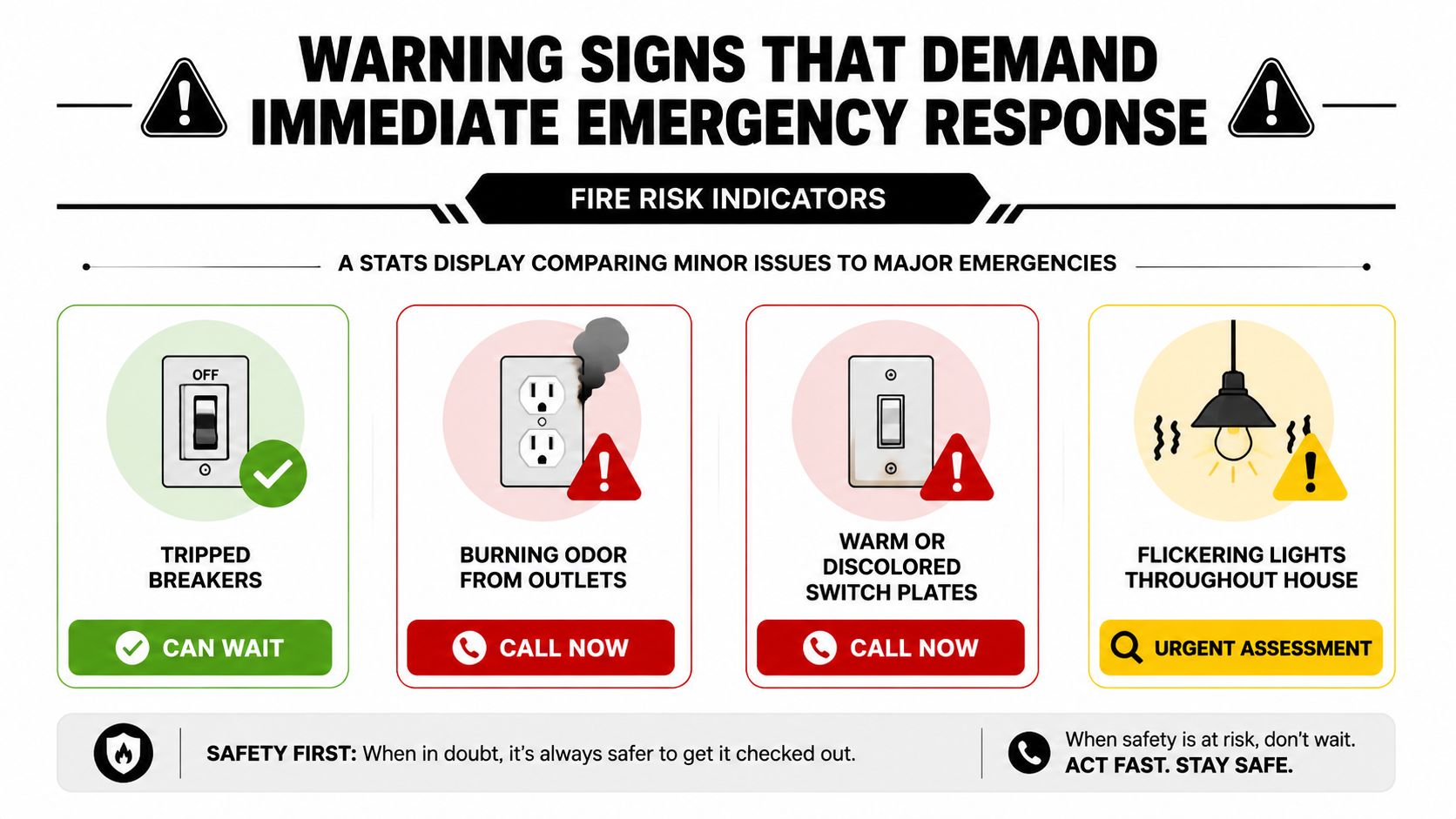
At 2 AM, a flickering light may seem like an inconvenience. A hot switch plate, burning odor, or outlet that crackles is different. These symptoms can signal arcing, overheating, or damaged wiring before flames appear. Treat the precursor, not just the visible failure.
Separate nuisance symptoms from danger signals
Sparking at a panel or outlet requires immediate action. Visible arcing means electricity is crossing an unintended gap, creating heat and damaging surrounding material. Move away from the area, keep others out, and do not tighten, replace, or inspect the device yourself.
An unexplained burning odor also demands prompt professional attention, particularly when no recently used appliance explains it. Stop using nearby equipment and call a licensed electrician. Do not search inside a wall or open the panel to locate the smell. Follow this emergency electrical repair guidance for the appropriate response to active sparking and unknown burning smells.
Warm or discolored outlets and switch plates should remain unused until inspected. Heat can come from a loose connection, damaged device, overloaded circuit, or deteriorating conductor. Black marks, melted plastic, smoke, or a sharp odor raise the risk further. Water near electrical equipment is another emergency, whether the source is a leak, flooding, or storm intrusion.
Repeated breaker trips indicate a condition the protective device cannot safely ignore. Repeatedly resetting it can leave the underlying fault energized between trips. Review this explanation of why a circuit breaker keeps tripping only to understand the symptom, then arrange professional assessment. Leave the breaker off if it trips again or if heat, odor, noise, or visible damage is present.
Minor annoyance or fire precursor?
A breaker that trips once after several high-load appliances run together may wait for daytime service if there is no heat, odor, smoke, water, or visible damage. A breaker that trips repeatedly, especially with one appliance or circuit, belongs on an emergency call.
Electrical fires can begin during ordinary equipment operation. 77% of home electrical fires involve an electrical failure or malfunction, 90% start from operating equipment, and arcing from operating equipment accounts for 64%, according to this analysis of electrical fire risks. The U.S. Fire Administration's electrical fire report records an estimated 24,000 residential building electrical fires annually from 2014 through 2016, with 310 deaths, 850 injuries, and $871 million in property loss. Eighty-three percent occurred in one- and two-family dwellings, and only 17% stayed confined to the item where the fire began.
Call immediately for arcing, smoke, burning odor, hot devices, water intrusion, or repeated trips. Do not place those warning signs on tomorrow's list.
What to Expect During a 24/7 Emergency Service Call
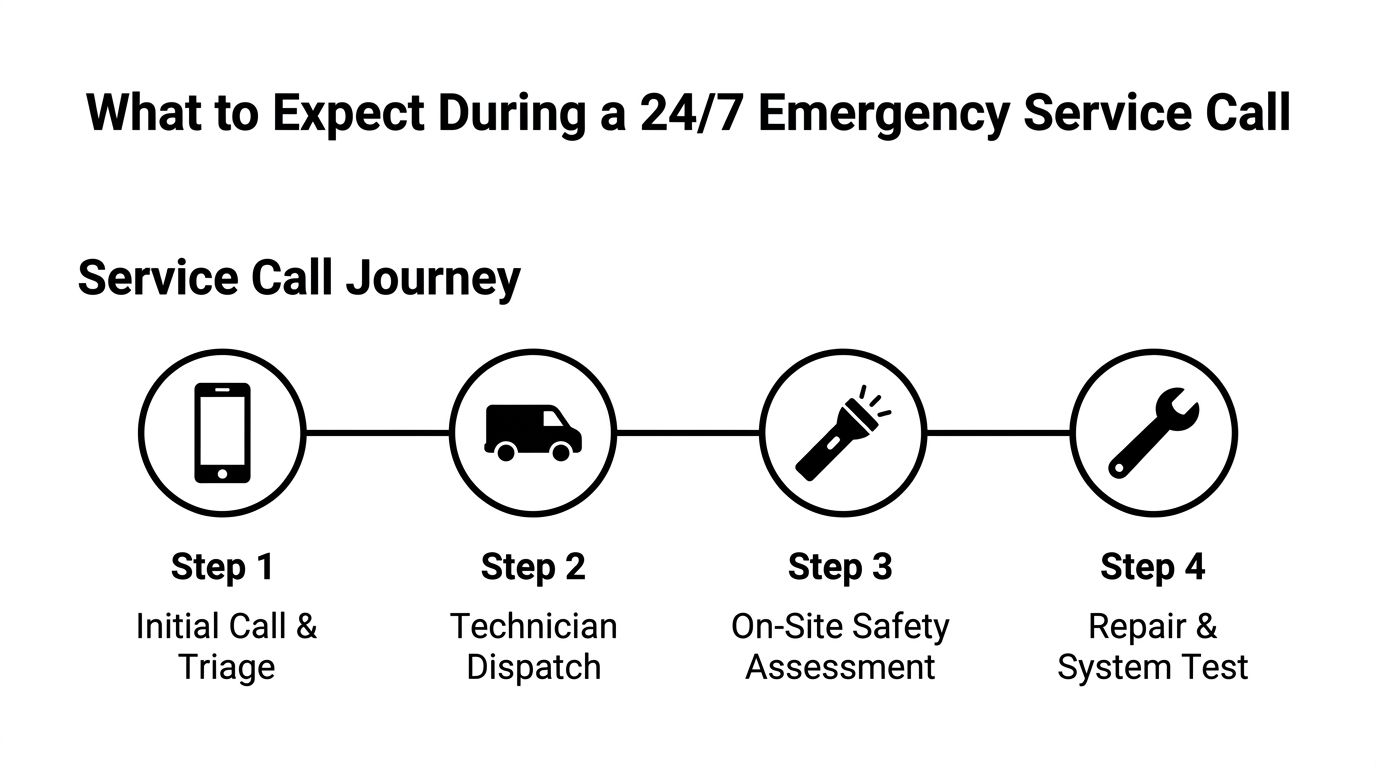
A dependable emergency call should feel organized, not mysterious. The provider should gather facts, explain the immediate safety decision, dispatch an appropriately qualified electrician, and tell you what happens if the repair needs additional materials or permitting.
The phone call is part of the repair
The first conversation should cover:
- What happened, and when.
- Whether there's smoke, odor, heat, sparking, water, or exposed wiring.
- Whether the issue affects one outlet, one room, part of the home, or the entire property.
- Whether the breaker resets and stays on.
- Whether anyone has been shocked or injured.
- Whether the utility appears to be experiencing a wider outage.
A qualified phone responder can tell you to leave the breaker off, evacuate, or wait in a safe area. A generic intake service may only collect contact details and pass the urgency along later. At 2 AM, that difference affects the first decision you make.
On-site diagnosis should be methodical
The electrician should begin with a safety assessment, not a parts swap. That usually means inspecting the service equipment and affected circuit, verifying whether power is present, looking for damaged insulation or overheated terminations, and testing the suspected device and connected load.
The immediate repair may involve replacing a failed receptacle, correcting a loose connection, isolating damaged wiring, repairing a panel component, or safely restoring a limited portion of the home. The technician should explain what caused the failure, what was repaired, and what remains unsafe or incomplete.
A quality provider also distinguishes temporary stabilization from a permanent correction. If the correct component isn't available on the truck, the electrician should make the system safe without disguising the limitation as a finished repair. Ask whether the affected circuit will remain off, whether another visit is required, and whether a permit or inspection applies.
Pricing and local coverage deserve direct questions
Before authorizing work, ask for the diagnostic charge, the estimated repair range, any after-hours fee, and whether materials, permits, or follow-up visits are separate. “We'll tell you later” is not an acceptable pricing process during a stressful call.
Palm Beach County homeowners should also confirm the actual service area and realistic arrival expectations. A provider serving the corridor from Boca Raton to Jupiter may be positioned differently from a contractor dispatching from outside the county. Don't accept a vague promise of immediate arrival. Ask what the provider can commit to, then request written details after the assessment.
Lighthouse Energy Services presents a model based on licensed professionals answering phones, transparent pricing, and no additional charge for after-hours calls. Those are provider-specific policies, so verify them directly before approving work.
How to Choose a Trusted 24/7 Electrical Provider in Palm Beach County
You won't conduct a full contractor search while smoke is coming from an outlet. Choose your emergency provider before you need one, and save the number where every adult in the home can find it.
Use four non-negotiable filters
Licensing and insurance come first. Ask who will perform the work and whether the company carries the licensing and insurance required for the job. Don't accept a vague answer from a dispatcher. Electrical repairs affect life safety, property, and future service work, so documentation matters.
A qualified person should answer urgent calls. The phone responder doesn't need to perform a remote diagnosis, but they should recognize the difference between a harmless outage and active arcing. They should ask about odor, heat, smoke, water, and repeated breaker trips.
Pricing should be explained before work begins. Request the diagnostic charge and the way repair pricing is calculated. If a company adds an after-hours surcharge, it should disclose that before dispatch. If it doesn't charge extra for after-hours calls, get that policy confirmed rather than assuming it.
Local coverage must be real. Palm Beach County stretches across distinct communities, and a provider should tell you whether it routinely serves your location. Confirm service from Boca Raton through Jupiter if that corridor matters to you, and ask how dispatch works overnight.
For a broader screening process, use this guide to finding a good electrician. It's easier to evaluate credentials and reviews before the emergency than while standing beside a failed panel.
Treat company history as evidence, not decoration
Lighthouse Energy Services was established in 2005 and identifies a team with more than 100 years of combined expertise. Those facts don't guarantee that every emergency will be simple, but they give a homeowner concrete points to verify when comparing providers.
Look for clear written quotes, verifiable local reviews, identifiable technicians, and an explanation of what the emergency visit includes. A provider that refuses to identify the electrician, won't discuss pricing, or promises an arrival without defining the process deserves caution.
Ask this before dispatch: “Who answers the emergency phone, who will arrive, what will the initial assessment cost, and what happens if the repair needs a part or permit?”
The right provider won't pressure you to approve unrelated upgrades during a dangerous event. The immediate objective is to eliminate the hazard, restore safe operation where possible, and document any recommended follow-up.
Common Questions About Emergency Electrical Services
Does emergency electrical work require a permit?
Sometimes. Requirements depend on the repair, equipment, and Palm Beach County rules that apply. A reputable electrician should explain whether a permit or inspection is required and whether the company will manage it. Permit uncertainty never justifies unsafe temporary work.
Should I troubleshoot before calling?
Limit yourself to safe observation and basic isolation. Stop using the affected device, check whether the issue affects only your home, and switch off an accessible breaker only if the panel area is dry and free of smoke, flame, or arcing. Do not open equipment, remove covers, replace wiring, or repeatedly reset a breaker that trips again.
What if the electrician does not have the required part?
The technician should first make the situation safe, explain what remains unavailable, and tell you whether the circuit must stay off. Before approving further work, request a written description of the temporary condition, the required part, the follow-up plan, and any added cost.
Why do some providers charge more after hours?
Emergency dispatch and overnight staffing may have different rates. The provider should disclose its policy before work begins. Lighthouse Energy Services states that it does not add extra charges for after-hours calls. Confirm the company's current terms and request a clear quote before authorizing repairs.
Can every electrical problem wait until morning?
No. A stable, isolated nuisance may wait, but sparking, smoke, unexplained burning odor, hot or discolored devices, water near electrical equipment, exposed wiring, and repeated breaker trips require immediate professional judgment. These warnings can precede an electrical fire, even when the affected outlet or breaker still appears usable. A burning smell, heat, or arcing is a reason to stop using the circuit and call for emergency help.
Lighthouse Energy Services provides 24/7 residential electrical repair across Palm Beach County. Licensed professionals answer emergency calls, explain pricing, and serve homeowners from Boca Raton to Jupiter. If your home has sparking, burning odors, repeated breaker trips, or another urgent electrical fault, visit Lighthouse Energy Services and request help before a minor warning becomes a dangerous failure.