
You're standing in a dark kitchen, the dishwasher's still humming, and there's water on the floor by your feet. The refrigerator is quiet, the breaker may be tripped, and your phone is already in your hand because this is no longer a “deal with it tomorrow” problem. If you're searching emergency appliance repair near me right now, stop scrolling through glossy promises and focus on two things first, safety and proof that the company can respond at night.
Table of Contents
- What Counts as an Appliance Emergency
- First Five Minutes Safety and Mitigation Steps
- How Emergency Appliance Repair Services Work
- What to Expect on Pricing, Licensing, and After-Hours Fees
- How to Tell a Real 24/7 Service From a Marketing Claim
- Why Lighthouse Energy Services Fits the Emergency Standard
- Preventing the Next Emergency and Getting in Touch
What Counts as an Appliance Emergency
A real appliance emergency is the kind that can't wait until morning without making the situation worse. A refrigerator that's gone warm and is starting to spoil food is urgent. A washer that's flooding the laundry room, a dishwasher pushing water back onto the floor, a stove that smells like gas or won't ignite, or any appliance giving off a burning smell should be treated as an immediate shutdown problem, not a routine repair ticket. In a house at 11 p.m., the question isn't whether the appliance is inconvenient, it's whether it's creating safety risk, water damage, or loss of critical food or heat control.
The search term emergency appliance repair near me exists because this category isn't rare. Industry reporting places the U.S. appliance repair industry at $6.3 billion in 2023 and the global market at $14.9 billion in early 2024, while consumer survey data says 75% of Americans had at least one home repair emergency in the past 12 months and 20% had no savings for an emergency repair (ConsumerAffairs industry reporting). The same survey found 41% had less than $500 or nothing at all set aside for home repairs, which explains why people want a fast local fix instead of defaulting to replacement. That's also why “near me” means more than convenience, it means available now, priced clearly, and able to schedule immediately.
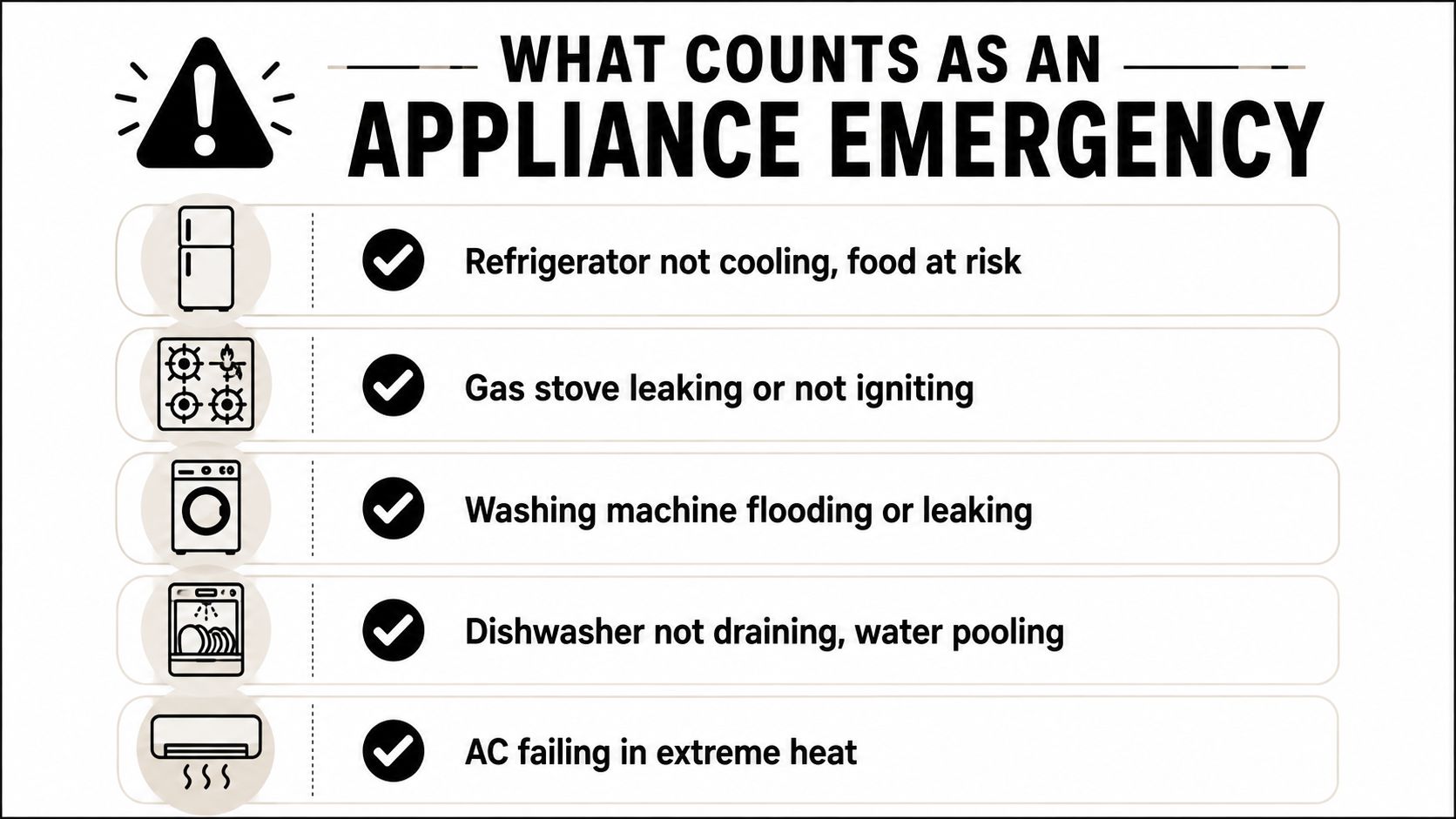
Use this quick rule
Shut down now: sparks, burning odor, gas smell, active leaking, or water pooling around the unit.
Watch and wait: a minor sound change, weak cooling with no food risk yet, or a cosmetic issue that isn't affecting operation.
Schedule normally: cosmetic damage, loose trim, slow wear, or a unit that still runs safely.
That same distinction applies when you're deciding whether to call a plumber or an appliance tech first. If the problem is tied to a burst supply line or a major leak, a guide like when to call a 24/7 plumber helps you separate plumbing damage from appliance failure, and that saves time before water spreads. For electrical threats, a local resource such as emergency electrical repair in Palm Beach County is useful when the symptom is clearly electrical rather than mechanical.
First Five Minutes Safety and Mitigation Steps
The first five minutes matter more than the repair quote. If something smells hot, sparks, leaks, or keeps tripping power, don't keep testing it. Shut the machine down, then deal with the source of risk before you worry about the symptom, because repeated restart attempts can turn a small failure into a bigger one.
Do these three things first
Kill the power at the breaker if the appliance is acting electrically unstable. If water is involved, shut off the appliance's water supply right away. If you smell something electrical, open nearby windows or doors to vent the area, then keep people away from the unit until you know it's safe.
A leaking dishwasher or washer can often be contained long enough to protect flooring, but only if you're not standing in water and the machine is already disconnected from power. Mop up what you can, move towels away from outlets, and keep pets and kids out of the area. If the appliance is a smart unit that's behaving erratically, unplugging it after power is cut at the breaker can keep it from trying to cycle again.
Don't chase a breaker by flipping it on and off. If it trips again, it's telling you something.
If the failure looks like a burst line or a major flood, the right next move is damage control, not appliance tinkering. A practical guide on after a pipe bursts in Florida is worth keeping handy because water spreads fast and the cleanup clock starts immediately. The same principle applies to appliance leaks, stop the source, contain the mess, and let a technician diagnose the cause.
Never run a dryer, oven, or any other appliance that smells hot. Never leave a leaking unit operating because you want one more load or one more cycle. The goal in an emergency is simple, make the appliance harmless, preserve the home, and hand the problem to a qualified tech in the condition that gives them the cleanest diagnosis.
How Emergency Appliance Repair Services Work
A late-night call about a dead refrigerator, a washer dumping water, or a stove that will not light should move straight into triage. A good dispatcher asks what failed, what the appliance is doing right now, and whether it is safe to leave it alone. That is how a serious 24/7 operation decides what gets routed first. The work starts with the failure mode, because each appliance problem calls for different safety steps, different parts, and a different arrival priority.
What happens after the call
The dispatcher identifies the appliance, the symptom, and the urgency, then sends the nearest on-call technician. Good shops stage common parts ahead of time, including compressor start relays, heating elements, door gaskets, and pump motors, so the first visit has a real chance of fixing the problem without a return trip. Published guidance says this kind of workflow is tied to technician arrival within roughly 2–4 hours and on-site diagnostic or repair windows of about 45 minutes to 2 hours, depending on complexity (National Appliance Repair Authority guidance).
That is the standard to watch for. If a company advertises instant help but cannot explain dispatch, cannot say what parts it stocks, or cannot tell you whether a technician is on call, you are dealing with marketing, not operations. Emergency service runs on response, diagnosis, and parts readiness. Anything else wastes time when the house needs a fix, not a pitch.
Practical rule: a serious dispatcher starts with one question, what exactly failed and is it safe to leave on?
The labor behind this work is specialized. Appliance repair is not generic handyman territory. It takes a technician who can read the symptom, make the safety call, and turn that into action on the truck.
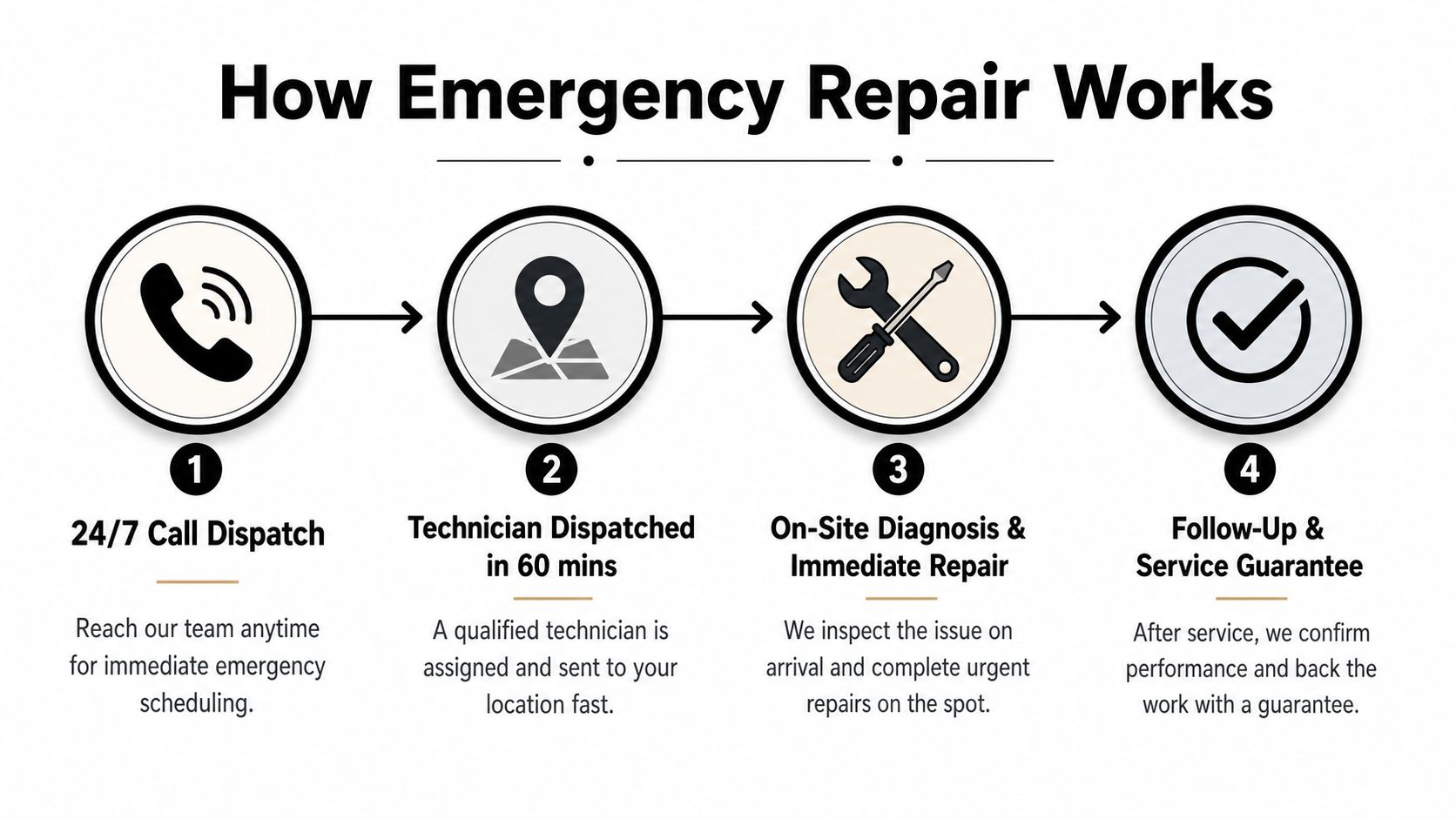
The sign of a real operation
A serious emergency shop answers with a plan. You should hear a clear triage question, a realistic arrival range, and enough detail to know whether the repair is likely to happen in one visit. If the person on the phone cannot explain the service flow, the company is not ready for after-hours work.
A real 24/7 licensed-electrical operation also has a clear intake process for safety and compliance. The dispatcher should know whether the problem points to power, water, heat, or a mechanical failure, because that determines whether the appliance stays off, gets isolated, or can wait for the truck. A homeowner should not have to decode the trade process. The company should do that immediately, then send the right technician with the right parts and the right expectation for the visit.
What to Expect on Pricing, Licensing, and After-Hours Fees
A late-night repair call should not turn into a guessing game about money. For mid-life appliances with non-catastrophic damage, repair typically costs less than replacement, and that is the decision most homeowners should start with. The mistake is paying for a new unit before anyone has checked whether the fault is isolated, fixable, and safe to work on.
What a fair quote usually includes
A straight quote should show the diagnostic fee, the service call or trip charge if one applies, and any after-hours premium. If the company cannot spell out how emergency dispatch is priced before anyone comes out, expect surprises later. Hidden fees are where homeowners get burned, especially when the shop never explains what counts as emergency work versus routine scheduling.
Licensing matters here. If the repair involves live electrical work, the person handling it should be properly licensed for that work, not just comfortable around appliances. That affects safety, code compliance, and the paperwork you may need if the failure caused damage. A homeowner does not need trade jargon, only proof that the person sent to the house is qualified to touch the system.
| Appliance | Typical Repair Range | Emergency vs Routine |
|---|---|---|
| Refrigerator | $100–$400 | Emergency when cooling is lost or food is at risk |
| Dishwasher | $100–$350 | Emergency when leaking, flooding, or backing up |
| Washing machine | $150–$300 | Emergency when water is escaping or the unit is stuck mid-cycle |
The best emergency shops are blunt about the rate structure and do not pile on charges just because the call came in after hours. Some businesses add a premium for night work, while others keep the pricing model flat. Ask which model you are getting before you book. That question matters more than a polished website banner.
A fair emergency quote is clear enough that you can repeat it back without guessing at the fine print.
If you are comparing after-hours electrical help, use a verified service page like after-hours electrical services near me as a reference point for how a real operation explains coverage and response. The details should be plain, not buried.
One more thing. If the first person you reach cannot explain the fee structure and cannot confirm the technician's credentials, hang up and call someone else. A midnight repair should not require detective work.
How to Tell a Real 24/7 Service From a Marketing Claim
A real 24/7 operation leaves fingerprints. Someone answers live. Someone can explain dispatch. Someone can give you a usable arrival window without sounding vague. If you get a generic “we'll get back to you as soon as possible,” you're not speaking to an emergency team, you're speaking to a message intake system.
Ask these questions before you book
Can I speak to a live dispatcher at 3 a.m.? Can they tell me the technician's ETA in plain language? Do they have a physical service address, a transparent emergency fee, and a written parts-and-labor warranty? Can they confirm service-area boundaries so the call doesn't get handed off or delayed? Those questions cut through a lot of empty marketing fast.
A strong local operator will also be willing to identify the license status of the person handling the call or the technician who's coming out. That's especially important for electrical emergencies, because homeowners need more than a friendly voice, they need someone who can safely troubleshoot the system. If a company dodges license questions, treats pricing like a secret, or refuses to say whether dispatch is overnight, that's a warning sign.
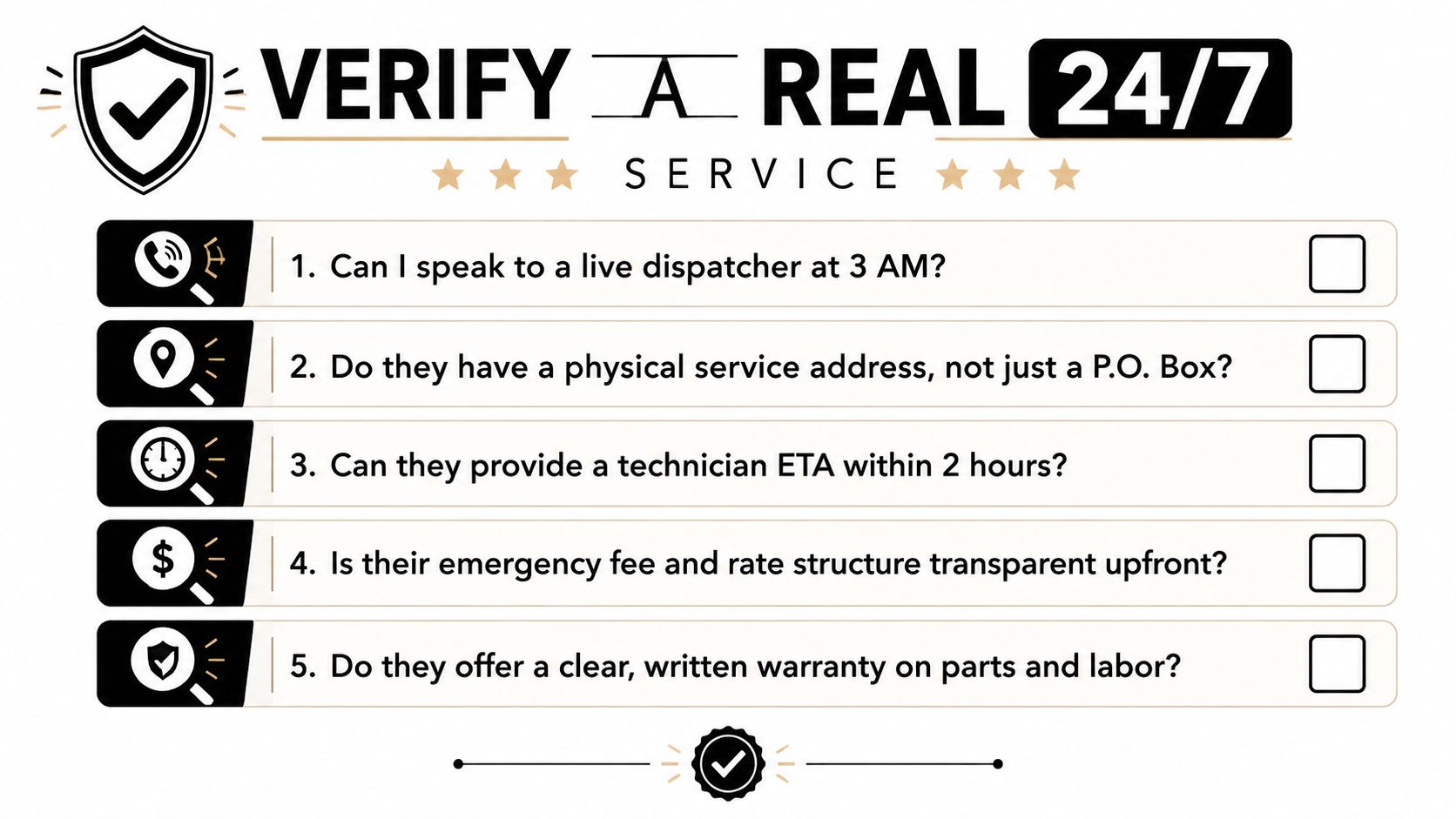
Green flags and red flags
- Green flag, live answer: you reach a dispatcher who asks clear diagnostic questions and doesn't rush past the symptom.
- Green flag, clear timing: they give you a specific window, not soft language.
- Green flag, transparent fee structure: you know the charge before the truck rolls.
- Red flag, vague arrival promises: “as soon as possible” is not a commitment.
- Red flag, no license or insurance details: that's a problem, not a minor omission.
If you want a practical local reference for after-hours electrical response, after-hours electrical services near me is the kind of page that should tell you how the operation is staffed, not just advertise that it's open late. Use that same standard on any emergency appliance call. The company should be able to show it's built to answer, triage, and dispatch, not just to capture leads.
Why Lighthouse Energy Services Fits the Emergency Standard
Once you know what real emergency readiness looks like, the bar gets simple. The company should answer live, respond after hours without playing fee games, cover your area, and have the electrical depth to deal with problems that aren't basic. Lighthouse Energy Services fits that standard on the operational points that matter most.
The standard should look like this
The phones are answered by licensed electrical professionals, not a call center reading from a script. That matters when the issue is electrical, because the person taking the call can triage risk instead of guessing. The company also states that no extra charges apply for after-hours calls, which is exactly what homeowners want to hear when the problem happens at night, not after a billing surprise.
Lighthouse Energy Services has been established since 2005 and serves Palm Beach County from Boca Raton to Jupiter. The team brings more than 100 years of combined expertise across residential, commercial, and industrial work, which gives it the kind of bench strength emergency calls need when the problem turns out to be more complex than the appliance itself. That matters because appliance issues often expose deeper electrical trouble, and a crew that handles diagnostics, repairs, and related power issues can keep the visit from stalling.
The company's broader work, including emergency diagnostics, Smartcool ECO3 efficiency upgrades, and aircraft obstruction lighting, also tells you something useful about its operating model. It's set up for real service depth, not just one narrow repair lane. That's the kind of infrastructure you want when a late-night call needs judgment, not a guess.
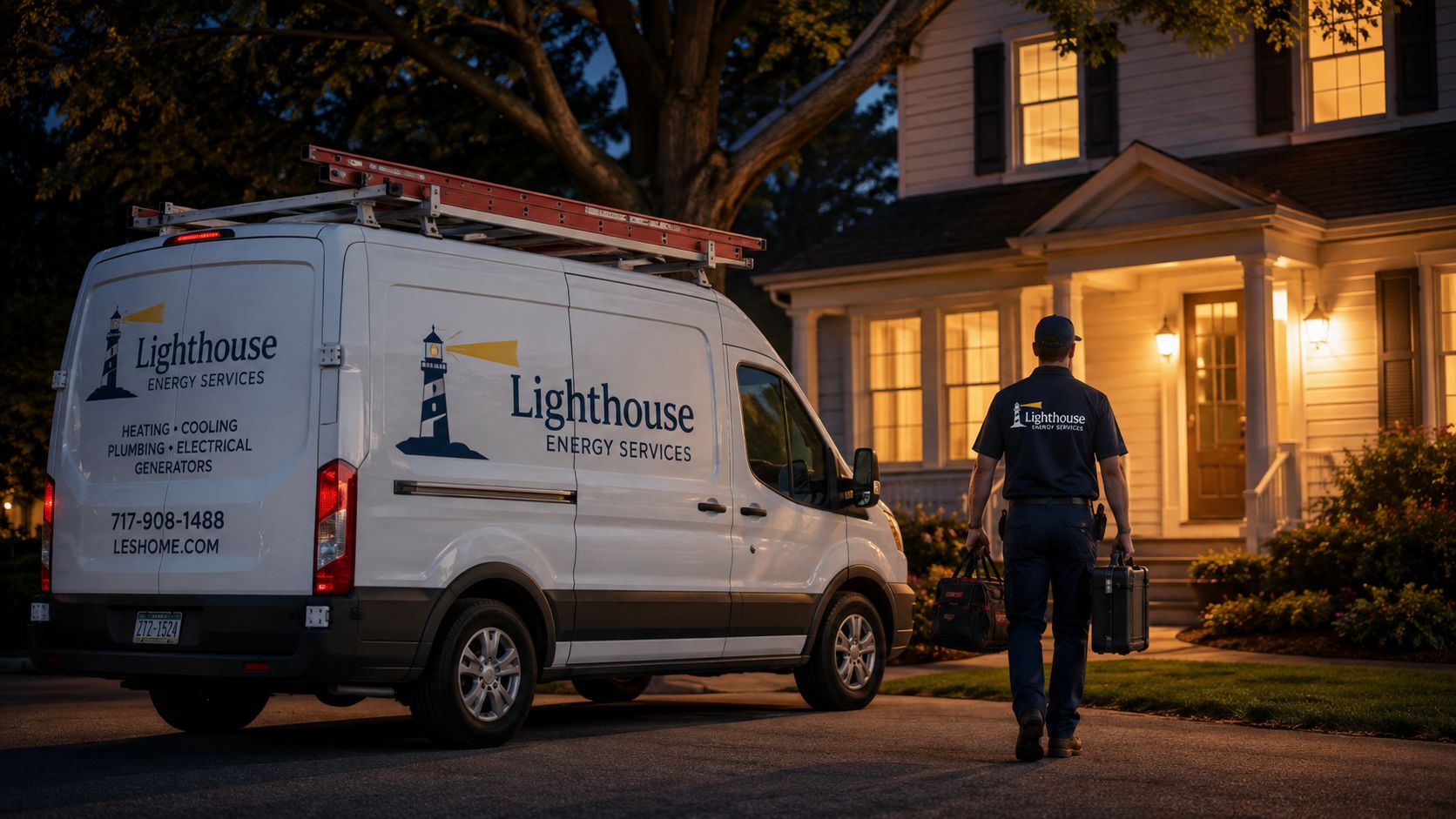
Why that matters to the homeowner
You're not hiring a slogan. You're hiring a response system. If a company can answer at night, explain the problem, and show up without adding games to the bill, it meets the standard most “near me” pages only pretend to meet.
Preventing the Next Emergency and Getting in Touch
The best emergency is the one that doesn't escalate next time. Label your breaker panel clearly, learn where the appliance water shutoffs are, and keep a simple list of appliance purchase dates so you know which units are getting old enough to warrant closer watch. Periodic electrical inspections help too, especially in homes where appliances share circuits or where past repairs were done fast and never revisited.
Make the house easier to manage
A home becomes less stressful when everyone in it knows what to turn off and where to turn it off. That means the breaker box shouldn't be a mystery, the shutoff valves shouldn't be hidden behind storage, and the homeowner should know which appliance smells, leaks, or trips power under load. The more familiar you are with those basics, the less likely a small issue turns into a night-long crisis.
If you want a simple starting point, use this home electrical inspection checklist to review the parts of the system most likely to affect emergency appliance calls. That kind of prep won't stop every failure, but it will shorten the time between symptom and solution. It also makes it easier to explain the problem clearly when you call for help.
If you're in Palm Beach County and need help now, Lighthouse Energy Services handles emergency troubleshooting with 24/7 availability and the same pricing approach at night as during the day. Visit Lighthouse Energy Services to get in touch, then ask for the emergency response path that matches your appliance, your location, and the problem you're seeing. If the failure is active, don't wait for morning. Get the call started and protect the house first.