
A homeowner in Palm Beach County wants to install an electric vehicle charger before a new car arrives. A neighbor says the job needs a city permit; the electrician mentions a county application. Both could be describing the right process, because the property's address determines which building department handles the work.
That's why electrical permit requirements are best treated as an address-specific decision, not a guess based on project price or a broad rule about “most electrical work.” Start by identifying the authority that has jurisdiction over the property, then confirm how it classifies the exact work.
Table of Contents
- Why Electrical Permit Requirements Start With Your Address
- How Electrical Permit Review Protects Your Property
- Determine Whether Your Electrical Project Needs a Permit
- Common Electrical Permit Exemptions and Exceptions
- Navigate the Electrical Permit Application and Inspection Process
- Compare Permit Exposure by Project Type
- Prepare Before Hiring a Licensed Electrician
- Final Steps for a Compliant Electrical Project
Why Electrical Permit Requirements Start With Your Address
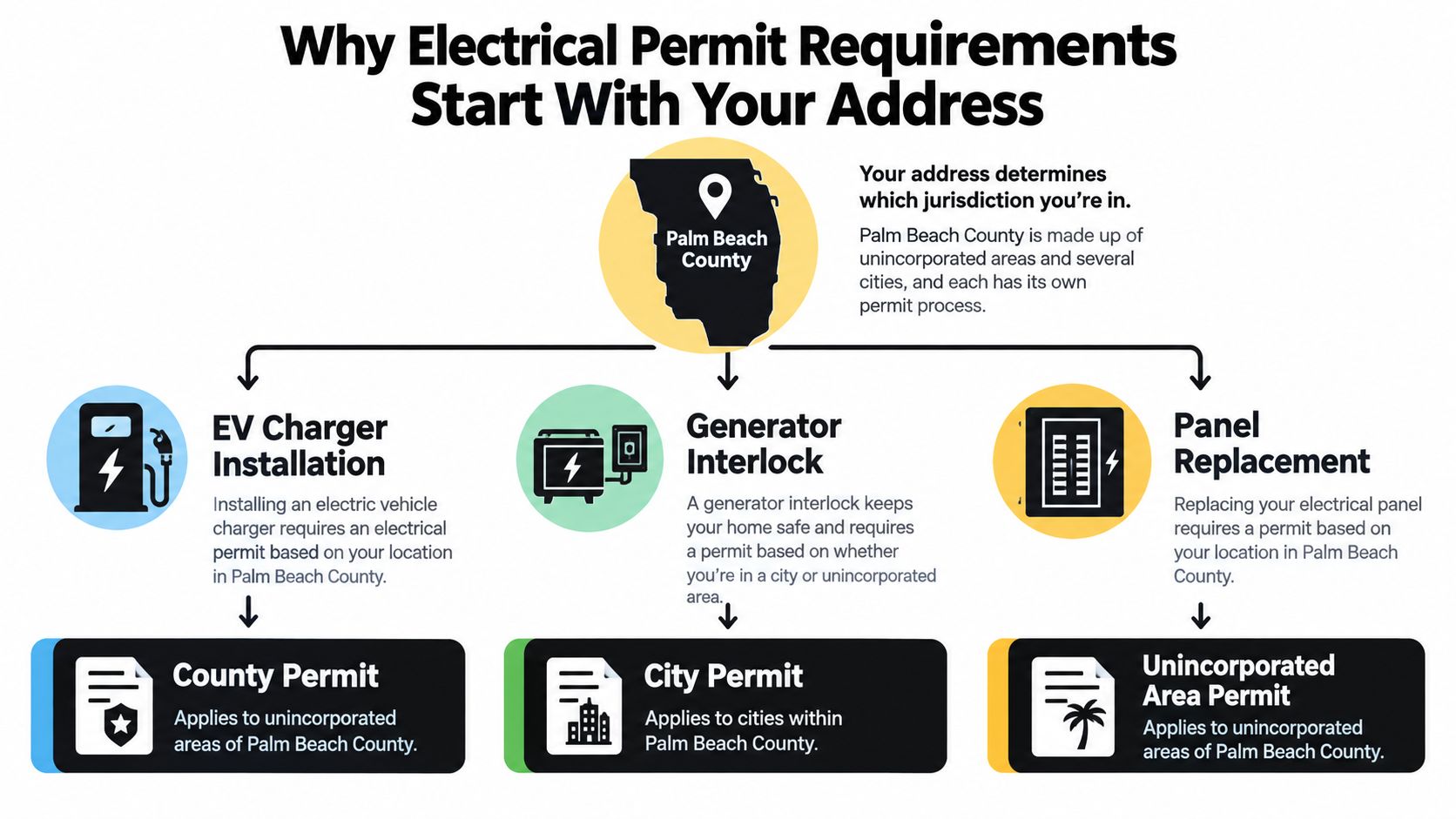
The homeowner planning an EV charger may live in an unincorporated area, or inside a city or town with its own permitting process. A property manager arranging a generator interlock or panel replacement faces the same first question: which local authority handles permits for this address?
Palm Beach County, cities, and municipalities can have separate application portals, forms, fees, and inspection procedures, even when their requirements are based on the Florida Building Code. The project matters, but the authority having jurisdiction determines the applicable permit category and how to apply it locally.
Make the address your first check
Before work is scheduled, verify whether the property falls under the county or a municipality. Then ask the responsible building department, or a qualified electrical contractor familiar with that jurisdiction, which permit category applies and what inspections may be required.
Be specific when you ask. “Electrical work” may be too broad to get a useful answer. Describe whether the job replaces equipment, adds a circuit, changes service equipment, installs a charger, or includes wiring as part of a renovation. If existing conditions are uncertain, say so; the final scope can affect the permit path.
Practical rule: Paying a contractor for electrical work doesn't, by itself, prove that a permit was obtained or that inspections were completed. Ask who is responsible for the application, inspection scheduling, and final records.
The same address-first approach helps homeowners, property managers, and commercial owners avoid relying on a neighbor's experience or a general online summary. First verify jurisdiction. Then classify the project and confirm the local process before work begins.
How Electrical Permit Review Protects Your Property
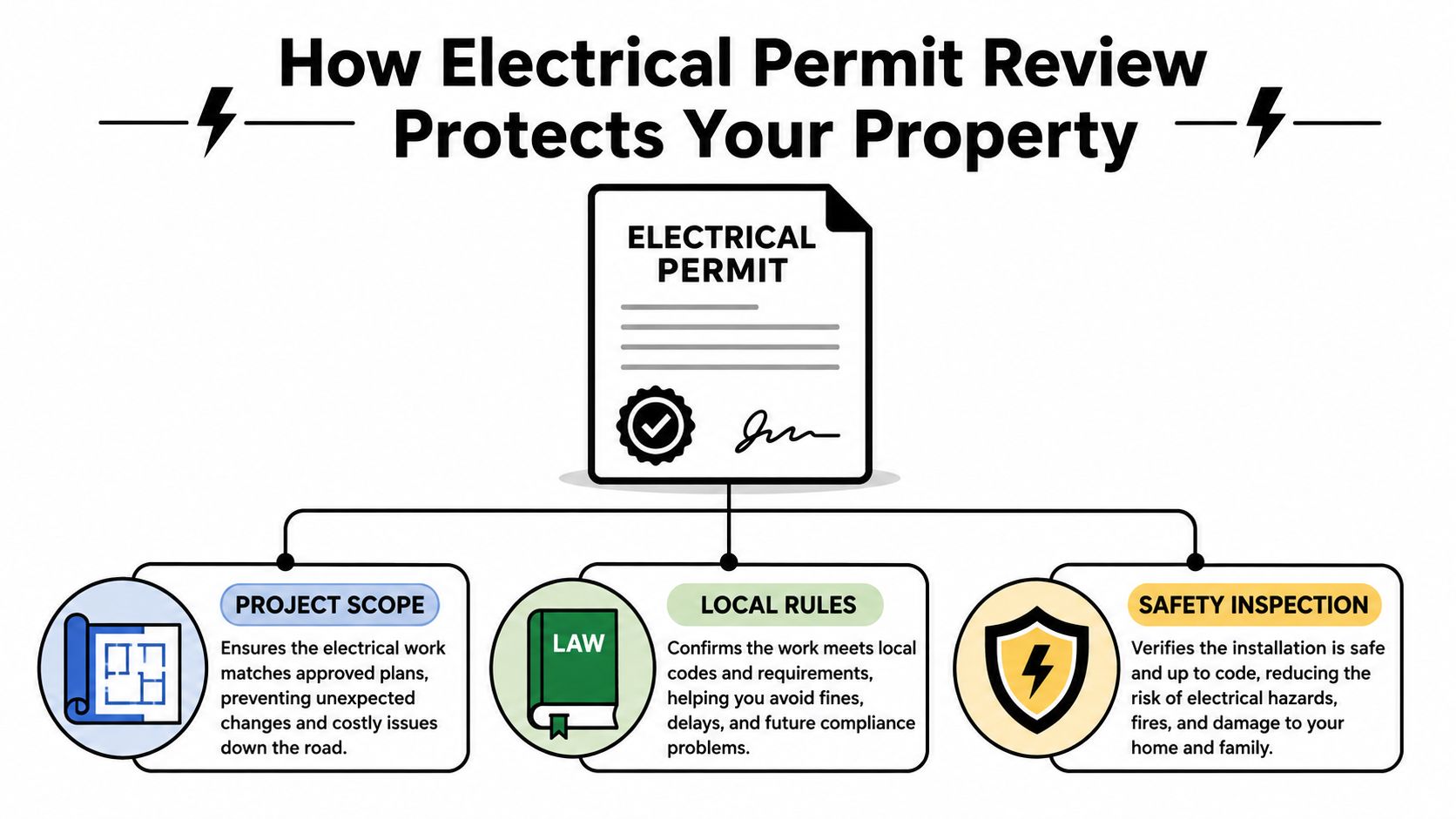
An electrical permit is more than a receipt. It records what work is planned and gives the local authority a way to review the scope and verify that the installation meets the rules that apply to that property.
Think of permit review and inspection as a controlled checkpoint at a job site. The plans or application describe the work, installation proceeds under the approved scope, and inspections provide opportunities to spot issues while important components are still accessible. Depending on the project, reviewers or inspectors may look at conductor sizing, overcurrent protection, grounding and bonding, equipment clearances, or whether connected equipment suits the installation.
A national model, applied locally
The National Electrical Code (NEC) provides a nationally recognized technical model, but it isn't itself a federal law. The NEC was first published in 1897, and responsibility for revising and publishing it moved to the National Fire Protection Association in 1911. States and local jurisdictions commonly adopt or incorporate the code into enforceable regulations, so the requirements for an individual property depend on the rules its local authority has adopted. (NFPA's overview of the National Electrical Code)
That distinction explains why two nearby properties can share a technical code basis yet have different administrative steps. Their applications, local procedures, and inspection sequences may not be identical.
The permit process also isn't interchangeable with hiring an electrician. A contractor performs the work, while the authority's process establishes whether the work needs approval and how it will be inspected. Homeowners preparing for an inspection can use this home electrical inspection checklist to organize what to review and discuss.
Determine Whether Your Electrical Project Needs a Permit
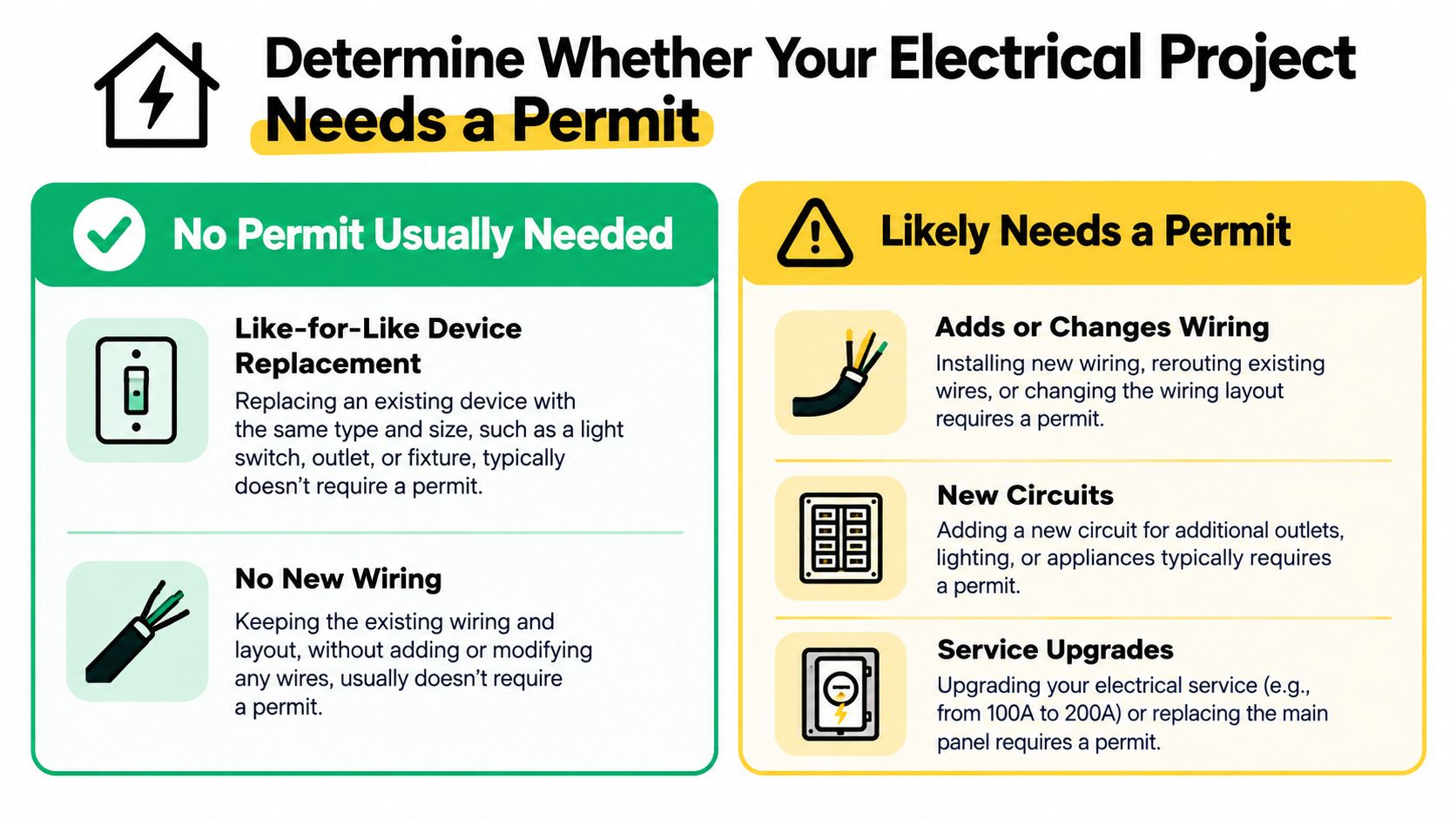
Start by classifying the work, not by deciding whether it seems small. A narrow, like-for-like device replacement may be treated differently from work that changes circuits, wiring, service equipment, or the electrical system's capacity. Palm Beach County guidance indicates that service installations, panel upgrades, new circuits, and wiring alterations generally require permits, while narrow like-for-like device replacements may not. Borderline projects still need confirmation for the property's address. (Palm Beach County electrical permit guidance)
Sort the scope into practical categories
Ask whether the job replaces a device, or changes what the electrical system can do. Replacing a device like for like may have a different permit signal from adding wiring or a circuit. Even then, do not assume an exemption without checking the local rule.
A panel replacement needs careful classification, even when the new panel has the same rating as the old one. The authority may consider the equipment, condition of the existing installation, and exact scope. A panel upgrade, service installation, or change to related wiring generally raises a stronger permit signal.
An EV charger or generator interlock can involve a new connection or circuit. A renovation that adds wiring, relocates electrical equipment, or connects new equipment can also bring electrical work into the permit review, even if the project is described mainly as a kitchen, garage, or building renovation.
Use these questions to frame your call to the authority or contractor:
- Does the work add or alter wiring? New circuits and wiring changes generally deserve a permit check.
- Does it affect service equipment or a panel? Describe any replacement, upgrade, or service change precisely.
- Is it only a like-for-like device replacement? Ask whether the local authority treats that exact task as exempt.
- Is it part of a larger permit? Confirm whether the electrical scope needs separate review or inspection.
These categories are useful for residential, commercial, and industrial projects, but they aren't a universal legal ruling. Existing conditions and the authority with jurisdiction can change the answer. Confirm a borderline project before work starts or wiring is concealed.
Common Electrical Permit Exemptions and Exceptions
A low project price doesn't settle the electrical permit question. West Palm Beach's published explanation of Florida HB 803 says that, beginning July 1, 2026, certain single-family residential work valued below $7,500 may qualify for a building-permit exemption. The explanation explicitly excludes electrical, plumbing, mechanical, structural, and gas work. (West Palm Beach's permit FAQ on Florida HB 803)
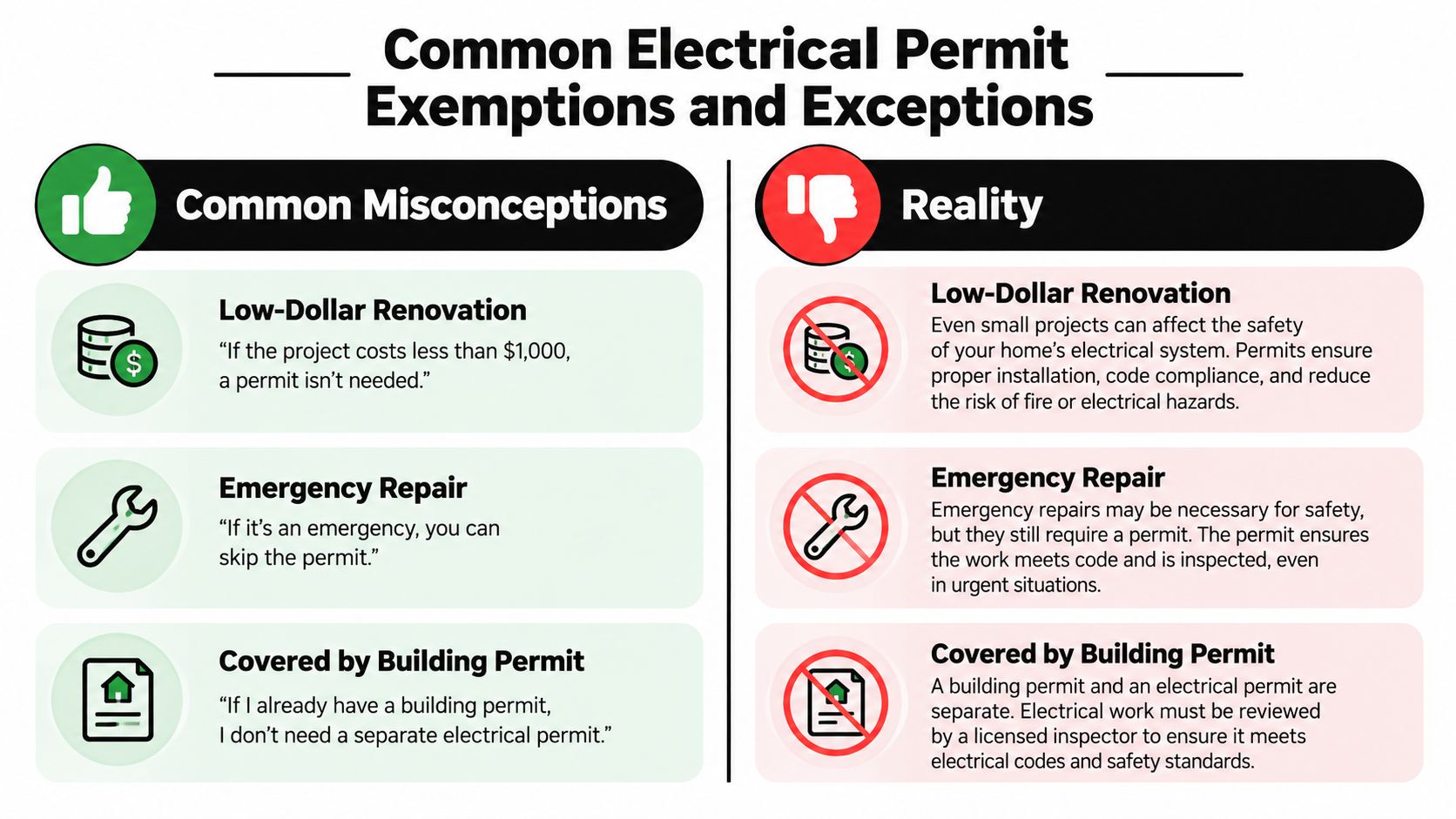
That distinction matters when a renovation includes electrical work. A project may qualify for a building-permit exemption under the stated conditions while the electrical scope still requires its own permit or inspection. Outlets, added circuits, lighting, charging equipment, generators, or panel work should be described to the local authority rather than assumed to fall under the overall project's treatment.
Emergency work also needs a clear distinction. Stabilizing an unsafe condition may be urgent, but that doesn't automatically answer what approvals or records are required for permanent replacement. Ask the authority how to document the immediate work and whether a permit or follow-up inspection applies to the lasting repair.
Unpermitted work can create complications later, including during inspections, insurance claims, resale disclosures, or coordination with the utility. The issue isn't only whether work appears to function; property owners may need to show what was done and whether the required process was followed.
A building permit, emergency, or small invoice isn't a substitute for asking whether the electrical scope has its own permit and inspection requirements.
Before authorizing work, ask the building department directly: does this electrical scope require a separate permit, and what inspection sequence applies? Get the answer for the property's jurisdiction and exact project description.
Navigate the Electrical Permit Application and Inspection Process
Once the authority and likely permit category are clear, define the work before submitting an application. Miami-Dade's official guidance describes permit review as applying before installing, enlarging, altering, repairing, removing, or replacing an electrical system regulated by technical codes. Its examples include service upgrades, panel replacements, rewiring, added circuits, and equipment connections. (Miami-Dade electrical permit guidance)
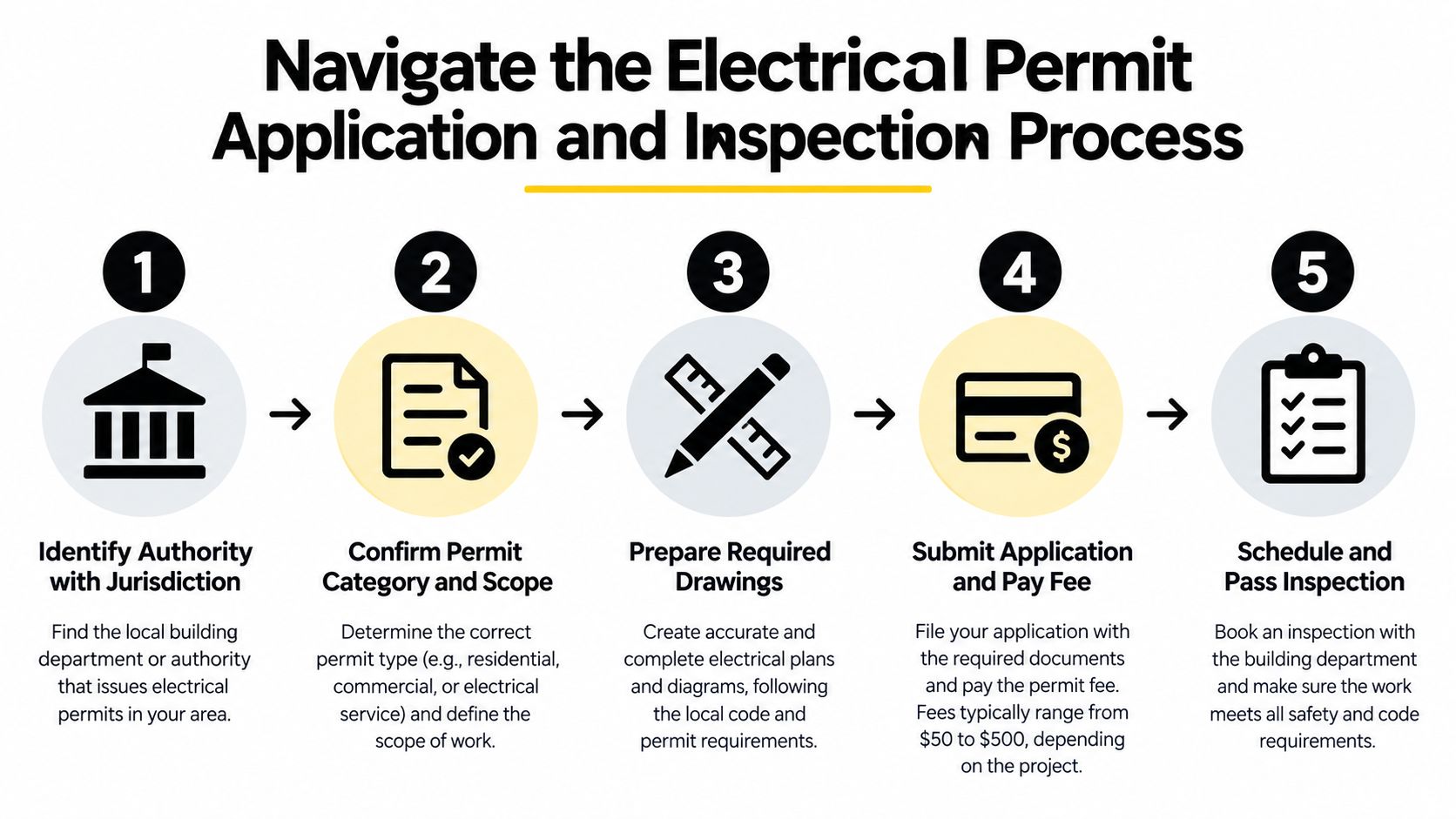
Follow the local sequence
The process varies by authority and scope, but the practical flow is straightforward:
Confirm authority → define scope → prepare documents → submit application → complete inspections and closeout.
First, verify which building department serves the address. Ask which permit category fits the work and whether the application requires drawings, contractor authorization, or other project-specific documents. Confirm the fee schedule and whether a Notice of Commencement or another requirement applies before inspections.
Next, describe the proposed work clearly. For a panel replacement, for example, distinguish a like-for-like replacement from a change in service or other alteration. For added circuits, rewiring, or equipment connections, explain where the work will occur and what the project includes. A clear scope gives reviewers a basis for determining what they need to assess before the work is covered.
After approval, the contractor performs the work within the permitted scope. The authority may require an inspection while wiring or equipment is accessible, then a final inspection or other closeout step. Don't cover work that may need to be viewed until the responsible contractor confirms the inspection stage is complete.
Keep the record from application to closeout
Ask who will submit the application, pay applicable fees, arrange inspection access, and respond if an inspector requests a correction. Keep the application, permit approval, inspection results, and closeout records with the property's maintenance documents.
There isn't one universal set of forms, fees, or steps for every Palm Beach County address. Confirm them with the authority having jurisdiction before scheduling work, and make sure the contractor knows which inspections must happen before concealed work proceeds.
Compare Permit Exposure by Project Type
Use this table to prepare a focused question for the local building department. The signals are general, not a guarantee for every address. The authority's rules and the project's actual scope determine the answer.
| Project Type | Permit Signal | What May Be Reviewed | Confirm Before Work |
|---|---|---|---|
| Like-for-like device replacement | May be limited or exempt, depending on local rules | Whether the device and circuit remain unchanged | Does this exact replacement qualify for an exemption here? |
| New branch circuit | Generally warrants a permit check | Proposed wiring, circuit, and connection | What application and inspection apply to a new circuit? |
| Panel replacement or upgrade | Panel work generally warrants a permit check | Equipment, scope, and any related changes | Is this treated as a replacement, upgrade, or broader alteration? |
| Service change | Service installations generally require a permit | Service equipment and associated electrical work | What documents and inspections does this authority require? |
| Generator or EV equipment connection | Confirm before installation | Equipment connection and any new circuit or related work | Does the connection need its own electrical permit or review? |
| Renovation wiring | Wiring alterations generally require a permit check | Electrical scope within the larger project | Is there a separate electrical permit or inspection sequence? |
A renovation permit doesn't automatically answer whether its electrical work needs separate handling. If backup power is part of the plan, review the scope and connection details for the residential backup power system before asking the authority what applies. For any project type in the table, describe the work accurately and confirm the local path before installation.
Prepare Before Hiring a Licensed Electrician
Before requesting a quote, write down what you want changed. Include the equipment involved, the area of the property, whether new wiring or circuits are expected, and whether the work is part of a renovation or urgent repair. Clear details help the contractor and permitting office discuss the same scope.
Ask prospective contractors who will handle the permit application and inspections, and confirm their licensing and any local authorization the job requires. Request a written scope that states what work is included and how the contractor will address approvals, inspection scheduling, and any follow-up corrections. To compare estimates consistently, an electrical estimating software resource from Exayard can help frame the quantities and work items being priced.
Keep approvals and responsibilities clear
Before work begins, ask:
- Who obtains the permit? Get a clear answer about who submits the application and provides the approval.
- Who schedules inspections? Confirm who arranges access and what must stay exposed for inspection.
- What happens if conditions change? Agree how unexpected wiring or equipment issues will be reported and documented.
- Who handles corrections? Establish who will coordinate any work required after an inspection.
- What records will I receive? Keep the scope, permit documents, approvals, inspection results, warranties, and relevant utility correspondence.
An owner-builder permit, when available, doesn't remove permitting or inspection obligations. Eligibility can be limited and conditioned on occupancy, personal involvement, and restrictions related to renting or selling the property. Check the rules for your address before taking that route.
For practical guidance on evaluating a contractor, use this resource on how to find a good electrician. A low quote isn't necessarily a complete scope. Compare what each estimate includes, who handles required approvals, and what documentation you'll have when the job is finished.
Final Steps for a Compliant Electrical Project
Use a simple intake routine before authorizing electrical work:
- Classify the scope. Identify whether it replaces a device, changes a panel or service, adds wiring, or connects new equipment.
- Confirm the authority. Check which building department serves the property address.
- Ask about the permit path. Confirm whether the electrical work needs a permit, separate review, or inspection.
- Coordinate before concealment. Make sure required inspections happen before wiring or equipment becomes inaccessible.
- Keep the closeout records. File approvals, inspection results, and the final work scope with the property documents.
Property managers can use this routine for maintenance requests, urgent repairs, and larger installations. Commercial and industrial owners can apply the same checks when coordinating plans, inspections, and closeout records. An emergency may require prompt stabilization, but urgency, price, or inclusion in another building permit shouldn't replace a direct permit question for permanent electrical work.
For Palm Beach County projects, Lighthouse Energy Services provides residential, commercial, and industrial electrical services and is available around the clock. Confirm the permit path with the local authority for your address, then contact a qualified electrical contractor to discuss the exact scope.
For help planning a panel replacement, EV charger, generator connection, or other electrical project, contact Lighthouse Energy Services. Its Palm Beach County team handles residential, commercial, and industrial electrical work, with 24/7 availability for urgent service needs.