
Is Tube and Knob Wiring Safe? Here’s What Every Homeowner Needs to Know
Is tube and knob wiring safe? The short answer: it depends — but in most real-world homes, it poses serious risks.
Quick answer for homeowners:
| Condition | Safe? |
|---|---|
| Original, unaltered installation in good condition | Possibly, with professional evaluation |
| Covered by attic or wall insulation | No — fire hazard |
| Modified by non-professionals | No — high risk |
| Used with modern high-wattage appliances | No — overload risk |
| Missing grounding (standard for K&T) | No — shock and equipment risk |
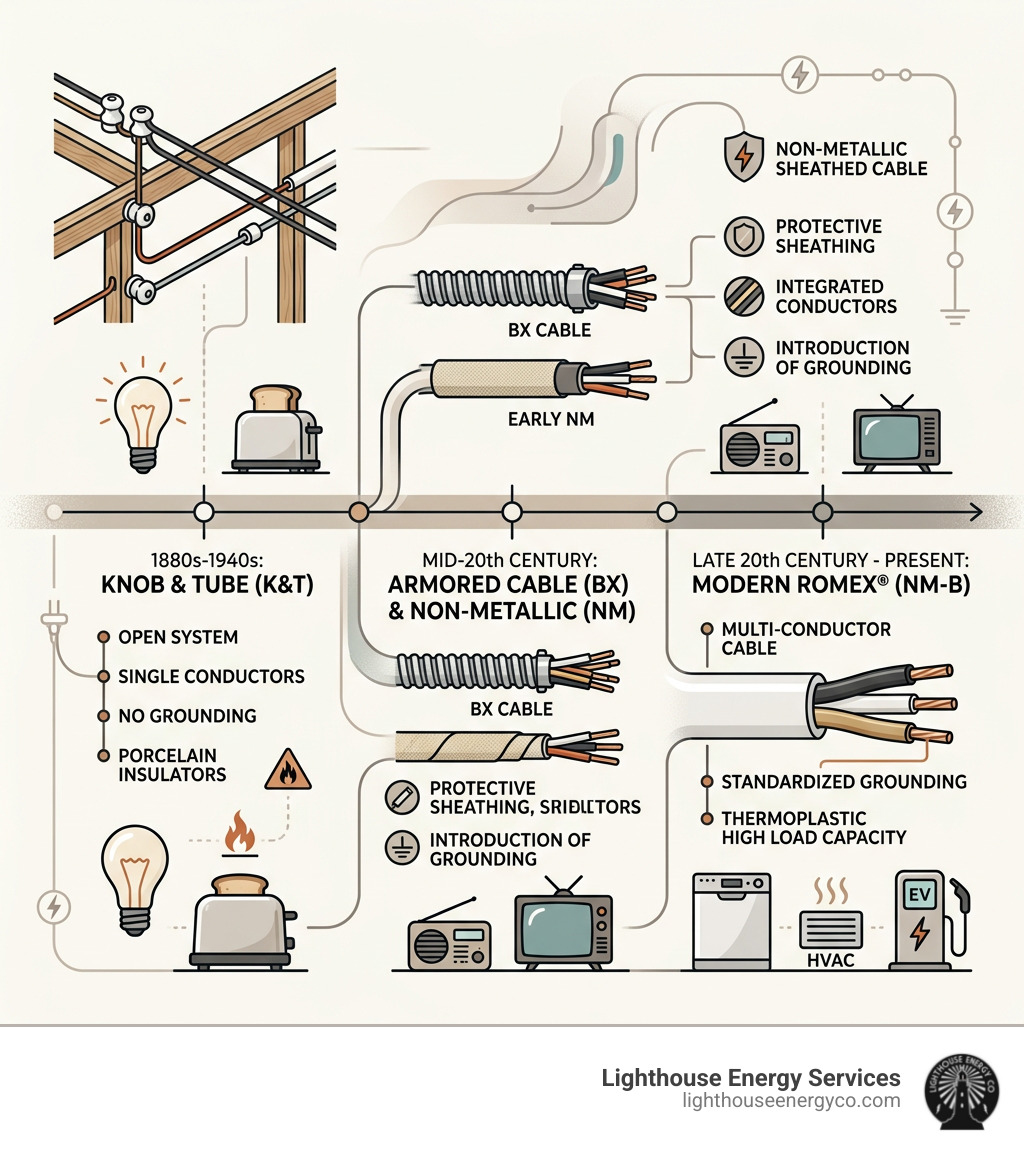
Knob and tube (K&T) wiring was the standard in North American homes from the 1880s through the 1940s. If your home was built before 1950, there’s a real chance it still has some of this wiring hidden in the walls, attic, or basement — whether you know it or not.
The wiring itself wasn’t poorly engineered for its time. But the world it was designed for looked very different. Homes back then ran a few light bulbs and maybe a toaster. Today’s homes run dishwashers, EV chargers, HVAC systems, and dozens of electronics — all on a system that was never built to handle that kind of load.
That gap between then and now is where the danger lives.
I’m Bruce Kemp, a licensed electrical contractor with hands-on experience evaluating and replacing outdated wiring systems — including knob and tube — and the question of is tube and knob wiring safe is one I get asked constantly on job sites and inspections. In the sections below, I’ll walk you through exactly what makes this wiring risky, when to act, and what your options are.
What is Knob and Tube Wiring and How Does it Work?
To understand why we get so concerned about this system, you first have to understand how it was put together. Unlike the modern “Romex” cables we use for new-home-electrical-wiring, which bundle multiple wires into a single plastic sleeve, knob and tube wiring is an “open” system.
It consists of single, insulated copper conductors. To keep these wires from touching the wooden structure of your home, electricians used porcelain “knobs” to secure the wire and “tubes” to protect the wire as it passed through joists or studs.
The Components of the System
- Ceramic Knobs: These are white, cylindrical porcelain pieces nailed to the wood. They act as insulators and strain relief, keeping the wire taut and away from the wood.
- Porcelain Tubes: When a wire needs to go through a beam, the electrician would drill a hole and insert a porcelain tube. This ensured the wire never actually touched the wood, preventing friction and potential fires.
- Copper Conductors: The wire itself is copper, usually wrapped in a rubberized cloth or asphalt-saturated cotton.
- Loom: In areas where wires might come close to each other, a flexible, non-metallic sleeve called “loom” was slipped over the wire for extra protection.
How it Functions
The system is a two-wire setup: one “hot” wire and one “neutral” wire. These wires were typically spaced 4 to 6 inches apart to allow for something called “free-air cooling.” Because the wires were exposed to the air inside the wall cavities or attics, the heat generated by the electricity could dissipate easily.
According to the book Electrical Inspection of Existing Dwellings, this spacing actually gave K&T a higher ampacity (current-carrying capacity) than modern bundled wires of the same gauge—provided the air stayed moving. However, the lack of a grounding wire is the most significant functional difference between K&T and the wiring we install today.
Is Tube and Knob Wiring Safe for Modern Homes?
When we visit a historic home in West Palm Beach or Boca Raton, the first thing we check is the condition of the electrical system. Many homeowners ask us: is tube and knob wiring safe just because it’s been there for 80 years?
The reality is that while K&T was a “marvel of home design” in its day, it is now considered obsolete. Modern homes have vastly different needs.
Comparing K&T to Modern Romex Wiring
| Feature | Knob and Tube (K&T) | Modern Romex (NM Cable) |
|---|---|---|
| Insulation | Rubber/Cloth (Degrades over time) | Thermoplastic (Lasts decades) |
| Grounding | None | Dedicated Ground Wire |
| Cooling | Requires open air | Heat-resistant insulation |
| Load Capacity | Usually 60 Amps max | 100 – 200+ Amps |
| Safety Devices | Fuses (Often bypassed) | Arc-Fault/Ground-Fault Breakers |
The National Fire Protection Association reports that electrical issues were the second leading cause of home fires in the US between 2015 and 2019. Many of these fires start in older wiring systems where the insulation has become brittle and the circuits are chronically overloaded.
Why is tube and knob wiring safe only under specific conditions?
If you talk to a home inspector from InterNACHI, they will tell you that K&T is not inherently dangerous in its original, pristine state. If the porcelain is intact, the wires are tight, and no one has ever touched it, it could theoretically function safely.
However, we almost never see “pristine” K&T. Over the decades, the rubber insulation oxidizes and cracks, especially in hot South Florida attics. Once that insulation falls off, you have bare, live copper wires sitting in your walls. Furthermore, K&T was never meant to be used in “wet” locations like kitchens or bathrooms, which is why a thorough electrical-home-safety-check is vital for older properties.
The dangers of modern loads and is tube and knob wiring safe today?
In the 1920s, a home might have used 10 or 12 amps total. Today, a single hair dryer or space heater can pull 15 amps. When you plug modern high-wattage appliances into a K&T system, the wires get hot—hotter than they were ever designed to be.
The U.S. Department of Energy notes that outdated systems can even consume more energy than necessary due to inefficiency. More importantly, constant overloading leads to “nuisance tripping” of fuses, which tempts homeowners to install larger fuses than the wiring can handle, creating a massive fire risk. If your lights flicker when the AC kicks on, you likely need to look into electrical-panel-upgrades-guide to handle the demand.
Critical Safety Risks: Fire Hazards and Grounding Issues
The most glaring safety issue with knob and tube is the lack of a grounding conductor. Modern three-prong outlets require a ground wire to safely redirect excess electricity (like during a surge or a short circuit) to the earth. Without this, that excess electricity can travel through you or your expensive electronics.
According to the Consumer Product Safety Commission, approximately 70 fatalities occur yearly from electrocutions involving consumer products. K&T systems only provide two-prong outlets, and while people often use adapters or “cheater plugs,” these do not provide actual grounding.
The Danger of Insulation and Heat Dissipation
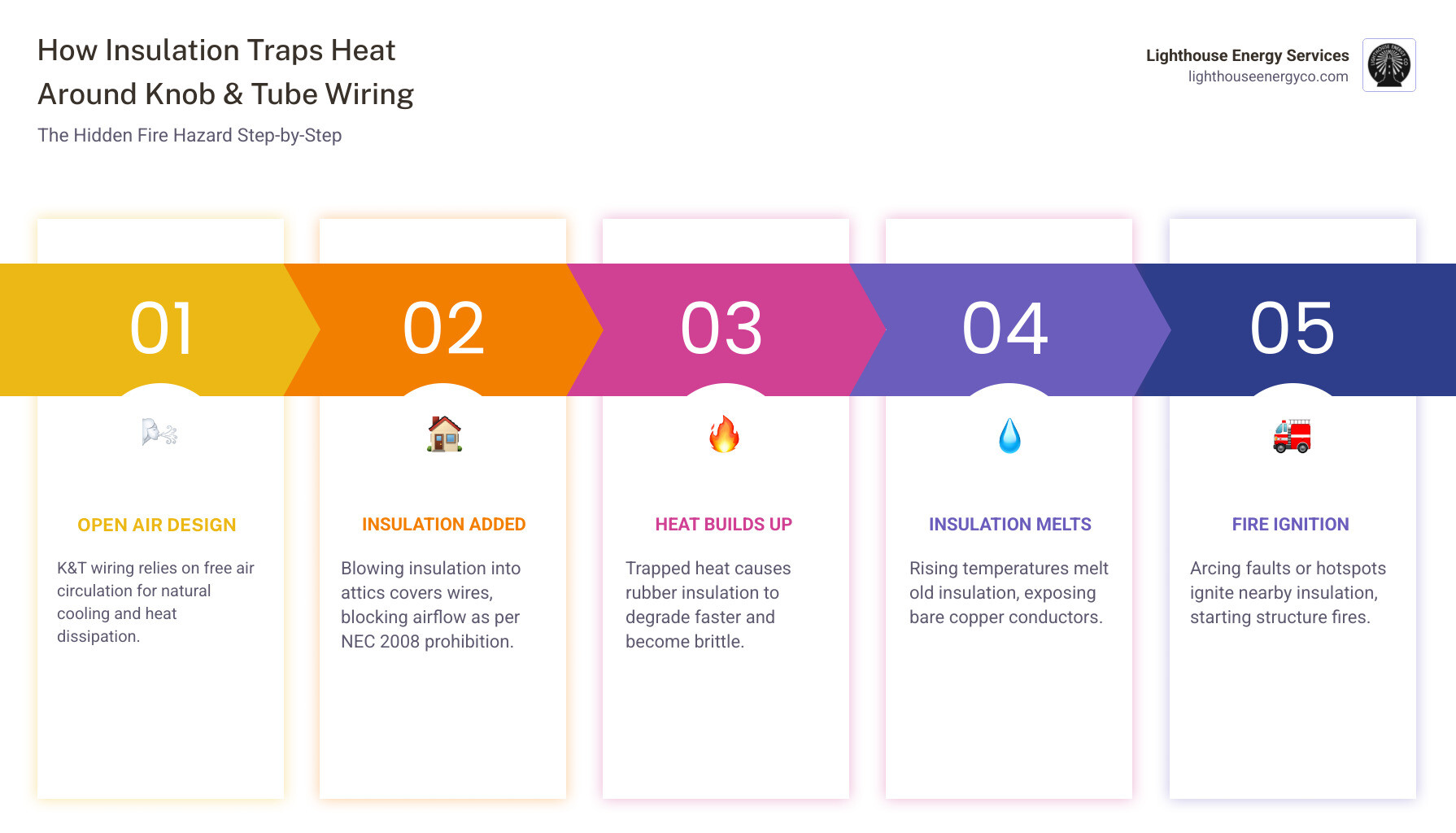
This is perhaps the biggest “hidden” danger. K&T wiring relies on the air around it to stay cool. Since the 2008 National Electrical Code (NEC), it has been strictly prohibited to cover active K&T wiring with building insulation.
When homeowners in South Florida try to make their homes more energy-efficient by blowing insulation into the attic or walls, they inadvertently “smother” the knob and tube wires. This traps the heat, causing the already-brittle insulation to melt or catch fire.
Improper Modifications and DIY Tampering
In our years serving Palm Beach County, we’ve seen some truly terrifying “handyman” fixes. Because K&T is so accessible in attics and basements, many DIYers have tried to splice into it.
- Masking Tape: We often find connections wrapped in masking tape or Scotch tape instead of proper electrical tape.
- Spider Webbing: This occurs when new wires are haphazardly tied into the old K&T system, creating a chaotic mess of “spider web” wiring that is impossible to trace safely.
- Oversized Fuses: If a 15-amp fuse keeps blowing, a frustrated homeowner might put in a 20 or 30-amp fuse. This stops the fuse from blowing, but it allows the wire to get hot enough to start a fire inside the wall.
- The Penny Trick: In extreme (and extremely dangerous) cases, people have placed a copper penny behind a blown fuse to restore power. This removes all safety protection from the circuit.
If you suspect your system has been tampered with, you should look into electrical-panel-upgrades to move toward a safer, breaker-based system. We have seen cases where homeowners even tried fixing-the-fuse-essential-home-electrical-repair-tips on their own, only to make the situation much worse.
Insurance, Legality, and the Cost of Replacement
If the safety risks don’t convince you to upgrade, your insurance company probably will. Most insurance carriers in Florida are very wary of knob and tube. In a 2019 survey of 30+ insurance companies, the vast majority refused to insure homes with active K&T. Those that did often required a certified electrician to sign off on the system’s safety or charged significantly higher premiums.
The Cost of Replacement
Replacing knob and tube is a major project, but it’s an investment in your home’s safety and value.
- Average Range: For a typical two-story home, the price for replacing knob and tube wiring typically ranges from $5,000 to $9,000.
- Extensive Projects: For larger homes or those with difficult access, costs can reach $13,500 to $15,000 or more.
- Rewiring: A whole-house-rewiring project ensures that every inch of your home meets modern codes and can handle today’s technology.
While it sounds expensive, consider the alternative: electrical fires cause over $1.3 billion in property damage every year in the US. Upgrading to a 100-amp or 200-amp service is often a requirement for lenders before they will approve a mortgage on an older home.
Identifying K&T in Your Home
Not sure if you have it? You can usually spot K&T by looking in your attic or basement.
- Look for Porcelain: Search for white, ceramic knobs nailed to the joists or white tubes passing through the wood.
- Check the Insulation: K&T wires are usually black and have a fabric-like texture, whereas modern wires are encased in smooth plastic (usually white, yellow, or grey).
- Inspect the Outlets: If your home still has original two-prong outlets, it’s a strong indicator that K&T is present behind the lath and plaster walls.
If you find these signs, it’s time to consider electrical-upgrades-for-home to bring your property into the 21st century.
Frequently Asked Questions about Knob and Tube Wiring
Is knob and tube wiring illegal to have in a house?
No, it is not “illegal” to have knob and tube wiring in an existing home. The National Electrical Code (NEC) does not require you to rip it out just because it exists. However, it is not permitted in any new construction. If you do a major renovation or addition, the local building department in cities like Fort Lauderdale or Jupiter will likely require you to replace any K&T in the affected areas to bring it up to modern code.
Can I just replace the outlets to make it safe?
Simply swapping a two-prong outlet for a three-prong outlet is actually illegal and dangerous if there is no ground wire connected. This is known as a “false ground.” If you want to use three-prong plugs on a K&T circuit, the only code-approved way to do it without rewiring is to install a GFCI (Ground Fault Circuit Interrupter) outlet. While this provides shock protection, it still does not provide a true ground for your sensitive electronics.
Should I remove old wiring or just deactivate it?
Electricians often leave old, deactivated K&T wiring inside the walls because it is difficult and messy to remove from lath and plaster. As long as it is completely disconnected from the power source at both ends, it is harmless. However, we always recommend labeling deactivated wires so future contractors don’t get confused. Some municipalities have specific rules about “abandoned” wiring, so it’s best to check with a professional.
Conclusion
So, is tube and knob wiring safe? While it was a reliable system for our grandparents, it simply isn’t equipped for the way we live today. Between the lack of grounding, the degradation of 80-year-old rubber, and the fire risks associated with modern insulation, K&T is a liability most South Florida homeowners shouldn’t ignore.
At Lighthouse Energy Services, we specialize in helping homeowners across Palm Beach, Broward, and Miami-Dade Counties navigate these vintage electrical challenges. Whether you need a safety evaluation, a panel upgrade, or a full home rewire, our team of qualified electricians is available 24/7 to ensure the job is “done right, and done right now.”
Don’t wait for a flickering light or a tripped breaker to become a bigger problem. If you’re concerned about the wiring in your historic home, check out our dedicated page on knob-and-tube-wiring or give us a call today. We’ll help you keep the vintage charm of your home without the vintage fire hazards.