
Why Double Socket Installation Is Easier Than You Think
Double socket installation is one of the most common DIY electrical upgrades homeowners tackle — and for good reason. More sockets mean fewer extension leads, less clutter, and a safer home.
Here is a quick overview of how to install a double socket:
- Isolate the circuit at your consumer unit and confirm the power is off with a voltage tester
- Remove the old socket faceplate by unscrewing it from the mounting box
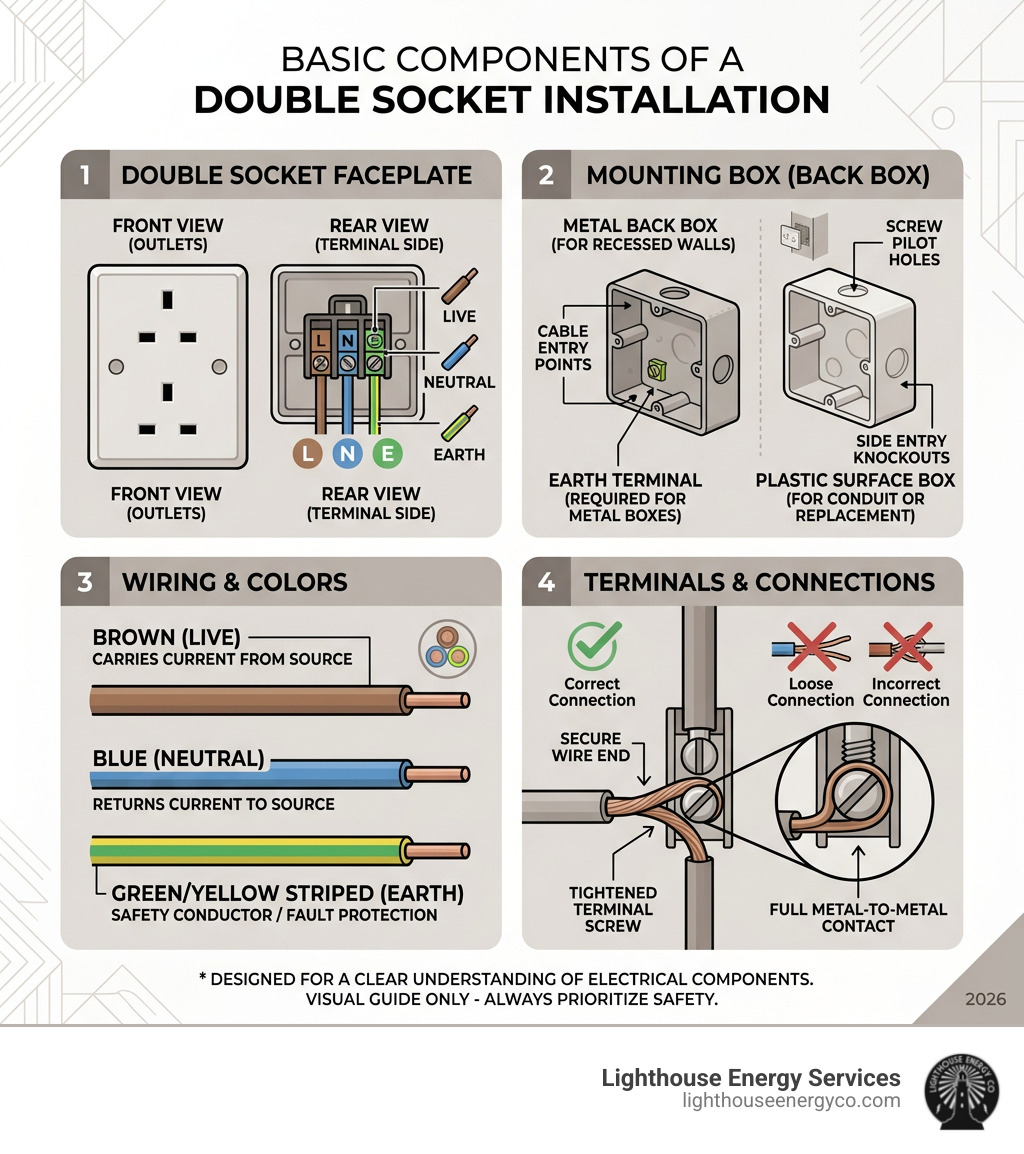
- Identify your wires — brown (live), blue (neutral), and green/yellow (earth)
- Connect the wires to the correct terminals on the new double socket
- Secure the faceplate to the mounting box and restore power
- Test the socket with a plug-in socket tester to confirm correct wiring
Whether you are replacing a damaged socket, converting a single socket to a double, or adding a brand-new outlet via a spur, the core process stays the same.
That said, electrical work does carry real risks if done incorrectly. Scorched terminals, loose connections, and overloaded circuits are all common results of shortcuts. This guide walks you through every scenario safely and clearly.
I’m Bruce Kemp, an electrical contractor with hands-on experience across every stage of electrical work — from estimating and engineering to picking up tools on the job — including countless double socket installation projects in residential settings. Let’s get into the details so you can do this job right.
Essential Tools and Safety for Double Socket Installation
Before we even touch a screwdriver, we need to talk about the “Golden Rule” of electrical work: safety first. In South Florida, from the high-rises of Miami to the suburban homes of Jupiter, electrical safety isn’t just a suggestion; it’s a necessity to prevent fire and injury.
To ensure your home remains a safe haven, we highly recommend an Electrical Home Safety Check if your wiring hasn’t been inspected in the last few years.
The DIY Toolkit
You don’t need a van full of gear, but you do need the right tools. Using the wrong screwdriver can strip screws, and guessing if a wire is live is a recipe for disaster.
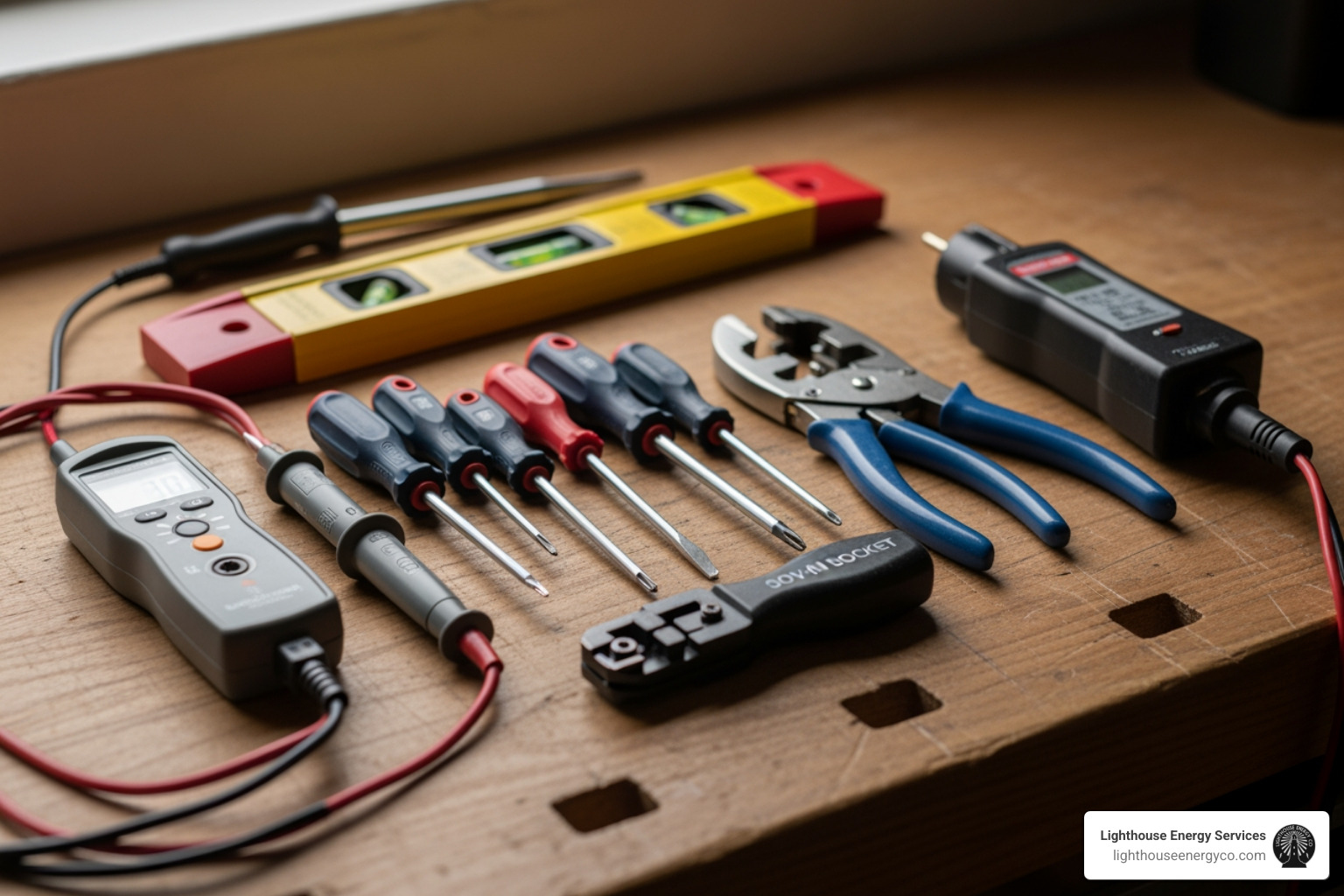
- Voltage Tester/Non-contact Voltage Detector: This is your most important tool. Never trust a label on a breaker box alone.
- Insulated Screwdrivers: Look for “VDE” rated tools that protect you from accidental shocks.
- Wire Strippers: For removing insulation without nicking the copper core.
- Spirit Level: To ensure your new socket doesn’t look crooked against your wallpaper.
- Plug-in Socket Tester: To verify the wiring is correct once you turn the power back on.
- Side Cutters and Pliers: For trimming and bending wires into place.
Power Isolation and Circuit Identification
Before starting your double socket installation, head to your electrical panel (consumer unit). Find the breaker for the “Sockets” or “Small Power” circuit. Flip it to the ‘OFF’ position.
Expert Tip: If you aren’t 100% sure which breaker controls the outlet, turn off the “Main Lug” or “Main Breaker” to kill power to the whole house. It’s better to reset your microwave clock than to take a hit from a live wire. Once the breaker is off, use your voltage tester on the existing socket to confirm it is truly “dead.”
For more on staying safe, check out these Electrical safety regulations and advice.
Identifying Wires During a Double Socket Installation
When you pull that faceplate away from the wall, you’ll likely see three types of wires. Understanding what they do is the difference between a working outlet and a spectacular short circuit.
- Live (L): Usually Brown (or Red in older South Florida homes). This carries the current to the socket.
- Neutral (N): Usually Blue (or Black in older homes). This carries the current back to the panel.
- Earth (E): Usually Green/Yellow striped. This is your safety wire. It provides a path for electricity to reach the ground safely if there’s a fault.
If you find bare copper wires (common for earth wires in older cables), you must slide a piece of green/yellow sleeving over them. This prevents the bare wire from accidentally touching the Live or Neutral terminals.
When to Consult a Professional Electrician
While replacing a faceplate is a great DIY project, some jobs require a Licensed Electrical Contractor. You should call us at Lighthouse Energy if:
- You are installing sockets in “special locations” like bathrooms or near a pool (these require GFCI protection and specific permits).
- You find scorched wires or a burning smell behind the wall.
- Your home has very old “Knob and Tube” or aluminum wiring.
- You need to install a completely new circuit from the main panel.
Understanding Your Circuit: Ring vs. Radial
In double socket installation, how your house is wired determines what you can and cannot do.
The Ring Main
A ring circuit is exactly what it sounds like: a loop. The cable leaves the panel, travels to every socket in a room, and then returns to the panel. When you open a socket on a ring main, you will typically see two sets of cables (two browns, two blues, two earths) because the “loop” is passing through that point.
- The 100 Square Metre Rule: A standard 30/32-amp ring circuit should not serve a floor area larger than 100 square metres (about 1,076 square feet).
- Capacity: These are designed for heavy loads, like kitchens.
The Radial Circuit
A radial circuit is like a branch. It starts at the panel and ends at the last socket. If you open the last socket on a radial circuit, you will only see one set of cables.
If your breakers keep flipping when you use your new socket, you might need Circuit Breaker Tripping Solutions to balance the load.
Adding a Spur to a Double Socket Installation
A “spur” is a new branch added to an existing circuit to provide an extra outlet. It’s a common way to perform a double socket installation where no outlet currently exists.
- The Rule of One: You can generally only run one “unfused” spur from each socket on a ring main.
- Cable Size: Always use 2.5mm² twin-and-earth cable for socket spurs to ensure it can handle the current.
- Junction Boxes: If you can’t run the cable directly from an existing socket, you can use a 30-amp rated junction box to tap into the main circuit cable.
For a deeper dive into expanding your home’s capacity, see this guide on How to add more electrical sockets.
Step-by-Step Guide to Replacing or Adding a Socket
Whether you are in Boca Raton or West Palm Beach, the physical installation follows a set pattern.
Step 1: Isolate and Verify
As mentioned, turn off the breaker and test the outlet. If the outlet is already dead and you are trying to fix it, read our Dead Outlet Fix guide first.
Step 2: Remove the Old Faceplate
Unscrew the two retaining screws. Gently pull the faceplate forward. Don’t yank it—wires in older South Florida homes can be brittle.
Step 3: Disconnect and Inspect
Loosen the terminal screws and pull the wires out. Check the ends of the wires. If they look “chewed” or blackened, trim them back with your side cutters and strip 5mm of fresh copper.
Step 4: Mounting the Box
If you are adding a new socket, you have two choices:
| Feature | Surface-Mounted | Flush-Mounted |
|---|---|---|
| Appearance | Sits on top of the wall; visible box. | Sits inside the wall; neat and flat. |
| Installation | Easy; just screw the box to the wall. | Harder; requires cutting into the wall. |
| Wall Type | Best for solid brick or concrete. | Best for drywall/stud walls. |
Step 5: Wiring the New Double Socket
Thread the cables through the “knockouts” in the mounting box. Connect them to the new faceplate:
- L (Live): Brown/Red wires go here.
- N (Neutral): Blue/Black wires go here.
- E (Earth): Green/Yellow wires go here.
Crucial Step: Tighten the terminal screws firmly. A loose wire causes “arcing,” which leads to heat, melting, and eventually house fires. Give each wire a gentle “tug test” to make sure it’s locked in.
Converting a Single to a Double Socket Installation
If you have a single socket and want a double, you don’t always have to chop out a bigger hole in your wall.
- Conversion Boxes: You can buy special “Single to Double” conversion boxes that screw into your existing single-gang wall box but provide a wider surface for a double faceplate.
- Widening the Recess: If you want it flush, you’ll need to use a pad saw to widen the hole in the drywall and install a “two-gang” cavity box with spring-loaded lugs.
Common Mistakes and Troubleshooting
Even the best DIYers can run into trouble. Here’s what we see most often in the field:
- Loose Connections: This is the #1 cause of electrical fires. If the screw isn’t tight, the electricity “jumps,” creating intense heat.
- Trapped Wires: When you screw the faceplate back on, make sure you aren’t pinching a wire between the plate and the box. This can cut the insulation and cause a short circuit.
- Overloading: Just because you have a double socket doesn’t mean you should plug in two high-heat appliances (like a space heater and a toaster) at once.
- Bare Copper Exposure: Ensure no copper is visible outside the terminal. The insulation should go right up to the metal terminal block.
- Wrong Cable Gauge: Using thin lamp cord for a socket installation is incredibly dangerous. Always use 2.5mm² cable.
If you’re worried about the state of your home’s wiring, our Residential Electrical team is always available for a professional review.
Frequently Asked Questions about Socket Wiring
Can I add a spur to any existing socket?
Not necessarily. You should only add a spur from a socket that is part of the main ring (it will have two sets of cables). If a socket only has one set of cables, it might already be a spur. Adding a “spur off a spur” is against regulations because it can easily overload that single cable.
What should I do if I find old red and black wiring?
Don’t panic! Red and black were the standard colors in the US and UK for decades. However, it does indicate that your wiring is older. Check the insulation; if it’s rubber and crumbling, you need a Home Rewiring Near Me specialist immediately. If the insulation is plastic (PVC) and in good shape, you can proceed, but remember: Red is Live, Black is Neutral.
How do I verify the installation is safe?
Once everything is screwed back together and the power is on:
- Visual Check: Is the socket level? Are there gaps?
- Socket Tester: Plug in your tester. It should show three lights (or a specific pattern) indicating “Correct.” If it shows “No Earth” or “Live/Neutral Reverse,” turn the power off immediately and re-check your wiring.
- The “Warm” Test: After using the socket for an hour, touch the faceplate. It should be cool. If it’s warm to the touch, you likely have a loose connection inside.
Conclusion
A successful double socket installation is a rewarding project that adds real value and convenience to your home. By following the steps of isolation, identification, and secure connection, most homeowners can handle a “like-for-like” replacement or a simple conversion with confidence.
However, electricity doesn’t give second chances. If you open your wall and find a “rat’s nest” of wires, or if you’re simply not comfortable working around live panels, give us a call. At Lighthouse Energy, we serve South Florida from Broward to Palm Beach County with 24/7 service. We ensure every job is “done right, and done right now” with no hidden fees.
Whether you need Electrical Repair Services or a full home upgrade, our Professional Electrical Services are just a phone call away. Stay safe and happy DIYing!