
You plug in a lamp, charger, or vacuum and catch a quick spark out of the corner of your eye. It’s enough to make most homeowners freeze for a second and wonder if they’ve just found a serious electrical problem.
That reaction is reasonable. A sparking outlet can be harmless, or it can be the first visible sign of heat, loose wiring, overload, moisture intrusion, or failing parts inside the box. In Palm Beach County, that question matters even more because humidity, salt air, and older coastal homes tend to expose weak points faster than drier climates do.
If you’ve been searching why does my outlet spark when i plug something in, the short answer is this: some sparks are normal, some are not, and the details matter. Color, sound, frequency, smell, and what was plugged in all help tell the story.
That Startling Spark What It Really Means
Homeowners often notice the spark at the exact worst moment. You’re getting ready for work, plugging in the coffee maker, or connecting a charger at night, and you see a flash. For a split second, every outlet in the house feels suspicious.
The first thing to know is that a small spark during plug insertion isn’t automatically a sign of failure. When the metal prongs first meet the energized contacts inside the receptacle, electricity can jump a tiny gap for an instant. That’s called arcing. It can happen with perfectly normal outlets.
A harmless spark is usually quick and small. Many homeowners describe it as a blue or white flash, similar to a tiny static snap. You see it once, the device works normally, and there’s no smell, buzzing, heat, or repeat event.
The concern starts when the spark looks aggressive or the outlet acts differently afterward. In the field, the details that change my level of concern are simple: repeated sparking, warm faceplates, discoloration, a burning odor, tripped breakers, or the spark happening with something small like a phone charger.
Palm Beach County homes add another layer. Moisture, salt exposure near the coast, and older wiring methods can all turn a minor issue into a recurring one. An outlet in a kitchen, bathroom, garage, patio area, or exterior wall deserves extra caution because dampness and corrosion can weaken the connection over time.
A spark is a symptom, not a diagnosis. The safe response is to judge the pattern, not just the flash.
The Difference Between a Normal Arc and a Danger Sign
A good way to think about outlet sparks is to separate contact spark from fault spark. One is often part of normal operation. The other points to a problem that needs attention.
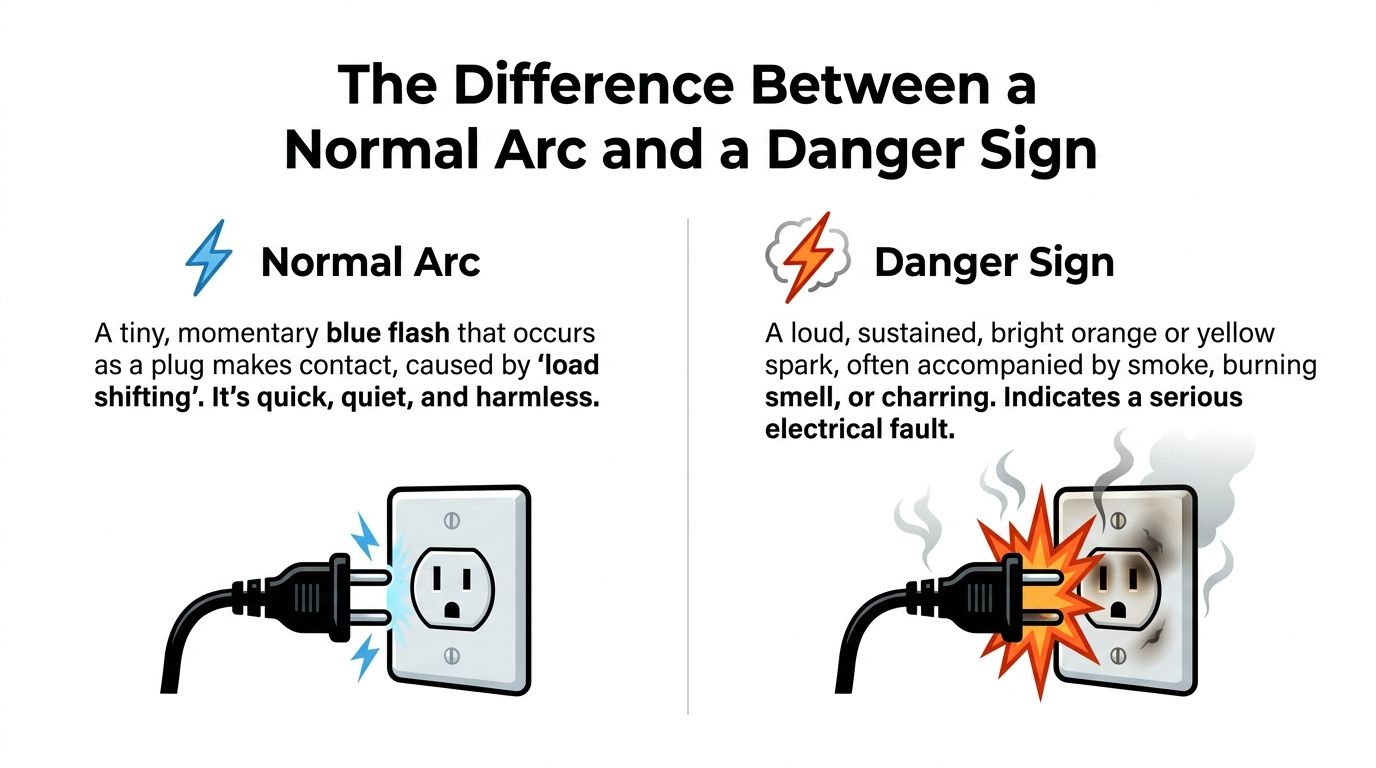
What a normal arc looks like
A normal arc happens at the instant the plug blade makes contact and the device begins drawing power. That’s especially common with appliances that start under load. The flash is typically:
- Small and quick. It’s over almost immediately.
- Blue or white. The color is usually light, not deep orange or red.
- Quiet. No hissing, crackling, or loud pop.
- Clean. No scorch marks, smoke, or odor remain.
This kind of spark is similar in feel to static electricity. It’s a tiny transfer event at the moment of connection.
What a dangerous spark looks like
A danger sign is different in both appearance and behavior. That spark tends to point to loose wiring, a short, a worn receptacle, or moisture-related breakdown in the connection. Watch for these clues:
- Yellow, orange, or red color
- A spark that lasts longer than a flash
- Buzzing, hissing, or popping
- Burning plastic or sharp ozone smell
- Smoke, charring, or melted plastic
- The outlet sparking with low-draw devices
When those signs show up, stop using the outlet.
Practical rule: If the spark is memorable, noisy, smelly, or leaves a mark, treat it as unsafe.
A simple danger scale
Here’s the triage method I’d want any homeowner to use before deciding whether this is a monitor-it issue or a call-now issue.
| Characteristic | Low Risk (Normal Arcing) | High Risk (Call an Electrician) |
|---|---|---|
| Color | Small blue or white flash | Yellow, orange, or red spark |
| Duration | Instant and gone | Sustained or repeated |
| Sound | Silent | Buzzing, hissing, crackling, popping |
| Smell | None | Burning plastic or ozone smell |
| After-effect | Outlet works normally, no marks | Scorching, warmth, smoke, tripped breaker |
| Device type | Often with higher-draw equipment | Happens even with chargers or lamps |
If you like having a general electrical safety reference on hand, the NFPA 70E Electrical Safety Guidance gives useful context on electrical hazard awareness and safe decision-making around energized equipment.
Top 5 Reasons Your Outlet Is Sparking Dangerously
A Palm Beach County homeowner usually notices this at the worst time. You plug in a window AC, hair dryer, or phone charger, see a sharp spark, and start wondering whether this is a nuisance or the start of a fire problem.
The answer depends on the cause. In the field, the same symptom can come from a simple worn receptacle or from heat and arcing inside the box that should be shut down right away. The U.S. Fire Administration’s home electrical fire safety guidance makes the larger point clearly. Faulty outlets, cords, and wiring are common fire starters in homes.
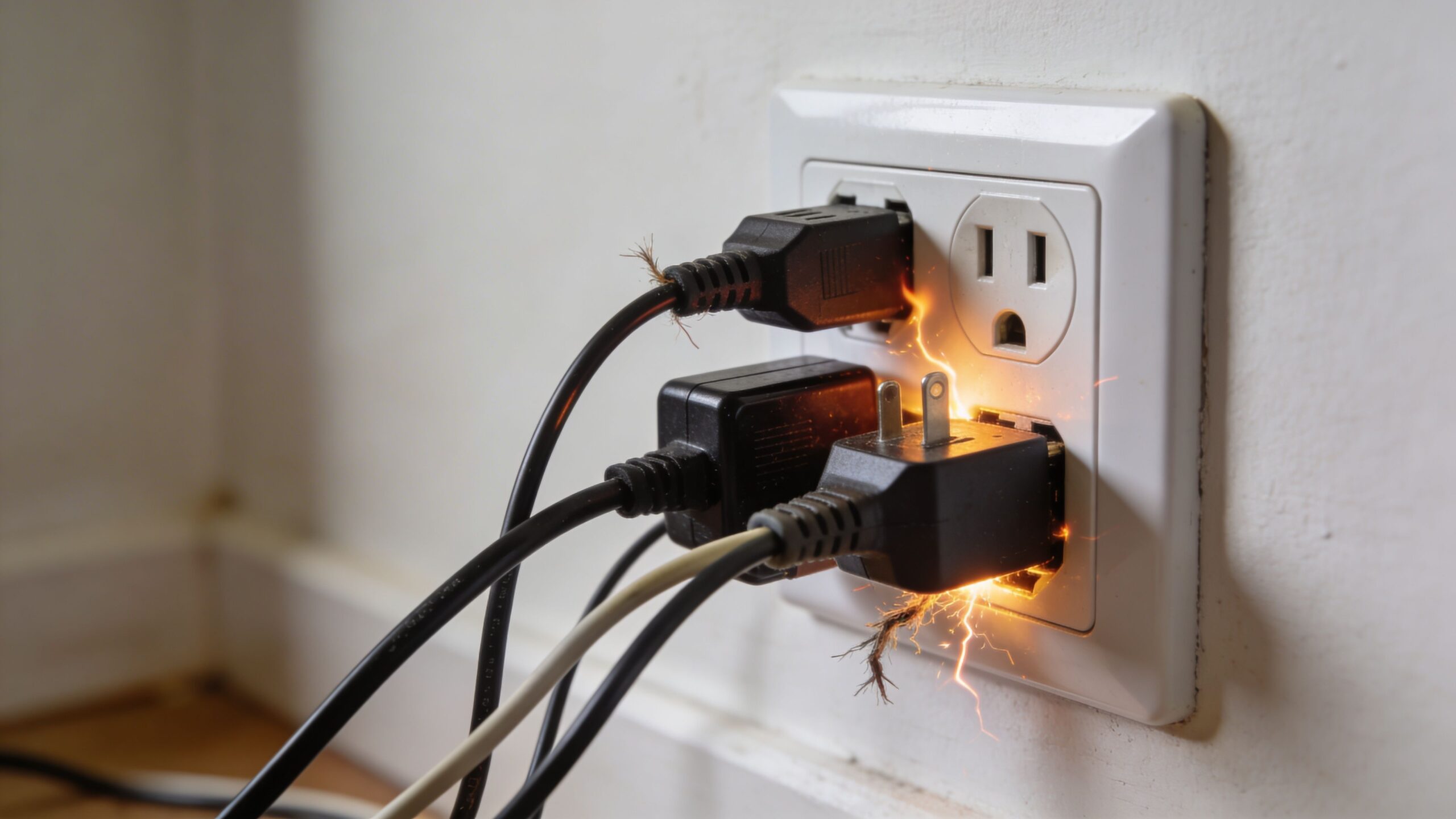
1. Overloaded circuits
Overload problems show up often in older homes and in rooms that were never designed for today’s plug-in habits. One receptacle may be feeding a space heater, TV, charger block, lamp, and vacuum in rotation. Add a high-draw appliance, and the outlet contacts can heat up fast.
I see this a lot with portable AC units, bathroom grooming tools, kitchen appliances, and garage refrigerators sharing general-use circuits. The breaker may not trip immediately, especially if the problem is concentrated at a weak receptacle connection instead of across the full circuit.
Low on the danger scale, a brief spark happens only with a larger motor or heavier-load appliance. High on the danger scale, the outlet sparks with small devices too, feels warm, or shows discoloration.
2. Short circuits inside the outlet or connected wiring
A short circuit means electricity has found a path it was never meant to take. That creates a sudden jump in current and a more aggressive spark. Homeowners often report a louder pop, a harsher smell, or immediate breaker tripping.
In Palm Beach County, moisture makes this category more common than many people realize. Humid air, salt exposure near the coast, and damp exterior walls can all contribute to insulation breakdown or conductive contamination inside a box. Kitchens, baths, laundry rooms, patios, pool areas, and exterior receptacles deserve extra suspicion.
If you want a plain-language explanation of how an electrical fire ignites when live wiring or gear overheats, sparks fly, that resource is a useful companion to what you’re seeing at the outlet.
3. Loose wiring behind the receptacle
Loose terminations are one of the most common causes I find after repeated sparking complaints. The wire is still connected, but not tightly enough to carry current cleanly. That creates resistance, and resistance creates heat at the exact point where you do not want it.
This is especially common on backstabbed outlets, older devices, and receptacles that have seen years of heavy use. The outlet may still power a lamp or charger, which gives a false sense that everything is fine. It is not fine. Each use can worsen the heat damage at the terminal or splice.
If an outlet has gone dead after sparking, this guide on what a dead outlet repair may involve will help you understand what we usually check first.
4. Worn-out receptacles with weak internal contacts
Outlets wear out. The spring tension inside the receptacle loosens over time, and the plug blades stop making firm contact. Once that grip weakens, current can arc across tiny gaps instead of flowing through a solid contact surface.
Homeowners usually notice a pattern before they notice the risk. The plug slips out easily. A charger droops. One outlet in the room works inconsistently while the others feel normal. In South Florida, age plus humidity tends to speed up that decline, especially in garages, kitchens, and covered outdoor areas.
This falls into the call-soon category if the plug fit is loose but there are no burn marks yet. It moves into shut-it-off-now territory if the face is cracked, darkened, warm, or giving off odor.
5. Moisture and corrosion
This is the local factor too many national articles miss. Salt air and year-round humidity can corrode terminal screws, device straps, and the contact surfaces inside receptacles, even when the outlet never looks wet from the outside.
Corrosion changes how well metal parts conduct electricity. That leads to uneven current flow, higher heat, and sporadic sparking that may seem random to the homeowner. One day the outlet behaves normally. The next day it sparks during a humid afternoon or after wind-driven rain.
That unpredictability matters. Corrosion problems rarely improve on their own. They usually spread until the device, the wiring connection, or both need replacement.
A simple rule works well here. If the outlet is near the coast, outdoors, in a bathroom, in a laundry area, or on a patio and it starts sparking, treat it as high risk until a licensed electrician checks it.
What to Do Immediately When an Outlet Sparks
The first few minutes are vital. Don’t focus on whether you can get the device working again. Focus on making the area safe.
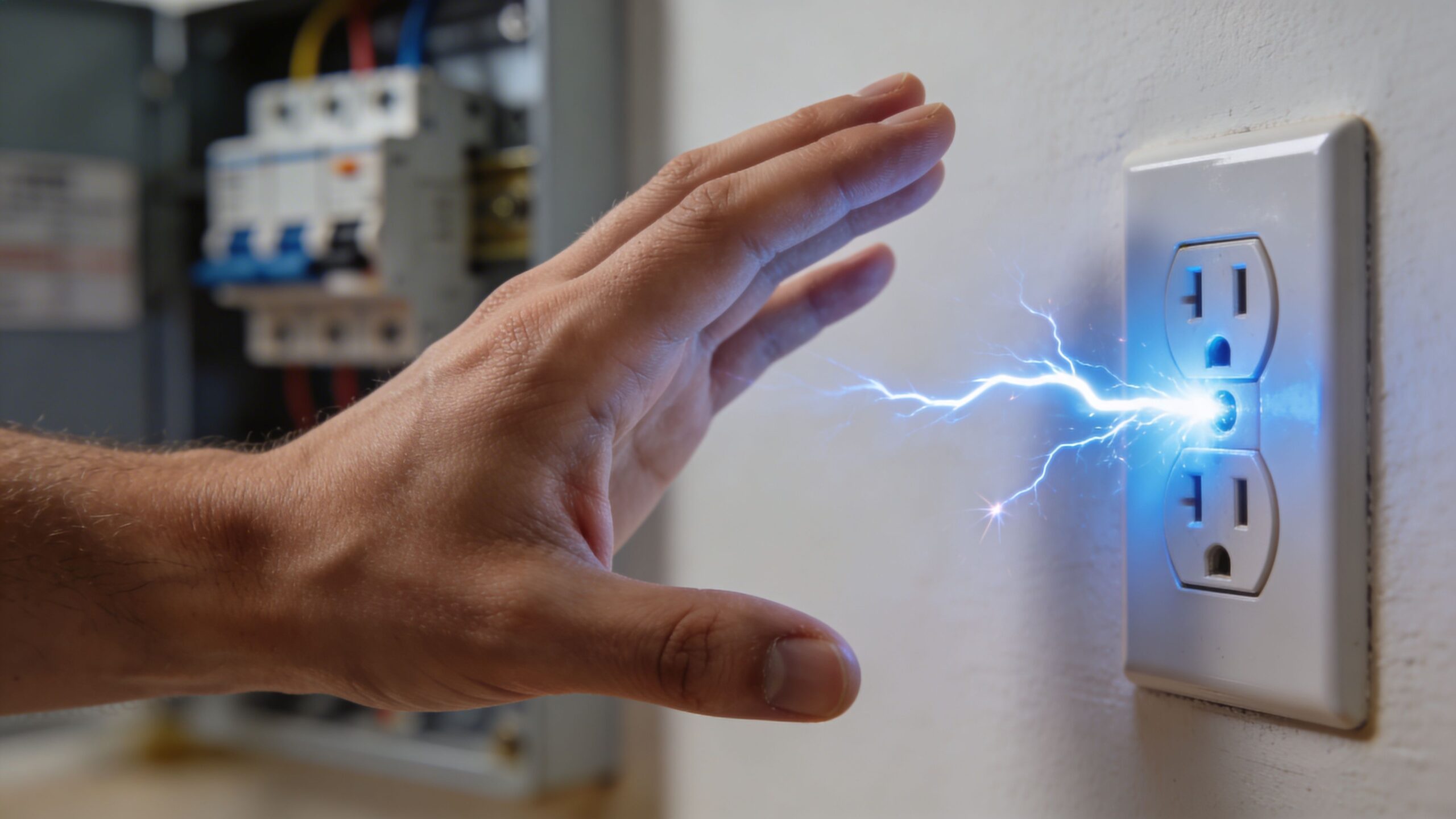
What to do first
Follow this order:
- Stop using the outlet. Don’t test it again with another device.
- Turn off the breaker feeding that outlet if you can identify it safely.
- Unplug the device only if it can be done safely and without reaching near active sparking or heat.
- Check from a distance for scorch marks, cracks, smoke, discoloration, or a warped cover plate.
- Notice the circumstances. Was it a space heater, vacuum, window unit, charger, or something with a damaged cord?
- Pay attention to smell. Burning plastic or a sharp electrical odor matters.
- Call a licensed electrician if the spark was anything more than a brief, isolated blue flash.
Short circuits from loose wiring or moisture in sparking outlets account for 15-20% of U.S. electrical fires, and 6% of homes, about 8 million, report persistent sparking per the 2022 CPSC survey summary cited here. That’s why repeated sparking should never be treated as a nuisance issue.
What not to do
These are the mistakes that create second problems:
- Don’t remove the cover plate. The issue may be inside the box.
- Don’t keep resetting the breaker just to “see if it still works.”
- Don’t use a power strip in the same outlet as a workaround.
- Don’t spray anything into the receptacle.
- Don’t assume it’s only the device unless that device has been tested safely elsewhere.
If the outlet has gone dead after sparking, this guide on a dead outlet fix can help you understand the possibilities before service is scheduled.
If you smell burning, see charring, or hear buzzing after the breaker is back on, leave it off and treat it like an urgent repair.
How a Licensed Electrician Diagnoses the Problem
Many homeowners picture outlet repair as swapping a receptacle. Sometimes that is the fix. Often it isn’t. The actual job is finding the root cause so the new device doesn’t fail the same way.
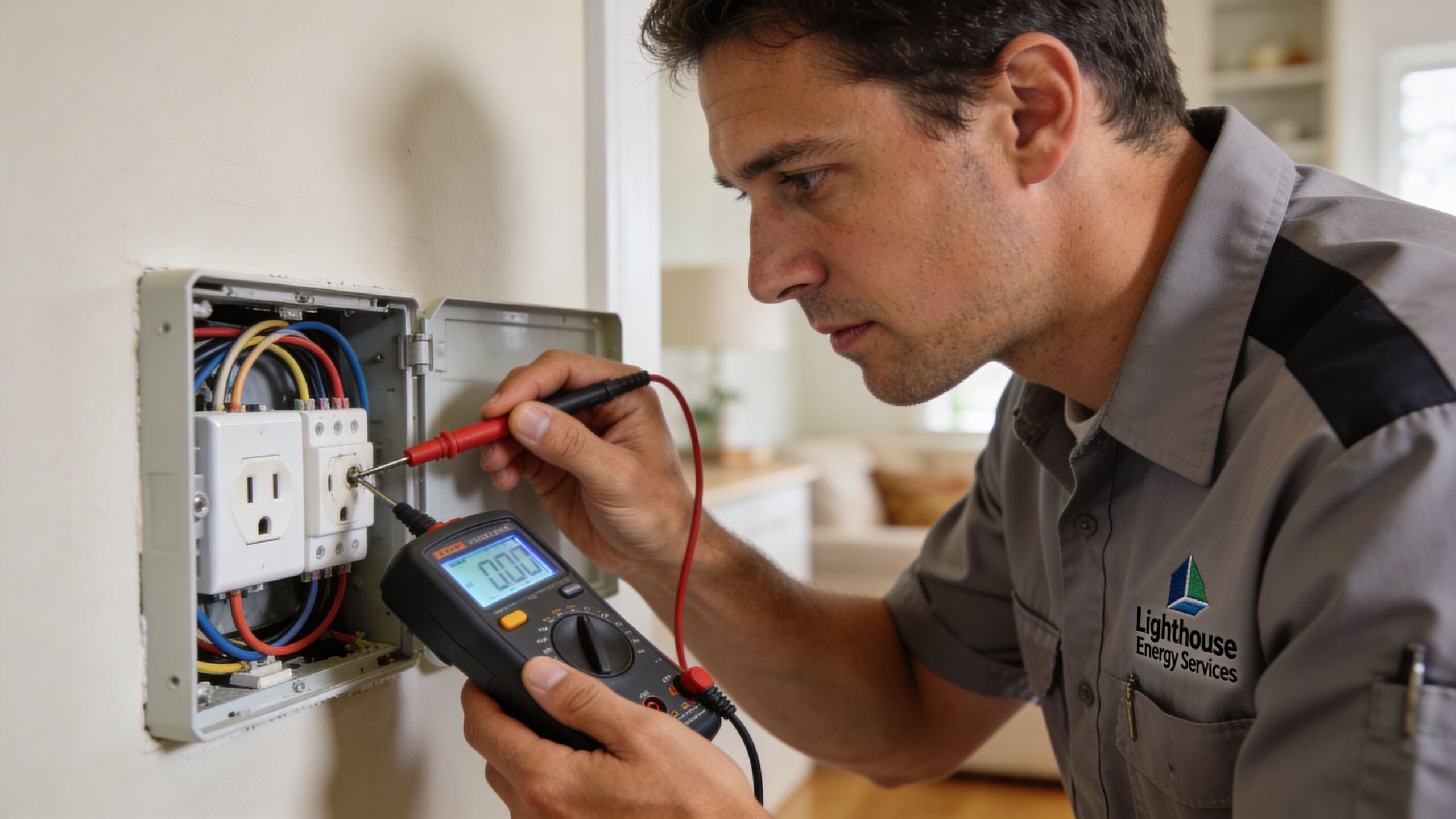
The first checks
A proper diagnosis starts before the outlet is removed. The electrician will usually look at the receptacle condition, ask what was plugged in, and check whether other devices on the same circuit showed symptoms.
Then come the test tools. Common ones include:
- Multimeter for voltage checks
- Receptacle tester for wiring and grounding confirmation
- Circuit tracer to identify the correct breaker and branch path
- Thermal camera or infrared thermometer if hidden heat is suspected
- GFCI or AFCI test functions where applicable
These steps matter because the outlet face is only one part of the system. A perfectly new receptacle won’t solve a bad splice upstream, an overloaded branch circuit, or a failing breaker connection.
Load and inrush matter
An electrician also has to think about what the outlet is being asked to do. A typical 15A/1800W 120V branch circuit handles continuous loads at 12A or less under the 80% rule, and plugging in motors can create inrush of 5-7x steady-state, producing visible arcing at the outlet, as noted in this technical overview of overloaded circuits and outlet sparking.
That’s why the question “What were you plugging in?” isn’t small talk. A charger, toaster, vacuum, dehumidifier, and small air conditioner all place different stress on the connection.
What gets inspected inside the box
Once the circuit is safely de-energized and verified, the outlet can be removed for inspection. At that point, the electrician is looking for physical evidence:
- Loose terminal screws
- Back-stabbed conductors that have loosened over time
- Heat discoloration on copper or insulation
- Cracked device body
- Corrosion on metal parts
- Signs of moisture in the box
- Improper wire size or mixed wiring condition
In older Palm Beach County homes, I’d pay particular attention to corrosion and to whether the receptacle type matches the location. A bathroom, exterior wall, garage, or patio area may need protective devices and weather-appropriate hardware that an older installation never had.
The trade-off homeowners should understand
The cheapest repair is often replacing the outlet only. Sometimes that works. Sometimes it hides the underlying issue for a while.
A deeper diagnostic takes more effort because it checks the branch circuit, breaker behavior, load pattern, device condition, and box wiring. That approach is slower, but it’s the one that answers why the outlet sparked in the first place.
Estimating Your Repair Costs in Palm Beach County
The honest answer is that cost depends on the cause. A straightforward receptacle replacement is a very different call from tracing a loose connection in a shared circuit, correcting moisture damage, or diagnosing repeated breaker trips tied to the same outlet.
What changes the price
A sparking outlet repair usually gets more expensive when any of these apply:
- The problem extends beyond the receptacle
- The box or wiring is heat-damaged
- The circuit needs troubleshooting across multiple outlets
- The location requires GFCI or AFCI protection
- There’s corrosion from humidity or salt exposure
- The outlet is part of a larger older-wiring issue
For homeowners, the practical comparison is simple. Replacing a visibly worn outlet is usually the lighter repair. Tracking down a hidden loose splice, overloaded branch, or moisture-related fault takes more labor because the electrician has to prove the source before closing the wall or energizing the circuit again.
The better way to think about the cost
The actual trade-off isn’t repair bill versus no repair bill. It’s controlled repair now versus uncontrolled damage later.
That’s especially true if the outlet is in a bedroom, kitchen, bathroom, garage, or near window A/C equipment. If you’re dealing with an active hazard or after-hours concern, this Palm Beach emergency electrician guide is a helpful reference for deciding when a same-day response makes sense.
A modest outlet repair can become a much larger job if heat spreads to the box, insulation, adjacent conductors, or breaker connection.
In Palm Beach County, I’d rather see a homeowner call early for a suspicious receptacle than wait until the issue includes charring, odor, and breaker problems.
A Proactive Guide to Preventing Electrical Hazards
Most sparking outlet calls I see could have been prevented with earlier attention to wear, moisture, or loose plug contact. In Palm Beach County, that matters even more because humidity, salt air, and heavy A/C use are hard on receptacles over time.
Prevention starts with simple observations a homeowner can make safely, without opening the outlet or removing the cover plate.
A practical home checklist
Use this as a baseline routine a few times a year:
- Check plug fit: If a plug slips out easily or rocks in the receptacle, the contact tension is wearing down.
- Spread out heavy loads: Avoid running space heaters, hair dryers, countertop cooking appliances, or other high-draw devices on the same general-use circuit whenever possible.
- Pay attention to damp areas: Bathrooms, kitchens, garages, laundry rooms, patios, and exterior-facing walls deserve closer inspection in South Florida homes.
- Watch for heat signs: A warm faceplate, light discoloration, or nuisance breaker trips usually show up before obvious outlet damage.
- Replace damaged cords: Bent prongs and frayed cords can arc at the connection point and make the outlet look like the problem.
- Update older protection where needed: GFCI and AFCI protection can reduce risk in locations where older systems have little or no modern fault protection.
Why small mechanical issues turn into bigger electrical problems
A receptacle can still "work" while the connection is getting worse. That is what makes these issues easy to ignore.
Loose terminal screws, weak contact tension inside the outlet, and worn plug blades all increase resistance. Increased resistance creates heat. Heat dries and damages plastic parts, weakens spring tension, and can lead to repeat arcing at the same spot. The National Electrical Code addresses replacement and connection requirements for receptacles in NEC 406.4 at the NFPA code overview. The practical point for homeowners is simple. A small fit problem today can become a charred outlet later.
Palm Beach County habits that help
Local conditions change the maintenance picture. Near the coast, salt in the air can speed up corrosion on metal contacts. Inland, high humidity still affects older devices, especially in garages, covered patios, and rooms that do not stay consistently conditioned.
A/C demand is part of the equation too. Homes here run cooling equipment hard for much of the year, and that steady electrical load exposes weak receptacles faster than you might see in a milder climate.
Use this danger scale as a quick guide:
- Low concern: One tiny spark at the moment of plugging in, no sound afterward, no odor, no marks, and no repeat issue.
- Moderate concern: Loose plug fit, occasional repeat sparking, or an outlet in a humid or salt-exposed area that looks worn.
- High concern: Buzzing, heat, discoloration, a burnt smell, crackling, tripping breakers, or visible corrosion.
Low concern usually means stop and monitor. Moderate concern means schedule an electrician. High concern means shut off the circuit if you can do so safely and call for service right away.
If you want a sensible starting point, a periodic electrical home safety check for Palm Beach County homes can catch worn outlets, grounding problems, and location-specific code issues before they turn into emergency repairs.
If your outlet sparked once and never did it again, it may have been a normal brief arc. If it sparks repeatedly, leaves marks, makes noise, or smells hot, treat it as a warning and get it checked.