Your Tesla is in the driveway, the app is set up, and the first practical question hits fast. How are you going to charge it every day without turning every week into a hunt for an open public charger?
Most West Palm Beach owners start in the same place. They plug into a regular outlet for the first night, see how slow it is, then realize home charging isn't just a convenience upgrade. It's part of making the car fit your routine. The main task is figuring out whether your house can support a proper setup, where the charger should go, and whether you need a simple new circuit or a bigger electrical upgrade.
That's where Tesla charger installation in West Palm Beach FL stops being a product question and becomes an electrical planning question. In Palm Beach County, the difference between a clean install and an expensive headache usually comes down to panel capacity, charger location, permit handling, and whether the electrician thinks through the whole path before touching a wire.
Your New Tesla Is Here Now What About Charging
A lot of homeowners call right after delivery day. They've got the car, they've got the charging cable, and they've got a garage or driveway that seems like it should be easy. Sometimes it is. Sometimes the panel is full, the parking spot is farther from the electrical room than expected, or the charger location that looks convenient on the wall turns out to be awkward once the car is parked.
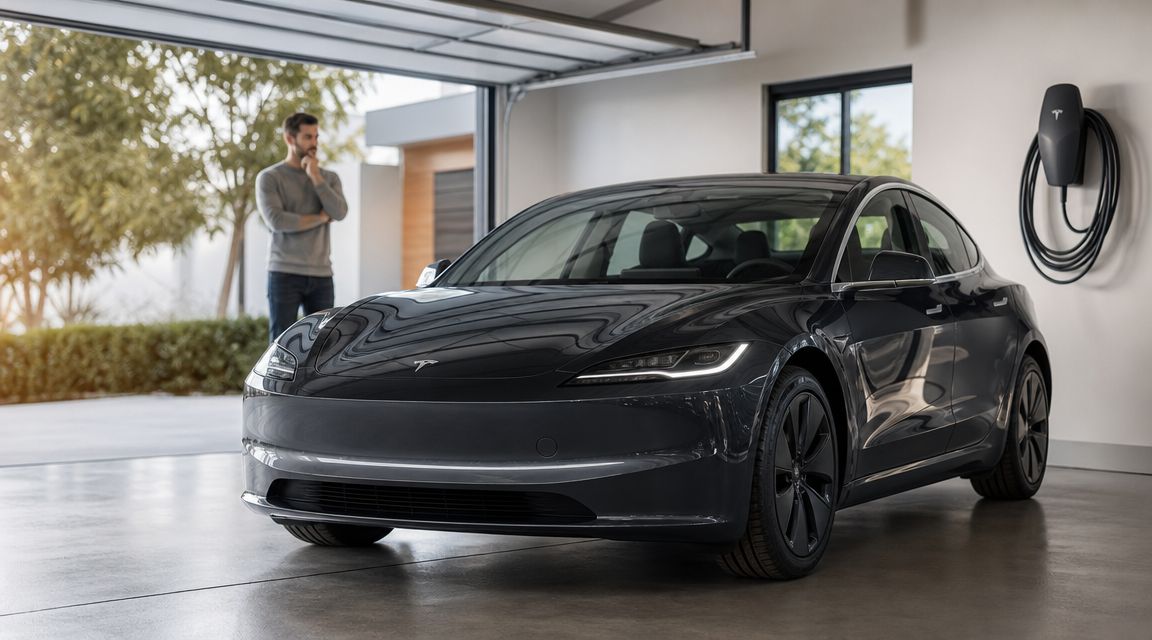
The first thing I tell people is simple. Don't guess based on what the garage looks like. A clean Tesla charging setup depends on what's behind the wall and inside the panel just as much as where the vehicle sits.
What most new Tesla owners actually want
Many individuals aren't looking for the most technical charging setup. They want three things:
- Reliable overnight charging: Plug in at night, wake up ready to drive.
- A charger in the right spot: The cable should reach comfortably without stretching across a walkway or forcing you to back in one exact way every day.
- No surprises on cost: Nobody wants to approve a charger install and find out late that the house also needs larger electrical work.
Tesla charger installation in West Palm Beach FL also has a local angle. This isn't a market with no public charging. West Palm Beach sits in a broader Florida EV corridor where the state noted faster chargers were being installed along the highway system, and in 2020 Florida Power & Light installed EV Level 3 charging stations at the West Palm Beach, Fort Drum, Port St. Lucie, and Pompano Beach Service Plazas as part of that buildout, with Tesla, FPL, and Duke Energy all involved in the wider effort on the Turnpike network, according to Florida's Turnpike electrification update.
That matters because local owners aren't deciding in a vacuum. Home charging is usually the most practical base setup, but it sits alongside a real regional charging network.
A good install starts before the estimate
If you're thinking about adding charging and also wondering whether the house is due for broader electrical work, it helps to look at your home electrical upgrade options before locking in charger placement. That's especially true in older Palm Beach County homes where the panel has already been stretched by HVAC, pool equipment, water heating, or previous remodels.
Practical rule: The charger is only the visible part of the project. The real decision is whether your electrical system can support it cleanly and safely.
Choosing Your Tesla Home Charging Solution
The hardware choice is usually simpler than people expect. For most homeowners, it comes down to Tesla Wall Connector versus Tesla Mobile Connector on a 240 V receptacle. Both can charge the car. They don't serve the same lifestyle.
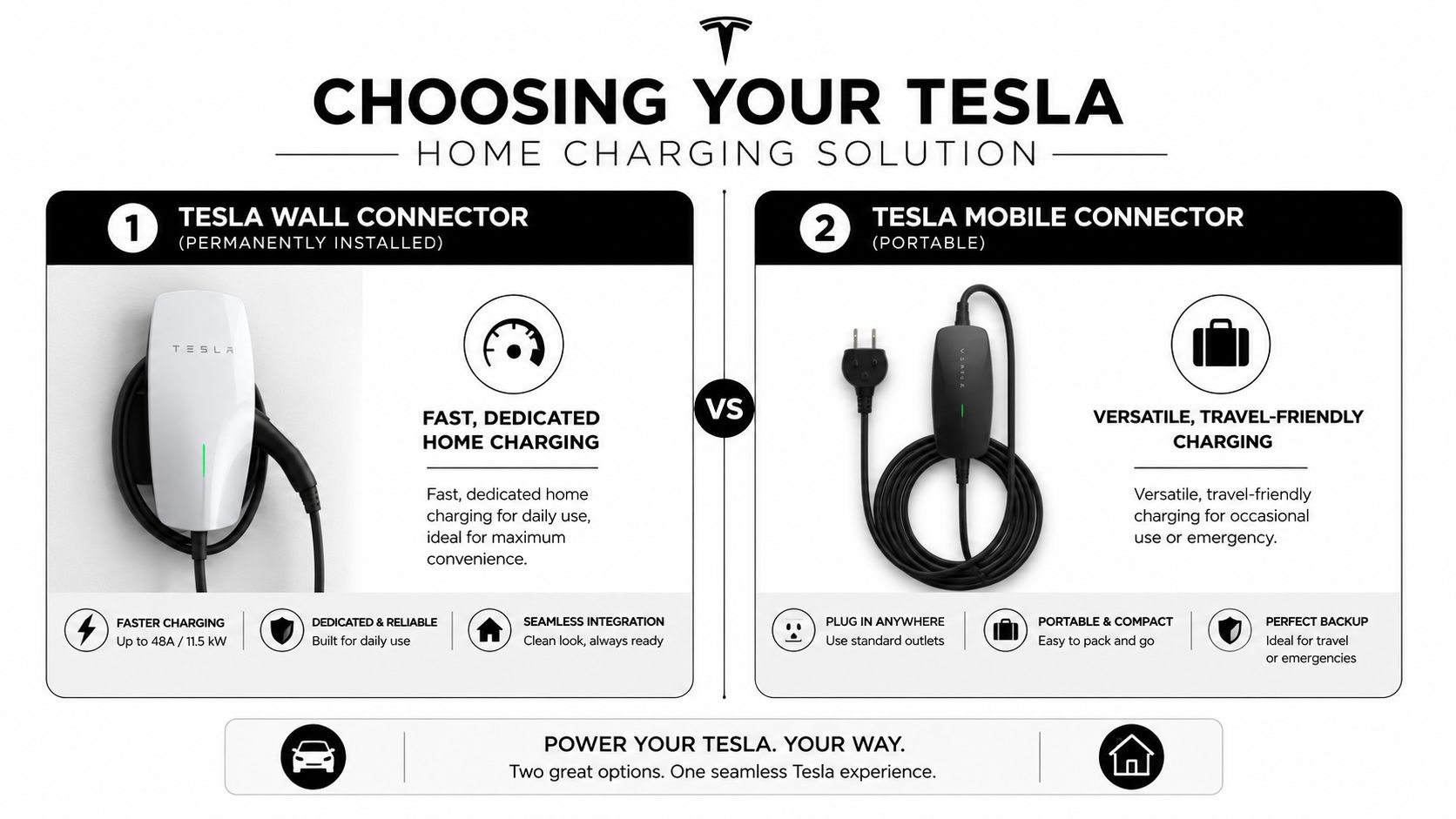
Wall Connector versus Mobile Connector
Here's the practical comparison homeowners use when they're deciding.
| Option | Best fit | Main advantage | Main drawback |
|---|---|---|---|
| Tesla Wall Connector | Daily home charging | Permanent, cleaner installation | Less portable |
| Tesla Mobile Connector | Occasional charging or flexibility | Easy to take with you | Less elegant as a long-term daily setup |
A Tesla Wall Connector is the better answer when the home is your main charging location. It mounts permanently, keeps the cable managed, and feels like a built-in part of the garage instead of another loose cord. Tesla notes that home charging can deliver about 30 miles of range per hour on a 240 V circuit with a Wall Connector, compared with roughly 3 miles per hour from a standard household outlet, in its home charging guidance.
A Mobile Connector makes sense if you want one charging tool that travels with the car, if you may move soon, or if you're not ready to commit to a permanent charger. It can be a reasonable stopgap. It usually isn't the setup owners stick with when they charge at home every day.
What works in real garages
The Wall Connector wins on usability more often than it wins on raw specs. In the field, the difference shows up in small things:
- Cleaner cable management: The cord stays where it belongs.
- Better parking tolerance: You don't need to hit the exact same position every time.
- Less wear on receptacles: A hardwired charger avoids the repeated use pattern of unplugging and handling a portable setup as your main charger.
The Mobile Connector has its place.
- Good for travel backup: Keep it in the trunk.
- Useful for temporary living situations: If you're between homes or unsure about a long-term install, portability matters.
- Can bridge the gap: Some owners start portable, then move to a permanent wall-mounted charger once they know how they use the vehicle.
If you drive the Tesla like your primary car, a permanent charger usually feels right within the first few weeks.
The decision usually comes down to one question
Ask yourself this. Are you trying to create a regular home fueling routine, or are you trying to preserve flexibility?
If the Tesla is part of your everyday work commute, school runs, or local driving, the Wall Connector is usually the more satisfying solution. If your home situation is less settled, the Mobile Connector can buy you time without forcing a permanent decision right away.
Either way, the charging hardware should follow the electrical reality of the house. A good electrician doesn't start with the charger box. They start with capacity, wire path, and how you park.
Assessing Your Home Electrical System
This is the part homeowners worry about most, and for good reason. The expensive mistake isn't choosing the wrong charger. It's assuming the house can support a new EV load without checking the panel first.
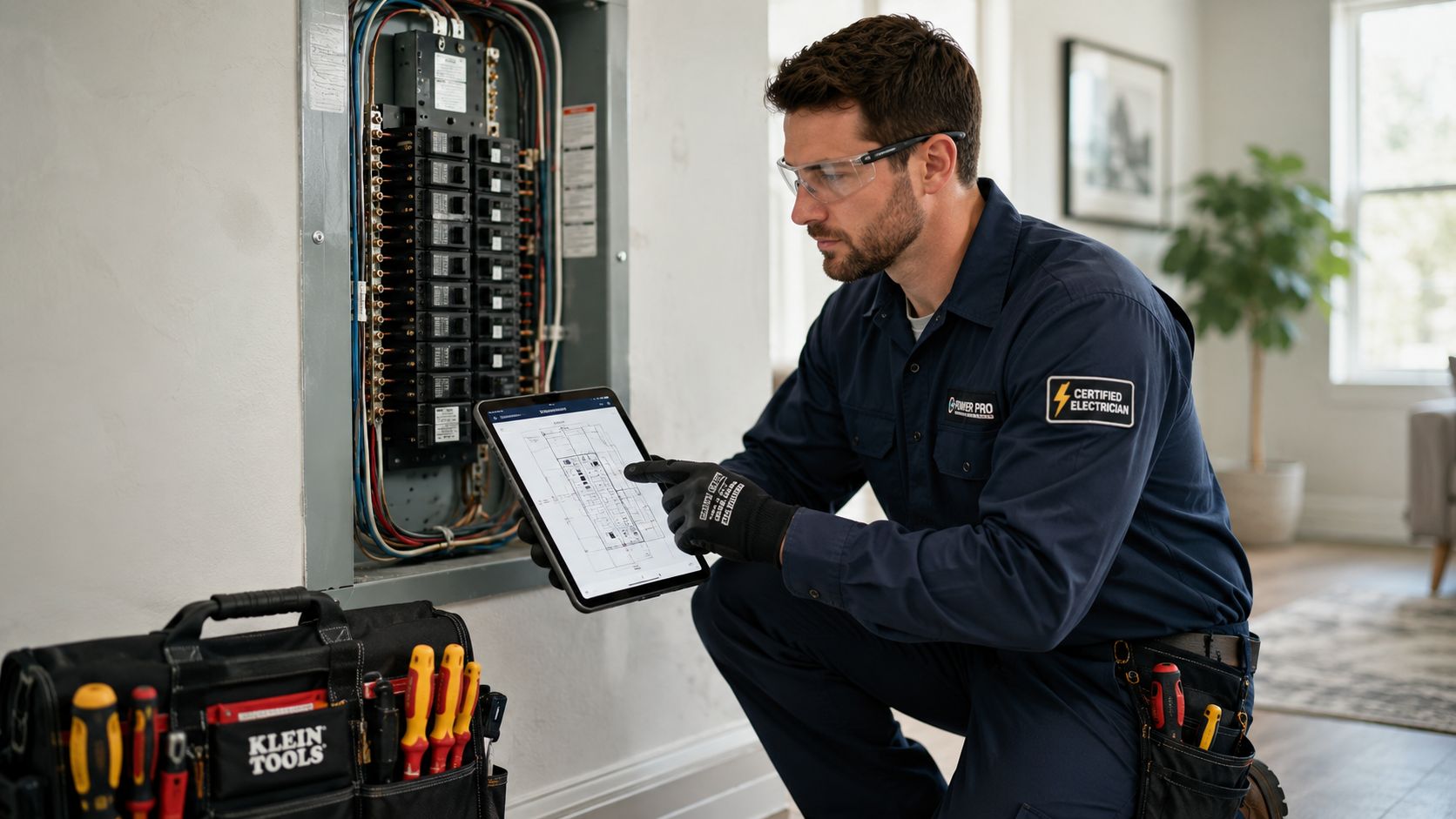
A key question for a West Palm Beach homeowner is whether the existing panel, especially in an older home with large HVAC loads, has enough spare capacity for a sustained overnight EV charging load without requiring a major service change, as noted by Mr. Electric West Palm's EVSE overview.
What an electrician checks first
Before a charger gets mounted, the electrician should look at a few specific things:
Panel rating
The first question is how much service and panel capacity the home has. The nameplate matters, but so does the actual load already being carried by the home.Available breaker space
An open slot helps, but an empty space alone doesn't mean the panel can take the added EV load safely.Existing large loads
Air conditioning matters a lot in South Florida. So do pool pumps, electric water heaters, ranges, dryers, and any detached structures already tied into the panel.Distance from panel to charger location
A short run in an unfinished garage is one project. A long route through finished walls, attic space, or exterior conduit is another.
Signs a simple circuit may be enough
Some homes are straightforward. The panel has spare capacity, there's room for the new breaker, and the charger location is close to the electrical source. In that case, the job may only require a dedicated circuit, proper conductor sizing, and a permit-based installation.
That's the clean version of Tesla charger installation in West Palm Beach FL. It happens often in newer homes and in homes where prior renovations already anticipated heavier electrical use.
Signs you may need a panel upgrade
A panel upgrade becomes more likely when several problems stack up at once:
- Older service equipment: The panel may already be near its practical limit.
- Heavy existing demand: HVAC and other large appliances can leave very little room for sustained EV charging.
- Crowded breaker layout: A packed panel often signals less flexibility.
- Past additions without much reserve: Remodels, garage conversions, and equipment additions can consume capacity gradually.
If your home falls into that category, it's worth reviewing what's involved in a 150 amp to 200 amp electrical upgrade. Sometimes that's the right move. Sometimes it isn't needed at all. The point is to decide based on a real load review, not guesswork.
Field note: A full panel isn't automatically the problem. The real issue is whether the home has safe, code-compliant capacity for continuous charging after everything else in the house is accounted for.
Placement matters more than people think
Tesla's installation flow calls for a load-capacity check, equipment selection, location planning, wiring and termination, and commissioning through Tesla One. In practice, placement is where a lot of homeowner frustration starts or ends.
Poor charger placement creates daily annoyance. If the cable barely reaches, if it drapes across storage, or if it only works with one parking orientation, the install may pass inspection and still be wrong for the homeowner.
A useful install puts the charger where the car lives, not where mounting is easiest.
Navigating Permits and Costs in West Palm Beach
Permits and cost planning are where a lot of Tesla charger projects get off track. Not because the work is unusually complicated, but because people hear one low number and assume every garage will match it. It won't.
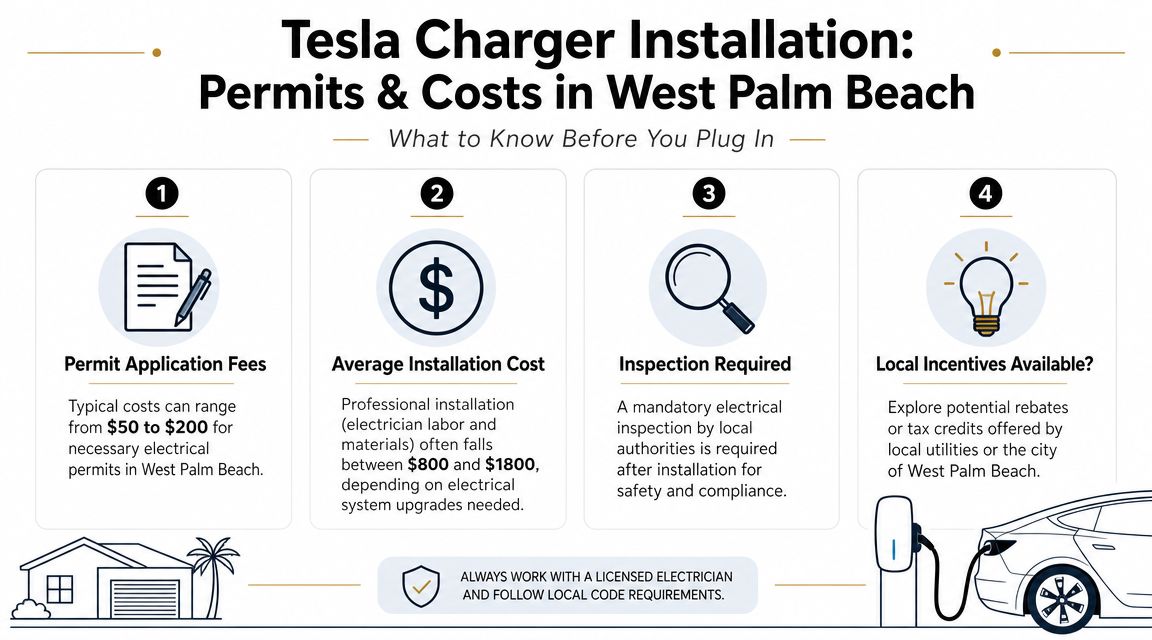
In Florida, a basic Tesla Wall Connector installation near an existing panel often costs $500-$1,000, while projects that need panel modifications or extensive wiring typically start at about $2,500, according to Palmer Electric's Tesla charger installation guidance.
Why the price range moves so much
The charger itself is only part of the job. Cost changes based on electrical conditions in the house.
- Short run near the panel: This is the least complicated path. It's usually the cleanest install and the easiest to price.
- Moderate run with conduit or finished-space routing: Labor rises because the route is more involved and the finish work needs more care.
- Panel work or service changes: At this stage, projects jump in cost because the charger install becomes part of a larger electrical upgrade.
That broad cost spread is useful because it tells you where the risk is. Long wire runs, conduit work, permit coordination, and panel limitations are usually what change a routine project into a more involved one.
Permits are not optional paperwork
A Tesla charger pulls a meaningful electrical load. The installation should be permitted and inspected where local code requires it. That protects the homeowner as much as the electrician.
A proper permit process helps with:
- Safety verification: The work is checked for code compliance.
- Insurance clarity: Documented electrical work is easier to defend if there's ever a claim.
- Resale confidence: Future buyers and inspectors won't be left guessing about what was added to the home.
One common local issue in Palm Beach County is permit documentation mismatch. The equipment, load details, and installation scope all need to line up. If they don't, approvals slow down.
Skipping permits can make a quick install look cheaper on day one and far more expensive later.
The local utility angle in West Palm Beach
Florida Power & Light matters in the background even when the charger is on your garage wall. West Palm Beach sits in a region where fast-charging infrastructure was expanded on major travel routes, and that larger EV buildout matters because it shows local charging demand is part of a bigger South Florida and Turnpike corridor pattern.
For homeowners, the practical takeaway is simple. Utility-side planning and house-side planning aren't the same thing. FPL supports the broader charging ecosystem, but your home still needs its own safe branch circuit or service upgrade based on the actual load in your panel.
What a useful quote should include
A quote for Tesla charger installation in West Palm Beach FL should answer more than price. It should spell out scope.
Look for these details:
- Charger location and wire path
- Whether conduit is exposed or concealed
- Permit handling
- Whether panel changes are included or excluded
- Commissioning and final testing
If the quote is vague, the final bill usually won't be.
What to Expect During the Installation
Installation day shouldn't feel chaotic. A good electrician will confirm the parking position, verify the mounting location, review the route from the panel to the charger, and make sure the agreed scope still matches the actual site conditions before starting.
The installation sequence
The physical work usually follows a logical order.
First comes site confirmation. During this step, small mistakes get avoided, especially charger placement. A location that looked fine in photos may need to shift once the Tesla is parked normally in the garage.
Then comes mounting and wiring. Tesla-oriented installation guidance commonly recommends mounting the charger at about 4 feet above the floor with at least 8 inches of clearance around the unit, and one documented installation sequence calls for using the correct wire gauge, pulling conductors through conduit, and torquing terminations to 50 in-lb on the charger side, as noted in the earlier Florida installer guidance already referenced above.
After that, the electrician completes panel terminations and protection, labels the new circuit, and prepares the system for startup.
Commissioning and testing
A Tesla Wall Connector isn't done when power is landed. It still needs to be commissioned correctly. Tesla's install flow requires scanning the QR code in the Tesla One app and following the installation workflow, which is part of making sure the charger is configured and operating as intended.
At the end, the electrician should verify that the charger is energizing correctly, that the vehicle begins charging normally, and that there are no obvious placement or usability issues.
A charger can be electrically correct and still be inconvenient. The final test should include plugging in the actual car from the way you really park.
What if you rely partly on public charging
Some owners use a mixed routine. That can work in West Palm Beach because the city has 451 total charging stations, including 325 Level 2 stations, along with multiple Tesla Supercharger locations. ChargeHub also lists a Tesla site at Palm Beach Outlets with 8 outlets and up to 250 kW, according to its West Palm Beach charging profile.
That public network complements a home installation. It doesn't replace the value of a correctly installed home charger for most daily drivers, but it does give you backup if you're waiting on a permit, managing a multifamily living situation, or occasionally need faster top-ups away from home.
Hiring Your Licensed Electrician in Palm Beach County
Homeowners can avoid significant trouble. Not every licensed electrician handles EV charging work the same way, and not every company that advertises charger installs is equally careful with load review, permits, and placement.
What to check before you hire anyone
Use a short checklist.
- Licensing and insurance: Ask for the basics first. That's the floor, not the bonus.
- EV installation experience: A contractor who regularly installs Level 2 charging equipment will usually ask better questions about parking position, conductor route, and panel loading.
- Permit process: Ask who pulls the permit and who handles inspection follow-up.
- Scope clarity: Get in writing whether the quote includes only the charger circuit or also includes any panel work if conditions require it.
- Commissioning familiarity: The installer should know the startup workflow, not just the wiring.
The questions that expose weak bids
Ask direct questions and listen for direct answers.
If you ask whether your panel can support the charger and the answer is vague, that's a problem. If you ask where the charger should go and the answer ignores how the car parks, that's another problem. If you ask about permits and get a shrug, keep looking.
A solid contractor should be able to explain the difference between a simple branch-circuit install and a job that starts pushing toward panel or service changes. They should also understand the local market they work in. For example, contractors who care about reputation often invest in things like improving local search for electricians because homeowners in Palm Beach County usually choose providers they can verify, review, and contact quickly when electrical work matters.
One practical option in West Palm Beach
If you're comparing local contractors, Lighthouse Energy Services in West Palm Beach is one licensed option for charger installations and related electrical upgrades in Palm Beach County. The useful part for homeowners is that EV charging work can be evaluated together with panel capacity, circuit additions, and broader residential electrical needs instead of treating the charger as a standalone gadget install.
The right hire is the electrician who treats Tesla charger installation in West Palm Beach FL like real electrical infrastructure. Because that's what it is. The wall unit is the part you see. The value is in the sizing, routing, permitting, and final setup you don't.
If you want a straightforward review of your panel, charger location, and installation path, contact Lighthouse Energy Services. A licensed electrician can tell you whether your home needs a simple dedicated circuit or a larger upgrade, and help you get the job permitted, installed, and ready to charge safely.