
You're probably dealing with one of two situations right now. Either a new tenant has signed and needs the space ready fast, or a current tenant is changing how they use the space and the old electrical layout no longer fits the job.
That's where tenant build-out electrical services stop being a line item and become a project driver. If the electrical scope is handled well, the build-out moves cleanly from drawings to permits to rough-in to final inspection. If it's handled poorly, everything downstream gets harder. Walls get opened twice, fixtures arrive before controls are ready, panel capacity gets questioned late, and everyone starts asking why the schedule slipped.
For a property manager, the primary challenge isn't understanding what a breaker panel is. It's knowing where the risk sits during the life of the project, which decisions need to happen early, and which shortcuts almost always come back as change orders. That's the gap most general guides miss.
The Core Components of Your Electrical Build-Out
A tenant build-out usually feels straightforward until the first field conflict shows up. The plan says new offices, updated lighting, a few dedicated circuits, and some data drops. Then the electrician opens the panel, finds limited spare capacity, the HVAC equipment needs a different feed than expected, and the lighting control layout no longer matches the reflected ceiling plan. That is the point where cost and schedule start to move.
The electrical scope is the operating framework for the space. It has to support daily use, special equipment, controls, communications, and life-safety functions under both normal and backup conditions. If one part is undersized, poorly coordinated, or installed without a clear sequence, the tenant feels it in delays, callbacks, and change orders.
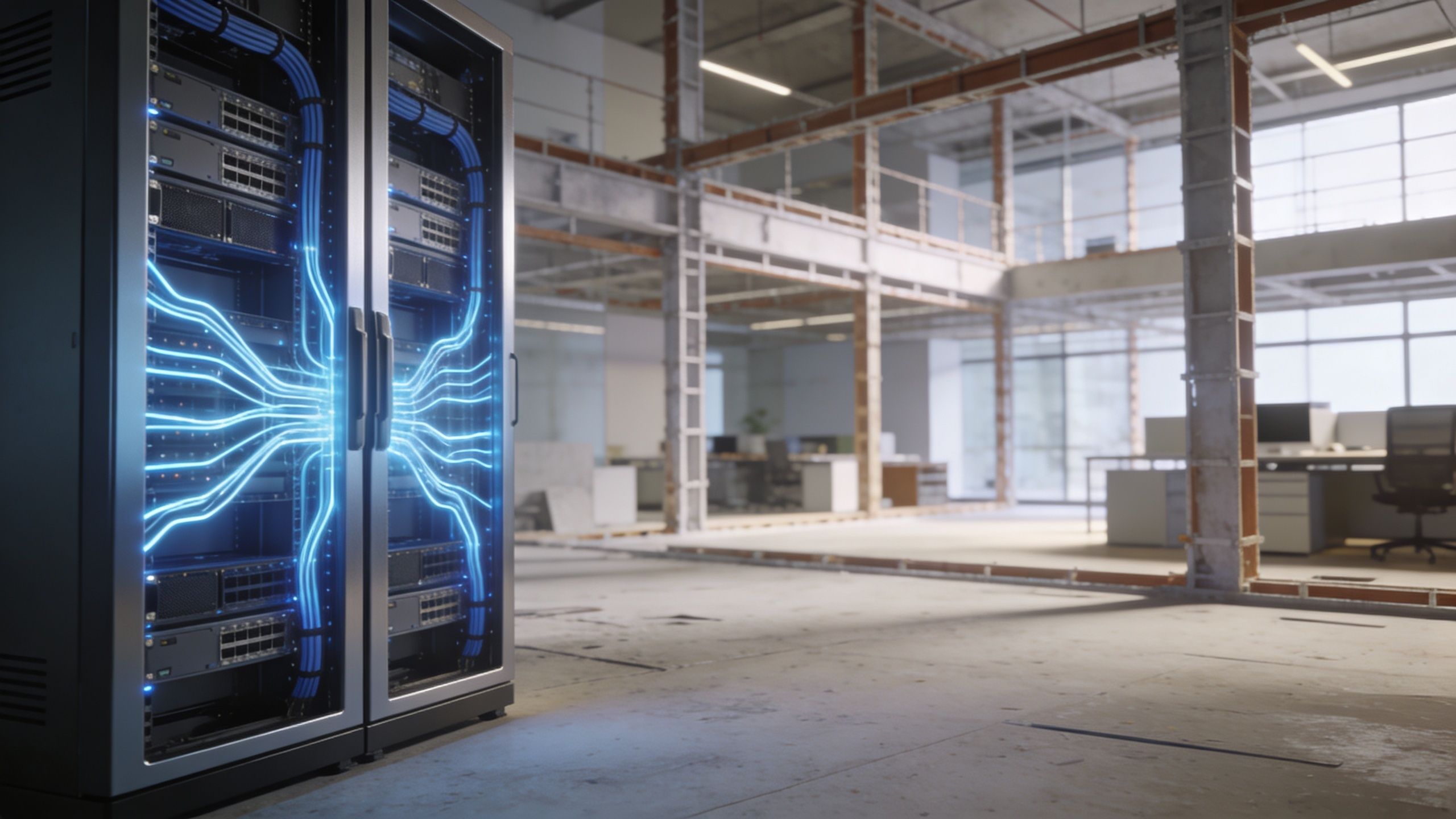
Power distribution and branch circuits
Start with capacity. Before anyone focuses on finish fixtures or device locations, confirm what the existing service can carry, how much room is left in the panelboards, and whether the tenant's new load profile matches the old one.
That matters because tenant use changes faster than building infrastructure. A former retail bay converted to medical, restaurant, or office use can require a very different mix of continuous loads, dedicated equipment circuits, and after-hours operation. On paper, the square footage may be the same. Electrically, it can be a different job.
For a practical reference point, review how commercial electrical distribution systems are typically structured. It helps when you compare contractor proposals and sort out the difference between extending a few branch circuits and reworking distribution to support the tenant properly.
A good build-out plan also separates nice-to-have changes from scope that drives the job. New receptacles are usually simple. Service upgrades, transformer work, panel replacement, and new homeruns are not. Property managers who identify that distinction early usually avoid the worst budget surprises.
Lighting, controls, and what the space needs to do
Lighting should be designed around function first. An office needs different light levels and controls than a boutique retail space. A back-of-house prep area has different maintenance and durability needs than a lobby. If the fixture package gets selected before the room use is nailed down, the project often pays for that decision later in rework.
Controls deserve the same attention. Occupancy sensors, dimming zones, scheduling, daylight response, and emergency transfer requirements all affect wiring methods and commissioning time. If these decisions are pushed late, fixtures may already be ordered, ceilings may already be framed, and the installer is left trying to make an incomplete design work in the field.
One practical rule helps here. Design lighting for how the tenant will operate at 10 a.m., 6 p.m., and after closing, not just for how the floor plan looks during leasing.
Low-voltage, mechanical interfaces, and life safety
Low-voltage coordination is where many build-outs lose time. Data drops, wireless access points, access control, cameras, AV, POS systems, and door hardware all need pathways, backing, power, and clear device locations before walls close. If those trades are working from different versions of the plan, the electrical contractor ends up reopening finished areas or adding surface raceway nobody wanted.
Mechanical coordination causes the same kind of trouble. Rooftop units, split systems, thermostats, condensate alarms, disconnects, control wiring, and specialty exhaust equipment have to line up with the electrical rough-in. If the mechanical submittal changes after electrical work starts, the cost rarely stays flat.
Life-safety scope needs its own review, especially in mixed-use and second-generation spaces. Typical items include:
- Fire alarm interfaces matched to device locations and required sequences
- Emergency lighting with proper circuiting, placement, and testing
- Exit signs located for code compliance and clear egress paths
- Dedicated equipment feeds where the tenant use or manufacturer requires them
Older distribution equipment can change the whole conversation. If the space has legacy gear, check its condition and replacement history before assuming it can support new tenant demands. Problems tied to obsolete equipment, including Zinsco electrical panels and solar readiness, are much easier to address before design and permitting are too far along.
Navigating Permits and Florida Building Code Compliance
A Palm Beach County build-out can look ready on paper and still stall at permit review because one basic question was left unanswered. The panel schedule does not match the equipment list. Receptacles are shown without clear spacing or mounting detail. The landlord requires a shutdown procedure that never made it into the drawing set. Those are the problems that cost time, and they usually show up after the tenant has already planned a move-in date.
A permit set does more than satisfy the building department. It tells the reviewer, the inspector, and the field crew the same story about how the space will be powered, protected, and used. From a client's side, that matters because every unanswered question tends to come back as a revision, a resubmittal, or a field change order.
What inspectors are really checking
Tenant build-outs require electrical planning that accounts for code rules on receptacle placement, accessibility clearances, circuit protection, and conductor sizing. In practical terms, the reviewer is checking whether the drawings reflect the actual tenant use, not a generic office layout copied from an old plan.
That review usually centers on a few predictable items. Receptacles need to be placed where the code and the floor plan both support them. Wet or utility areas need the correct protective devices. Panel schedules have to match the connected loads shown on the plans. Grounding and bonding details need to be clear enough that the installer and inspector will read them the same way.
In second-generation spaces, this gets harder fast. Existing circuits may be mislabeled, multiwire branch circuits may not be documented well, and older panels may have little room for new breakers. If those conditions are not identified before permit submission, the project can pass through design with assumptions that fail in the field.
A good permit set usually answers these questions before inspection day:
- Are receptacles and devices placed for accessibility and actual furniture or equipment layouts?
- Are branch circuits sized for the connected load shown on the plans?
- Is grounding and bonding identified clearly enough to install and inspect correctly?
- Do breakroom, restroom, janitorial, or other wet areas have the right protective devices?
- Are emergency and other required systems identified, separated, and labeled properly?
The Florida angle that catches people off guard
Florida compliance involves more than the electrical code. The project must also satisfy local review comments, landlord standards, utility conditions, and the existing building's physical state. A drawing can look clean and still create delay if it ignores service capacity, meter requirements, required shutdown windows, or base building restrictions.
I see this most often when permit drawings are assembled before anyone has verified the existing electrical room. On paper, the scope looks simple. In the field, the feeder path is blocked, the spare breaker space is gone, or the landlord requires after-hours work with advance notice. None of that is unusual, but it needs to be addressed early.
The fastest path through inspection is a drawing set that answers ordinary field questions before plan review or the inspector has to raise them.
For a property manager comparing contractors, ask direct questions about how permit risk is handled:
- Who verifies the existing panel capacity and field conditions before the permit set is finalized?
- How are accessibility requirements checked against the actual layout, not just a code minimum?
- Who coordinates revisions if the landlord or jurisdiction issues comments?
- How are shutdowns, utility requirements, and base building rules identified before work starts?
- What happens if the existing installation does not match the original drawings?
Clear answers here usually mean fewer surprises later. Vague answers usually mean the client will be paying to solve design questions during construction.
Mapping Your Build-Out Timeline and Project Phases
Most clients don't need a technical lecture on conduit bends or conductor pulls. They need to know what happens first, what can hold up the next step, and where decisions become expensive to change.
The electrical side of a tenant build-out follows a sequence. If the sequence is respected, the project feels manageable. If trades overlap without coordination, the same space gets touched multiple times and the schedule starts slipping for reasons that look small on paper but cause real disruption in the field.
The project usually starts before anyone pulls wire
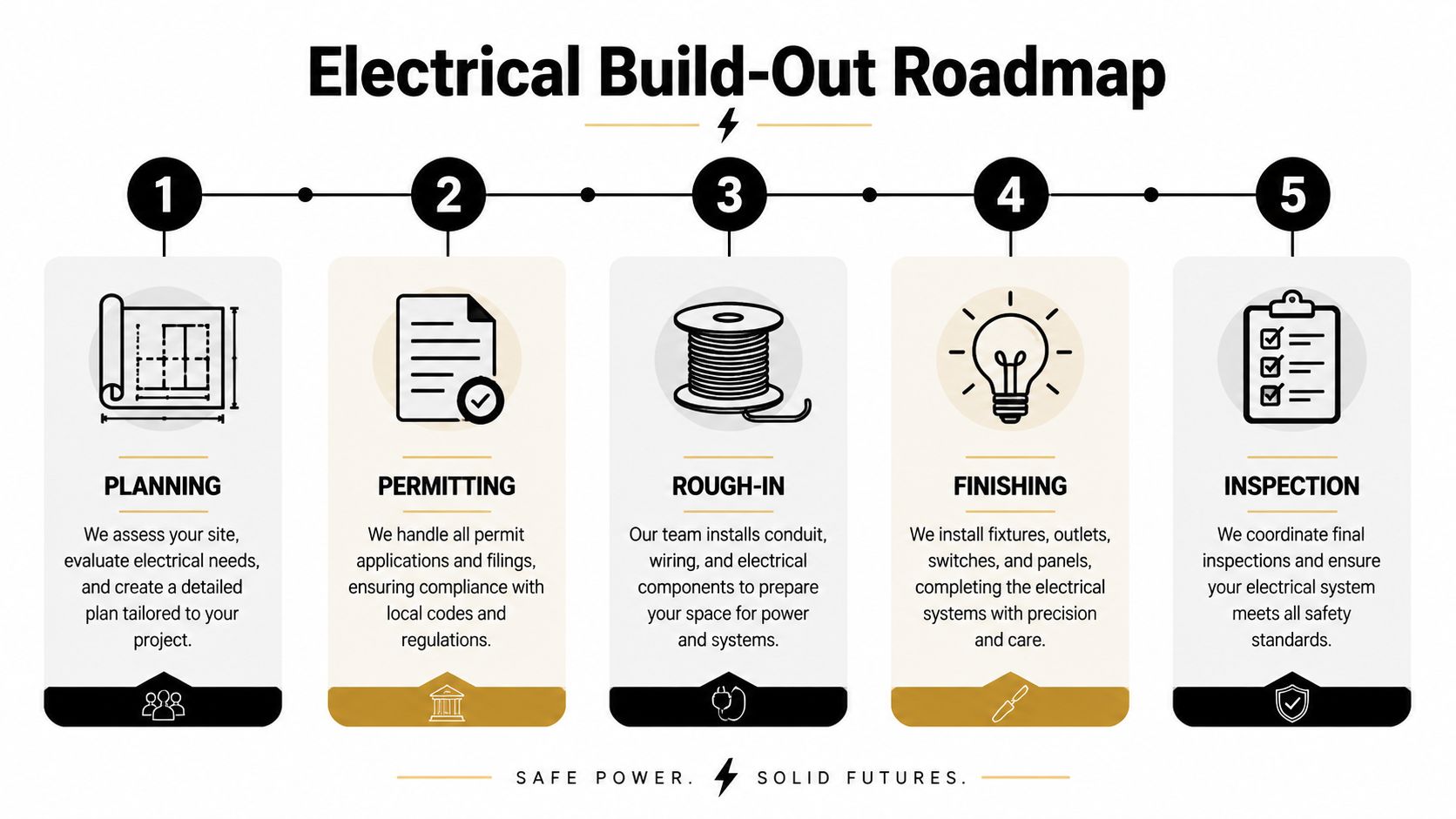
The first phase is planning. That means site walks, review of existing conditions, panel evaluation, fixture layout, equipment schedules, low-voltage coordination, and load calculations based on the tenant's actual use.
At this stage, the most valuable questions are simple:
- Where will people work, gather, sell, or store product?
- Which equipment needs dedicated power?
- What has to stay flexible for future reconfiguration?
- Is the existing electrical room an asset or a constraint?
Those answers drive the permit drawings and the scope.
Rough-in is where the project becomes real
After plans are approved and the permit path is moving, rough-in begins. This is the phase where electricians install boxes, conduit, supports, homeruns, feeders, and in-wall or above-ceiling wiring before finishes go in.
Rough-in is also where project coordination either pays off or falls apart. If furniture plans changed but device locations didn't, you'll see conflicts. If mechanical equipment moved, disconnect locations may need to move with it. If low-voltage layouts weren't coordinated, the ceiling becomes crowded fast.
A rough-in phase goes better when the client team locks these decisions early:
- Furniture and workstation layouts that affect receptacle placement
- Lighting fixture selections so supports and control zones line up
- Equipment lists for break rooms, IT rooms, retail counters, and specialty spaces
- Access control and security locations before walls are closed
Trim-out, testing, and final turnover
Trim-out comes after walls are closed and finishes are ready. Devices, plates, fixtures, occupancy controls, emergency lighting equipment, and final terminations get installed here. This is the visible part of the work, but by this point most major success or failure has already been decided upstream.
Then comes testing, punch work, inspection coordination, and the walkthrough. That final phase should confirm that devices are labeled correctly, controls operate as intended, panels are documented, and the tenant understands what was installed.
A clean final walkthrough isn't luck. It's what happens when the design, rough-in, and procurement decisions were aligned early enough that the field crew wasn't forced to improvise.
For a property manager, the key milestone isn't “electrical is done.” It's whether each phase closed cleanly enough that the next trade could proceed without waiting.
Budgeting Accurately for Electrical Fit-Out Costs
Electrical budgets go off track for predictable reasons. The existing service is weaker than expected. The tenant's equipment list arrives late. A panel that looked reusable turns out to be tapped out. Lighting controls get specified after rough-in instead of before. None of those are unusual. They're just expensive when discovered late.
That's why the budget conversation has to start with scope realism, not allowance optimism. In many projects, electrical cost isn't isolated. It sits inside the larger MEP package, and decisions in one discipline affect another.
Where the money usually goes
In tenant build-out projects, MEP systems account for 40% to 45% of total project costs, and electrical services can command 20% to 30% of the MEP budget. For first-generation office spaces in major U.S. markets, total fit-out costs can average nearly $150 per square foot, and improper electrical load calculations can inflate costs by 15% to 25% mid-project because of unexpected panel upgrades, according to LoopNet's fit-out cost analysis.
Those figures matter less as national averages than as a warning. The earlier the electrical load is defined correctly, the lower the chance of getting surprised by distribution work that wasn't in the original number.
Primary Electrical Build-Out Cost Drivers
| Cost Driver | Description & Impact |
|---|---|
| Existing infrastructure condition | Older panels, limited capacity, poor distribution layout, or questionable legacy equipment can force upgrades instead of reuse. |
| Power density | Offices with heavier workstation loads, retail counters, break rooms, IT rooms, and specialty equipment all increase circuit and panel demands. |
| Lighting design complexity | Basic switching is one thing. Zoned controls, occupancy sensors, accent lighting, and code-driven control requirements add labor and coordination. |
| Low-voltage coordination | Data, AV, access control, cameras, and point-of-sale infrastructure often expand after the initial concept if not defined early. |
| Mechanical equipment needs | HVAC replacements, new condensers, air handlers, control interfaces, and disconnect requirements can change feeder and branch circuit scope. |
| Schedule compression | Rush procurement, after-hours work, and trade stacking usually reduce efficiency and increase change-order risk. |
| Late design changes | Moving walls, adding equipment, or changing fixture packages after rough-in almost always costs more than making the same decision on paper. |
What works and what doesn't
The most reliable way to control cost is to pin down the specific use of the space before the estimate is finalized. “General office” is too vague. A call center, executive suite, coworking floor, medical tenant, and showroom all consume power differently and require different control strategies.
A few budgeting habits consistently help:
- Request panel due diligence early. If the contractor hasn't opened the conversation about existing capacity, ask why.
- Insist on a real equipment list. Coffee bars, server racks, display coolers, copiers, POS stations, and supplemental AC all affect the number.
- Separate must-haves from upgrades. That makes value engineering cleaner if the budget tightens.
- Review upgrade scenarios in advance. A good comparison point is this guide on when commercial electrical panel upgrades become necessary.
Budget warning: The most expensive electrical change is often the one that looked “minor” during design review.
What doesn't work is carrying a light electrical allowance and hoping the field can solve the gap. The field can solve almost anything. It just won't solve it cheaply.
Future-Proofing Your Space with Efficient Upgrades
A common build-out mistake shows up after move-in. The tenant starts using the space, a few rooms sit lit all day, cooling costs run higher than expected, and someone asks why basic control upgrades were skipped when the ceilings were already open.
That is the right time to ask the question. It is also the most expensive time.
Future-proofing is not about loading the project with every premium option. It is about choosing the upgrades that are cheap to add during construction and expensive to retrofit later. From a property manager's perspective, the objective is straightforward: hand over a space that works now, stays flexible for the tenant, and does not force avoidable change orders six months after occupancy.
The upgrades that usually justify themselves during construction
Lighting is usually first on that list. LED fixtures reduce maintenance, lower heat in the space, and give you better control over light levels and appearance. During a build-out, fixture layout, ceiling coordination, switching, and control zoning can all be decided together. That is the point in the job where good decisions cost the least.
Controls deserve the same attention. Occupancy sensors, time scheduling, and well-planned switching zones help cut waste, especially in rooms that are used intermittently. The savings matter, but the operational benefit is just as important. Lights respond to actual use instead of staying on because nobody wants to hunt for switches or manually shut down small areas.
The right control strategy depends on the tenant's use of the space:
- Open office areas usually need zones that match work patterns, not one blanket control for the whole floor.
- Conference rooms should be easy to operate during presentations and video calls.
- Storage rooms and back-of-house spaces are strong candidates for automatic shutoff.
- Retail and display areas need controls that protect presentation quality while limiting unnecessary runtime.
Leave room for the next tenant, not just the current one
Property managers can avoid significant future costs by planning ahead. A space built to the exact minimum for today's layout often needs rework the first time the tenant adds workstations, changes furniture plans, or installs new equipment.
A better approach is to build in selective capacity. That can mean spare conduit paths, panel space for future circuits, extra data and power locations in likely reconfiguration areas, or control systems that can be adjusted without tearing into finished walls. These upgrades are not glamorous. They are the items that keep a lease renewal, expansion, or turnover from becoming a demolition project.
If you are weighing what should be included now versus deferred, this guide to choosing a local commercial electrician for long-term facility needs is a useful reference point.
HVAC efficiency belongs in the electrical discussion
Electrical and mechanical scope meet in more places than many clients expect. Dedicated circuits, disconnects, thermostats, control wiring, rooftop coordination, and equipment access all affect how the HVAC system performs and how hard it is to service later.
That is why I advise property teams to review HVAC-related electrical scope before rough-in is complete. If the tenant has high cooling demand, the project should account for that early, while electrical and mechanical trades can still coordinate equipment requirements cleanly. Waiting until the end usually leads to field fixes, added labor, and controls that feel patched together.
The long-term benefit of efficient upgrades is not limited to utility savings. You get a space that adapts better, turns over more easily, and creates fewer headaches when tenant needs change.
Efficient upgrades reduce operating cost now and protect the next round of tenant improvements from avoidable disruption.
Choosing the Right Electrical Partner in Palm Beach County
The contractor you choose affects more than installation quality. That choice shapes how clearly the scope is defined, how quickly problems are surfaced, whether permit comments are handled professionally, and how much confidence you have when the project starts moving fast.
A bid can look complete and still hide risk. The better comparison is not just price. It's whether the contractor has a process that protects schedule, budget, and inspection readiness from the first walkthrough to final punch.
What to verify before you award the work
Start with the basics, but don't stop there.
- Licensing and insurance need to be current and appropriate for commercial work.
- Relevant project experience matters more than general volume. Tenant build-outs require coordination discipline.
- Communication habits should be clear before the job starts. If updates are vague during estimating, they won't improve during rough-in.
- Field supervision should be defined. Someone must own layout issues, revisions, and coordination with other trades.
- Closeout support matters. You want panel directories, as-builts where applicable, and a clean handoff.
One useful benchmark is whether the contractor can explain the life of the project in plain terms. If they can't make permitting, rough-in, and turnover understandable to a property manager, they may struggle to manage those steps under pressure.

The selection criteria that hold up in real projects
Ask direct questions and listen for specific answers:
- How do you verify existing capacity before pricing final scope?
- Who handles permit revisions or inspector comments?
- How do you coordinate low-voltage, lighting controls, and mechanical interfaces?
- What's your process when field conditions don't match the drawings?
- What support do you provide after substantial completion?
If you're comparing local firms, this overview of how to evaluate a local commercial electrician is a useful reference point.
Palm Beach County projects reward contractors who are organized, responsive, and honest about constraints early. The right partner doesn't just install the work. They help prevent bad assumptions from making it into the field. That's usually the difference between a build-out that feels controlled and one that feels reactive.
The strongest electrical partners also understand that a property manager's job doesn't end at certificate sign-off. Future service calls, tenant changes, maintenance needs, and emergency response all matter after occupancy. A clean build-out should set the next phase of ownership up well, not leave a trail of undocumented decisions behind it.
If you're planning a tenant build-out and want a team that can help you move from scope review to permit-ready planning to reliable installation, Lighthouse Energy Services serves Palm Beach County with commercial electrical expertise, true 24/7 availability, and licensed professionals who understand how to keep projects moving without losing sight of safety, code compliance, or long-term performance.