
The Silent Dangers Lurking in Your Home
Smoke carbon monoxide detectors are essential devices that protect your family from two deadly threats: fires and carbon monoxide (CO) poisoning. Choosing, placing, and maintaining them correctly is critical for your safety.
Quick Answer for Choosing Safety Detectors:
- Type: Combination units protect against both smoke and CO.
- Power: Hardwired (most reliable), 10-year sealed battery, or replaceable battery.
- Features: Voice alerts, digital display, interconnectivity, and smart home integration.
- Placement: On every level, inside and outside bedrooms.
- Maintenance: Test monthly and replace units every 7-10 years.
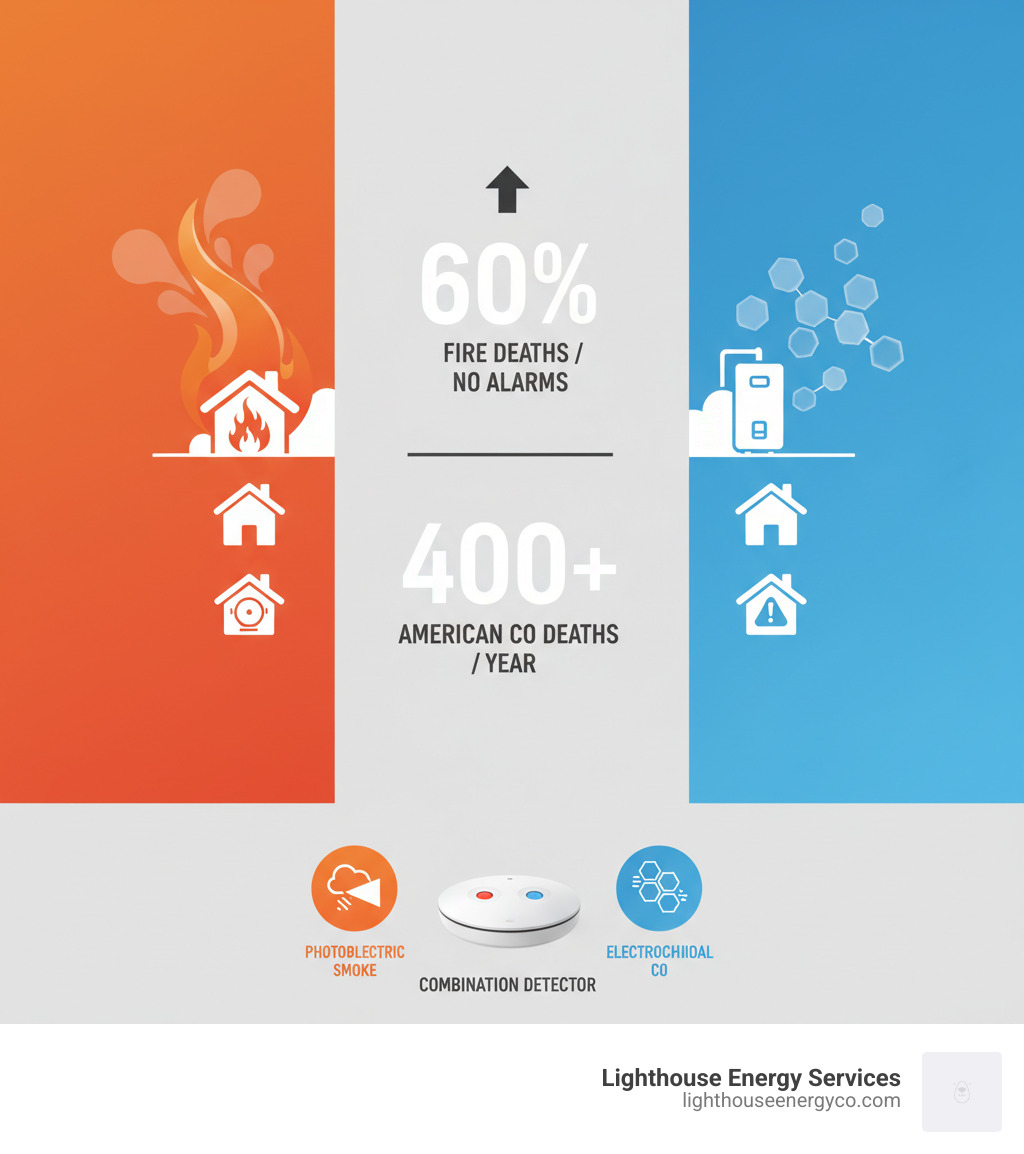
The statistics are sobering: about 60 percent of fire deaths occur in homes without working fire alarms, and over 400 Americans die from accidental CO poisoning annually. Carbon monoxide is a colorless, odorless gas, earning it the name “silent killer.”
Combination smoke carbon monoxide detectors provide dual protection in a single unit, using separate sensors to identify each threat and sounding a distinct alarm for each. Modern detectors are more reliable than ever, with features like voice alerts (“Fire!” or “Warning Carbon Monoxide!”), 10-year sealed batteries, and smartphone connectivity.
However, owning a detector isn’t enough. Proper placement, maintenance, and timely replacement are what make them effective. As an electrical contractor with decades of experience, I’ve seen how correct installation saves lives. This guide will walk you through everything you need to know to make informed decisions and protect what matters most.
Understanding How Detectors Work
Smoke carbon monoxide detectors use different technologies to spot smoke versus carbon monoxide. Understanding how they work helps you appreciate these lifesaving devices.
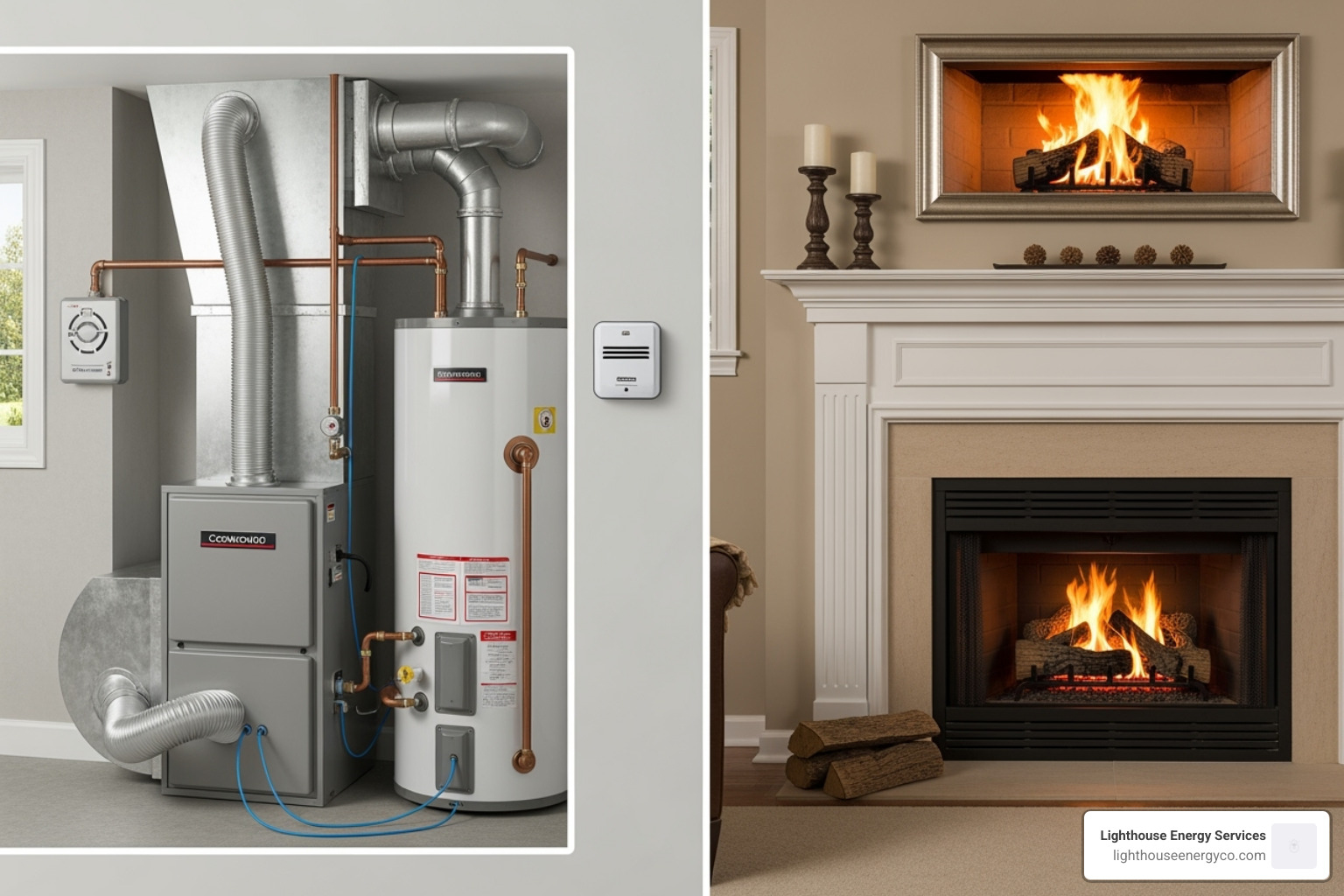
Carbon monoxide is a colorless, odorless, and tasteless gas produced by fuel-burning appliances like furnaces, water heaters, fireplaces, and gas stoves. If these appliances malfunction or are not vented properly, they can release deadly CO into your home. Health Canada offers detailed information on CO poisoning prevention.
Types of Smoke Sensors
Not all fires are the same, which is why there are two main types of smoke sensors.
Photoelectric sensors use a light beam to detect smoke. When smoke particles scatter the light, the alarm sounds. They excel at detecting slow, smoldering fires, like those from an overheating wire or a cigarette on furniture. They are also less prone to false alarms from cooking.
Ionization sensors use a small electrical current. When smoke particles disrupt this current, the alarm is triggered. These sensors are best at detecting fast, flaming fires that produce smaller smoke particles.
Because each sensor has its strengths, many modern combination smoke carbon monoxide detectors are dual-sensor alarms that include both technologies for the most comprehensive fire protection.
Types of Carbon Monoxide Sensors
Detecting the invisible threat of CO requires a different technology.
- Electrochemical sensors contain a chemical solution that reacts with carbon monoxide gas. This reaction creates an electrical current, which the sensor measures to determine the CO concentration in parts per million (PPM).
These sensors are highly accurate and can detect both low levels of CO that cause flu-like symptoms (headache, dizziness) and dangerously high levels that can be fatal. This precision is crucial for providing an early warning.
Combining these advanced smoke and CO sensors into one unit provides 24/7 protection. For the most reliable hardwired systems, our electrical services ensure a professional and safe installation.
Choosing the Right Combination Smoke Carbon Monoxide Detectors
Not all smoke carbon monoxide detectors are created equal. The right choice for your home depends on finding a balance of reliability, convenience, and features that fit your needs.
Let’s break down the key considerations.
Key Features for Combination Smoke Carbon Monoxide Detectors
Modern detectors offer features that significantly improve safety and convenience:
- Voice alerts: Clearly announce “Fire!” or “Warning Carbon Monoxide!” to eliminate confusion.
- Digital display: Shows CO levels in parts per million (PPM) for real-time information.
- Hush button: Temporarily silences nuisance alarms from cooking without removing the battery.
- 10-year sealed battery: Eliminates the need for battery changes for the life of the detector.
- End-of-life warning: Alerts you when the unit’s sensors have expired (typically after 7-10 years) and it’s time for a replacement.
- Tamper resistance: Prevents batteries or units from being removed, ideal for rentals or homes with children.
Hardwired vs. Battery-Powered Smoke Carbon Monoxide Detectors
This is a critical choice. Hardwired detectors connect to your home’s electricity and have a battery backup, offering the most reliable power source. Their main advantage is interconnectivity—when one alarm sounds, they all do. This requires professional installation, which our electrical services can handle to ensure code compliance.
Battery-powered detectors are easy to install yourself and can be placed anywhere. Newer models offer wireless interconnectivity, but they rely solely on batteries. For these, a 10-year sealed battery model is a major upgrade in reliability.
| Feature | Hardwired Detectors | Battery-Powered Detectors |
|---|---|---|
| Reliability | Connected to your home’s electrical system with battery backup for outages | Depend entirely on batteries, which must be replaced regularly |
| Installation | Requires professional installation by a qualified electrician | DIY-friendly, simply mount to wall or ceiling |
| Maintenance | Battery backup needs annual replacement; unit replaced every 10 years | Batteries need replacement every 6 months to a year (unless 10-year sealed) |
| Interconnectivity | Easily interconnected so all alarms sound together | Many modern models offer wireless interconnectivity |
| Suitability | Ideal for new construction, renovations, or maximum reliability | Great for existing homes where wiring is difficult or costly |
While a well-maintained battery unit is better than nothing, hardwired, interconnected systems offer the highest level of protection.
The Rise of Smart Detectors
Smart smoke carbon monoxide detectors offer improved connectivity and peace of mind.
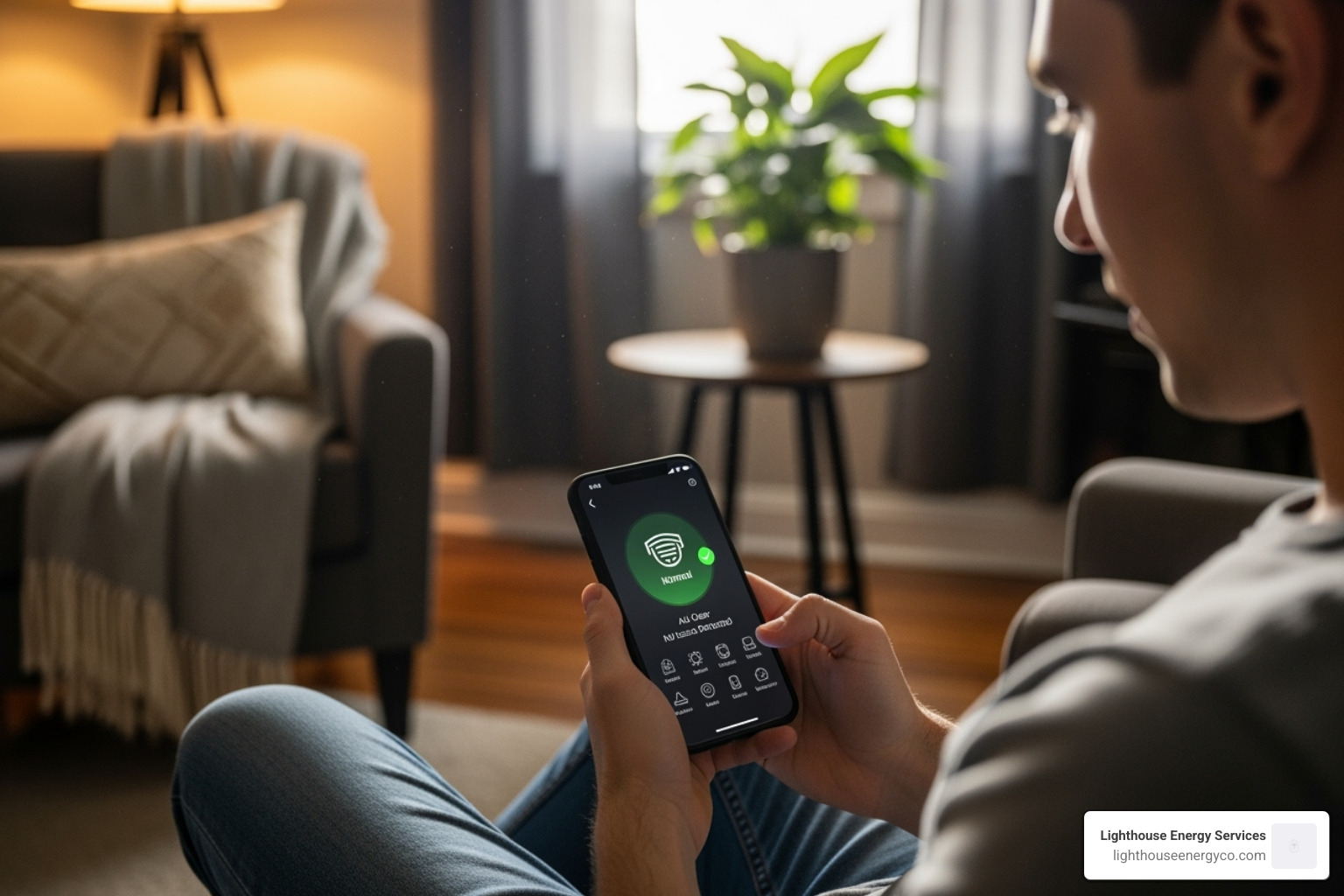
- App connectivity provides remote notifications to your smartphone if an alarm sounds while you’re away.
- Smart home integration with platforms like Google Home or Amazon Alexa allows for automated actions, such as turning on lights to illuminate an escape path or shutting off your HVAC system to prevent smoke circulation.
- Self-testing features automatically check sensors and batteries, notifying you of any issues.
These features make your safety system more effective and easier to manage, keeping you connected to your home’s safety 24/7.
Installation and Maintenance: A Lifesaving Routine
Even the best smoke carbon monoxide detectors are useless if installed incorrectly or poorly maintained. Proper placement and a simple maintenance routine are non-negotiable for home safety.
Following best practices ensures your detectors work when you need them most. For professional help ensuring your home is safe and compliant, explore our electrical services.
Best Practices for Detector Placement
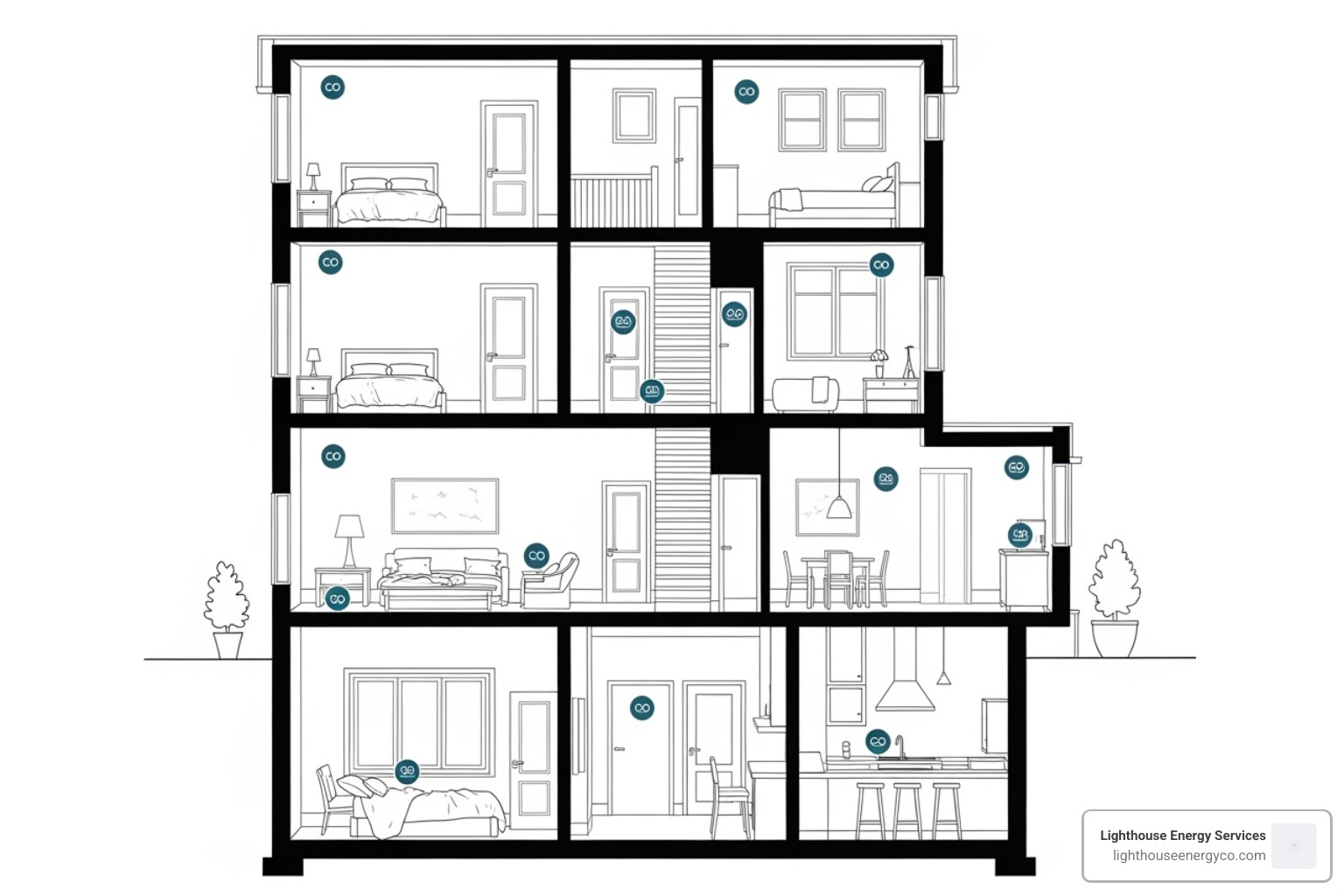
Strategic placement ensures the fastest possible detection. Follow these guidelines:
- Install on every level: Include basements and attics.
- Cover sleeping areas: Place detectors inside every bedroom and in the hallway outside.
- Mount high: Smoke and CO rise, so mount detectors on the ceiling (at least 4 inches from walls) or high on a wall (4-12 inches from the ceiling).
- Avoid false alarm zones: Keep detectors at least 10 feet from kitchen appliances and away from steamy bathrooms or dusty areas. Avoid placing them within five feet of fuel-burning appliances like furnaces.
Local regulations, like the Florida Building Code, have specific requirements. Our electricians can ensure your installation meets all current standards.
Testing, Maintenance, and Replacement
A simple routine keeps your detectors in working order:
- Test monthly: Press the test button on each unit to ensure the alarm sounds.
- Replace batteries annually: For units with replaceable batteries, change them once a year. A recurring chirp is a low-battery warning that needs immediate attention.
- Clean regularly: Gently vacuum or wipe down detectors every few months to remove dust that can interfere with sensors.
- Replace the entire unit: This is crucial. Smoke alarms must be replaced every 10 years, and CO alarms every 7-10 years. The sensors degrade over time. Check the manufacturing date on the back of the unit and write the installation date on it as a reminder.
Professional installation of hardwired detectors is the best way to ensure your system is interconnected and meets all code requirements, providing the earliest possible warning in an emergency.
What to Do When an Alarm Sounds
When a smoke carbon monoxide detector sounds, panic can set in. Having a clear, practiced emergency plan is the key to acting quickly and safely. Your response should be immediate and decisive.
If the Smoke Alarm Sounds
Fire spreads incredibly fast. Your only priority is to get everyone out safely.
- Get out and stay out. Do not stop for belongings.
- If there is smoke, drop low and crawl to the nearest exit, as cleaner air is near the floor.
- Before opening a door, feel it for heat with the back of your hand. If it’s hot, find another way out.
- Go to your pre-arranged family meeting spot outside.
- Once everyone is safely outside, call 911. Never re-enter a burning building.
If the Carbon Monoxide Alarm Sounds
The threat of CO is invisible, but just as deadly. Act immediately.
- Move everyone to fresh air immediately, including pets. Open windows on your way out if it’s safe and quick.
- Call emergency services from outside your home.
- Do not re-enter your home until it has been inspected and declared safe by the fire department or a utility professional.
- Be aware of CO poisoning symptoms, which mimic the flu (headache, dizziness, nausea). Inform emergency responders if anyone feels unwell.
Differentiating Alarm Sounds
Knowing the alarm pattern saves precious seconds. Most smoke carbon monoxide detectors use distinct signals:
- Smoke/Fire: A pattern of three beeps, repeated continuously.
- Carbon Monoxide: A pattern of four beeps, repeated continuously.
Many modern detectors also use voice alerts, such as “Fire!” or “Warning: Carbon Monoxide!” Test your alarms so your family becomes familiar with the sounds. In any alarm event, the first step is always the same: get to safety.
Frequently Asked Questions about Smoke and CO Alarms
Homeowners often have questions about their smoke carbon monoxide detectors. Here are answers to the most common concerns.
Why is my alarm chirping?
That intermittent chirp is an important signal. It usually means one of four things:
- Low Battery: The most common cause. Replace the battery immediately.
- End-of-Life Warning: The detector has reached its 7 to 10-year lifespan and the entire unit needs to be replaced.
- Malfunction: If new batteries don’t stop the chirping on a newer unit, it may be faulty and should be replaced.
- Dust or Debris: Sometimes dust can interfere with the sensor. Try cleaning the unit with a soft vacuum brush.
Never ignore a chirp; it’s a sign your protection may be compromised.
How can I tell if the alarm is for smoke or carbon monoxide?
Combination detectors use distinct patterns to identify the threat:
- Smoke Alarm: A repeating pattern of 3 loud beeps.
- CO Alarm: A repeating pattern of 4 loud beeps.
Many modern smoke carbon monoxide detectors also have voice alerts that announce “Fire!” or “Warning! Carbon Monoxide!” to eliminate any confusion during an emergency.
Are there specific laws in Florida for these detectors?
Yes, Florida has specific laws, and they are crucial for safety and compliance.
- Smoke Alarms: The Florida Building Code mandates smoke alarms in all new residential construction, requiring them in every bedroom, outside sleeping areas, and on each level. Landlords are also required to provide working smoke alarms in rental properties.
- Carbon Monoxide Alarms: The code also requires CO detectors in new construction and major renovations for homes with fuel-burning appliances or an attached garage. While not always legally required for all existing homes, they are a highly recommended safety measure. Information on CO poisoning prevention underscores their importance.
Local ordinances in Palm Beach, Broward, and Miami-Dade counties can be even stricter. As licensed electricians serving South Florida, we ensure every installation through our electrical services meets or exceeds all current state and local codes.
Conclusion: Secure Your Home with Professional Installation
Your smoke carbon monoxide detectors are your family’s silent, 24/7 guardians. Understanding how to choose, place, and maintain them is a critical step in home safety. Being proactive with these devices provides invaluable peace of mind, ensuring you’ve taken a vital step to protect the people you love most.
While DIY battery-powered units are an option, hardwired systems offer superior reliability through a constant power source and interconnected alarms. For these life-saving devices, professional installation is not just a convenience—it’s a guarantee of safety and compliance.
At Lighthouse Energy Services, we specialize in keeping homes safe across Palm Beach County and South Florida. Our licensed electricians ensure your detectors are installed correctly, meet all Florida Building Codes, and function flawlessly. We are available 24/7, provide upfront pricing with no hidden fees, and get the job done right.
Don’t leave your family’s safety to chance. For hardwired smoke carbon monoxide detector installation that’s “done right, and done right now,” contact our expert electricians today. Explore our full range of electrical services and let us help you make your home a safer sanctuary.