
Why Choosing the Right Residential Electrical Contractor Matters
Residential electrical contractors are licensed professionals who design, install, maintain, and repair electrical systems in homes. Here’s what you need to know when searching for one:
What They Do:
- Install and upgrade electrical panels, wiring, and circuits
- Perform electrical repairs and troubleshooting
- Install lighting, outlets, switches, and smart home systems
- Ensure all work meets local electrical codes and safety standards
- Provide emergency electrical services
What to Look For:
- Valid electrical license (verify through your state/province)
- Liability and worker’s compensation insurance
- Experience with your specific project type
- Clear, written estimates with no hidden fees
- Positive reviews and local references
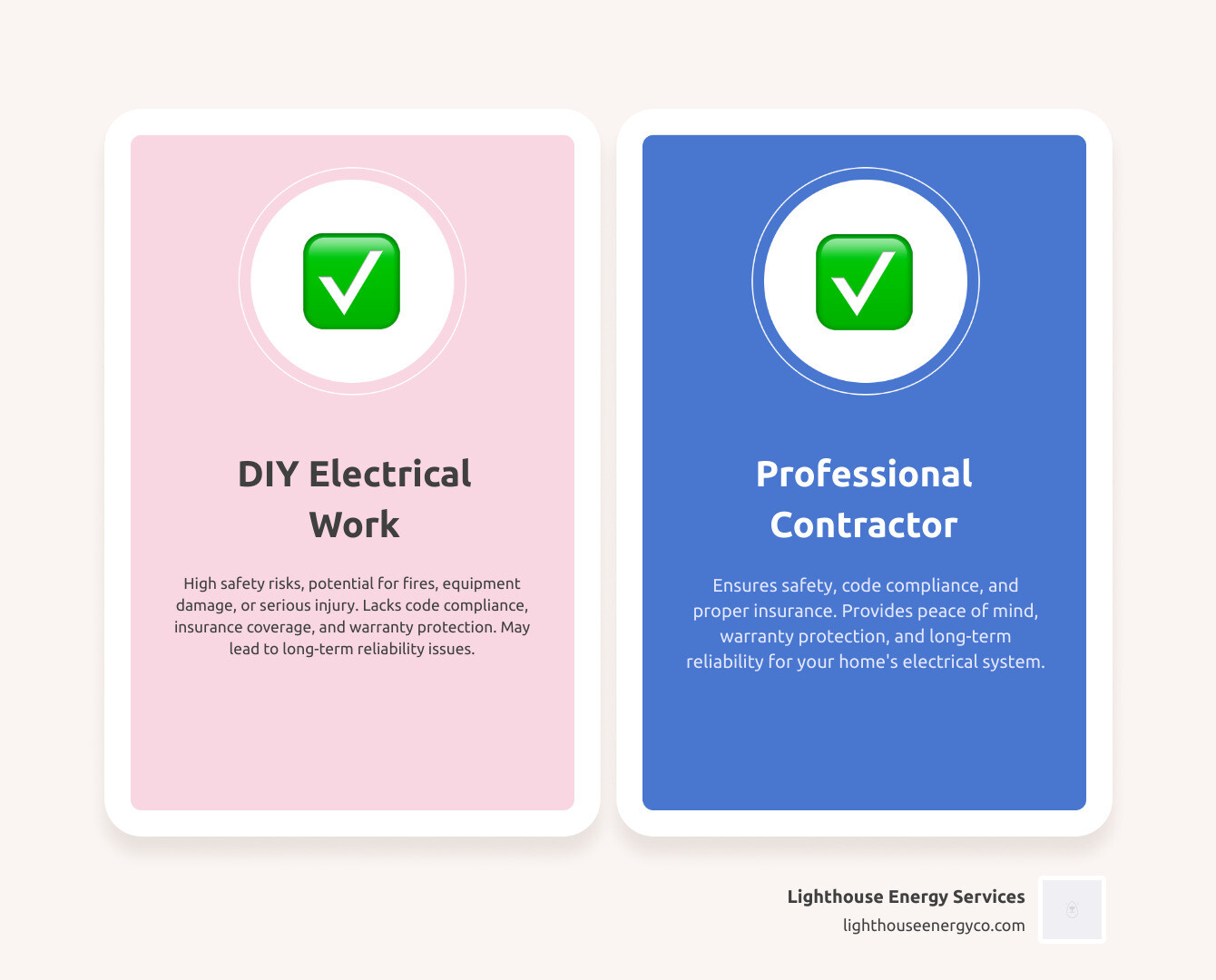
Your home’s electrical system is complex and dangerous. A single mistake can lead to fires, equipment damage, or serious injury. Unlike a leaky faucet, electrical work requires specialized knowledge and legal credentials.
Not all electrical contractors are equally equipped. Some prioritize speed over safety, while others hide fees in vague estimates or lack the proper licensing and insurance that protects you if something goes wrong.
The right contractor brings more than technical skills; they bring peace of mind. They show up on time, explain the work clearly, and stand behind their craftsmanship, helping you understand what’s happening in your walls, not just fixing what’s broken.
As an experienced electrical contractor, I’ve learned what separates exceptional residential electrical contractors from the rest-and what homeowners should demand before letting anyone touch their electrical system.
What Do Residential Electrical Contractors Do?
Think about everything in your home that runs on electricity: the lights, the refrigerator, your phone charging by the bed. All of it depends on a complex network of wires and circuits working perfectly behind your walls.
Residential electrical contractors are the professionals who make that happen. Our work goes beyond connecting wires. We design electrical systems, calculating power needs and planning safe circuits. We install everything from the main panel to the last outlet, ensuring every connection meets code. We also maintain equipment to prevent emergencies and repair faults when they occur.
The goal is to keep your home powered safely and reliably. Whether you have a flickering light or are planning a renovation, we ensure electricity flows where it needs to go without creating fire hazards or code violations.
At Lighthouse Energy, we handle the full spectrum of residential electrical work. You can see our complete range of services here.
Common Residential Electrical Projects
The variety of electrical work we handle is extensive, from quick fixes to projects that transform your home.
Panel upgrades are common, as many older homes have panels that can’t handle modern power demands. Running central air, laptops, and a home office can overload outdated fuse boxes. We replace them with modern breaker panels that provide the capacity and safety features you need.
For new construction wiring, we design the entire electrical system from a blank slate, planning layouts and capacity to meet current codes and your family’s future needs.
Remodel rewiring is necessary when reconfiguring rooms. Existing wiring might be outdated, damaged, or in the wrong spot. We rewire sections or entire homes, often replacing dangerous old wiring (like cloth-insulated or aluminum) with modern, safe copper.
Lighting installation covers everything from chandeliers to security lights. We install recessed, landscape, and smart lighting systems you can control from your phone. Good lighting is both functional and improves your home’s feel and security.
With more electric vehicles on the road, EV charger installation is a regular request. We install dedicated high-power charging stations in garages and driveways for convenient home charging.
Generator installation is crucial in Florida, where storms can knock out power. A backup generator keeps your home running when the grid goes down, preventing spoiled food and discomfort.
Smart home automation integrates thermostats, security cameras, and lighting controls so you can manage everything from your smartphone.
Even simple outlet and switch repairs are important. A faulty outlet can be dangerous. We repair or replace them and install new ones like dimmer switches and GFCI outlets for wet areas.
Surge protection systems guard your electronics from voltage spikes. A whole-house surge protector is a smart investment to protect your appliances.
We also handle electrical inspections, ceiling fan installations, hot tub wiring, and general troubleshooting and repairs.
The Non-Negotiables: Verifying Credentials and Qualifications
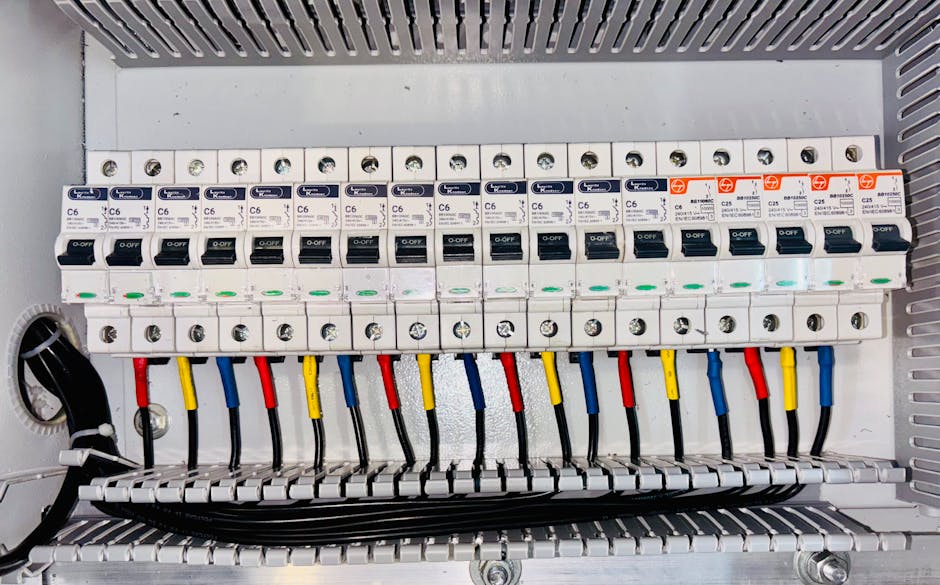
Making sure your residential electrical contractor is properly qualified should never be optional. Electricity doesn’t forgive mistakes, and a single error can turn your home into a fire hazard. You wouldn’t let an unlicensed doctor perform surgery, and the same logic applies to your home’s electrical system.
Working with credentialed contractors protects your family, home, and financial investment. It also ensures that unpermitted work won’t create legal or insurance problems down the road.
Licensing and Insurance
Before any work begins, you must verify two things: the contractor’s license and their insurance. No exceptions.
Why does licensing matter so much? A valid electrical license proves the contractor has the required training, has passed exams, and understands electrical codes. In most places, performing electrical work without a license is illegal. Furthermore, if unlicensed work causes a fire, your insurance company might refuse to pay your claim.
Most states have a licensing board website where you can verify a contractor’s status. For example, Ontario, Canada, has the Electrical Safety Authority’s online tool to find or verify a Licensed Electrical Contractor. Florida has its own system. The key is to check-don’t just take their word for it.
Insurance is equally critical. You need to verify two types:
Liability insurance protects you if the contractor accidentally damages your property. Without it, you could be paying for repairs out of your own pocket.
Worker’s compensation insurance covers injuries that happen on your property. Without it, you could be held financially responsible if a worker gets hurt. That’s a risk no homeowner should take.
Any legitimate residential electrical contractor will happily provide proof of licensing and insurance. If someone hesitates, consider it a major red flag.
Certifications and Specializations for residential electrical contractors
While a license is the minimum, additional certifications indicate a contractor’s expertise and commitment.
The Master Electrician designation, for example, represents thousands of hours of hands-on experience and passing difficult exams. It signals a deeper level of knowledge.
Specializations are also important as electrical work has evolved. Today’s homes have EV chargers, solar panels, and home automation systems, each requiring specialized knowledge.
If you’re installing a renewable energy system, you want someone with specific training in solar integration. For smart home technology, look for contractors trained in home automation and network integration. Some contractors also hold manufacturer-specific certifications for equipment like generators or EV chargers, meaning they’ve been trained directly by the manufacturer.
We believe in staying current with the industry, which is why we invest in ongoing training for our team. You can learn more about our approach and expertise on our About Us page.
Credentials matter. They are proof that you’re working with professionals who take safety seriously. When it comes to your home’s electrical system, that peace of mind is priceless.
Key Factors for Choosing Your Residential Electrical Contractor
Once you’ve confirmed a contractor is licensed and insured, you need to find the right fit. Credentials alone don’t guarantee someone will show up on time, communicate clearly, or stand behind their work. Choosing the right residential electrical contractors is about finding a partner you trust with your home.

Experience and Reputation
When it comes to electricity, experience matters. A contractor who’s been in business for years has seen it all, from the quirky wiring in older homes to the thousand little things that only come from hands-on work. Local experience in areas like Palm Beach County, Boca Raton, or West Palm Beach is even better. They’ll know the local building codes and the unique challenges of South Florida homes.
Years in business suggests stability and reliability. A long-standing contractor isn’t likely to disappear halfway through a project. But don’t just take their word for it. Check online reviews on Google or Yelp to see what other homeowners are saying. Look for consistent praise for work quality and communication.
Word-of-mouth referrals are also powerful. A recommendation from a neighbor or friend who had a great experience carries significant weight.
We’re proud of the reputation we’ve built in Palm Beach County. Our gallery showcases some of the projects we’ve completed for local homeowners.
Communication and Professionalism
Clear communication and professionalism are essential. From your first call, you should feel heard and respected. A good residential electrical contractor will take the time to understand your project and explain what needs to happen in plain English.
Transparent pricing is a priority for us at Lighthouse Energy Services. We provide a clear, written estimate with no hidden fees before any work begins. You should know exactly what you’re paying for, the materials used, and the project timeline. Surprises are for birthday parties, not for electrical bills.
Always insist on a written estimate. It protects both you and the contractor by documenting the scope of work, costs, and timeline.
Professional appearance also reflects a contractor’s approach. Someone who shows up in a clean uniform, drives a well-maintained vehicle, and respects your home by cleaning up after themselves takes pride in their work.
Punctuality is another sign of respect. A professional contractor will arrive on time and communicate promptly about any delays. We are available 24/7, with qualified electricians answering the phone around the clock, because electrical issues don’t wait for business hours. Our commitment is simple: prompt, professional service, done right, and done right now.
The Hiring Process: From First Call to Final Inspection
You’ve done your homework and know what to look for in a residential electrical contractor. Now it’s time to hire someone and get the project started. Here’s a step-by-step guide to the process.
Getting Quotes and Making a Choice
Getting quotes isn’t just about finding the lowest price. Homeowners who choose the lowest bidder often face cut corners, hidden fees, or shoddy work. Think of this as an interview process to find the right partner for your home.
Start by contacting at least three contractors. This gives you a sense of fair pricing and approach. Be as detailed as possible about your project-photos are helpful-to get an accurate estimate.
When the estimates arrive, review them carefully. A good estimate breaks down labor, materials, permits, and the timeline. Watch out for vague language or suspiciously low bids. A price that’s dramatically cheaper than others is usually a red flag.
This is also your chance to ask questions. What kind of warranty do they offer? Who will be doing the work? How do they handle unexpected issues or delays? A confident contractor will answer these questions without hesitation.
Don’t skip checking references. Previous clients can tell you if the contractor was on time, stayed on budget, and cleaned up after themselves.
Once you’ve made a choice, get everything in a written contract. It should spell out the scope of work, payment schedule, timeline, materials, warranty, and proof of insurance. Never start a project based on a verbal agreement.
Preparing for the Contractor’s Visit
A little preparation on your end helps the work go smoother and faster.
Clear the work area before the electrician arrives. Move furniture away from outlets and panels, and put away fragile items. Ensure there’s a clear path to attics or crawl spaces.
Secure pets in another room or outside. This keeps them safe and allows the electrician to work without distractions.
Plan for temporary power outages. Your contractor should warn you about this, but it’s smart to plan ahead. If you work from home or have medical equipment that needs power, discuss this with your contractor so they can make arrangements.
Be available for questions. Electricians sometimes find unexpected issues, like old wiring, and will need your input. A quick phone call can keep the project moving forward.
We know your time is valuable, which is why we prioritize clear communication. If you have questions about preparing your home, you can always reach us through our contact page. Our qualified electricians are available around the clock to ensure your project goes smoothly.
Warning Signs: When to Call an Electrical Contractor Immediately
Your home’s electrical system will often signal when something is wrong, from a flickering light to a burning smell. These are not messages to ignore.
Electrical problems rarely fix themselves and can quickly become major hazards, including house fires and electrocution risks. This is not the time for DIY attempts or waiting to see if the problem disappears. When you spot certain warning signs, the only safe move is to call a residential electrical contractor immediately.
Catching problems early almost always saves you money and prevents a minor issue from becoming a dangerous situation.
Telltale Signs of Electrical Problems
Learning to recognize these danger signals could save your home and your life.
Flickering or dimming lights are often a clue that your circuits are overloaded or have loose connections, especially if it happens when you use a large appliance.
If your circuit breaker trips frequently, it’s doing its job by protecting you from an overload or fault. Constantly resetting the same breaker means the circuit can’t handle the demand or has a fault that needs to be fixed.
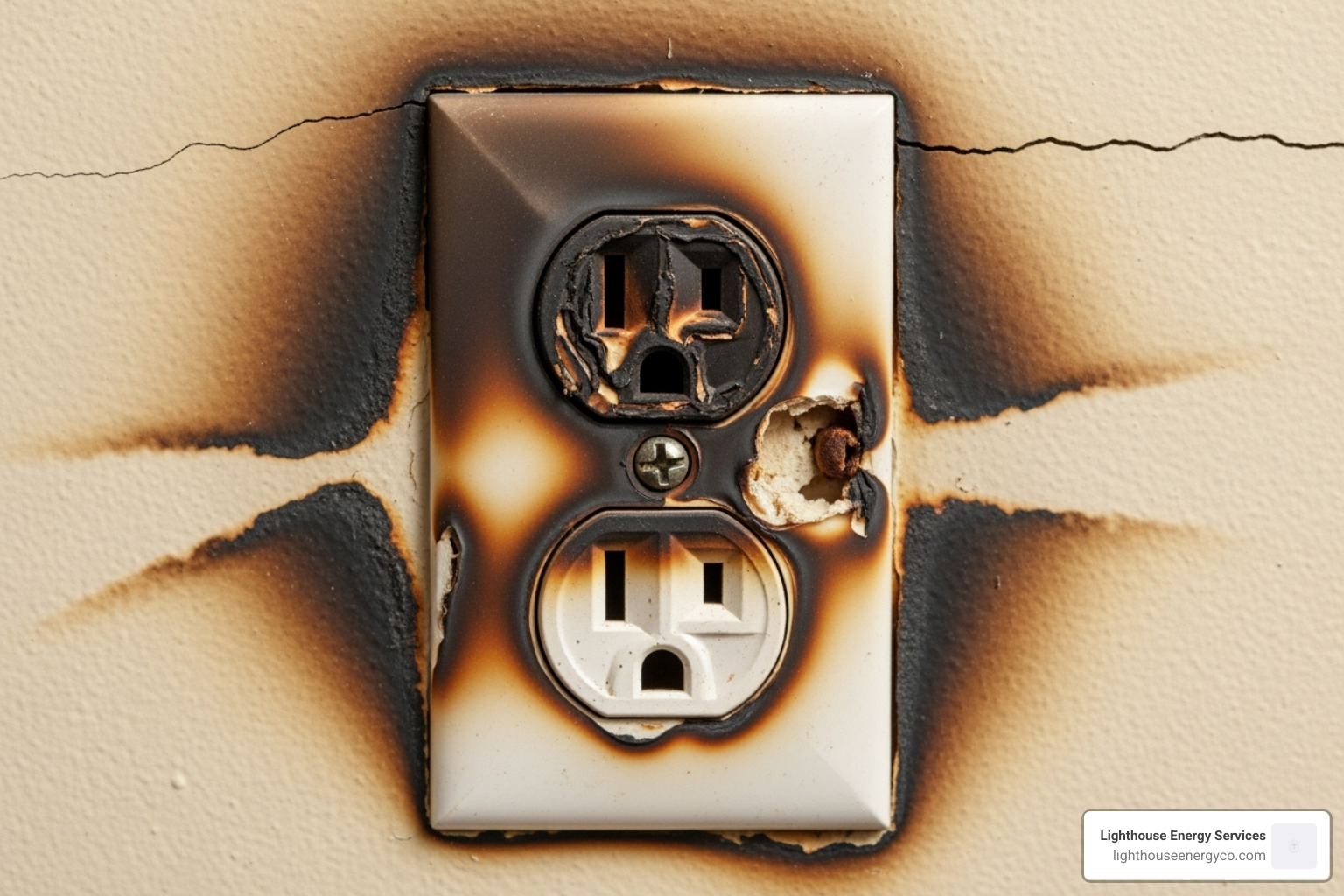
A burning smell near outlets, switches, or your electrical panel is an emergency. It means components are overheating and pose a serious fire hazard. Turn off the power to that area if it’s safe to do so and call an electrician right away.
Buzzing or humming sounds from outlets or switches are not normal. This usually indicates loose wiring or a failing component, which can generate heat and spark a fire.
If an outlet or switch feels warm or hot to the touch, or you see discoloration around it, that’s evidence of dangerous heat building up behind your walls.
Sparks from an outlet when you plug something in (beyond a tiny, initial spark) indicate a short circuit or damaged wiring that needs immediate attention.
Getting a mild shock or tingling sensation when you touch an appliance points to a grounding problem or faulty wiring. This is a serious safety issue.
If your home is over 40 years old and has its original wiring (such as aluminum, knob and tube, or cloth-insulated wiring), it likely can’t handle today’s electrical demands and may be a fire hazard.
Specifically, if your home has a Federal Pacific Electric (FPE) Stab-Lok panel, it is a known fire hazard. These panels often fail to trip during an overload. We strongly recommend having them inspected and replaced as soon as possible.
Do not try to diagnose or fix these problems yourself. Electricity is unforgiving. Our qualified electricians are available 24/7 because emergencies don’t wait for business hours.
Conclusion
Your home’s electrical system is something you rely on every day. Throughout this guide, we’ve covered what makes a great residential electrical contractor, from verifying non-negotiable credentials to recognizing the warning signs of a problem. We’ve explored why experience, reputation, and clear communication are just as important as technical skill.
Choosing the right electrical contractor is about protecting your family, your investment, and your peace of mind. It’s knowing that when you flip a switch, the work was done safely and reliably by qualified professionals.
The temptation to cut corners with a cheap bid is real, but it’s not worth the risk. Properly licensed and insured residential electrical contractors bring accountability and expertise. They follow safety codes, carry insurance that protects you, and deliver work that passes inspections.
At Lighthouse Energy Co., we live these principles daily. Our qualified electricians answer the phone around the clock because emergencies don’t wait. Whether you need a panel upgrade, smart home installation, or immediate help with a faulty outlet, we are ready. We believe in transparent pricing, professional communication, and craftsmanship that lasts.
For prompt, professional service in Palm Beach County and throughout South Florida, explore our residential electrical services. Your home’s electrical system is too important to leave to chance. Let’s make sure it’s done right, and done right now.