
Why Becoming a Licensed Electrical Contractor Matters
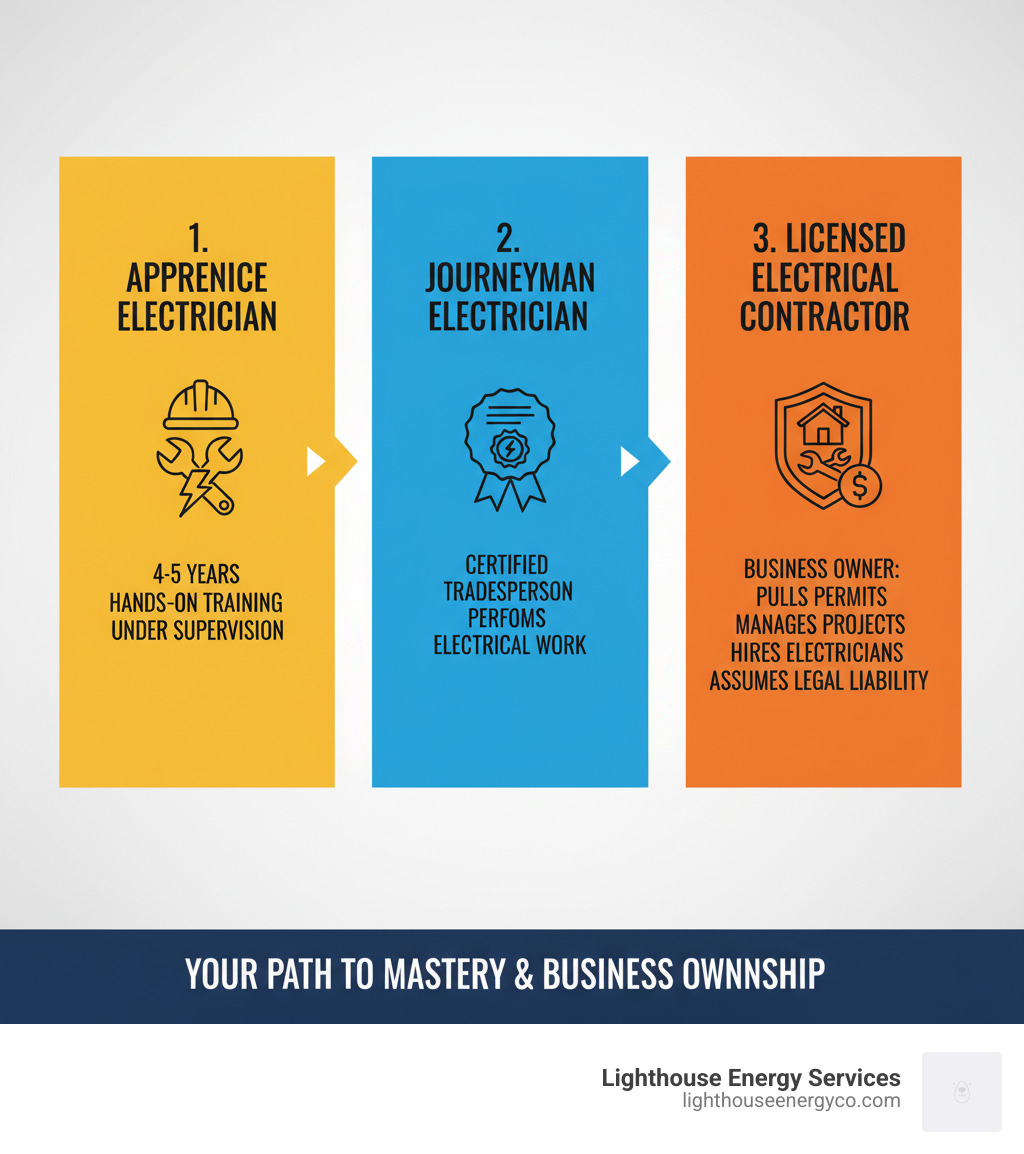
A licensed electrical contractor is a certified professional authorized to design, install, and maintain electrical systems. After extensive training and rigorous exams, they earn the legal right to operate an electrical business, pull permits, manage projects, and hire electricians—responsibilities that go beyond the hands-on work of a journeyman electrician.
The path involves several key steps:
- Completing a multi-year apprenticeship (8,000+ hours).
- Earning a journeyman certification.
- Gaining several years of additional work experience.
- Passing a comprehensive contractor’s exam on electrical codes, business law, and safety.
- Meeting insurance and bonding requirements.
Licensing is critical because it is legally required, ensures adherence to safety codes, protects consumers with insurance, and opens the door to business ownership. With electrical fires being a leading cause of property damage, the expertise of a licensed professional is essential for public safety.
My experience as a licensed electrical contractor has shown me that this credential is the bedrock of professional credibility. It’s not just a piece of paper; it’s a commitment to safety and quality on every job, from a simple outlet installation to a complex commercial project.
Understanding the Roles: Licensed Contractor vs. Certified Electrician
While both a licensed electrical contractor and a certified electrician are vital for safe electrical work, they play distinct roles. Think of the contractor as the head chef running the restaurant, while the certified electrician is the line cook mastering specific dishes.
Licensed Electrical Contractor
A licensed electrical contractor is the business entity or individual with the legal authority to offer electrical services, pull permits, and bid on projects. They manage the entire job, from initial client consultation to final inspection, ensuring all work complies with local and national codes. Crucially, they assume full legal and financial liability for the work performed. To earn this status, they must pass comprehensive exams covering the National Electrical Code, business law, and safety regulations, like those overseen by Florida’s Department of Business & Professional Regulation (DBPR).
Certified/Journeyman Electrician
A certified or journeyman electrician is the hands-on technical expert. After completing a multi-year apprenticeship and passing a certification exam, they are qualified to perform the physical installation, repair, and maintenance of electrical systems. However, they typically work under the supervision of a licensed electrical contractor and do not have the authority to pull permits or operate an independent business.
Specializations within Electrical Work
The electrical field is diverse, and many electricians specialize in high-demand areas. At Lighthouse Energy Services, our team includes experts in solar and green energy systems, EV charger installation for the growing electric vehicle market, and complex industrial machinery for our commercial clients. We also have specialists in smart home technology who integrate automated lighting, security, and advanced controls. This combination of licensed oversight and specialized skill allows us to handle any project across South Florida. You can explore the full range of what our licensed electrical contractor team can do by visiting Our Services.
The bottom line is that both roles are essential. The contractor provides the legal authority and project management, while the certified electrician brings the hands-on technical expertise. Together, they ensure your project is completed safely, legally, and professionally.
The Core Requirements to Become a Licensed Electrical Contractor
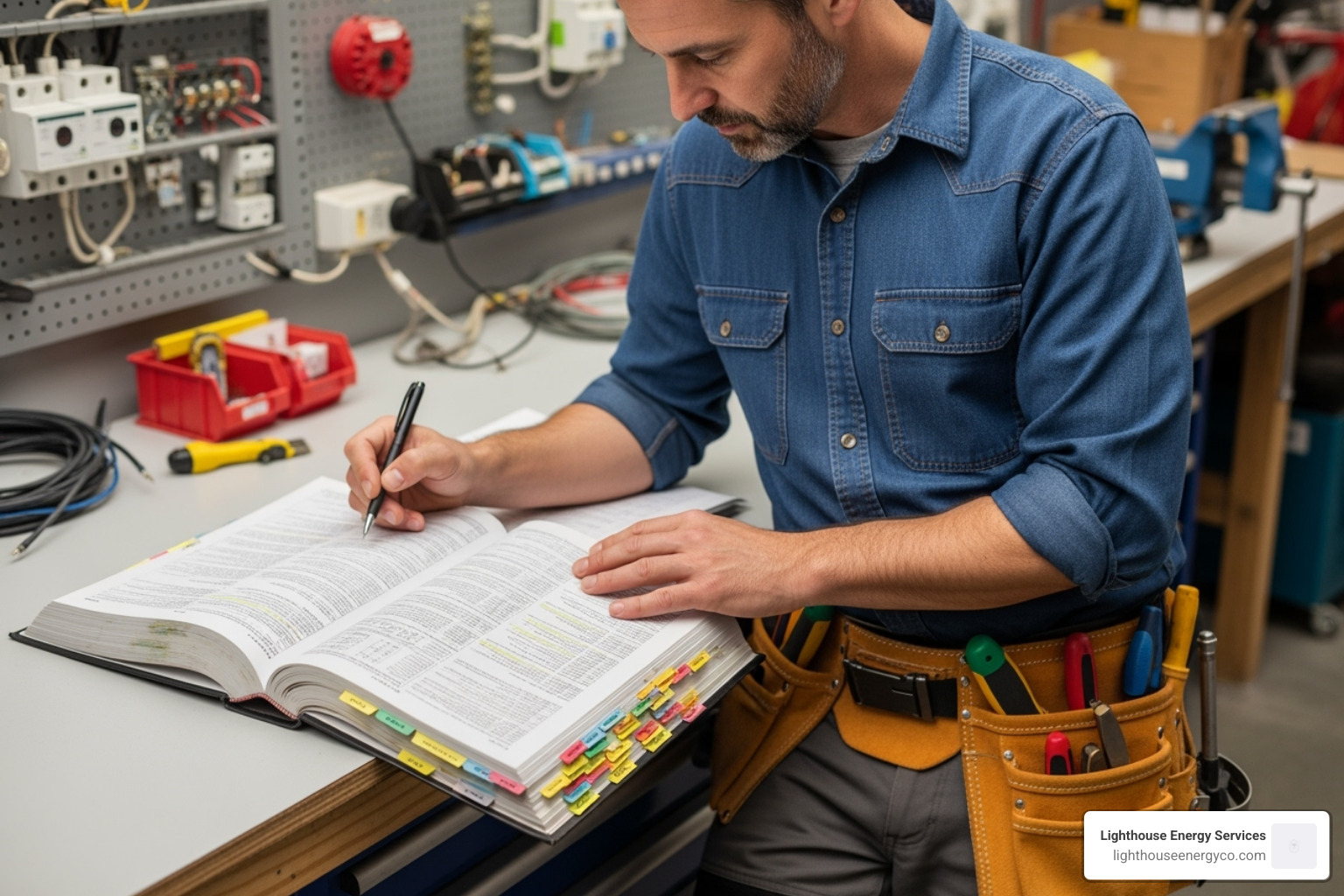
Becoming a licensed electrical contractor is a multi-step journey that requires years of dedication. While specifics vary by location, the path generally follows a consistent framework.
Step 1: Foundational Education and Apprenticeship
The journey starts with a combination of classroom learning and extensive on-the-job training. Most aspiring electricians attend a trade school to learn electrical theory, blueprint reading, and safety basics. This is followed by a 4-5 year apprenticeship, where they gain 8,000-9,000 hours of practical experience under the supervision of seasoned professionals. In Canada, the Red Seal Program offers a nationally recognized standard of excellence. After completing the apprenticeship and passing a technical exam, you earn your journeyman certification, proving your competence as a qualified electrician.
Step 2: Gaining Experience as a Qualified Electrician
With a journeyman certification in hand, the next step is to gain additional work experience, typically 1-3 years. This period is crucial for moving beyond purely technical tasks to develop essential project management skills and business acumen. Working under an established contractor provides insight into estimating, client relations, and project profitability. This is also where you cultivate the leadership qualities needed to guide apprentices and take responsibility for a team’s work, principles we value at Lighthouse Energy Co..
Step 3: Passing the Licensing Examination
The final hurdle is the contractor licensing exam. This is a comprehensive test that goes far beyond technical skills. It assesses your mastery of the National Electrical Code (NEC), which is the bedrock of electrical safety in the U.S. You’ll also be tested on local and state codes, which can have specific requirements for your area, such as those outlined in Chapter 455 of the Florida Statutes. Many jurisdictions also require a separate business and law exam and a thorough knowledge of safety protocols like OSHA standards. Passing this exam proves you are a responsible business professional ready to protect public safety.
Navigating the Application and Maintaining Your License
After passing the exams, the final steps are applying for your licensed electrical contractor status and committing to its upkeep. This framework protects both you and your clients.
The Application Process for a licensed electrical contractor
The application requires you to prove you are technically competent and financially responsible. You’ll submit detailed paperwork, including education records, work history, and exam results. The process also involves paying application fees, providing proof of insurance to cover liability, and securing bonding to guarantee your work. Finally, expect background checks to ensure a history of ethical conduct, which helps maintain public trust in the profession.
The Importance of Maintaining Your licensed electrical contractor Status
Getting your license is not a one-time event. It must be actively maintained. Licenses require periodic renewal, typically every one to three years. To renew, most jurisdictions mandate Continuing Education Units (CEUs) to ensure contractors stay current with evolving technology and code changes. At Lighthouse Energy Services, we see this as a vital investment in serving our South Florida clients. Letting a license expire or become suspended has severe consequences, as it legally prohibits you from operating your business, pulling permits, or performing any electrical work.
The Role of Regulatory Bodies
Regulatory bodies are the guardians of public safety in the electrical trade. Their primary mandate is to protect consumers by setting licensing standards, conducting inspections, and investigating complaints. They provide essential license verification databases, like the one from Florida’s DBPR, allowing anyone to confirm a contractor’s status. These organizations have the authority to take disciplinary actions, from fines to license revocation, against contractors who violate codes or professional standards. This oversight, also performed by bodies like Technical Safety BC in British Columbia, ensures accountability and maintains high standards across the industry.
The Benefits and Responsibilities of Being a Licensed Professional

Becoming a licensed electrical contractor opens up significant professional opportunities but also comes with serious responsibilities that impact public safety. At Lighthouse Energy Services, our license is the foundation of our work across South Florida.
The Rewards of Professional Licensing
Earning your license open ups a new level of professional and financial growth. The primary benefits include a higher earning potential and the opportunity for business ownership, allowing you to build your own company. As a licensed electrical contractor, you gain the legal authority to bid on larger commercial and industrial projects that are off-limits to unlicensed individuals. This status also provides immense professional credibility, building trust with clients who know you’ve met stringent standards. For customers, hiring a licensed professional offers peace of mind, knowing the work is insured, compliant, and backed by a legitimate business, as shown in our Gallery of Our Work.
The Weight of Professional Responsibility
With these rewards comes great responsibility. A licensed electrical contractor is accountable for more than just proper wiring.
- Code Compliance: Every project must strictly adhere to the National Electrical Code and all local regulations. There are no shortcuts when safety is at stake.
- Worker Safety: You are responsible for providing a safe work environment, proper training, and safety equipment for your entire team.
- Liability and Insurance: Maintaining comprehensive liability insurance is essential to protect your business and your clients from the financial consequences of accidents or errors.
- Upholding Industry Standards: Licensed professionals must act as ambassadors for the trade through quality workmanship and ethical practices.
As research from organizations like Technical Safety BC shows, electrical fires are a leading cause of incidents. This fact underscores the critical responsibility we carry to protect homes, businesses, and lives through safe, professional work.
Frequently Asked Questions about Electrical Contractor Licensing
We receive many questions about becoming a licensed electrical contractor. Here are answers to some of the most common inquiries.
How long does it take to become a licensed electrical contractor?
The total time commitment is significant, typically ranging from 6 to 9 years. This timeline breaks down into three main stages:
- A 4- to 5-year apprenticeship involving 8,000+ hours of hands-on training.
- An additional 1 to 3 years of work experience as a certified journeyman electrician to build management skills.
- The exam and application process, which can take several months to complete.
It’s a marathon, not a sprint, but the expertise gained is invaluable.
Can I operate in different states or provinces with one license?
Generally, no. Electrical licenses are issued by individual states or provinces and are not automatically transferable. Each jurisdiction has its own specific codes, regulations, and licensing requirements. While some neighboring states have reciprocity agreements that can streamline the process, you will typically need a separate license for each state or province in which you plan to operate. Always check with the local licensing board before starting work in a new area.
What happens if I perform electrical work without a license?
Working without a license carries severe consequences. The risks are not worth it.
- Legal Penalties: You can face substantial fines and, in some cases, legal prosecution.
- Inability to Pull Permits: Unlicensed work cannot be legally permitted or inspected, which can lead to costly tear-outs and problems when selling a property.
- Liability: You are personally liable for any damages, injuries, or accidents that occur. Insurance claims related to unlicensed work are often denied, leaving the property owner responsible.
- Safety Risks: Unlicensed individuals may not be up-to-date on safety codes, creating dangerous hazards. As noted, electrical fires are a leading cause of incidents, and unlicensed work dramatically increases this risk.
For questions about professional electrical work, it’s always best to work with a verified professional. Please Contact Us for assistance.
Conclusion: Powering Your Future as a Licensed Contractor
The path to becoming a licensed electrical contractor is long and challenging, involving years of training, experience, and rigorous exams. However, each step builds you into a professional capable of managing projects, running a business, and ensuring public safety. At Lighthouse Energy Services, our license represents our unwavering commitment to doing things the right way—without shortcuts.
This credential is more than a legal requirement; it’s the foundation of trust and quality in our industry. With electrical fires remaining a significant hazard, the role of properly trained, licensed electrical contractors is more important than ever. It’s your best guarantee of safe, compliant, and high-quality workmanship.
Whether you are starting your career or looking to hire a professional for a complex project, always prioritize proper licensing. For commercial and industrial jobs in Boca Raton, Fort Lauderdale, Miami, and across South Florida, a team of licensed experts is essential.
Ready to see what a team of licensed electrical contractors can accomplish? Learn about our commercial electrical services and let us power your success safely and professionally.