
Understanding the Powerhouses of the Electrical Industry
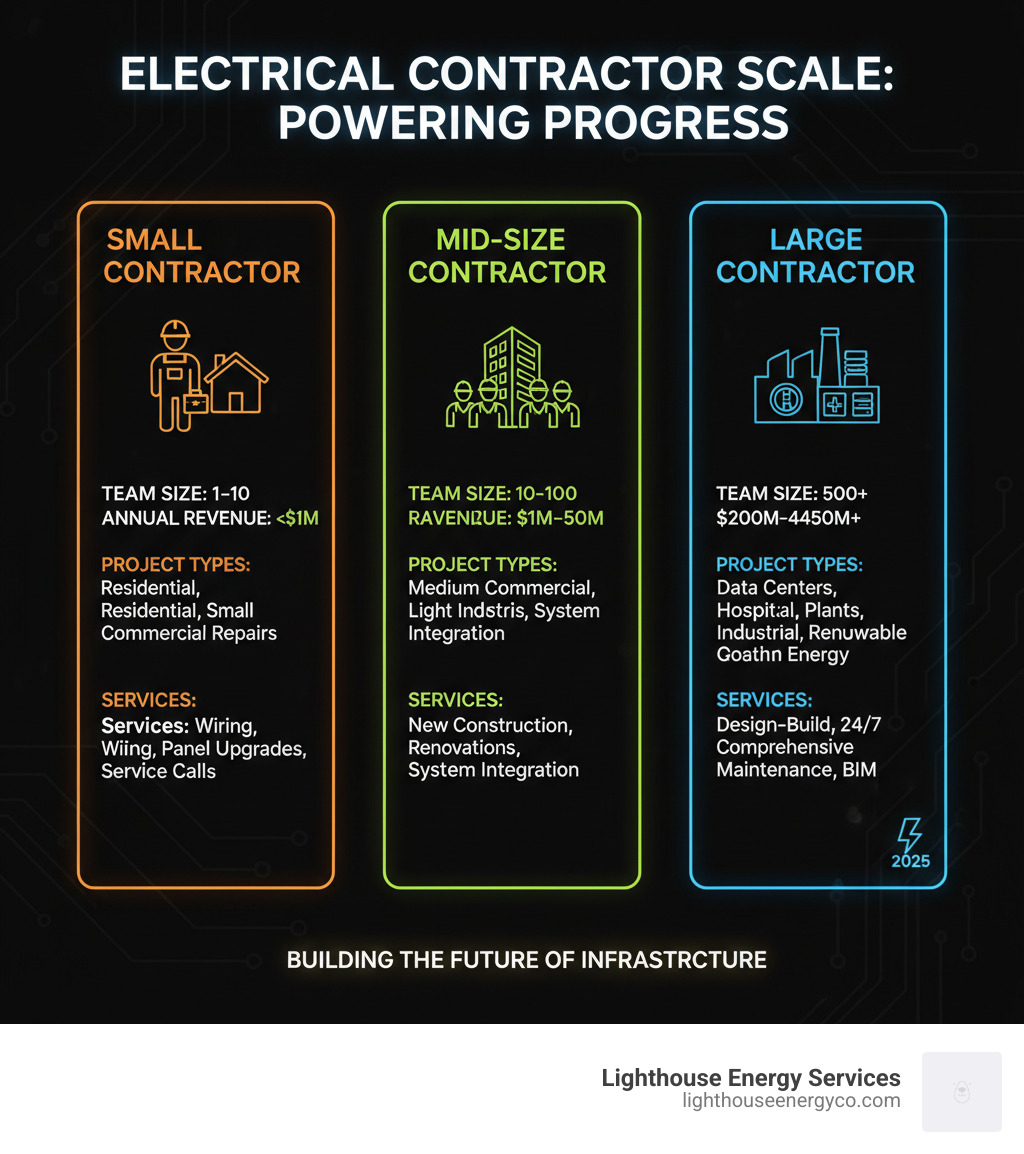
A large electrical contractor is a company with hundreds to thousands of employees, generating annual revenues often exceeding $200 million. These firms are capable of handling complex, multi-million dollar projects across commercial, industrial, and institutional sectors. They distinguish themselves from smaller contractors through their ability to manage multiple large-scale projects simultaneously, maintain 24/7 emergency response teams, and deliver comprehensive services from design through ongoing maintenance.
Key characteristics of large electrical contractors include:
- Scale: 500+ employees with multi-state or national operations
- Project Scope: Healthcare facilities, data centers, industrial plants, renewable energy installations
- Comprehensive Services: Design-build, installation, maintenance, emergency response, and specialized systems
- Experience: Often 50-100+ years in operation with proven track records
- Certifications: IBEW partnerships, NECA membership, COR safety certification
- Revenue: $200M-$450M+ annually with 90%+ repeat customer rates
Large electrical contractors power the infrastructure that keeps our modern world running. From hospitals to data centers, these companies handle the electrical backbone of society’s most critical facilities. They don’t just install outlets—they design and build entire electrical ecosystems for billion-dollar campuses, manage teams of hundreds of electricians, and maintain mission-critical systems that can’t afford a single minute of downtime.
What separates these industry giants from smaller firms isn’t just size. It’s their accumulated expertise, financial stability to handle $100M+ projects, and the workforce to staff multiple job sites at once. They maintain in-house engineering teams, run comprehensive apprenticeship programs, and invest in cutting-edge technology like Building Information Modeling (BIM) and prefabrication. This article examines the leading contractors in North America, what makes them successful, and what you should look for when your project demands this level of expertise.
The Anatomy of a Large Electrical Contractor
Think of a large electrical contractor as a carefully orchestrated community of specialists working together to power some of the most complex projects imaginable. These aren’t the folks you call to replace a light switch. They’re the teams that wire entire hospital complexes, build the electrical infrastructure for data centers, and keep manufacturing plants humming 24/7.

The structure inside a large electrical contractor resembles a major corporation. Project managers orchestrate everything, keeping projects on time and on budget. Before work begins, the preconstruction team dives into planning, identifying potential problems and optimizing the workflow. Estimators must accurately predict the costs of multi-million dollar projects months in advance.
On the job site, foremen lead crews of licensed electricians who turn blueprints into reality. Alongside them, apprentices learn the trade through thousands of hours of hands-on experience. Behind the scenes, support staff handle safety, logistics, and payroll, keeping the entire operation running smoothly.
This isn’t just about having a lot of people; it’s about having the right people in the right roles. At Lighthouse Energy, we understand this principle. Whether you’re managing a massive industrial facility or a single commercial building, a well-coordinated team makes all the difference. Learn more about our team and how we bring this commitment to excellence to every project.
The Importance of Experience and Reputation
In the electrical world, experience is everything. When a large electrical contractor has been around for decades, they’ve encountered and solved nearly every imaginable challenge. This institutional knowledge is a significant advantage.
Some of these companies have been in business for nearly a century, adapting through technological revolutions from knob-and-tube wiring to smart building systems. This longevity is earned by satisfying clients year after year. A reputation in this industry is built on reliability, creative problem-solving, and standing behind your work. When a contractor’s business comes mostly from repeat customers, it speaks volumes about their trustworthiness and quality.
Industry recognition, such as safety awards or hall of fame inductions for their leaders, also matters. It’s the industry itself acknowledging that a company sets the standard for excellence.
Typical Team Composition and Scale
The sheer scale of a large electrical contractor can be impressive, with hundreds or thousands of employees spread across multiple states. They manage dozens of major projects simultaneously, coordinating vast amounts of people and equipment while maintaining strict quality and safety standards.
These companies have entire departments you wouldn’t find at smaller firms, such as in-house professional engineers, communications specialists for low-voltage work, and dedicated safety coordinators. This infrastructure allows them to take on projects that would overwhelm smaller contractors, like wiring a new hospital wing while the existing facility remains operational or deploying multiple crews to meet a tight deadline.
Their ability to serve multi-state or national areas is invaluable for businesses with facilities in different regions. Having a single electrical partner ensures consistent quality across all locations. This combination of scale, specialization, and geographic reach truly defines what a large electrical contractor can accomplish.
Core Services & Project Showcase
When you think about what a large electrical contractor actually does, you’re looking at companies that can handle just about anything electrical—from initial design sketches all the way through decades of maintenance. They are partners for the entire lifecycle of a facility.

Comprehensive service offerings typically include design-build solutions, where the contractor manages everything from concept to completion. This integrated approach streamlines projects by having one cohesive group working together from day one. Large contractors employ master electricians, licensed professionals, and apprentices to handle installation, troubleshooting, and maintenance across every type of facility.
At Lighthouse Energy, we understand the importance of comprehensive service. That’s why we offer everything from initial planning through ongoing support for residential, commercial, and industrial clients. You can explore our full range of capabilities on our Services page.
Specialized Industrial & Commercial Work
Where large electrical contractors really shine is in specialized work that requires both technical expertise and substantial resources. Automation and controls are critical in modern industrial facilities, which depend on sophisticated systems to monitor and adjust operations automatically. This includes everything from manufacturing line controls to building management systems that optimize energy use.
Low voltage systems form the nervous system of today’s buildings, carrying data, security, and communication signals. Voice and data cabling infrastructure has become as critical as the power lines themselves, supporting everything from conference rooms to security operations.
Critical power solutions are life-or-death in some facilities. For hospitals or data centers, power interruptions are catastrophic. Large contractors design redundant systems with backup generators and uninterruptible power supplies to keep electricity flowing no matter what.
Project Scale & Diversity
The scale and variety of projects that large electrical contractors tackle is impressive. In healthcare, this can mean a $225 million hospital expansion or a billion-dollar, all-electric medical center. These buildings require incredibly reliable electrical systems, fail-safe backup power, and specialized wiring for sensitive medical equipment, including operating rooms, imaging devices, and life support.
Industrial plants present their own challenges. A $925 million mining operation, for example, needs robust, high-capacity electrical infrastructure that can handle massive equipment loads while maintaining safety in harsh environments. Data centers are among the most demanding projects, requiring redundant power, advanced cooling, and sophisticated monitoring to ensure zero downtime.
The renewable energy sector is a fast-growing area. Large contractors are building major solar farms, wind installations, and EV charging networks, and often have dedicated renewables divisions. From airports and transportation hubs to large commercial office buildings and university campuses, the diversity of projects is remarkable, each demanding specialized knowledge and the resources to execute at scale.
The Significance of 24/7 Emergency Availability
True 24/7 emergency capability separates large contractors from smaller operations. This means fully stocked service vehicles and qualified electricians on call around the clock, 365 days a year.
For the facilities these contractors serve, downtime can be devastating. A hospital losing power puts lives at risk. A data center going dark means millions in lost revenue. A manufacturing plant shutting down can halt production worth hundreds of thousands of dollars per hour.
That’s why companies maintain electrical response teams ready to deploy immediately. When an industrial client calls at 3 AM with an emergency, they need someone on-site within minutes, not hours. These service departments operate continuously because electrical issues don’t respect business hours.
At Lighthouse Energy, we’ve built our reputation on this same principle. We answer our phones 24/7 with qualified electricians—not answering services—because when you have an electrical emergency, you need real help right now. Whether it’s a residential issue or a commercial crisis, we’re there.
Upholding the Gold Standard: Quality, Safety, and Training
When you’re working on projects worth millions of dollars—hospitals where lives depend on power, or data centers that can’t afford a second of downtime—there’s no room for cutting corners. For a large electrical contractor, quality and safety are the foundation of everything they do.

Commitment to Safety
The best large electrical contractors don’t just meet safety standards—they exceed them. Many earn advanced credentials like COR Certification, a nationally recognized occupational health and safety audit program. Others receive prestigious safety awards for their commitment to protecting their people. These aren’t one-time efforts; safety is woven into every single day on the job site.
Top-tier firms ensure all their electricians meet the strict requirements of bodies like the Electrical Safety Authority (ESA). They also carry significant liability insurance and workers’ compensation coverage, because protecting workers and clients is non-negotiable.
At Lighthouse Energy, we take the same approach. Whether we’re working on a small residential repair or a large commercial installation, our electricians follow rigorous safety protocols. We know that getting home safely at the end of the day matters more than anything else.
Quality Assurance Programs
Safety protects people; quality protects your investment. A large electrical contractor implements comprehensive quality assurance programs to ensure every system is installed correctly the first time. These programs define clear responsibilities and procedures to ensure projects meet the highest standards from start to finish. This commitment to getting it right means fewer callbacks, less downtime, and electrical systems that perform flawlessly for decades. It’s why we guarantee our workmanship at Lighthouse Energy—because quality work shouldn’t need to be redone.
Workforce Development and Training
Becoming a licensed electrician takes years of intensive training. The skilled professionals working for a large electrical contractor have invested thousands of hours mastering their craft.
Industry-leading apprenticeship programs, like the one sponsored by the Greater Toronto Electrical Contractors Association and IBEW Local 353, run for five years. Apprentices complete over 1,200 hours of classroom study and log an impressive 9,000 hours of on-the-job training. That’s more than four years of full-time, hands-on learning.
Many top contractors actively employ apprentices, creating a culture where learning never stops. These programs build lifelong careers, not just jobs. Even after earning their license, electricians continue their education to keep up with new technologies, updated codes, and evolving best practices.
The Role of Accreditations and Partnerships
When you’re choosing a large electrical contractor, accreditations and industry partnerships tell you a lot about who you’re working with. These aren’t just plaques on the wall—they’re proof that a company meets rigorous standards.
Partnership with the International Brotherhood of Electrical Workers (IBEW) is a significant indicator of quality. These partnerships ensure access to the most highly trained, safety-conscious electricians in the industry.
Membership in the National Electrical Contractors Association (NECA) signals another level of commitment. NECA members adhere to industry best practices and participate in advocacy that shapes electrical standards nationwide. Induction into groups like the Academy of Electrical Contracting represents one of the highest honors in the field.
Specialized certifications for occupational health and safety and other industry awards demonstrate an ongoing commitment to excellence. These credentials build trust with clients who need to know their project is in capable hands. Organizations like the Electrical Contractors Association of Ontario (ECAO) also provide networking, advocacy, and standard-setting functions, creating a framework of accountability.
Navigating Challenges and Embracing the Future
The electrical contracting industry isn’t standing still, and neither are the challenges facing even the most established firms. But large electrical contractors don’t just react to these obstacles—they turn them into opportunities for innovation and growth.
Supply Chain Management
For a large electrical contractor managing million-dollar projects with tight deadlines, a missing component can halt an entire job site. The smart contractors have learned to stay ahead of these headaches. Many stock critical equipment specifically to avoid downtime for their clients. Having a specialized breaker or transformer already in a warehouse makes all the difference in an emergency.
Building strong, long-term relationships with suppliers and manufacturers is another key strategy, providing immediate access to parts when needed. Technology is also revolutionizing procurement. Some firms have slashed their procurement process time by over 90% by implementing new software. Others use just-in-time deliveries, ensuring materials arrive exactly when needed to minimize storage costs and keep job sites organized.
Technological Innovation
The electrical contracting industry is experiencing a technological revolution, and large electrical contractors are leading the charge. These aren’t just buzzwords—they’re practical tools that deliver real results.
Building Information Modeling (BIM) has changed how complex projects are planned. Contractors use BIM to create detailed 3D models, allowing them to visualize every conduit and connection before construction begins. This means fewer conflicts, less rework, and smoother projects.
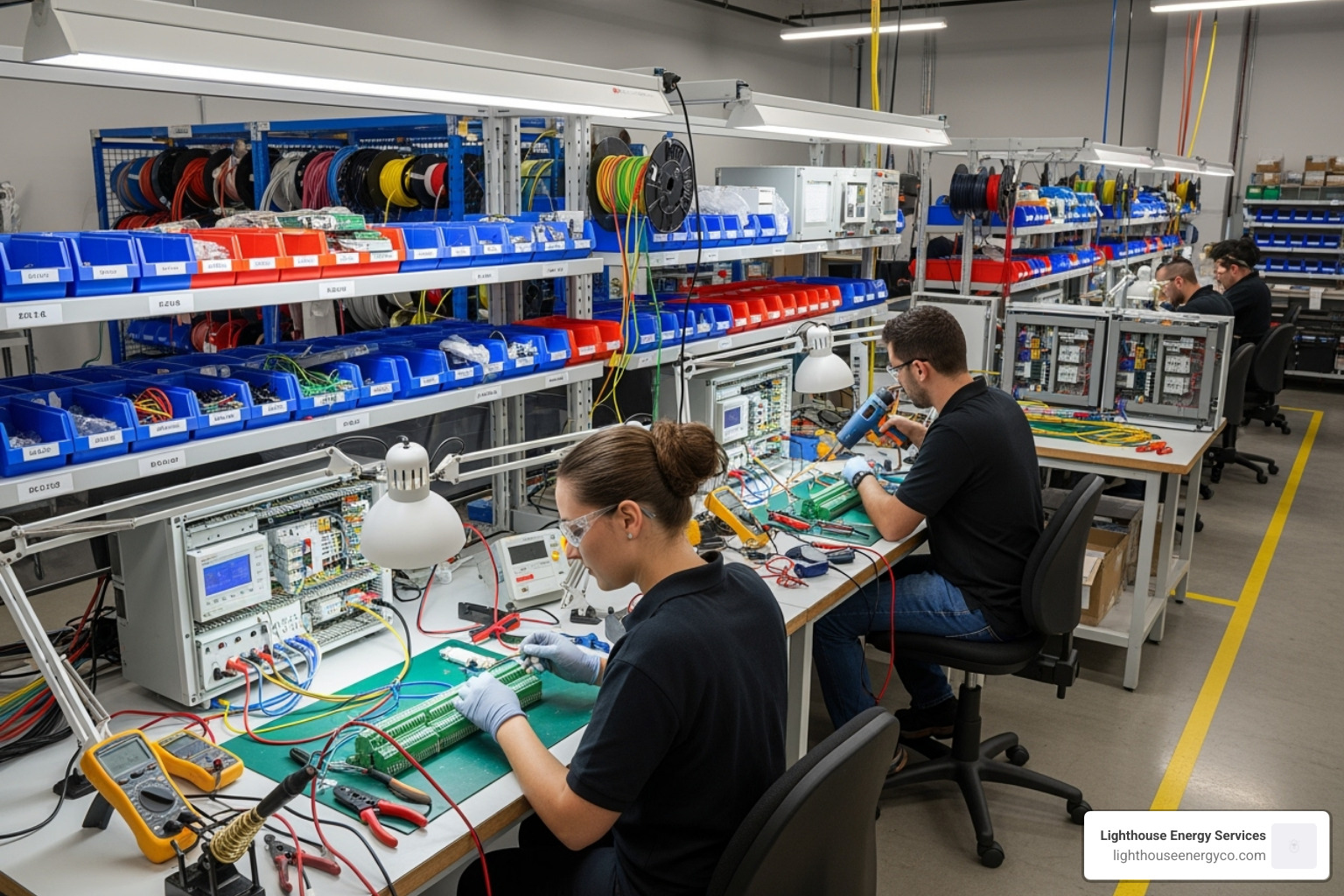
Prefabrication is a game-changer. Assembling complex electrical panels or wiring harnesses in a controlled workshop environment improves quality and dramatically reduces on-site installation time. This approach leads to improved schedules, lower costs, and higher-quality installations.
Automation and controls work represents another frontier. Industrial facilities are becoming smarter, with sophisticated systems that monitor, adjust, and optimize operations in real-time. Leading contractors have positioned themselves at the intersection of electrical construction, engineering, and technology services, recognizing that these fields are increasingly inseparable.
Future Industry Trends
Looking ahead, several massive trends are reshaping what it means to be a large electrical contractor. The shift toward electrification is creating unprecedented demand. Electric vehicles need charging stations, industrial processes are moving away from fossil fuels, and buildings are going all-electric. An all-electric medical center, for example, shows where the industry is heading.
Green energy is no longer a niche market—it’s mainstream infrastructure. Solar farms, wind installations, and renewable energy projects are booming. Many large contractors are heavily invested in building out this infrastructure, recognizing that it’s both good for the planet and good for business.
The rise of smart buildings and IoT integration is changing how we think about electrical systems. Buildings are becoming intelligent ecosystems where lighting, HVAC, and security systems communicate and coordinate. These sophisticated systems require electrical contractors who understand not just power distribution, but also data networks, controls, and integrated systems.
At Lighthouse Energy, we’re watching these trends closely. While our focus is on serving Palm Beach County with reliable, 24/7 electrical services, we understand that the industry’s evolution affects everyone. The future is electric, smart, and sustainable—and that’s exciting for everyone in this field.
Frequently Asked Questions about Choosing a Large Electrical Contractor
When you’re planning a major electrical project, choosing the right large electrical contractor can feel overwhelming. Let’s address the most common questions to help guide this important decision.
What differentiates one large electrical contractor from another?
On paper, many large electrical contractors seem similar, but key differences can significantly impact your project’s success.
- Specialization: Some contractors have deep expertise in specific industries, like data centers or healthcare facilities. Choosing a contractor who understands your industry’s unique challenges is invaluable.
- Safety Record: Look beyond promises and examine a contractor’s Experience Modification Rate (EMR) and safety awards. A strong safety record often indicates better project management, fewer delays, and a more professional team.
- Technology Adoption: Contractors who invest in Building Information Modeling (BIM) and prefabrication can offer fewer surprises. Modeling the entire electrical system in 3D catches conflicts early, reduces waste, and keeps projects on schedule.
- In-House Design Capabilities: An integrated design-build or design-assist service streamlines your project. You work with one team from concept to completion, which means better communication, faster problem-solving, and a single point of accountability.
- Geographical Reach: If your project spans multiple locations or you’re planning an expansion, a contractor with a broader footprint can provide consistent quality and service across all your sites.
How do large electrical contractors manage such complex projects?
Managing a multi-million dollar electrical project requires sophisticated systems and experienced leadership. Large electrical contractors use proven approaches to handle this complexity.
- Dedicated Project Management: Every major project is assigned a dedicated project manager or team. These experienced professionals serve as your single point of contact, coordinating hundreds of moving parts and keeping you informed.
- Preconstruction Services: Before any work begins, contractors invest significant time in planning. They analyze costs, identify potential challenges, and find ways to deliver more value. Problems solved on paper are far cheaper than problems solved in the field.
- Phased Execution and Communication: Complex projects are broken into manageable phases with quality checks at each stage. Advanced project management software provides real-time visibility, while strong communication protocols ensure everyone stays aligned.
Why is 24/7 service crucial for a large electrical contractor?
For certain facilities, 24/7 availability isn’t just a nice feature—it’s absolutely essential.
- Mission-Critical Facilities Can’t Wait: A hospital’s backup power system failing at 2 AM or a data center experiencing an electrical fault demands an immediate response. A large electrical contractor with true 24/7 availability can have qualified electricians on-site within the hour, not the next business day.
- Industrial Downtime is Expensive: When a manufacturing line stops, you’re losing production, paying idle workers, and potentially damaging customer relationships. A quick response can mean the difference between a minor inconvenience and a financial disaster.
- Electrical Emergencies are Dangerous: Beyond financial costs, electrical issues can pose serious safety risks like fires or electrocution hazards. You need professionals who can respond immediately to protect your people and property.
At Lighthouse Energy, we understand this need for constant availability. Our team answers calls 24/7, and we’re proud to offer the same level of responsive service to our Palm Beach County clients. We know that electrical problems don’t respect business hours, and neither do we.
Conclusion: Powering Your Next Big Project
Throughout this article, we’ve explored what makes a large electrical contractor stand out. These aren’t just companies with big budgets; they’re organizations built on decades of experience, an unwavering commitment to safety, and the ability to deliver on projects that smaller firms can’t handle.
Large electrical contractors share common threads: comprehensive services from design through maintenance, specialized expertise in critical sectors, and the financial stability to manage massive projects. They invest heavily in their people, maintain 24/7 emergency capabilities, and adopt new technologies like BIM and prefabrication to stay ahead.
When choosing a partner for your next major electrical project, you need a contractor with a proven track record who understands your specific requirements. Whether you need expertise in renewable energy or the capacity to handle large-scale projects, these factors should guide your decision.
For businesses in Palm Beach County, you don’t always need a massive national contractor to get exceptional service. Sometimes what you need is a dedicated local partner who combines professional expertise with genuine care. That’s where we come in. At Lighthouse Energy Services, we bring that same commitment to quality, safety, and round-the-clock availability, custom for our community.
We understand that electrical issues don’t wait for business hours. That’s why we offer professional, 24/7 support with no hidden fees. When you call, you’ll speak with qualified electricians ready to respond immediately. Our approach is simple: we do the job right, and we do it right now.
Learn more about our commercial electrical solutions and find how Lighthouse Energy Services can power your next project with the professionalism and reliability you deserve.