
Why Every South Florida Homeowner Should Understand This Outdated System
Knob and tube wiring is an obsolete electrical system used in homes from the 1880s to the 1940s. If you own an older South Florida home, this outdated wiring may be hidden in your walls, posing a significant risk to your family and property.
Quick Answer: What You Need to Know About Knob and Tube Wiring
- What it is: An early electrical system using ceramic knobs and tubes to support cloth-insulated copper wires
- When it was used: Approximately 1880s to 1940s
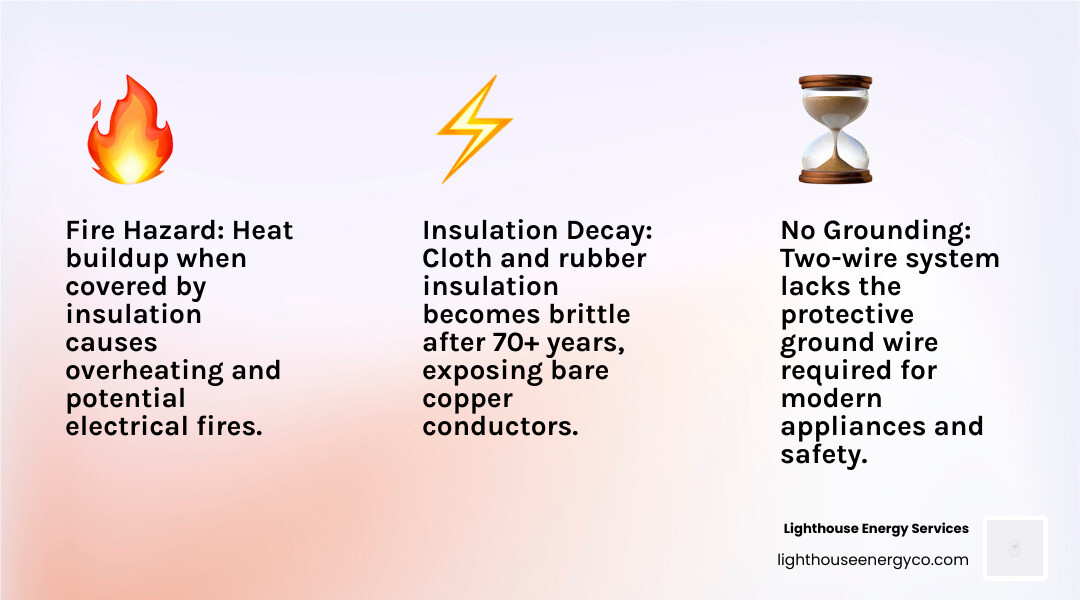
- Key dangers: Lack of grounding, fire hazards from heat buildup, and degraded insulation
- Insurance impact: Many companies refuse coverage or require immediate replacement
- Replacement cost: Typically $8,000 to $15,000+ depending on home size and complexity
- Legal status: Not illegal but prohibited in new construction; may require removal during renovations
While state-of-the-art a century ago, knob and tube wiring was never designed for modern electrical demands. Today’s air conditioners, computers, and kitchen appliances place enormous stress on this aging system, which lacks the critical safety grounding that has been standard since the 1960s. This increases the risk of electrical fires and shocks.
Many insurance companies now refuse to insure homes with active knob and tube wiring, and the National Electrical Code prohibits covering it with modern insulation, as it can overheat and create a fire hazard.
I’m Bruce Kemp, and as a licensed electrical contractor with years of experience in South Florida’s older homes, I’ve seen the dangers this system poses. Proper upgrades are essential for protecting both families and property values.
In the sections that follow, we’ll explore how to identify this wiring, understand its dangers, and outline the steps to protect your investment.
What is Knob and Tube Wiring and How Do I Identify It?
Knob and tube (K&T) wiring was the first standardized electrical method in North America, used from the 1880s through the 1940s. Its design is simple, using ceramic knobs to suspend wires in open air and porcelain tubes to protect them when passing through wooden joists. Unlike modern wiring that bundles hot, neutral, and ground wires in a plastic sheath, K&T systems use two separate cloth-wrapped copper conductors (hot and neutral) run several inches apart.
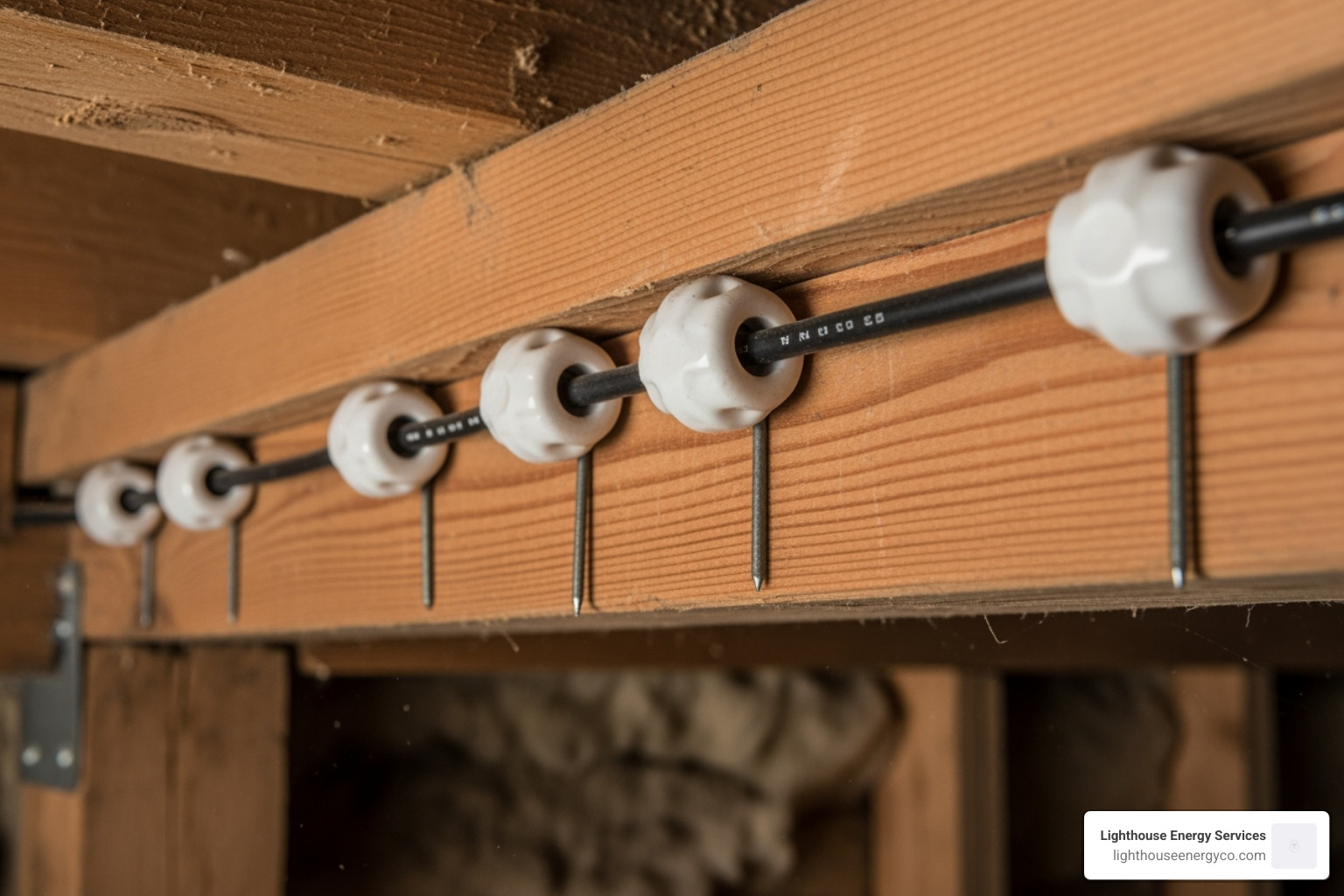
This open-air design allowed heat to dissipate effectively, which was an advantage for the minimal electrical loads of the early 20th century. However, these same characteristics create serious safety issues today. At Lighthouse Energy Services, we help South Florida homeowners assess and upgrade these outdated systems. Learn more about our commitment to safety on our About Us page.
How to identify knob and tube wiring in your home
If your home was built before 1950, you can often identify K&T wiring with a flashlight in unfinished spaces like attics, basements, or crawl spaces. Look for:
- Ceramic Knobs and Tubes: White or brown porcelain knobs nailed to joists and tubes inserted where wires pass through wood.
- Cloth-Wrapped Wires: Individual wires with black or dark brown fabric insulation, running separately instead of bundled in a modern plastic cable.
- Two-Prong Outlets: The absence of the third grounding hole in your outlets is a strong indicator of an ungrounded system like K&T.
Why was knob and tube wiring used?
K&T was the standard for over 50 years primarily because it was cost-effective and adequate for the era’s low electrical demands—powering a few light bulbs and maybe a radio. As post-WWII homes began using more appliances, its limitations became clear, and builders transitioned to modern wiring methods.
The Hidden Dangers of Knob and Tube Wiring
What was once cutting-edge is now a significant liability. Knob and tube wiring was not built for a world of air conditioners, computers, and smart devices. Its age and design create several critical dangers.
The original cloth and rubber insulation, now 70-100 years old, becomes brittle and can crumble away, leaving live copper wires exposed within walls. Furthermore, decades of improper modifications—like splicing new wires with tape or using oversized fuses to prevent them from blowing—can turn a latent issue into an active hazard. These amateur fixes bypass safety features and push the system beyond its limits.
For more technical details on these risks, the International Association of Certified Home Inspectors provides comprehensive documentation.
Fire Risk from Insulation and Overloading
The most significant danger is fire. K&T wiring was designed to dissipate heat in open air. When modern thermal insulation is added to walls or attics—a common energy-saving measure in South Florida—it smothers the wires. Heat becomes trapped, causing the wiring to overheat, which can ignite nearby wood or insulation. The National Electrical Code (NEC) explicitly prohibits covering K&T wiring with most types of insulation for this reason.
Another fire risk comes from overloading. Original K&T circuits were designed for small loads (around 10 amps). Today’s high-power appliances force these antique wires to carry currents they were never meant to handle, causing them to heat up dangerously and increasing fire risk.
No Ground Wire: A Major Safety Concern
K&T is a two-wire system and lacks a ground wire. This third wire, standard since the 1960s, provides a safe path for stray electricity to travel, tripping a breaker and preventing electric shock. Without it, if a fault occurs in an appliance, its metal casing can become electrified. Anyone touching it could receive a severe or fatal shock, a danger especially acute in kitchens and bathrooms where water is present.
This is why K&T systems use two-prong outlets. While some may install GFCI outlets for shock protection—a partial, temporary measure—it does not fix the underlying fire hazards or insulation decay.
At Lighthouse Energy Services, we take these risks seriously. Our electrical services are designed to bring your home up to modern safety standards.
Upgrading Your Home’s Electrical System
Replacing knob and tube wiring is one of the smartest investments you can make in your South Florida home. It’s not just about passing an inspection; it’s about protecting your family, home, and financial future.
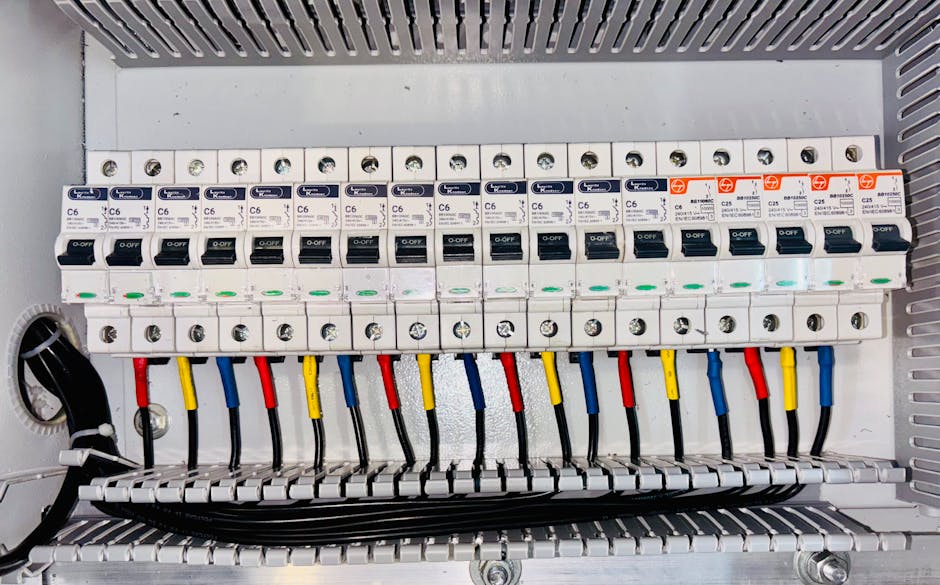
The primary benefits of a full electrical upgrade include:
- Increased Safety: Eliminates fire and shock hazards by installing modern, grounded wiring with AFCI/GFCI protection that meets current codes.
- Higher Home Value: Makes your property more attractive and marketable to buyers, who are often deterred by outdated wiring.
- Insurability: Qualifies you for standard homeowner’s insurance policies, often at better rates, without the risk of cancellation.
- Peace of Mind: Removes the constant worry associated with an aging, unsafe electrical system.
- Modern Functionality: Provides the capacity for today’s technology, from EV chargers and solar panels to modern kitchen appliances.
We are proud of the quality we bring to every project. You can view our past projects to see the difference professional work makes.
The Process of Replacing knob and tube wiring
Replacing K&T wiring is a job for a licensed electrical contractor. Our professional process is designed to be efficient and minimize disruption:
- Professional Assessment: A licensed electrician inspects your home to trace the K&T wiring and create a comprehensive replacement plan.
- Deactivating Old Circuits: We safely disconnect all old circuits at the panel before work begins.
- Running New Wiring: We route new, code-compliant Romex wiring to every outlet, switch, and fixture, using techniques to minimize wall damage.
- Panel and Breaker Upgrade: We typically install a new, modern circuit breaker panel to handle today’s electrical loads safely.
- Final Inspection: A local inspector verifies that the work meets all code requirements, ensuring the job was done right.
To learn more, check out our complete electrical services.
What is the Estimated Cost of Replacement?
The cost to replace knob and tube wiring typically ranges from $8,000 to $15,000+. The final price depends on several factors:
- Home Size: Larger homes require more materials and labor.
- Accessibility: Unfinished basements and attics reduce labor costs compared to finished walls and ceilings.
- System Complexity: Simple layouts are less expensive than homes with multiple additions or confusing circuits.
- Additional Upgrades: The cost will increase if you add new lighting, dedicated circuits, or other features.
The only way to get an accurate price is with a professional assessment. We provide transparent, detailed estimates for homeowners throughout our service area.
Navigating Real Estate, Insurance, and Renovations with K&T
Knob and tube wiring impacts more than just your outlets; it affects insurance, real estate transactions, and renovations.

The Insurance Headache
Finding affordable home insurance in South Florida is already a challenge, but K&T wiring makes it much harder. Most insurers view it as a major fire risk and will either refuse to write a policy, charge extremely high premiums, or cancel coverage upon findy. Those that do offer a policy may require a certification from a licensed electrician and still charge more. To remain insurable, replacement is often the only long-term solution.
Buying and Selling: The Negotiation Game-Changer
In a real estate deal, knob and tube wiring is a major negotiating point. For buyers, an inspection report flagging K&T is leverage to request a price reduction or have the seller replace the wiring before closing. For sellers, this issue can scare away potential buyers or lead to lowball offers. Proactively addressing the wiring—either by replacing it before listing or providing a professional replacement estimate—is the best strategy to ensure a smooth sale. Mortgage lenders may also require replacement as a condition of financing.
Renovation Reality: When Permits Force Your Hand
While existing K&T wiring is grandfathered in, it is prohibited in new construction and additions. If you pull permits for a significant renovation, especially one that opens walls, building inspectors will almost certainly require you to replace the K&T wiring in the affected areas. Often, they will mandate a full-system upgrade to meet the current National Electrical Code. The best time to handle a rewire is during a planned renovation, as access is easier and costs are lower when integrated with other work.
Frequently Asked Questions about Knob and Tube Wiring
Here are answers to the most common questions we hear from South Florida homeowners about knob and tube wiring.
Is knob and tube wiring illegal in Florida?
No, existing knob and tube wiring is not illegal. It is “grandfathered in” because it was compliant when installed. However, it is an obsolete method and is not permitted for any new construction or additions. Furthermore, local building codes will often require its removal and replacement during major renovations, especially if walls are opened.
Can I get home insurance with knob and tube wiring?
It is very difficult. Many insurance companies refuse to cover homes with active knob and tube wiring due to the high fire risk. Some may offer a policy but at a significantly higher premium and may require a formal inspection and certification from a licensed electrician. Hiding its presence can lead to a denied claim, so it’s best to be upfront and plan for replacement.
Do I have to replace all of it at once?
Ideally, yes. A full replacement of all knob and tube wiring is the only way to completely eliminate the risks and resolve all insurance and resale issues. However, we understand this is a significant investment. A partial, strategic replacement can be an interim solution. This involves prioritizing the highest-risk areas first, such as circuits covered by insulation, those in kitchens and bathrooms, or circuits powering modern, high-load appliances. A consultation with a licensed electrician is essential to create a safe, prioritized plan that fits your budget.
Secure Your Home with a Modern Electrical System
You now understand that knob and tube wiring is more than a historical quirk—it’s a serious safety concern that impacts your home’s insurability and value. The risks of fire from degraded insulation and overloaded circuits, combined with the shock hazard from a lack of grounding, mean this century-old system is not suited for modern life.
The good news is that upgrading is a straightforward process that provides lasting safety and peace of mind. A modern electrical system protects your family, increases your property value, and ensures you can get affordable homeowner’s insurance.
At Lighthouse Energy Services, we specialize in helping homeowners throughout Palm Beach County transition from outdated wiring to safe, reliable electrical systems. Our licensed electricians are available 24/7 to provide prompt, professional service. We begin with a thorough assessment and provide a transparent estimate, so you can make an informed decision.
Don’t wait for an emergency or a failed inspection. If you suspect your home has knob and tube wiring, contact us for a professional electrical assessment of your home today. Let us help you bring your home safely into the 21st century.