
Why Industrial Electrical Upgrades Are Critical for Modern Facilities

Industrial electrical upgrades are systematic improvements to a facility’s power infrastructure—including panels, wiring, lighting, and control systems—that improve safety, capacity, and operational efficiency. These upgrades bridge the gap between aging electrical systems and the demands of today’s high-powered machinery and automation technology.
Key reasons facilities need industrial electrical upgrades:
- Safety Concerns: Outdated systems increase fire risk and workplace accidents.
- Insufficient Capacity: Older buildings with 60-120 amp service cannot support modern equipment requiring 200+ amps.
- Energy Waste: Legacy lighting and equipment consume far more power than modern alternatives.
- Compliance Issues: Systems must meet current electrical codes and safety standards.
- Operational Inefficiency: Frequent breakdowns and production delays are costly.
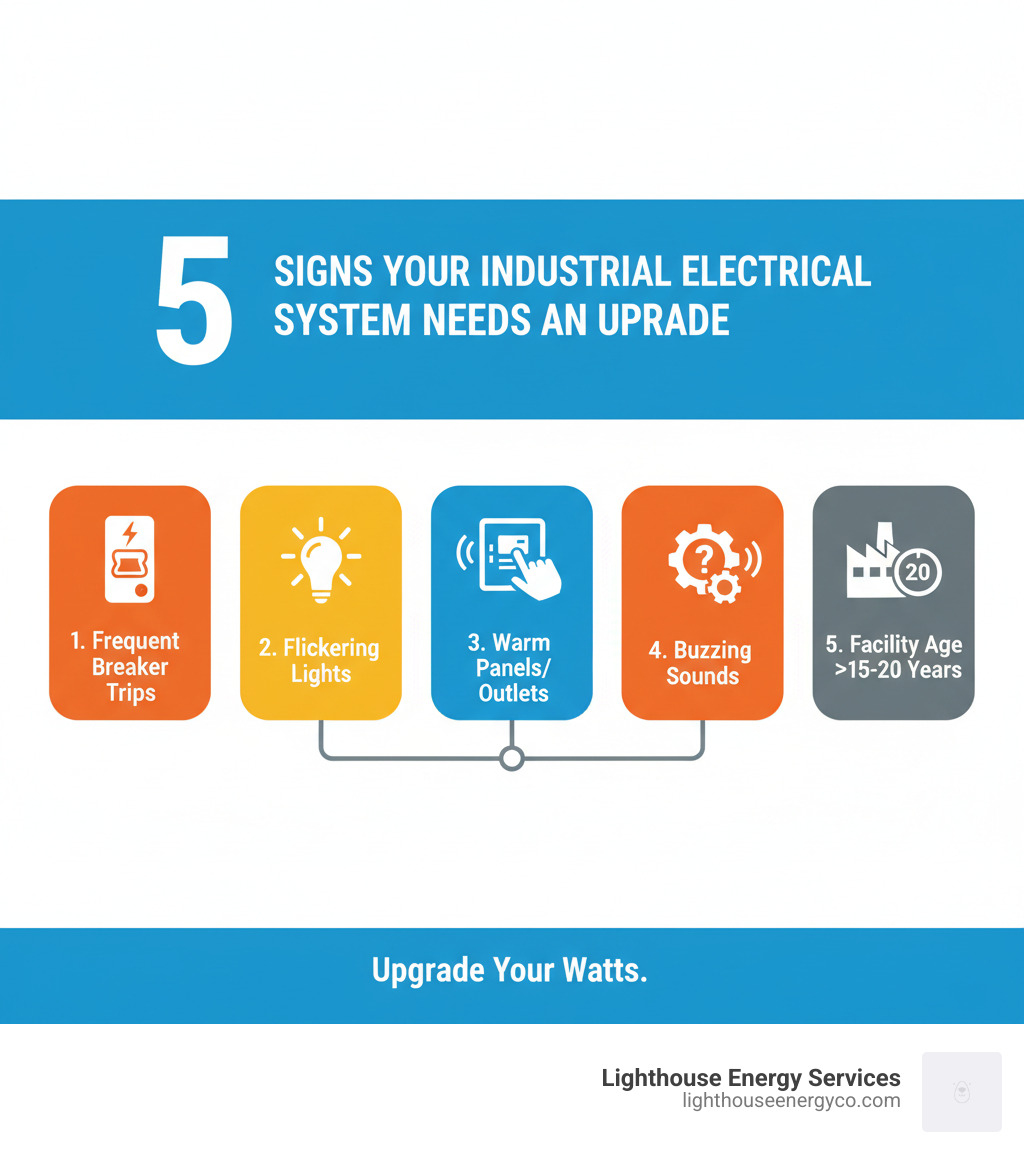
If your facility experiences frequent breaker trips, flickering lights, or can’t power new equipment, you’re likely overdue for an upgrade. Most experts recommend comprehensive electrical system upgrades every 15 to 20 years.
The right improvements transform not just power systems, but entire operations—boosting safety, efficiency, and bottom-line performance. For example, upgrading to LED lighting alone can slash energy consumption by 50-75%. These upgrades deliver measurable returns through reduced energy costs, fewer safety incidents, and increased production capacity.
Telltale Signs: When to Consider an Electrical Upgrade
Recognizing the warning signs of a failing electrical system is key to preventing costly emergencies and dangerous situations. Here are the signals your system might be sending you:
Frequent Breaker Trips: If your team is constantly resetting breakers, your circuits are overloaded. Older systems weren’t built to handle today’s power-hungry machinery, and each trip is a red flag.
Flickering or Dimming Lights: This signals voltage drops or an insufficient power supply, especially when heavy equipment starts. It points to deeper electrical issues that need professional attention.
Overheating or Buzzing Components: Electrical panels or outlets that feel warm to the touch are a serious fire hazard. Similarly, any buzzing or humming sounds from electrical components suggest loose wiring or faulty parts operating under strain.
Insufficient Power for Modern Equipment: If you can’t power new machinery without overloading your system, you’ve outgrown your infrastructure. Buildings with 60 or 120-amp systems often can’t support technology that requires 200 amps or more.
Reliance on Extension Cords: A web of extension cords is not just a tripping hazard; it’s a fire risk and a clear sign your facility lacks adequate permanent outlets for your operational needs.
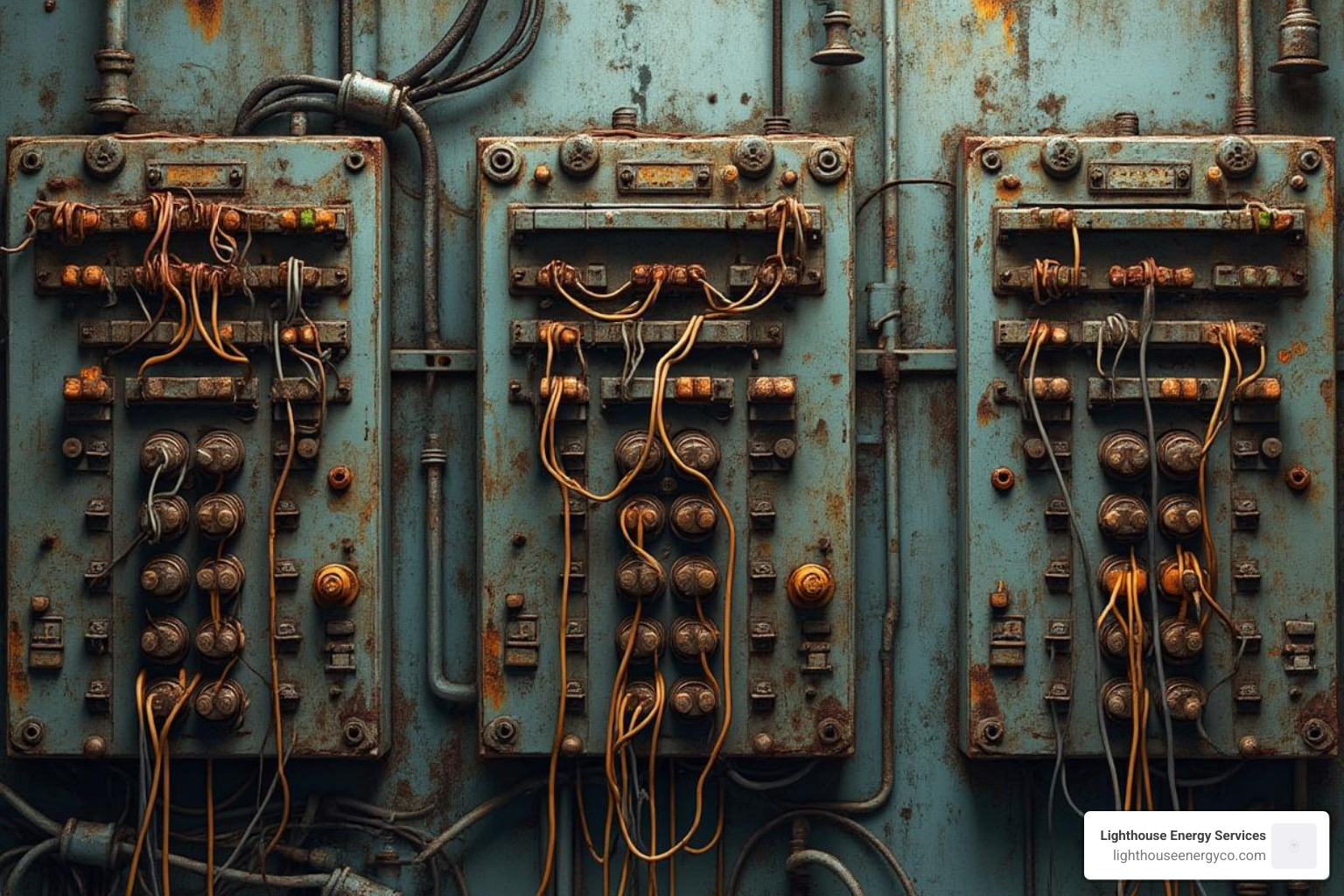
Outdated Panels and System Age: Panels over 25-30 years old lack modern safety features like Arc Fault Circuit Interrupters (AFCIs) and Ground Fault Circuit Interrupters (GFCIs). If your system is over 15-20 years old, its components are likely degrading and losing efficiency.
Production Delays from Electrical Issues: When equipment malfunctions or unexpected outages interrupt operations, the costs add up quickly in lost productivity and missed deadlines.
If these scenarios sound familiar, it’s time to consider industrial electrical upgrades. A professional assessment can identify your facility’s needs and prevent small issues from becoming major problems.
The ROI of Upgrading: Key Benefits for Your Facility
Industrial electrical upgrades are a strategic investment that pays for itself over time. These improvements improve nearly every aspect of your facility’s performance.
Improved Safety and Reduced Fire Hazards: Upgrades introduce modern safety features like Arc Fault Circuit Interrupters (AFCIs) and Ground Fault Circuit Interrupters (GFCIs), which actively guard against electrocution and electrical fires. Replacing old wiring and overloaded circuits provides crucial protection for your personnel and property.
Substantial Energy Savings: Modern electrical systems and lighting are far more efficient. Upgrading to LED lighting alone can reduce energy consumption by 50-75%. These savings compound year after year, significantly lowering your utility bills.

Lower Operational Costs: In addition to energy savings, newer equipment requires less maintenance and fewer emergency repairs. This leads to a reduced maintenance budget and less operational disruption.
Increased Production Capacity: A robust, modern electrical system can handle the demands of your current machinery while providing room to expand. You can add new automated lines or scale up operations without worrying about overloads.
Improved Reliability and Reduced Downtime: Upgrades lead to consistent, stable power, which means machinery runs smoothly and production stays on schedule. Reducing unexpected equipment failures prevents costly downtime and lost revenue.
Compliance with Modern Codes: Electrical codes evolve to incorporate new safety standards. Upgrades ensure your facility meets current local and national regulations, helping you avoid fines and insurance complications.
Increased Property Value: A modern, safe, and efficient electrical system is a major asset. It makes your property more attractive to potential buyers or tenants and signals that the facility is future-ready.
While the upfront investment in industrial electrical upgrades can be significant, the cumulative benefits of energy savings, improved safety, and improved productivity deliver a clear and compelling return on investment. At Lighthouse Energy Services, our qualified electricians have helped countless facilities make this transition, changing operations from struggling to thriving.
A Guide to Essential Industrial Electrical Upgrades
Industrial electrical upgrades are strategic investments in your facility’s core infrastructure. This section details the most common and beneficial types of upgrades, from power management to lighting and automation.
Upgrading Power Distribution Systems
An efficient power distribution system is the backbone of your facility. Key upgrades include:
Electrical Panel Upgrades: Modern panels are essential for handling today’s industrial loads. They integrate advanced safety features like AFCIs and GFCIs, dramatically reducing the risk of electrical fires and accidents.
Switchboard Modernization: Outdated switchboards can cause inefficient energy flow and unreliable power. Modernizing these systems improves safety, control, and power distribution. Our Main Switchboard Upgrades can transform your facility’s performance.
Transformer Replacement: Older transformers can waste significant energy and provide inconsistent voltage, potentially damaging sensitive equipment. New, energy-efficient models ensure stable power and reduce energy loss.
Circuit and Power Upgrades: Updating individual circuit boards ensures they can safely handle current loads. For growing operations, a 3-phase power upgrade may be necessary to provide the high-capacity power required by heavy machinery. Our Industrial Electrical Services team can design an upgrade that meets your specific needs.
Transitioning to Energy-Efficient Lighting
Upgrading your lighting offers immediate and dramatic results in both cost and safety.
LED Lighting Retrofits: This is one of the most cost-effective industrial electrical upgrades available, reducing lighting energy consumption by 50-75%. The payback period is often just a few years.
Improved Visibility and Safety: LED lighting provides crisp, consistent illumination that reduces eye strain and minimizes shadows, helping your team work more safely and productively.
Lower Maintenance Costs: LEDs last significantly longer than traditional bulbs, which means fewer interruptions for bulb changes and lower labor costs.
Smart Lighting Controls: Automated dimming, motion sensing, and scheduling can add another 20-30% in energy savings by ensuring lights are only on when and where they are needed.
Implementing Automation and Control Systems
Intelligent control systems monitor, adjust, and optimize your electrical usage automatically.
Programmable Logic Controllers (PLCs): Modern PLCs provide precise control over machinery and processes, improving consistency while reducing manual errors and energy waste.
SCADA Systems: Supervisory Control and Data Acquisition (SCADA) systems offer a real-time, bird’s-eye view of your entire operation, helping you optimize energy usage and spot inefficiencies early.
Variable Frequency Drives (VFDs): VFDs control the speed of AC motors based on actual demand, preventing them from running at full speed wastefully. This can save 30-50% or more on motor energy consumption.
Automated Process Control: These integrated systems adjust power usage based on demand, prevent overloads, and reduce energy waste without manual intervention. They are a key component of a modern, efficient facility. Explore Top Electrical Upgrades for Industrial Facilities to see how automation can revolutionize your operation.
The Upgrade Blueprint: Planning, Execution, and Compliance

A successful industrial electrical upgrade requires careful planning and professional execution to ensure safety, compliance, and minimal disruption. Breaking the process into clear steps makes it manageable.
Step 1: Strategic Planning and Assessment
Every project begins with a thorough understanding of your facility’s current and future needs. This phase includes:
Site Analysis and Load Calculation: We conduct a deep dive into your current electrical infrastructure, usage patterns, and vulnerabilities. We then calculate your present and future power requirements to ensure the upgrade supports long-term growth.
Equipment Inventory: Cataloging all power-drawing equipment helps identify inefficiencies and accurately determine your facility’s demands.
Project Scope and Budgeting: Based on the assessment and your operational goals, we develop a detailed project roadmap with clear timelines and outcomes. We work with you to create a budget that considers both the upfront investment and long-term returns.
Step 2: Partnering with Licensed Electrical Contractors
This work requires specialized expertise and strict adherence to safety standards. Working with licensed professionals is non-negotiable.
Expertise and Safety: Licensed electricians have the training and certifications to handle complex industrial systems safely. At Lighthouse Energy Services, our qualified team prioritizes rigorous safety protocols to protect your workers and our own.
Code Compliance and Permitting: We have deep expertise in the National Electrical Code (NEC) and local Florida regulations. We handle the entire permitting process, from documentation to inspections, ensuring your project proceeds smoothly and legally.
Project Management and Quality: We provide comprehensive project management and guarantee quality workmanship using the best materials. Our goal is to ensure your project is durable, efficient, and reliable. We invite you to View Our Projects to see our commitment to excellence.
Step 3: Execution, Testing, and Ensuring Code Compliance
This phase is about precision, safety, and verification to ensure everything performs as expected.
Safe Installation: Our electricians follow strict safety practices, including lockout/tagout procedures, to minimize risk and disruption to your operations.
System Testing and Commissioning: After installation, every component undergoes rigorous load testing and functional checks. This commissioning process ensures the entire system operates optimally and safely.
Final Inspections and Handover: The upgraded system is inspected by our team and local authorities to confirm full compliance with all electrical codes. We then provide you with complete documentation, including schematics, manuals, and test reports, for future reference.
Future-Proofing and Financing Your Project
A strategic upgrade builds an electrical system that can handle tomorrow’s demands, not just today’s. This requires forward-thinking design and a clear understanding of the financial benefits.
Key considerations for future-proofing industrial electrical upgrades
Scalability for Growth: We design upgrades with future expansion in mind, ensuring there’s capacity to add new machinery or production lines without another major overhaul.
Smart Grid and Renewable Energy Readiness: We can build in compatibility for future smart grid technologies and make it easier to integrate renewable energy sources like solar power down the line. Explore our Industrial Electrical Services to learn more.
Modular System Design: A modular approach allows for easier expansion, modification, or repair of specific components without disrupting the entire system, saving time and money.
Accommodating New Technologies: Future-proofing ensures your system can support emerging technologies like advanced robotics and AI-driven controls, keeping you competitive.
How to justify the cost of industrial electrical upgrades
While industrial electrical upgrades are a significant investment, the financial returns are compelling.
Return on Investment (ROI) Calculation: We help you conduct a detailed ROI analysis that factors in energy savings, reduced maintenance, and improved productivity. The payback period is often faster than expected.
Energy and Maintenance Savings: A thorough analysis quantifies the savings from eliminating wasted energy and reducing equipment breakdowns. These ongoing savings often offset a substantial portion of the upgrade cost.
Productivity Gains from Less Downtime: Reliable systems mean fewer outages and equipment malfunctions. This boosts productivity and revenue by preventing costly interruptions in production.
Safety-Related Cost Avoidance: Preventing a single major electrical accident or fire can save your company from catastrophic financial and reputational damage. The cost of an upgrade is a fraction of the potential cost of an incident.
Available Grants and Incentives: We can help you explore government grants, tax incentives, or utility rebates for energy-efficient upgrades, which can significantly reduce your net investment.
At Lighthouse Energy Services, we help you build a comprehensive financial case that demonstrates the long-term value of upgrading. When you’re ready, contact us to discuss how we can modernize your facility.
Frequently Asked Questions about Industrial Electrical Upgrades
Here are answers to some of the most common questions we receive about industrial electrical upgrades.
How often should an industrial electrical system be upgraded?
We typically recommend a comprehensive upgrade every 15 to 20 years. This keeps your facility aligned with technological advancements, evolving safety codes, and increasing power demands. However, regular inspections by qualified electricians can identify specific components that may need attention sooner. Proactive upgrades are far less costly than emergency repairs and production downtime.
What is the main advantage of upgrading from a fuse panel to a circuit breaker panel?
The primary advantages are safety and convenience. Circuit breakers are more reliable at interrupting overcurrents, which reduces fire risk. Unlike fuses that must be replaced, a tripped breaker can be easily reset, minimizing operational downtime and keeping your facility running smoothly. Modern breaker panels also incorporate advanced safety features like AFCIs and GFCIs.
Can electrical upgrades really lower my operational costs?
Yes, significantly. Upgrades like switching to LED lighting can cut energy consumption by 50-75%. Modern power distribution systems, efficient transformers, and automation controls like Variable Frequency Drives (VFDs) also eliminate energy waste throughout your operation. Combined with lower maintenance costs and less production downtime, the ROI on industrial electrical upgrades is clear and substantial.
If you’re curious about what upgrades would make the most sense for your facility, our qualified electricians at Lighthouse Energy Services can provide a professional assessment. Contact us to start the conversation, or explore our commercial electrical services to see how we can help.
Power Your Future with Confidence
We’ve covered the essential landscape of industrial electrical upgrades, from identifying warning signs to understanding the tangible benefits of improved safety, efficiency, and reliability. The electrical demands on modern facilities are only increasing, and an outdated system creates unnecessary risks and financial waste.
Upgrading your electrical infrastructure is a foundational investment in your facility’s future. It’s not just about fixing problems; it’s about open uping potential. Better lighting improves safety, increased capacity allows for growth, and smart controls reduce energy costs. These are game-changing improvements that boost your bottom line.
At Lighthouse Energy Services, we’ve built our reputation on getting the job done right, and right now. Our qualified electricians understand the unique challenges of industrial environments in Palm Beach County and the surrounding areas. We are available 24/7 because we know electrical issues don’t wait for business hours. You can expect honest, professional service with no hidden fees.
Ready to take the next step? Explore our commercial electrical services to see the full range of solutions we offer. When you’re ready to discuss your specific needs, please Contact Us today. Let’s work together to power your facility’s future with confidence.