
You've probably already done the easy part. You picked the vehicle, looked at a few chargers online, and started wondering whether adding home charging in Riviera Beach is a simple afternoon job or a bigger electrical project.
The honest answer is that it depends less on the car and more on the building. In this part of Palm Beach County, I see two issues come up over and over: older electrical infrastructure and parking layouts that weren't designed for EV charging. A newer single-family home with open panel space is one kind of job. A coastal property with aging equipment, a long run to the driveway, or a condo board in the middle is a completely different one.
That's why good EV charger installation in Riviera Beach, FL starts with the house, not the charger box. The right approach keeps you from buying the wrong equipment, underestimating the cost, or getting stuck in permit review because the paperwork didn't match the actual site.
Table of Contents
- Your Pre-Installation Checklist Home Assessment and Load Calculation
- Choosing the Right Charger Level 1 vs Level 2 for Your Lifestyle
- Navigating Riviera Beach Permits and Panel Upgrades
- The Real Cost of EV Charger Installation in Riviera Beach
- Finding and Vetting a Licensed Electrician in Palm Beach County
- Post-Installation Care and Getting the Most From Your Charger
- Your Riviera Beach EV Charger Questions Answered
Your Pre-Installation Checklist Home Assessment and Load Calculation
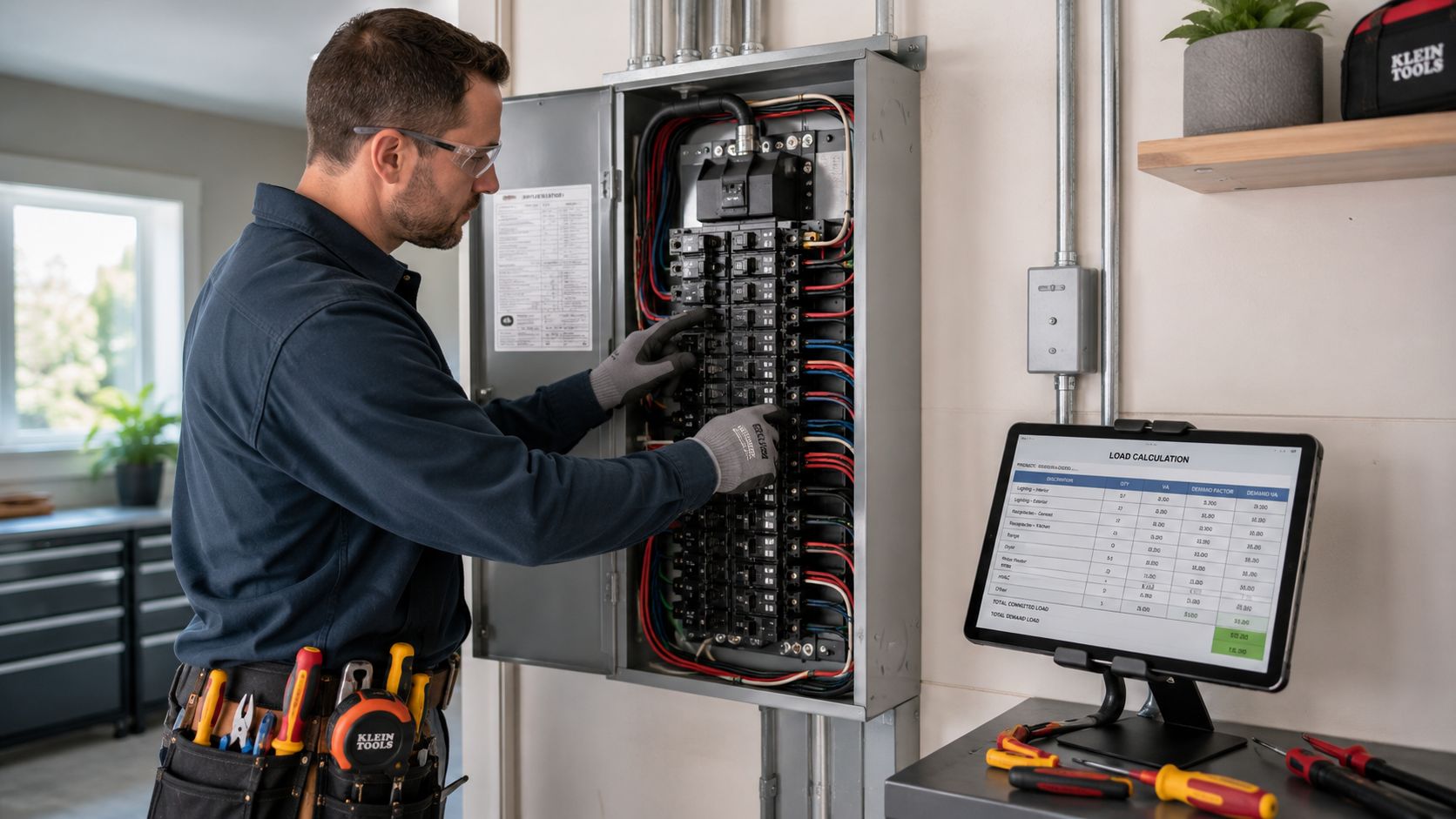
You pull into the driveway with a new EV on the way, pick out a charger online, and assume the install will be straightforward. Then the panel cover comes off. In Riviera Beach, that is often the point where the actual project begins, especially in older coastal homes, garages that were added later, and condos with shared electrical rooms.
Why the panel comes first
A charger adds a steady, high electrical load for hours at a time. Before anyone talks about charger model, amperage, or wall location, the house has to be checked for capacity, condition, and a workable wiring route.
That inspection usually answers three practical questions:
- Is there physical space in the panel for a new two-pole breaker?
- Can the service handle the added continuous load along with air conditioning, water heating, cooking, and laundry?
- How hard is the run to the parking spot if the car is not parked near the panel?
Those answers affect cost fast. A charger mounted on the other side of a garage is one job. A charger feeding a driveway parking spot from a back-of-house panel, through finished walls or around a condo structure, is a different job with different labor and material.
In Riviera Beach, panel condition matters as much as panel size. Salt air, humidity, and age can leave breakers, lugs, meter equipment, or outdoor disconnects in worse shape than they look from a quick glance. I have seen panels that seemed usable from the outside but showed corrosion and heat wear once opened. That kind of equipment should be dealt with before adding a charger circuit.
What a proper load calculation should catch
A real load calculation is more than counting empty breaker spaces. It reviews the home's service size, major appliances, existing continuous loads, panel rating, and the condition of the equipment feeding the house.
Homeowners can get a basic sense of how breaker and conductor choices relate to load by looking at the E & I Sales sizing guide. The field decision still has to be based on the actual service, the charger specs, and code requirements for the property.
A solid pre-install assessment should catch problems like these:
- Frequent nuisance tripping when the AC, range, dryer, or water heater are running.
- A full, outdated, or mismatched panel that leaves no clean path for a dedicated EV circuit.
- Corrosion, heat marks, or loose-looking terminations in exterior or service equipment.
- A long wire run to the vehicle location, which can increase copper cost, conduit work, and labor.
- Condo or townhouse limitations where the electrical room, meter bank, or association rules affect what can be installed and where.
That last point gets missed in a lot of general EV charging advice. In Riviera Beach, many owners are not working with a simple single-family layout. They are dealing with carports, assigned parking, HOA approval, common-area walls, or service equipment that was never designed with EV charging in mind. The charger may be the easy part. Getting power to it legally and cleanly is often the harder part.
If the calculation shows the existing service is already close to its limit, the project can turn into a service upgrade instead of a simple circuit addition. In that case, it helps to understand what is involved in a 150-amp to 200-amp service upgrade for EV charging.
The upfront assessment saves rework. It also helps avoid permit problems, surprise change orders, and a charger setup that works on paper but causes trouble in daily use.
Choosing the Right Charger Level 1 vs Level 2 for Your Lifestyle
You get home in Riviera Beach after a full day, plug in, and wake up to a battery that still is not where you need it. That is usually when homeowners realize charger choice is not about specs on a box. It is about how the car gets used, where it parks, and what the house can realistically support.
When Level 1 is enough
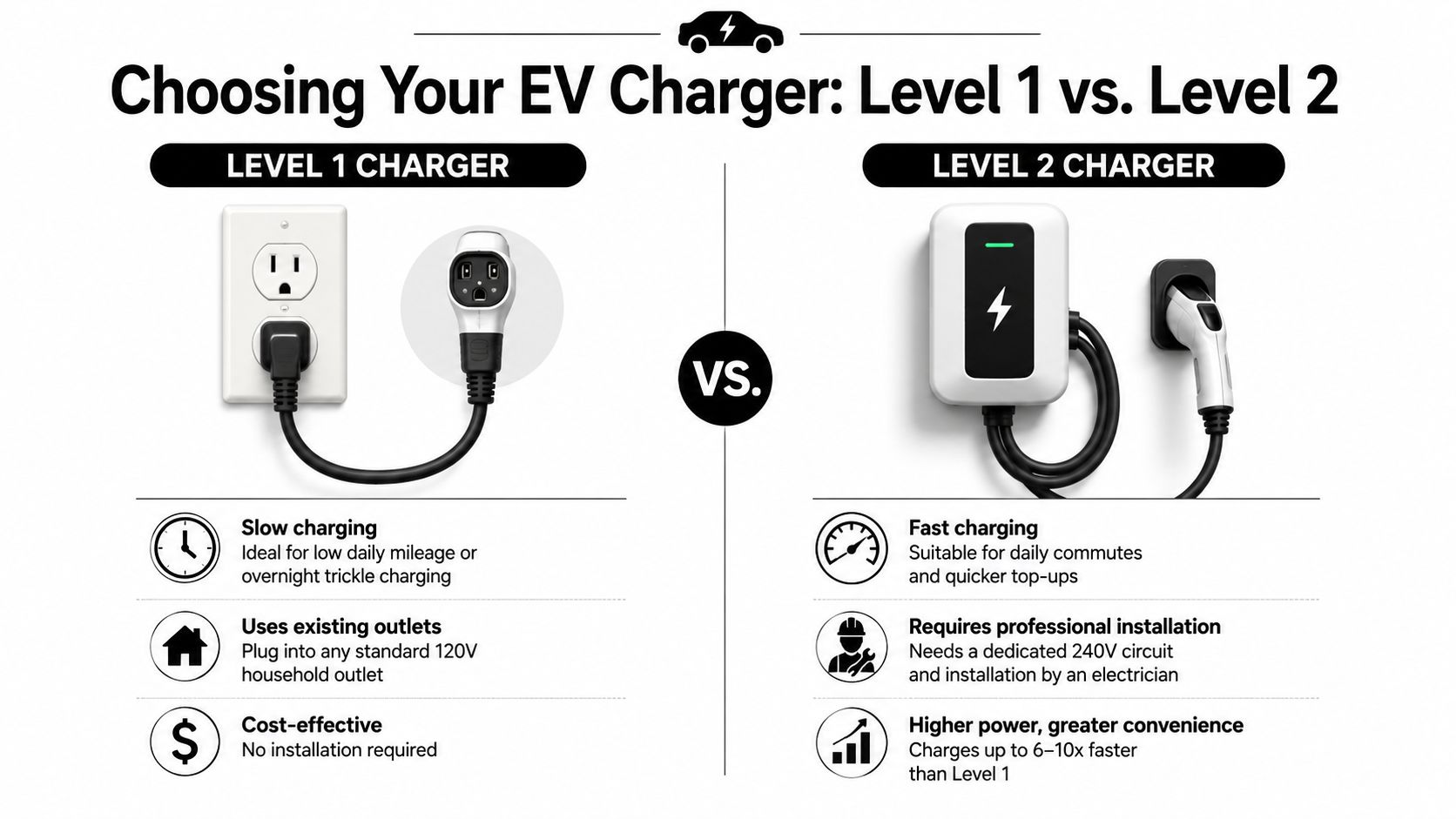
Level 1 charging uses a standard receptacle, but that does not automatically mean every garage or carport outlet is a good candidate. In older coastal homes around Riviera Beach, I often see outlets with the wrong circuit conditions, worn devices, or long runs that were fine for light tools and no more. If that outlet shares loads or shows signs of age, using it daily for EV charging is not a good long-term plan.
Level 1 fits drivers who keep mileage low, park for long stretches, and can tolerate slower recovery after a busy day. It also makes sense for homeowners who want to live with the EV for a few months before committing to a larger electrical project.
That said, slow charging changes the way you use the car. If you come home with a heavily depleted battery more than once or twice a week, Level 1 can start to feel restrictive.
When Level 2 is the better fit
Level 2 works better for households that want the car ready every morning without much planning. It is usually the right choice for commuters, two-EV households, larger battery packs, and anyone who uses a garage less like storage and more like a daily refueling point.
The installation is more involved. A proper Level 2 setup usually needs a dedicated 240-volt circuit, the right breaker size, correct wire sizing for the run length, and a permit. In some homes, the charger itself is the smaller expense. The bigger cost comes from making room in the panel or correcting older service equipment. If your existing system is crowded or dated, a panel upgrade for EV charging may be a significant part of the decision.
Here is the practical difference:
| Charger type | Best for | Installation reality | Daily experience |
|---|---|---|---|
| Level 1 | Light driving, overnight top-offs | May use an existing outlet if the circuit and receptacle are suitable | Simple, but slow to recover after heavier use |
| Level 2 | Regular commuting, larger batteries, faster turnaround | Usually needs a new dedicated circuit, permit, and sometimes panel work | Easier to live with day to day |
Condo and townhouse owners need to be even more careful here. A Level 2 charger may be the better fit for your routine, but association rules, assigned parking layouts, and common-area electrical access can shape what is possible. In those properties, the right charger is the one you can install legally, get approved, and use without creating a dispute over shared infrastructure.
For a single-family homeowner, the choice usually comes down to habits. For a condo owner, it often comes down to habits plus building constraints.
If charging needs to work in the background with no babysitting, Level 2 is usually the better investment. If your driving is light and the existing outlet is suitable, Level 1 can hold you over without overspending too early.
Navigating Riviera Beach Permits and Panel Upgrades
This is the part that worries homeowners most, mostly because permit talk makes a straightforward project sound more complicated than it is. The process is manageable when the site assessment is done correctly and the paperwork matches the work.
What permit-ready usually means
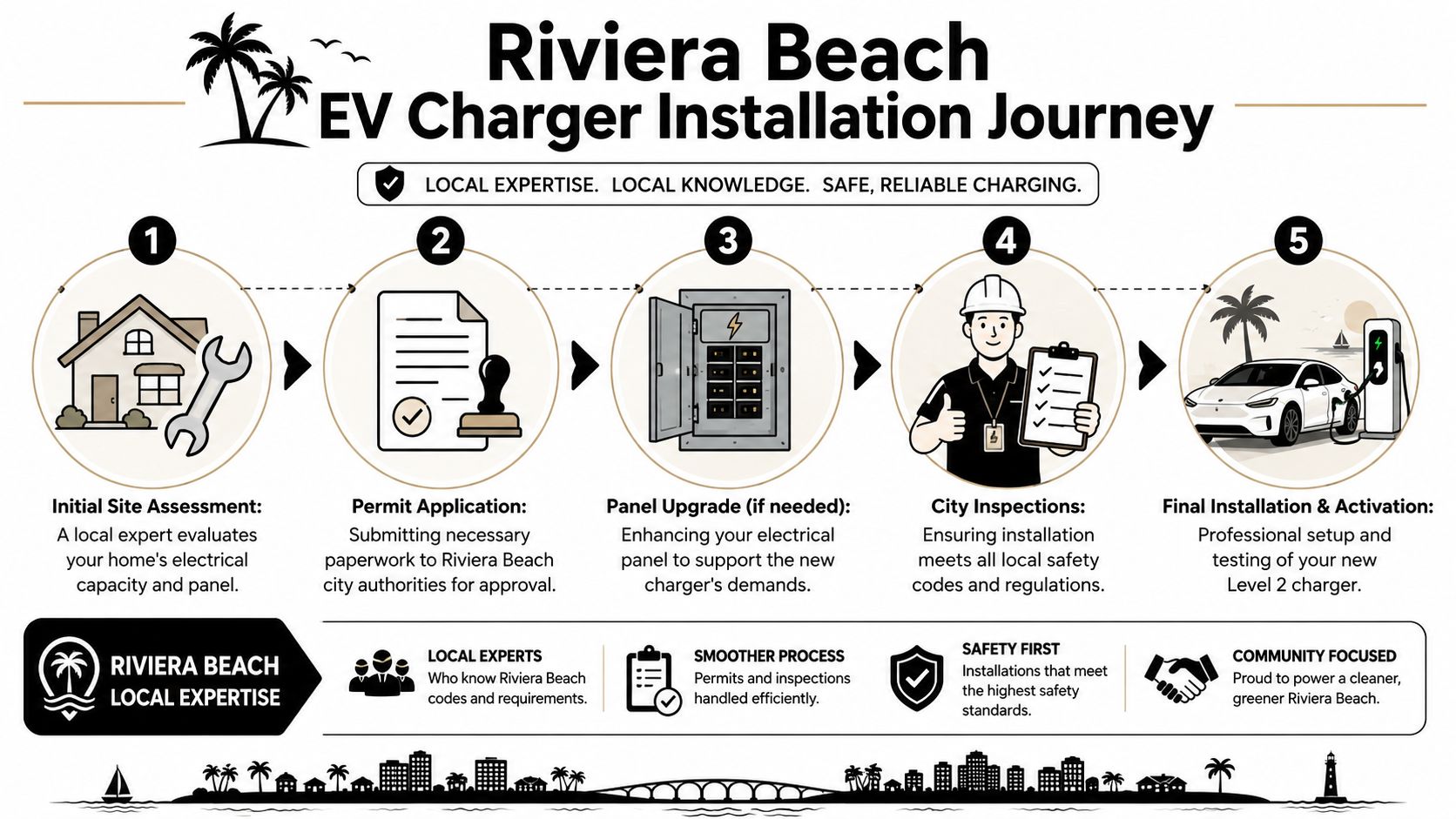
In Palm Beach County, charging station projects commonly need load calculations, manufacturer spec sheets, site plans, ADA annotations where applicable, and sealed engineering drawings if structural review is triggered. That's why a rough sketch and a charger model number usually aren't enough for a clean approval path.
The inspection flow matters too. In Florida's permitting environment, projects typically go through plan review before construction, then electrical rough-in and final inspections, as described in this installation and inspection walkthrough.
What slows projects down most often isn't the charger itself. It's missing documentation or a mismatch between what was submitted and what's on site.
- Load details missing: The reviewer can't confirm the service can support the charger.
- Site plan too vague: The mounting location, disconnects, or wiring route aren't clear.
- Field changes after approval: The charger or circuit gets changed without updating the plan.
What happens when the panel is undersized
If the load calculation shows the panel doesn't have enough headroom, there are several possible paths. Sometimes the answer is a modest revision to the installation approach. Sometimes it means a bigger electrical project.
A few common outcomes:
- Dedicated circuit only: Best-case scenario. The existing panel and service support the charger with minimal changes.
- Subpanel addition: Useful when space management is the issue more than total service capacity.
- Full panel or service upgrade: Necessary when the home's electrical backbone is already stretched.
One thing inspectors and electricians both care about is workmanship at the termination stage. Skipping torque verification on terminals or choosing hardware before confirming panel headroom can lead to delays or failed inspections. If you want a broader look at what those upgrade paths can involve, this overview of electrical panel upgrades is a good companion read.
Permits aren't red tape for the sake of it. They protect the homeowner by making sure the charger, the conductors, the breaker, and the panel all work together safely.
The Real Cost of EV Charger Installation in Riviera Beach
This is usually the first question homeowners ask, and it should be. A charger project can be modest, or it can uncover larger electrical issues that were already there.
Many online guides miss key cost drivers in Riviera Beach, especially distance from the panel, service capacity in older homes, and condo approval requirements. That gap is specifically noted in this local charging cost discussion for Riviera Beach.
What a simple install usually includes
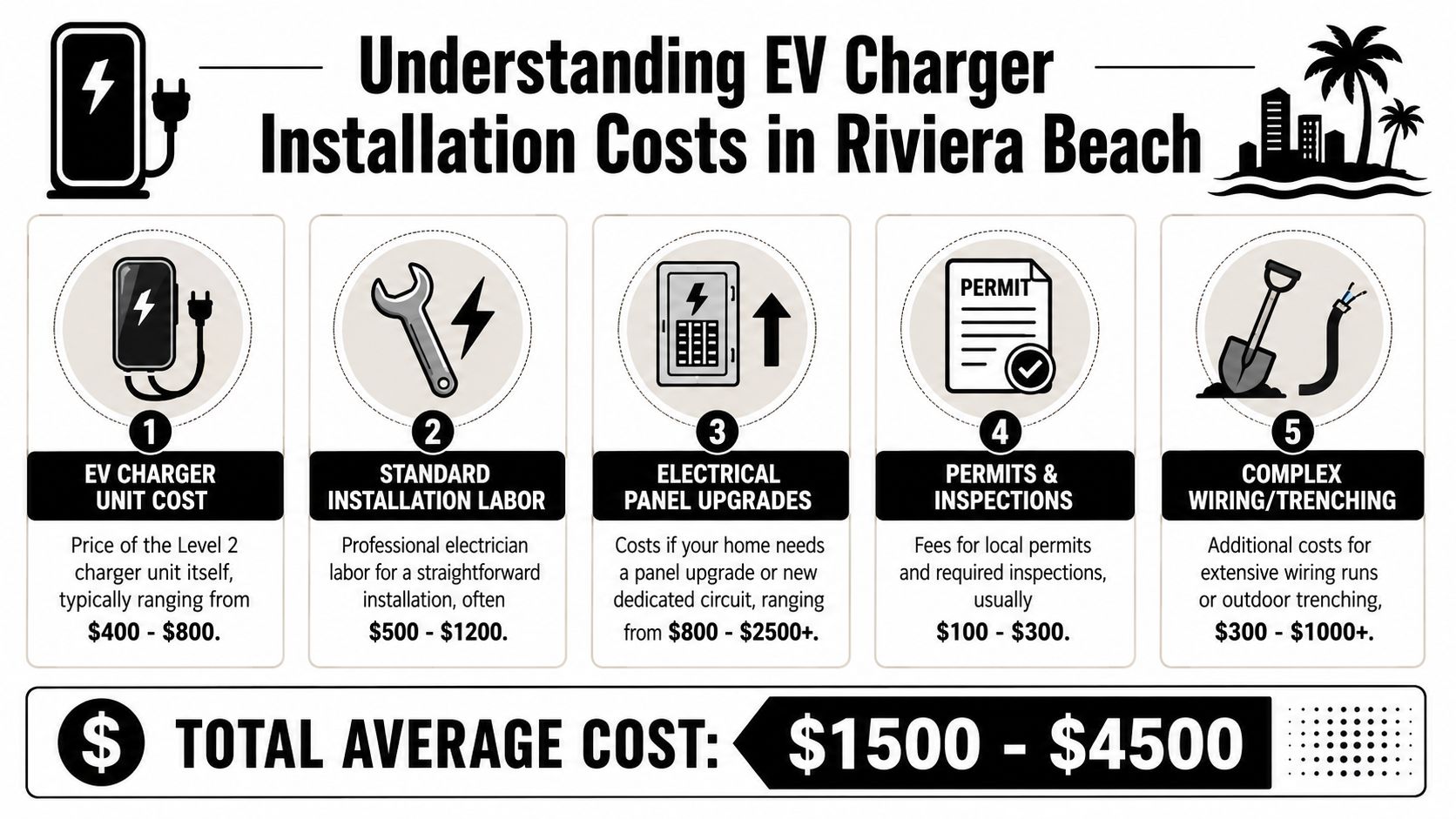
A straightforward project usually means the panel has capacity, the parking spot is close, and the wiring route is direct. In that case, the cost is mostly made up of the charger hardware, labor, permit handling, and standard installation materials.
The biggest mistake I see is treating “charger installation” like a single flat-price item. It isn't. It's a package of separate pieces that can change based on the building.
A cleaner way to think about budget is by category:
| Cost area | What it covers | Why it changes |
|---|---|---|
| Equipment | The charger unit and related mounting hardware | Features, enclosure type, cord length |
| Electrical labor | Circuit installation, mounting, terminations, testing | Access difficulty and wiring path |
| Permit and review | Documentation, submission, inspections | Scope of work and review requirements |
| Corrective work | Panel changes, corrosion issues, service limitations | Existing condition of the home |
What pushes the price up
The expensive jobs usually come from the building, not the charger. A coastal home with older gear, a detached garage, or a parking area far from the service equipment can turn a small install into a more involved one.
Watch for these cost multipliers:
- Long conductor runs: More labor, more material, more finish work.
- Panel replacement or service upgrade: Often the largest surprise item.
- Condo or HOA requirements: Added drawings, review time, access rules, or designated installation methods.
- Outdoor exposure: Weather protection and mounting strategy matter more near the coast.
- Shared or awkward parking layouts: The charger location may be limited by association rules or practical access.
Cheap quotes often leave out the conditions that make Riviera Beach projects unique. The final bill catches up later.
If you want a realistic budget, ask for the estimate to separate the base installation from possible add-ons. That way you can see what's included, what depends on permit review, and what only happens if the assessment finds limited capacity or aging equipment.
Finding and Vetting a Licensed Electrician in Palm Beach County
A charger install can look simple from the driveway and turn complicated the minute the panel cover comes off. That happens a lot in Riviera Beach. Older coastal homes may have tired breakers, limited space, or corrosion starting at the lugs. Condo projects add another layer because the electrician may need to satisfy both the city and the association before any work starts.
That is why the electrician matters more than the charger brand. The right contractor spots problems before they become change orders, failed inspections, or a charger that trips every time the car pulls full power.
What to ask before you hire
Start with the part that affects the job. Ask whether the electrician has handled EV charger work on older homes, townhomes, and condo parking areas in Palm Beach County. A contractor who only talks about hanging the unit on the wall is missing half the project.
A useful conversation sounds like this:
- Have you installed EV chargers on older service equipment before? Riviera Beach homes can hide grounding issues, corrosion, and crowded panels.
- Will you verify load capacity before you lock in charger size and breaker size? That tells you whether the recommendation is based on the house, not a sales script.
- Who pulls the permit and meets the inspector? You want one clear answer.
- If the panel is full or undersized, what are the options? A good electrician should explain choices such as load management, a lower-amperage setup, subpanel work, or a service upgrade.
- Have you worked in condos or HOA-controlled properties? Access rules, approved mounting locations, and required documents can slow a project down if nobody checks them early.
Listen to how they explain the trade-offs. A qualified electrician should be able to tell you why one charger location costs less, why another may charge better for daily use, and where the hidden risk sits in your particular home.
What a solid quote should tell you
A good proposal should be specific enough that you can see what is included and what could change if the site conditions are worse than expected. Vague quotes are where budget problems start.
Look for these details:
- Dedicated circuit size and the charger output it supports
- Proposed mounting location and expected wire route
- Permit responsibility and inspection coordination
- Included work versus possible add-ons such as panel repairs, drywall patching, trenching, or corrosion correction
- Startup testing to confirm the charger is operating properly after installation
Our guide to hiring a qualified electrician for home projects gives a practical checklist for reviewing bids and spotting thin scopes before you sign.
One more point matters. The lowest quote is often based on the best-case scenario. In Riviera Beach, best-case assumptions fail all the time because of salt exposure, older equipment, long runs to detached parking, or condo approval requirements. A careful electrician will say that upfront. That honesty usually saves money.
Post-Installation Care and Getting the Most From Your Charger
Once the charger is installed and approved, the job shifts from construction to ownership. Most units don't need constant attention, but a few simple habits help them last longer and perform more reliably.
Simple maintenance that matters
Start with visual checks. Look at the cable, connector, wall mounting, and any exposed exterior hardware every so often. If the plug handle is cracked, the cable jacket is damaged, or the enclosure looks loose, don't keep using it until it's inspected.
A few habits go a long way:
- Keep the connector clean: Dirt and moisture at the handle or holster can create avoidable wear.
- Protect the cable: Don't leave it stretched tight, pinched under objects, or lying where vehicles can roll over it.
- Watch for heat or nuisance trips: If the breaker starts tripping or the equipment feels unusually warm, have it checked.
- Pay attention after storms: Coastal weather can affect exterior equipment, seals, and mounting points.
If the charger's behavior changes, slower charging, breaker trips, error lights, stop using it as “normal” and get it inspected.
Using home charging the smart way
If your charger has scheduling features, use them. Timed charging can make daily use more predictable and may help you align charging with your utility habits.
Riviera Beach also has a longer history with EV infrastructure than many people realize. The Port of Palm Beach announced workplace charging in 2020 as part of Florida Power & Light's EVolution initiative, and that early local connection to utility-led charging planning is documented in the Port of Palm Beach EV charging announcement. For homeowners, that means it's worth checking current FPL-related programs and account tools as part of owning the charger, not just installing it.
Home charging works best when it becomes routine. Plug in where it makes sense, keep the equipment in good condition, and treat the charger like any other permanent electrical asset in the house.
Your Riviera Beach EV Charger Questions Answered
Do I still need a home charger if public charging is nearby
Not always. Riviera Beach sits inside a strong regional charging network. ChargeHub reported more than 4,100 public EV charging stations in Florida, including over 3,300 Level 2 chargers and 808 DC fast stations, and its West Palm Beach area profile listed 451 charging stations locally in early 2026, as shown in this West Palm Beach charging network profile.
That density changes the decision. A home charger isn't mandatory for survival here. It's mainly about convenience, control, and reducing the need to make charging stops part of your week.
What if I live in a condo or rent
Installations often experience slowdowns within condo and HOA communities. In these settings, the electrical work may be the easy part. Approval, parking assignment, meter access, and association rules often present the primary challenge.
Before buying equipment, get answers to these questions:
- Who controls the parking space? Assigned use matters.
- Who approves visible exterior equipment or conduit?
- Is power coming from your meter, a shared house panel, or common area service?
- What restoration requirements apply if walls, pavement, or common areas are affected?
For renters, the practical path is usually discussion first, hardware second. If the owner won't approve permanent installation, public charging may remain the better option.
Can older homes handle EV charging
Some can. Some can't without upgrades. The key issue isn't age by itself. It's the condition and capacity of the service equipment, plus how difficult it is to get a safe dedicated circuit to the parking location.
Older homes near the coast deserve a careful inspection because hidden problems tend to show up only when you add a sustained new load.
Is Level 2 always worth it
No. It's worth it when your driving pattern benefits from faster recovery and less daily planning. If your vehicle use is light and your parking time is long, Level 1 may be enough.
That said, many homeowners who drive regularly prefer Level 2 because it turns charging into a background task instead of a routine they have to manage closely.
If you're planning EV charger installation in Riviera Beach, FL and want a quote based on your actual panel, parking layout, and permit needs, Lighthouse Energy Services can evaluate the site, identify upgrade requirements, and handle code-compliant installation without guessing at the scope first.