
Getting a professional EV charger installation in Jupiter, FL, is the key to unlocking the real convenience of owning an electric vehicle. It starts with a qualified electrician assessing your home's electrical setup, helping you pick the right Level 2 charger, and handling all the local permits and inspections. The result? No more relying on public charging stations—just effortless, overnight charging right in your own garage.
Table of Contents
- Your Guide to Home EV Charging in Jupiter
- Selecting the Right Charger for Your Car and Lifestyle
- Decoding Permits and Inspections in Jupiter
- Budgeting for Your EV Charger Installation Costs
- Why You Can't Afford to Skip a Licensed Electrician
- Your Top EV Charger Questions, Answered
Your Guide to Home EV Charging in Jupiter
Switching to an EV is a great move, but the real game-changer is having your own charging station at home. While the public charging network is growing, nothing beats the convenience of waking up to a full battery every single morning. It means an end to searching for an open station or waiting around for your car to charge.
This guide walks you through the entire process, with a focus on what Jupiter residents need to know. We’ll cover everything from the initial electrical evaluation to the final safety sign-off. The goal is to give you a clear roadmap for a safe, efficient, and reliable home charging setup.
A successful installation hinges on your home's electrical backbone. It's a lot like the planning that goes into setting up other modern home tech, such as electrical wiring for property-wide WiFi, where the foundation has to be solid.
Understanding the Local Charging Landscape
The push for home charging in our area is easy to understand when you look at the public options. Right now, Jupiter has about 27 public charging station ports. What's telling is that 96% of these are Level 2 chargers—the same slower, destination-style charging you'd get at home.
While it's great that the Town of Jupiter offers free charging at Town Hall during business hours, availability is very limited. This reality highlights just how essential a dependable home charger is. For local electricians, this means a growing need for professionals who can not only install chargers but also perform the necessary electrical panel upgrades to support them.
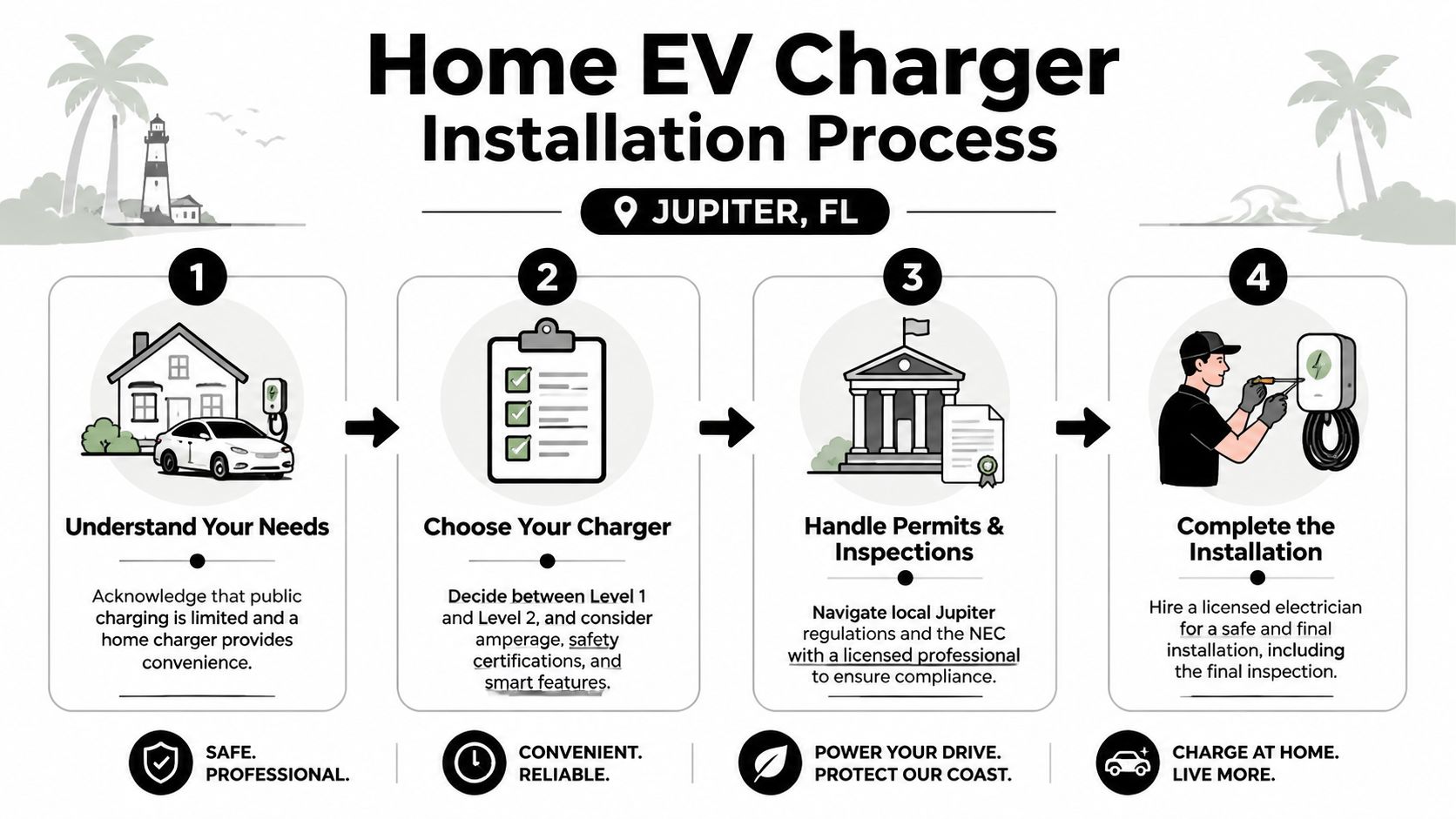
As you can see, a professional installation moves from assessing your needs to a final, inspected completion. A critical step is making sure your home's electrical service can handle the extra load from an EV charger. In many cases, this requires an upgrade, and it's something you'll want to figure out early on.
You can learn more about what's involved by checking out our guide on whether it's time to upgrade from a 150-amp to a 200-amp panel.
Selecting the Right Charger for Your Car and Lifestyle
Picking the right EV charger can feel a bit like navigating a new world, but it really comes down to a simple question: how fast do you need to charge? For most Jupiter homeowners, this decision boils down to a Level 1 charger versus the much more powerful Level 2.
Think of a Level 1 charger as the slow-and-steady option. It’s the one that comes with many EVs and plugs right into a standard 120V wall outlet. While convenient, it’s also incredibly slow, typically adding just 3-5 miles of range per hour. If you have a plug-in hybrid or a very short daily commute, this might be all you need. For a fully electric car, though, you could be looking at multiple days to get a full charge.
This is where a Level 2 charger completely changes the game for EV owners.
By stepping up to a 240V circuit—the same kind your electric dryer uses—a Level 2 charger can deliver 20-60 miles of range per hour. Suddenly, topping up your battery overnight is a guarantee, no matter how much you drove that day.
To help you visualize the difference, here’s a quick comparison of the two main types of home chargers.
Level 1 vs. Level 2 Home EV Charger Comparison
| Feature | Level 1 Charger | Level 2 Charger |
|---|---|---|
| Voltage | 120V (Standard Outlet) | 240V (Dedicated Circuit) |
| Charging Speed | 3-5 miles of range per hour | 20-60 miles of range per hour |
| Installation | Plug and play | Professional installation required |
| Best For | Plug-in hybrids, low-mileage drivers | All-electric vehicles, daily drivers |
| Cost | Low (often included with car) | Moderate to high (unit + installation) |
For the vast majority of our clients in Jupiter, the significant time savings make the Level 2 charger the clear winner and the standard for a true home charging solution.
Key Factors for Your Charger Choice
Once you’ve settled on a Level 2 charger for your EV charger installation in Jupiter, FL, you still have a few key decisions to make. We walk our customers through these details to ensure they get a system that’s perfect for their needs.
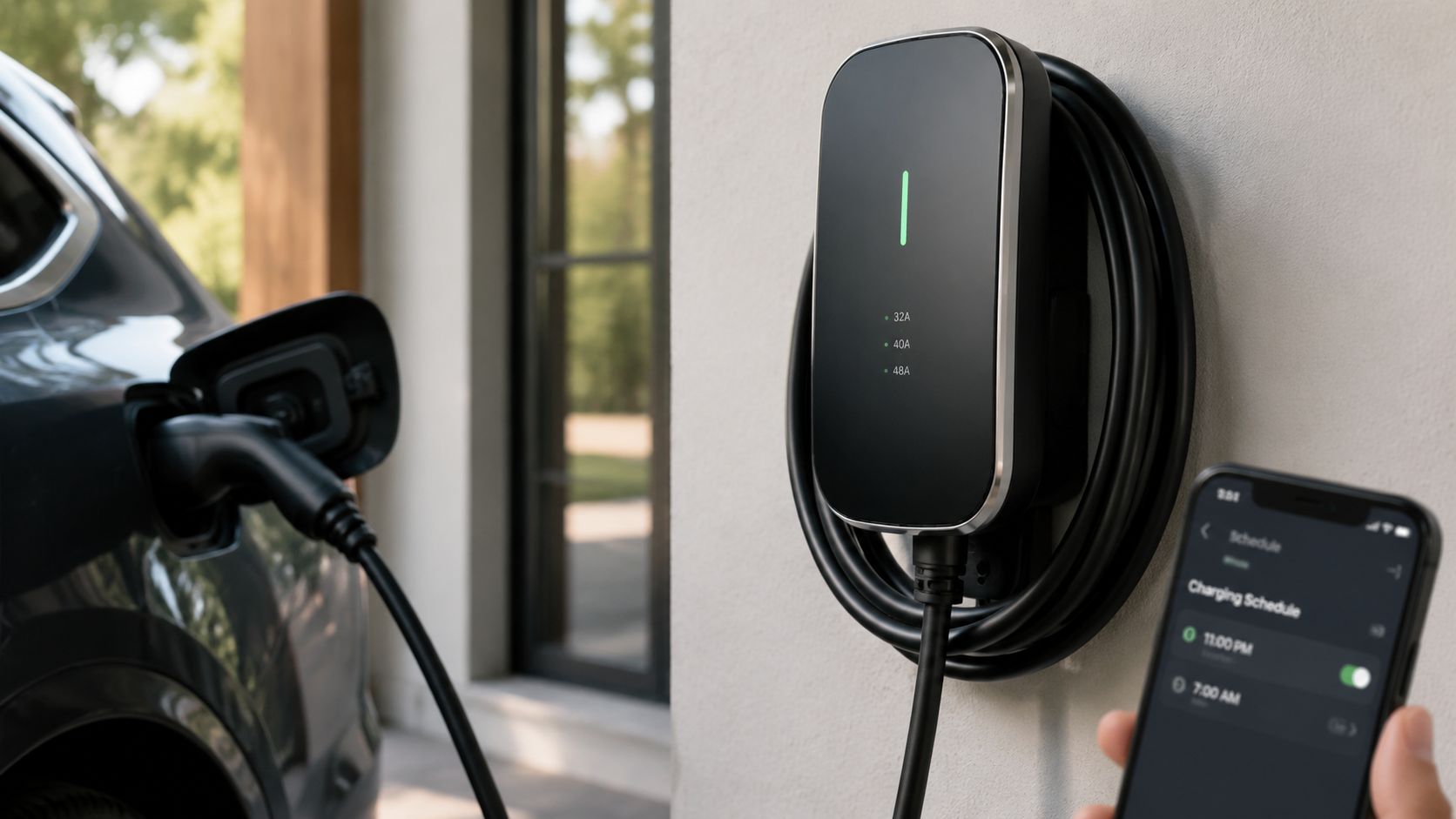
- Amperage: Chargers come in different power levels, like 32A, 40A, or 48A. The key is to match this to what your car can actually handle. There’s no sense in paying for a 48A charger if your vehicle can only accept 32A.
- Plug-In vs. Hardwired: A plug-in unit offers a little more flexibility if you ever want to move it. However, hardwired installations are more robust, weather-resistant, and often required by code for higher-amperage or outdoor setups.
- Safety Certification: This is non-negotiable. Only consider chargers that are UL or ETL certified. This certification means the unit has passed rigorous independent safety tests, protecting your home and vehicle from fire hazards.
- Smart Features: Many modern chargers connect to your home’s WiFi. This is more than just a gimmick—it allows you to schedule charging during FPL’s off-peak hours to save money, track your exact energy consumption, and even qualify for potential utility rebates.
It's no surprise that the U.S. Department of Energy finds that 64% of all EV charging takes place at single-family homes. Having a reliable, fast, and safe charger in your own garage is the cornerstone of a great EV experience.
Decoding Permits and Inspections in Jupiter
Let’s talk about the part of the process that makes some homeowners nervous: permits and inspections. For any EV charger installation in Jupiter, FL, navigating the local regulations is a crucial step. It might feel like a hassle, but there’s a very good reason for it.
A Level 2 charger isn't like plugging in a new toaster. It’s a powerful piece of equipment that needs its own dedicated 240-volt circuit. Because this is a significant electrical upgrade to your home, both the Town of Jupiter and Palm Beach County require a permit before we even start the work.
This isn't about red tape. It's about safety, plain and simple. The permit process ensures every installation is done right and strictly follows the National Electrical Code (NEC). When a licensed electrician like us files for a permit, we're submitting a detailed plan that shows local officials exactly how we'll install your charger safely and correctly.
What Happens During the Final Inspection?
After your new charger is installed, a city or county inspector will come to your home for the final sign-off. This isn't just a quick look—it's a professional check to guarantee the work is flawless and safe.
Here's what an inspector is looking for:
- Proper Wiring: Is the new circuit wired with the correct gauge of wire for the electrical load?
- Breaker Size: Is the circuit breaker in your panel correctly sized for your specific charger?
- Secure Connections: Are all connections tight, secure, and properly protected to prevent any issues down the road?
- Safe Location: Is the charger mounted in a spot that's clear of potential hazards?
Think of this final inspection as your ultimate peace of mind. It’s an independent, expert confirmation that the installation poses zero risk to your home, your expensive new EV, or your family.
A big part of our job is handling this entire process for you. We know the Jupiter building department, we know what they expect, and we manage all the paperwork and scheduling. You don't have to worry about a thing. By hiring a pro, you’re not just paying for an installation—you're buying the assurance that everything is 100% compliant, safe, and ready for you to just plug in and charge.
Budgeting for Your EV Charger Installation Costs
Now, for the big question on every homeowner's mind: what’s this going to cost? When it comes to an EV charger installation in Jupiter, FL, the price isn't a one-size-fits-all number. The final investment really hinges on your home’s unique electrical setup and the charger you’ve picked out. A good, professional quote won't just give you a single number; it will break everything down so you know exactly where your money is going.
So, what moves the needle on the price? One of the biggest factors is simply the distance from your electrical panel to where you want the charger. A longer run requires more heavy-duty wiring and conduit, which adds to both material and labor costs.
Another major consideration is whether your electrical panel can even handle the new load. This is a common hurdle, especially in older Jupiter homes, and often requires an upgrade to safely add a dedicated circuit for your charger.
Any legitimate estimate should clearly itemize the costs for:
- Labor: The hands-on time for a licensed electrician to get the job done right.
- Materials: This covers everything from the thick-gauge wiring and protective conduit to the new circuit breaker in your panel.
- Permit Fees: The administrative costs associated with filing the necessary paperwork with the Town of Jupiter or Palm Beach County.
Understanding the Cost Spectrum
For most folks in the Jupiter area, the cost of installing a new EV charger is a balance between upfront investment and long-term convenience. From our experience, a typical EV charger installation in Florida can range from $800 to $2,000, sometimes more.
A straightforward job—say, installing a charger in a garage right next to a modern panel with plenty of capacity—will land on the lower end of that spectrum. On the other hand, more complex projects that involve trenching across a yard or a significant electrical panel overhaul will naturally be on the higher end.
The most important thing to figure out for your budget is whether your current electrical system can support the new charger. If your panel is already maxed out, an upgrade isn't just a recommendation—it's a necessity.
This is a step we see many homeowners needing to take to safely power a new Level 2 charger. If you want to get a better handle on what that involves, you can check out our comprehensive electrical panel upgrades guide.
Finally, don't leave money on the table. Always look into available incentives that can soften the financial blow. Make sure to investigate the federal tax credits for EV charging equipment and ask your local utility about any rebates they might be offering for 2026. These programs can significantly reduce your out-of-pocket expenses.
Why You Can't Afford to Skip a Licensed Electrician
Let's be frank: when you're looking at installing a Level 2 charger, the thought of hiring a general handyman or even trying to wire it yourself to save a few hundred dollars can be tempting. But as an electrician who has seen the aftermath of jobs gone wrong, I can tell you this is one area where cutting corners is simply not worth the risk.
An improper EV charger installation in Jupiter, FL, isn't just a minor mistake. It can lead to some truly serious consequences. We're talking about the risk of an electrical fire that could jeopardize your entire home, or a faulty connection that permanently damages your EV's very expensive battery. Even worse, if an incident is traced back to unpermitted electrical work, you could find your homeowner's insurance claim denied.
This is about more than just making the charger work. It's about ensuring the long-term safety of your family and your property. That’s the promise behind every professional installation we handle.
How to Spot a True Professional
Choosing the right electrician is the single most important decision you'll make in this process. It's a lot like finding a contractor for any other major home project, a point echoed in Kitchen Renovations Perfected's advice.
Here are the non-negotiables you should look for to make sure you're hiring a qualified expert:
- Florida State License: First things first, ask for their license number and verify that it's active and in good standing. A licensed electrician is held to the high standards of the National Electrical Code and is accountable for their work.
- Proof of Insurance: They must carry both general liability and workers' compensation insurance. This is your protection. It shields you from any financial responsibility if an accident were to happen on your property during the job.
- Specific EV Experience: Not all electricians are well-versed in the nuances of EV charging. Ask them directly: "How many EV chargers have you installed?" and "Are you familiar with my specific charger brand?"
- A Detailed Quote: A true professional will never give you a vague estimate. You should receive an itemized quote that clearly breaks down the costs for labor, all materials, and the required permits. There should be no surprises.
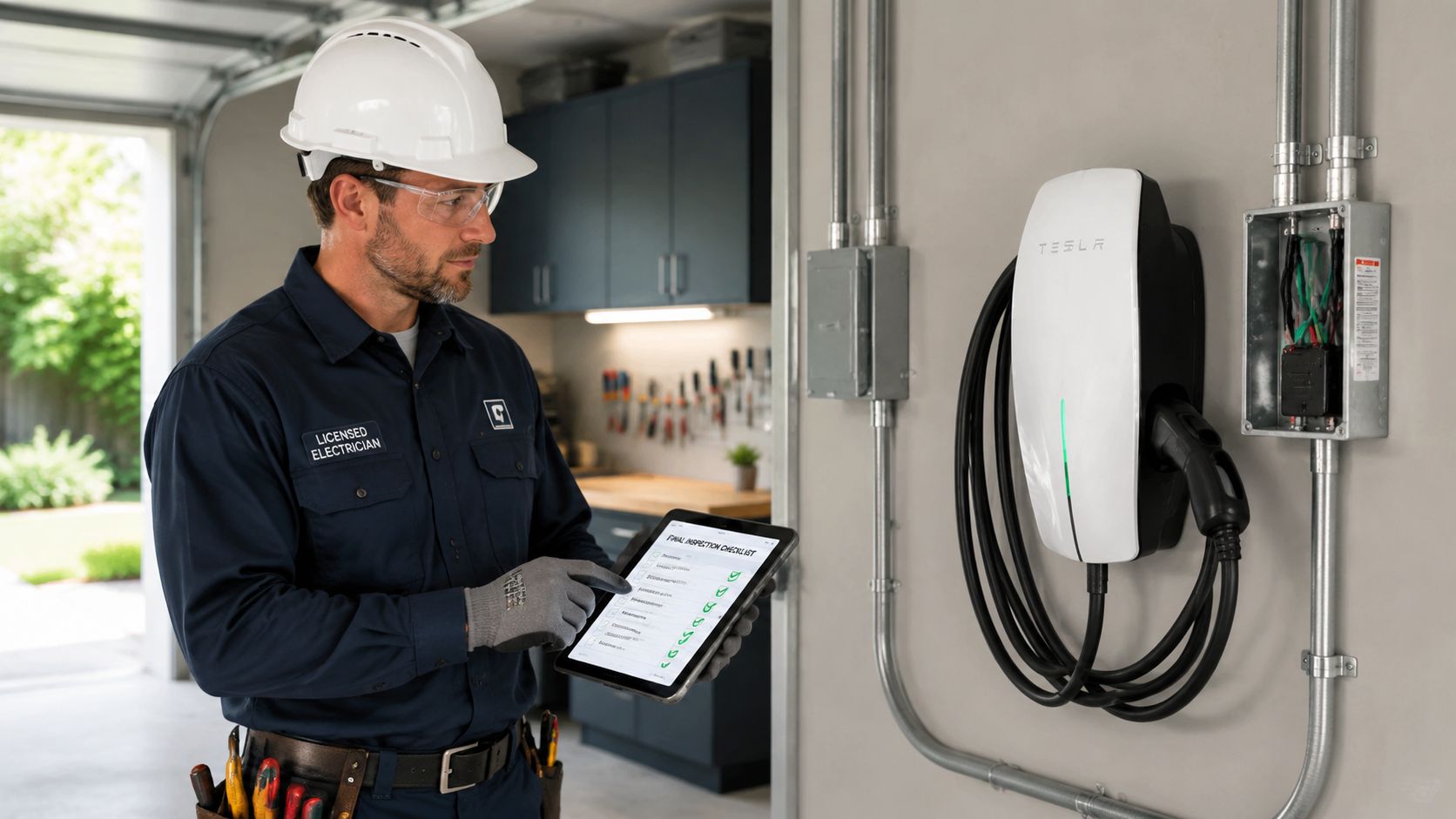
Ultimately, paying for a licensed and experienced electrician isn't just a cost—it's an investment in doing the job safely and correctly the first time. For more tips on vetting your pro, you can learn more in our comprehensive guide to hiring an electrician for your new home.
Your Top EV Charger Questions, Answered
If you're thinking about an EV charger installation in Jupiter, FL, you probably have some questions. That's a good thing. A little planning now goes a long way. Based on our experience helping countless homeowners in the area, we've put together answers to the most common things people ask.
One of the first questions we always get is, "How long will this take?" For a standard Level 2 charger installation where your electrical panel has plenty of room and the charger is going near it, we can often have you ready to charge in just a few hours.
If the project is more involved—maybe we need to run wiring across the house or your panel needs a full upgrade—it could take a full day. We'll always give you a clear timeline upfront.
Will My Electrical Panel Need an Upgrade?
This is a big one, and it's a valid concern. The answer really comes down to a professional load calculation. An electrician will look at your home's total electrical demand—from your AC to your oven—to see if your current panel can safely support the new, dedicated 240V circuit for the charger.
If your panel is already working near capacity, you'll need an upgrade. It’s not just a recommendation; it's a crucial safety measure to prevent overloads and potential fire hazards.
Where Is the Best Spot to Install the Charger?
Think about your daily routine. Where do you park your car? The most common spot for a charger is inside the garage. It makes perfect sense—it keeps your expensive charging unit out of the sun, salt, and subtropical downpours we get here in Jupiter. Plus, the cable is easy to manage.
Of course, parking in the driveway is just as common. Installing the charger on an exterior wall is a great solution in that case. We can help you pick the perfect location that balances convenience with protecting the equipment.
If you live in a condo, don't worry. Florida’s "right to charge" laws are on your side. The key is communicating early with your HOA or property manager. We can help you provide them with the technical details they need to approve an installation that meets all community and safety guidelines.
Ready to move forward with your own EV charger? The team at Lighthouse Energy Services is here to walk you through every step. Contact us for a professional consultation and get a clear, no-nonsense quote for your home.