
The Smart Choice: Hiring an Electrician for Ceiling Fan Installation
If you need an electrician to install ceiling fan in your home, you’re in the right place. Here’s what homeowners often ask:
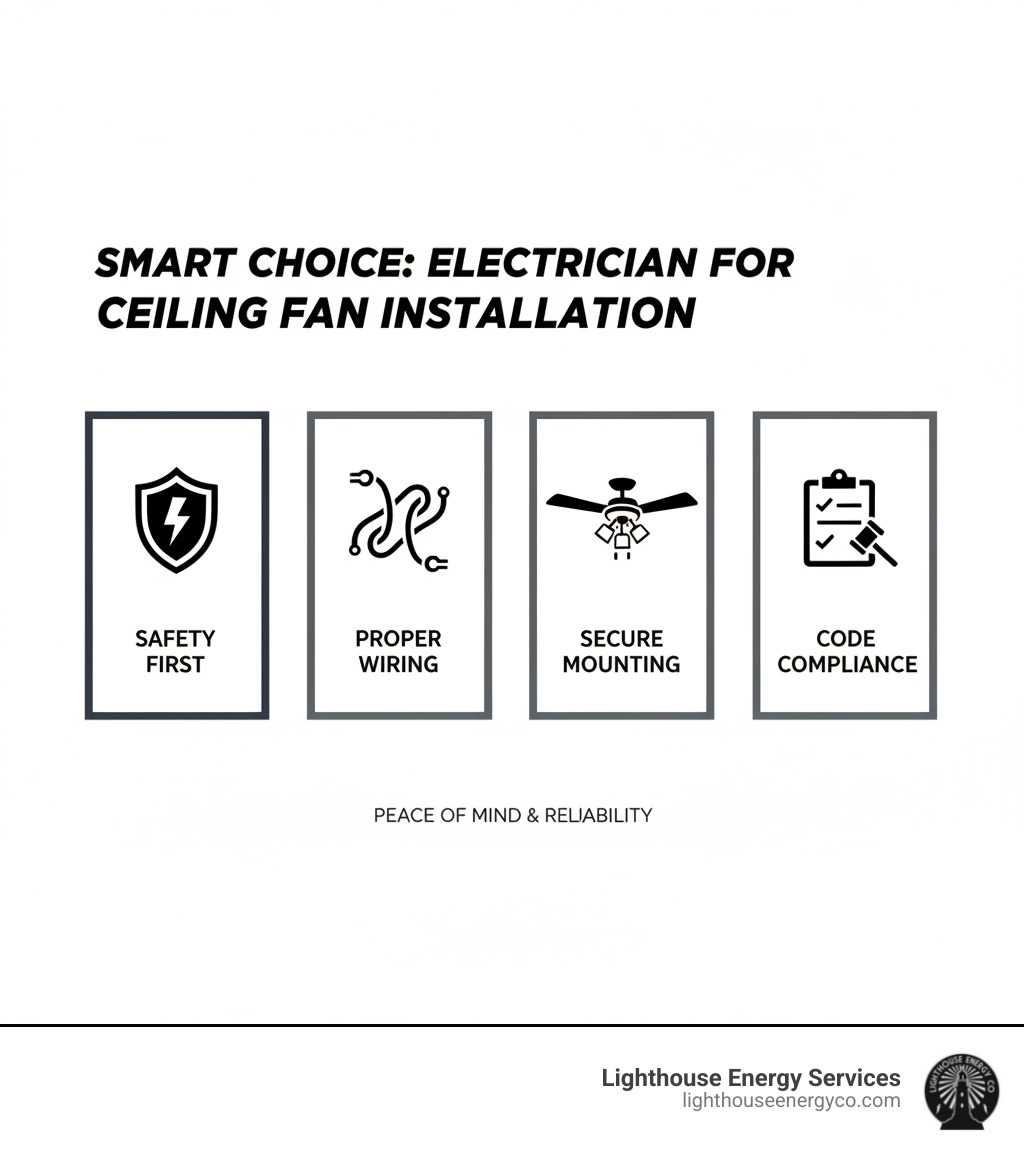
- Do electricians install ceiling fans? Yes, absolutely. Electricians are trained for this work.
- When should I hire an electrician? Always. Installing a ceiling fan involves complex electrical work. A professional ensures safety and correct operation.
- Why not DIY? Doing it yourself can lead to electric shocks, fires, or the fan falling. Improper wiring is a big risk.
- What does a professional do? An electrician ensures the fan is wired correctly, safely mounted, and works reliably.
A ceiling fan adds comfort, improves air circulation, and can even save you money on energy bills. It also makes your room look better. But working with electricity is serious business. Getting it wrong can be dangerous.
Bruce Kemp brings years of electrical contracting experience to this guide. He has seen the complexities involved when you need an electrician to install ceiling fan, ensuring safety and proper function.
The Undeniable Benefits of a Professionally Installed Ceiling Fan
When installed correctly by an electrician to install ceiling fan, a ceiling fan is a game-changer for your home, offering comfort, style, and energy savings—a smart deal for any South Florida homeowner.
A key benefit is energy efficiency. Fans create a ‘wind-chill effect,’ making a room feel up to 8 degrees cooler. This allows you to raise your thermostat, reducing AC strain and lowering electricity bills. Fans also provide improved air circulation, keeping air moving to prevent stuffiness and distribute fresh air. Aesthetically, a new fan can boost your home’s appeal and value, with styles ranging from modern to rustic. A professionally installed fan delivers year-round comfort and peace of mind, knowing it’s safe, secure, and operating correctly.
How Ceiling Fans Improve Air Circulation in Every Season
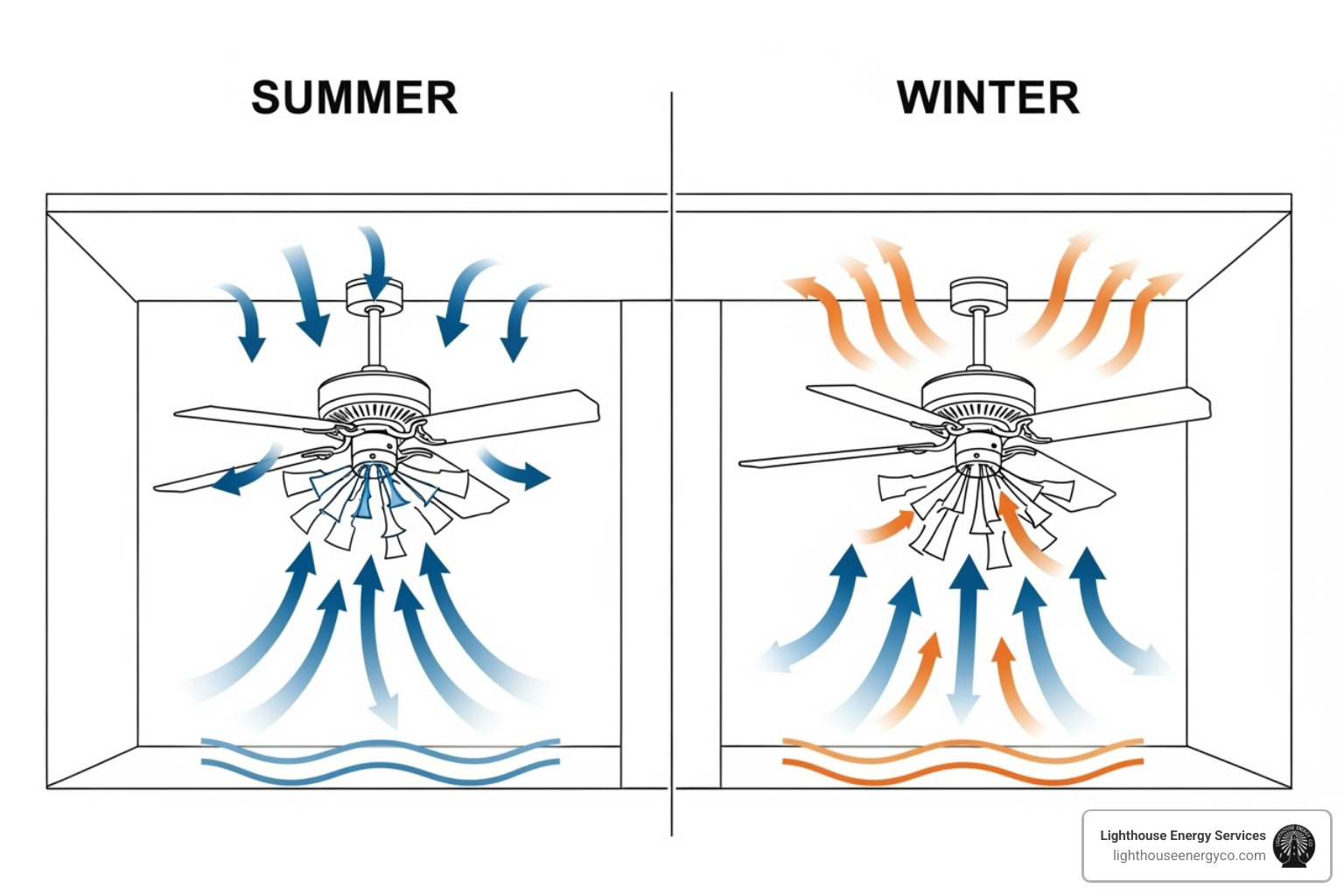
A ceiling fan’s versatility allows it to save energy all year round. For summer cooling, the fan should spin counter-clockwise, pushing air down to create a refreshing breeze. This effect helps you feel cooler, allowing you to rely less on your AC and cut energy costs.
In winter, your fan’s clockwise rotation on a low speed serves a different purpose. It gently pulls cool air up and pushes warm air down from the ceiling, making the room feel cozier. This allows you to lower your thermostat, saving on heating costs while also reducing stuffiness.
By supporting your HVAC systems in distributing air evenly, ceiling fans eliminate hot and cold spots, reducing the workload on your heater or air conditioner. This extends your HVAC’s lifespan and saves you money, ensuring your home is comfortable every day of the year.
Want to learn more about how Lighthouse Energy Services can boost your home’s comfort and efficiency? Check out our full range of electrical services today!
DIY vs. Professional: Weighing the Risks and Rewards
While a DIY ceiling fan installation might seem like a way to save money, the risks involved with electrical work are significantly higher than in other home projects. It involves handling live wiring and securely mounting a heavy, moving fixture. A single mistake can lead to electric shocks, fires, or a fan falling from the ceiling. To help you make an informed decision, here’s how DIY and professional installation compare:
| Feature | DIY Installation | Professional Installation |
|---|---|---|
| Safety | High risk of electric shocks, fires, unstable installation, personal injuries, or ceiling damage due to improper wiring or mounting. | Significantly lower risk. Licensed electricians prioritize safety, follow electrical codes, and have expertise in handling wiring and securing heavy fixtures. |
| Cost | Appears lower initially (fan cost + basic tools). However, potential for costly repairs from errors, medical bills from injuries, or damage to property can make it more expensive in the long run. | Initial cost includes labor, but provides assurance of correct installation, warranty protection, and prevents future issues. Often more cost-effective when considering long-term safety and reliability. |
| Time | Can take longer for inexperienced individuals, especially if troubleshooting is required or unexpected issues arise (e.g., inadequate electrical box). | Efficient and typically completed within 1-3 hours, depending on complexity. Electricians have the right tools and experience to work quickly and effectively. |
| Code Compliance | High risk of violating local electrical codes, which can lead to inspection failures, insurance issues, or safety hazards. | Ensures compliance with all local and national electrical codes, preventing future legal or safety complications. |
| Complexity | Challenging if existing wiring is complex, no pre-existing fixture, or if the electrical box needs upgrading for fan support. Requires both electrical knowledge and mechanical skills. | Electricians are equipped to handle complex wiring, structural support, and integration with smart home systems. They can assess and upgrade electrical infrastructure as needed. |
The bottom line? While DIY might look cheaper on paper, the risks often outweigh the rewards. A professional installation gives you safety, code compliance, and peace of mind—and that’s worth every penny.
The DIY Approach: What You Need to Know
If you’re still considering the DIY route, understand that it requires both electrical and mechanical skills. You’ll need more than basic tools, including a sturdy ladder, a voltage tester, wire strippers, pliers, and screwdrivers. Safety is paramount: you must turn off the power at the circuit breaker and use a voltage tester to confirm it’s off before touching any wires.
A common DIY pitfall is using an existing electrical box that isn’t rated for a fan’s weight and vibration. This can lead to wobbling, noise, or the fan falling, causing ceiling damage. The installation process itself is physically demanding, requiring you to work on a ladder while holding a heavy fixture. Improper wiring or mounting creates serious safety hazards, including electrical fires and structural damage. If you have any doubts, it’s best to call a professional.
The Professional Advantage: Why Hire an Electrician to Install a Ceiling Fan?
Hiring a professional electrician to install ceiling fan fixtures is an investment in safety, expertise, and peace of mind. Licensed electricians have the training to handle wiring safely, preventing the short circuits and overheating that can lead to fires. According to the National Fire Protection Association (NFPA), electrical failures are a leading cause of home fires, a risk that professional installation minimizes.
An electrician ensures your fan is mounted to a proper, fan-rated support box, which is critical for preventing wobbling and ensuring stability. We assess and upgrade the support if needed, a step often overlooked in DIY projects. We also secure all connections, balance the blades to eliminate noise, and ensure the installation complies with local electrical codes, protecting you from future inspection or insurance issues.
While a handyman may be suitable for some tasks, the specialized knowledge of a licensed electrician is crucial for complex jobs involving new wiring or upgraded boxes. Choosing a qualified electrician from Lighthouse Energy Services means prioritizing the safety of your home and family.
When to Absolutely Call an Electrician to Install a Ceiling Fan
While we always recommend professional installation, certain situations make calling an electrician to install ceiling fan absolutely essential for your safety. DIY is not worth the risk in these scenarios:
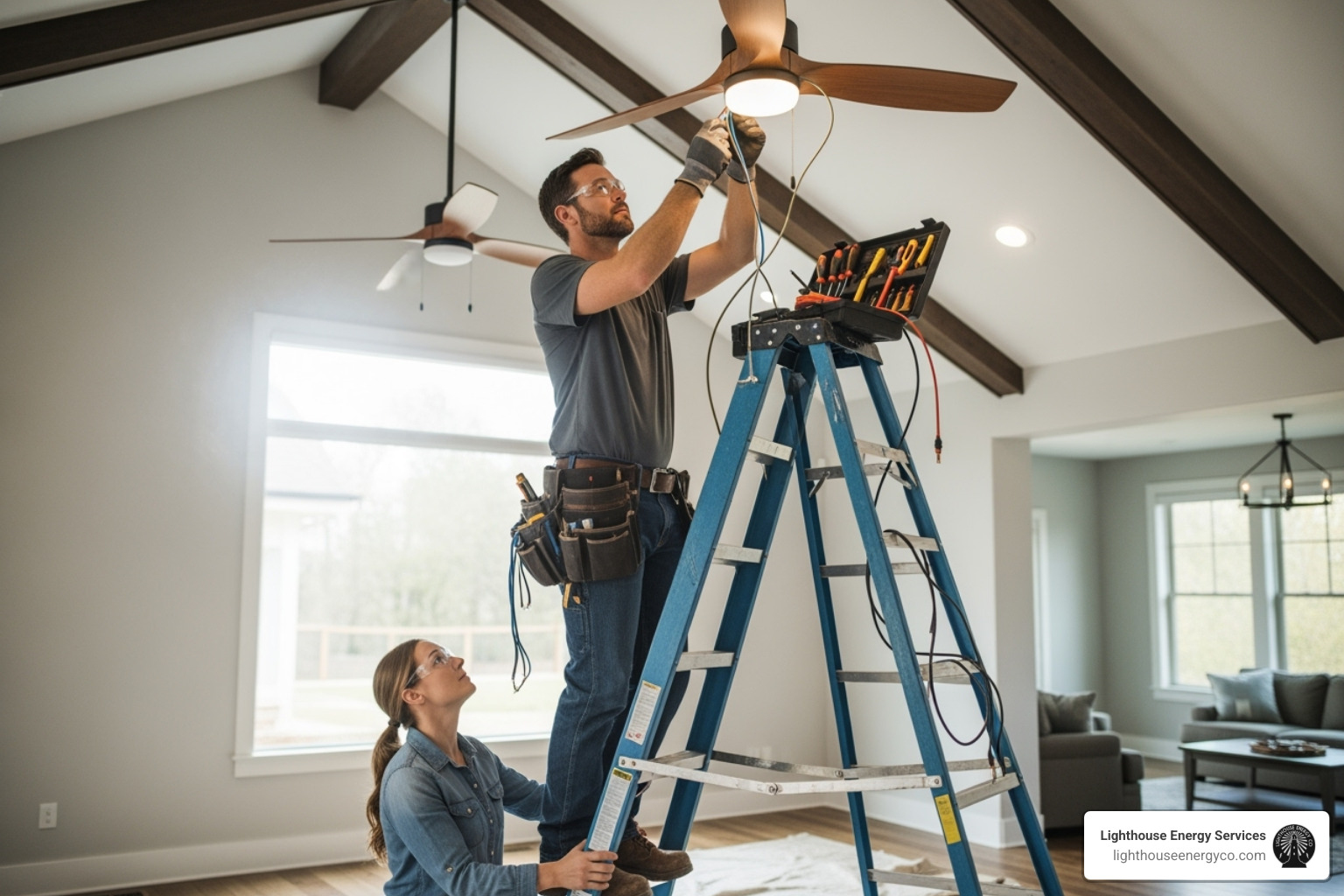
- No existing fixture or wiring: If you need a fan where there’s no current fixture, the job requires running new electrical wiring through walls or ceilings, installing a new electrical box, and ensuring it all meets code. This is complex work for a licensed electrician.
- Replacing a light fixture: Standard light fixture boxes are not designed for the weight and vibration of a ceiling fan. An electrician will verify your box is fan-rated and replace it if it’s not, preventing a dangerous collapse.
- High or vaulted ceilings: Working at height requires specialized ladders, safety gear, and experience. An electrician can safely secure the fan and install the correct downrod for proper air circulation.
- Old wiring: If your home has outdated wiring (like knob and tube), a professional assessment is crucial. Connecting a new fan to an inadequate system creates a serious fire hazard.
- Smart fan installation: Smart fans with WiFi, remotes, and home automation integration have specific wiring needs. An electrician can ensure these advanced features are installed and configured correctly.
In these situations, a DIY mistake can lead to electric shocks, fires, or property damage. At Lighthouse Energy Services, our qualified electricians are available 24/7 to handle any installation safely and correctly the first time.
Curious about the quality of our work? You can view our past projects to see how we’ve helped homeowners throughout Palm Beach County.
Understanding Costs and Common Installation Issues
When you’re ready to add a ceiling fan, it’s helpful to understand the potential costs and common issues that can arise. We believe in being upfront so you can make an informed decision.
What Is the Typical Cost for an Electrician to Install a Ceiling Fan?
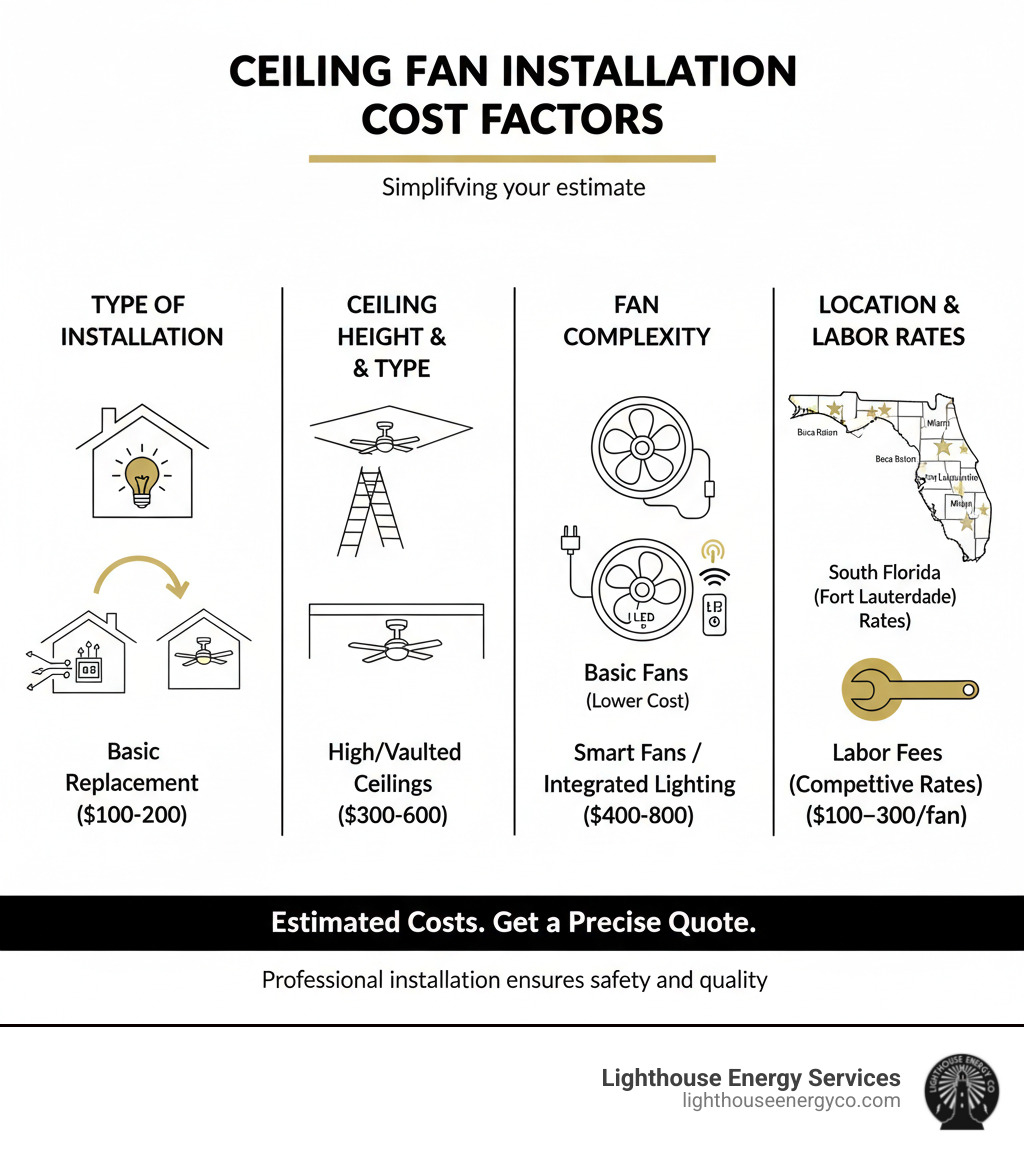
The cost to hire an electrician to install ceiling fan varies, but several factors influence the price. A basic replacement of an existing fan, where wiring is adequate, is the most affordable option, typically costing $100 to $200. A new installation with no existing fixture requires running new wiring and installing a fan-rated box, which usually costs between $250 and $500.
Ceiling height also affects the price; high or vaulted ceilings require special equipment and more labor, with costs ranging from $300 to $600. Finally, the fan’s complexity matters. A simple fan is straightforward, but a smart fan with advanced features can raise the installation cost to $400 to $800 due to complex wiring and setup.
While these are estimates, we provide detailed, upfront quotes with no hidden fees. The investment in a professional ensures safety and code compliance, preventing costly repairs from a failed DIY attempt.
Troubleshooting Common Ceiling Fan Problems
Even a well-installed fan can have issues. Here are common problems and when to call a professional:
- Fan won’t turn on: First, check for a tripped circuit breaker. If that’s not the issue, the problem could be a faulty switch, loose wiring, or a bad motor, which requires an electrician.
- Wobbling fan: A wobbling fan is a safety hazard, often caused by unbalanced blades or loose screws. While a balancing kit can fix minor issues, significant wobbling needs a professional inspection to ensure the fan is securely mounted.
- Noisy operation: Squeaks, hums, or rattles usually indicate loose components or motor issues. An electrician can diagnose and fix the source of the noise.
If your fan runs slow, lights flicker, or the remote fails, it’s time to call for help. It’s always safer to have a licensed electrician diagnose and repair fan issues rather than attempting to fix complex electrical problems yourself.
Frequently Asked Questions about Ceiling Fan Installation
We talk to homeowners every day about ceiling fan installation. Here are answers to the most common questions.
Can a ceiling fan be installed where a light fixture currently is?
Yes, but it’s critical that the existing electrical box is replaced with one that is fan-rated. Standard light fixture boxes are not designed to support the weight and vibration of a ceiling fan, and using one creates a safety hazard. A professional electrician to install ceiling fan will ensure the proper support is in place.
How does a ceiling fan improve energy efficiency in winter?
Most fans have a reverse switch that changes the blade rotation to clockwise. On a low speed, this creates a gentle updraft, pushing the warm air that has risen to the ceiling back down into the room. This allows you to lower your thermostat, saving on heating costs.
How long does a professional installation take?
A typical ceiling fan installation takes 1 to 3 hours. A basic replacement in a location with proper wiring and support usually takes 1 to 2 hours. A more complex installation, such as one requiring new wiring or on a high ceiling, may take 3 hours or more.
Conclusion: Ensure a Safe and Secure Installation
A professionally installed ceiling fan boosts your home’s comfort, style, and energy efficiency. However, the electrical work is complex and carries significant risks. A DIY installation can lead to electrical hazards, fires, or an unstable fan. For this reason, we always recommend trusting the job to a licensed professional.
At Lighthouse Energy Services, we provide safe, reliable, and high-quality electrical solutions. Our qualified electricians are available 24/7 across South Florida—including Palm Beach, Broward, and Miami-Dade Counties—to provide prompt service with no hidden fees. Our promise is to get the job “done right, and done right now.”
Choosing us is an investment in peace of mind. We ensure your fan is wired correctly, mounted securely, and running efficiently. For a job done right, trust our qualified electricians with your electrician to install ceiling fan needs.
Why wait for comfort and safety? Contact Us today for an upfront quote or to schedule your installation. You can also explore our full range of electrical services to see how else we can improve your home or business.