
Why Understanding Your Home’s Electrical System Matters
Electrician house wiring is the network of cables and circuits that safely powers your home. While it may look like a tangle of colored wires, this system follows strict safety codes for good reason: electrical fires cause an estimated 51,000 fires each year in the U.S., resulting in 470 deaths and $1.3 billion in property damage.
Understanding the basics—like why wire colors and gauges matter, and when to call a professional—helps you spot warning signs, plan upgrades, and keep your family safe. This knowledge is essential whether you’re dealing with flickering lights or planning a renovation.
I’m Bruce Kemp, an electrical contractor with years of hands-on experience in residential electrician house wiring. In this guide, I’ll break down everything you need to know in straightforward terms.
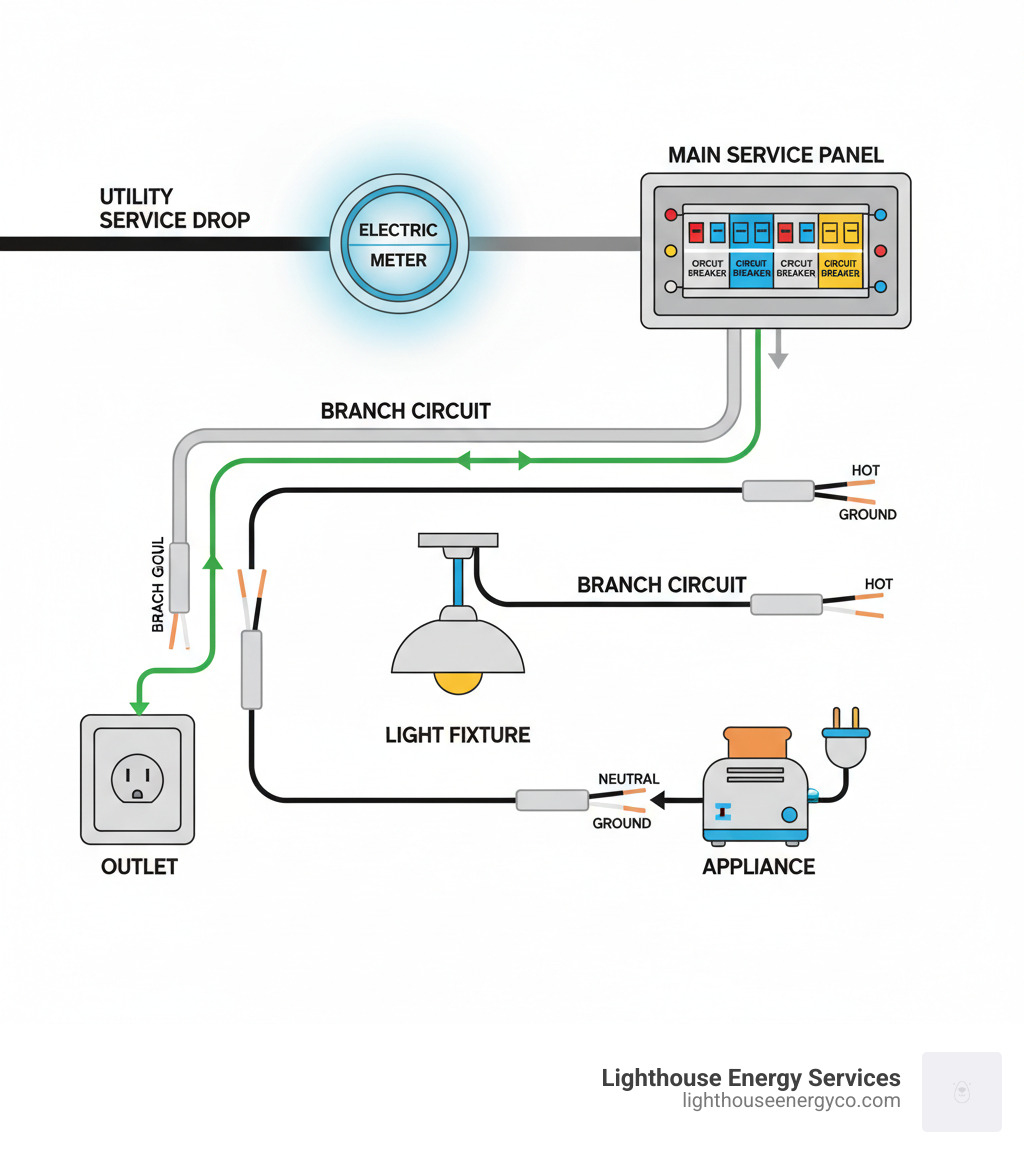
The Anatomy of Your Home’s Electrical System
Think of your home’s electrical system like a tree. Power from the utility company enters your home at the main service panel (breaker box), the trunk of the tree. This metal box, usually in a garage or basement, divides power into separate circuits, which are the branches running through your walls.
Each circuit is protected by a circuit breaker (or a fuse in older homes). If a circuit overloads, the breaker trips, cutting power to prevent wires from overheating and causing a fire. What you see running through walls is typically cable—two or more wires bundled in a protective sheath—not individual wires.

Understanding Electrical Wire Colors
The colors of electrical wires are a safety language for electricians. Getting them wrong is dangerous.
- Black wires are hot, carrying live electricity from the breaker panel. Always assume they are energized.
- Red wires are also hot, often used as a second live wire in 240-volt circuits or for separate switching (like a ceiling fan and light). They also appear as travelers in three-way and four-way switches.
- White or gray wires are neutral, completing the circuit by carrying current back to the panel. Though called “neutral,” they can still carry current.
- Green and bare copper wires are for grounding. They are a safety feature, providing a path for electricity to follow in a fault, preventing shock. They should only ever be used for grounding.
- Blue and yellow wires are less common but are also used as hot wires, often in more complex switching configurations.
Essential Electrical Components
Beyond wires, several key components make up your system:
- Main Service Panel: Command central, distributing power via circuit breakers.
- Circuit Breakers and Fuses: Safety devices that cut power during an overload. Breakers can be reset, while fuses must be replaced.
- 120-Volt and 240-Volt Circuits: Most lights and outlets use 120-volt circuits. Large appliances like dryers and ranges require more powerful 240-volt circuits, which use two hot wires.
- Outlets and Switches: Your daily interaction points with the system. Building codes dictate placement, but thoughtful positioning improves convenience.
- Junction Boxes: Every wire connection must be housed inside one of these protective metal or plastic boxes to contain sparks and prevent accidental contact.
Understanding how these components in our past projects come together helps you make informed decisions about your home’s electrician house wiring.
Common Types and Materials for Electrician House Wiring
The materials used for electrician house wiring are chosen for safety and durability. Each type of wire and cable has a specific purpose.
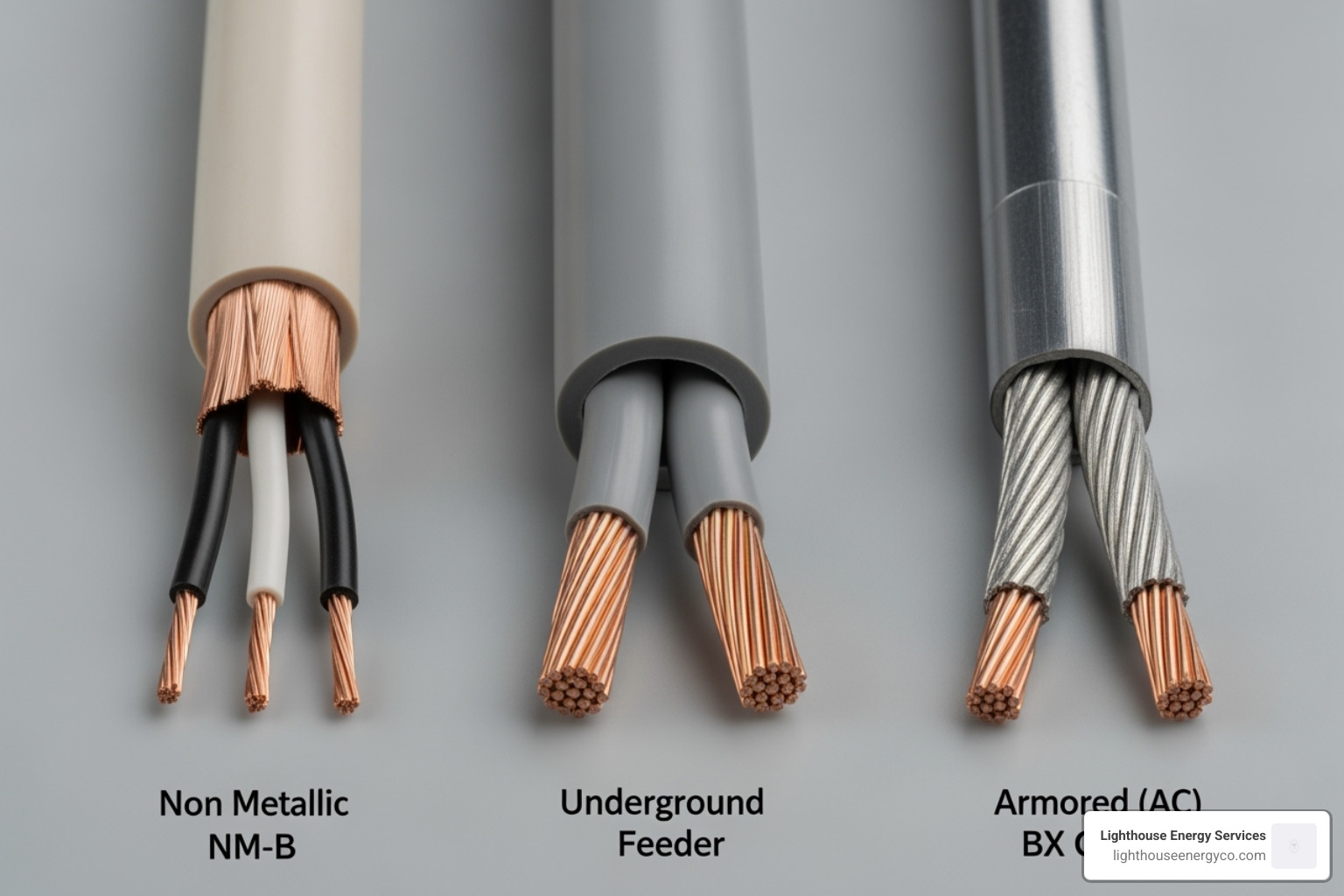
- Non-Metallic (NM) Cable (Romex): The standard for interior residential wiring, bundling hot, neutral, and ground wires in a plastic sheath. The sheath color often indicates the wire gauge (white for 14-gauge, yellow for 12-gauge, orange for 10-gauge).
- Underground Feeder (UF) Cable: Designed for outdoor and underground runs, its conductors are embedded in solid, moisture-resistant vinyl.
- THHN/THWN Wires in Conduit: Individual wires run through protective plastic (PVC) or metal pipes (conduit), offering excellent physical protection in exposed areas like basements or garages.
- Armored Cable (AC): A flexible metal jacket protects the wires, providing durability where needed.
Choosing the Correct Wire Gauge
Wire gauge, measured by the American Wire Gauge (AWG) system, refers to the wire’s thickness. A smaller gauge number means a thicker wire. Thickness is critical because thicker wires can safely carry more current without overheating. Using a wire that’s too thin for its circuit is a serious fire hazard.
While using a thicker-than-necessary wire is safe, it’s more expensive and harder to work with. Electricians match the gauge to the circuit’s amperage rating and expected load.
| Wire Gauge (AWG) | Common Amperage Rating | Typical Residential Uses |
|---|---|---|
| 14-gauge | 15 Amps | General lighting circuits, some standard outlets |
| 12-gauge | 20 Amps | General-purpose outlets, kitchen and bathroom circuits |
| 10-gauge | 30 Amps | Electric water heaters, clothes dryers, window AC units |
| 8-gauge | 40 Amps | Electric ranges, central air units |
| 6-gauge | 50-60 Amps | Main service feed, EV chargers, large electric ranges |
For most homes, 14-gauge and 12-gauge wires are the most common gauge sizes. Major appliances require thicker 10, 8, or 6-gauge wire.
Planning Your Electrical Layout
Smart electrical planning makes a home more functional. This involves considering each room’s unique needs and thinking about the future.
- Room-by-Room: Kitchens and bathrooms need GFCI protection and dedicated circuits for appliances. Bedrooms need conveniently placed outlets that aren’t blocked by furniture.
- Outlet and Switch Placement: While code requires outlets every 12 feet, placing them every 8 feet is more practical. Think about how you’ll use a space to determine the best locations for switches and outlets.
- Future-Proofing: Planning for tomorrow’s needs today saves money and hassle. Consider pre-wiring for smart home devices, EV chargers in the garage, or solar panels. Running conduit during construction is far easier than opening up finished walls later.
Thoughtful planning, as seen in our past projects, creates a home that works for you now and in the future.
The Blueprint for Safety: Codes, Principles, and Precautions
When it comes to electrician house wiring, safety is everything. Electricity is unforgiving, and a single mistake can have devastating consequences. The numbers are sobering: electrical fires cause an estimated 51,000 fires per year in the U.S., resulting in 470 deaths and $1.3 billion in property damage.
This is why professional qualifications are so important. The growing demand for electricians reflects the need for specialized training to handle complex systems safely. For any project beyond a simple replacement, it’s wise to call in professionals. See how Our Services can keep your home safe.
Core Electrical Safety Principles
If you tackle a simple DIY task, follow these non-negotiable Electrical Safety Principles:
- Work on Dead Circuits: Always turn off power at the breaker panel before starting.
- Lock and Tag: Use a lockout/tagout device to prevent someone from accidentally restoring power.
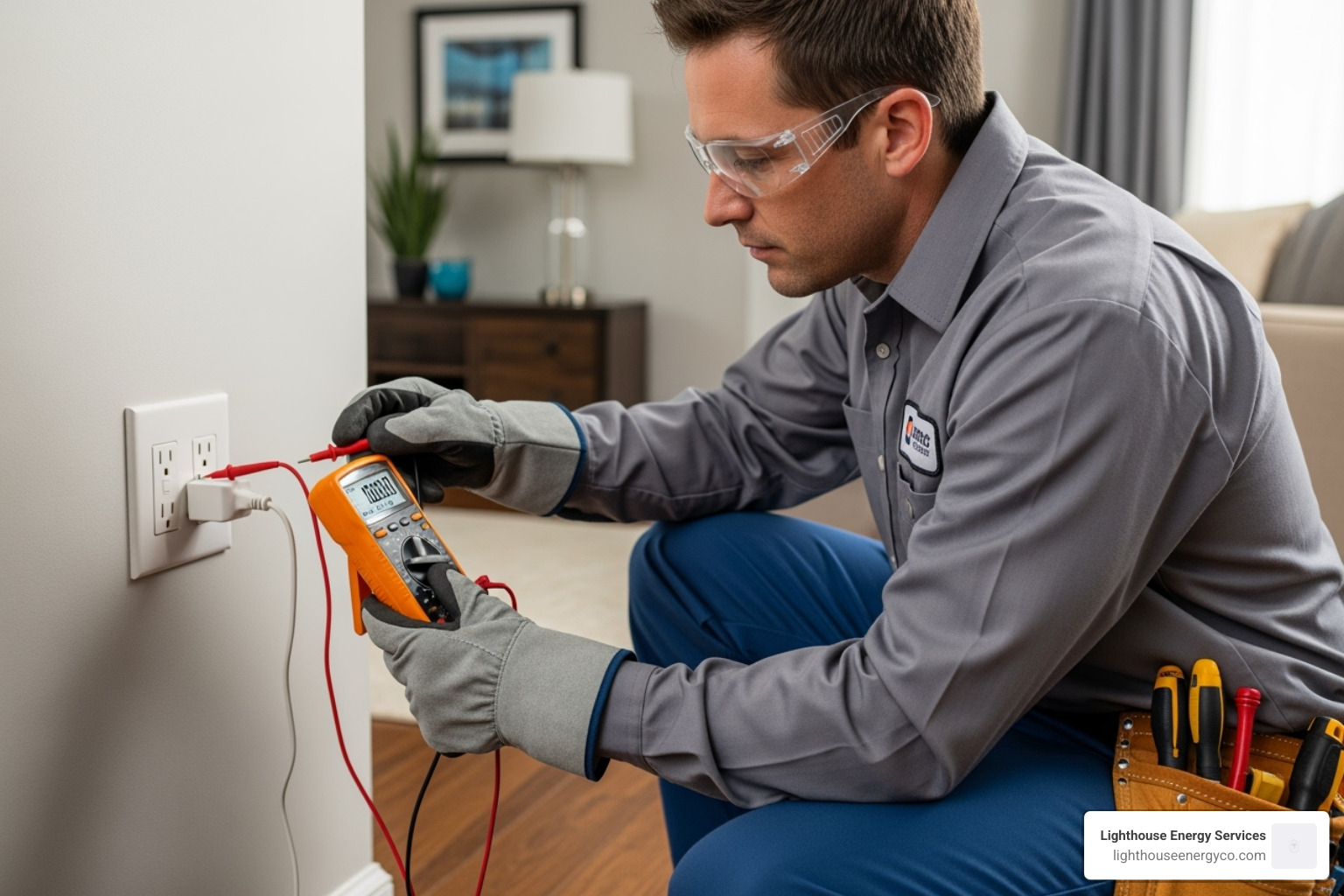
- Test Before You Touch: Use a voltage tester to confirm the circuit is truly de-energized.
- Use Proper Tools and PPE: Use insulated tools and wear safety glasses and gloves.
Understanding the National Electrical Code (NEC)
The National Electrical Code (NEC) is the U.S. standard for safe electrical installation. It’s not a suggestion—in most places, it’s the law. Local building codes may add further requirements.
This is why permits and inspections are crucial for significant electrical work. An inspector’s job is to verify that the work is safe and compliant, protecting your family and your investment.
Common Mistakes to Avoid When Wiring a House
Avoid these common and dangerous DIY mistakes:
- Connections Outside Boxes: All wire splices must be inside an approved electrical box.
- Wires Cut Too Short: The NEC requires at least six inches of wire extending from the box to allow for safe connections.
- Overfilling Boxes: Cramming too many wires into a box can cause overheating and short circuits.
- Unprotected Cables: Cables run through wall studs need protection from nails and screws.
- Improper Grounding: Failing to connect the ground wire correctly compromises your home’s primary safety system against electric shock.
Troubleshooting and Modern Safety Upgrades
Even a well-maintained electrical system can develop problems. Knowing the warning signs and understanding modern safety upgrades like GFCIs and AFCIs is key to protecting your family and property.
At Lighthouse Energy, we’re committed to helping homeowners understand these vital safety features. Learn more About Us and our commitment to safety in Palm Beach County.

The Role of GFCI and AFCI Protection
GFCI and AFCI devices are two of the most important safety innovations in electrician house wiring.
- Ground Fault Circuit Interrupters (GFCI): These devices protect against electric shock. They detect when current is flowing along an unintended path (like through a person) and shut off power in a fraction of a second. GFCIs are required by code in kitchens, bathrooms, garages, laundry rooms, and outdoor areas.
- Arc Fault Circuit Interrupters (AFCI): These devices protect against fires caused by arcing—electricity jumping across damaged or loose wires. AFCIs detect dangerous arcs and trip the circuit before heat can ignite surrounding materials. They are required in most living areas, including bedrooms and living rooms.
The Importance of Proper Grounding
Proper grounding is a critical aspect of electrical safety. It provides a safe path for stray electricity to travel into the earth, preventing shocks and protecting appliances. A grounding system starts with rods driven into the earth and connects via wires to every outlet and switch in your home. Without it, a simple fault could turn an appliance into a lethal shock hazard.
Troubleshooting Common Electrician House Wiring Problems
Your electrical system will give you warning signs when something is wrong. Be alert for:
- Flickering Lights: Persistent flickering can indicate loose connections or an overloaded circuit.
- Frequently Tripping Breakers: This is a clear sign that a circuit is overloaded or has a fault.
- Unusual Smells or Sounds: A burning or fishy smell, or buzzing from outlets or switches, signals immediate danger from overheating.
- Warm or Discolored Outlets: These are physical signs of a dangerous wiring problem.
While a multimeter can help a DIYer with basic voltage and continuity testing, persistent issues require a professional. If you experience any of these warning signs, especially burning smells or frequent breaker trips, call an electrician immediately. Our team is available 24/7 to diagnose and fix problems correctly.
Frequently Asked Questions about House Wiring
Homeowners often have the same questions about their electrical systems. Here are answers to the most common ones.
When should I hire a professional vs. DIY an electrical project?
For your safety, it’s crucial to know your limits. Simple tasks like replacing a light switch or an outlet cover may be manageable for a confident DIYer who has turned off and tested the power.
However, any work involving new circuits, panel upgrades, code compliance, or troubleshooting persistent problems should always be left to a licensed electrician. The risks of DIY electrical work—including fire, electrocution, and voided insurance—are too high. When it comes to electrician house wiring, if you have any doubt, call a pro.
What are the signs my house needs to be rewired?
If your home is over 40 years old, its wiring may not be able to handle modern electrical demands. Watch for these key warning signs:
- Frequent breaker trips or flickering lights.
- A constant need for extension cords due to insufficient outlets.
- Burning smells, buzzing sounds, or scorch marks around outlets.
- The presence of outdated aluminum wiring (common in homes from the mid-1960s to late 1970s).
If you notice these issues, have your system evaluated by a professional.
How can I make my home’s electrical system more energy-efficient?
Improving energy efficiency can lower your utility bills. Here are a few effective upgrades:
- Switch to LED Lighting: LEDs use significantly less energy and last much longer than traditional bulbs.
- Install Smart Switches and Outlets: These allow you to schedule and control lights and appliances remotely, reducing wasted power.
- Choose ENERGY STAR Appliances: When replacing appliances, look for the ENERGY STAR label to ensure lower energy consumption.
- Use Dedicated Circuits: Ensure large appliances have their own circuits to help them run more efficiently and prevent overloads.
Conclusion
From wire colors to circuit breakers, you now have a foundational understanding of your home’s electrician house wiring. The most important takeaway is that while electricity is useful, it is also unforgiving. Safety must always come first.
While you might handle a simple switch replacement, complex jobs like installing new circuits, panel work, or troubleshooting ongoing issues require a licensed electrician. The risks of a mistake are simply too high. A flickering light or tripping breaker is your home’s way of asking for professional help.
That’s where Lighthouse Energy Services comes in. We are your South Florida neighbors, with qualified electricians answering the phone 24/7. We provide prompt, honest service with no hidden fees, ensuring the job is done right the first time. Serving communities from Boca Raton to Miami and throughout Palm Beach, Broward, and Miami-Dade Counties, we’re here to help.
For peace of mind and professional care for your home’s vital electrical system, contact us for your residential electrical needs. We’re ready to ensure your home is safe and functional.