
Why Your Home’s Electrical System Matters More Than Ever
Electrical upgrades are crucial improvements to your home’s power system that improve safety, boost capacity, and prepare it for modern technology. Key reasons to upgrade include:
- Safety: Reduce fire and shock risks from old wiring or overloaded circuits.
- Capacity: Power modern appliances, EV chargers, and smart home devices.
- Efficiency: Lower energy bills through optimized systems.
- Home Value: Increase property appeal and satisfy insurance requirements.
- Code Compliance: Meet current National Electrical Code (NEC) standards.
The average household uses 400% more energy than in the 1960s. Today’s devices demand power that older systems weren’t built to handle. If you have an older home or notice flickering lights, frequent breaker trips, or burning smells, your electrical system is likely struggling.
Upgrading significantly reduces the risk of electrical fires and shocks. It also lowers utility bills, increases home value, and prepares your property for future tech like EVs and smart home systems.
I’m Bruce Kemp, and with decades of experience in electrical contracting, I’ve helped countless homeowners complete safe, efficient, and budget-friendly electrical upgrades that meet modern standards.
Key Foundational Electrical Upgrades for Safety and Capacity
Your electrical panel is the heart of your home’s power system. If it’s old or undersized—common in homes over 25-30 years old—it can’t safely meet today’s energy demands. A 60-amp fuse box from 1975 simply can’t handle modern appliances, creating frustration and danger.
Upgrading your system solves these issues, increases your home’s value, and brings it up to current National Electrical Code (NEC) safety standards. However, a service upgrade to increase total amperage requires coordination with your utility company for work on the service drop, meter, and sometimes the street transformer. This can cause delays of weeks or months.
We have years of experience managing this process with utility companies across Palm Beach, Broward, and Miami-Dade Counties. We handle the communication to keep your project moving as efficiently as possible.
Here are typical costs and timelines:
| Upgrade Type | Typical Costs (Homeowner Portion) | Who is Responsible? | Potential Timelines |
|---|---|---|---|
| Standard Panel Upgrade | $2,000–$4,000 | Homeowner (via licensed electrician) | 1-3 days (depending on scope), plus permit/inspection time |
| Service Upgrade | $5,000–$25,000+ | Utility company (for service drop/meter base) | Weeks to months (coordination with utility, trenching, transformer work, permits) |
These are general estimates for South Florida. Your actual costs will depend on your home’s specific conditions.
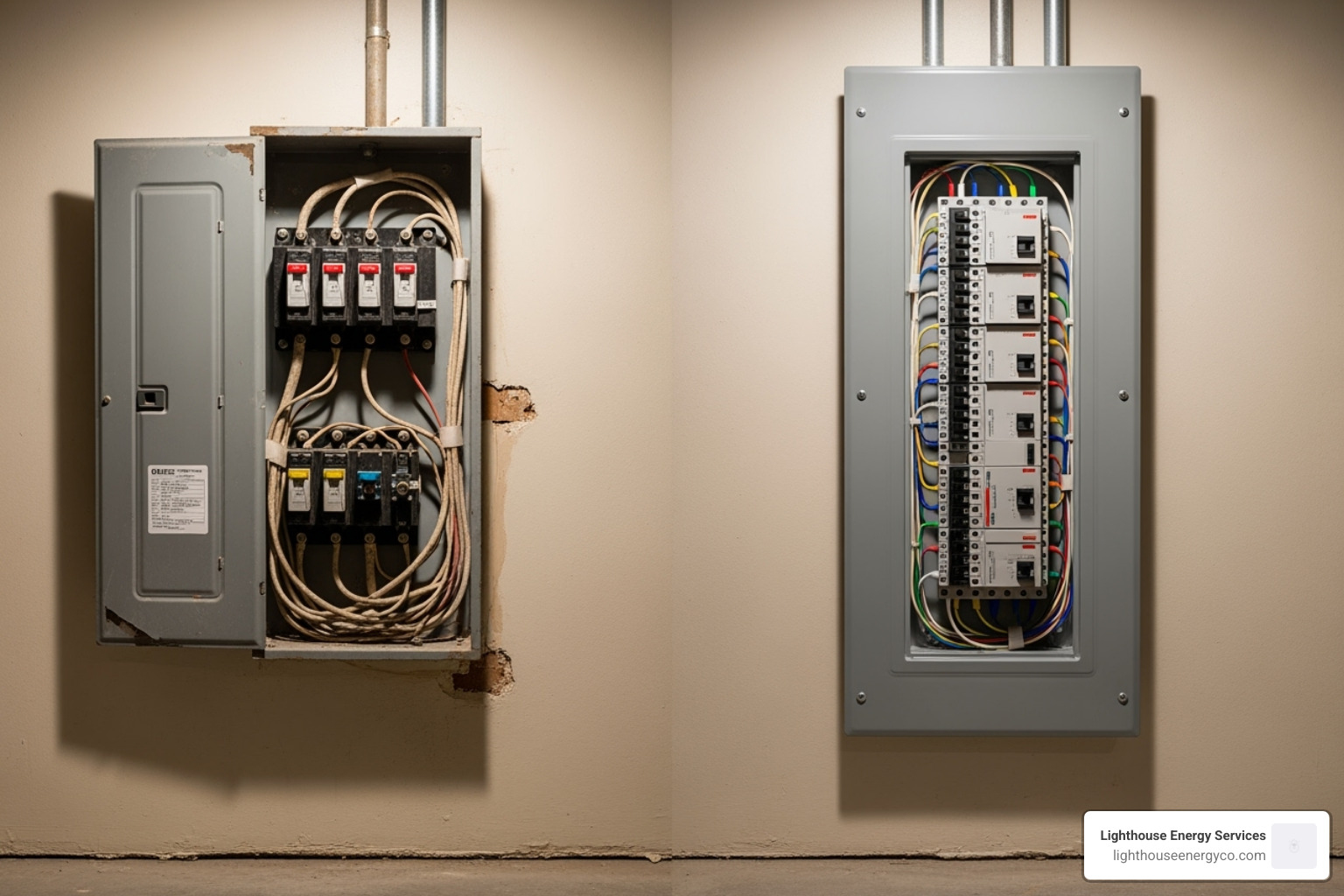
The Pros and Cons of an Electrical Panel Upgrade
An electrical panel upgrade is a smart investment for safety and peace of mind. The primary benefit is increased capacity. If your panel is below 100 amps, an upgrade is necessary to handle modern electrical loads safely. While a 100-amp panel can suffice for modest power users, a 200-amp panel provides ample room for current needs and future additions like an EV charger or heat pump.
Increased capacity means you can run major appliances simultaneously without tripping breakers. A new panel also allows for more circuits, improving load distribution and preventing overloads. The main downsides are cost ($2,000–$4,000 for a panel, $5,000+ for a full service upgrade) and the time investment. For most older homes, the long-term safety and functional benefits far outweigh these short-term costs. More info about our electrical panel services.
Signs You Need an Electrical Panel Upgrade
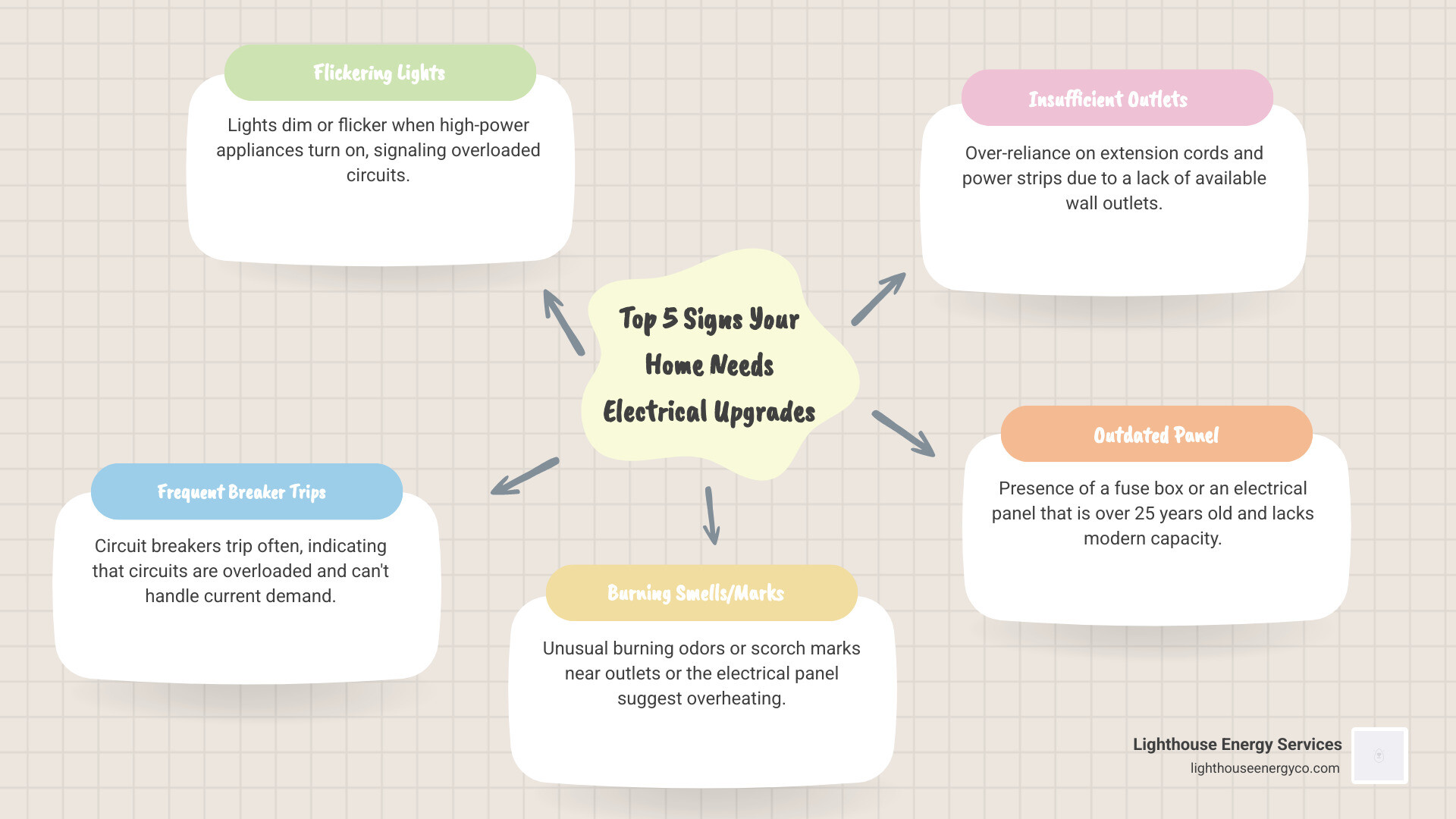
Your electrical system will often show warning signs when it needs attention. Look for these red flags:
- Flickering or dimming lights: Especially when large appliances turn on, this indicates your panel is struggling.
- Frequent breaker trips: This is a clear sign your panel can’t handle your home’s electrical demand.
- Burning smell or scorch marks: If you notice a burning odor or discoloration near your panel or outlets, call an electrician immediately. This is an emergency fire hazard.
- Insufficient outlets: Over-reliance on power strips and extension cords points to a need for more circuits, which often requires a panel upgrade.
- Outdated panel: A fuse box or any panel over 25 years old is due for replacement. Panels from hazardous brands like Federal Pacific, Zinsco, and Challenger require urgent replacement.
- Adding major appliances: If you’re planning to install a new HVAC system, hot tub, or EV charger, upgrade your panel first to ensure it has the capacity.
Understanding Wiring and Service Upgrades
Beyond the panel, the wiring in your walls and the service line to your home are critical. In older homes, these often need attention during electrical upgrades.
- Outdated Wiring: Homes built before the 1970s may have aluminum wiring, a fire hazard due to its tendency to loosen at connection points. Even older homes might have knob-and-tube wiring, which lacks grounding and proper insulation. Both types should be replaced.
- Grounding: Many older homes have ungrounded two-prong outlets. Replacing them with properly grounded three-prong outlets is a simple upgrade that dramatically reduces shock risk.
- Service Upgrades: This involves increasing the total amperage delivered to your home by the utility company. The work, which is the utility’s responsibility, can include replacing the service drop, meter base, and street transformer. This process can take weeks or months and cost anywhere from $2,000 to $30,000+, depending on the complexity. We handle all coordination with the utility company to make the process as smooth as possible.
Essential In-Home Safety Devices
Ground Fault Circuit Interrupters (GFCIs) and Arc Fault Circuit Interrupters (AFCIs) are essential electrical upgrades that work silently to prevent shocks and fires. Required by the National Electrical Code (NEC) in specific areas, these devices are your home’s electrical bodyguards, each protecting against a different threat.
Preventing Shocks with Ground Fault Circuit Interrupters (GFCIs)
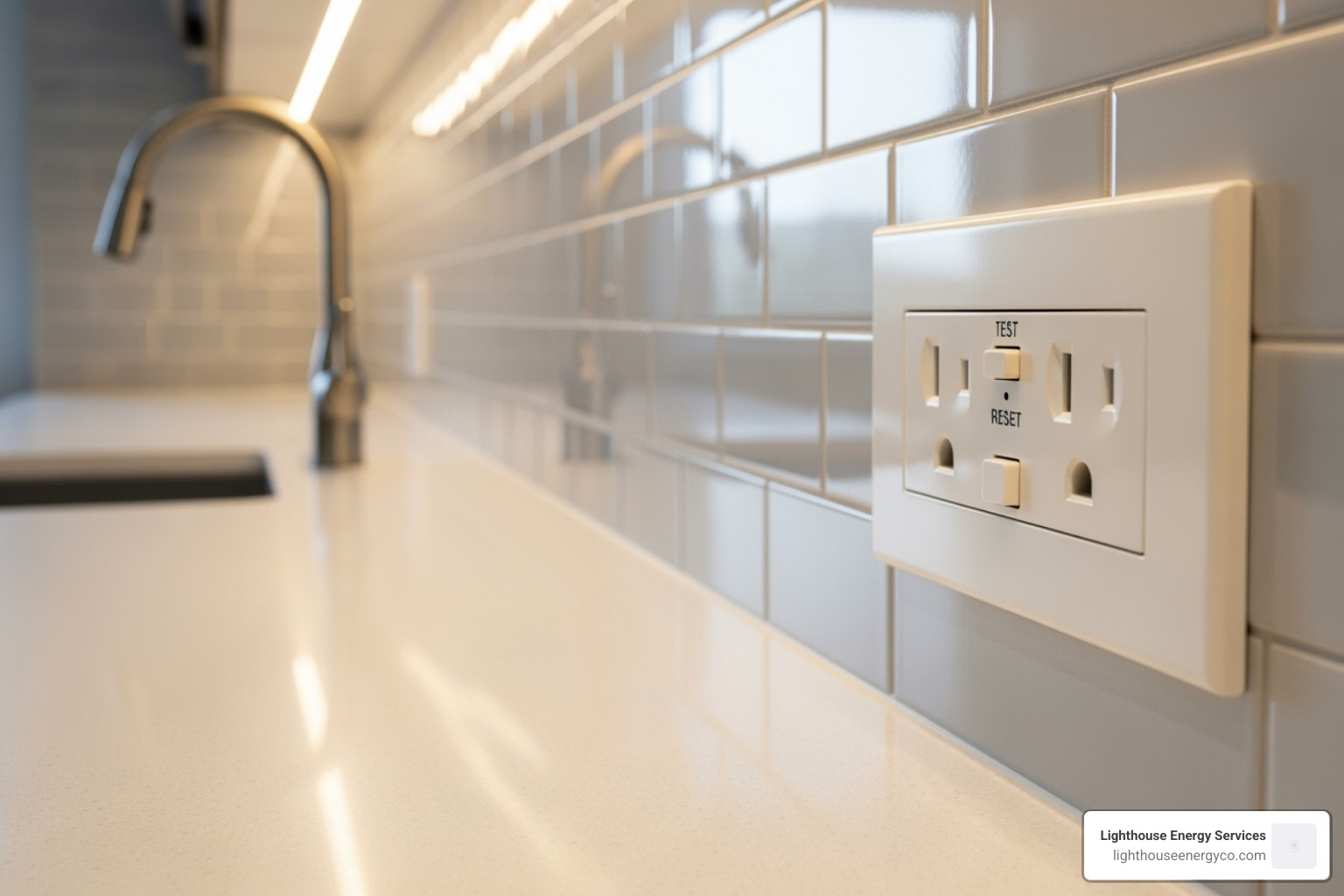
GFCIs are designed for shock prevention. They constantly monitor the flow of electricity in a circuit. If they detect a tiny imbalance—meaning electricity is escaping through water or a person—the GFCI trips in less than 1/40th of a second, cutting power before a serious shock can occur. This is far faster and more sensitive than a standard circuit breaker.
Modern electrical code requires GFCI protection in any area where water and electricity might mix, including kitchens, bathrooms, laundry rooms, garages, unfinished basements, and all outdoor outlets. Many older homes lack this protection. Installing GFCI outlets or breakers is an affordable and high-impact upgrade for family safety. Learn more about GFCI outlet requirements.
Stopping Fires with Arc Fault Circuit Interrupters (AFCIs)
While GFCIs prevent shocks, AFCIs prevent electrical fires. Thousands of home fires start from arcing faults—dangerous sparks created by damaged wiring inside walls, often from a misplaced nail or a pinched cord. These arcs generate intense heat that can ignite building materials.
Standard breakers can’t detect these low-current arcs, but AFCIs can. These intelligent devices analyze the electrical waveform to distinguish between normal sparks and dangerous arcing. When a hazardous arc is detected, the AFCI immediately shuts down the circuit, preventing a fire before it starts. AFCIs automatically disconnect the power when they sense trouble.
The NEC now requires AFCI protection in most living areas of new homes, including bedrooms, living rooms, and hallways. Upgrading an older home with AFCI breakers in the panel provides a critical defense against hidden electrical fire hazards. Combined with GFCIs, they create a complete safety net for your home.
Future-Proofing for Electrification and Modern Lifestyles
As the world shifts toward electrification, electrical upgrades are about getting ahead of the curve. Preparing your home for electric vehicles (EVs), heat pumps, and smart appliances makes it more efficient, valuable, and ready for the future. This “electric readiness” allows you to adopt cleaner, cheaper energy options for your South Florida home.

Powering the Future: EV Charger Installation
Home charging is essential for EV owners. While a standard 120-volt outlet (Level 1) is slow, adding only 3-5 miles of range per hour, a professionally installed Level 2 charger is a game-changer. These 240-volt systems add 10-30 miles of range per hour, allowing for a full overnight charge.
Installing a Level 2 charger requires a new dedicated circuit from your electrical panel to your garage or parking area. We ensure all installations, especially outdoor ones, are weatherproof and GFCI-protected for safety. Plus, a federal tax credit can reimburse you for 30% of the installation cost, up to $1,000, making it a smart financial move.
Integrating Smart Home Technology with Electrical Upgrades
A true smart home starts with a solid electrical foundation. Electrical upgrades enable seamless integration of technology that makes your life easier and more efficient.
- Smart Panels: These advanced panels offer circuit-level monitoring via an app, showing you exactly where your power is going. They can also manage energy usage by prioritizing loads, such as temporarily pausing EV charging when the AC kicks on to prevent overloads.
- Smart Devices: We can install smart outlets and switches for remote control of lights and appliances, and integrate programmable thermostats that save on energy costs. A unified system combining security, lighting, and climate control offers ultimate convenience and peace of mind.
Bright Ideas: Upgrading to Energy-Efficient LED Lighting
One of the simplest and most effective electrical upgrades is switching to LED lighting. LEDs use a fraction of the energy of incandescent bulbs, last significantly longer, and run much cooler, which helps reduce AC costs in Florida.
Modern LEDs offer a wide range of color temperatures and brightness levels, allowing you to customize the ambiance of any room. From recessed fixtures to landscape lighting, LEDs are an efficient, eco-friendly choice that improves your home’s look and lowers your utility bills. View our project gallery to see the changes we’ve completed.
Making Your Upgrades Pay for Themselves
Electrical upgrades are a smart financial decision that can pay for themselves through energy savings and government incentives. While there’s an upfront cost, the long-term return on investment is significant.
How Upgrades Boost Energy Efficiency
An efficient electrical system wastes less energy, leading to lower utility bills. Modern wiring reduces heat loss, and an updated panel with sufficient capacity allows appliances like your HVAC system to run at peak efficiency without straining. This is especially beneficial in Palm Beach County, where cooling costs are high.
Electrification offers even greater savings. An induction stove is twice as efficient as gas, and charging an EV at home is far cheaper than buying gasoline. Smart panels provide another layer of efficiency with circuit-level monitoring, helping you identify energy hogs and manage power distribution automatically to minimize waste.
Opening Up Savings: Federal Tax Credits and Rebates
The federal government offers substantial tax credits for energy-efficient electrical upgrades through the Inflation Reduction Act.
- Electrical Panel Upgrades: Claim 30% of the project cost, up to $600, for a panel upgrade (200 amps or more) that supports home electrification.
- EV Charger Installation: Claim 30% of the installation cost, up to $1,000.
These credits are available for work done through December 31, 2025, with an annual limit of $3,200 for all efficiency credits. You can claim the credits using the IRS Form 5695. Many local utility companies in Miami-Dade, Broward, and Palm Beach counties also offer their own rebates. Stacking these incentives makes the financial case for upgrading even more compelling. We can help you steer these programs to maximize your savings.
Frequently Asked Questions about Home Electrical Systems
Thinking about electrical upgrades can bring up a lot of questions. Here are straightforward answers to the ones we hear most often from homeowners in Palm Beach County.
How do I know if my home’s electrical system is outdated?
Your system is likely outdated if you notice these signs:
- Age: Your home is over 25-30 years old and has not had a major electrical overhaul.
- Visuals: You have a fuse box instead of a circuit breaker panel, or you have ungrounded two-pronged outlets.
- Performance: Lights flicker, breakers trip frequently, or you can’t run multiple appliances at once.
- Amperage: Your main panel is rated at 60 or 100 Amps, which is often insufficient for modern needs.
If any of these sound familiar, it’s time for a professional assessment.
Can I electrify my home without a major panel upgrade?
Often, yes. Many assume electrification requires a costly panel upgrade, but that’s not always true. The key is a professional load calculation to assess your existing panel’s capacity.
Homes with 100-150 Amp panels can often accommodate new electric appliances by using energy-efficient models and smart load management technology. These systems can intelligently balance power usage, such as pausing EV charging when another large appliance is running. However, if your panel is under 100 Amps, an upgrade is almost always necessary. We can help you find the most cost-effective path to electrification.
How long does a typical electrical upgrade take?
The timeline depends on the project’s scope:
- Panel-Only Upgrade: The installation typically takes 1-3 days. You may be without power for several hours during the switch.
- Full Rewiring: Replacing all the wiring in a home is more involved and can take a week or more, depending on the home’s size and accessibility.
- Permits and Inspections: Most electrical upgrades require permits and inspections, which can add several days or weeks to the overall timeline.
- Utility Coordination: If a service upgrade is needed from the utility company, this can be the biggest variable, potentially adding weeks or even months to the project. We manage this coordination to minimize delays.
We provide a clear, realistic timeline upfront and maintain transparent communication throughout your project.
Conclusion: Secure Your Home’s Electrical Future
Your home’s electrical system is the invisible foundation of modern life. As we’ve seen, electrical upgrades are about more than fixing problems—they’re an investment in a safer, more efficient, and future-ready home. From GFCI/AFCI protection and modern panels to EV readiness and smart home integration, these improvements improve your home’s value, safety, and your family’s peace of mind.
An outdated system creates real risks and should not be ignored. Whether you’re experiencing issues, planning a renovation, or want to meet modern safety standards, the right time to act is now.
At Lighthouse Energy, our promise is simple: we do the job right, and we do it right now. Our qualified electricians are available 24/7 across Palm Beach, Broward, and Miami-Dade Counties, offering prompt, professional service with no hidden fees. Your home deserves an electrical system that is safe, reliable, and ready for the future.
Contact us today to schedule a comprehensive electrical assessment and take the first step toward a safer, smarter home. Let’s light the way to your home’s electrical future—together.