
Why Your Home’s Electrical System Needs Attention Now
Electrical upgrades for home systems are more than a modern convenience—they’re essential for safety, efficiency, and keeping up with today’s power demands. If you’re dealing with flickering lights, frequent breaker trips, or planning to add an electric vehicle charger, understanding your options can prevent dangerous situations and save you money.
Many older homes have electrical systems that can’t handle modern life. With approximately 51,000 home electrical fires occurring each year resulting in around 500 deaths, upgrading your system is about protecting your family and property. These upgrades range from new safety outlets and wiring to larger projects like electrical panel replacements and EV charger installations.
As experienced electrical contractors, we’ve seen how critical electrical upgrades for home safety and functionality are. We help homeowners steer these important decisions while ensuring every job complies with modern electrical codes.
Why Upgrade Your Home’s Electrical System?
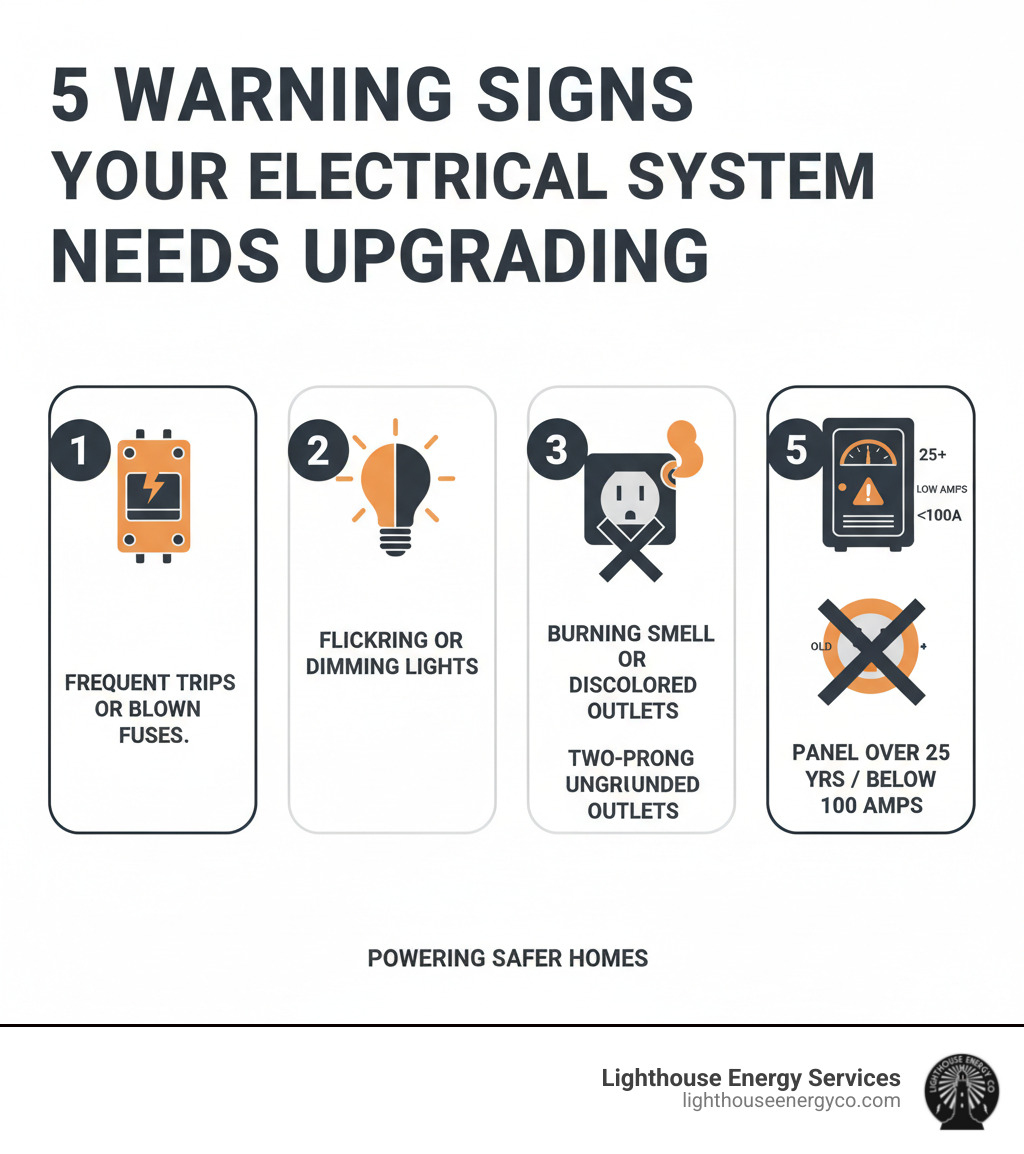
Your home’s electrical system works quietly behind the walls, but if it was installed 30 or 40 years ago, it wasn’t designed for today’s world of smart devices and power-hungry appliances. The signs of an aging system start small: lights flicker when an appliance turns on, or a circuit breaker trips when you vacuum. These aren’t just annoyances; they’re warnings that your system is struggling.
More serious signs include a burning smell near an outlet, discolored wall plates, or a home full of two-prong, ungrounded outlets. Ignoring these warnings is risky. According to the Electrical Safety Foundation, about 51,000 home electrical fires occur annually in the U.S., causing around 500 deaths. Outdated wiring and overloaded circuits are leading causes. When we talk about electrical upgrades for home safety, we’re talking about protecting your family and your biggest investment.
Your electrical system has four main parts: the electrical panel (the command center), circuits (pathways for power), wiring (the power lines in your walls), and outlets/switches. If any of these are outdated, the whole system suffers. A 60-amp panel from 1960 simply can’t handle a modern home’s demands.
Key benefits of electrical upgrades for home
Upgrading your electrical system offers significant advantages:
- Improved Safety: Modern wiring, panels, and outlets dramatically reduce fire and shock risks by meeting current safety codes.
- Energy Efficiency & Reduced Costs: Newer systems waste less power. Combined with LED lighting and smart controls, this can lower your utility bills.
- Increased Home Value: An updated electrical system is a major selling point, signaling a well-maintained, modern-ready home to potential buyers.
- Support for Modern Appliances: Run your high-power devices simultaneously without tripping breakers.
- Future-Proofing: An upgraded system is ready for future technology like EV chargers and advanced smart home integrations.
When is the right time for an upgrade?
Consider an upgrade if you’re in one of these situations:
- Your home is over 30 years old: It likely wasn’t designed for today’s energy consumption.
- You’re planning a major renovation: Upgrading is easier and cheaper when walls are already open.
- You’re adding large appliances: A hot tub, central AC, or EV charger often requires more power and dedicated circuits.
- You experience frequent electrical issues: Regularly tripping breakers, flickering lights, or buzzing sounds are clear warning signs.
- You’re selling your home: An updated system can boost your asking price and speed up the sale.
We offer comprehensive electrical services to handle any upgrade your home needs. Learn more about our electrical services and how we can help future-proof your home.
Essential Electrical Upgrades for Home Safety and Modern Living

Now that we’ve covered why upgrades matter, let’s look at the specific electrical upgrades for home safety and efficiency that make the biggest impact. Understanding the purpose and cost of each helps you make informed decisions.
Electrical Panel and Service Upgrades
Your electrical panel is your home’s power distribution hub. If it’s outdated, the whole system is at risk. A panel upgrade replaces the breaker box inside your home, often increasing capacity from 100 amps to a modern standard of 200 amps. A service upgrade is a larger project, replacing the wiring from the utility line to your home to bring in more power overall. Most homes only need a panel upgrade unless you’re adding major electrical loads like multiple EV chargers.
An upgrade to a 200-amp panel typically costs between $1,000 and $4,000. Signs you need an upgrade include a panel that’s over 25 years old, frequent breaker trips, flickering lights, or reliance on power strips. A modern panel improves safety, provides power for all your appliances, and increases your home’s value.
We also recommend considering smart panels, which offer real-time energy monitoring and remote control of circuits from your phone. They can help manage power loads more efficiently, sometimes helping you avoid a more costly full service upgrade.
Wiring Upgrades
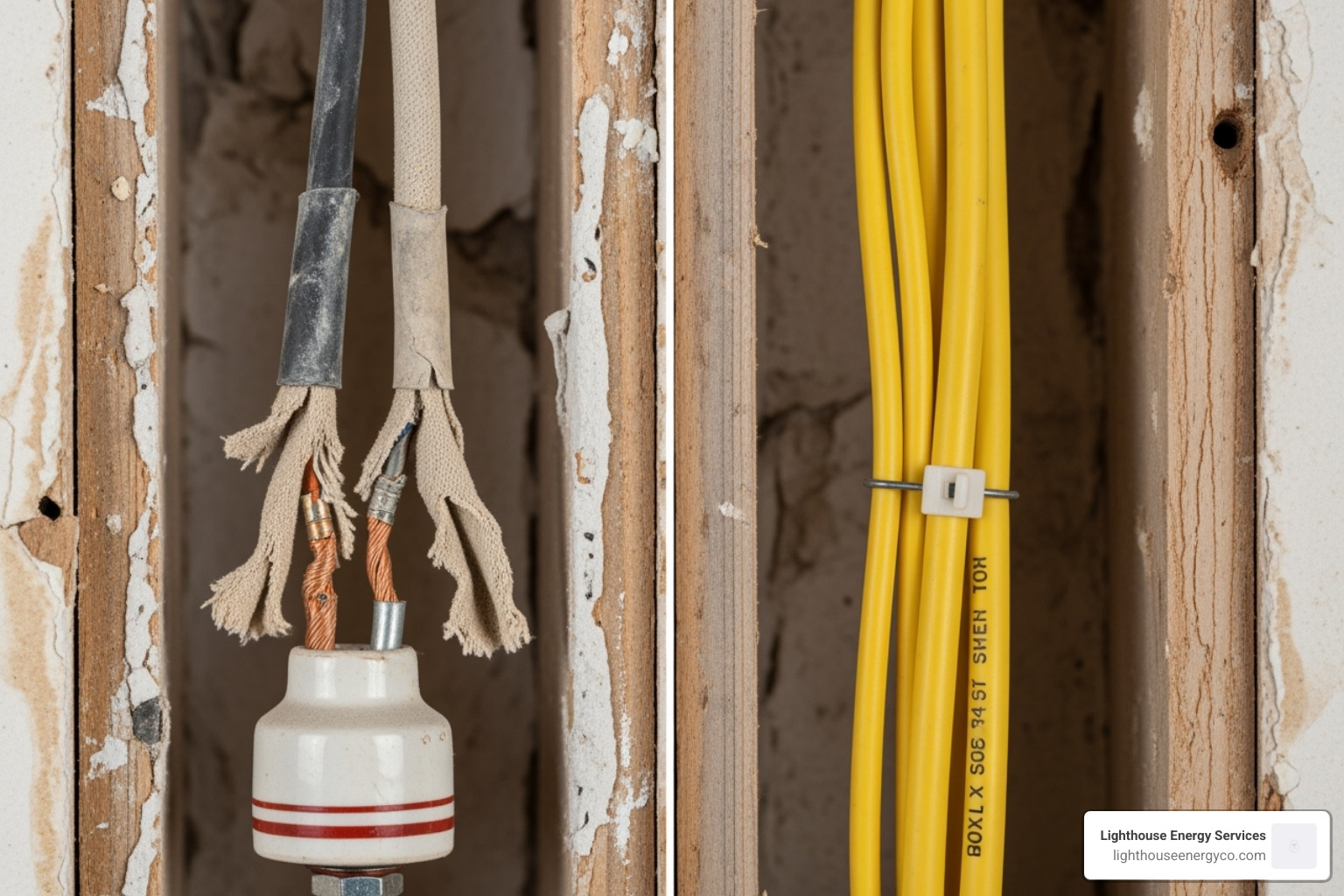
The wiring in your walls is critical. Older homes may have outdated and dangerous wiring:
- Knob and tube wiring (pre-1940s) lacks proper grounding and insulation, posing a significant fire hazard. You can learn more about knob and tube wiring risks.
- Aluminum wiring (1960s-70s) can corrode and loosen over time, creating dangerous overheating at connections. Many insurers charge higher premiums for it. See the details on aluminum wiring hazards.
Copper wiring is the modern standard for its durability and safety. If your home has old wiring, a full rewire is a critical safety investment. The average cost is around $7,000, but it eliminates fire hazards and ensures reliable power delivery, making it one of the most important electrical upgrades for home safety.
Safety Outlet Installation: GFCI & AFCI
Modern outlets are life-saving devices. Ground Fault Circuit Interrupters (GFCIs) prevent electrical shock by instantly cutting power if they detect a fault. They have “test” and “reset” buttons and are required by code in wet locations like kitchens, bathrooms, garages, and outdoors.
Arc Fault Circuit Interrupters (AFCIs) prevent fires by detecting dangerous electrical arcs in wiring, which can be caused by damage or loose connections. AFCIs shut down the circuit before the intense heat can start a fire. The CPSC explains why AFCIs are important safety features. They are required in bedrooms and other living areas in new construction.
Installing these outlets is an affordable and high-impact upgrade. Professional installation typically costs $150 to $275 per outlet, a small price for protection against shock and fire.
Smart Home Integration and Lighting
Smart technology improves efficiency, security, and control over your energy use. Popular upgrades include smart thermostats, lighting, security systems, and outlets. One of the simplest and most effective changes is switching to LED lighting. LEDs use up to 75% less energy than incandescent bulbs and last years longer, significantly cutting electricity and replacement costs.
For comprehensive protection, consider whole-home surge protection. Unlike a simple power strip, this device is installed at your panel and shields all your electronics and appliances from damaging voltage spikes from the grid or lightning. At an average cost of around $300, it’s affordable insurance for thousands of dollars worth of equipment.
Dedicated Circuits and EV Charging Stations

High-power appliances like refrigerators, ovens, and HVAC systems need their own dedicated circuits to prevent overloads and fire hazards. Installing a dedicated circuit, which costs $300 to $1,000, ensures these appliances run safely and efficiently without tripping breakers.
Electric vehicle charging is one of the most requested electrical upgrades for home today. While you can use a standard 120-volt outlet (Level 1), it can take days to fully charge an EV. We recommend installing a 240-volt (Level 2) charger, which can fully charge a vehicle overnight. This requires a dedicated 240-volt circuit, similar to an electric dryer.
This upgrade is more affordable than you might think. The federal government offers a 30% tax credit on the installed cost of home EV chargers, up to $1,000. You can find details on the Federal Tax Credit for EV Chargers. This incentive makes installing a home charger a smart investment in convenience and your electric future.
The Upgrade Process: From Planning to Powering Up
Undertaking electrical upgrades for home safety requires careful planning. A clear process ensures the project runs smoothly, on budget, and meets all safety standards.
Planning your electrical upgrades for home
A successful project starts with a solid plan. First, we help you assess your needs, discussing current issues and future goals like a kitchen remodel or an EV charger. This determines the scope of the work. Next, we provide a transparent budget with a full breakdown of costs for materials, labor, and permits—no surprises. We also handle all permits and inspections, ensuring your project is fully code-compliant without you having to deal with the paperwork. If you’re renovating, we coordinate with other contractors to integrate electrical work seamlessly. You can see examples of our work in our past electrical projects gallery.
The Role of a Licensed Electrician
Electrical work is not a DIY project. Mistakes can cause fires, electrocution, or costly damage. A licensed electrician has the training, experience, and knowledge of the National Electrical Code (NEC) to do the job safely and correctly. Always verify that your electrician is licensed and insured.
When you call us for a quote, you’ll get a free, transparent estimate with no hidden fees. While it’s wise to get multiple quotes, the lowest price isn’t always the best value. Prioritize expertise and reputation. During installation, our team communicates clearly, minimizes disruption, and thoroughly tests everything before we consider the job done. Our motto is to get jobs “done right, and done right now.”
Incentives and Rebates
Making electrical upgrades for home efficiency can be more affordable than you think. Several programs can lower your out-of-pocket costs:
- Federal Tax Credits: The Inflation Reduction Act offers significant savings. You can get a tax credit for 30% of the cost (up to $600) for an electrical panel upgrade that enables other energy efficiency improvements. For EV charger installations, a separate credit covers 30% of the cost, up to $1,000. ENERGY STAR has more details.
- State and Local Rebates: Many states and municipalities offer their own programs for energy-efficient upgrades. These vary by location but are worth investigating.
- Utility Company Offers: Check with your local utility provider for rebates on specific energy-saving installations.
Navigating these programs can be confusing. We help our clients identify all qualifying incentives and assist with the application process to maximize your savings.
Frequently Asked Questions about Home Electrical Upgrades
Planning electrical upgrades for home brings up many questions. Here are the answers to the ones we hear most often.
How can I tell if my electrical panel has enough capacity?
First, check the main breaker at the top or bottom of your panel. The number on it (e.g., “100A” or “200A”) is its maximum amperage. Most modern, all-electric homes need at least 200-amp service. If you have a 60A or 100A panel, it’s likely undersized for today’s needs.
While empty slots for new breakers might seem like a good sign, the panel could already be at its load limit. The only way to know for sure is to have a licensed electrician perform a load calculation. We assess your current usage and future plans (like adding an EV or heat pump) to ensure your panel is sized correctly for the long term.
What’s the difference between a panel upgrade and a service upgrade?
These terms are often confused. A panel upgrade replaces the breaker box inside your home to add capacity or replace an unsafe model. A service upgrade is a larger project that replaces the wiring from the utility line to your meter and panel, increasing the total amount of power your home can draw from the grid. Most homeowners only need a panel upgrade; a service upgrade is for major additions or a full conversion to electric power.
Can I perform electrical upgrades myself?
While simple tasks like changing a light switch can be done by a careful homeowner (always turn off the power!), major electrical upgrades are not DIY projects. Working with electricity is dangerous, and mistakes can lead to fire, electrocution, or serious property damage. Professional electricians are trained to work safely, understand complex load calculations, and ensure every installation complies with the National Electrical Code.
Improperly installed work can also cause problems when you sell your home or file an insurance claim. For anything beyond a minor replacement, hiring a licensed professional is the safest and smartest choice. At Lighthouse Energy Services, our licensed master electricians are available 24/7 for this very reason.
Your Partner for a Safer, Smarter Home
When you invest in electrical upgrades for home safety and efficiency, you’re making a commitment to your family’s well-being and your property’s future. These improvements provide lasting peace of mind, knowing your electrical system is working safely and reliably behind the scenes.
Electrical upgrades future-proof your home. Whether you’re charging an EV, powering a home office, or simply want protection from electrical hazards, these improvements prepare your home for modern life. When it’s time to sell, a code-compliant electrical system is a powerful selling point that signals a well-maintained property.
The investment you make today pays dividends in reduced utility costs, increased home value, and improved safety for years to come.
At Lighthouse Energy Services, we understand your home is your sanctuary. Our qualified electricians are available 24/7 to provide prompt, professional service with no hidden fees. We believe in doing things right the first time, which is why our motto is simple: “done right, and done right now.”
For professional electrical upgrades for home safety and efficiency in Palm Beach County, Jupiter, West Palm Beach, Boca Raton, Fort Lauderdale, Miami, and throughout South Florida, you need a partner you can trust. Our team of licensed master electricians brings decades of combined experience to every project.
Contact us today for a comprehensive electrical assessment of your home and find how we can build a safer, more efficient future for your home.