
Finding the right electrical contractor in South Florida isn't just a task to check off your list—it's one of the most critical decisions you'll make for the safety and compliance of your property. In a region known for its unique challenges, from hurricane-proofing to navigating a maze of new construction codes, the right pro can save you from dangerous violations and expensive delays. This guide will show you exactly how to find a qualified, reliable electrician, from Jupiter down to Boca Raton.
Why The Right Electrical Contractor Is Non-Negotiable
In South Florida's fast-paced environment, choosing an electrician is about much more than just getting a job done. It's about protecting your home, your business, and your investment. The stakes are sky-high, whether you're a homeowner planning a kitchen remodel or a developer overseeing a massive commercial project.
Making the wrong choice can set off a disastrous chain reaction. A bad electrical job isn't just an annoyance; it’s a serious safety threat that can lead to electrical fires or personal injury. On top of that, failing to meet the strict local building codes can bring your project to a screeching halt, landing you with hefty fines and potentially voiding your property insurance.
The Booming Demand For Skilled Electricians
The need for truly qualified electrical contractors in South Florida has never been greater. With the state's explosive growth, the demand for skilled tradespeople is through the roof. Florida actually ranks third in the nation for employing electricians, with roughly 47,000 licensed professionals on the books as of May 2023.
This surge is fueled by a construction boom across Palm Beach County, with residential, commercial, and industrial projects popping up at a record pace. It's no surprise that the national electrical contracting market is expected to hit $347.5 billion by 2026. You can dig deeper into these electrical industry trends from ConsumerAffairs.
With so many contractors out there, how do you separate the real experts from the rest? It all comes down to knowing what to look for before you even pick up the phone.
A great electrical contractor does more than just connect wires. They act as a critical safety partner, navigating complex codes, anticipating potential issues, and ensuring the long-term integrity of your electrical system.
Your Quick Vetting Framework
Before you get bogged down in comparing quotes and project details, it’s smart to have a simple framework for your initial screening. The checklist below covers the absolute must-haves for any electrician working in our region. Use it to quickly weed out anyone who doesn't meet the baseline for safety, compliance, and professionalism.
This first pass saves you a ton of time and helps you focus only on contractors who are genuinely qualified to work on your property.
Quick Vetting Checklist for South Florida Electricians
| Vetting Criteria | Why It's Critical in South Florida |
|---|---|
| State & County Licensing | A valid Florida license (like an EC or ER license) is non-negotiable. It proves they've met the state's rigorous standards for knowledge and safety. |
| Liability & Workers' Comp Insurance | Our litigious environment and high-risk storm season make this essential. It protects you from financial liability if an accident happens on your property. |
| Knowledge of Local Codes | Codes can vary between Palm Beach County and even specific cities like Boca Raton or West Palm Beach. The right pro knows these nuances inside and out. |
| Hurricane Preparedness Experience | Experience with generator installation, transfer switches, and surge protection is vital for ensuring your power systems can withstand a major storm. |
| Clear Permitting Process | An experienced contractor will handle the entire permitting process for you, preventing delays and ensuring your project is fully compliant with local authorities. |
Think of this checklist as your first line of defense. If a potential contractor can't tick every one of these boxes without hesitation, it’s a clear sign to move on. A true professional will have all this information ready and will be happy to provide proof.
Decoding Licenses, Insurance, And Local Permitting
Let's talk about the paperwork. I know it’s the least exciting part of any project, but when you're hiring an electrician in South Florida, dotting your i's and crossing your t's is the single most important thing you can do to protect yourself. The rules here are notoriously strict for good reason, and understanding a contractor's credentials is your best defense against shoddy work, endless delays, and serious financial risk.
First up is the license. Before you even think about signing a contract, you need to verify that the electrician is licensed by the State of Florida. The official gatekeeper is the Department of Business and Professional Regulation (DBPR). You can—and absolutely should—look up any contractor’s license on the DBPR website. It takes two minutes and can save you a world of trouble.
Certified vs. Registered Florida Electricians
In Florida, electrical licenses aren't one-size-fits-all. You'll run into two main types, and knowing the difference is key.
- Certified Electrical Contractor (EC): This is the top-tier state license. An EC can legally work anywhere in Florida, from Miami to Pensacola, without needing to pass extra local tests. This usually signals a more established, experienced operation.
- Registered Electrical Contractor (ER): This license is more localized. An ER is only authorized to work in the specific cities or counties where they've passed a local competency exam. For instance, an electrician might be registered to work only in Palm Beach County.
So which is better? For most projects, a certified contractor offers greater flexibility. However, a good local registered electrician can be a fantastic choice, as long as you confirm their license is active and their work is confined to the jurisdiction they're registered in.
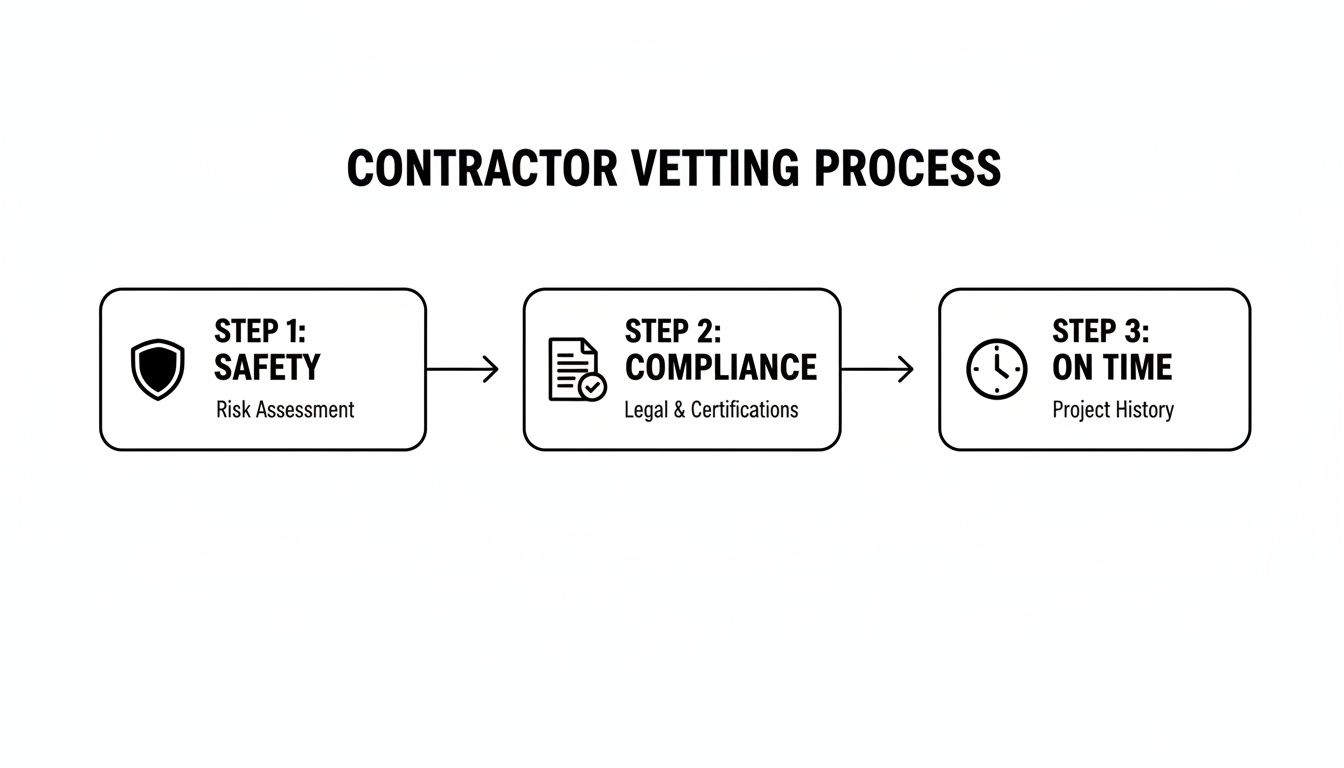
A simple vetting process that prioritizes safety, full compliance, and reliability is your blueprint for a successful project.
The Non-Negotiable Need for Proper Insurance
A license is just the start. The next critical checkpoint is insurance. A professional electrical contractor in South Florida must carry two specific types of coverage. This isn't optional.
- General Liability Insurance: This protects your property. If an electrician’s work accidentally starts a fire or they drop a heavy tool that cracks your tile floor, their general liability policy pays for the damage.
- Worker's Compensation Insurance: This is what protects you if one of their employees gets hurt on your property. Without it, you could be on the hook for medical bills and lost wages.
Think about a worst-case scenario. An electrician falls off a ladder in your living room and breaks a leg. If their company doesn't have worker's comp, that injured worker’s next call could be to a lawyer to sue you. It’s a nightmare that is easily avoided by asking for proof of insurance.
Expert Tip: Never just take their word for it. Always request a current Certificate of Insurance (COI) directly from the contractor. A reputable company will hand it over without blinking an eye. Check the policy dates to make sure it's not expired.
Understanding South Florida Permitting
The final piece of the compliance puzzle is the building permit. Here in places like Palm Beach County and the surrounding cities, permits are required for almost any electrical work that goes beyond changing a lightbulb. If you want to get into the nitty-gritty, our guide on government-approved electrical contractors breaks down these local rules in more detail.
Trying to sidestep a permit is a huge gamble. It can void your homeowner's insurance, get you hit with fines from the city, and cause absolute chaos when you try to sell your home. A title search will flag unpermitted work, and you'll likely have to tear everything out, have it redone with a permit, and get it inspected before the sale can close.
As a rule of thumb, projects that always need a permit include:
- Replacing or upgrading an electrical panel
- Running new circuits for appliances or extra outlets
- Installing a whole-home generator
- Any significant rewiring
A true professional knows exactly when a permit is needed and will handle the entire process for you—from submitting the application to scheduling the final inspection. This is how you ensure your project isn't just safe, but also fully documented and legal, protecting your investment for years. When vetting electrical contractors in South Florida, make sure their process for pulling permits is crystal clear.
Evaluating An Electrical Contractor's Real-World Expertise
So, you’ve checked their license and insurance. That’s the easy part. Paperwork proves an electrician meets the bare minimum, but it tells you nothing about their real-world skills for your specific project. A contractor who excels at wiring new homes might be completely out of their depth troubleshooting a tricky commercial system.
This is where the real vetting begins. You need to move past the credentials and dig into their actual experience. In South Florida, the best electrical contractors aren’t just technicians—they’re seasoned problem-solvers who understand our region’s unique challenges. Your job is to find the team whose experience genuinely lines up with what you need done.
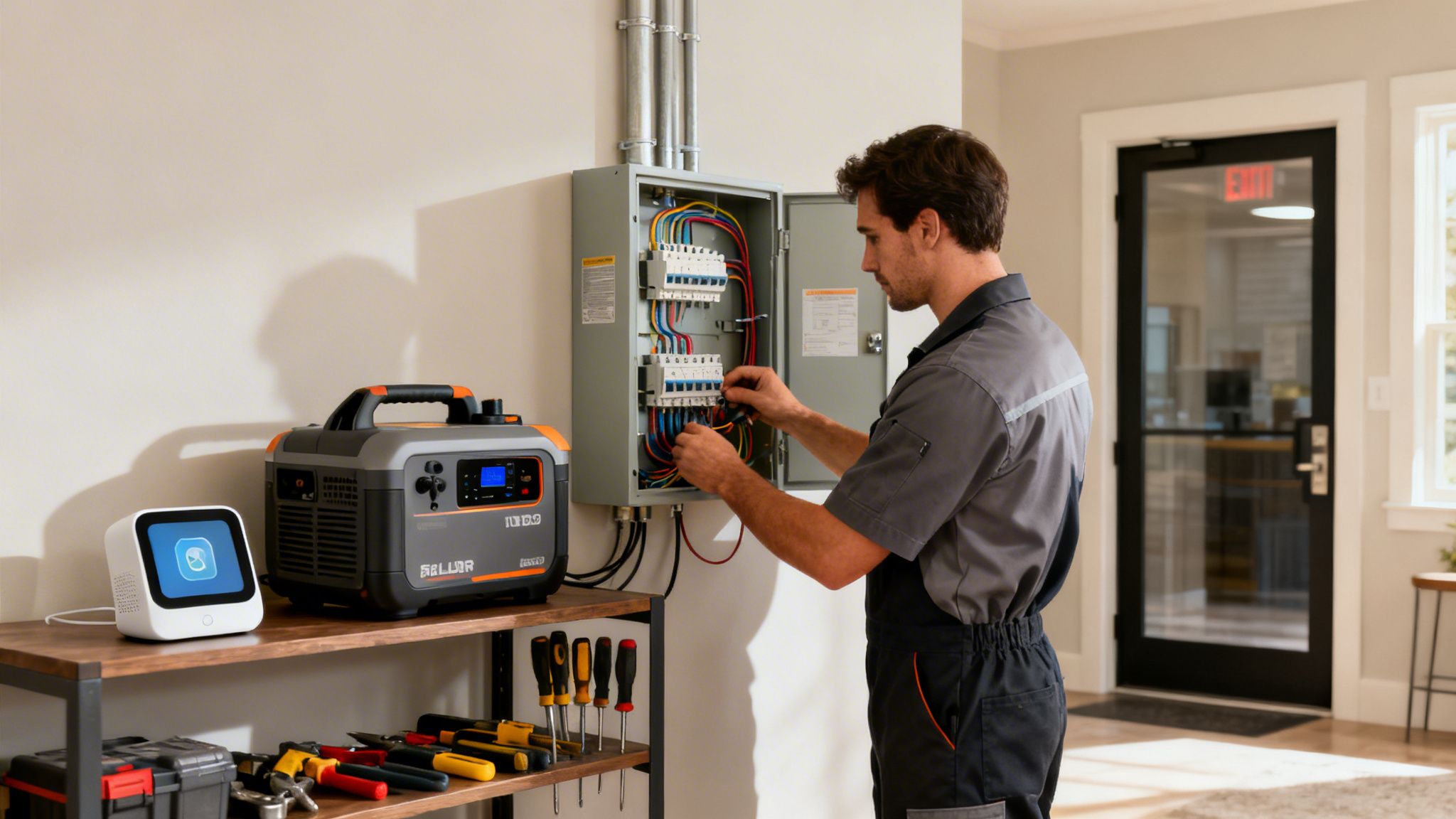
Residential Project Expertise
For homeowners from Boca Raton up to Jupiter, electrical work is rarely just about a simple fix. When you're talking to a contractor about a residential job, you have to look for experience that’s relevant to the way we live here.
Don't just ask, "Do you do residential work?" Get specific. Push for examples of their work with:
- Generator Installations: This is non-negotiable for hurricane season. A pro won’t just drop a generator on a slab; they’ll properly size it for your home and integrate it flawlessly with a transfer switch.
- Smart Home Wiring: Automated lighting, security systems, and other smart home features need a delicate touch. This requires a deep understanding of low-voltage wiring and network setups.
- Panel Upgrades and Home Rewiring: A lot of homes in our area still have old panels or aluminum wiring that’s a fire hazard and can’t handle today’s appliances. Experience with these upgrades is critical for safety.
If you have a home project on the horizon, we've compiled even more tips in our complete residential electrical contractors guide for 2026. It’s a great resource to help you plan any upcoming installations or upgrades.
Vetting for Commercial and Industrial Needs
For a business, the stakes are completely different. Downtime isn't just an annoyance—it's money walking out the door. Property managers and business owners need an electrical contractor who gets it.
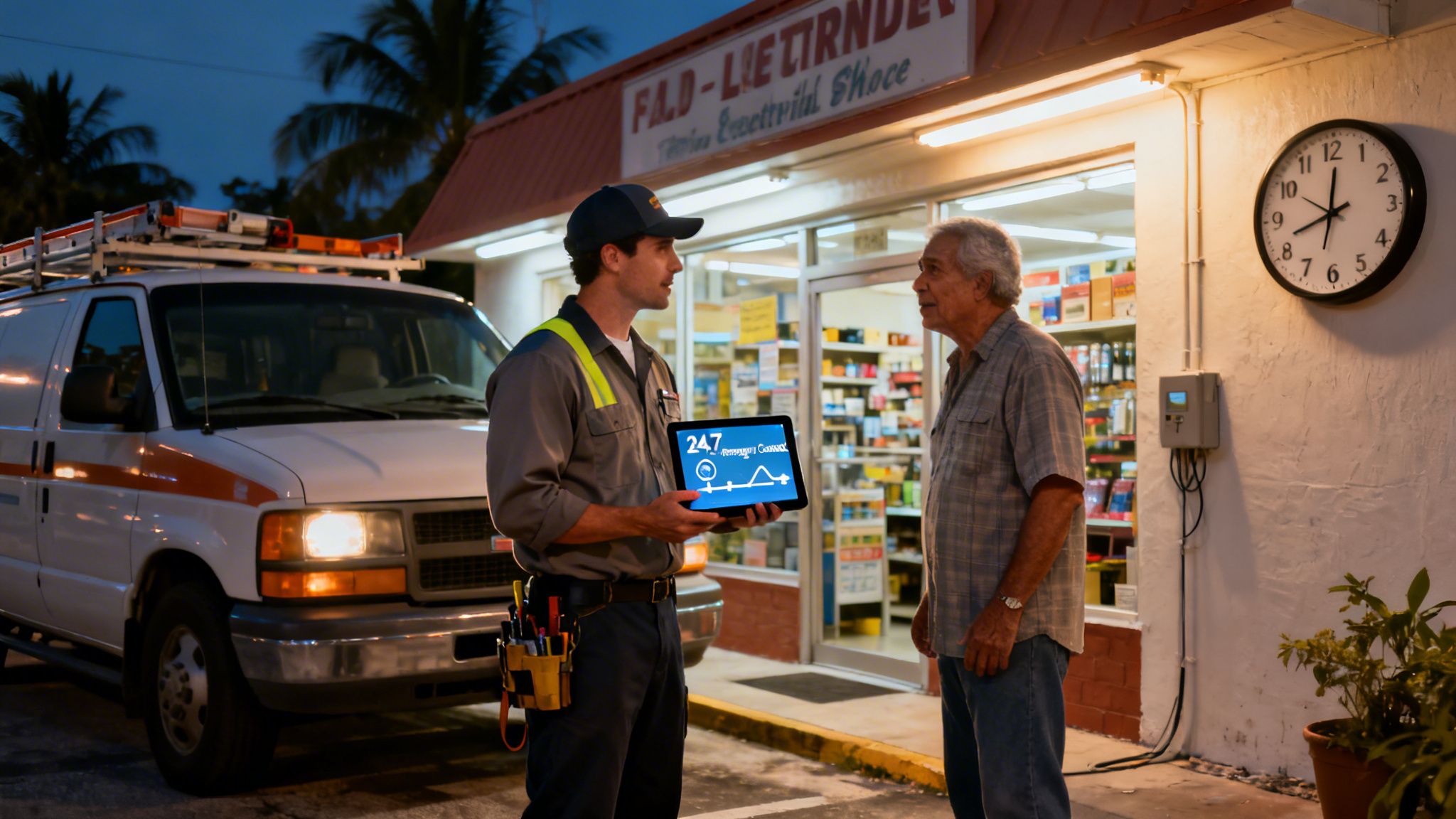
One of the biggest differentiators here is a true 24/7 emergency service. I'm not talking about an answering service that takes a message. I mean a licensed professional answering the phone after hours, ready to get a qualified technician on the road immediately.
Scenario: Imagine the power goes out in your retail store on a Saturday night. An answering service might leave you waiting until Monday. A true 24/7 contractor, on the other hand, understands that every minute counts and already has a system to get someone to your door, fast. That's how you minimize losses.
Specialized Services Show Deep Expertise
Beyond the basics, a contractor’s ability to handle highly specialized jobs is a dead giveaway of their true capabilities. A diverse, in-house team that can tackle complex projects shows a depth of knowledge and resources that smaller outfits just don't have.
In South Florida, these specializations are particularly telling:
- Tenant Build-Outs: Customizing electrical systems for new commercial tenants requires speed, precision, and a rock-solid grasp of commercial codes.
- Aircraft Obstruction Lighting: For high-rises and cell towers, keeping this lighting FAA-compliant is a legal must. Experience here is a huge indicator of a top-tier firm.
- HVAC Optimization: With Florida electricity costs recently averaging 15.02 cents/kWh, energy efficiency is everything. Contractors who can install tech like the Smartcool ECO3—which can cut HVAC electricity use by up to 25%—are putting money directly back into your pocket.
The demand for these skills is only growing. South Florida’s construction is booming, especially in the industrial sector, thanks to e-commerce and manufacturing. Nationally, the need for electricians is projected to grow 9.1% from 2020-2030, spurred by the shift to clean energy. This just goes to show how valuable a proven expert really is.
In the end, a contractor’s real-world expertise is proven by the specific problems they’ve solved. Look for a team that has a track record of projects just like yours and can speak intelligently about the challenges involved. That’s how you find a true partner, not just another vendor.
The Right Questions to Ask Before You Hire
Once you've confirmed an electrician has the right license and insurance, it's time to dig deeper. This is where you separate the pros from the pack. The answers to these questions will tell you everything you need to know about their professionalism, how they communicate, and what it’s really like to work with them.
Think of this conversation as more than just a formality—it's your best tool for spotting red flags. A truly experienced contractor will have ready, confident answers. Someone who is disorganized or cutting corners will start to stumble.
Their Process and Professionalism
First, you want to get a feel for how they run their business. These questions are designed to reveal how organized and transparent they are.
Can you give me a detailed, itemized quote? A single number on a piece of paper just won’t cut it. A professional quote breaks down the costs for labor, all the different materials, and any permit fees. This isn't just about avoiding surprise charges; it shows they've thoroughly planned the job.
Who will be my main point of contact? You need one person you can rely on for updates. Will you be talking to the owner, a project manager, or an office admin? Establishing this from day one prevents the frustrating runaround when you have a simple question.
What’s your process for handling unexpected problems? This one is crucial, especially in South Florida where older homes can hide some serious electrical quirks. Things go wrong. A good contractor has a plan. They won't just slap you with a bigger bill.
The right answer should sound calm and methodical. They should explain that they'll stop work, document the issue (often with photos), explain the problem and your options clearly, and then provide a written change order for you to approve before they proceed.
An experienced contractor anticipates the unexpected. Their answer to this question should inspire confidence, not create more anxiety. They should sound like they've managed this exact scenario many times before.
Their Team and Their Guarantees
Next, you need to know who is actually showing up to do the work and what happens if something goes wrong down the line. The friendly owner you interview might not be the person up on the ladder.
Are the electricians on my property your employees or subcontractors? This matters more than most people think. When a company uses its own W-2 employees, it has far more control over their training, quality of work, and scheduling. If they use subcontractors, that's not a deal-breaker, but you should ask for proof that the subs carry their own liability and workers' comp insurance.
What kind of warranty do you offer on your workmanship? A reputable company will always stand behind their work. You should expect to see at least a one-year warranty on labor. This shows they’re confident in their skills and aren't just looking for a quick paycheck.
How do you keep the work area clean and safe? This simple question says a lot about their respect for your home or business. A professional crew will have a plan for containing dust, protecting your floors and furniture, and cleaning up completely at the end of every single day.
Their Availability for Emergencies
For anyone living in South Florida, this is a non-negotiable. Electrical problems don’t wait for business hours, and during hurricane season, you need a team you can count on. Finding reliable electrical contractors South Florida means finding someone who answers the call when it matters most.
- If I have an emergency after hours, who answers the phone? Do you get an answering service that promises a call back "sometime tomorrow," or do you speak directly with a technician who can start troubleshooting immediately? For a business owner losing thousands in revenue or a family sitting in the dark, that difference is everything. A company that puts a real expert on its after-hours line is serious about service.
Understanding Costs, Timelines, And Emergency Response
In my experience, the biggest source of frustration between a client and a contractor comes down to mismatched expectations. It’s almost always about money, timing, or what happens when a real emergency strikes. A transparent contractor lays all this out from the beginning, so you can plan properly and avoid any nasty surprises down the road.
Let's get right into how electrical contractors in South Florida actually figure out their pricing. It isn't just one arbitrary number; it’s a blend of factors that add up to your final quote.
Breaking Down The Cost Of Electrical Work
You’ll typically see two pricing models: a flat-rate fee for the job or an hourly rate (often called time and materials). For most planned work, like swapping out an electrical panel or installing new lighting, a detailed flat-rate quote is the way to go. It gives you a solid price you can budget for, as long as the scope of the project doesn’t change.
So, what goes into that final number?
- Labor Costs: This is the biggest piece of the pie. It’s based on how many technicians are needed and the time it takes to do the job safely and up to code.
- Material Costs: This covers everything from the wire and outlets to the fixtures and breakers. The price of materials, especially copper, can swing, which might affect your quote.
- Permit Fees: If your project needs a permit in Palm Beach County, the contractor will handle that and include the city’s fee in the cost. These fees vary from one municipality to the next.
- Overhead and Profit: This is what keeps the lights on for the contractor—it covers insurance, trucks, tools, and office support, plus a margin that allows them to stay in business.
The demand for skilled electricians is huge. The U.S. electrical contracting market is projected to be a $255 billion industry by 2026, with over 70,000 firms and nearly 713,000 electricians nationwide as of May 2023. For property managers in Palm Beach, this just reinforces the importance of finding an established local partner. A good one can help you navigate costs with smart solutions like aircraft obstruction lighting or energy-saving retrofits that provide real value. You can learn more about industry trends from the National Electrical Contractors Association.
Realistic Timelines For Common Projects
Just like with cost, timelines are all over the map. Replacing a faulty outlet might take less than an hour, but rewiring an entire house is a multi-day job. A professional contractor should give you a clear start date and a realistic timeframe for completion.
Here’s a rough guide for what to expect on some common South Florida projects:
| Project Type | Typical Timeline (Excluding Inspections) |
|---|---|
| Electrical Panel Upgrade | 1-2 days |
| Whole-Home Generator Installation | 2-4 days |
| Commercial Lighting Retrofit | 3-5+ days, depending on size |
| Full Home Rewire | 5-10 days, depending on home size |
Key Takeaway: Always factor in the permitting and inspection process. The actual hands-on work might only be a couple of days, but waiting for a city inspector to come out and give their approval can easily add several more days—or even a week—to the total project time.
The Critical Difference In Emergency Response
Now for the real test: what happens when your power goes out at 2 AM on a Sunday? This is where you see the night-and-day difference between a truly professional service and everyone else. You need to ask what "24/7 service" really means.
For many companies, it means you get an answering service. They take your name, and you get a callback "first thing in the morning." That’s useless for a business owner whose refrigerators are off or a family sweltering without A/C in the middle of a Florida summer.
True 24/7 emergency service means a live, licensed professional answers the phone, ready to troubleshoot with you and get a truck rolling immediately.
Think about this real-world scenario. A power surge knocks out half the circuits in a Boca Raton retail shop at 8 PM on a Friday night.
- Contractor A (Answering Service): The manager calls, leaves a voicemail, and hopes for the best. The store stays dark, losing thousands in critical weekend sales.
- Contractor B (Live Expert): The manager calls and speaks directly to an on-call electrician. They walk through a few diagnostic questions, and a service truck is on-site within the hour. Power is back on before midnight, and the weekend is saved.
The return on investment couldn't be clearer. The small premium for a contractor who is built for a rapid, expert response pays for itself the very first time you have a crisis. For a more detailed breakdown of what to do in an urgent situation, check out our guide to emergency electricians in Palm Beach.
Here are some of the most common questions we get from South Florida property owners. Even after doing your homework, a few practical questions always pop up right before you're ready to hire someone. Let's clear those up.
Do I Need The Same Credentials For All Electricians?
This is a fantastic question, and the answer is a hard yes. The distinction between a licensed and an insured electrician is huge, and you absolutely need someone who is both.
A license is proof that an electrician has put in the work—they've passed Florida's demanding training and exams. It’s your assurance that they know how to do the job safely and up to code. Insurance, on the other hand (both general liability and worker's comp), is what protects your wallet if there's an accident, property damage, or an injury on site.
Think of it this way: hiring someone with a license but no insurance puts you on the hook for any accidents. But hiring an insured person who isn't licensed is just as bad—they probably don't have the proven skill, which can lead to shoddy work, failed inspections, and genuine danger. Checking for both is the one step you can't afford to skip.
What Are Common Electrical Issues In Older South Florida Homes?
So many of the homes here in Palm Beach County have some years on them, and with age comes a few common electrical hazards. If your home was built before the 1980s, it's a really good idea to have an electrician take a look for these specific issues.
We see these problems all the time:
- Outdated Aluminum Wiring: This was a go-to in the 60s and 70s, but we now know it's a significant fire risk.
- Federal Pacific or Zinsco Panels: If you have one of these, get it inspected immediately. They're infamous for not tripping when they should, which is a recipe for a fire.
- Lack of GFCI Outlets: Modern safety codes mandate Ground Fault Circuit Interrupter outlets anywhere near water (kitchens, bathrooms, garages, outdoor spaces) to prevent electric shock. Older homes are almost always missing them.
- Not Enough Power: A vintage 60- or 100-amp service just wasn't designed for our modern lifestyle. It can't handle multiple TVs, computers, and high-powered kitchen appliances, leading to constantly tripped breakers.
A good electrician can identify these weak spots and give you a clear plan to bring your home's electrical system into the 21st century.
An electrical inspection isn’t just about finding what's wrong. It’s about building a roadmap to make your home safer for your family. It's a small price to pay for real peace of mind, especially with hurricane season always around the corner.
How Can I Tell If A Quote Is Fair?
A fair quote from a professional electrical contractor in South Florida won't be a single number on a napkin. It will be a detailed, itemized document that clearly breaks down the costs for labor, all the materials involved, and any city or county permit fees.
Be extremely wary of any quote that comes in drastically lower than the others. That's a massive red flag. A suspiciously cheap price usually means one of three things:
- They're cutting corners by being unlicensed or uninsured.
- They're planning to use cheap, low-quality materials that won't pass inspection or last.
- You're being set up for a "bait-and-switch," where "unexpected" costs suddenly appear once the work has started.
Getting at least three quotes is smart, but remember you're not shopping for the lowest price—you're looking for the best value. Base your decision on the contractor's credentials, experience, and the transparency of their quote.
Do I Need A Permit For A Simple Repair In Palm Beach County?
It really depends on what you mean by "simple." For tiny jobs—like swapping out a single light switch or replacing a standard outlet with one of the same type—you typically won't need a permit.
However, the threshold is lower than you might think. In Palm Beach County and surrounding cities like Boca Raton or Jupiter, you will absolutely need a permit for projects like:
- Replacing or upgrading your main electrical panel.
- Running any new wiring or circuits.
- A full or partial rewire of your home.
- Installing a whole-home standby generator.
This is where hiring a true professional pays off. An experienced local contractor knows the permitting process inside and out. They'll handle everything from the application to scheduling the final inspection, ensuring your project is done safely, legally, and is properly documented with the city.
For any electrical project, big or small, you need a team you can trust to do the job right—especially when it needs to be done right now. At Lighthouse Energy Services, our licensed professionals answer the phone 24/7 to provide prompt, expert service across Palm Beach County. To schedule a service or get a transparent quote, visit us at https://lighthouseenergyco.com.