
When you need electrical work done in South Florida, picking a licensed professional isn't just a smart move—it's the only way to safeguard your property and everyone in it. Choosing the right electrical contractors in south florida is about more than a simple repair; it's about protecting your home or business from our region’s specific challenges, from hurricane-force winds to strict local building codes.
Why Smart Hiring Matters for South Florida Electrical Work
Your property's electrical system is its backbone. It keeps the A/C running on sweltering August days, powers the security lights that deter intruders, and runs every appliance you depend on. You wouldn't ask a general handyman to handle something so critical, right? That’s a job for a specialist—a qualified electrical contractor.
Hiring the right pro in a place like Palm Beach County is about getting ahead of problems, not just reacting to them. The stakes are just higher here, thanks to our unique coastal environment.
The High Stakes of Electrical Work in Our Region
Living in South Florida means dealing with a climate that’s tough on buildings. The intense sun, relentless humidity, and the ever-present threat of hurricanes demand that electrical systems be rock-solid and installed by an expert who gets it. A cut-rate worker might use fixtures that rust out in our salty air or fail to properly seal outdoor connections, setting you up for a serious fire or shock hazard down the road.
A true professional understands these local risks. They know which materials withstand corrosion and how to install everything from your main panel to an outdoor outlet so it exceeds local codes for hurricane readiness and moisture protection.
Going with a vetted expert gives you layers of protection you can't afford to skip. It's the difference between a secure, compliant electrical system and one that's a ticking time bomb waiting for the next big storm.
Here’s why a professional is your best line of defense:
- Code Compliance: Licensed contractors are fluent in the complex language of local and state electrical codes. This means your project will pass inspection without a hitch, avoiding legal headaches and insurance nightmares.
- Safety Assurance: Professional electricians follow rigorous safety protocols. This protects your property, your family, or your employees from the dangers of fire, electrocution, and catastrophic equipment failure.
- Future-Proofing: An expert thinks beyond today's needs. They can recommend and install systems ready for tomorrow's demands, whether it's an EV charger in the garage or a full smart home integration.
At the end of the day, hiring proven electrical contractors in south florida is an investment in your property’s resilience and your peace of mind. It’s how you avoid the costly, and often dangerous, fallout from shoddy work and ensure the job is done right the first time.
So, when do you need to call a professional electrical contractor, and when can a handyman handle the job? It’s a question we hear all the time, and getting it wrong can have serious consequences for your safety and your wallet.
The simplest way to think about it is this: a handyman is great for surface-level fixes—patching drywall, fixing a leaky faucet, maybe hanging a pre-wired light fixture. But when it comes to the complex, high-stakes world of your electrical system, you’re moving into a different league entirely. This isn't just about skill; it's about legal authority, accountability, and specialized knowledge.
What A Licensed Contractor Really Does
A true licensed electrical contractor is much more than just a technician who connects wires. They are the project manager for your entire electrical system, responsible for making sure everything is safe, efficient, and up to South Florida’s notoriously strict building codes.
Their job involves a whole lot more than just the hands-on work. A professional contractor handles:
- System Design and Planning: They’ll look at your goals—whether it's for a home renovation or a new commercial space—and design an electrical system that works for you today and can grow with you tomorrow.
- Pulling Permits: They know exactly what paperwork is needed and how to work with local city and county offices, like those in Palm Beach County, to get the right permits before any work begins.
- Sourcing the Right Materials: In our coastal climate, using the wrong materials can lead to corrosion and failure. A pro knows which components will stand up to the salt and humidity.
- Managing Inspections: The job isn’t done until a government inspector signs off on it. A good contractor schedules and manages these inspections, ensuring the work passes on the first go.
Think about it this way: a handyman might be able to swap out a dimmer switch. But a licensed contractor is the one who orchestrates a full panel upgrade for a 1970s home in Boca Raton or wires a brand-new restaurant in Jupiter, ensuring every single connection is perfect before it passes final inspection.
This guide can help you decide when it’s time to call in a pro. The key difference always comes down to safety and licensing.
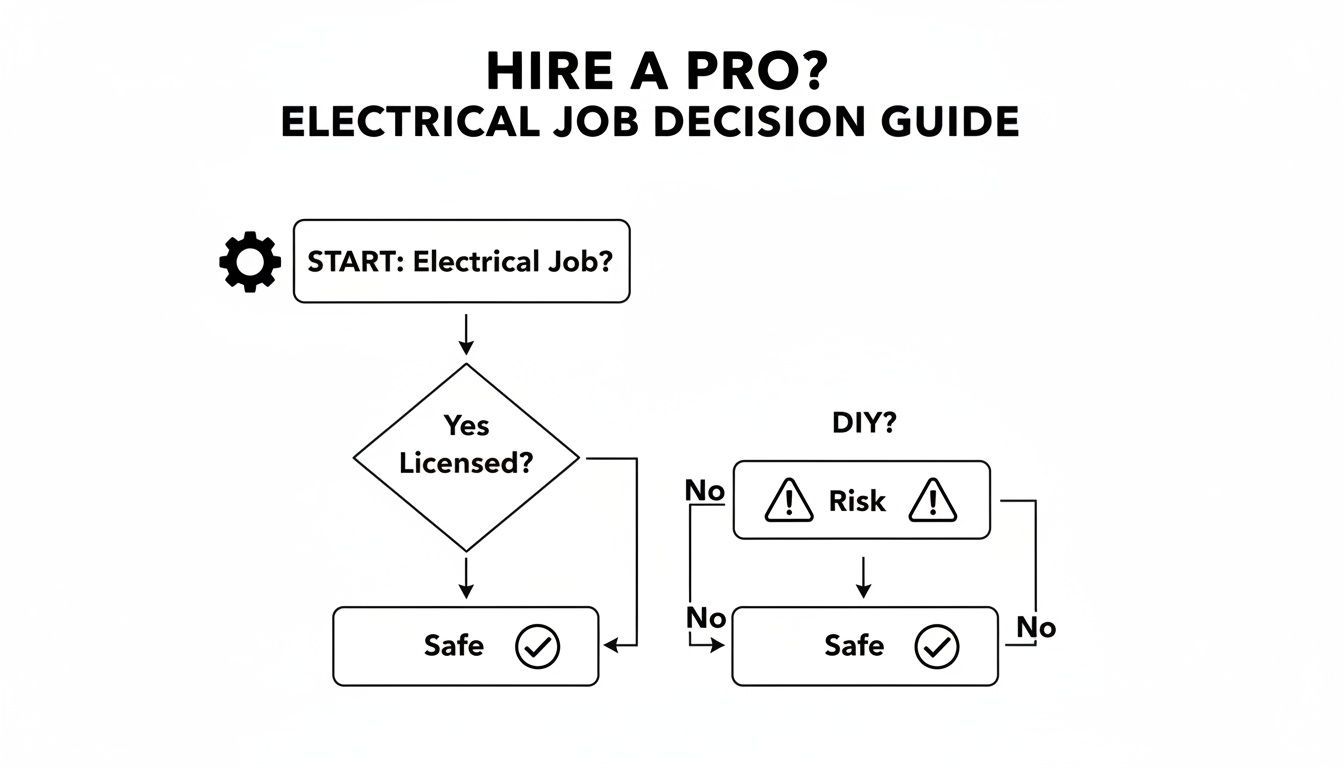
As you can see, the minute you’re dealing with anything more than a simple fixture swap, the risks of using an unlicensed individual skyrocket.
The Real Dangers of Unlicensed Electrical Work
Hiring someone without a proper electrical license is one of the biggest gambles a property owner can take. Florida regulates this work so heavily for one simple reason: safety. Electricity is unforgiving.
An unlicensed worker, no matter how well-intentioned, likely doesn't have a deep understanding of the National Electrical Code (NEC) or the specific amendments required in our local communities. That lack of knowledge can lead to hidden hazards inside your walls—improperly grounded outlets, overloaded circuits, or loose connections that can arc and spark a fire weeks or even months later.
Even worse, if a fire or other disaster is traced back to unlicensed electrical work, your insurance company has every right to deny your claim. You could be left with catastrophic financial losses, all to save a few bucks on the initial job. It's a risk that is never, ever worth taking. Choosing a licensed pro is the single best way to protect your property and ensure the job is done right.
Navigating South Florida's Electrical Codes and Insurance

When you bring an electrical contractor into your home or business, you're doing more than just hiring someone to run wires. You’re trusting them with the safety of your property and everyone in it. In South Florida, a web of state and local rules exists for one reason: to protect you from faulty work, liability, and major financial headaches.
Knowing your way around these requirements is the best tool you have for vetting professionals. The electrical contracting field is massive—it was a $225 billion industry in the U.S. in 2022—and with South Florida’s constant growth, the number of contractors to choose from can feel overwhelming. This is why knowing what to look for is so critical.
Florida Licensing Explained
In Florida, not all electrical licenses are created equal. It’s crucial to know the difference between a state-certified contractor and a registered one.
State-Certified Contractor: Think of this as the gold standard. A certified pro has passed a rigorous statewide exam and has the legal authority to work anywhere in Florida. It signals a comprehensive understanding of codes and practices that aren't limited to just one town or county.
Registered Contractor: This license is much more local. A registered contractor has permission to work only in the specific cities or counties where they’ve registered. Their authority stops at the county line.
For your own peace of mind, you should always verify a contractor's license on the Florida Department of Business and Professional Regulation (DBPR) website. It’s a simple search that takes seconds and tells you immediately who you're dealing with.
The Non-Negotiable Need for Insurance
A license is just one piece of the puzzle. Proper insurance is the financial safety net that separates a true professional from a risky gamble. Any contractor you even consider should be able to provide proof of two essential policies.
A license proves they have the skill; insurance proves they have the responsibility. Never hire a contractor who cannot provide proof of both General Liability and Workers' Compensation coverage.
Here’s why both are so important:
General Liability Insurance: This is what protects your property. If an accidental wiring error starts a fire that damages your business or home, their general liability policy covers the cost of repairs—not your bank account.
Workers' Compensation: This protects you from being held liable if one of the contractor's employees gets hurt on your job site. Without it, you could be on the hook for their medical bills and lost wages.
Imagine an uninsured electrician falling off a ladder in your facility. You, the property owner, could be sued and held financially responsible for their injuries. It’s a devastating scenario that is completely avoidable. A professional company that cares about its team and its clients will always have a robust workers' comp policy.
Ultimately, hiring a team that knows the local rules means they are prepared to serve as government-approved electrical contractors for any kind of project. When you insist on a state-certified license and verify both insurance policies, you're protecting yourself from legal exposure, financial risk, and subpar work. A contractor who handles these fundamentals—including pulling all necessary permits with Palm Beach County—is showing you they are committed to quality and your safety from the very start.
Of all the home and business maintenance tasks, paying for electrical work can feel like a shot in the dark. You know a repair or installation is necessary, but you’re often bracing for a surprisingly high bill. A good electrical contractor in South Florida won't just hand you a quote; they’ll walk you through it, so you understand exactly where your money is going.
Whether you're a homeowner gearing up for hurricane season or a facility manager keeping a commercial property running, most electrical jobs fall into a few familiar categories.
Common Jobs for Homeowners
Around the house, electrical work can range from a quick fix to a full-scale renovation. We see a lot of the same projects pop up, especially here in South Florida.
- Standby Generator Installation: This is practically a necessity in our area. The job involves more than just dropping a generator on a concrete slab; it requires installing a transfer switch and wiring it directly into your home's main panel so it kicks on automatically when you need it most.
- Panel Upgrades: Many older homes simply weren't built for today's power-hungry lifestyle. If your panel is outdated, it’s not just an inconvenience—it's a serious fire risk. Swapping it for a modern, higher-amperage panel is one of the most important safety upgrades you can make.
- Smart Home Wiring: Getting your automated lights, security cameras, and sound systems to work together seamlessly takes a lot of careful planning and clean wiring. It’s about creating a system that’s both powerful and easy to use.
- EV Charger Installation: With more people switching to electric vehicles, installing a Level 2 charger at home has become a very common request. This isn't a simple plug-in job; it needs a dedicated 240V circuit installed by a professional.
Commercial and Industrial Project Needs
For businesses, the stakes are usually much higher. The electrical systems are more complex, and any downtime can mean a direct hit to the bottom line. This is where you need a contractor with proven commercial experience.
These projects are all about safety, operational reliability, and meeting strict codes.
- New Construction Electrical: This is about building a property's entire electrical nervous system from scratch. From designing the layout for a new retail store to implementing the full system in a warehouse, it has to be done right from day one.
- Preventative Maintenance Contracts: Think of this as a check-up for your building's electrical system. Regular, scheduled inspections help catch small problems before they lead to catastrophic failures and expensive downtime.
- Specialized Lighting: This is a broad category. It might mean retrofitting an entire parking garage with energy-efficient LEDs or installing highly specialized aircraft obstruction lighting on a high-rise to comply with FAA regulations.
The real difference between a fair price and an overcharge isn't the dollar amount—it's the transparency. A trustworthy contractor will always give you a detailed, itemized estimate so there are no surprises when the work is done.
What Goes Into Your Final Bill?
Rather than a generic price list, it's more useful to understand what actually drives the cost. Any electrical project, big or small, really comes down to a combination of labor, materials, and the overall complexity of the job.
The foundation of any good electrical work is the skilled professional doing it. Florida actually has the third-largest number of electricians in the country, with a workforce of around 47,000 licensed pros. These aren't handymen; they are highly trained experts who command a respectable wage, with the average Florida electrician earning $32.60 per hour. That expertise is what keeps our homes and businesses powered safely. If you're interested in the economics behind the trade, you can explore detailed statistics on electrician employment and market trends.
Knowing this helps you see a quote not as a random number, but as a sum of its parts. The table below breaks down how these factors come into play for different types of jobs.
South Florida Electrical Projects and Key Cost Factors
Here's a quick overview of common jobs and the variables that will most influence the final price, helping you get a better sense of potential costs.
| Type of Service | Typical Projects | Primary Cost Drivers |
|---|---|---|
| Residential Repair | Fixing outlets, troubleshooting circuits, repairing light fixtures | Labor hours, diagnostic time, cost of replacement parts. |
| Residential Installation | Generator installation, EV charger setup, panel upgrade | Project complexity, quality of materials (e.g., generator brand), labor hours, permit fees. |
| Commercial New Build | Wiring an entire new office or retail space | Square footage, complexity of the electrical design, high-end materials, extensive labor. |
| Commercial Maintenance | Scheduled inspections, equipment testing | Scope of the contract, number of properties, emergency response requirements. |
Thinking about these factors can help you ask the right questions when you get a quote.
Finally, let’s talk about something that frustrates a lot of people: the dreaded "after-hours fee." When your power goes out at 2 a.m., the last thing you want is to be penalized for it. A truly 24/7 contractor, like Lighthouse Energy Services, has built their business around being available anytime. They won't hit you with surprise charges just because your emergency happened at an inconvenient time. That commitment to clear, upfront pricing is a sure sign you've found a partner you can count on.
Specialized Expertise for the South Florida Market
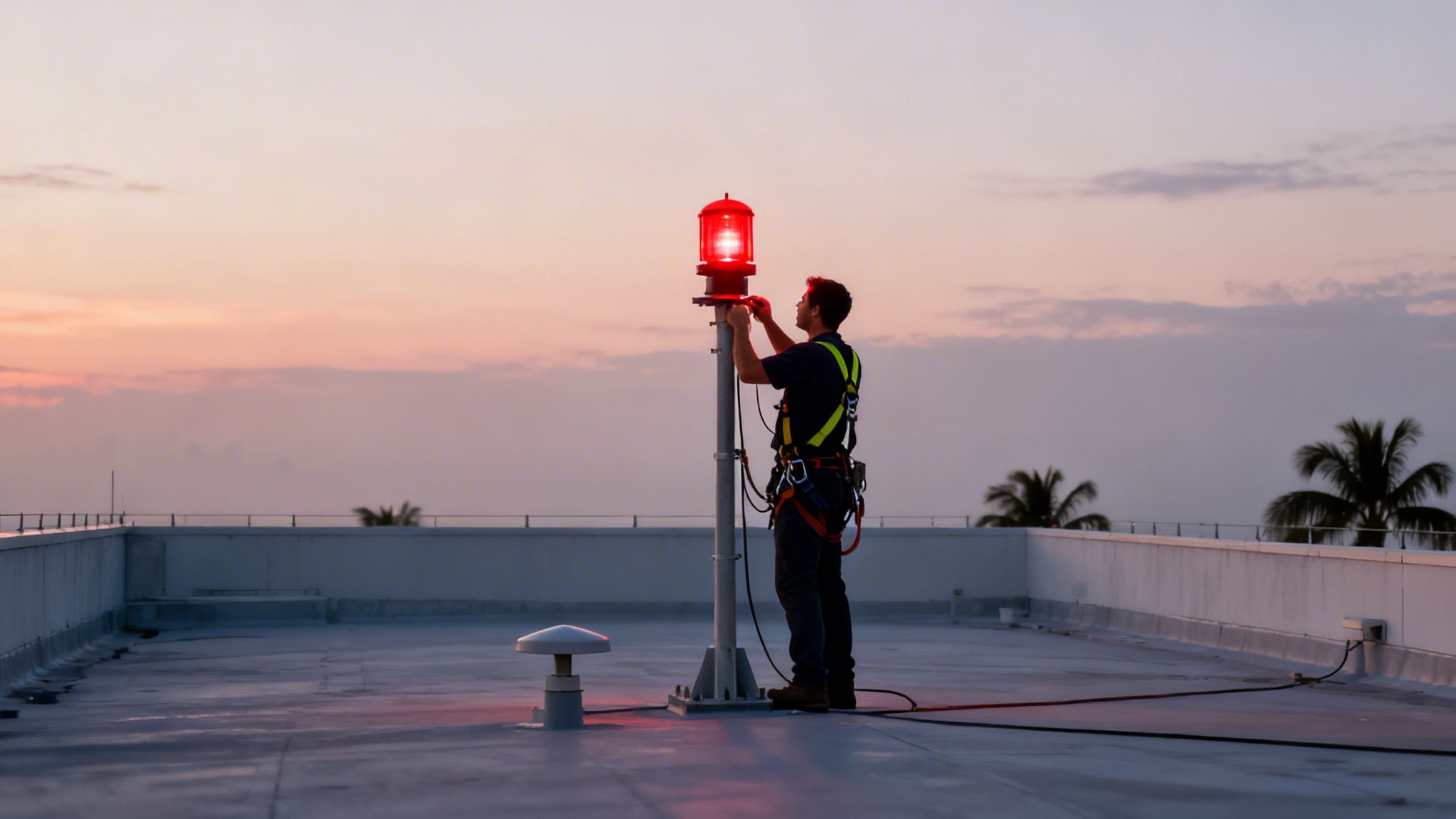
Any licensed electrician can handle basic repairs and installations. But South Florida isn't a basic market. Our region’s constant growth, tropical climate, and strict regulations create unique challenges that demand a higher level of expertise.
This is where the truly great electrical contractors stand out. Their ability to master complex, niche services is what separates them from the pack. Two areas in particular—aircraft obstruction lighting and advanced energy efficiency—are a dead giveaway that you're dealing with a team that has deep local knowledge and serious technical skill.
Keeping Our Skies Safe with Aircraft Obstruction Lighting
Take a look around South Florida. High-rise condos, new office towers, and communication antennas are popping up everywhere, constantly reshaping our skyline. Every time a structure reaches a certain height, it enters protected airspace, which triggers the need for a very specific skill: Aircraft Obstruction Lighting.
This is far more than just screwing in a red light bulb on a roof. We're talking about designing and installing sophisticated systems of high-intensity beacons that comply with strict Federal Aviation Administration (FAA) rules. The purpose is critical: make tall structures clearly visible to pilots in all conditions, day or night.
There's no room for error here. Non-compliance can result in huge fines and, more importantly, create incredibly dangerous situations. With South Florida’s population boom driving so much construction, this has become an essential service. As we see major infrastructure projects and airport expansions move forward, the demand for contractors who can ensure FAA compliance has never been higher. You can get a sense of this trend by exploring the 2026 industry forecasts.
A true expert manages the entire process from start to finish:
- System Design: They'll create a custom lighting plan that meets all FAA requirements for your building or tower.
- Installation & Wiring: This involves safely installing the entire system, often at dizzying heights and in tough conditions.
- Maintenance & Repair: They provide ongoing service, including 24/7 emergency response, to guarantee the lights never fail.
Slashing Energy Costs in a High-Demand Climate
Here in South Florida, air conditioning isn't a luxury—it's a constant. That means electricity bills are a major overhead for businesses and a significant household expense. A forward-thinking electrical contractor doesn’t just fix problems; they offer solutions that deliver real financial savings, especially when it comes to energy efficiency.
One of the most powerful tools for this is the Smartcool ECO3, a specialized device designed to make your air conditioning and refrigeration systems run smarter, not harder.
Think of your AC compressor like a driver who only knows two speeds: flooring the gas pedal or slamming on the brakes. The ECO3 acts like a sophisticated cruise control, intelligently managing the compressor's cycles so it only uses the exact amount of energy needed.
By optimizing the compressor's runtime, this device dramatically reduces energy consumption without ever sacrificing cooling performance. The result is a much lower monthly power bill—often cutting usage by as much as 25%.
For a business, that can add up to thousands of dollars in savings every year. For a homeowner, it provides welcome relief from climbing energy costs. In the same way a standby generator gives you peace of mind during a storm, smart energy devices offer financial security year-round. You might also want to see how a standby generator installation can protect your home or business from outages.
It's specialized services like these that truly define a top-tier contractor. They prove a contractor can solve complex, region-specific issues and provide value that lasts long after the job is done.
Alright, you've done your homework. You know the difference between a real pro and a handyman with a toolbox, why licensing and insurance are non-negotiable, and what it takes to handle the unique electrical demands of South Florida. Now for the most important part: actually choosing the right contractor.
This isn't just about getting a few quotes and picking the cheapest one. Think of it more like you're hiring a key team member for your property—because you are. You're looking for a partner who will protect your home or business for the long haul. Let's move past the price tags and figure out how to evaluate what really counts.
The Consultation Is Your Interview
Your first meeting with a potential contractor is everything. This is your chance to dig in with some pointed questions that will tell you all you need to know about their experience, their business practices, and their professionalism. A top-notch contractor won't just tolerate these questions; they'll welcome them.
Here’s a simple checklist to guide that conversation:
- "Can I see a few projects you've done that are similar to mine?" This is the big one. If you need a generator installed in Boca Raton, you want to talk to someone who has done exactly that, not just someone who can do it. It proves they've already navigated the specific challenges your project presents.
- "Who actually picks up the phone when I have an emergency at 2 AM?" A 24/7 promise on a website is nice, but it means nothing if it goes to a generic answering service. You need to know you'll be speaking with a qualified professional who can start solving your problem immediately.
- "Does your quote include everything? I'm talking permits, materials, all of it." No one likes surprises. A transparent contractor will give you a fully itemized estimate right from the start. Vague quotes or hidden fees for "after-hours work" are a huge red flag.
- "Are your electricians employees or do you use subcontractors?" This question speaks volumes about accountability. Companies that hire and train their own full-time electricians have far more control over the quality and consistency of the work done on your property.
A contractor's answers—and how they answer—tell you everything. If they're dodging questions or giving you vague responses, that's your cue to walk away. Real confidence comes from clear, direct communication, and a true professional is always happy to provide it.
Beyond the Q&A: Evaluating What Matters
Once you've had that initial chat, it's time to step back and weigh each company on a few core qualities. These are the things that separate a one-time fix from a long-term, reliable partnership.
Responsiveness and Professionalism
First impressions are rarely wrong in this business. Did they answer your call promptly? Show up on time for the consultation? How they treat you and your property from the very beginning is a strong indicator of how they'll behave for the entire project.
Real-World Expertise
Look for signs of genuine, deep-seated knowledge. You don't want an order-taker; you want a problem-solver. Do they take the time to explain complex electrical issues in a way you can actually understand? Better yet, are they suggesting solutions you hadn't even thought of, like energy-saving upgrades with a Smartcool ECO3? That’s the mark of an expert.
Long-Term Reliability
Finally, ask yourself if this company will be around in five or ten years when you need them again. A contractor with deep roots in the community, like Lighthouse Energy Services, brings a certain peace of mind. With a long history in Palm Beach County and a team that carries over 100 years of combined experience, you're not just hiring a contractor—you're investing in stability.
By taking this approach, you'll cut through the sales pitches and find a partner who has the skill you need and the professionalism you deserve. It ensures your project gets done right and, more importantly, starts a relationship you can count on for years to come.
Frequently Asked Questions About Electrical Services
When you're looking for a reliable electrical contractor in South Florida, it's natural to have questions. Getting straight answers is the first step toward making a smart decision for your property's safety and function. Let's walk through a few of the most common things people ask us.
How Often Should I Have My Electrical System Inspected?
For most homes here in South Florida, getting a professional electrical inspection every 5 to 7 years is a solid safety measure.
Of course, some situations call for a closer look. If your home is over 20 years old, you're planning a major renovation, or you're noticing persistent issues like flickering lights (especially after a storm), you should definitely schedule a check-up sooner.
Commercial properties are a different story. We recommend an annual inspection as a best practice. This isn't just about ticking a compliance box; it's about preventing expensive downtime and ensuring the safety of your employees and customers.
What Is the Difference Between a Tripped Breaker and a Blown Fuse?
It helps to think of a circuit breaker as a modern, reusable safety switch. When it senses too much electricity flowing through it—an overload or a short circuit—it automatically trips and cuts the power. To get things running again, you just flip the switch back, once you've unplugged whatever caused the problem.
A fuse, which you'll typically find in older electrical setups, does the same job but in a more final way. It has a small piece of wire inside that is designed to literally melt and break the connection when overloaded. Once a fuse blows, it's done. You have to replace it entirely. That’s why breakers are the safer, more convenient standard in all modern panels.
A tripped breaker is a warning that your circuit is carrying too much of a load. If it happens often, that's a clear sign you need a professional to find out why. A blown fuse, on the other hand, is a one-time event that requires immediate replacement.
Is It Unsafe to Use an Extension Cord for My Refrigerator?
Yes, this is incredibly unsafe and a serious fire hazard. Your refrigerator, freezer, or microwave pulls a huge amount of continuous power—way more than a typical extension cord is built to handle. Overloading the cord like this can cause it to overheat, melt its plastic casing, and easily start a fire.
Major appliances should always be plugged directly into a dedicated wall outlet that was installed specifically for that high electrical load. If you don't have an outlet in the right spot, the only safe solution is to have a licensed electrician install a new one.
Have more questions or an electrical emergency on your hands? The team at Lighthouse Energy Services is always here to provide clear answers and expert help. Get in touch with us 24/7.