
Introduction: Why Is My Outlet Not Working?
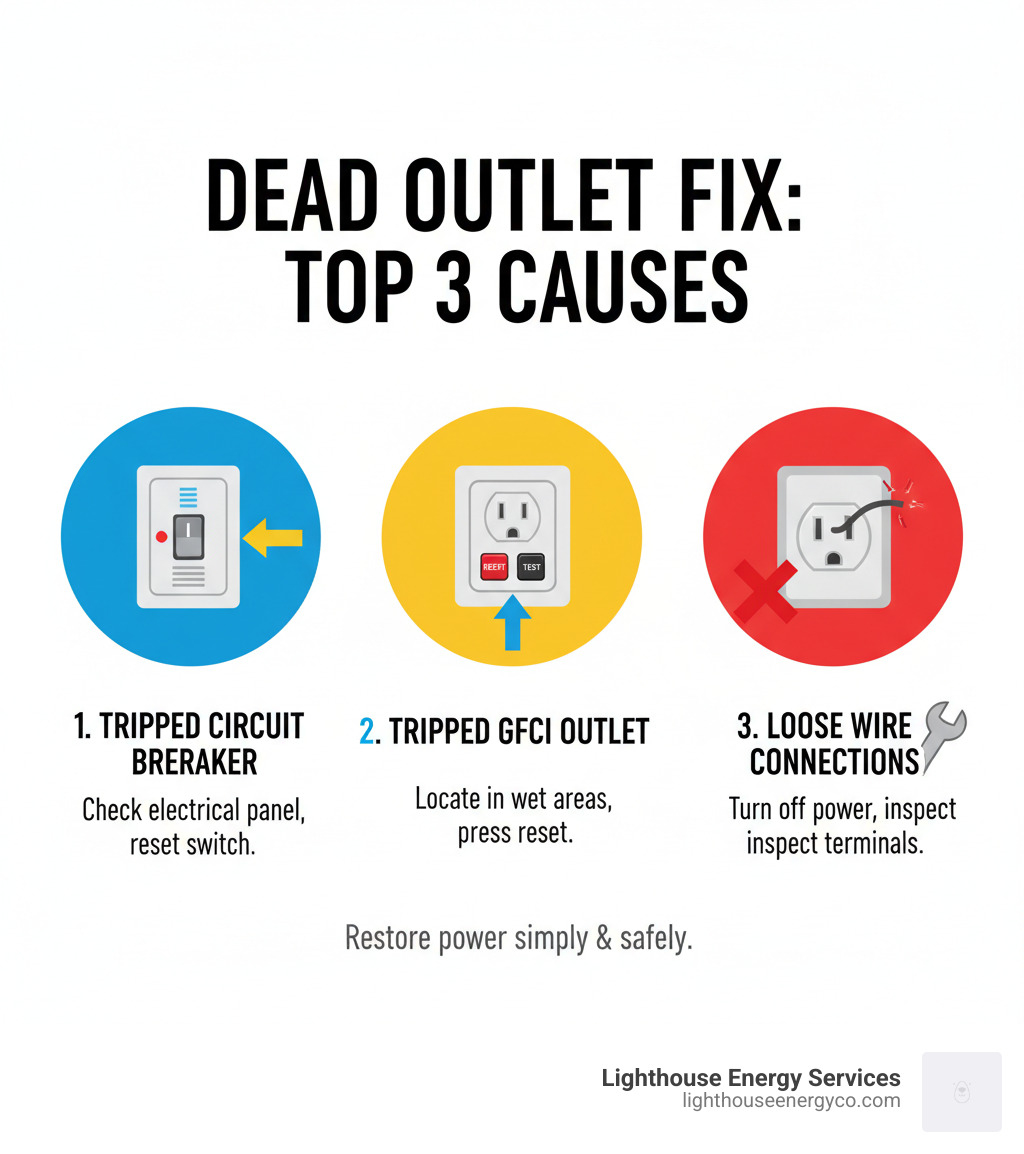
Dead outlet fix starts with three simple checks: reset your circuit breaker, press the reset button on nearby GFCI outlets, and inspect for loose wire connections. Most dead outlets trace back to one of these issues, and you can often restore power in under five minutes without calling an electrician.
A dead outlet is no one’s idea of a good time. You plug in your phone charger, your coffee maker, or that lamp you need for reading—and nothing happens. No power. No lights. No reassuring hum of electricity doing its job.
The good news? More often than not, fixing a dead outlet is simpler than you think. Tripped circuit breakers are the most common cause of dead outlets, followed by tripped GFCI outlets and loose wire connections. Many of these problems have straightforward solutions you can tackle yourself with basic tools and a few safety precautions.
The bad news? Sometimes a dead outlet signals something more serious—faulty wiring, damaged connections, or even fire hazards lurking behind your walls. Loose wires can overheat and spark, creating real danger for your home and family.
This guide walks you through the complete troubleshooting process, from the easiest quick fixes to more involved repairs. You’ll learn:
- How to safely check and reset circuit breakers
- Where to find and test GFCI outlets that might be cutting power
- How to inspect outlet wiring for loose or damaged connections
- When to replace a faulty outlet yourself
- When to stop and call a professional electrician
I’m Bruce Kemp, and I’ve spent decades as a licensed electrical contractor tackling every kind of dead outlet fix imaginable—from simple tripped breakers to complex wiring failures that stumped homeowners for weeks. My approach combines hands-on technical expertise with practical safety guidance to help you restore power quickly and correctly.
Safety First: Essential Tools and Precautions
Let’s get one thing straight before we touch a single wire: working with electricity isn’t something to take lightly. I’ve seen too many DIY disasters that started with someone thinking “it’s just a quick fix” and ended with a trip to the emergency room—or worse, a house fire.
Electricity doesn’t give second chances. A simple mistake can result in severe electrical shock, burns, or sparks that ignite materials inside your walls. Even experienced electricians approach every job with healthy respect for what can go wrong. That’s not meant to scare you away from a dead outlet fix—most are perfectly safe for homeowners to handle—but you need to understand the stakes.
The biggest dangers? Loose or exposed wires can arc and spark, creating enough heat to ignite insulation or wood framing. Touch a live wire with bare hands or metal tools, and you’re completing a circuit with your body—that’s how people get shocked. And if you reconnect wires incorrectly, you might create a hidden hazard that won’t show itself until weeks or months later when something overheats.
The good news is that with the right precautions and tools, you can work safely on most outlet problems. Let’s make sure you’re properly equipped.
Gather Your Toolkit
You don’t need a van full of professional equipment for a basic dead outlet fix. A handful of common tools will cover most situations. The most critical item is a non-contact voltage tester—this little device detects electrical current without requiring you to touch anything, and it’s honestly a lifesaver. You just hold it near an outlet or wire, and it lights up or beeps if electricity is present.
You’ll also want insulated screwdrivers in both Phillips and flathead varieties. The rubber coating on the handles provides an extra layer of protection if you accidentally contact a live wire. Needle-nose pliers help you bend and position wires in tight spaces, while wire strippers let you remove insulation if connections need refreshing.
If you end up replacing the outlet entirely, make sure you have a new electrical outlet that matches your current setup—typically a 15-amp or 20-amp, 120-volt receptacle for standard household use. Keep some electrical tape handy for wrapping wire connections and providing temporary insulation when needed.
The Golden Rule: Turn Off the Power
Here’s the rule that trumps everything else: never work on an outlet with the power on. Not for “just a quick peek.” Not because “I’ll be really careful.” Not ever. Every serious electrical accident I’ve witnessed started with someone skipping this step.
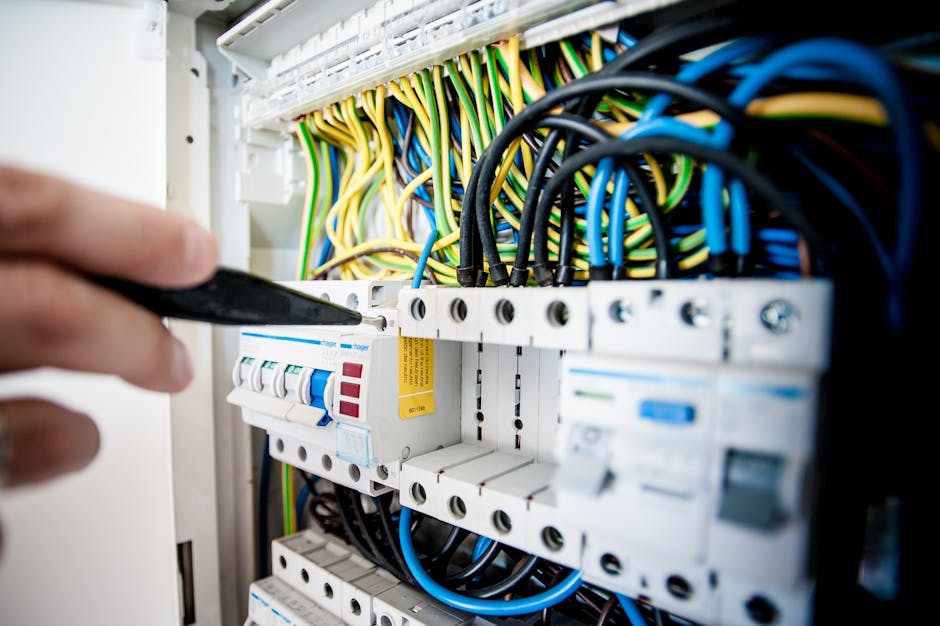
Start by locating your main electrical panel—it’s usually tucked away in your basement, garage, utility room, or a hallway closet. This is mission control for your home’s electricity. The breaker box distributes power through individual circuits to different areas and rooms throughout your house.
Finding the right breaker is your next task. If your panel has labels (and many don’t, or they’re hilariously vague like “stuff” or “things”), you might immediately know which switch controls your dead outlet. If not, you have two options: flip breakers one at a time until you find the right one, or turn off the main breaker to kill power to the entire house. Yes, your family will complain about losing Wi-Fi for a few minutes, but that’s infinitely better than a trip to the hospital.
Once you’ve shut off what you think is the correct breaker, make absolutely certain the power is off by testing with your voltage tester. Insert the tester into both slots of the outlet. If it lights up, beeps, or shows any sign of activity, there’s still live electricity flowing. Find the correct breaker and test again. I can’t emphasize this enough—this verification step is what separates safe DIY work from dangerous gambles.
Let everyone in your household know that you’re working on electrical repairs and they shouldn’t touch the breaker panel. The last thing you need is someone helpfully flipping breakers back on while you’re wrist-deep in an outlet box. A simple “Don’t touch the breaker panel for the next hour!” text to the family group chat can prevent a shocking surprise.
Level 1 Troubleshooting: Checking Breakers and GFCI Outlets
Here’s the good news: most dead outlet fix situations don’t require any serious electrical work. In fact, the solution is often as simple as flipping a switch or pressing a button. Before you grab your screwdriver or start worrying about rewiring, let’s check the two most common culprits—tripped circuit breakers and GFCI outlets.
Think of this as your first line of defense. These safety devices are designed to cut power when something goes wrong, whether it’s an overloaded circuit, a power surge, or a potential shock hazard. They’re doing their job by shutting things down, and getting them back online is usually straightforward.
How to Reset a Tripped Circuit Breaker
Circuit breakers are the unsung heroes of your home’s electrical system. When a circuit draws too much power—maybe you’re running the microwave, toaster, and coffee maker all at once—the breaker trips to prevent overheating and potential fires. It’s a safety feature, not a malfunction.
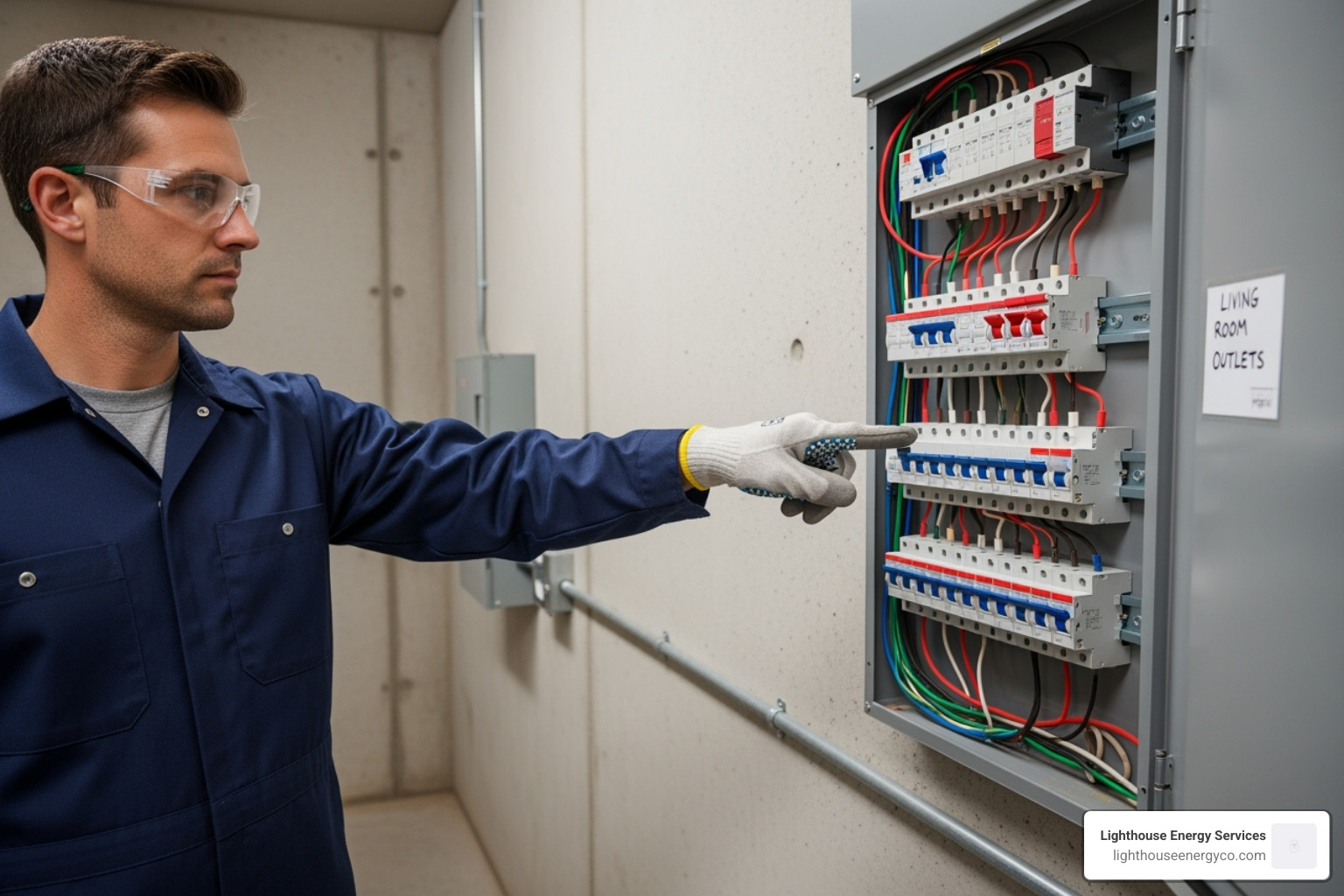
Head to your electrical panel and take a look at those rows of switches. Most will be neatly aligned in the “ON” position. A tripped breaker looks different—it’ll be flipped to “OFF,” or more commonly, sitting in that telltale middle position, slightly off-center from the others. It’s like it’s trying to tell you something went wrong.
To reset it, push the handle firmly all the way to “OFF” first. You should feel a slight click. Then push it back to “ON.” If it stays put, congratulations! Go test your outlet. If it immediately trips again, stop right there. Something on that circuit is still drawing too much power or creating a short. Repeatedly resetting a breaker that keeps tripping is like ignoring your smoke alarm—it’s warning you of a problem that needs attention.
If you have an older home with fuses instead of breakers, you’ll need to replace a blown fuse rather than reset it. Look through the small glass window on each fuse—a blown one will have a broken or visibly burned filament inside. Replace it with a new fuse of the exact same amperage. Never, ever use a higher-rated fuse as a “solution.” That’s like disabling a safety feature, and it can create a serious fire hazard.
How to Find and Reset a GFCI Outlet
GFCI outlets are those special outlets with the “Test” and “Reset” buttons on their face. You’ll find them in bathrooms, kitchens, laundry rooms, garages, and anywhere else water and electricity might cross paths. They’re designed to detect electrical imbalances and shut off power in milliseconds—fast enough to prevent a potentially deadly shock.
Here’s where things get interesting: one GFCI outlet can protect multiple standard outlets downstream on the same circuit. This means your dead outlet might not have GFCI buttons itself, but it could be protected by a GFCI somewhere else. If your bedroom outlet suddenly stops working, the culprit might actually be a tripped GFCI in your bathroom or even in the garage.
Start by checking obvious locations first—bathrooms and kitchens are the most common spots. Look for those telltale Test and Reset buttons. If you find a tripped GFCI, the Reset button will be sticking out noticeably.
To reset it, press the “Test” button first. This simulates a ground fault and confirms the GFCI is working properly. Then press “Reset” firmly until you hear a click and the button stays in. That satisfying click means power should be restored.
If the Reset button won’t stay in, or if it immediately pops back out, that’s your GFCI doing its job. It’s detected a persistent problem—maybe a faulty appliance, moisture in the circuit, or damaged wiring somewhere downstream. Don’t keep trying to reset it. This is a clear signal that something needs professional attention. The GFCI is protecting you from a potentially dangerous situation, and that’s exactly what it should be doing.
The Complete DIY Dead Outlet Fix
So you’ve checked the breakers, hunted down every GFCI outlet in your home, and your outlet is still dead. Don’t worry—we’re not done yet. It’s time to take a closer look at the outlet itself. This is where things get a bit more hands-on, but it’s still totally manageable for most homeowners.
Before we go any further, let me remind you one more time: make absolutely certain the power is OFF at the breaker. Use that voltage tester. Double-check. Triple-check if you need to. Electricity doesn’t give second chances.
Step 1: Safely Inspecting for Loose Wiring
Loose wire connections are sneaky troublemakers. Over time, vibrations from everyday life, temperature changes, or even just a rushed installation years ago can cause wires to work themselves loose from their terminals. When that happens, your outlet stops working—simple as that.

With the power confirmed OFF, grab your screwdriver and carefully remove the outlet’s cover plate. Now take a good look at what you’re seeing. Watch for burn marks or scorch marks around the outlet—these are serious warning signs that something’s been overheating. You might also notice discoloration (usually brownish or yellowish staining), cracks in the plastic housing, or even catch a whiff of that distinctive electrical burning smell. Any of these signs mean this outlet needs replacing, period.
Next, unscrew the two screws holding the outlet to the electrical box and gently pull it out. Don’t yank—we want to ease it forward so we can see the wire connections without putting stress on anything. Now we’re getting to the good stuff.
Look at those terminal screws on the sides of the outlet. The wires should be wrapped clockwise around the screws and held firmly in place. Give each screw a gentle test with your screwdriver—if it turns easily, it wasn’t tight enough. That loose connection could be your whole problem right there.
Here’s something that drives me crazy: stab-in connections. Some outlets have holes in the back where you just push wires straight in. They’re quick to install, which is why builders love them, but they’re notorious for coming loose over time. If you see wires stuck into the back of your outlet instead of wrapped around screws, that’s likely your culprit.
Do the tug test. Gently pull on each wire. If any wire slides out easily or feels loose, congratulations—you’ve found your problem! Sometimes the dead outlet fix is as simple as re-securing those wires properly.
Step 2: How to Replace a Faulty Outlet
If you’ve found damage, persistent loose connections, or your outlet just looks like it’s seen better days, it’s replacement time. The good news? Swapping out a standard outlet is straightforward once you know what you’re doing.
Replace your outlet if it shows any signs of burning, cracking, melting, or if it has those unreliable stab-in connections. Even if it’s just old and tired-looking, a fresh outlet can restore reliable power and improve safety.
First things first: choose the right replacement. Most standard residential outlets are 15-amp, 120-volt models. Some circuits, especially in kitchens or workshops, might use 20-amp outlets—you can spot these by the T-shaped neutral slot. Check the face or body of your old outlet for the amperage rating and match it.
Now let’s walk through the replacement. Confirm one last time that the power is OFF—I know I’m being repetitive, but this is where people get hurt. Use your voltage tester and verify there’s no electricity flowing.
Disconnect the old outlet by loosening each terminal screw and carefully unhooking the wires. Pay attention here: the black wire connects to the brass (darker) screw, the white wire goes to the silver screw, and the bare copper or green wire attaches to the green ground screw. Take a mental snapshot or even snap a quick photo with your phone if it helps.
If the wire ends look damaged or frayed, use your wire strippers to trim off the bad section and strip about 3/4 inch of fresh insulation.
Now for the new outlet. Connect the black “hot” wire to a brass terminal screw, wrapping it clockwise around the screw before tightening it down firmly. The white “neutral” wire goes to a silver screw, again wrapping clockwise. The bare copper or green “ground” wire connects to the green screw. That clockwise wrap is important—it keeps the wire from working loose as you tighten the screw.
If you’ve got two black wires, two white wires, or multiple ground wires at the outlet, you might want to “pigtail” them. This means twisting the two circuit wires together with a short third wire using a wire nut, then connecting that short wire to the outlet’s terminal. It creates a more secure, reliable connection than trying to cram two wires under one screw.
Once everything’s connected, gently fold the wires back into the electrical box—don’t force anything—and push the outlet into place. Secure it with the mounting screws, replace the cover plate, and you’re almost done.
Head back to your breaker panel and flip that circuit breaker back to ON. Now test your outlet with something you know works—your phone charger, a lamp, whatever. If it powers up, congratulations! You’ve successfully completed a dead outlet fix.
If you’re feeling uncertain about any of these steps, or if you’d rather have a professional handle it from the start, we get it. That’s exactly what we’re here for. You can find more info about our electrical services and how we can help with everything from simple outlet repairs to complete electrical system upgrades.
When to Call a Pro: Warning Signs and Serious Problems
Look, I’ll be honest with you. I love a good DIY project as much as the next person, and there’s real satisfaction in fixing something yourself. But when it comes to electricity, knowing when to stop and call a professional isn’t just smart—it could save your life, your home, or both.
A dead outlet fix can seem straightforward until it suddenly isn’t. Sometimes that dead outlet is trying to tell you something bigger is wrong. The tricky part? The warning signs aren’t always obvious to untrained eyes. That’s why I want to walk you through the red flags that mean it’s time to step back and let a licensed electrician take over.
Red Flags That Demand an Expert
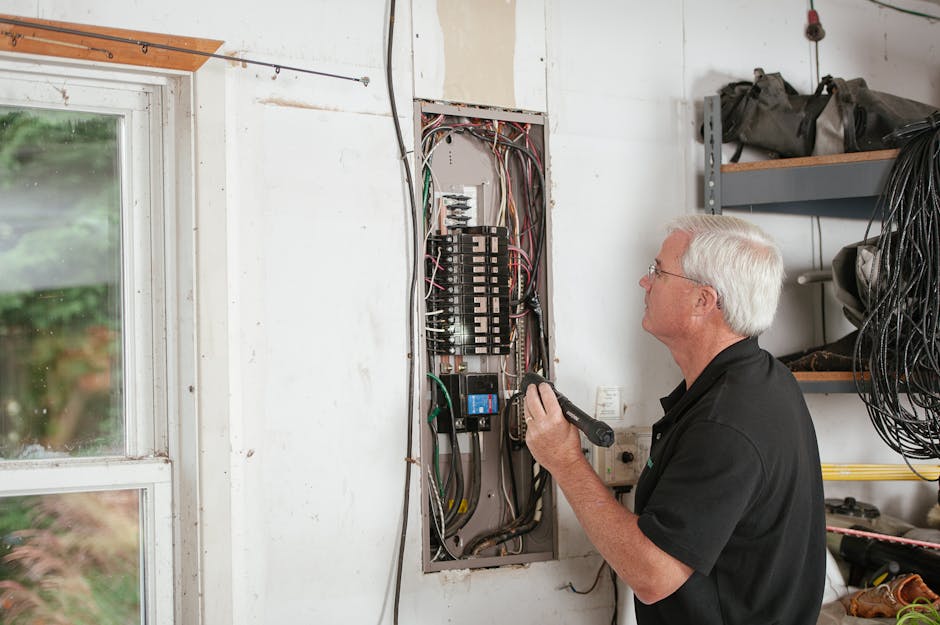
If your breaker trips repeatedly, you’ve got a problem that won’t be solved by just flipping it back on. A breaker that trips immediately after resetting, or one that keeps tripping over and over, is screaming that something’s wrong. It could be an overloaded circuit, a short circuit somewhere in the wiring, or even a failing breaker itself. This isn’t a guessing game you want to play on your own.
The same goes for GFCI outlets that won’t reset or trip instantly after you press the reset button. These outlets are designed to detect dangerous electrical imbalances. When they refuse to stay on, they’re literally doing their job by protecting you from something hazardous. Don’t fight it—call a pro to find out what that hazard is.
Any burning smell or scorch marks around outlets, switches, or your electrical panel should set off alarm bells in your head. That acrid smell of burning plastic or that distinctive ozone odor means wires are overheating somewhere. Scorch marks are evidence that you’ve already had dangerous heat buildup. If you notice either of these, shut off power to that area if you can do so safely, and get an electrician out immediately. This is an active fire hazard.
Buzzing, humming, or crackling sounds coming from electrical components aren’t normal. Electricity should flow silently through your home. Those sounds usually mean loose connections that are arcing, components that are failing, or wiring that’s breaking down. Any of these can lead to fires or shocks.
If your home was built between the mid-1960s and mid-1970s, there’s a chance you have aluminum wiring. Aluminum wiring isn’t inherently dangerous, but it requires special handling, specific connectors, and techniques that differ from standard copper wiring. If you find aluminum wiring during your inspection (it’ll have “AL” or “Aluminum” printed on the wire sheathing), stop what you’re doing and call an electrician who’s experienced with aluminum wiring systems.
When multiple outlets go dead, or when an entire section of your house loses power, you’re looking at something more complex than a single bad outlet. This could indicate problems with your main electrical panel, issues with the circuit itself, or even problems with the service connection from your utility company. These situations require professional diagnostic equipment and expertise.
Here’s something else to keep in mind: a dead outlet can be a sign of a major electrical wiring problem lurking behind your walls. What seems like a minor inconvenience might actually be an early warning of dangerous conditions throughout your home’s electrical system.
The Risks of an Incorrect Dead Outlet Fix
I’ve seen the aftermath of well-intentioned DIY electrical work gone wrong, and it’s not pretty. Fire hazards from loose or improperly connected wires are real and terrifying. When wires aren’t connected properly, they create resistance. Resistance creates heat. Heat creates fires—sometimes slowly smoldering inside your walls for weeks before you notice anything wrong.
Electrical shock is the other major risk we need to talk about. Getting shocked isn’t like in the movies—it’s not always dramatic or immediately obvious. Depending on the circumstances, electrical shock can cause serious injury, heart problems, or worse. Even experienced electricians treat every wire as if it’s live until proven otherwise. If you’re not trained in proper electrical safety procedures, the risk multiplies.
There’s also the practical consideration of damage to your appliances and electronics. Incorrectly wired outlets can send the wrong voltage or current to devices plugged into them. That expensive computer, your smart TV, or even your refrigerator could be damaged by improper electrical connections. The cost of replacing these items often far exceeds what you’d pay for a professional repair in the first place.
Finally, electrical work must meet local codes and standards for good reason. These codes exist because they’re based on decades of experience about what’s safe and what isn’t. DIY electrical work that doesn’t meet code can create liability issues when you sell your home, cause problems with insurance claims after a fire, and most importantly, leave your family living with hidden dangers.
At Lighthouse Energy Co., we’ve built our reputation on being there when you need us—day or night, with no hidden fees and no runaround. We answer our phones with real electricians who can assess your situation and provide prompt, professional service. Your safety is always our top priority. Learn more about Lighthouse Energy Co. and our commitment to doing electrical work right the first time, every time.
Conclusion: Restore Power Safely and Reliably
We’ve covered a lot of ground together in this guide to dead outlet fix solutions. From that initial moment of frustration when you plug something in and nothing happens, to understanding the most common culprits—tripped breakers, GFCI outlets, and loose wire connections—you now have the knowledge to tackle many of these issues yourself.
The most important takeaway? Safety comes first, always. Before you touch a single wire or unscrew a single faceplate, turn off the power at the breaker and verify it’s off with a voltage tester. This simple step can literally save your life. No outlet repair is worth risking your safety or your family’s well-being.
We’ve walked through the simple fixes that solve most problems: resetting a tripped circuit breaker, finding and resetting that GFCI outlet that might be protecting multiple outlets downstream, and even replacing a faulty outlet when necessary. These are skills that every homeowner can learn and apply safely.
But we’ve also talked about knowing your limits. Repeatedly tripping breakers, burning smells, buzzing sounds, or GFCI outlets that won’t stay reset are all clear signals to step back and call in the professionals. There’s no shame in recognizing when a problem is beyond a DIY fix—in fact, it’s the smartest thing you can do. Some electrical issues are symptoms of deeper problems hiding in your walls, and those require the expertise, tools, and training that only a licensed electrician brings to the job.
For complex issues or emergency repairs in Palm Beach County and throughout South Florida—including Boca Raton, Fort Lauderdale, Jupiter, Miami, West Palm Beach, Broward County, and Miami-Dade County—Lighthouse Energy Services is here for you around the clock. Our qualified electricians answer your calls 24/7, ready to diagnose the problem and restore your power safely and reliably. No hidden fees, no runaround—just prompt, professional service that gets the job done right, and done right now.
Whether it’s 2 PM or 2 AM, when you need help, we’re just a phone call away.
Contact Us for 24/7 Emergency Electrical Repair—because your home’s electrical safety can’t wait.