
Why Understanding Circuit Breaker Tripping Solutions Matters
Circuit breaker tripping solutions start with understanding why your breaker tripped. When the power cuts out, your home’s electrical system is doing its job—protecting you from danger.
Quick Circuit Breaker Tripping Solutions:
- For Overloads – Unplug devices, reset the breaker, and redistribute appliances across different circuits
- For Short Circuits – Turn off power immediately, inspect for damaged wiring or burning smells, and call a professional electrician
- For Ground Faults – Unplug all devices, reset the breaker, and if it trips again, contact an electrician immediately
- For Repeated Tripping – Never ignore frequent trips—this signals a serious problem requiring professional diagnosis
Your circuit breaker is a fail-safe that cuts power when it detects dangerous conditions like overloads, short circuits, or ground faults. The metal strip inside is calibrated for a specific amperage (typically 15 or 20 amps). When current exceeds safe limits, the strip triggers the tripping mechanism, breaking the connection.
The three main reasons your breaker trips are:
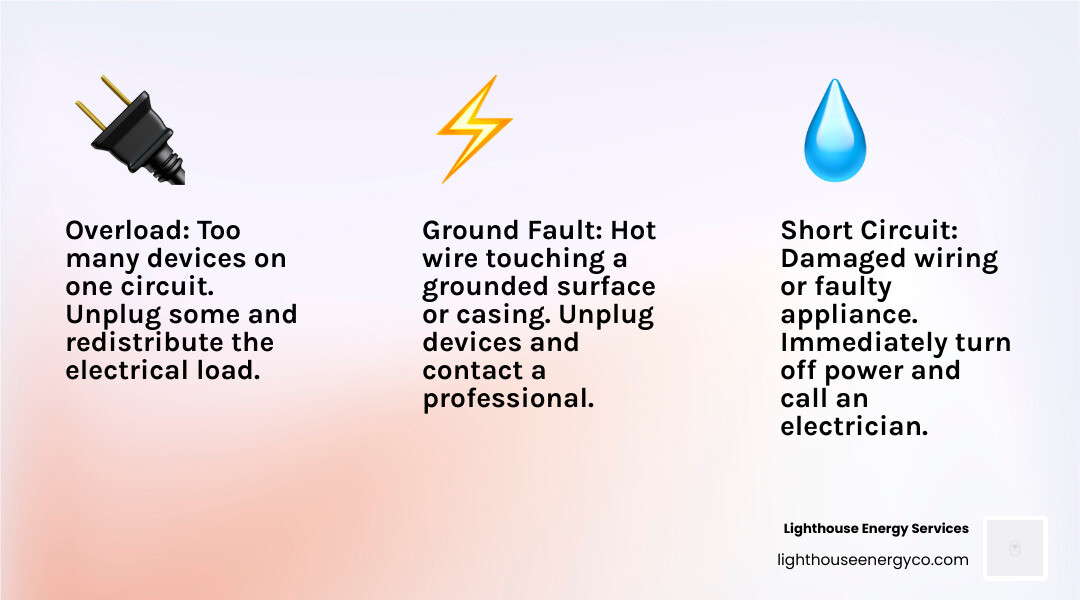
- Overload – Too many devices drawing power on one circuit
- Short Circuit – A hot wire touching a neutral or ground wire
- Ground Fault – A hot wire touching a grounded surface or metal casing
Most trips can be resolved with simple troubleshooting. But situations like burning smells, immediate re-tripping, or visible damage require professional help right away.
I’m Bruce Kemp, an electrical contractor with decades of experience diagnosing and implementing circuit breaker tripping solutions. I’ve handled everything from simple nuisance trips to complete electrical system upgrades.
Understanding Your Electrical Guardian: How Breakers Work
Think of your circuit breaker as your home’s unsung hero, constantly monitoring electrical flow to prevent fires and keep your family safe. It’s not an inconvenience; it’s active protection.
A circuit breaker is a fail-safe switch that automatically cuts power when something goes wrong. Inside is a bimetallic strip that heats up as electricity flows. If the current exceeds the breaker’s amperage rating—usually 15 or 20 amps in homes—the strip gets too hot, bends, and triggers the tripping mechanism. The power cuts off instantly.
This split-second response prevents wiring from overheating and protects your equipment from damage. The main reasons breakers trip are circuit overloads, short circuits, ground faults, and faulty appliances. Each condition creates an unsafe situation that your breaker is designed to stop.
What a Tripped Breaker Looks Like
You’ll know a breaker has tripped when you open your electrical panel. While other breakers are in the “ON” position, the tripped one will be in the middle position—neither fully on nor off. Some newer panels have color indicators (red or orange) to make identification even easier.
The resetting procedure is crucial: you must first push the handle all the way to the “OFF” position to feel it click. Then, push it back to “ON.” This two-step process fully resets the internal mechanism.
Circuit Breakers vs. Safety Switches (RCDs)
Many homes have two types of protection working together in the electrical panel.
Circuit breakers protect your equipment and wiring. They monitor for overcurrent and trip when too much electricity is flowing, preventing fires and protecting your home’s infrastructure.
Safety switches, also called Residual Current Devices (RCDs), protect people. They monitor for current imbalance. If even a tiny amount of electricity leaks to the ground—as in a ground fault—the RCD detects it and cuts power in milliseconds, which can save your life.
In short: the breaker keeps your house from burning down, while the RCD keeps you from getting electrocuted. RCDs are especially critical for ground fault detection in wet areas like bathrooms and kitchens. Because of their life-saving role, you should test RCDs quarterly by pressing the “Test” button on each device. If the power doesn’t cut, call an electrician immediately.
The Usual Suspects: Overloads, Short Circuits, and Ground Faults
When your circuit breaker trips, it’s signaling a problem. Understanding the three most common causes—overloads, short circuits, and ground faults—is the first step toward finding effective circuit breaker tripping solutions. Overloads are most common, but short circuits and ground faults pose the greatest safety risks.
| Cause | Definition | Common Causes | Signs |
|---|---|---|---|
| Overload | Too much electricity flowing through a circuit than it’s designed to handle. | Plugging in too many high-wattage appliances (microwaves, hair dryers, toasters, space heaters) on the same circuit; Older electrical systems with insufficient capacity for modern demands. | Breaker trips after a period of use; Lights dim when an appliance turns on; No visible damage to wiring. |
| Short Circuit | An unintended, low-resistance connection between a hot wire and a neutral wire, or between two hot wires. | Damaged appliance cords; Faulty internal appliance wiring; Loose connections in outlets or switches; Worn-out wire insulation; Water exposure. | Immediate trip of the breaker; Sparks, flashes, or popping sounds; Burning smell; Visible scorch marks around outlets/switches; Hot wires/components. |
| Ground Fault | A type of short circuit where a hot wire touches a grounded surface or component (e.g., metal box, plumbing). | Damaged appliance cords or internal wiring where current leaks to the appliance casing; Water exposure near outlets or appliances; Improperly grounded equipment; Faulty wiring in wet areas like kitchens, bathrooms, or outdoors. | Immediate trip of the breaker (especially GFCI/RCD); Tingling sensation when touching an appliance; Burning smell; Visible scorch marks. |
Circuit Overloads: Too Much Demand
An overload is the most frequent cause of a tripped breaker. It simply means you’re asking a circuit to deliver more power than it can safely handle. Every circuit has an amperage rating—usually 15 or 20 amps. When the total current drawn by all devices exceeds this rating, the breaker trips to prevent a fire. High-power appliances with heating elements (microwaves, toasters, space heaters) or motors (vacuums, refrigerators) are common culprits. Signs of an overload include the breaker tripping after a few minutes of use and lights dimming when a large appliance turns on.
Short Circuits: A Dangerous Shortcut
A short circuit is a serious fire and shock hazard. It happens when a hot wire makes improper contact with a neutral or ground wire, creating a path for a massive surge of current that trips the breaker instantly. Damaged wiring is the usual cause, from a pinched appliance cord, faulty internal wiring, or deteriorated insulation in your walls. The signs are hard to miss: a loud popping sound, sparks, a burning smell, and scorch marks around an outlet. If a breaker trips immediately after being reset, a short circuit is a likely cause. This is not a DIY fix—call a professional.
Ground Faults: A Specific Type of Short
A ground fault is a type of short circuit with a high risk of electric shock. It occurs when a hot wire touches a grounded surface, like the metal casing of an appliance or a metal junction box. This energizes the surface, and touching it can send current through your body. This is especially dangerous in wet areas like kitchens, bathrooms, and outdoor spaces, which is why codes require GFCI (Ground Fault Circuit Interrupter) protection. A tingling sensation from an appliance is a classic sign. Other warnings include a burning smell, scorch marks, and an immediately tripping GFCI. If you suspect a ground fault, call for professional help right away.
Your Step-by-Step Guide to Circuit Breaker Tripping Solutions
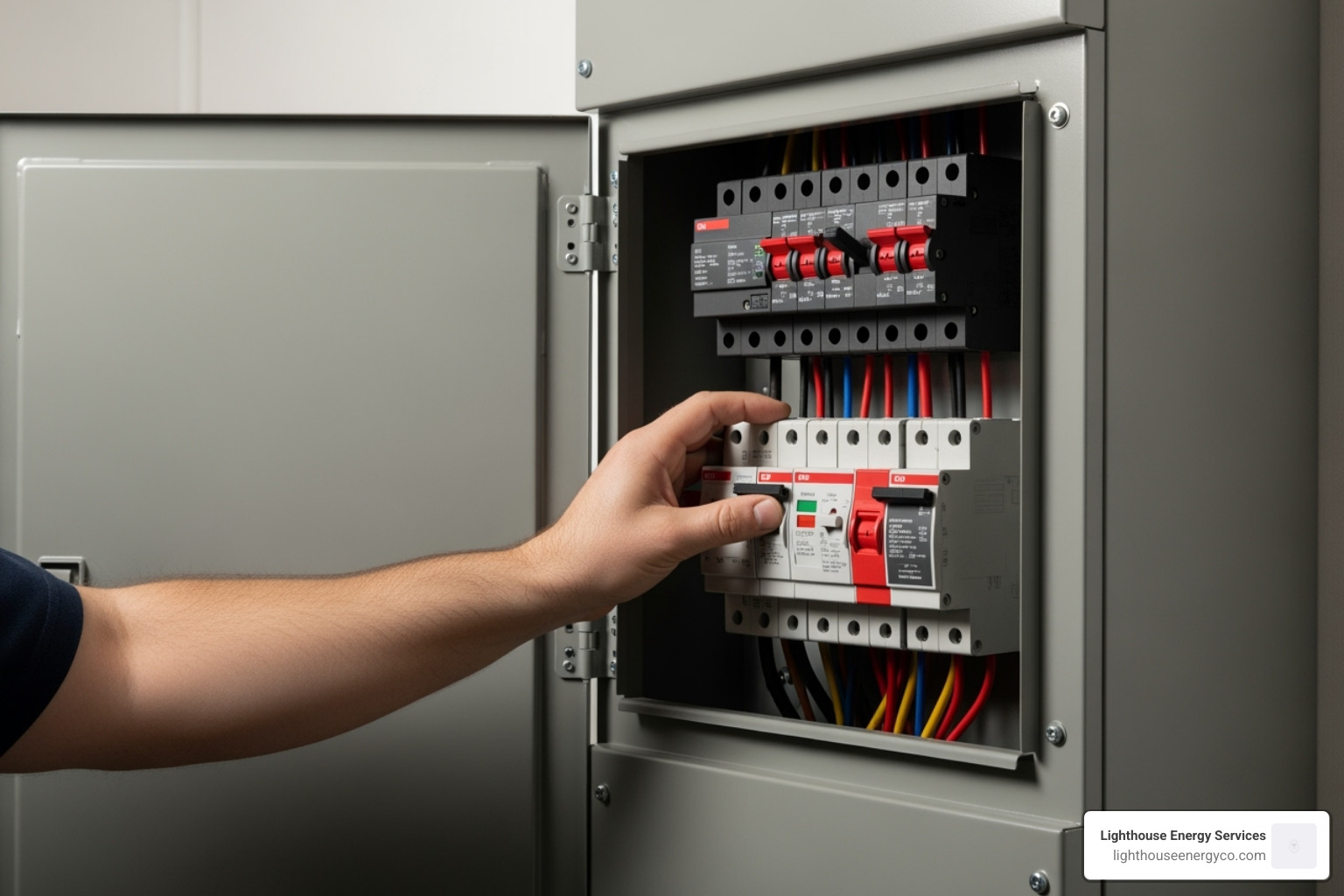
When a circuit goes out, start with safety. Grab a flashlight. If you smell burning, see scorch marks, or suspect water damage near the panel, stop and call a professional. These are red flags that require an expert, not a DIY fix.
Step 1: Safely Reset the Breaker
Locate your electrical panel, which is usually in a garage, basement, or utility closet. Find the tripped breaker—its handle will be in the middle position, out of alignment with the others. For safety, stand to the side of the electrical panel and turn your face away when you reset it. This simple precaution protects you from a rare but dangerous arc flash, as noted in OSHA guidance.
To reset, firmly push the handle all the way to “OFF” first, then push it back to “ON.” If the breaker trips again immediately, you likely have a short circuit or ground fault in the wiring. Do not keep trying to reset it. Leave that breaker in the “OFF” position and call Lighthouse Energy Services. We’re available 24/7 for electrical emergencies.
Step 2: Identifying the Cause: Simple Circuit Breaker Tripping Solutions
If the breaker stayed on, it’s time for some detective work to prevent it from happening again. This is key to finding the right circuit breaker tripping solutions.
Start by unplugging everything connected to that circuit and turning off all associated light switches. Reset the breaker again. If it stays on, you can begin plugging devices back in one at a time. Pause after plugging in each device and turning it on. The one that trips the breaker is your culprit.
Next, you need to determine if the appliance is faulty or if the circuit is simply overloaded. To do this, test the suspect appliance on a different circuit. If it trips that breaker too, the appliance is faulty and should be repaired or replaced. If it works fine on the other circuit, your original circuit is overloaded. You’ll need to redistribute your appliances across different circuits or consider a professional electrical upgrade.
When DIY Isn’t Enough: Recognizing Serious Electrical Problems
While some circuit breaker tripping solutions are simple, certain signs indicate a serious problem that requires a professional. Knowing when to call an expert is the smartest, safest choice for your family.
Call an electrician immediately if you notice any of the following:
- A breaker that trips instantly after you reset it.
- A burning smell or visible scorch marks near outlets, switches, or the panel.
- Buzzing or crackling sounds from your electrical system.
- A breaker that feels hot to the touch.
- Frequent trips on the same circuit, even after troubleshooting.
These are signs of dangerous conditions like short circuits or failing components. At Lighthouse Energy Services, our qualified electricians are available 24/7 to diagnose and fix these emergencies safely. Find out more about Our Electrical Services.
Signs of an Aging Electrical System
If your home is over 25-30 years old, its electrical system may not be equipped for modern demands. Signs of an aging system include:
- Flickering or dimming lights, especially when large appliances turn on.
- Circuit breakers and panels older than 25-30 years, as they can become unreliable.
- Insufficient capacity, forcing you to juggle appliance use to avoid trips.
- An outdated fuse box, which lacks the safety of a modern breaker panel and is a clear sign an upgrade is needed.
The Dangers of Ignoring a Tripping Breaker
Ignoring a repeatedly tripping breaker is like ignoring a check engine light—you’re risking a serious breakdown. The primary dangers are:
- Fire: Repeated overloads and short circuits generate heat that can melt wire insulation and ignite materials inside your walls.
- Electrical Shock: Ground faults can energize appliance casings or other metal surfaces, creating a severe shock hazard.
- Appliance Damage: Power fluctuations and sudden outages shorten the lifespan of your expensive electronics.
- Breaker Failure: Each trip wears on the breaker’s mechanism. Eventually, it can fail to trip when needed, leaving your home unprotected. A tripping breaker is an alarm; don’t ignore it.
Proactive Prevention: How to Stop Breakers From Tripping
Once you’ve handled an immediate trip, the best circuit breaker tripping solution is prevention. Most strategies are simple and involve being more aware of your electricity use.
Start by distributing your electrical load more evenly. Avoid running multiple high-power appliances (like a microwave and a toaster) on the same circuit simultaneously. Stagger their use or move a portable appliance to an outlet on a different circuit. Also, unplug devices when not in use; many draw a small amount of power even when off, which contributes to the overall load.

Upgrade to Energy-Efficient Appliances
Upgrading to modern, energy-efficient appliances is a solution that pays for itself over time. Today’s ENERGY STAR-rated products use significantly less electricity than older models, reducing the strain on your circuits and lowering your energy bills. When it’s time to replace an appliance, always Look for ENERGY STAR appliances.
Advanced Circuit Breaker Tripping Solutions: Upgrades and Maintenance
If basic prevention isn’t enough, it may be time to upgrade your electrical infrastructure.
- Arc-Fault Circuit Interrupter (AFCI) Breakers: These detect dangerous electrical arcs—a leading cause of electrical fires—and shut off power before a fire can start. Learn more about how to Install arc-fault circuit interrupter (AFCI) breakers.
- Ground-Fault Circuit Interrupter (GFCI) Protection: Essential for wet areas (kitchens, bathrooms, outdoors), GFCIs prevent electric shock by detecting ground faults and cutting power in a fraction of a second. You can Install ground-fault circuit interrupter (GFCI) receptacles.
- Dedicated Circuits: High-power appliances like EV chargers, large microwaves, or window AC units should have their own circuit to prevent overloads.
- Electrical Panel Upgrade: If your panel is over 25 years old, it may lack the capacity for modern electrical loads. An upgrade is the most comprehensive solution for an overburdened system.
- Regular Electrical Inspections: A professional can spot worn wiring, loose connections, and other issues before they become serious problems.
The growing number of smart home devices also adds to your home’s total electrical load. Ensure your system can handle it. At Lighthouse Energy Services, we specialize in all these upgrades. See Our Electrical Services for more.
Frequently Asked Questions about Tripping Circuit Breakers
We hear the same questions from homeowners across Palm Beach County every day. Here are straightforward answers to the most common ones.
Why does my breaker trip when I use the microwave?
This is a classic circuit overload. Microwaves are power-hungry, drawing around 10 amps, and they require a brief startup surge of even more power. If your microwave shares a 15 or 20-amp kitchen circuit with other appliances like a coffee maker or toaster, running them at the same time will likely exceed the circuit’s limit and trip the breaker. The best circuit breaker tripping solution is to avoid using other high-power appliances with the microwave or to install a dedicated circuit for it.
Can a circuit breaker just go bad?
Yes. Circuit breakers are mechanical devices that wear out over time, especially with frequent tripping. A breaker at the end of its 25-to-30-year lifespan can fail. The most common sign of a bad breaker is one that won’t stay reset, tripping immediately even with nothing plugged into that circuit. Other signs include a loose handle, scorch marks, a burning smell from the panel, or the breaker feeling hot to the touch. A faulty breaker is a safety hazard and should be replaced by a qualified electrician.
Is it dangerous if a circuit breaker keeps tripping?
Yes, it is very dangerous. A breaker that keeps tripping is a clear warning of an unresolved electrical problem, such as a chronic overload, a short circuit, or a ground fault. Ignoring it puts you at risk of:
- Fire: From overheating wires or short circuits.
- Electrical Shock: From ground faults.
- Appliance Damage: From constant power fluctuations.
A repeatedly tripping breaker can also wear out and fail to trip when it’s most needed, leaving your home unprotected. If basic troubleshooting doesn’t solve the problem, call a professional. At Lighthouse Energy Services, we’re available 24/7 to diagnose and resolve persistent electrical issues. Contact Us for 24/7 Electrical Service, and we’ll get the job done right.
Restore Your Peace of Mind and Power
We’ve covered how your circuit breaker acts as an electrical guardian and how to diagnose common issues like overloads, short circuits, and ground faults. The most important takeaway is that a tripped breaker is a safety feature, not just an inconvenience.
Simple circuit breaker tripping solutions, like safely resetting the breaker and identifying an overloaded circuit, can often resolve minor issues. However, knowing when to stop is critical. If a breaker trips immediately, you smell burning, see scorch marks, or face persistent tripping, it’s time to call a professional. Your safety is not worth the risk.
For homeowners and businesses throughout Palm Beach County—from Boca Raton to Fort Lauderdale, Jupiter to Miami, West Palm Beach and beyond—Lighthouse Energy Services has your back. Our qualified electricians are available 24/7 for prompt, professional service with no hidden fees. We don’t just fix breakers; we restore your peace of mind.
Whether you need an emergency repair or a full panel upgrade to meet modern demands, we’re committed to getting the job “done right, and done right now.”
Ready to restore your power and peace of mind? Contact Us for 24/7 Electrical Service and let the experts at Lighthouse Energy Services take care of everything.