
You call an electrician for what sounds like a simple fix. A breaker keeps tripping, a light flickers, maybe an outlet stopped working. Then the invoice shows up with a diagnostic charge, a trip fee, permit handling, inspection coordination, and a few vague extras that nobody mentioned when you booked the job.
That's the part homeowners hate. Not paying for skilled work. Paying for surprises.
If you're searching for West Palm Beach electrician no hidden fees, you're probably not looking for the cheapest name on a list. You're looking for someone who will tell you the actual number before work starts, explain what can change it, and get your approval before adding anything. That's the right mindset.
A fair electrical bill should feel predictable. If the estimate is vague, the final invoice usually won't be your friend.
The Fear of the Final Bill
A lot of homeowners in Palm Beach County have had the same thought: “I can handle a repair bill. I can't handle a repair bill that keeps growing while the job is happening.”
That fear is justified. Electrical work often starts with one visible symptom and uncovers something behind the wall, in the panel, or at the service connection. That doesn't mean an electrician is being dishonest. It means the quote needs to separate known work from possible added work, and it needs to spell out how approvals happen.
Why people feel burned
The problem usually isn't the repair itself. It's the estimate.
If a proposal says “repair as needed” or “standard troubleshooting,” you don't have a price. You have an open tab. If it doesn't mention minimum service charges, parts markup, return visits, or permit handling, you're depending on goodwill instead of paperwork.
Practical rule: If an electrician can't explain the estimate in plain English, don't expect the invoice to get clearer later.
What control looks like
You want a contractor who treats pricing the same way a good electrician treats wiring. Clean, labeled, and easy to trace.
That means asking for an itemized quote, but it also means knowing what to look for inside it. A good estimate should tell you what's included, what isn't, what requires approval, and what happens if the electrician finds code issues once the cover comes off.
That's how you stop feeling like a worried customer and start acting like an informed client.
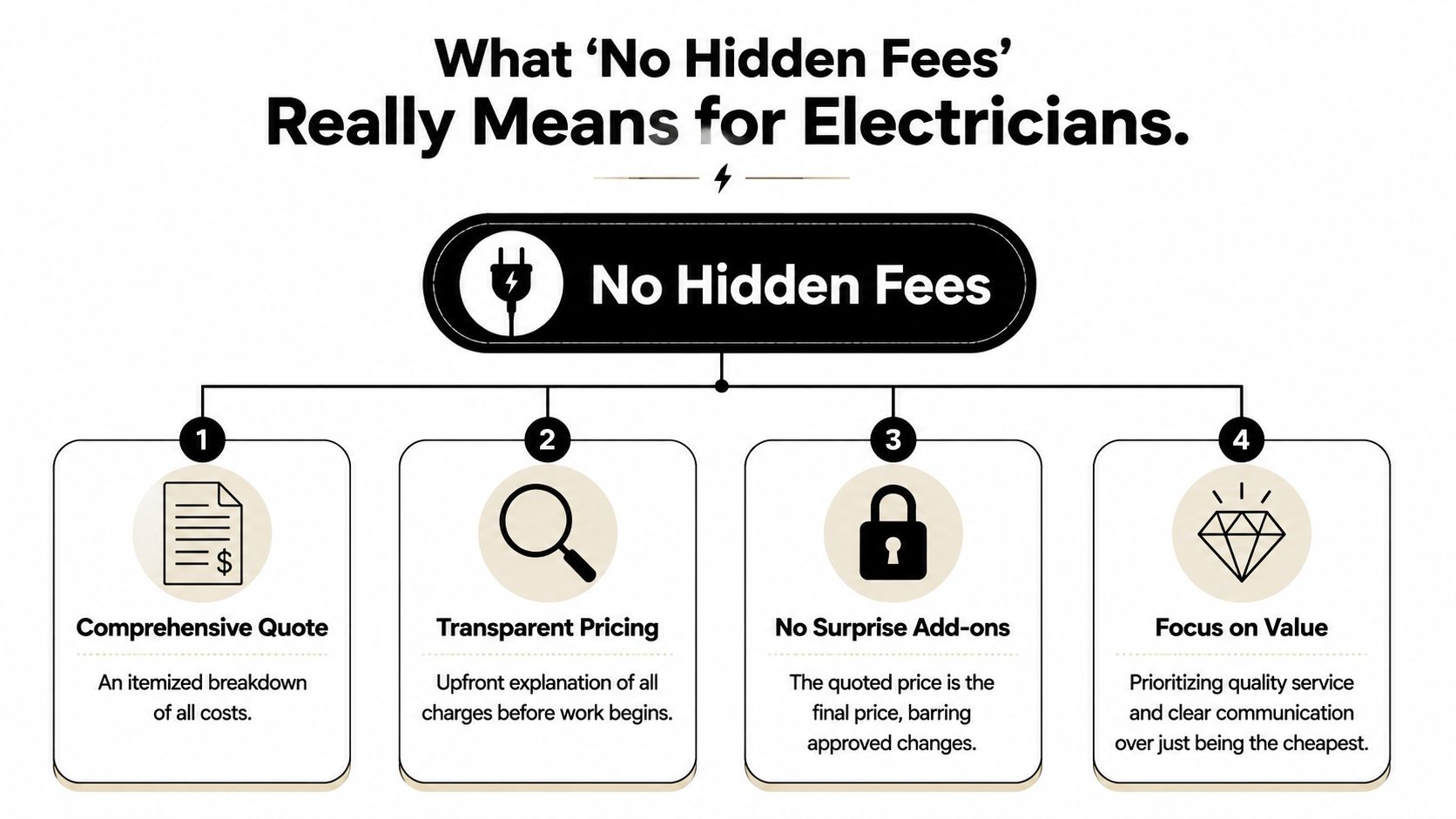
What "No Hidden Fees" Really Means for Electricians
“No hidden fees” doesn't mean “lowest price.” It means complete price.
A restaurant bill provides a good comparison. If the menu lists one price and then adds separate charges for utensils, table service, and cooking the meal, the cheap menu price was meaningless. Electrical estimates work the same way. A quote only helps if it captures the actual job cost, not just the piece that sounds attractive on the phone.
In West Palm Beach, electrical services typically run from $73.10 to $91 per hour, and that still doesn't include parts, materials, or administrative costs such as a $150 electrical permit and $75 final inspection coordination, according to this West Palm Beach electrical cost guide. That's why a “no hidden fees” promise only means something when the quote is itemized.
What should be on the estimate
A transparent electrician should list the core parts of the job clearly. If you're comparing bids, use this as your baseline:
- Labor charges that state whether pricing is hourly, flat-rate, or diagnostic-first
- Materials with enough detail to show what's being installed
- Permit and inspection handling if the work requires it
- Scope limits so you know what the quote covers and where extra work would begin
- Approval process for changes before any added work is done
If you're hiring a licensed electrical contractor in Palm Beach County, this level of detail should be standard, not special treatment.
What no hidden fees does not mean
It does not mean every job has one fixed price no matter what gets discovered.
It means the electrician tells you, up front, which parts are fixed, which parts depend on findings, and which charges could apply if the scope changes. Honest pricing leaves room for real-world conditions without turning the invoice into a surprise.
A low number without line items is not transparency. It's a sales tactic.
Uncovering Common Electrical Service Hidden Costs
Most hidden charges don't arrive with dramatic names. They show up as harmless-looking add-ons, usually after you've already committed.
Homeowners get caught because many electricians advertise “upfront pricing,” yet common consumer guidance still doesn't clearly explain what triggers extra charges such as after-hours dispatch, diagnostic-only visits, or return trips. That gap between marketing and invoice reality is called out in this West Palm Beach electrician marketplace guidance.
The charges that catch people off guard
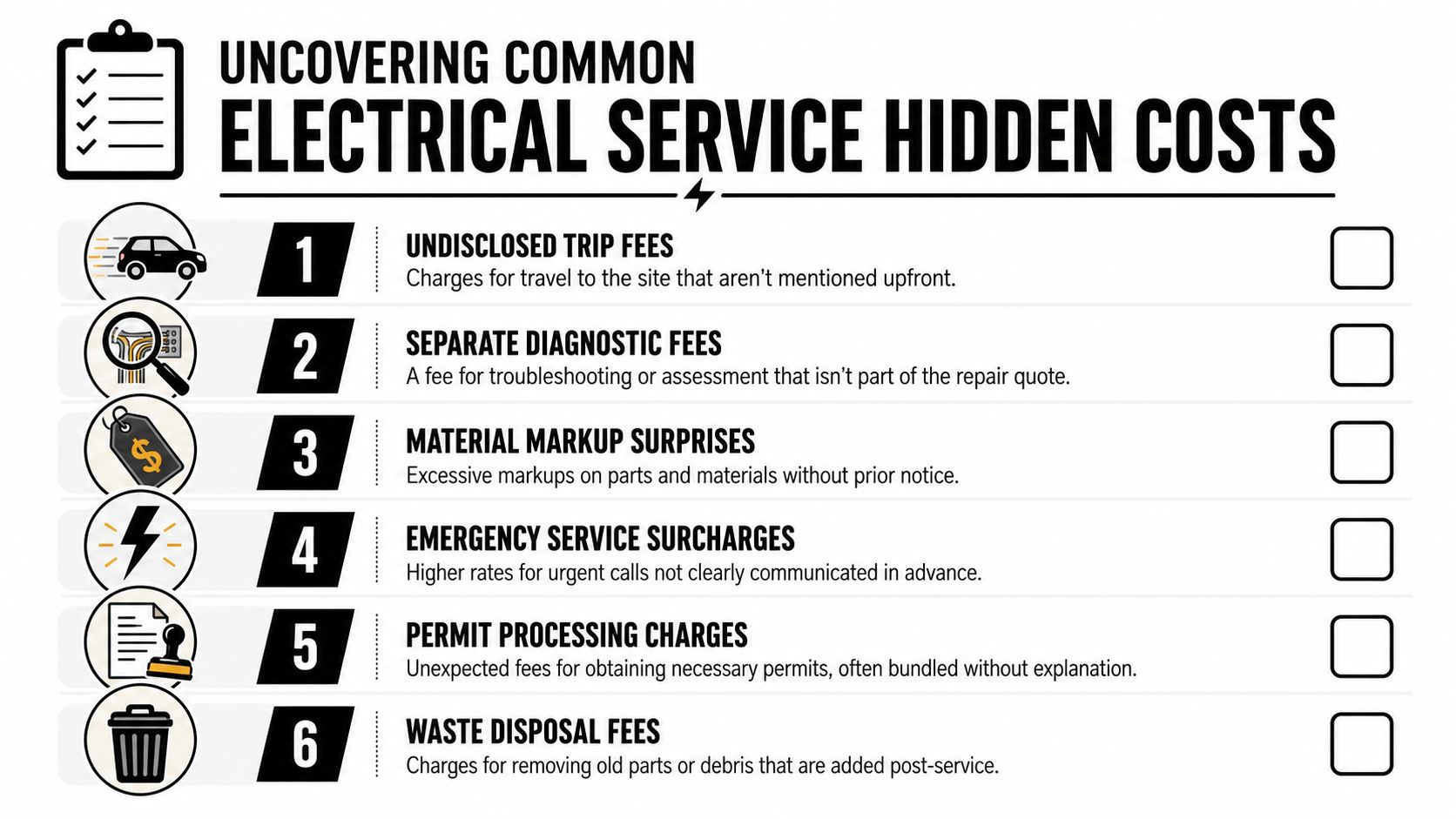
Here are the add-ons I'd tell any homeowner to watch for first:
Trip fees
Some companies charge just to show up. That isn't automatically wrong. It is wrong when they wait until the invoice to mention it.Diagnostic-only charges
Troubleshooting takes skill and time. A fair company will tell you whether the diagnostic fee stands alone or applies toward the repair. If that policy is missing, ask before booking.After-hours surcharges
Emergency service costs can be structured differently from scheduled work. What matters is whether the electrician tells you that before dispatch. If you need a benchmark for how emergency pricing should be explained, this emergency electrician cost guide for homeowners shows the kind of clarity buyers should expect.
The vague line items that deserve scrutiny
Some estimate language should make you slow down.
Terms like “miscellaneous materials,” “shop supplies,” “admin,” or “standard corrective work” can hide real charges inside broad categories. If a contractor uses those terms, ask for them to be unpacked into plain line items. If they won't do that, assume the final bill may grow.
Here's another common one: return visit charges. If a part has to be ordered, ask whether the second trip is included. If permit paperwork or inspection coordination is required, ask whether those tasks are already priced.
If a line item can't be explained in one sentence, it probably shouldn't be on your estimate.
Where hidden costs often start
The estimate often goes wrong before the electrician even leaves the office. A rushed phone quote based on incomplete information can sound convenient, but it usually leaves room for extra charges later.
That's why the best quotes aren't just “written.” They're specific. They say what the electrician will do, what the electrician won't do, and what would require your approval if the job expands.
Your Vetting Checklist Questions to Ask Before You Hire
The smartest homeowners don't ask, “What's your hourly rate?” and stop there. They ask the questions that expose how the company handles scope, permits, materials, and surprises.
Use this list when you call or when someone hands you an estimate. If the answers are fuzzy, walk away.

Questions that reveal pricing honesty
What exactly is included in this quote?
Ask them to name the labor, materials, and any administrative handling in plain language.Are diagnostics separate from the repair, or does that amount apply toward the final work?
This is one of the most common areas where homeowners get surprised.If you find additional problems, what happens next?
The right answer is simple: they stop, explain the issue, price the added scope, and get your approval first.Does this estimate include permits and inspection coordination if needed?
For larger work in Palm Beach County, that matters. For major jobs like panel upgrades, contractors often must bring the service area up to current NEC standards, and permit fees can run from $100 to $500, according to this Palm Beach panel upgrade pricing guide.
Questions for bigger jobs
If the work involves a panel, service upgrade, or code corrections, ask these too:
- If the existing setup isn't code-compliant, how will you quote the corrections?
- Will you itemize labor, materials, permits, and inspection handling separately?
- Are utility coordination and inspection closeout included, or billed later?
- If you need to return after inspection, is that already covered?
This same logic applies outside electrical work too. If you've ever reviewed proposals for quality solar installations, you've seen the same pattern. The equipment matters, but installation quality and scope clarity matter just as much.
Your red-flag checklist
Before you sign, watch for these warning signs:
- A one-line estimate with no scope detail
- Verbal promises that don't appear in writing
- No answer on permit handling
- No change-order process
- Pressure to approve immediately
- Vague wording like “additional work as needed”
If you want a broader homeowner checklist before hiring, this guide to hiring an electrician for home projects is the type of resource worth reviewing.
Good contractors don't get annoyed by careful questions. They answer them cleanly.
The Lighthouse Energy Services Transparency Promise
It is 8:30 p.m., half the kitchen is dead, and you are trying to decide whether an emergency call will fix the problem or blow up the budget. This is the moment when a pricing promise gets tested.
A real "no hidden fees" policy has to answer the questions homeowners care about before the truck rolls. Will the company add an after-hours surcharge? Will diagnostic time show up as a surprise line item? Will permit handling appear later if the repair grows into a larger code issue?
Lighthouse Energy Services gives a useful benchmark here. The Lighthouse Energy Services website states the company offers 24/7 service and says there is "NEVER an extra charge" for after-hours calls. Good. That is the kind of plain-language policy you want to see because it removes one of the most common billing surprises upfront.
What a transparent quote should resemble
Use this as a quick verification check when you review an estimate. If a company says its pricing is clear, the quote should show where each cost lives.
| Service/Material | Description | Cost |
|---|---|---|
| Service call | Initial visit and on-site evaluation | Quoted upfront |
| Diagnostic labor | Troubleshooting to identify fault | Quoted upfront |
| Repair labor | Approved repair work within defined scope | Quoted upfront |
| Materials | Parts required for the approved repair | Itemized in quote |
| Permit handling | Included when required by scope | Itemized in quote |
| Inspection coordination | Included when required by scope | Itemized in quote |
| After-hours response | Pricing stated before dispatch | No extra charge if covered by company policy |
Here is my rule. If you cannot point to the line for service call, diagnosis, labor, materials, and permit-related handling, the estimate is not clear enough yet.
For West Palm Beach homeowners, that matters more than the slogan. Older homes, panel work, storm-related damage, and code updates can all change job scope fast. A contractor with a real transparency promise will show you what is included now, what would require approval later, and what stays the same even on a night or weekend call.
That is the standard to use. Clear scope. Clear price. Clear trigger for any change. If a contractor cannot put that in writing, keep shopping.
Frequently Asked Questions About Electrical Pricing
Are emergency calls priced differently than scheduled appointments
Sometimes they are. What matters is disclosure before work begins. For commercial and multifamily sites especially, transparent pricing for 24/7 emergency calls lowers downtime risk because the electrician defines the scope, code requirements, and out-of-hours pricing before starting, as described in this West Palm Beach emergency electrical service overview.
What happens if the electrician finds more problems during the job
The electrician should stop and explain the new issue. Then they should give you a revised price or a change order for that added work. They should not roll forward and surprise you at billing time.
Is a diagnostic fee normal
Yes. Troubleshooting has value. The issue isn't whether the fee exists. The issue is whether the electrician told you about it clearly and explained whether it stands alone or applies toward the repair.
Should I reject the cheapest estimate
If the estimate is vague, yes. A low number without line items often means parts of the job haven't been priced yet. Cheap electrical work gets expensive fast when permits, code corrections, return visits, or emergency response weren't included from the start.
If you want a quote that spells out the work, the pricing, and what can change before anyone starts, contact Lighthouse Energy Services. Ask for an itemized estimate, ask how scope changes are approved, and ask what's included for emergency calls. Those three questions alone will tell you whether you're dealing with a real no-hidden-fees electrician.