
If you manage a commercial property in West Palm Beach, you've probably dealt with this version of the same call. A tenant says half the lights are out. The HVAC keeps tripping. A breaker panel feels warm. A sign circuit fails at the worst possible time. Everyone wants it fixed now, but nobody can tell you when the warning signs started.
That's how electrical problems usually show up in commercial buildings. Not as one dramatic event, but as a chain of small issues that were easy to postpone until they weren't. In South Florida, that pattern gets worse fast. Heat, humidity, salt air, and storm exposure don't give electrical equipment much room for neglect.
Commercial electrical maintenance West Palm Beach owners need isn't just about repairs. It's about building a system that catches trouble early, protects uptime, and gives you a cleaner budget instead of a string of surprises.
The Cost of Waiting for an Emergency
A restaurant can limp along with a bad lamp ballast. It can't limp along when a panel issue takes out kitchen equipment on a packed night. An office building can tolerate a nuisance trip once. It can't tolerate repeated shutdowns during a heatwave when the cooling system and tenant expectations are both under pressure.
That is the actual cost of a reactive approach. The repair invoice is only part of it. The harder losses are operational. Staff stand around. Tenants complain. Refrigeration warms up. Access systems fail. Managers start calling vendors they haven't vetted because the problem is already live.

Why local labor availability doesn't solve the planning problem
West Palm Beach sits inside a strong electrical labor market. The Miami-Fort Lauderdale-West Palm Beach metro area has approximately 12,400 electricians, with employment concentration nearly in line with the national average, and an average hourly wage of $26.46 according to the U.S. Bureau of Labor Statistics occupational employment data.
That matters, but it doesn't remove the risk. A healthy labor pool means help exists. It doesn't mean the right technician already knows your building, your panel lineup, your tenant schedule, your roof equipment, or which circuits can't go down during business hours.
Practical rule: The cheapest time to identify an electrical weakness is before it interrupts revenue.
What reactive management looks like in practice
Most emergency failures follow a familiar path:
- Minor warning signs get normalized: Flicker, nuisance trips, buzzing contactors, warm breakers, and intermittent exterior lighting become “something to watch.”
- No one owns the maintenance log: The engineer remembers one repair. The property manager remembers another. The tenant remembers a different version.
- The call list is weak: During a real outage, people start searching instead of executing.
If you're already seeing unstable power behavior, recurring trips, or storm-related interruptions, it helps to review a practical business power outage response guide before the next failure forces decisions under pressure.
The properties that stay calmer during an outage usually aren't luckier. They're better prepared. They know what's critical, what can wait, and who's responsible for each step.
Building Your Proactive Maintenance Framework
A maintenance program works when it's built around the building, not around a generic checklist. Start with the systems that matter most to operations, then create a schedule that reflects actual exposure in West Palm Beach.
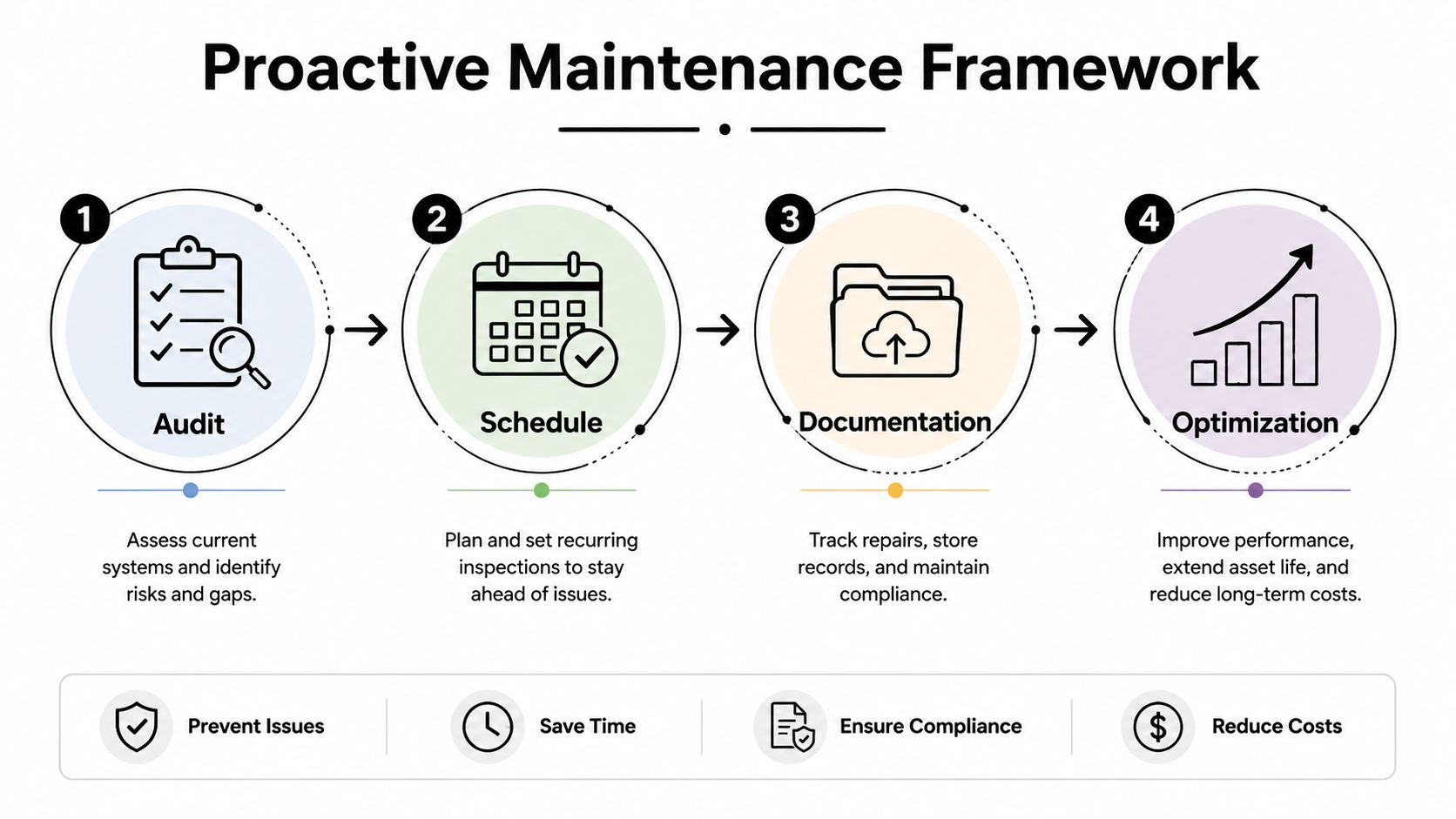
Start with an asset inventory
Before anyone talks about frequency, get the asset list right. That means more than “main panel and lighting.”
Document:
- Distribution equipment: Main switchgear, panelboards, disconnects, transformers, meter sections.
- Critical loads: HVAC, refrigeration, kitchen equipment, elevators, access control, emergency lighting, fire-related support systems.
- Exterior exposure points: Site lighting, parking lot circuits, rooftop equipment feeds, signage, weather-exposed disconnects.
- Backup-related components: Batteries, transfer points, controls, and anything that has to perform during a utility problem.
A lot of wasted maintenance money comes from treating every circuit the same. They aren't the same. A panel feeding common-area lighting is not the same risk as a panel feeding refrigeration, tenant server rooms, or a building's cooling backbone.
Rank systems by consequence, not by age alone
Older equipment deserves attention, but consequence should drive priority. A newer component in a harsh environment can become a bigger risk than an older interior panel that has stayed dry and stable.
Use a simple filter:
- If this fails, what stops working?
- Can the building operate safely while it's down?
- Can it be serviced during off-hours, or does failure disrupt tenants immediately?
That's the difference between preventive work and random vendor visits. If your team wants a good outside primer on the decision-making side, this overview on selecting the right maintenance path for MRO is useful because it frames the trade-off between routine preventive work and more condition-based thinking.
Build the schedule around real financial risk
The business case for structured maintenance is straightforward. According to Lighthouse Energy's commercial maintenance guidance, a structured program can reduce emergency call-outs by 40-60%, extend electrical infrastructure lifespan by 15-25 years, and electrical failures cost businesses an average of $5,600 per hour in downtime. In humid, salt-air markets like West Palm Beach, quarterly inspections are essential, especially since 35% of preventable failures are tied to inconsistent schedules, as outlined in this commercial electrical maintenance methodology reference.
That changes how a property manager should think about maintenance. It's not a line item you defend after the fact. It's a control measure for uptime, tenant retention, and capital planning.
A good maintenance plan doesn't try to inspect everything equally. It puts the most attention where downtime hurts the most.
Set goals your team can actually manage
Don't build a plan around vague language like “improve reliability.” Use operating goals such as:
- Fewer emergency dispatches: Track what caused each urgent call and whether it was visible earlier.
- Better documentation: Keep service records by panel, circuit, and recurring issue.
- Less tenant disruption: Push planned work into low-impact windows.
- Longer equipment service life: Replace parts before failures damage larger assemblies.
One practical option in this market is a contractor that combines scheduled inspections, preventive maintenance, and rapid repair response in one program. Lighthouse Energy Services offers that structure for commercial properties, which is useful when you want one maintenance record instead of scattered service history.
Essential Preventive Maintenance Checklists and Schedules
Most maintenance plans fail for a simple reason. They're too vague to execute. “Inspect electrical systems regularly” sounds responsible, but it doesn't tell your chief engineer or vendor what needs attention this month, this quarter, or this year.
A working schedule has to be boring enough to repeat and specific enough to catch change. In West Palm Beach, that means paying close attention to corrosion, moisture intrusion, exterior enclosures, rooftop exposure, and any equipment tied to cooling loads.
Monthly checks that catch drift early
Monthly work should be fast, visual, and disciplined. You're looking for changes before they become failures.
- Check tenant-reported problem areas: Repeated tripping, flicker, intermittent receptacle loss, and dim exterior lighting should go on a recurring watch list.
- Inspect panels externally: Look for heat discoloration, missing blanks, loose covers, and signs of moisture around the enclosure.
- Test common protective devices: GFCI and similar protective devices in service areas, kitchens, wash-down areas, and exterior zones need regular verification.
- Walk exterior lighting and signage: Corrosion, water intrusion, and failed photocell behavior often show up there first.
- Review battery-backed lighting status: A quick visual check now can prevent a bad surprise during a real outage.
Quarterly work that fits South Florida conditions
Quarterly is where Commercial electrical maintenance West Palm Beach programs earn their keep. This is the interval where you move past observation and into hands-on testing, tightening, cleaning, and condition tracking.
Here's a sample you can adapt.
| Component / System | Task | Frequency |
|---|---|---|
| Panelboards | Inspect for signs of overheating, moisture intrusion, corrosion, and labeling issues | Quarterly |
| Breakers and disconnects | Check for proper operation, visible wear, and signs of nuisance tripping history | Quarterly |
| Exterior fixtures and boxes | Inspect for salt-air corrosion, failed seals, and water entry | Quarterly |
| Emergency lighting and battery backup | Test operation and confirm units respond correctly during simulated outage conditions | Quarterly |
| GFCI and weather-exposed receptacles | Test function and inspect covers and enclosure integrity | Quarterly |
| HVAC electrical connections | Inspect disconnects, visible conductors, and control-related electrical condition | Quarterly |
| Signage and parking lot lighting circuits | Verify operation, timer or control function, and enclosure condition | Quarterly |
| Maintenance records | Update logs with findings, repairs made, and unresolved watch items | Quarterly |
If you want help turning a rough checklist into something your team follows, tools and templates built to boost uptime with preventive maintenance can be useful for assigning tasks and keeping records consistent.
Annual work for deeper review
Annual electrical maintenance should answer a different question. Not “what failed,” but “what is aging into a problem?”
That review usually includes a deeper look at panel condition, circuit loading patterns, deteriorated exterior components, emergency systems, and any equipment that has shown repeat issues during the year. It's also the right time to clean up labeling, confirm panel directories still match reality, and decide what needs repair versus full replacement.
If you can't tell from your records which panel, disconnect, or exterior enclosure caused the last issue, your maintenance system is still too loose.
Navigating Compliance and Cutting Operating Costs
Property managers often separate compliance work from cost reduction work. In practice, they belong together. The same inspection that catches a code issue can also reveal a source of wasted energy, poor power quality, or failing equipment that's driving utility costs up.
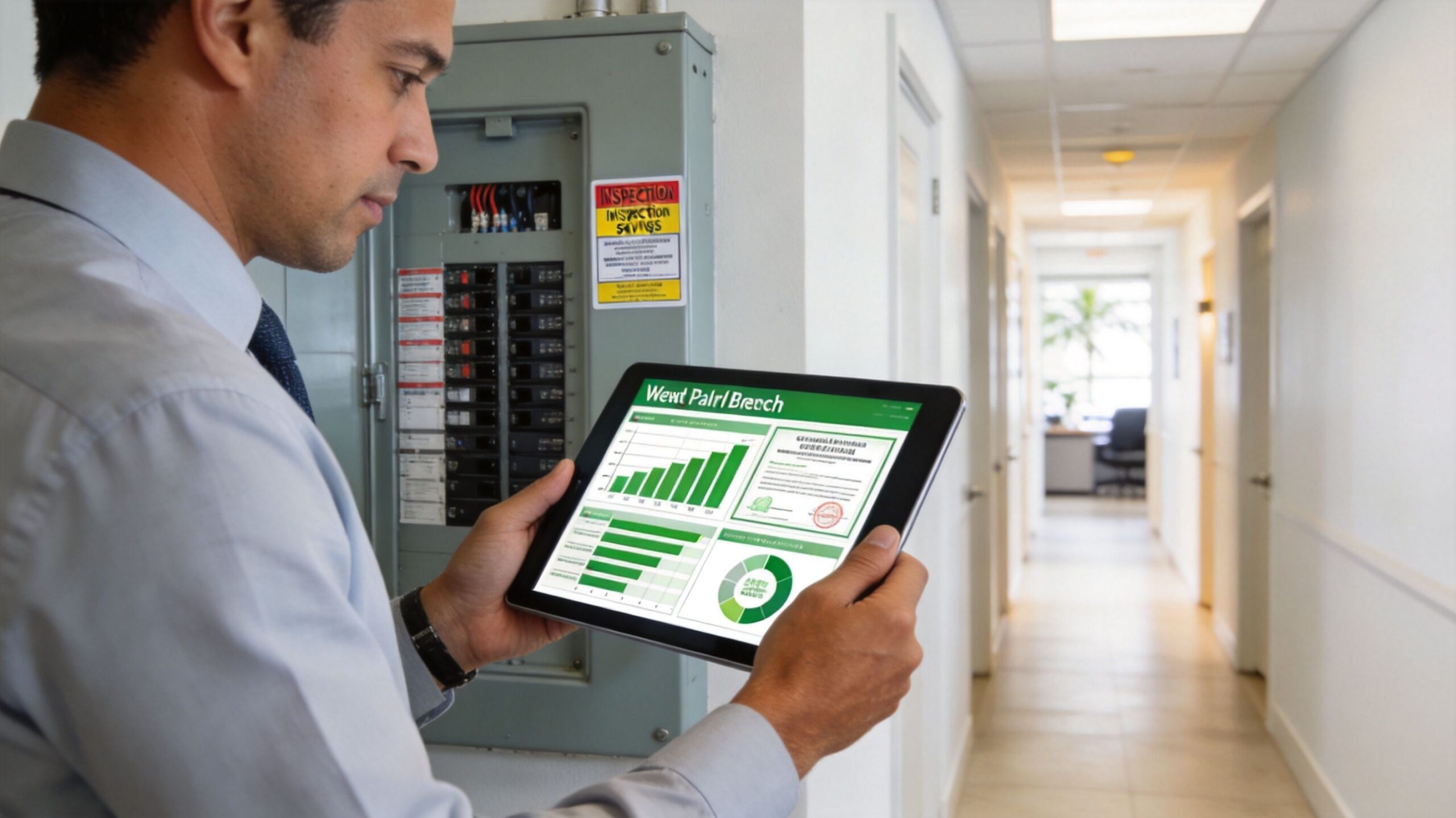
Compliance is an operating issue, not paperwork
Commercial properties don't get in trouble because someone ignored “compliance” in the abstract. They get in trouble because equipment wasn't maintained, records were incomplete, or a building system drifted out of safe condition over time.
That includes the basics like NEC-aligned work practices, proper labeling, safe enclosures, and serviceable equipment access. It also includes specialized items some owners overlook, such as aircraft obstruction lighting on taller buildings and towers. If your property has roof structures or lighting obligations tied to height and visibility, that maintenance has to stay on a calendar. You don't want to discover a compliance gap because a light failed and no one owned the inspection cycle.
Energy savings usually start with electrical housekeeping
A lot of “high bills” problems begin with old controls, inefficient lighting, poor panel organization, neglected HVAC electrical support, or equipment that's technically running but not running well.
West Palm Beach contractor content often mentions energy audits without connecting them to current code pressure or to specific upgrade paths. One gap is the link between stricter Florida commercial energy codes projected for 2024-2026 and practical upgrades such as the Smartcool ECO3, which can reduce electricity consumption by up to 25%, as discussed in this commercial electrical service and efficiency context.
That matters because savings don't always come from a major overhaul. Sometimes the right move is targeted work:
- LED retrofit cleanup: Better fixtures, controls, and fewer recurring service calls.
- Panel modernization: Safer distribution and easier troubleshooting.
- HVAC electrical optimization: Cleaner operation on one of the building's biggest electrical loads.
- Power quality review: Useful if motors, cooling equipment, or sensitive loads are running poorly.
For buildings dealing with inefficient electrical demand, power factor correction solutions are also worth evaluating because they connect maintenance, equipment performance, and operating cost control in a way many owners miss.
A code-compliant system that wastes power is still a management problem. A low-cost system that fails inspection is one too.
Developing Your 24/7 Emergency Response Plan
Preventive maintenance reduces chaos. It doesn't eliminate it. Storms, utility issues, failed components, tenant misuse, and hidden equipment defects can still trigger an after-hours event.
The difference between a manageable emergency and a building-wide scramble is the response plan you put in place before the phone rings.
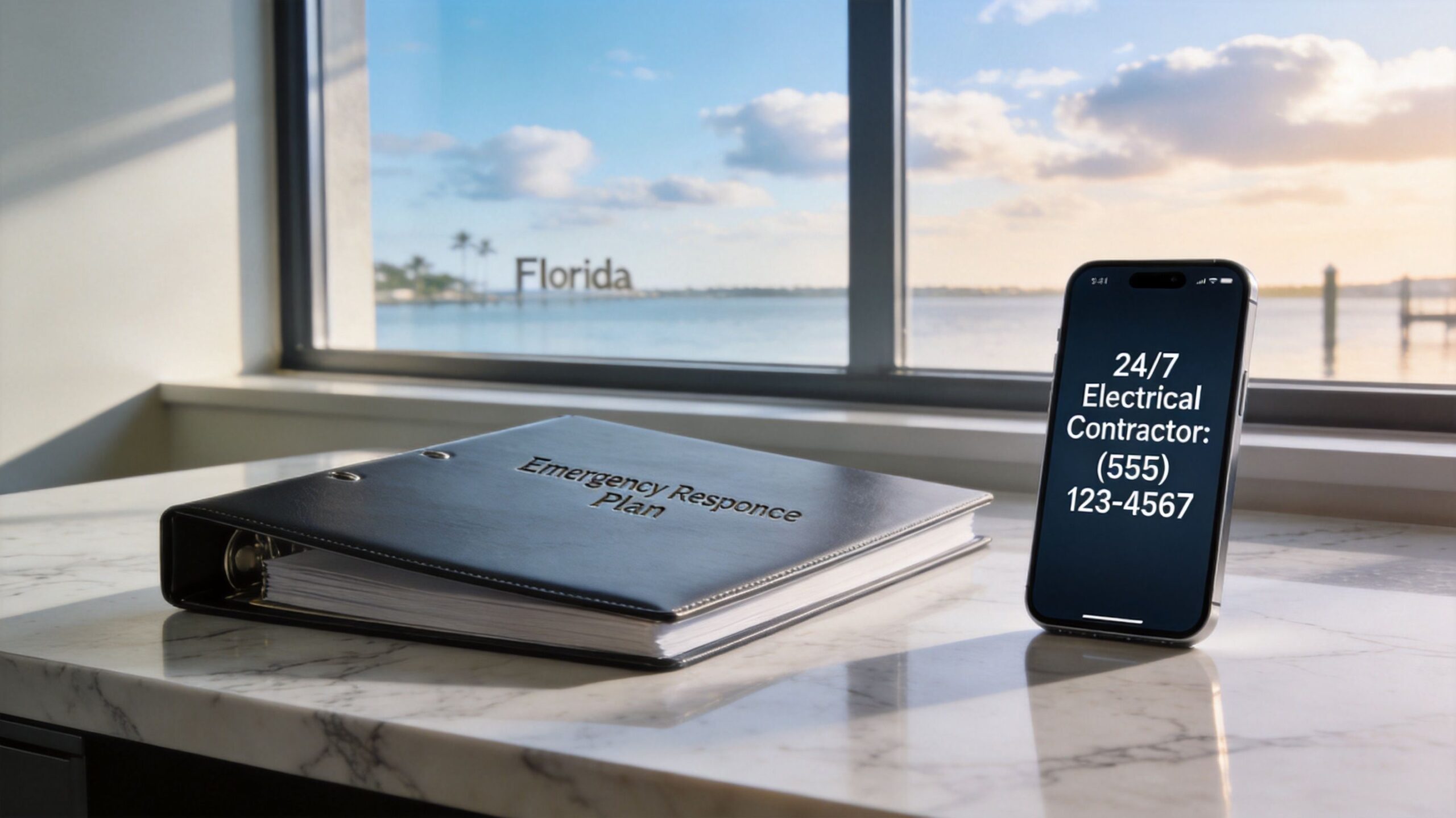
Build a clear communication tree
Your response tree should answer three questions immediately:
- Who gets the first call from the tenant or security desk?
- Who has authority to approve emergency electrical work?
- Who communicates updates to occupants, ownership, and vendors?
If those answers change depending on the day, the plan isn't finished. Write the sequence down. Put it in the property office, engineering room, and shared digital records.
Label critical circuits before you need them
In an outage, nobody wants to guess. Critical panels and disconnects should be labeled clearly enough that a responding electrician and your on-site team can identify what supports life-safety-adjacent functions, access systems, refrigeration, cooling, exterior security lighting, or other essential operations.
Keep a short emergency sheet with:
- Panel locations: Main gear, subpanels, rooftop disconnects, exterior service points.
- Critical load notes: What absolutely must stay up, what can be shed, what restarts in sequence.
- Site access details: Locked rooms, roof access, alarm coordination, tenant restrictions.
- Recent issue history: If a panel or circuit has been unstable, note it.
Pre-vet the contractor before the outage
The worst time to learn how a contractor handles emergencies is during one. You need to know who answers the phone, whether they can troubleshoot commercial systems under pressure, and whether they'll arrive with enough context to work safely.
Keep one emergency binder in the office and one digital copy off-site. If the property is dark, your plan still has to be reachable.
A workable emergency plan is short, specific, and tested. If it takes too long to read, nobody will use it during a real failure.
Choosing Your Electrical Partner in Palm Beach County
The contractor selection process matters more now because the market is getting busier. The Florida electricians industry is projected to reach $1.4 billion in revenue by 2026, with the number of businesses growing annually by 4.5%, according to this Florida electricians industry outlook. More firms in the market means more choices, but it also means more variation in responsiveness, commercial experience, and maintenance discipline.
What to screen for first
Don't start with price. Start with operational fit.
- True after-hours response: Ask who answers calls at night. An answering service isn't the same as direct technical response.
- Commercial troubleshooting experience: Tenant spaces, common areas, HVAC support, site lighting, and active facilities require a different mindset than simple one-off service work.
- Documentation quality: If the contractor leaves vague invoices and weak notes, your building history disappears.
- Local familiarity: Coastal exposure, storm prep, and local permitting habits matter in Palm Beach County.
What separates a maintenance partner from a call-out vendor
A call-out vendor fixes what's broken today. A maintenance partner helps you see what's likely to break next and documents the pattern.
That means you should ask:
- Do they build service history by asset?
- Can they work around tenant schedules and off-hours constraints?
- Do they identify recurring root causes, not just replace failed parts?
- Can they support specialized needs like roof systems, site lighting, or tower-related work?
If you're comparing firms, this commercial electric contractor guide is a practical way to frame the questions before you sign a service agreement.
The right fit is usually obvious after a few questions
Ask a contractor how they handle repeated nuisance trips in a multi-tenant building. Ask what information they want before arriving on an emergency call. Ask how they log maintenance findings from one quarter to the next.
The serious firms answer directly. They talk about panel history, load behavior, labels, documentation, scheduling windows, and known failure points. The weaker ones stay general.
That is the standard to use for Commercial electrical maintenance West Palm Beach properties require. Not who can show up once, but who can help you run the building with fewer surprises.
Frequently Asked Questions
| Question | Answer |
|---|---|
| How should I handle electrical maintenance in a multi-tenant building? | Separate common-area responsibilities from tenant-side responsibilities in writing, then keep one master electrical record for the whole property. Shared infrastructure such as main distribution, exterior lighting, common HVAC support, and house panels should stay on a landlord-controlled maintenance schedule. |
| Does hurricane season change the maintenance plan? | Yes. Before storm season, review exterior fixtures, rooftop equipment feeds, weather-exposed disconnects, site lighting, and any known water-intrusion points. After major weather events, inspect again even if power stayed on. Storm damage often shows up later as corrosion or intermittent faults. |
| What should be replaced proactively instead of run to failure? | Weather-exposed components, degraded enclosures, unreliable lighting controls, damaged disconnects, and equipment with repeat nuisance behavior are usually poor candidates for run-to-failure thinking. If the same issue keeps returning, replacement is often cheaper than repeated troubleshooting. |
| How detailed should maintenance records be? | Detailed enough that a new property manager or electrician can understand the history without guesswork. Track the asset, location, symptom, repair performed, date, and whether the issue has happened before. |
| Should I bundle energy improvements into maintenance work? | Usually yes, if the building already needs electrical access or downtime planning. Combining maintenance with targeted upgrades like lighting improvements, panel cleanup, or HVAC-related electrical optimization reduces repeat disruption and gives you a clearer operating picture. |
| What's the biggest mistake property managers make with electrical systems? | Waiting for certainty. By the time an electrical issue is obvious to everyone, it's often already expensive. A pattern of small warnings is enough reason to inspect and document before it becomes an outage. |
If your property needs a tighter maintenance plan, cleaner documentation, or a reliable emergency response process, Lighthouse Energy Services is one local option to evaluate for Palm Beach County commercial electrical support. Start with the systems that affect uptime first, then build a schedule your team can successfully maintain.