
A lot of emergency calls in Palm Beach County start the same way. A storm moves through, the lights blink, the AC hesitates, and then somebody notices a burning smell near the panel or a row of dead outlets in one part of the house. In a condo, it might be a tripping breaker after salt-heavy air has worked on outdoor equipment for years. In an older home, it might be a loose connection that finally shows itself under load.
Emergency electrical repair Palm Beach County isn't just about getting power back on. It's about making the space safe, figuring out whether the problem is inside your property or on the utility side, and avoiding the mistakes that turn a repair into a fire or shock hazard. Palm Beach County has its own trouble pattern: hurricane season, storm surges, coastal corrosion, and older infrastructure that doesn't tolerate neglect well.
If you're dealing with an electrical problem right now, stay calm and work the problem in order. Safety first. Diagnosis second. Repair last.
Immediate Safety Steps for Any Electrical Emergency
If your lights are flickering during a storm and you smell something hot or burnt, the first priority is not to fix anything. The first priority is to keep people away from danger.
Palm Beach County averages 79 thunderstorm days per year, which is why surge damage, lightning-related failures, and storm-time electrical emergencies are common in this area, as noted by Mister Sparky's Palm Beach emergency electrical overview. Storm conditions change what is safe. Wet surfaces, flooded patios, damp garages, and metal enclosures all raise the risk.
What not to do first
These mistakes are common, and they make bad situations worse:
- Don't touch the panel with wet hands: If your shoes are wet or you're standing on a damp slab, step back.
- Don't reset a breaker over and over: A breaker that keeps tripping is reporting a fault. It isn't being stubborn.
- Don't use extension cords to work around damage: That can overload another circuit or energize an unsafe area.
- Don't open equipment covers: Burned conductors, damaged bus bars, and loose lugs aren't homeowner-level repairs.
- Don't ignore smell or sound: Buzzing, crackling, and hot plastic odors need immediate attention.
Practical rule: If water is near the panel, meter, outlet, extension cord, or appliance, treat the area as energized until a licensed electrician says otherwise.
The safe first move
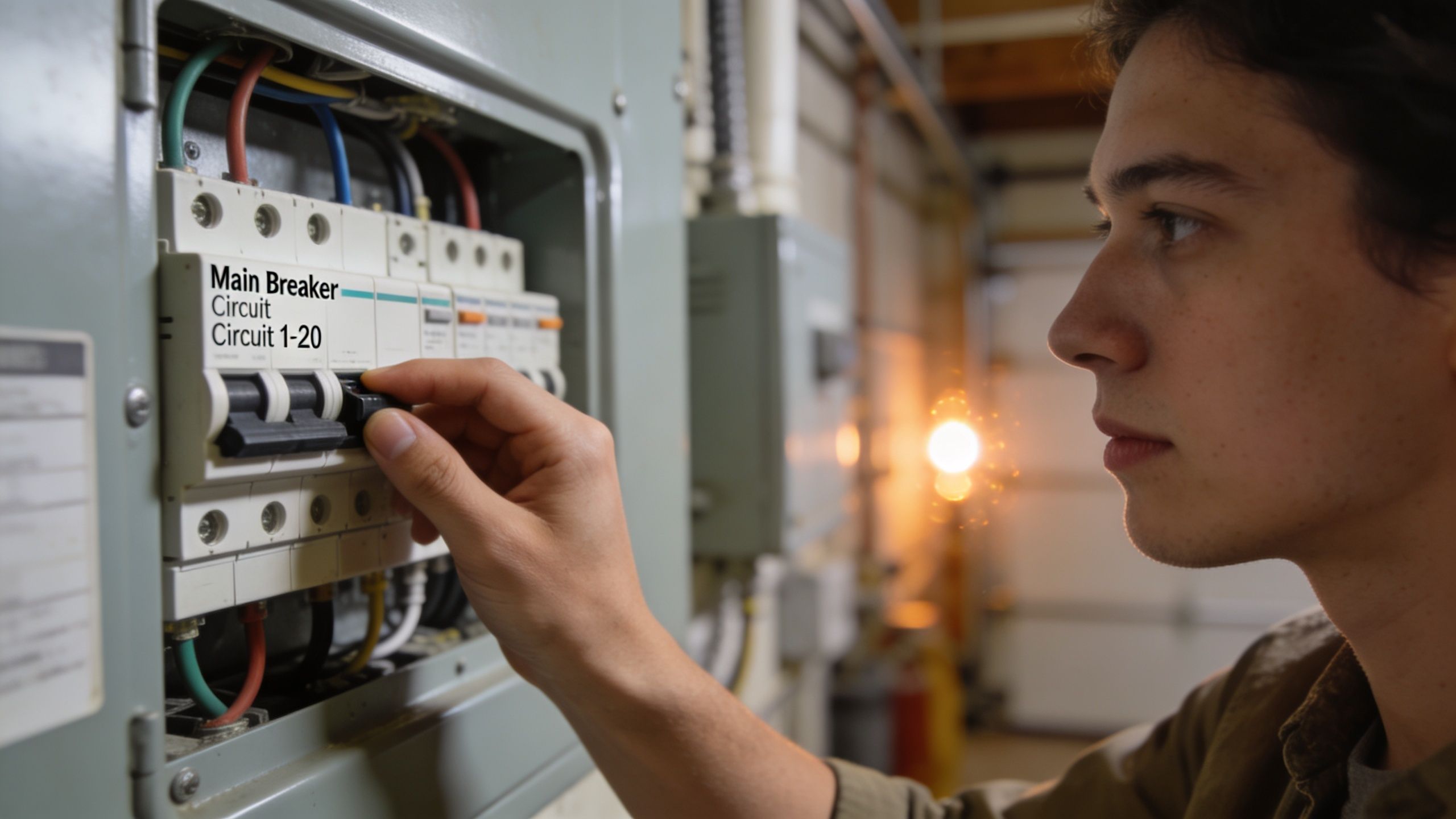
If you can reach the main breaker without crossing water or touching damaged equipment, shut off the main. Stand to the side of the panel, look away, and switch it firmly. If the panel cover is hot, buzzing, scorched, or wet, don't touch it.
Then do three things:
- Move people away from the area.
- Unplug sensitive electronics only if the area is dry and safe.
- Use flashlights, not candles.
If you see smoke, active sparking, or fire, leave the building and call emergency services. Electrical fires can travel inside walls before you see visible flame.
When the storm passes, don't assume the danger did too
A house can look normal after a surge and still have a damaged neutral, overheated breaker, or compromised outlet. That's why a post-event inspection matters, especially in older homes and coastal properties. If you want a baseline after the emergency is over, a home safety check from Lighthouse is the right kind of follow-up.
Quick Troubleshooting You Can Safely Do Yourself
Once the immediate hazard is controlled, you can do a limited amount of troubleshooting. The goal isn't repair. It's to figure out the scope of the problem and gather useful information.
That matters because the right details save time when you make the call. They also keep you from guessing wrong and making the fault worse.
Check whether it's one circuit, the whole property, or the neighborhood
Start broad, then narrow down.
Look outside. Are streetlights on? Do neighbors have power? If your whole block is dark, the issue may be utility-side. If only your kitchen, bedroom wing, office suite, or one AC circuit is out, that's usually inside the property.
Then walk the property and note:
- What still works: Lights, receptacles, garage door, HVAC, water heater.
- What doesn't: One room, one appliance, one panel section, or the whole building.
- What changed right before the outage: Storm, appliance start-up, burnt smell, buzzing, flicker.
Check the panel once, carefully
Open the panel door only if the area is dry and there are no signs of heat damage. You're looking for a breaker handle sitting in the middle or slightly off its normal position. That's often a tripped breaker.
Reset it once:
- Push it fully to OFF.
- Then push it back to ON.
If it trips immediately, stop. If it holds and then trips again when a specific appliance starts, you've learned something useful. Don't keep testing.
A breaker that trips once may be reacting to a temporary overload. A breaker that trips again right away is usually pointing to a real fault.
Check GFCI outlets before you assume the wiring failed
Bathrooms, kitchens, garages, patios, and exterior outlets often feed multiple downstream receptacles. One tripped GFCI can make several outlets look dead. Press RESET once. If it won't reset, leave it alone.
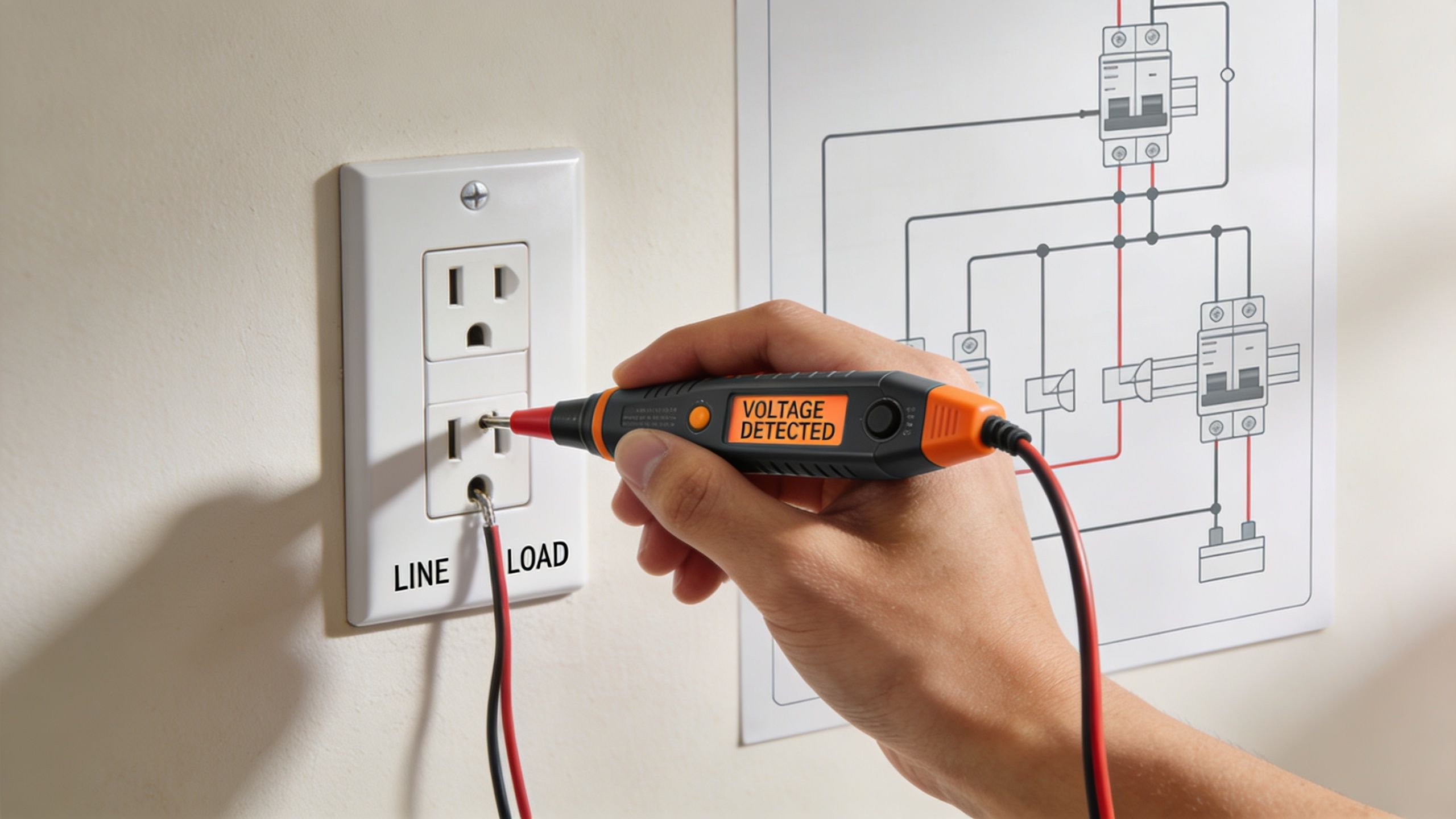
A simple voltage detector can help confirm whether a receptacle is dead, but it doesn't replace proper diagnosis. It tells you whether power is present. It doesn't tell you why a conductor failed, whether a neutral is loose, or whether heat damage is inside the box.
What to write down before you call
A short list helps more than a long story:
- Exact symptoms: Flicker, smell, buzzing, warm outlet, partial outage
- Affected area: One room, one floor, exterior, panel, meter side
- Recent trigger: Rain, lightning, appliance use, renovation, flood exposure
If breaker trips are part of the issue, this guide to circuit breaker tripping solutions gives you a useful reference point before the technician arrives.
When to Call for Emergency Electrical Repair
Some electrical problems are inconvenient. Others are dangerous the moment they start. Knowing the difference is what keeps people safe.
Call for emergency electrical repair Palm Beach County when the problem involves heat, smell, repeated tripping, visible damage, water exposure, or service equipment. Those aren't wait-until-Monday issues.
Red flags that require a licensed electrician
Call immediately if you have any of these:
- A burning smell with no clear source
- Buzzing or crackling from an outlet, switch, or panel
- An outlet or faceplate that's hot to the touch
- A breaker that trips immediately after one reset
- Sparks, smoke, or discoloration at a receptacle
- Water intrusion near electrical equipment
- A service mast, meter area, or outdoor disconnect damaged after a storm
According to FPL Electric Service Standards, delays in restoration often come from incomplete information or poor coordination, and repeated arc-fault trips are tied to a high share of electrical fires, which is why those calls belong with a professional from the start.
What to tell the dispatcher
The best calls are short and precise. Give the dispatcher the information that affects safety and truck stock.
Tell them:
- What happened first: storm, flood, pop, smell, outage
- What you're seeing now: partial power, dead panel section, hot outlet
- Whether the main is on or off
- Whether anyone sees water near energized equipment
- Property type and age if known: single-family home, condo, retail suite, warehouse, older building
That last point matters in Palm Beach County. Older properties and coastal buildings often bring corrosion, outdated panels, and compromised exterior gear into the diagnosis.
If you can't describe the part, describe the symptom. "The breaker by the air handler keeps tripping" is more useful than guessing what failed.
For property managers, speed starts before the truck rolls
If you manage rentals or multi-unit properties, keep a current list of licensed service partners by trade and service area. A directory such as finding maintenance pros for your rentals is useful for building that backup list before an after-hours call forces a rushed decision.
The wrong move in an emergency is usually delay. The second wrong move is letting an unqualified person open energized equipment.
What to Expect from Your Service Call
A solid emergency call should feel organized, not chaotic. The electrician arrives, verifies safety, isolates the fault, explains the problem in plain language, and gives you pricing before repair starts.
In the West Palm Beach area, general electrical repairs average $91 to $121 per job, and licensed electricians typically charge $50 to $100 per hour, according to local repair cost data compiled by Homeyou. Those numbers don't price every emergency, but they do give you a baseline for what fair, transparent service looks like.
What happens first on site
The first minutes matter more than the wrench work. A qualified electrician will usually start by confirming whether the hazard is still active, then narrowing the fault to a device, a branch circuit, the panel, or the service side.
Expect questions like these:
- When did the problem begin
- What changed just before it happened
- Which breakers or outlets were affected
- Whether water, wind, or lightning was involved
If storm exposure is part of the story, the electrician may pay closer attention to exterior disconnects, corroded terminations, outdoor receptacles, and equipment near grade where surge and moisture problems show up.
What transparent pricing looks like
You should get a clear explanation of the repair path before work starts. Sometimes there are trade-offs.
For example, an electrician may be able to restore one failed outlet quickly, but if the underlying issue is heat damage in the box or deteriorated conductors, replacing the device alone isn't the right repair. Fast and cheap isn't always safe.
Here’s a practical baseline.
| Estimated Costs for Common Electrical Repairs in Palm Beach County (2026) | Estimated Cost Range |
|---|---|
| Standard electrical repair job | $91 to $121 |
| Licensed electrician hourly rate | $50 to $100 per hour |
| Standard outlet repair | $100 to $150 |
| 220-volt outlet repair | $120 to $170 |
| Replace one electrical receptacle | $113.84 total |
| Rewiring a 1,600 sq ft home | $2,500 to $5,000 |
What good communication sounds like
A good technician explains the difference between a temporary restore and a complete repair. Those are not always the same thing.
Sometimes the right emergency repair is to make the system safe tonight and schedule the larger corrective work after power is stabilized and damaged materials can be fully inspected.
If you want a clearer sense of pricing before the truck arrives, this emergency electrician cost guide helps frame the usual ranges and the factors that push a call up or down.
After the Repair Preventing Future Emergencies
The emergency is over when the hazard is gone. The long-term fix starts after that.
In Palm Beach County, many repeat failures come from conditions that don't exist in generic electrical advice. Coastal air corrodes terminals and enclosures. Hurricane season puts outdoor equipment under stress. Older neighborhoods often have wiring and service gear that worked for years until heat, moisture, and heavy modern loads exposed the weak point.
A significant number of coastal-area power issues are tied to aging infrastructure, with some lines over 50 years old and vulnerable to salt corrosion and storm surge, and proactive upgrades can reduce repeat calls by up to 30%, according to Gator Electric's emergency repair page.
What actually prevents repeat failures
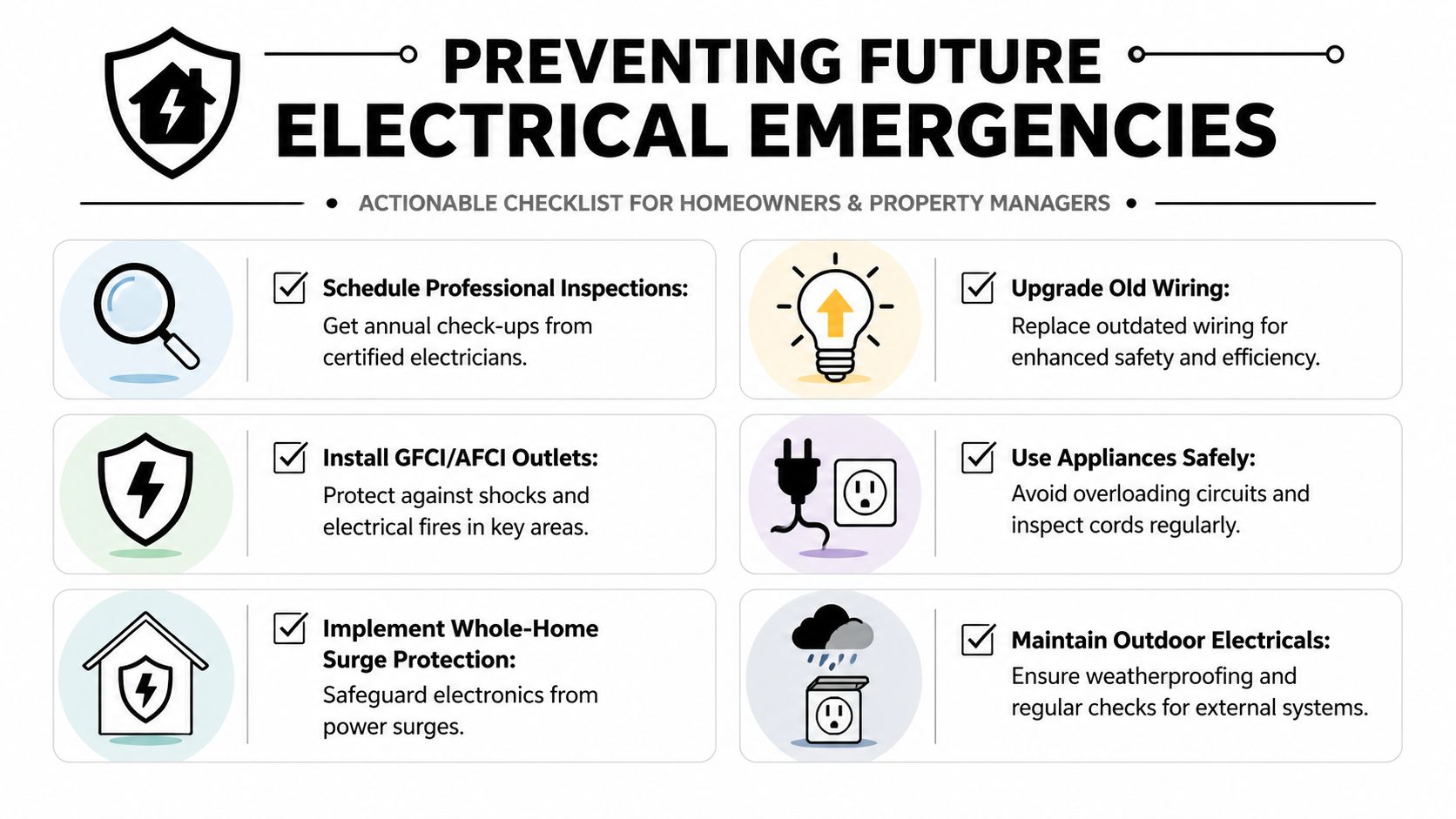
Some upgrades are worth doing sooner rather than later:
- Whole-home surge protection: In a lightning-prone county, this is one of the clearest ways to reduce damage to electronics and connected equipment.
- Panel replacement when the panel is obsolete, damaged, or overcrowded: Adding tandem fixes to a bad panel isn't a strategy.
- Weatherproofing exterior equipment: Especially for disconnects, outdoor receptacles, dock equipment, pool equipment, and rooftop gear.
- GFCI and AFCI protection where required and appropriate: These devices don't stop every problem, but they catch the kind of faults that hurt people and start fires.
- Targeted rewiring in older sections of the property: Sometimes the right fix isn't whole-home rewiring. It's replacing the worst branch circuits first.
Palm Beach County specific weak points
These deserve extra attention after an emergency call:
| Area | What often goes wrong |
|---|---|
| Outdoor panels and disconnects | Salt air corrosion, moisture intrusion, failed lugs |
| Flood-prone exterior equipment | Water contamination, rust, insulation breakdown |
| Older homes | Loose connections, deteriorated insulation, undersized circuits |
| Large HOA and commercial AC loads | Repeated overloads during heavy cooling demand |
Efficiency upgrades that also reduce stress on the system
One question comes up often after a repair. If the system is already being opened up, can you also reduce future electrical strain?
In Palm Beach County, overloaded AC circuits account for 22% of emergencies in multi-family and commercial properties, according to this West Palm Beach emergency electrician page. That's why efficiency upgrades can be more than a utility-bill conversation. They can also be part of an electrical reliability plan.
One option used in this market is the Smartcool ECO3, which Lighthouse Energy Services installs for AC optimization as part of broader electrical work. In practical terms, the value is simple: lower strain on heavily used cooling circuits can mean fewer nuisance trips and less stress during high-demand periods.
The best prevention plan is specific to the property. A waterfront condo, a 1950s bungalow, and a retail strip center don't fail the same way, so they shouldn't get the same upgrade list.
Frequently Asked Questions About Electrical Emergencies
Are flickering lights always an emergency
No. A single flicker during a storm isn't unusual. Persistent flickering, flickering tied to one appliance turning on, or flickering along with buzzing, odor, or breaker trips needs professional diagnosis.
Is it legal to do my own electrical repairs in Florida
Minor tasks that seem simple can cross into code and safety issues quickly. In practice, anything involving the panel, meter, damaged wiring, or repeated faults belongs with a licensed electrician. Emergency conditions are not the time for trial-and-error repairs.
How can I tell if an outlet is dangerously overloaded
Warning signs include heat, discoloration, a loose plug fit, buzzing, or a burnt smell. If plugging in a device causes repeated loss of power or trips protection devices, stop using that outlet.
What's the difference between a GFCI trip and a breaker trip
A GFCI usually trips to protect people from shock risk, often around moisture-prone locations. A breaker trips to protect the wiring and circuit from overload or fault. If either one won't reset, don't force it.
Should I reset a breaker more than once
No. One reset is enough for basic troubleshooting. If it trips again, you've moved from nuisance to fault, and continued resetting can overheat damaged components.
Can storm damage show up after the power comes back
Yes. A system can re-energize and still have hidden damage, especially at receptacles, sensitive electronics, outdoor equipment, and panels. Delayed symptoms often show up as odor, heat, or intermittent outages.
Is a buzzing panel always serious
Yes. Panels should not buzz loudly, crackle, or smell hot. That points to a loose connection, arcing, or a failing breaker, and those are same-day problems.
Can efficiency upgrades be part of an emergency repair
Yes, in the right setting. In Palm Beach County, rising electric costs have pushed more owners to ask about efficiency during repairs, and overloaded AC circuits cause 22% of emergencies in multi-family and commercial properties, which is why devices like the Smartcool ECO3 come up in those conversations.
If you need help right now, Lighthouse Energy Services handles emergency electrical repair across Palm Beach County for residential, commercial, and industrial properties. Call when the issue is active, describe the symptoms clearly, and keep the area safe until a licensed electrician arrives.