
A July storm pushes across Palm Beach County, the lights blink twice, and a breaker trips again. Then you notice a hot, dusty smell near a bedroom outlet. In a local home, that is not a small warning.
South Florida is hard on electrical equipment. Humidity gets into enclosures, salt air speeds up corrosion near the coast, and repeated storm activity puts extra stress on panels, breakers, exterior receptacles, and surge protection. A defect that stayed hidden in dry weather can show up fast when moisture and wind-driven rain hit the house.
Palm Beach County homes also face pressure from insurance inspections, older service equipment, and upgrades that were added over time without a full review of the system. I see this often in houses that picked up a new condenser, pool equipment, a tankless water heater, or a generator connection years after the original electrical work was installed. The result is a system that may still run day to day, but not with the safety margin it should have.
That is why a real inspection is more than a quick glance at the panel. It should account for local code expectations, storm exposure, corrosion risk, and the condition of the grounding and protective devices throughout the property. If there are signs that your service equipment is outdated, electrical panel upgrades may become part of the discussion, especially in older Palm Beach County homes.
Use the checklist below the way an experienced electrician would. Start at the service equipment, follow the circuits through the house, and pay close attention to damp, exterior, and high-load areas. You do not need to diagnose every defect yourself. You do need to recognize what needs prompt repair, what should be monitored, and when it is time to call a local 24/7 expert such as Lighthouse Energy Services before the next storm tests the system for you.
1. Electrical Panel and Circuit Breaker Inspection
After a hard summer storm, the first warning sign is often at the panel. A breaker starts tripping, the enclosure shows rust at the edges, or a circuit directory no longer matches what is connected. In Palm Beach County, that pattern usually points to a bigger problem than simple wear. Moisture, salt air, storm-related surges, and years of additions to the house all tend to show up here first.
Your panel is the control point for the whole system, so this check needs to be methodical. Open the panel door, but do not remove the dead front or touch live parts. Look for rust, staining, scorching, missing filler plates, loose breaker blanks, and labeling that clearly identifies the rooms or equipment on each circuit. If the home is near the coast, pay close attention to corrosion on the cabinet, screws, and breaker hardware. I see that damage advance faster in Palm Beach County than in drier inland areas.
Service size matters, but so does how the panel has been used over time. An older home may still have equipment that was acceptable when it served lights, a range, and a small air conditioner. Then a later owner adds a pool pump, second condenser, tankless water heater, generator inlet, or EV charger. The panel may still function day to day, but the safety margin gets thin, and insurance inspections often catch that mismatch.
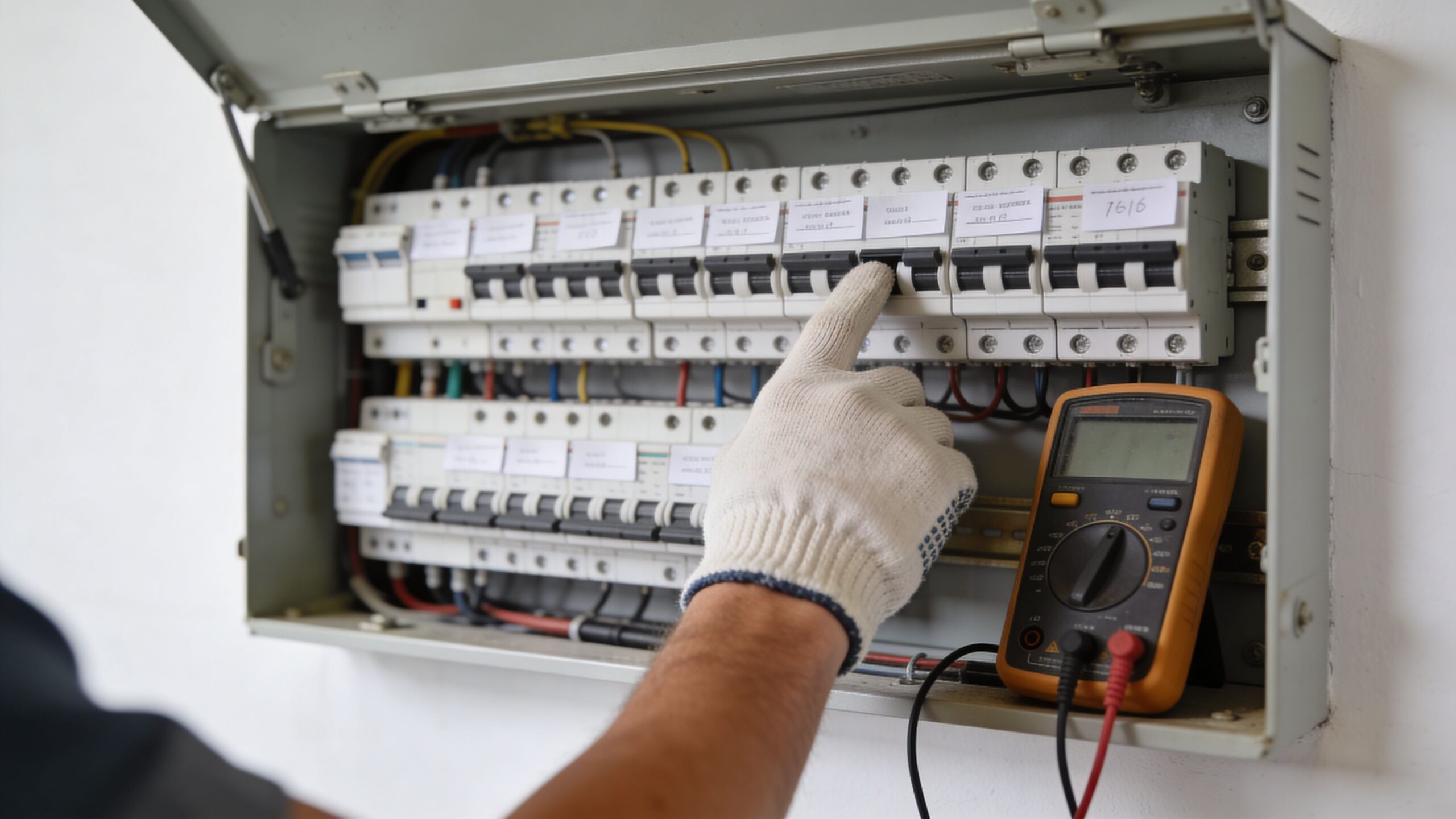
What to look for inside the panel
Double-tapped breakers are a common correction item. If two conductors are landed under a breaker lug that is only listed for one, that is a defect that needs to be fixed. Also check for neutrals doubled under a terminal where they should be separated, signs of overheating at breaker connections, mixed breaker brands that do not belong in that panel, and abandoned conductors that suggest piecemeal additions.
Panel directory quality matters more than many homeowners realize. During an outage or an emergency shutoff, you need to know exactly which breaker controls the air handler, water heater, kitchen small-appliance circuits, and outdoor equipment. Handwritten labels like "misc" or "back room" are not good enough when a storm is coming and time is short.
Certain older panel brands deserve extra scrutiny because of their history in the field and how often they come up in real estate and insurance reviews. If your panel has a reputation for poor breaker performance, replacement is usually a better long-term decision than waiting for repeated trip issues, hot spots, or a failed inspection.
One practical tip. If you are relying on plug strips or a multi plug outlet extender in several rooms because circuits are inconvenient or overloaded, the panel and circuit layout deserve a closer look. That kind of workaround often points to missing receptacles, unbalanced circuits, or a system that no longer fits the home’s actual electrical use.
Keep photos of the panel directory, manufacturer label, and any visible rust or heat damage. If your home needs more capacity, better labeling, breaker replacement, or a safer configuration for storm season, these situations typically prompt electrical panel upgrades.
2. Outlet and Switch Grounding Verification
A receptacle can look fine and still be unsafe. That’s especially true in kitchens, baths, laundry rooms, garages, and covered patios where Palm Beach humidity raises the stakes.
Grounding gives fault current a safe path. Without it, a metal appliance housing or a damp countertop area can become part of the path instead. I’ve seen homeowners assume a three-prong outlet means grounded, only to find out a previous owner swapped the device without correcting the wiring behind it.
Fast checks that catch common problems
Use a plug-in outlet tester for a first pass. It won’t replace a licensed inspection, but it can quickly reveal open grounds, reversed polarity, and some wiring errors. Then use your eyes. Loose faceplates, cracked receptacles, scorch marks, and outlets that don’t grip a plug firmly all deserve repair.
Older two-prong receptacles are another clue. The verified data notes that replacing ungrounded two-prong outlets is part of the room-by-room safety checks the CPSC recommends every six months. In older Palm Beach homes, that often shows up in guest rooms, hallways, and original living areas that never got fully updated.
- Check wet-zone outlets first: Kitchens, bathrooms, laundry areas, garages, and outdoor locations should move to the top of your list.
- Watch for storm aftermath: After a lightning event or utility disturbance, retest any outlet that starts acting erratically.
- Don’t trust cosmetic upgrades: A fresh white receptacle doesn’t mean the box is grounded correctly.
One trade-off homeowners face is between quick device replacement and proper circuit correction. Swapping outlets is fast. Fixing grounding problems may mean tracing the branch circuit, opening boxes, or replacing sections of wiring. The second option is the one that solves the hazard.
If you’re adding more devices to one wall location, avoid masking a wiring problem with adapters or splitters. Even something as simple as a multi plug outlet extender should only go on a properly wired, grounded receptacle that isn’t already overloaded.
3. GFCI and AFCI Protection Assessment
Many older homes fall behind current safety expectations. A house can function every day and still be missing the devices that help stop shock and arc-related fire hazards.
Ground Fault Circuit Interrupters protect people. Arc Fault Circuit Interrupters protect wiring and surrounding materials from dangerous arcing. They do different jobs, and Palm Beach homes need both in the right places.
The verified data states that GFCIs detect ground faults and trip in milliseconds, and that the CPSC credits them with averting up to 500 electrocution deaths yearly in the United States. It also notes that AFCIs address arc faults associated with a large share of electrical fires. Those aren’t minor upgrades. They’re core protection.
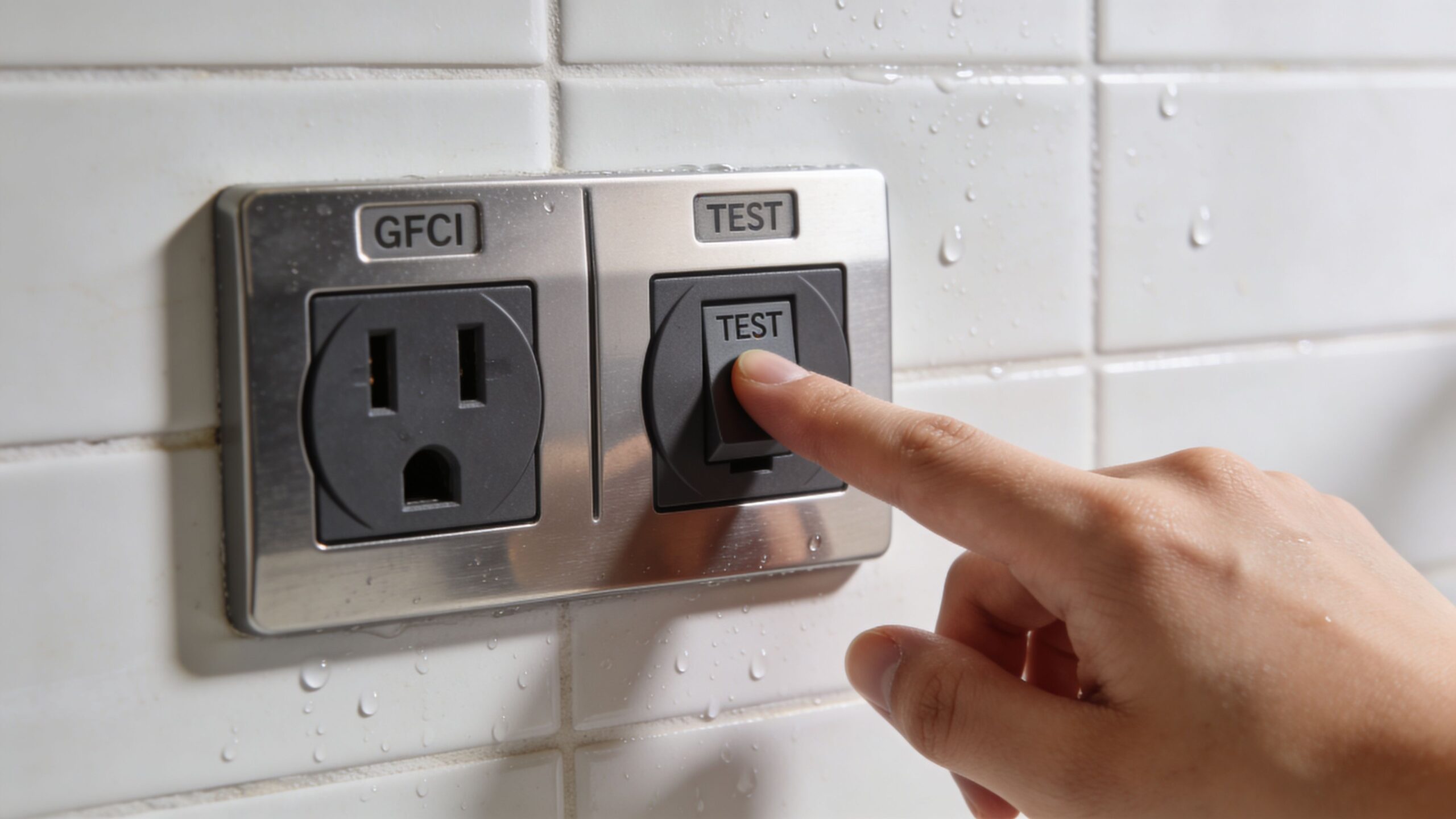
Where they belong and how to check them
GFCIs are expected in wet or damp areas such as kitchens, bathrooms, garages, exterior locations, and similar spaces. AFCIs are expected in living areas and bedrooms under later code requirements. The older the home, the more likely one or both protections are missing, partially installed, or no longer functioning properly.
Test every GFCI with the built-in buttons. Press TEST. Power should shut off. Press RESET. Power should return. If it won’t trip, won’t reset, or controls outlets you didn’t expect, note that for an electrician.
A GFCI that trips once in a while may be doing its job. A GFCI that trips repeatedly needs diagnosis, not guesswork.
A common mistake is treating these devices like nuisance hardware and replacing them with standard receptacles or non-matching breakers. That removes protection without solving the underlying problem. In Palm Beach County, where wet conditions are routine and patios, pool areas, and garages get heavy use, that’s a bad trade.
4. Wiring and Wire Condition Assessment
Most dangerous wiring defects are quiet. You don’t always get sparks or smoke first. Sometimes you get a faint smell, intermittent flicker, or one warm switch plate that nobody thinks much about until the problem grows.
Homes built in different decades carry different risks. In older stock, I’m looking for outdated wiring methods, deteriorated insulation, crowded junction boxes, and additions that were spliced in during remodels. In Florida attics, heat and moisture can be hard on cable jackets, and rodent activity doesn’t help.
The verified data highlights exposed wires, crowded junction boxes, and outdated materials as common inspection findings. It also notes that pre-1960s homes often lack later safety protections such as GFCIs and AFCIs, which makes visible wiring condition even more important.
Red flags that deserve immediate action
If you see brittle insulation, exposed conductors, taped splices outside approved boxes, or scorch marks around a device, stop using that circuit until it’s checked. The same goes for buzzing in walls, recurring odor near a receptacle, or lights that dim when a normal household load starts.
A Palm Beach example that comes up often is attic wiring above a bathroom or laundry area. Warm moist air, roof leaks, and service work from different trades can leave cable unsupported, damaged, or buried under later modifications. Another is a DIY garage conversion where the original wiring was never intended to support mini-splits, refrigerators, and office gear.
- Know the home’s era: Age often points to the wiring methods you’re likely to find.
- Check accessible spaces: Attics, garages, utility rooms, and under-sink areas often expose the first visible clues.
- Don’t ignore smell: A burning odor around a switch or outlet isn’t a “monitor it later” issue.
What works is targeted troubleshooting with proper test equipment. What doesn’t work is replacing one outlet after another hoping the symptom disappears.
5. Surge Protection and Lightning Protection Evaluation
In Palm Beach County, surge protection isn’t an upgrade for gadget lovers. It’s part of basic resilience.
Storm activity, utility switching events, and nearby lightning can damage electronics, control boards, appliances, and even connected protection devices. Homeowners usually think first about TVs and computers, but I’m just as concerned about air conditioning controls, refrigeration boards, garage door systems, security equipment, and pool automation.
A layered setup is the one that holds up best
The best approach is layered. Start with a whole-home surge protective device at the main panel. Then add point-of-use protection where sensitive equipment lives, such as entertainment centers, home offices, network racks, and kitchen appliance zones.
That layered approach matters in South Florida because not every surge enters the same way. Some arrive through branch circuits. Some ride in on utility events. Some hit exterior systems and then travel inward. A cheap power strip alone won’t cover the house, and a panel device alone won’t always protect delicate electronics the way homeowners expect.
If your home sits near the coast, has a pool system, gate equipment, or a lot of smart-home gear, surge protection should be treated as part of storm prep.
Look at installation quality too. The device should be properly grounded and mounted according to listing requirements. If a protector shows obvious failure indication, visible damage, or unknown age, it may no longer be doing its job. After major storms, it’s smart to have the protection rechecked along with the panel and exterior circuits.
6. Bonding and Grounding System Integrity
Grounding and bonding are related, but they’re not the same thing. Homeowners often hear both terms and assume they mean “the house is safe.” The details matter.
Grounding connects the electrical system to earth. Bonding ties metal parts together so they stay at the same electrical potential and fault current has a reliable path back to trip the protective device. If either part is compromised, metal piping, equipment housings, railings, or pool components can become hazardous.
Where Palm Beach homes run into trouble
Corrosion is a major issue here. Grounding electrode connections, exterior service equipment, and metal hardware exposed to salt air can deteriorate over time. A conductor that looked secure years ago may now be loose, oxidized, or mechanically weak.
Pools, spas, and outdoor kitchens deserve extra scrutiny because they combine water, metal, and heavy equipment. I’ve seen systems where everything looked finished and expensive, but the bonding path was incomplete or altered during later plumbing and deck work.
The verified data states that inspectors check proper grounding and bonding at the panel and verify related safety conditions during residential inspections. That’s one reason this part of a home electrical inspection checklist should never be reduced to a quick glance.
Touching a metal appliance or fixture and feeling even a slight shock is enough reason to stop and call a licensed electrician.
What works here is continuity testing, connection verification, and a close look at any area where another trade may have interrupted the path. What doesn’t work is assuming that because power is on, grounding and bonding are correct.
7. Electrical Load and Capacity Analysis
A house can have no visible damage and still be overloaded. That’s why load analysis belongs on any serious home electrical inspection checklist.
Modern homes ask more from the service than older designs ever anticipated. Air conditioning runs hard in South Florida. Add a pool pump, tankless water heater, second refrigerator, EV charger, hot tub, or generator interconnection, and the panel may be carrying more than it was built to support.
The verified data notes that NEC demand factors are used to calculate total connected load and prevent overload conditions. It also points out that older 60-amp services are inadequate for modern appliances such as EV chargers or generators. In practice, that means “the lights still work” is not proof the service is sized correctly.
Signs your home has outgrown its service
Repeated tripping when multiple appliances run is the obvious sign. Less obvious signs include dimming when HVAC starts, limited space for new circuits, shared loads where dedicated circuits should exist, and renovation plans that keep getting constrained by panel capacity.
A Palm Beach homeowner might not notice a problem until adding a car charger in the garage or upgrading pool equipment. Then the electrical review reveals that the service can’t comfortably support both current and planned loads. That’s better to learn before the installation day than after.
- List major equipment: HVAC, range, dryer, water heater, pool gear, EV charging, workshop tools, and spa equipment.
- Plan future additions now: Service upgrades are easier to coordinate before remodeling is complete.
- Treat nuisance tripping as evidence: It often points to load issues, wiring issues, or both.
One practical trade-off is whether to squeeze one more addition into an old service or upgrade proactively. Short-term patching may cost less today. A properly sized service usually costs less frustration over the next several years.
8. Outdoor and Garage Electrical Safety Inspection
Exterior and garage wiring fail differently than indoor circuits. Sun, moisture, insects, irrigation overspray, lawn equipment, and salt air all wear these installations down.
Walk the outside of the house and look at every receptacle, disconnect, light, and junction box. Covers should close properly. Boxes should be secured. Devices shouldn’t wobble, crack, or show rust staining. In garages, pay attention to workbench areas, freezer outlets, door opener receptacles, and any extension-cord habits that have become permanent.
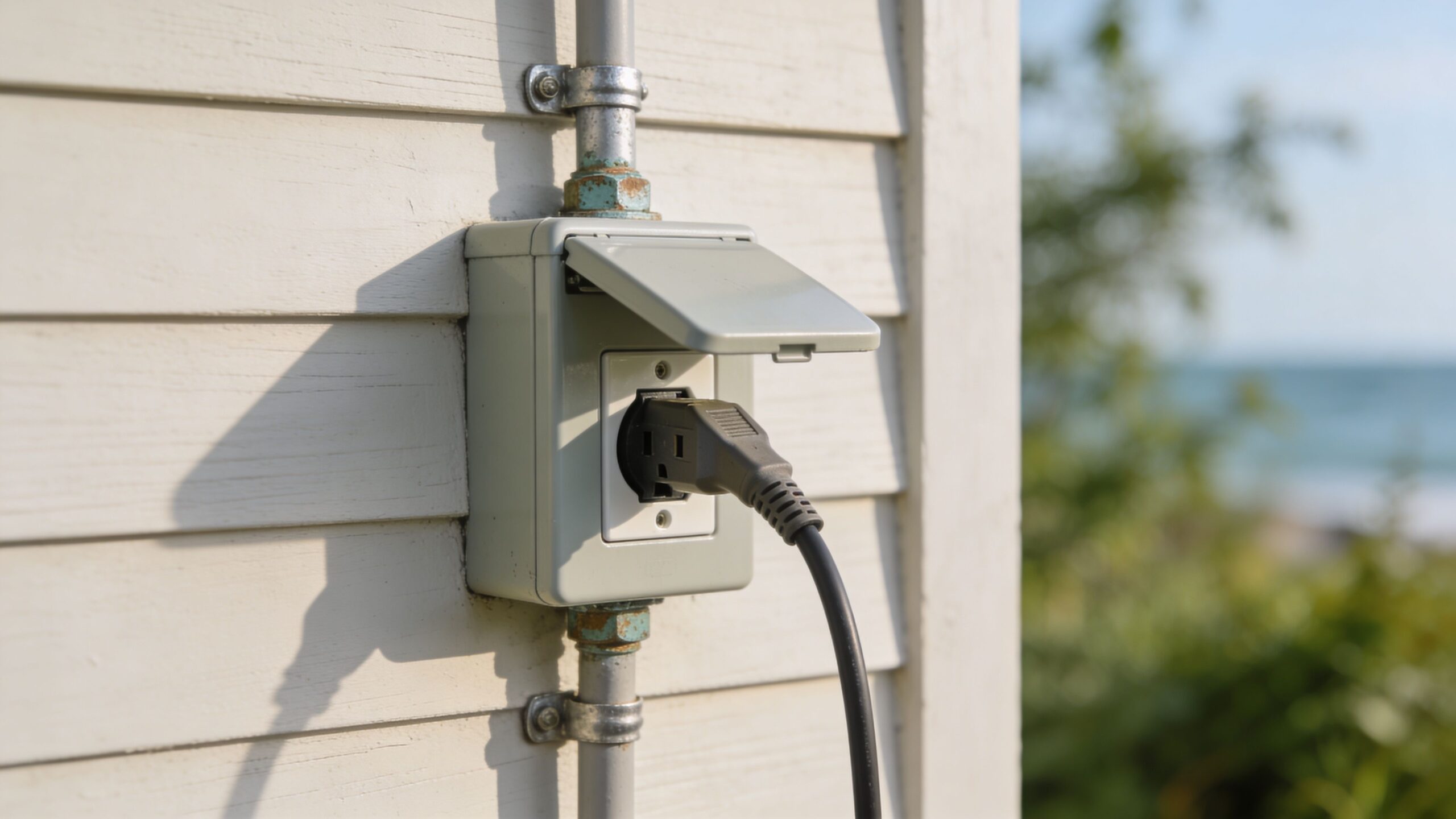
The details that matter outside
Outdoor receptacles need weather-resistant installation details and proper covers, especially where cords stay plugged in. In Palm Beach County, I prefer corrosion-resistant materials near the coast because standard hardware ages quickly in salt-heavy air. If an exterior outlet looks chalky, rusted, or water-marked, open-box inspection is usually justified.
Garages deserve more respect than they get. They’re often damp, cluttered, and full of ignition risks such as chargers, tools, fuel, and overloaded cords. A receptacle that’s “good enough” in a spare bedroom is not good enough next to a workbench or under a door track where vibration and heat are common.
The verified data specifies GFCI testing in wet areas including garages and exterior locations, and recommends room-by-room checks every six months. That rhythm makes sense here, especially after heavy rain and storm season.
- Check after storms: Water intrusion can compromise boxes and device terminals.
- Use in-use covers where needed: A cord plugged into an exterior outlet needs protection while connected.
- Don’t improvise power for outdoor installations: Outdoor lighting and decorative loads should be properly supplied, not fed from makeshift cord setups.
9. Overcurrent Protection and Breaker Functionality Testing
Breakers are supposed to fail safe. When they don’t, wires can overheat before anyone realizes there’s a problem.
This part of the inspection is more than “flip it off and back on.” A proper review checks whether breaker sizes match conductor sizes, whether the breaker seats correctly on the bus, whether there are signs of overheating, and whether repeated trips point to a real fault rather than an inconvenience.
What homeowners often miss
If a breaker trips, many people reset it and move on. That’s understandable once. It’s not a maintenance plan. The more useful question is why it tripped. Overload, short circuit, moisture intrusion, loose connection, damaged appliance, failing breaker, and arc fault conditions can all show up as repeated trips.
The verified data notes that inspectors test breakers for tripping functionality and examine busbars for heat damage. It also calls for checking for loose breakers and heat marks at the panel. Those are critical checks in humid coastal environments where corrosion can affect contact quality over time.
Don’t reset the same breaker over and over. A breaker that keeps tripping is reporting a fault.
One real-world example is a garage refrigerator and freezer sharing a circuit with tools and a door opener. Everything works until weekend use adds enough load to trip the breaker. Another is an outdoor lighting circuit that starts tripping after water gets into a fixture box. In both cases, replacing the breaker without finding the cause usually wastes time and money.
10. Electrical System Age and Condition Assessment
This final check is about the whole picture. A home’s electrical system rarely ages evenly.
You may have a newer panel but original branch wiring. You may have updated kitchen receptacles but an old grounding setup. You may have GFCIs installed in some rooms but not in others, or a serviceable system that still struggles under modern load patterns. Looking at one device at a time can miss the pattern.
A broad inspection matters because electrical problems are the second most prevalent issue in home inspections at 18.7 percent of cases, according to the home inspection analysis summarized by AmeriSave. That’s one reason older Palm Beach properties, especially those with additions, partial remodels, or deferred maintenance, deserve a full electrical review rather than a few spot checks.
How to prioritize what you find
Start with safety hazards first. Corroded panels, compromised wiring, failed protective devices, missing grounding, and obvious overheating outrank convenience items such as adding receptacles or upgrading decorative fixtures. Insurance and resale concerns come next, especially if a 4-point inspection is likely.
Then separate immediate repairs from planned upgrades. A home doesn’t always need a full rewire at once. It may need a staged plan that addresses the most serious hazards now, then capacity, outdoor systems, and modernization work over time.
- Review the home’s age: Older systems aren’t automatically unsafe, but they do need a closer look.
- Document updates and gaps: Keep records of panel replacements, rewiring, GFCI or AFCI additions, and surge device installation.
- Reassess after major changes: Renovations, storm damage, new equipment, and insurance inspections all justify another look.
The best outcome isn’t just a pass or fail. It’s a clear understanding of what’s safe today, what needs correction soon, and what will become a problem if you wait.
10-Point Home Electrical Inspection Comparison
A checklist works better when you can see what each inspection item involves. In Palm Beach County, that matters because salt air, high humidity, storm exposure, and older service equipment change what is routine and what becomes a repair priority fast.
Use this comparison to judge scope, likely effort, and where each item tends to matter most in local homes.
| Inspection Item | Implementation Complexity | Resource Requirements | Expected Outcomes | Ideal Use Cases | Key Advantages |
|---|---|---|---|---|---|
| Electrical Panel and Circuit Breaker Inspection | Moderate to high. Requires panel access and professional testing | Licensed electrician, multimeter, panel tools, 1 to 2 hour inspection | Identifies capacity limits, double-taps, corrosion, heat damage, and upgrade needs | Older homes, pre-purchase reviews, before adding high-demand appliances | Reduces fire and shock hazards, confirms capacity, and checks for code issues common in aging panels |
| Outlet and Switch Grounding Verification | Low to moderate. Outlet-level testing with limited invasive work | Outlet tester, multimeter, electrician for rewiring or grounding corrections | Finds ungrounded or two-prong outlets, reversed polarity, open grounds, and failed GFCI wiring | Kitchens, bathrooms, laundry areas, post-storm checks, pre-sale reviews | Lowers shock risk, protects electronics, and flags hidden defects behind newer-looking devices |
| GFCI and AFCI Protection Assessment | Moderate. Device testing and possible circuit updates | GFCI and AFCI testers, electrician, replacement devices | Confirms working protection, detects wiring errors, and identifies missing required protection | Wet areas, bedrooms, older homes missing newer safeguards | Cuts electrocution and arc-fault fire risk and helps bring older homes closer to current safety standards |
| Wiring and Wire Condition Assessment | High. May require opening accessible areas or limited destructive inspection | Thermal camera, wiring testers, qualified electrician, possible rewiring crew | Identifies outdated, damaged, overheated, rodent-damaged, or moisture-affected wiring | Homes built decades ago, houses with additions, after leaks or rodent activity, before renovations | Helps prevent wiring fires and supports a practical repair or rewire plan instead of guesswork |
| Surge Protection and Lightning Protection Evaluation | Moderate. Includes panel review and surge device recommendations | Whole-home surge protector, point-of-use protection, electrician, possible lightning protection components | Assesses surge exposure, recommends device placement, and identifies weak spots in protection | Storm-exposed homes, coastal properties, home offices, homes with sensitive electronics | Protects appliances and electronics, reduces replacement costs, and improves storm readiness |
| Bonding and Grounding System Integrity | High. Requires specialized testing and occasional corrective work at service or exterior points | Clamp-on ground testers, bonding clamps, grounding electrodes, specialist electrician | Verifies grounding continuity, detects corroded or missing bonds, and recommends corrections | Homes with pools or hot tubs, coastal properties, lightning-prone areas, major electrical upgrades | Reduces dangerous voltage on metal parts and improves fault clearing during storms or equipment failures |
| Electrical Load and Capacity Analysis | Moderate to high. Involves calculations and upgrade planning | Load calculation tools, electrician, appliance data, possible utility coordination | Determines whether service supports current and planned loads and identifies upgrade needs | Adding an EV charger, hot tub, new HVAC equipment, or a large renovation | Prevents overloads, reduces nuisance tripping, and helps avoid undersized service changes later |
| Outdoor and Garage Electrical Safety Inspection | Moderate. Requires exterior access and weather-resistance checks | GFCI testers, weather-resistant covers and devices, electrician with outdoor installation experience | Identifies corroded parts, missing GFCI protection, failed covers, and poor weatherproofing | Waterfront homes, patios, garages, pool areas, landscape lighting systems | Reduces moisture-related shock and fire risk and helps outdoor equipment last longer in humid, salty conditions |
| Overcurrent Protection and Breaker Functionality Testing | Moderate. Includes breaker operation testing and sizing verification | Breaker test equipment, multimeter, licensed electrician, replacement breakers if needed | Verifies breaker trip performance and finds mismatched, worn, or failing breakers | Older panels, repeated tripping, post-fault inspections, insurance-driven reviews | Confirms breakers respond properly under fault conditions and improves reliability |
| Electrical System Age and Condition Assessment | Moderate. Involves a full system review and may require more than one visit | Experienced inspector or electrician, records review, diagnostic tools | Provides overall condition, repair priorities, and a realistic sense of remaining service life | Pre-purchase inspections, long-term maintenance planning, insurance assessments | Gives a clear risk picture and helps budget phased repairs and upgrades |
In practice, these items do not all carry the same weight. A missing patio cover plate is a repair. Corrosion inside a panel near the coast, weak bonding at pool equipment, or breakers that do not trip properly move to the front of the list.
That is why local judgment matters. A Palm Beach County inspection should account for storm exposure, moisture intrusion, and corrosion patterns that a generic checklist misses. When homeowners need that level of evaluation, Lighthouse Energy Services is one of the local 24/7 options equipped to inspect, test, and explain what needs attention first.
From Checklist to Action Secure Your Home with a Professional Inspection
A summer storm rolls through Palm Beach County at 9 p.m. The lights flicker, the pool equipment shuts off, and a back patio receptacle starts clicking after the rain. That is the point where a checklist stops being enough. Homes in this area deal with salt air, humidity, wind-driven rain, and heavy electrical demand for air conditioning, pool systems, and outdoor living spaces. Problems that look minor on paper can turn serious fast.
A homeowner can spot warning signs. A licensed electrician can confirm what is happening, test the system safely, and rank the findings by risk. That matters in Palm Beach County, where corrosion, moisture intrusion, and storm damage often show up in places that are easy to miss during a casual walkthrough.
Some conditions call for service now. Burning odor near a device, repeated breaker tripping, rust in or around the panel, dead GFCIs, buzzing equipment, water at exterior boxes, or a shock from metal parts all point to a fault that needs hands-on inspection. In my experience, homeowners often hope one of these symptoms will stay isolated. It rarely does.
Other problems build risk more subtly. Older homes may have partial rewiring, mixed device types, undersized service, missing AFCI protection, weak grounding continuity, or outdoor circuits that were added over time without enough capacity for today's use. Those issues may not fail today, but they leave less margin during storm season, summer peak load, or the next renovation.
Professional inspection work adds value because it answers the questions a checklist cannot. Is the corrosion only on the surface, or has it affected lugs and bus connections? Did storm exposure leave moisture in outdoor enclosures or disconnects? Are garage, patio, and pool-area circuits protected and loaded the way current local expectations and code requirements call for? Those are Palm Beach County questions, not generic homeowner checklist questions.
A good inspection also helps with decisions, not just defect hunting. Homeowners usually do not need every recommendation handled at once. They need to know what is unsafe now, what should be corrected before hurricane season, and what can be planned as part of a panel upgrade, service change, or remodel. That priority list is often what saves money, because it keeps emergency failures from driving the schedule.
For owners who want a local contractor after finding warning signs, Lighthouse Energy Services handles residential inspections, repairs, and upgrades in Palm Beach County with 24/7 availability. That kind of response matters when a panel starts overheating after hours, an outdoor circuit takes on water, or storm damage leaves part of the home in an uncertain condition.
If this checklist turned up corrosion, tripping, outdated protection, storm-related issues, or anything that does not look right, the next step is simple. Get a licensed electrician on site and have the system tested before the next hard rain, insurance inspection, or equipment failure forces the issue.