
TL;DR: In Palm Beach County, a typical 200-amp home electrical panel upgrade cost is often between $2,500 and $6,000 in 2026, depending on the age of the home, the condition of the existing wiring, and whether the service entrance or meter equipment also needs work. That price usually includes parts, labor, and permits, and complex jobs can run higher when code upgrades or utility coordination are involved.
If you're reading this, there's a good chance something in your house is already telling you the panel is struggling. The lights dip when the air conditioner starts. A breaker trips when the microwave and toaster run together. Maybe you're adding an EV charger, replacing an old range, or getting pressure from your insurance company to update the electrical system.
In Palm Beach County, panel upgrades are rarely just about swapping one metal box for another. Local code expectations, exterior equipment requirements, permit handling, FPL coordination, and the condition of older wiring all affect the final scope. A fair quote has to account for the whole system, not just the panel cover and breakers.
When to Consider an Electrical Panel Upgrade
Your electrical panel is the heart of the home's power system. It takes incoming utility power and distributes it safely to lighting, air conditioning, kitchen circuits, laundry equipment, pool equipment, electronics, and anything else that draws current. When that heart is undersized, deteriorated, or outdated, the whole house starts showing symptoms.
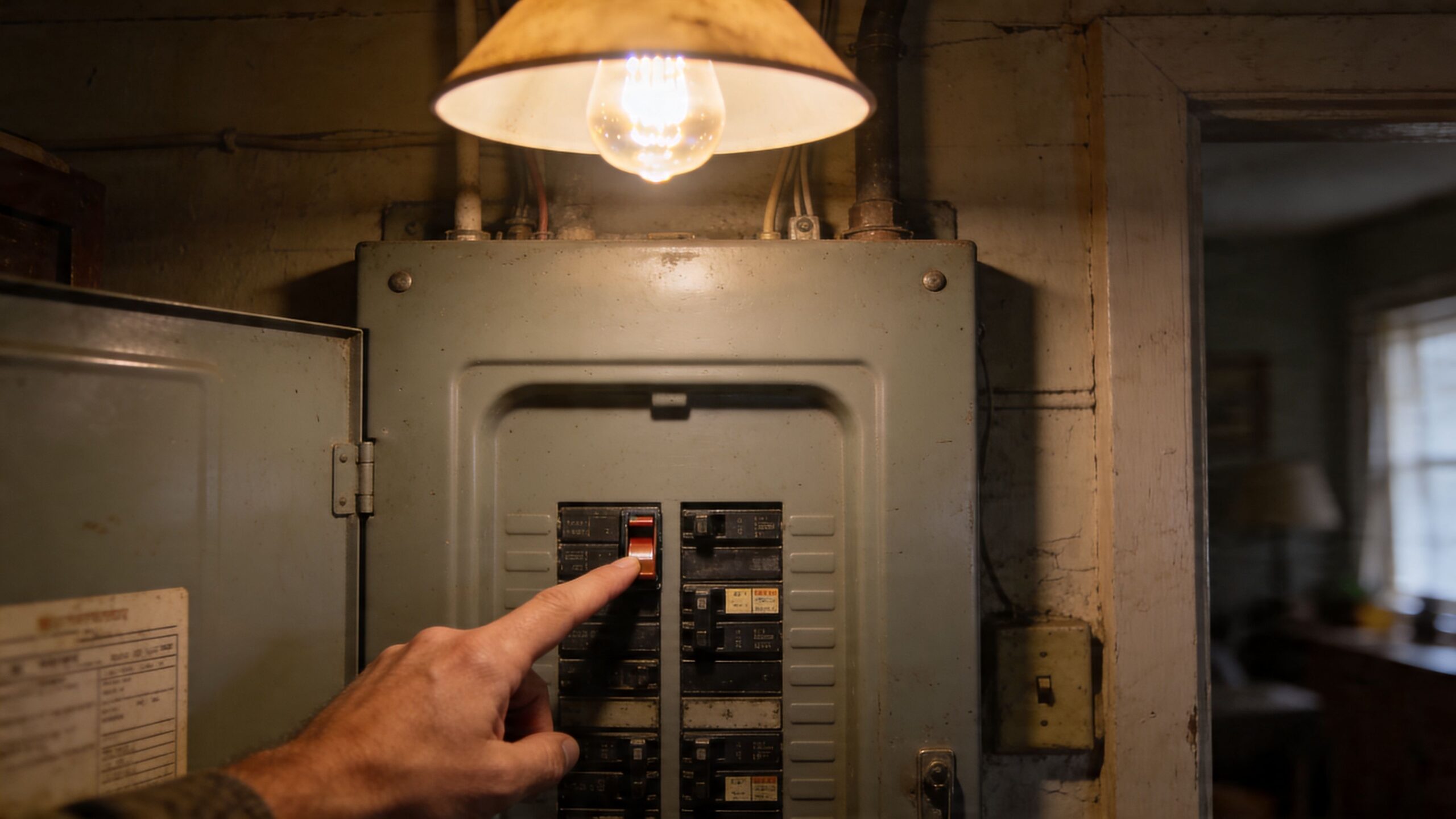
For many homeowners, the first clues are easy to dismiss. Flickering lights. Warm breakers. Repeated nuisance trips. A panel that still uses old fuse equipment or looks untouched for decades. Those signs usually mean one of three things is happening: the system has a safety issue, the house needs more capacity, or the home no longer meets the expectations of insurers, buyers, or current code practice.
Safety problems that shouldn't wait
Older homes in South Florida often carry electrical histories that don't show up in a listing sheet. Added circuits, replaced condensers, renovated kitchens, backyard equipment, and patchwork repairs can leave the panel doing more than it was ever designed to handle.
The bigger issue is age and code era. The National Electrical Code shifted steadily upward in safety expectations from the 1960s forward, and 200-amp minimums became common for new construction by the 1990s, leaving over 30% of U.S. housing stock, especially homes built before 1980, with outdated 60-100 amp panels prone to overloads and often out of compliance, according to this electrical panel replacement cost guide.
Practical rule: If a panel is old enough that no one can clearly document what was added, what was removed, and what each breaker serves, treat that as a reason to inspect it, not a reason to ignore it.
Capacity demands that didn't exist years ago
A house that once ran fine on a smaller service can hit its limit fast. Modern living adds steady electrical demand from larger HVAC systems, induction cooking, garage equipment, pool gear, tankless water heating, and EV charging. Even when the panel doesn't fail outright, it may not have enough spaces, enough amperage, or the right breaker types for safe expansion.
Some homes sit in the gray area where 150 amps may still be workable and some don't. If you're sorting that out, this guide on when 150-amp service is plenty, when it's not, and what to do gives useful context before you commit to a full service upgrade.
Compliance matters for insurance and resale
An upgrade also protects the value side of ownership. Buyers, inspectors, and insurance carriers don't look at the panel as a cosmetic item. They see risk, capacity, and documentation. If you're already planning projects that improve marketability, it's worth thinking of the electrical system alongside other upgrades that raise property value.
A clean, permitted panel upgrade doesn't just solve today's breaker problems. It removes a major objection that can stall financing, insurance approval, renovations, or a future sale.
Breaking Down Your Electrical Panel Upgrade Cost
The fastest way to misunderstand home electrical panel upgrade cost is to treat it like a simple product purchase. Homeowners often ask what a new panel "costs," as if they're buying an appliance off a shelf. In practice, you're paying for equipment, skilled labor, code-required protection, permit handling, and final verification that the system is safe to energize.
Nationally, a standard 100-amp to 200-amp residential panel upgrade ranges from $1,300 to $3,000, and that typically includes the panel unit at $100 to $500, standard breakers, labor, and permits. The same source notes that labor usually runs 4 to 10 hours, and high-demand 400-amp systems can rise to $2,000 to $10,000 or more depending on scope, as outlined in this residential panel upgrade cost guide.
The three buckets on your quote
A solid estimate usually falls into three categories.
- Parts and materials include the panel can, main breaker, branch breakers, grounding components, connectors, conduit fittings, lugs, labels, and any replacement meter or service equipment required by the utility.
- Labor covers safe shutdown, removal of the old panel, transfer of circuits, torqueing terminations to spec, grounding and bonding corrections, testing, troubleshooting, and circuit labeling.
- Administrative costs cover the permit, inspection scheduling, and the coordination needed to get the service disconnected and re-energized at the right time.
When a quote looks suspiciously low, one of those buckets is usually missing. Sometimes the contractor hasn't included permit handling. Sometimes they assume all existing breakers can be reused. Sometimes they leave out code items that are likely to come up once the wall is open and the inspector sees the actual conditions.
A realistic Palm Beach County cost view
Palm Beach County pricing often lands above broad national averages because local jobs regularly involve exterior equipment, weather exposure, and stricter expectations around service hardware. That doesn't mean every project is expensive. It means the details matter.
| Cost Component | Typical Price Range | Notes |
|---|---|---|
| Panel and standard materials | $100–$500 | Typical panel unit range for standard upgrades when no specialty equipment is needed |
| Labor | 4–10 hours | Scope depends on amperage, access, labeling condition, and how clean the existing wiring is |
| Permit and inspection handling | Included in total quote | A proper quote should spell out whether permitting is included |
| Standard 100A to 200A upgrade total | $1,300–$3,000 | National baseline for a common residential upgrade |
| Palm Beach County 200A project total | $2,500–$6,000 | Typical local range for many homes once local conditions and code-driven scope are included |
What you're actually paying for on upgrade day
The panel itself is one of the smaller line items on many jobs. The expensive part is the work around it. Electricians have to disconnect and re-land each circuit correctly, verify conductor condition, separate neutrals and grounds where required, install proper connectors, bond metallic systems where needed, and confirm the new arrangement complies with current standards.
A cheap panel swap can become an expensive correction if the original contractor skips labeling, reuses damaged breakers, or leaves grounding issues behind for the inspector to catch.
Another thing that surprises homeowners is how often the "panel upgrade" extends beyond the panel. If the grounding system is inadequate, if required protective breakers must be added, or if a service entrance issue appears during the job, the final number can move. That's why the best estimates are itemized. You should be able to see where the money goes, not just the total at the bottom.
What Factors Influence Your Final Upgrade Price
Two houses on the same street can have very different panel upgrade quotes. That's normal. Electrical work is driven by what the installer finds at the panel, at the meter, and in the branch circuits. The major cost drivers aren't random. They follow a pattern.
Amperage and load demand
The first driver is how much power the house needs. A straightforward upgrade to support a normal modern home is one thing. A large property with multiple air conditioning systems, pool equipment, heavy kitchen loads, and EV charging is another.
A true 400-amp service upgrade, which is often needed for larger homes with multiple HVAC units and EV chargers, can cost $8,000 to $12,000 or more. In many cases, that work is done by installing two 200-amp panels in parallel, not one oversized single panel, and it requires heavier components and utility coordination, as explained in this 400-amp panel upgrade cost guide.
If you're weighing whether your house really needs the jump, this guide on upgrading from 150 amp to 200 amp service is useful because it frames the decision around load, not guesswork.
Existing wiring condition
The condition of the existing panel often separates quotes. A clean panel with neatly routed copper conductors is faster and safer to upgrade than a panel full of doubled-up neutrals, brittle insulation, mystery splices, or unlabeled multiwire circuits. Older houses can also have branch wiring that won't pass inspection once it's exposed.
The quote should reflect the possibility of corrective work if the existing conductors aren't in shape to reconnect safely. That's not upselling. It's what happens when a new code-compliant panel gets attached to old wiring that was never brought up to current expectations.
Location and access
A direct swap in the same spot is usually the best-case scenario. Relocating the panel is more involved. It means rerouting circuits, extending conductors where allowed, revising conduit paths, repairing wall surfaces, and possibly changing the service entrance path. Even if the panel stays put, cramped placement can slow the work.
Factors commonly raising labor for access alone:
- Tight clearances around the panel that make code-compliant working space an issue.
- Exterior corrosion on fasteners, enclosures, or conduit parts that don't come apart cleanly.
- Poor labeling that forces the electrician to identify circuits one by one before reconnecting.
- Added equipment nearby such as surge devices, generator hardware, or pool subfeeds that need to be integrated correctly.
Code upgrades beyond the panel box
Some projects turn expensive because the homeowner expects a one-item replacement, but the inspector sees a system issue. That may mean breaker changes, grounding and bonding corrections, meter equipment updates, or service entrance modifications.
The panel is the visible part. The code issues attached to it are often the bigger job.
That is especially true in older Florida homes where equipment has been exposed to heat, moisture, and salt air. Even when the old panel still "works," the new one has to be installed as a legal, safe assembly. That's the fundamental trade-off. Doing the minimum may look cheaper on paper, but it often creates inspection problems, utility delays, or repeat service calls.
Your Electrical Upgrade Timeline and Key Steps
Most homeowners don't mind paying for skilled work. What they dislike is uncertainty. They want to know how long they'll be without power, what happens first, and what could slow the job down. A panel upgrade follows a clear sequence when it's handled properly.
Step one is the site visit and quote
The process starts with an on-site evaluation. The electrician checks the existing panel size, service rating, breaker condition, conductor size, grounding method, meter arrangement, and any obvious code issues. They should also ask what loads you're adding now or planning to add later.
From there, you should receive a written scope that spells out whether the quote includes permit handling, replacement breakers, grounding corrections, service entrance work, and utility coordination. If those items aren't addressed, ask before scheduling. Assumptions create change orders.
Step two is permitting and scheduling
After approval, the permit is pulled and the job gets placed on the calendar. If utility coordination is needed, that gets lined up as well. The scheduling window depends on the municipality, the utility's availability, and whether the project is a same-location replacement or a broader service revision.
A good contractor will tell you when to expect the outage and what to do beforehand. That usually means saving work, protecting electronics, and planning around refrigerator, internet, alarm, gate, and garage door interruptions.
What happens on upgrade day
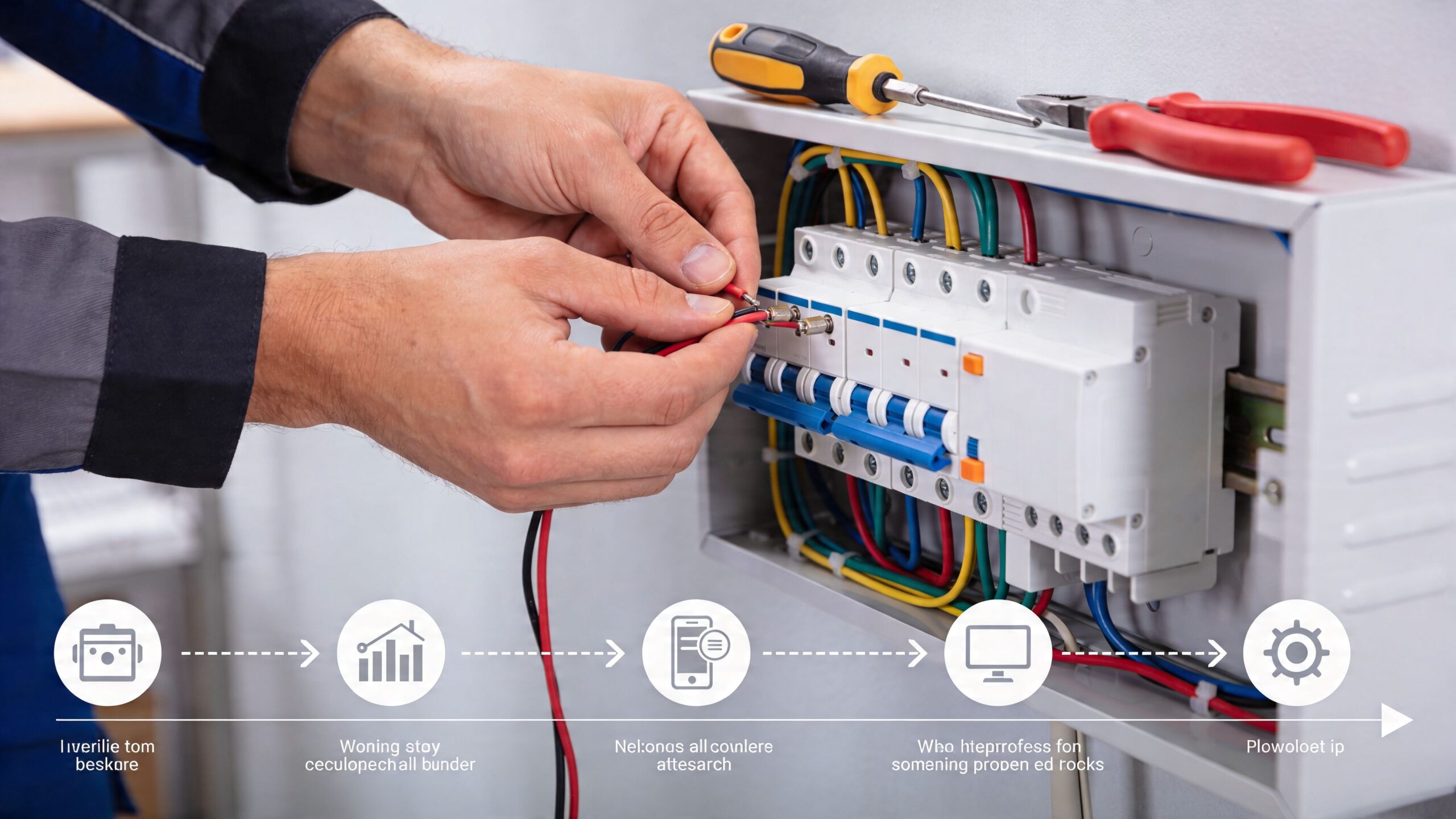
The live work window is controlled carefully. Power is shut off, the old panel is removed, and each branch circuit is transferred to the new equipment. The installer verifies conductor terminations, breaker sizing, grounding and bonding details, and panel labeling before the system is ready to be energized.
For a standard residential upgrade, the actual labor often fits within the 4 to 10 hour range cited earlier in the national cost data. That doesn't mean every project is done in one uninterrupted stretch from first phone call to final approval. It means the hands-on installation work often falls inside that window when conditions are straightforward.
A typical homeowner experience looks like this:
- Morning shutdown after final prep and safety checks.
- Old equipment removal and inspection of conductor condition.
- New panel installation with breakers, grounding, and circuit transfer.
- Testing and labeling so each circuit is identified clearly.
- Inspection and release sequence based on local procedure and utility requirements.
If a contractor can't explain the outage plan in plain language, that's usually a warning sign.
Final inspection and power restoration
Once the work is complete, the required inspection is scheduled or finalized according to local process. If the inspector approves the installation, the service is cleared for normal use. The homeowner should receive a clearly labeled panel, an explanation of any new breaker types, and guidance on what to watch for after energization.
The smoothest jobs aren't the ones with no paperwork. They're the ones where the paperwork, utility timing, and field work were lined up correctly from the start.
Navigating Palm Beach County Permits and Inspections
In Palm Beach County, a permit isn't a formality. It's the mechanism that protects your house, your insurance position, and the next person who works on the system. If someone offers to replace a panel without pulling a permit, they're asking you to absorb the risk while they keep the job moving.
Why local permits matter more here
South Florida isn't a generic electrical market. Exterior service equipment is exposed to weather, heat, corrosion, and storm conditions. Municipal review and inspection help confirm that the new panel, meter equipment, and related parts are suitable for local conditions and installed to current requirements.
That local context affects cost. In high-cost areas like Palm Beach County, base panel upgrade prices can run 20% to 50% higher than national averages because of hurricane code requirements, labor rates of $75 to $150 per hour, and permitting that can cost $200 to $500+. The same source adds that homeowners often underestimate total costs by 30% to 40% without localized quotes, as discussed in this Palm Beach County panel cost overview.
What a proper permit process does for you
A real permit process forces clarity. It identifies who is responsible for the work, what equipment is being installed, and whether the finished assembly meets the current standard the inspector expects to see. That's good for the homeowner.
It also matters later. If you sell the property, file an insurance claim, renovate again, or need to troubleshoot a future issue, permitted work gives the next professional a reliable paper trail.
Here are the practical benefits:
- Safety verification because the work is inspected, not just billed.
- Code alignment so the installation reflects current local requirements instead of old habits.
- Utility coordination when meter or service components need approval or replacement.
- Documentation that supports property value and can reduce disputes later.
Palm Beach County details that change the job
Local panel work often includes requirements beyond the interior wiring itself. Exterior enclosures may need to suit local weather exposure. Service entrance components may need utility-approved replacement. In some neighborhoods, HOA procedures add another layer of review before the electrician even starts.
That doesn't make the process bad. It means the electrician has to know how to work through it. Homeowners save the most frustration when they hire someone who expects permit review, builds it into the schedule, and doesn't treat inspection as an afterthought.
Skipping the permit can make a quote look lean. It can also leave you with an uninsurable, unapproved, or incomplete installation.
How to Choose the Right Palm Beach County Electrician
The electrician you hire matters as much as the hardware they install. A panel upgrade isn't forgiving work. Mistakes show up as failed inspections, nuisance tripping, damaged equipment, mislabeled circuits, or dangerous connections hidden behind a neat-looking dead front.
Start with license, insurance, and scope clarity
First, verify that the contractor is licensed and properly insured for residential electrical work in Florida. Then ask for an itemized quote, not a lump sum on a text message. You want to see whether the proposal includes permits, breaker replacements, grounding corrections, labeling, service entrance work, and inspection coordination.
A homeowner should also ask who answers the phone after hours. That sounds small until a shutdown runs late, a breaker issue appears after energizing, or the utility timing changes. Electrical service isn't a category where "call us tomorrow" inspires confidence.

What to ask before you sign
This is the checklist I want homeowners to use.
- Ask who pulls the permit. If the answer is vague, keep looking.
- Ask what's excluded. Hidden fees usually live in the exclusions.
- Ask whether the quote assumes the existing wiring will pass inspection. That single question reveals how realistic the estimate is.
- Ask how the outage will be handled. Good contractors explain this clearly.
- Ask what brand and type of equipment will be installed. Serious electricians don't dodge equipment questions.
For homeowners doing a broader due-diligence review before hiring any contractor, this new home electrician hiring guide is a practical reference.
Look for judgment, not just availability
Plenty of contractors can swap parts. Fewer can explain trade-offs. You want someone who will tell you when a direct replacement is fine, when a grounding issue needs to be corrected now, and when a service upgrade is overkill compared with a smarter load-management approach.
It's also useful to compare how other trades present inspections and documentation. Even in a different category, a professional example like Paletz Roofing Inspection reflects the same principle homeowners should expect from electrical work: clear evaluation, real accountability, and no hand-waving about condition or compliance.
The best electrician isn't the one with the fastest yes. It's the one whose quote still makes sense after the inspector opens the panel.
If a contractor offers a suspiciously low number, can't explain permit handling, and avoids specifics about breakers, grounding, or utility coordination, move on. The cheapest panel job often becomes the most expensive one to fix.
Frequently Asked Questions About Panel Upgrades
Will a panel upgrade help with homeowner's insurance
Yes, it often can. Insurance carriers care about electrical risk, not just whether the lights turn on. Older panels, undersized service, obsolete equipment, and visible signs of overload can create underwriting problems or trigger requests for correction before a policy is issued or renewed.
In practical terms, a permitted panel upgrade helps because it shows the home now has a safer, more current distribution point for power. If your insurer has already raised a concern, ask exactly what they want documented. Some want proof of replacement, some want a licensed invoice, and some want confirmation that the work was permitted and inspected.
Does a new electrical panel lower electric bills
Not by itself in the way a high-efficiency air conditioner does. A panel doesn't manufacture efficiency. What it does is support efficiency safely. It gives you the capacity and breaker layout needed for newer equipment, load management, and properly protected circuits.
There is one important exception in the broader system sense. Some upgrade paths support devices designed to reduce energy waste. The verified data behind this article notes two related ideas. First, one guide states that upgraded systems can support efficient appliances and may save 25% on bills via optimized systems, and second, the publisher installs the Smartcool ECO3 to improve air-conditioner efficiency with potential savings of up to 25%. Those savings come from the equipment and controls attached to the system, not from the panel enclosure alone. The panel is what makes safe integration possible.
What warning signs suggest a dangerous or failing panel
Some signs deserve quick attention. If you notice any of the following, don't keep resetting breakers and hoping for the best.
- Breakers that trip repeatedly under ordinary household use.
- Lights that flicker or dim when large appliances start.
- A burning smell or unusual heat near the panel.
- Crackling or buzzing sounds from breakers or inside the enclosure.
- Rust, staining, or visible corrosion on panel parts.
- No room for added circuits even though the home needs more loads supported.
- Insurance questions or failed inspection comments pointing to outdated service equipment.
The pattern matters more than any single symptom. One nuisance trip may be minor. Several warning signs together usually mean the panel and the connected wiring need a licensed inspection.
Is a 200-amp panel always the right answer
No. It's common, and for many homes it's the right target, but not every property needs the same solution. Some homes function well with existing capacity when the load is managed properly. Others clearly need more service because of large HVAC demand, EV charging, pool equipment, or expansion plans.
The right decision comes from a load-based evaluation, not from copying what a neighbor installed. A reliable electrician should be able to explain why you're replacing the panel, why the selected amperage makes sense, and what would happen if you chose a smaller or larger option.
Can the job be done without replacing other components
Sometimes yes, sometimes no. A clean same-location replacement may not need much beyond the panel and standard reconnection work. But if the grounding system is inadequate, the meter base is outdated, or the service entrance equipment doesn't meet current requirements, the job won't stop at the panel.
That isn't mission creep. It's the difference between changing one visible part and delivering a safe, approvable installation. The more honest quote is the one that anticipates likely code-related items instead of pretending they don't exist.
If you want a clear, local assessment of your panel, Lighthouse Energy Services serves Palm Beach County with residential electrical upgrades, emergency response, and code-conscious installation work. Their team has been serving the area since 2005, offers true 24/7 availability with no extra after-hours charges, and provides transparent quotes from licensed electrical professionals who understand local permitting, inspections, and the realities of South Florida service equipment.