Your power goes out after business hours. The POS system is dead, the office is hot, the refrigerator alarms are starting, or half the house is dark and you smell something hot near the panel. During an outage, people search fast and click the biggest name they recognize.
That’s where situational fit matters.
When people look up pike electric west palm beach, they’re often comparing two very different types of electrical contractors without realizing it. One is built for utility infrastructure, grid work, and large regional deployments. The other is built for property-level response, troubleshooting, repairs, upgrades, and specialized local compliance.
If you own a home, manage a condo, run a retail space, oversee a warehouse, or handle facilities for an HOA, that difference affects who should get the call first.
The Urgent Choice for West Palm Beach Electrical Service
A restaurant owner in West Palm Beach loses power to part of the kitchen at night. The dining room still has lights, but key equipment is down. Staff can’t close properly, morning prep is at risk, and nobody wants to guess whether it’s a panel issue, a damaged feeder, a failing disconnect, or something upstream.

That owner doesn’t need branding. They need the right electrical model.
Two very different calls
If the problem sits on the utility side, a company built for utility distribution and restoration makes sense. If the problem is inside the building, at the meter stack, panel, tenant space, site lighting, disconnect, or equipment connection, a local service electrician is usually the practical answer.
That’s why people often compare national names with a local electrical contractor in West Palm Beach, FL even though the job types are different.
Early in a breakdown, the wrong call wastes time. The symptoms can look similar, but the responsibilities are not.
| Situation | Best fit |
|---|---|
| Downed line, utility feeder issue, regional outage, storm grid damage | Utility-scale provider or utility-directed crew |
| Dead panel, failed breaker, burned lug, lighting outage, tenant build-out issue | Local property-focused electrician |
| Planned transmission or substation work | National infrastructure contractor |
| HOA maintenance, office emergency call, warehouse troubleshooting | Local responsive service team |
What usually works
Property owners do best when they ask one question first: Is this a grid problem or a property problem?
If the whole area is out and utility assets are involved, think utility response. If only your building is affected, or only part of it, think local troubleshooting first.
Practical rule: If the outage stops at your property line, you usually need a service electrician, not a utility construction fleet.
This is the core issue behind the search for pike electric west palm beach. It isn’t about who has the bigger name. It’s about matching the contractor to the actual failure.
Understanding the Players A Tale of Two Contractors
Pike Electric is a long-established utility contractor. Pike Electric Corporation was founded on February 10, 1945, in Mount Airy, North Carolina, and today operates as a national company with over 6,700 employees focused on distribution, transmission, and substation projects for utilities according to this history of Pike Electric.
That matters because it tells you what kind of machine Pike is. It’s built to work at utility scale.
What Pike is built to do
In practice, a company like Pike fits jobs such as:
- Grid infrastructure work involving utility distribution systems
- Transmission construction where crews, equipment, planning, and utility coordination are substantial
- Substation-related scopes that require a different level of engineering and field execution
- Storm recovery deployments organized around restoring larger sections of the electrical system
That’s not the same thing as being the best fit for a failed tenant panel, a tripping service disconnect, or a condo common-area outage.
What local property-focused contractors are built to do
A local Palm Beach County electrician usually lives in a different lane. The work is more immediate and more granular.
That means things like:
- diagnosing a partial outage in one building
- replacing damaged devices or feeders
- coordinating with property managers and tenants
- handling repairs that can’t wait until normal business hours
- dealing with code, access, permits, and occupancy constraints at the property level
The priorities are different. Utility contractors focus on network assets and larger system reliability. Local service contractors focus on response, diagnosis, repair, and continuity inside the property boundary.
For homeowners and building operators, that distinction is more useful than a brand comparison.
Why people confuse the two
The confusion happens because both work in “electrical.” But the word covers radically different scopes.
A utility-scale contractor may be the right answer for infrastructure tied to the broader grid. A local firm is usually the right answer when the person calling is the owner, manager, board member, or facilities lead trying to get a specific property back online.
If you’re trying to understand how local residential electrical work is evaluated, this residential electrical contractors guide gives a better frame for property-level decision making than utility contractor marketing ever will.
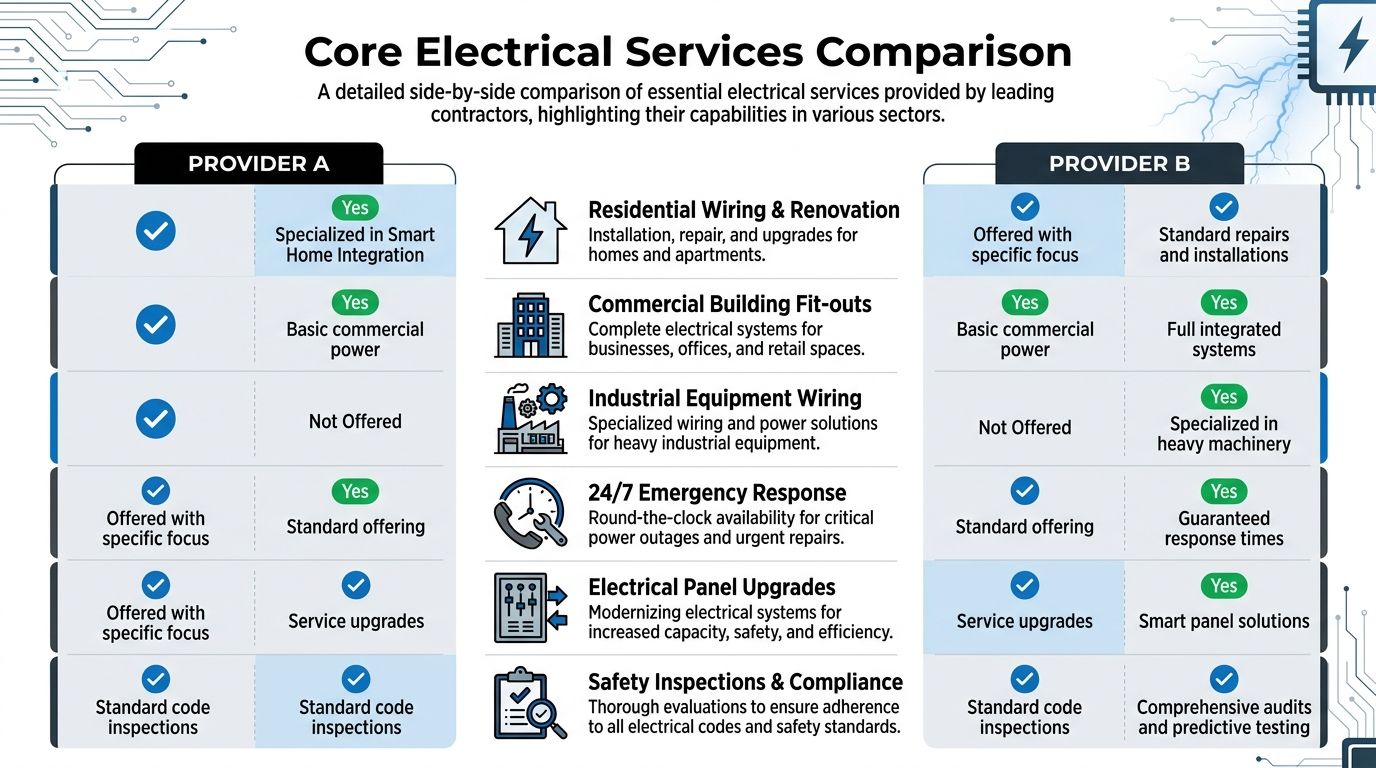
Comparing Core Electrical Services Side-by-Side
Most confusion clears up once you compare actual service categories instead of logos.
Pike Electric’s documented West Palm Beach-area competencies center on utility-grade overhead and underground distribution, transmission projects from 69 kV to 345 kV, and substation construction based on West Palm Beach Pike-related job and capability references. That’s serious, specialized work. It also sits far outside most residential and standard commercial service calls.
Where the lines separate
Here’s the cleanest way to look at it.
| Service area | Utility-scale provider like Pike | Local responsive expert |
|---|---|---|
| Residential wiring and repair | Usually not core focus | Core day-to-day work |
| Commercial panel and lighting issues | Limited fit unless tied to utility infrastructure | Strong fit |
| Transmission line work | Core fit | Not typical |
| Substation construction | Core fit | Not typical |
| Underground utility distribution | Core fit | Limited or project-specific |
| Tenant improvement troubleshooting | Weak fit | Strong fit |
| HOA and property maintenance | Weak fit | Strong fit |
| Aircraft obstruction lighting and property compliance | Depends on scope, often outside core local service model | Strong specialty fit when offered |
| After-hours building outage response | Different response model | Strong fit |
Residential needs
Homeowners don’t need transmission expertise. They need someone who can safely trace a fault, inspect the panel, identify failed components, check damaged circuits, and restore service without turning a one-night problem into a week-long project.
Typical residential calls include:
- Panel trouble from heat damage, corrosion, loose terminations, or aging breakers
- Renovation wiring where added load has to be planned correctly
- Lighting and receptacle failures that need actual diagnosis, not guesswork
- Service upgrades when an older home no longer supports current demand
A utility contractor’s strengths don’t usually line up with that list.
Commercial and industrial needs
Commercial properties sit in the middle. Some jobs are clearly local-service work. Others edge into utility coordination.
A retail center, office building, warehouse, or HOA often needs:
- emergency diagnostics
- panel and disconnect replacement
- site lighting repair
- distribution within the property
- code corrections
- maintenance planning
- coordination with tenants and operations staff
An industrial site may also need higher-capacity power work, but even then, the question is still about scope. If the issue is internal distribution, equipment connection, or facility reliability, a local contractor with commercial and industrial experience is often the better operational fit.
A contractor can be highly capable and still be the wrong fit for your job. Scale alone doesn’t solve a property-level electrical problem.
What works and what doesn’t
What works is matching the contractor to the asset involved.
What doesn’t work is hiring based on name recognition when the failure is local, building-specific, and time-sensitive.
For most searches around pike electric west palm beach, the practical takeaway is simple. If your problem involves utility infrastructure, Pike’s type of operation makes sense. If your problem lives inside a home, business, condo, office, warehouse, or managed property, you need a contractor organized for that environment.
Availability and Emergency Response When Minutes Matter
At 2 a.m., response model matters more than company history.
A storm restoration contractor and a local emergency electrician may both be excellent, but they answer different calls. Pike is known for large-scale storm restoration, including drone scouting and live-line techniques for utility recovery, and that model is quite different from localized 24/7 dispatch for individual property emergencies as described on Pike’s company information page.
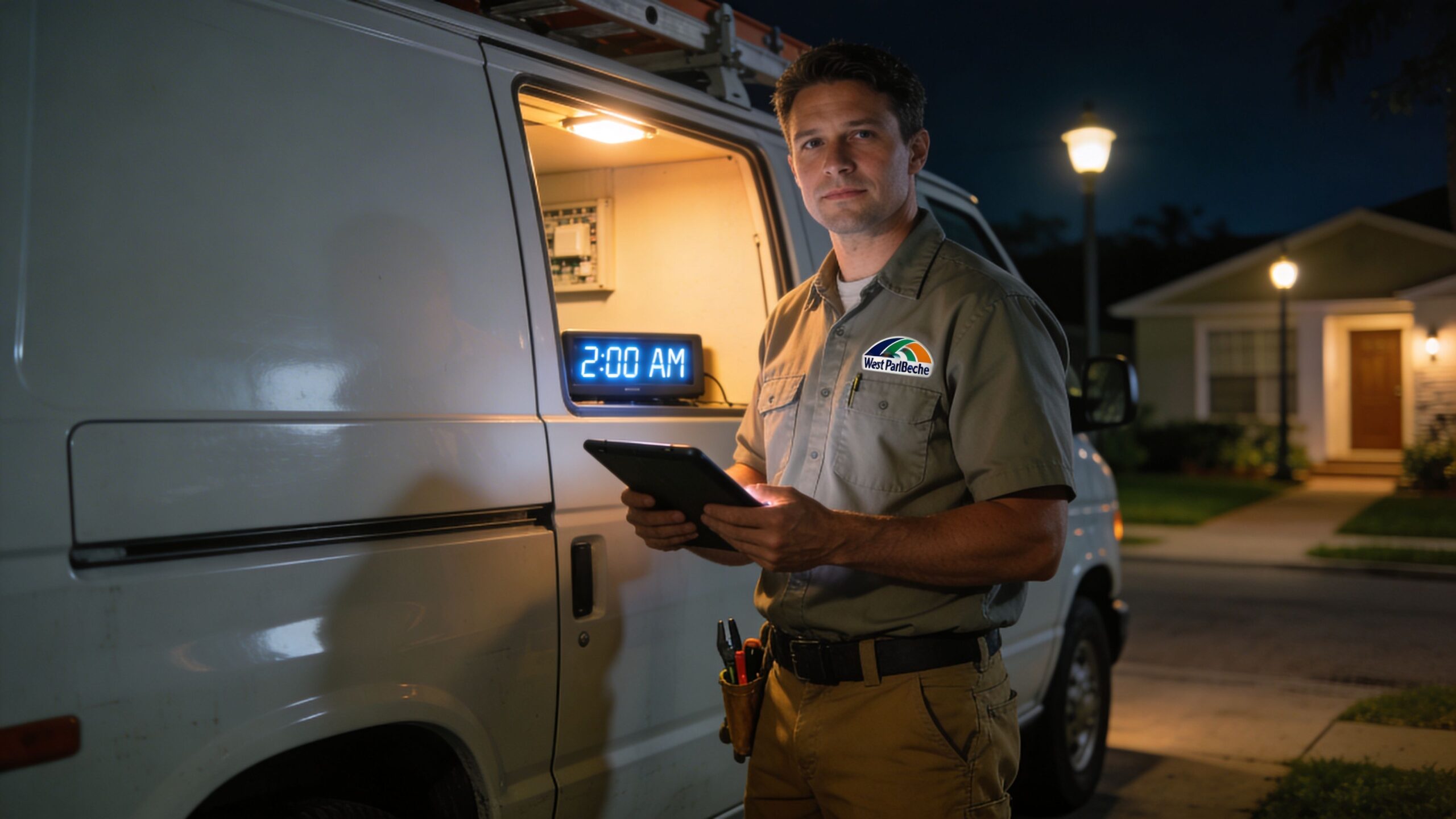
Storm response is not the same as property response
Here, people often get tripped up.
When a hurricane or regional event damages the grid, utility-scale crews may be deployed to assess lines, restore feeders, replace poles, and support utility operations. That’s coordinated recovery work.
When a building owner has a failed main breaker, a melted meter can, a dead lighting circuit in a parking lot, or a dangerous hot panel, the need is narrower and faster. The priority is to get a qualified electrician to the property, isolate the fault, make the area safe, and restore service if possible.
Those are different systems.
What local emergency service should look like
For Palm Beach County property owners, the right emergency response model usually includes:
- Direct phone access to someone who understands electrical trouble, not just an answering script
- Fast dispatch within the local service area
- Troubleshooting at the building level rather than utility-network recovery
- Clear communication about whether the issue is on your side or the utility side
- Safe temporary measures when a same-night permanent repair isn’t practical
That’s the standard people should use when reviewing local emergency options, including resources like this Palm Beach emergency electrician guide.
Field reality: A regional outage needs restoration logistics. A burned lug in your service equipment needs a technician who can open gear, test safely, and make a property-specific call.
The practical trade-off
National-scale response brings manpower and infrastructure for utility emergencies. Local response brings speed and focus for individual properties.
If you manage a shopping center, multifamily building, office, marina-adjacent property, or industrial space, that trade-off is practical, not theoretical.
Use a utility-scale provider when the problem belongs to the grid.
Use a local emergency electrician when the problem belongs to the building.
That sounds obvious, but in a crisis people often blur the line. The result is delays, misrouted calls, and longer downtime than necessary.
The best emergency electrician is the one whose operating model matches the failure in front of you.
Evaluating Specialty Capabilities and Compliance Expertise
Basic repairs are only part of electrical work in Palm Beach County. The harder jobs involve compliance, ongoing risk, and systems that owners don’t deal with every day.
That’s where specialty capability matters.
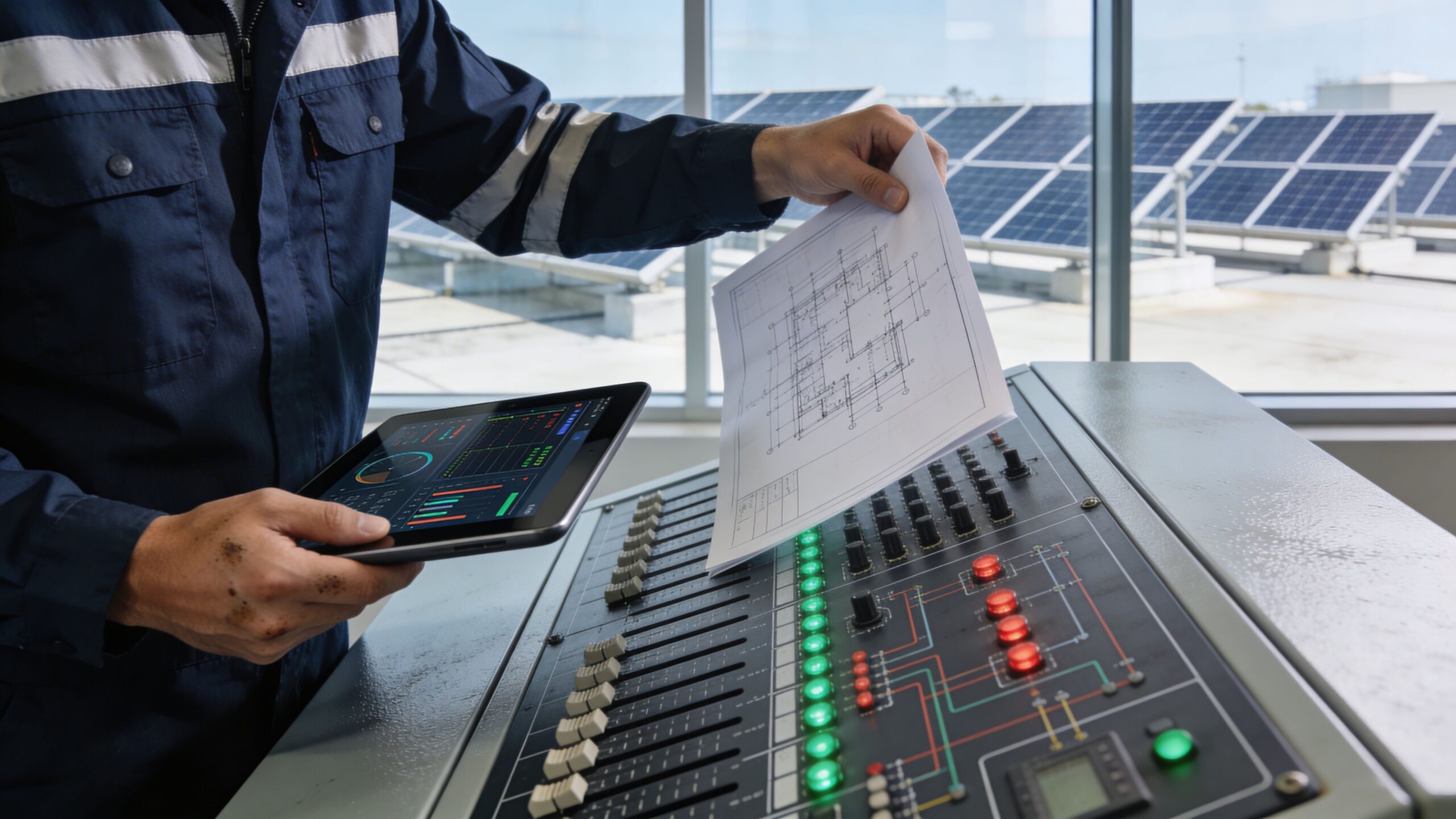
Aircraft obstruction lighting
Property owners in Palm Beach County face a significant compliance burden with aircraft obstruction lighting because they may need to address FAA requirements, National Electric Code issues, and local zoning or building concerns with limited public guidance according to this discussion of aircraft obstruction lighting compliance in Palm Beach County.
For towers, rooftops, and taller structures, installation is only one part of the job. The harder part is knowing whether the existing setup still meets current requirements and what to do when it doesn’t.
A useful contractor in this space does more than mount lights.
They should help with:
- System review of what’s installed now
- Failure-point identification in controls, fixtures, wiring paths, and monitoring
- Upgrade planning when older equipment no longer fits the property’s obligations
- Maintenance strategy so the owner isn’t surprised by avoidable outages
That advisory role matters because owners often don’t know where the compliance line starts until there’s a problem.
If your building has obstruction lighting, don’t treat it like ordinary exterior lighting. The risk profile is different, and so is the maintenance approach.
Energy optimization beyond repair calls
The other specialty area that gets overlooked is operational efficiency.
A lot of contractors can replace devices and restore power. Fewer can step back and ask whether the facility is using electricity wisely.
For commercial and industrial facilities, that means looking at:
- equipment load patterns
- HVAC-related electrical efficiency
- power quality concerns
- practical upgrades that lower waste without disrupting operations
One example is the Smartcool ECO3, which can significantly reduce air conditioning electricity consumption. That makes it a strategic option for facilities where cooling drives a large part of the electrical bill.
Why this matters in practice
A contractor who only shows up when something fails stays in reactive mode.
A contractor who understands compliance and efficiency can help the owner avoid preventable shutdowns, nuisance issues, and unnecessary operating costs.
That distinction is especially important for:
- office buildings
- retail centers
- warehouses
- managed communities
- sites with rooftop or tower lighting obligations
These aren’t glamorous jobs, but they’re the ones that save time, reduce headaches, and keep a property operating cleanly.
How to Choose the Right Electrical Partner in West Palm Beach
The right choice comes down to scope, urgency, and asset type.
If you strip away marketing, the decision gets easier.
Choose based on the job, not the logo
Use a utility-scale contractor when the work involves the broader electrical system, large infrastructure, or utility-facing construction. That’s where a company built around distribution, transmission, and substation work earns its place.
Use a local service-focused contractor when the issue is tied to the property itself and needs fast diagnosis, local accountability, and practical repair execution.
Here’s the simplest decision framework.
Best-fit situations for a utility-scale provider
- Utility infrastructure projects involving overhead or underground distribution assets
- Transmission-related scopes where high-voltage construction is central
- Substation construction or major upgrades
- Regional storm recovery organized through utility operations
- Large developments that interface directly with utility-grade construction requirements
Best-fit situations for a local Palm Beach County expert
- Home electrical problems such as panel issues, partial outages, device failures, or renovation upgrades
- Commercial emergency calls where a business can’t wait for normal hours
- HOA and property management work that depends on recurring service and local accountability
- Warehouse and industrial troubleshooting on the facility side of the meter
- Specialized compliance needs such as aircraft obstruction lighting
- Efficiency upgrades where the goal is lower operating cost, not just repair
One more factor people miss
A lot of owners focus only on outages. They don’t look at electrical work as an operating-cost decision.
That’s a mistake.
For many commercial and industrial facilities, energy efficiency upgrades are overlooked, and solutions such as the Smartcool ECO3 can cut air conditioning electricity consumption substantially, shifting the electrician’s role from repair vendor to cost-reduction partner.
The same thinking applies to homes. If you’re planning broader property improvements, this guide to energy efficient home upgrades for South Florida homes is useful because electrical upgrades often work best when they’re planned alongside insulation, remodeling, and HVAC decisions.
The practical takeaway
If you searched pike electric west palm beach, the answer isn’t that one company is universally better.
The answer is narrower and more useful:
- call the utility-scale specialist for grid and infrastructure work
- call the local responsive expert for homes, businesses, managed properties, specialty compliance, and urgent building-level problems
That’s how experienced property owners avoid wasted time. They don’t ask who sounds biggest. They ask who is built for the exact problem on site.
When you need fast, experienced electrical help in Palm Beach County, Lighthouse Energy Services is built for the jobs property owners face every day. From emergency troubleshooting and repairs to commercial service, specialized obstruction lighting, and efficiency-focused upgrades, the team delivers direct local response with licensed professionals who understand the urgency and the details.