
When your business grinds to a halt in the middle of a busy Tampa day, there's a good chance faulty wiring is the silent culprit. This is where a commercial electrician comes in—a specialist trained to navigate the high-voltage, high-stakes electrical systems that power everything from South Tampa boutiques to the massive warehouses near the port.
Their job is to make sure your business runs safely, efficiently, and without the costly interruptions that can sink a balance sheet.
Why Tampa Businesses Need a Specialized Commercial Electrician
Think about the wiring in your house. Now, compare that to the complex web of power running through a bustling restaurant, a multi-story office building, or an industrial plant. While a residential electrician is perfect for the former, a commercial specialist is trained for a completely different league of complexity and power. They're the special forces of the electrical world.
For any business, an electrical failure is more than a minor hassle. It means lost revenue, frustrated customers, and serious safety risks. A commercial electrician gets this. Their work is the bedrock of your entire operation, keeping the lights on, the servers running, and the facility compliant with a mountain of codes.
Different Demands for Different Businesses
A hospital's need for life-saving backup power is worlds away from a retail store's focus on lighting and payment systems. A truly qualified commercial electrician in Tampa brings the experience to handle these unique demands.
- Retail and Hospitality: It's all about creating an experience. That means perfect lighting, reliable point-of-sale systems, and security networks that never fail.
- Office Buildings: They manage the intricate wiring for dozens or hundreds of workstations, climate-controlled server rooms, and integrated building automation systems.
- Industrial and Warehouses: This is heavy-duty work, involving three-phase power for machinery, massive high-bay lighting, and custom equipment installations.
- Healthcare Facilities: There's zero room for error. They implement critical backup generators, isolated power panels, and meet the incredibly strict codes required for patient care.
This kind of specialized knowledge is more critical than ever, especially with Tampa's explosive growth. Florida's construction sector now pumps over $200 billion into the state’s economy each year, and the demand for skilled electricians is surging right along with it. The state's electrician industry is on track to become an $18.2 billion market by 2026. You can read more about how Florida's population boom is driving construction and the need for skilled trades.
In a competitive market like Tampa, downtime is a killer. Hiring a specialized commercial electrician isn’t an expense—it’s an investment in your business’s continuity, safety, and success. It turns your electrical infrastructure into a reliable asset, not a ticking liability.
Navigating Tampa Electrical Codes and Permits
When it comes to your business's electrical system, "good enough" is never good enough. In Tampa, electrical work is governed by a strict set of codes and permitting rules. Think of them less as red tape and more as a safety manual designed to protect your business, your employees, and your bottom line from liability and disaster.
Ignoring these regulations can bring your project to a screeching halt, lead to hefty fines, or create genuinely dangerous conditions. That’s why hiring a qualified commercial electrician in Tampa FL isn’t just a good idea—it’s a crucial business decision. They’re the experts who know the local rulebook by heart, ensuring every wire is pulled and every connection is made safely and correctly the first time.
Verifying Essential Electrical Licenses
First things first: let's talk about licenses. The most important credential you need to look for is a state-certified Electrical Contractor (EC) license. This isn't just a piece of paper; it’s proof that the contractor has passed demanding exams, logged thousands of hours of real-world experience, and carries the proper insurance to work on commercial properties.
You should always verify a contractor's license on the Florida Department of Business and Professional Regulation (DBPR) website. It takes just a few minutes and provides immediate peace of mind. Hiring someone without this license means you’re on the hook for any code violations, accidents, or shoddy work.
A valid EC license is the absolute baseline. It confirms the contractor is a recognized professional who is fully accountable for their work, not just some person with a truck and a toolbox.
The Hillsborough County Permitting Process
Beyond state licensing, nearly any meaningful electrical project in Hillsborough County requires a permit from the local building department. A permit is your official green light to start the work, and it triggers a series of inspections to ensure everything is up to code. Trying to sidestep this process to save a little time or money is a classic mistake that always costs more in the long run.
- What needs a permit? Think major projects: tenant build-outs, new construction, full panel upgrades, or installing dedicated circuits for heavy equipment.
- Why is it required? Permits ensure an impartial inspector reviews the work to confirm it’s safe and meets the standards of the National Electrical Code (NEC) and local Hillsborough County amendments.
- What if you skip it? You’re risking stop-work orders, serious fines, and major headaches with your business insurance or when you try to sell the property. Unpermitted work is a huge red flag.
To see how a professional handles this, the workflow generally follows a clear, logical path from planning to completion.
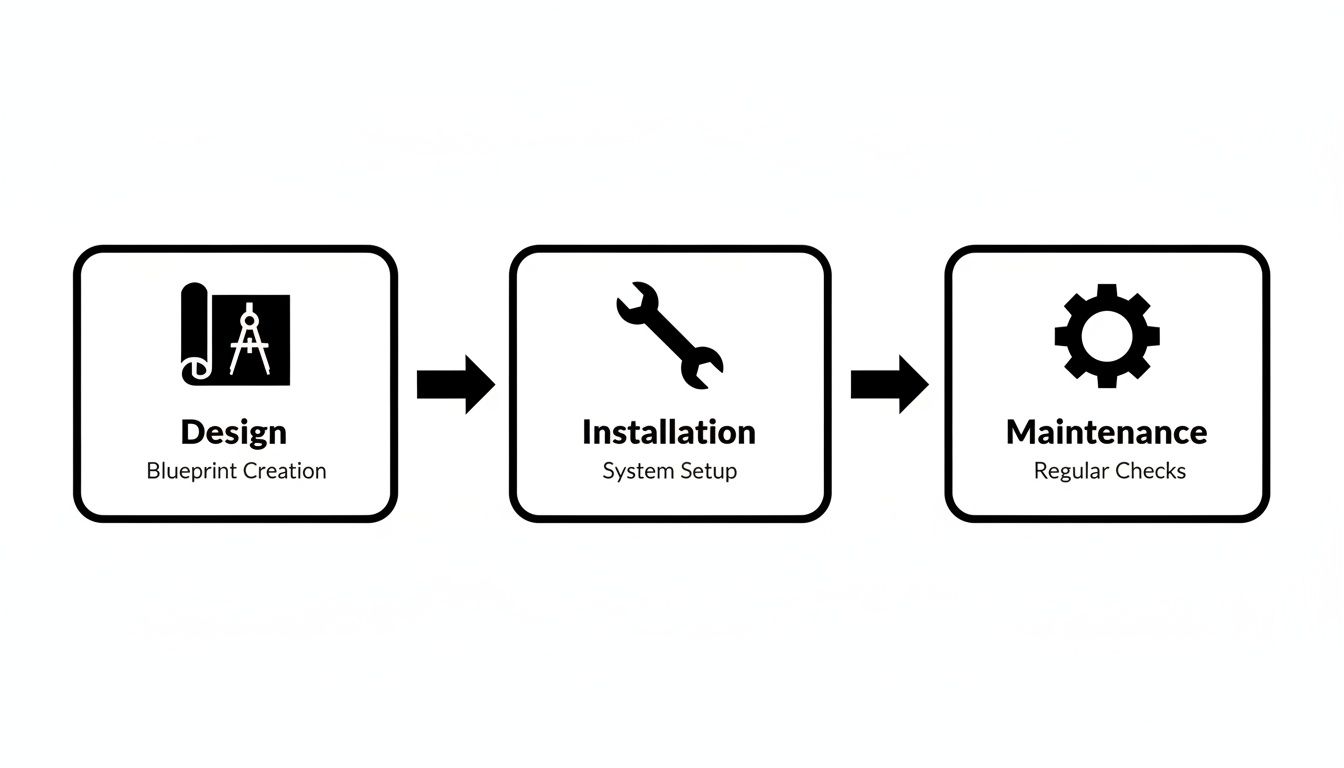
As you can see, a project starts with solid design, moves to skilled installation, and continues with proactive maintenance. A true professional seamlessly integrates the permitting and inspection steps into this process. If you want to dig deeper, you can learn more about finding government-approved electrical contractors who live and breathe compliance.
Specialized Compliance for Taller Structures
Tampa's unique landscape, with both Tampa International Airport and MacDill Air Force Base nearby, adds another layer of safety compliance: aircraft obstruction lighting. Any structure tall enough to interfere with airspace—from high-rise condos and communications towers to the cranes used to build them—must have specialized lighting.
These systems must meet strict Federal Aviation Administration (FAA) guidelines. This is a niche skill, and not every electrician is equipped to handle it. Working with an expert in FAA-compliant lighting is critical for keeping Tampa’s busy skies safe and ensuring your project gets the final sign-off without a hitch.
Figuring Out Commercial Electrical Costs in Tampa
Trying to pin down a budget for a major electrical project can be nerve-wracking. As a Tampa business owner, you need a clear financial picture, whether you're renovating a South Howard storefront, overhauling an industrial facility near the port, or building out a brand-new office in Westshore. The final number on that proposal isn't just an arbitrary hourly rate; it’s a detailed calculation of several moving parts.
It’s a lot like pricing a custom-built piece of furniture. The cost isn't just the wood. It's the complexity of the design, the specific finish you choose, the hours of skilled craftsmanship, and any special hardware needed to bring it all together. In the same way, the price for a commercial electrician in Tampa, FL, comes down to the scale of your job, the materials going into the walls, and the specific expertise required.
What Goes Into an Electrical Quote?
No two commercial spaces are the same, so no two quotes will be, either. Getting a handle on these key variables will help you have a much clearer conversation with your contractor and understand what’s really driving the investment.
- Project Size and Scope: This is the most obvious one. A simple lighting swap in a small retail shop is worlds away from wiring an entire multi-story office building from the ground up. The more square footage you have and the more intricate the systems—think data centers or specialized medical equipment—the more labor and materials you'll need.
- Materials and Fixtures: The specific parts you choose make a huge difference. Standard-grade wiring and outlets are always going to be more budget-friendly than specialized, high-performance components. The same goes for lighting—basic fluorescent fixtures have a lower upfront cost than a sophisticated smart LED system with automated controls.
- Labor and Required Expertise: Not all electrical work is created equal. Highly technical tasks, like working with high-voltage systems or installing FAA-compliant aircraft obstruction lighting, require a specialist, and that expertise comes at a premium. The number of electricians needed on-site and the total hours to get the job done right are major factors.
Here in Tampa Bay, this is especially true. The demand for skilled commercial electricians is through the roof, thanks to a boom in private sector growth across hospitality, healthcare, and industrial development. And with global trends like power-hungry AI data centers taking root in Florida's tech hubs, the need for that specialized electrical knowledge is only growing. You can dig into the numbers on Florida's electrician industry trends to see just how much the market is expanding.
Common Commercial Projects and Ballpark Costs
While every single job demands a custom estimate, it helps to have a general framework for budgeting. Here are a few common projects we see with Tampa businesses and what you might expect.
Tenant Build-Outs
This is all about getting an empty commercial space ready for a new tenant. It could be as simple as adding a few outlets and lights for an office, or as complex as a full electrical system for a restaurant kitchen or a dental clinic. Costs can swing wildly, from a few thousand dollars for minor tweaks to $50,000 or more for large, highly-specialized fit-outs.
Lighting Retrofits and Upgrades
Swapping out old, power-hungry lighting for modern, efficient LEDs is one of the most popular upgrades a business can make. The main cost drivers here are the number and type of fixtures you need. A small office might spend $3,000 – $8,000, while a large warehouse could easily see that number climb to $25,000 or more.
The magic of a lighting upgrade isn't the upfront cost; it's the long-term payback. Energy-efficient LEDs can slash your lighting-related electricity bill by 50-75%. They often pay for themselves over a few years and then keep cutting your operating expenses for years to come.
Dedicated Circuit Installation
If your business relies on heavy-duty equipment—commercial ovens, large production copiers, or industrial machinery—you absolutely need dedicated circuits to handle the load safely. Installing a single 120V or 240V dedicated circuit typically runs between $400 and $1,200. The final price depends on how far the new line has to run from the electrical panel and how difficult that path is.
How to Hire the Right Commercial Electrical Contractor
When it's time to hire an electrical contractor for your business, you're not just looking for someone to run some wires. You’re choosing a partner to protect your investment, ensure the safety of your employees and customers, and keep your operations running without a hitch. Making the wrong choice can lead to shoddy work, dangerous oversights, and unexpected costs that blow your budget.
Finding the right commercial electrician in Tampa FL is a lot like hiring a key employee. You need a methodical process to vet them properly. The right contractor is an asset; the wrong one is a liability waiting to happen.

Start with the Absolute Must-Haves
Before you even start talking about project details or pricing, you need to confirm a few non-negotiable credentials. Think of these as the gatekeepers that filter out the amateurs from the true professionals. Don't even think about skipping this part.
- Verify Their License and Insurance: Your first move should be to confirm their Florida Electrical Contractor (EC) license. You can do this right on the state's DBPR website. Just as important, ask for proof of general liability and workers' compensation insurance. This is your financial shield against any on-site accidents or property damage.
- Check Real-World Reviews and References: What are other business owners saying? Look for consistent feedback on platforms like Google, but don't stop there. Ask the contractor for a few references from recent commercial clients—ideally with projects similar to yours. A confident, established electrician will have a list ready to go.
A professional contractor's reputation is built over years. A long trail of satisfied clients and a clean, verifiable license are the best indicators you'll find of someone who does quality work and stands by it. It’s your first green light.
Digging Deeper: Experience and Safety Culture
Once you've confirmed the basics, it’s time to see if they’re the right fit for your specific job. This means going beyond the paperwork and getting a feel for their actual expertise and how they operate. A great electrician isn’t just technically competent; they’re a responsible business partner.
Ask About Relevant Experience
Don't be shy here. Get specific. If you’re opening a restaurant, ask them if they’ve wired a commercial kitchen before. For a warehouse, you'll want to know about their experience with high-bay lighting or three-phase power systems. Direct, relevant experience is invaluable and can save you a world of headaches.
Ask About Their Safety Program
Any serious commercial electrical company has a formal safety program. Ask them to tell you about it. Do they hold regular safety talks? What kind of personal protective equipment (PPE) is standard for their team? A company that's serious about safety is serious about protecting your people and your property. You can find more on this in our licensed commercial electrician complete guide, which dives deep into what separates the pros.
How to Analyze and Compare Written Quotes
Never, ever accept a verbal quote. A professional proposal is a detailed written document that breaks everything down. If you get a quote that seems suspiciously low, be wary. It’s often a red flag for cheap materials, inexperienced labor, or corners being cut somewhere.
To help you vet potential contractors effectively, we've put together a simple checklist. Use this table to compare quotes and make sure you're looking at all the crucial details before you make a final decision.
Hiring Checklist for a Tampa Commercial Electrician
| Verification Step | What to Look For | Why It Matters |
|---|---|---|
| Detailed Scope of Work | A clear, point-by-point description of all tasks included in the project. | This prevents misunderstandings and surprise charges from "scope creep" down the line. |
| Itemized Material Costs | A full breakdown of parts, fixtures, and materials with their associated prices. | It ensures total transparency and helps you confirm you aren't being overcharged. |
| Labor Rates and Hours | The hourly rate for electricians and an estimate of the total hours needed. | This is usually the biggest cost factor, so understanding it is key to managing your budget. |
| Permit Fees Included | Explicit confirmation that the cost of pulling all necessary permits is in the bid. | It shows they understand and follow local Tampa regulations from the start. |
| Payment Schedule | Clear terms outlining the deposit amount, progress payments, and final payment. | This sets clear financial expectations and protects both you and the contractor. |
By following these steps, you’re not just hiring an electrician; you’re making a smart business decision. Taking the time to thoroughly vet your options ensures you partner with a contractor who will deliver safe, compliant, and high-quality work for your Tampa business.
Preparing for Electrical Emergencies in Your Business
It's a nightmare scenario for any Tampa business owner. One minute, your registers are ringing and your team is productive; the next, everything goes dark. An electrical failure can shut down your operations in an instant, costing you revenue and putting both your staff and customers at risk. Thinking about these situations before they happen isn't just a good idea—it's a fundamental part of keeping your business running smoothly.
An electrical emergency isn't always as dramatic as a city-wide blackout. It can be a persistent circuit breaker that keeps tripping and disrupting your workflow. Or it can be something far more dangerous, like the distinct smell of burning plastic near an outlet or, worse, seeing sparks fly from an electrical panel.
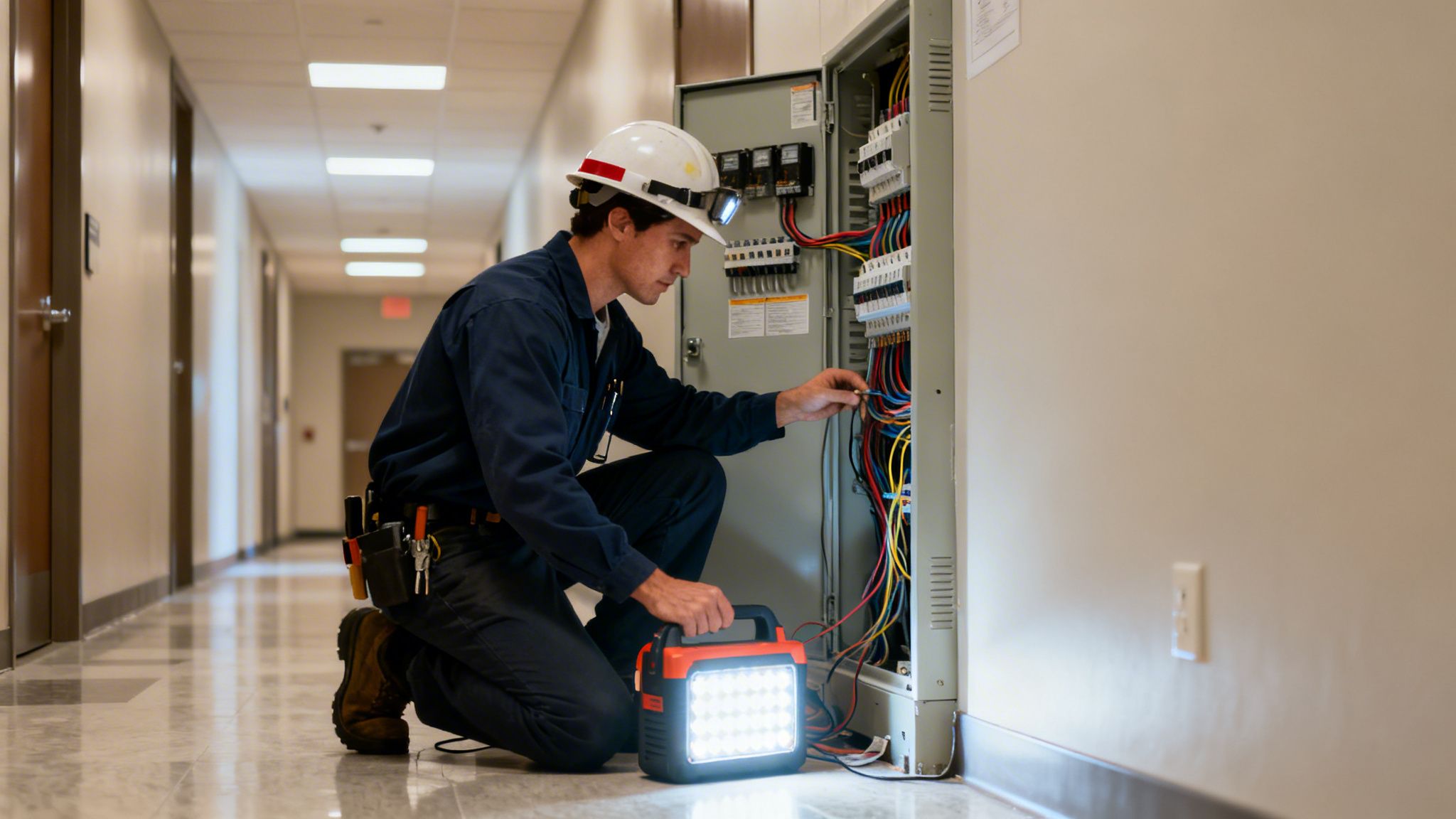
Immediate Actions During an Electrical Crisis
When you're faced with an electrical problem, your first move should always be about safety. Knowing what to do in those first critical moments can be the difference between a minor hiccup and a major disaster.
- Assess the Scope: Is it just you, or is the whole block dark? A quick look outside or a call to a neighboring business will tell you if the problem is yours alone or part of a larger outage.
- Prioritize Safety Above All: If you see sparks, smell something burning, or hear a strange buzzing from your equipment, kill the power at the main breaker—but only if you can do so safely. Get everyone out of the immediate area and call for professional help.
- Contact an Emergency Electrician: This is not a DIY situation. Don't try to troubleshoot a buzzing panel or a faulty outlet yourself. The next call you make should be to your go-to 24/7 emergency electrician.
Having a clear protocol is essential. Our guide on what to do during a business power outage offers a more detailed playbook for keeping everyone safe when the lights go out unexpectedly.
The Value of a 24/7 Emergency Electrician
The middle of a crisis is the absolute worst time to start Googling for a reliable commercial electrician in Tampa FL. Scrambling to find someone qualified while your business is losing money is a recipe for stress and bad decisions. The smart move is to build a relationship with a trusted electrical partner before you ever need one.
Think of it like this: You don't wait until you see smoke to shop for a fire extinguisher. Having a 24/7 emergency electrician on speed dial is your business's fire extinguisher for electrical problems. It gives you immediate access to an expert who, ideally, already knows your building's electrical system.
When you're vetting a potential emergency partner, make sure they check these boxes:
- True 24/7 Availability: This means a licensed pro answers the phone, not an answering service that will take a message.
- Rapid Response Times: They need to be local and have the capacity to get a technician to your business quickly to minimize your downtime.
- Clear Communication: A good electrician will tell you what's wrong, how they plan to fix it, and what it will cost before they start the work. No surprises.
- Proven Expertise: They must have a deep understanding of commercial systems and the experience to diagnose complex issues, even under pressure.
Finding a contractor with this level of readiness is more important than ever. The demand for electricians is projected to create 80,000 new jobs annually through 2031, but ongoing labor shortages mean not every company can guarantee a fast, reliable emergency response. As detailed in Florida's construction sector forecast, the firms that can deliver on-time service and transparent quotes are the ones best equipped to handle the needs of our area's retailers, offices, and warehouses. Finding that partner now isn't an expense; it's an investment in your business's resilience.
Your Partner for Electrical Excellence in Tampa
Hiring the right electrical contractor in Tampa is about much more than just getting wires run from point A to point B. It’s about finding a genuine partner who is invested in the long-term health of your business. From the initial blueprints to a middle-of-the-night emergency, the right team ensures your electrical system is an asset, not a liability.
A truly great commercial electrician in Tampa FL sees the bigger picture. They understand their work forms the very backbone of your daily operations. It's not just about the task at hand; it's about building a system that’s safe, efficient, and fully compliant with local codes, protecting your investment and everyone in your building.
The Foundation of a Strong Partnership
So, what does a real partnership with an electrician actually feel like? It’s built on a solid foundation of trust and proven expertise. This isn't a one-and-done transaction; it's a lasting professional relationship.
Here’s what you should be looking for:
- Proven Experience: A deep portfolio of successful projects right here in the Tampa area that are similar to yours.
- Transparent Practices: You should always get clear, itemized quotes and honest communication about schedules and any potential issues.
- Commitment to Safety: A non-negotiable, documented safety program and an unwavering dedication to all regulations.
- Reliable Support: The ability—and willingness—to respond fast, especially when an electrical problem has shut you down.
This level of service is what elevates a contractor from a simple vendor to a critical part of your operational team.
When you find the right electrical partner, you’re getting more than just safe wiring. You’re gaining the peace of mind that comes from knowing an expert has your back, ready to help you grow and solve problems before they start.
Your Next Step Toward Electrical Confidence
Whether you’re planning a major tenant build-out, need an urgent repair to get your power back on, or are just curious about energy-saving upgrades like LED retrofits, it all begins with a simple conversation. A professional consultation is your chance to lay out your goals, learn about your options, and get a straight answer on the state of your current system.
The smart choice you make today ensures your electrical infrastructure can handle whatever your business throws at it for years to come. Don't leave something as critical as your building's safety and efficiency to chance.
Ready to build a relationship with a trusted electrical expert in Tampa? Reach out to a qualified professional, schedule a consultation, and move your business forward with total confidence.
Frequently Asked Questions About Tampa Commercial Electricians
Running a business in Tampa brings its own set of challenges, and electrical systems shouldn't be one of them. We get a lot of questions from fellow business owners, so we've put together some straight-to-the-point answers to help you make smart decisions for your property.
What Is the Difference Between a Commercial and Residential Electrician?
It helps to think of it like the difference between a mechanic who works on family cars and one who specializes in heavy-duty diesel trucks. A residential electrician is a master of home wiring. A commercial electrician in Tampa FL, on the other hand, is a specialist trained to handle the much more demanding and complex systems that power businesses.
They’re experts in things you just don't see in a house:
- Three-phase power, which is the standard for running heavy commercial equipment.
- Heavier-duty conduits and wiring built to withstand constant, high-demand use.
- Stricter building codes and compliance rules that are unique to commercial and industrial properties.
Do I Really Need a Permit for My Electrical Work?
For commercial properties in Tampa, the answer is almost always a resounding yes. Any time you’re doing more than a simple repair like swapping out a fixture, a permit is non-negotiable. If you're adding circuits, upgrading your main panel, or doing the electrical for a new tenant build-out, you need a permit from Hillsborough County.
A good commercial electrician takes care of the entire permitting process for you. This isn't just about paperwork; it guarantees the work is done correctly, inspected for safety, and fully compliant with the National Electrical Code (NEC). Trying to skip a permit is a huge gamble that can result in hefty fines, stop-work orders, and serious trouble with your insurance provider if something goes wrong.
How Much Does a Commercial Electrician Charge?
The cost of a commercial electrician really depends on the job. A quick repair will cost far less than a full office wiring project. What's important is that you receive a detailed, written quote that clearly breaks down all the costs—labor, materials, and any permit fees. There should be no surprises.
Be wary of a bid that seems too good to be true. A rock-bottom price is often a red flag that a contractor is cutting corners with subpar materials, unskilled labor, or worse, no permit. That's a risk no business can afford to take.
What Should I Do in an Electrical Emergency?
Safety first, always. If you see sparks, smell that distinct electrical burning odor, or hear buzzing from a panel, shut off the power at the main breaker only if it is safe to do so. Evacuate the immediate area to keep everyone safe.
Then, your very next call should be to a 24/7 emergency electrician. Don't try to troubleshoot the issue yourself; electrical emergencies are dangerous and require a professional.
At Lighthouse Energy Services, our licensed professionals are on call 24/7, ready to provide the fast, dependable support your Tampa business needs to stay safe and running. For expert service you can count on, visit us at https://lighthouseenergyco.com.